Strawberry Wine
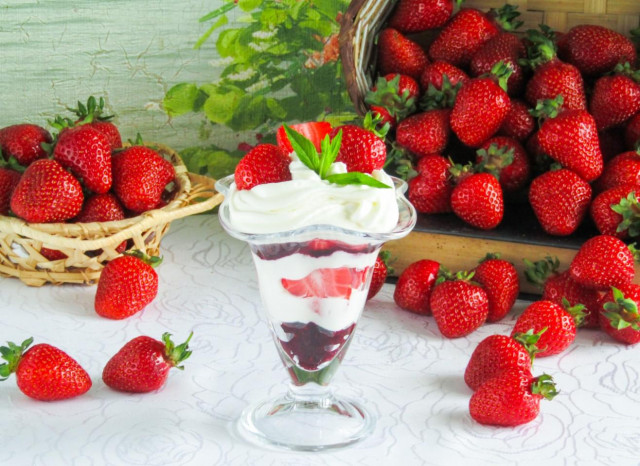
In the cold season, this wine stirs up warm memories of summer! Right off the bat: the long wait and the large amount of fresh, choice strawberries pay off more than 100%! No other wine has such a fragrant bouquet.


Cooking method
-
Step 1:
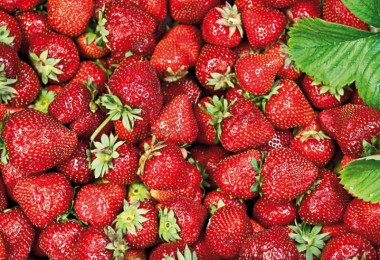
Pick any ripe strawberries for the wine, but make sure none are shriveled or rotten.
-
Step 2:
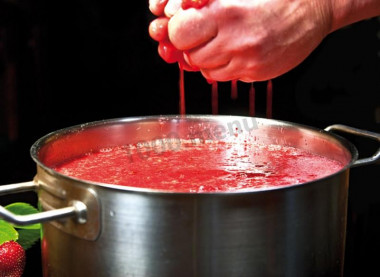
Then, without washing them or removing the stems, mash all the berries by hand - taking care not to crush any seeds - into a suitable fermentation vessel. Cover it tightly with a lid to keep out uninvited guests and leave it undisturbed for 3-4 days at 64-73°F (18-23°C). After those first 3-4 days, you'll need to stir the must from the bottom up several times over about two weeks, once every 2-3 days.
-
Step 3:
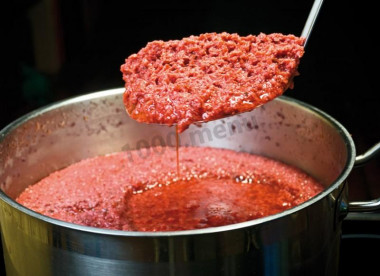
Before you start removing the pulp from the must, let it rest for a day. Under the pressure of the carbon dioxide, part of the pulp will rise to the surface.
-
Step 4:
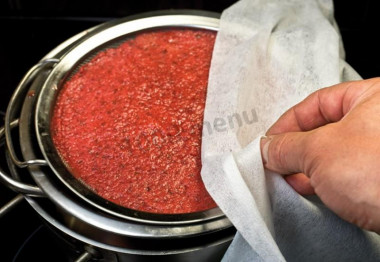
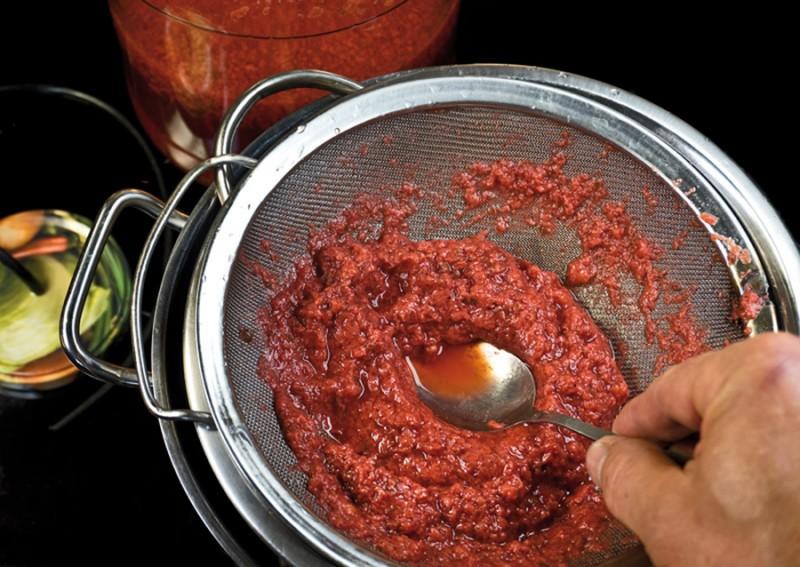
Skim it into a fine sieve or a cheesecloth bag and let it sit for a few hours over an empty container so the juice trapped in the pulp drains out.
-
Step 5:
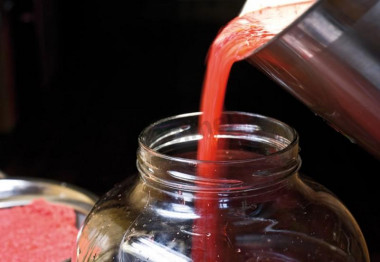
Drain all the juice into a suitably sized jar.
-
Step 6:
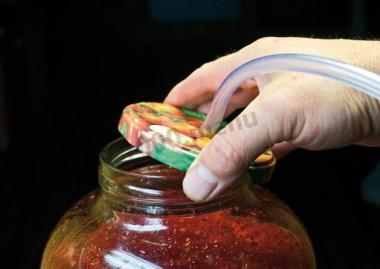
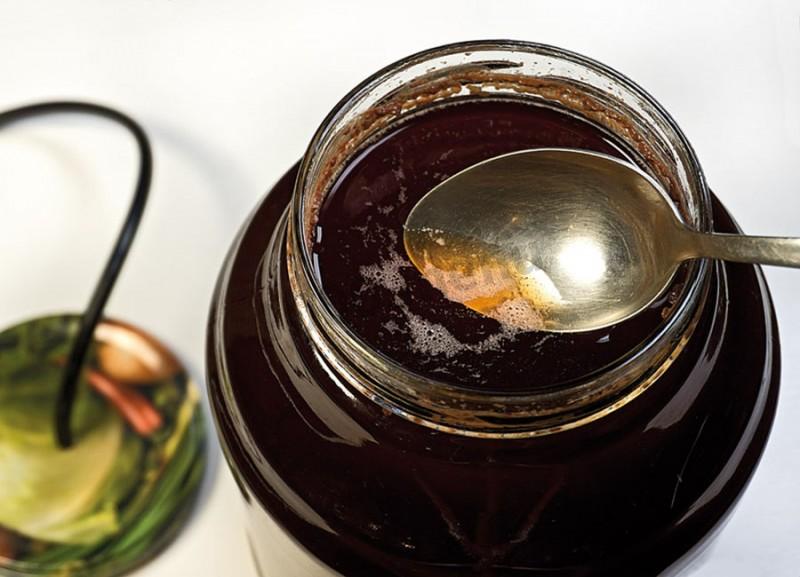
Fit it with an airlock and leave it to ferment for another 8-10 days.
-
Step 7:
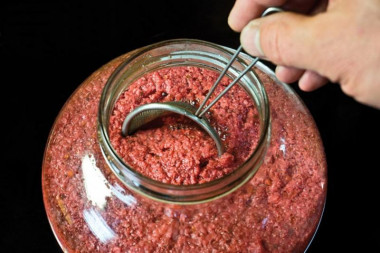
After that time, remove the airlock and take out the pulp that's risen, squeezing it lightly.
-
Step 8:
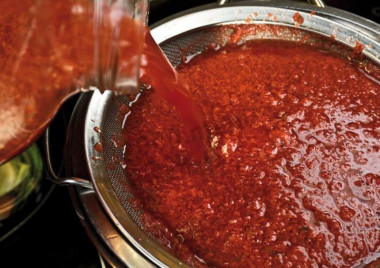
Strain the young wine through a sieve to remove the rest of the pulp.
-
Step 9:
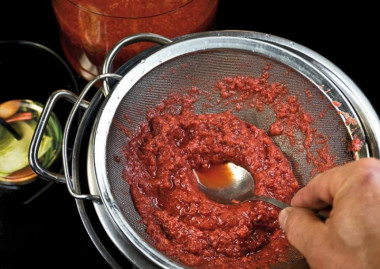
Squeeze lightly and pour it back into the jar under the airlock for another 8-10 days.
-
Step 10:
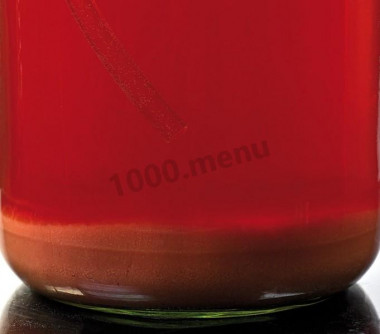
During this time, a substantial sediment will settle in the jar of wine.
-
Step 11:
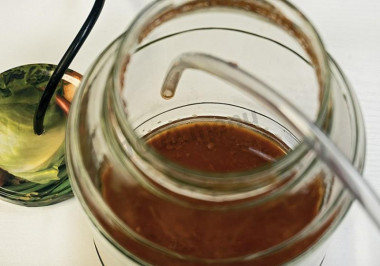
Using a long flexible tube, carefully rack the wine off without disturbing the sediment. And back under the airlock it goes! But this time for a few days longer than the previous period - and do this with each subsequent racking. Keep a log so you don't lose track, especially if you have several different wines going!
-
Step 12:
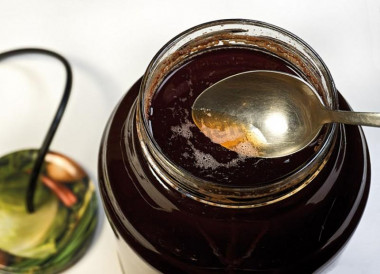
Over time the wine will start to change color - that's perfectly normal.
-
Step 13:

That means it's time to start aerating it - during the next racking, hold the tube so the stream falls about 5 cm above the jar, so the wine picks up oxygen.
-
Step 14:
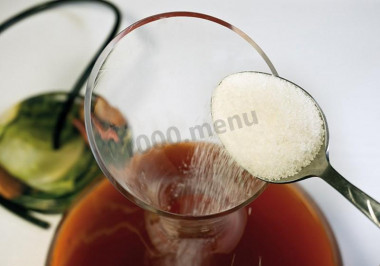
It's also time to taste the wine; if there isn't enough natural sugar and the wine is too tart, add a third or a quarter of the sugar. To do this, set aside a little wine and dissolve the sugar in it.
-
Step 15:
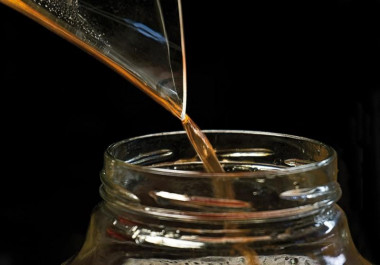
Pour the sweetened portion of wine back into the jar. Add the rest of the sugar in stages during the following rackings and aerations.
-
Step 16:
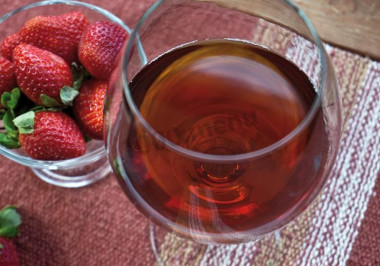
Keep racking and aerating until the wine turns clear and stops throwing sediment or film. The whole process is long - two months or more, depending on conditions and how the fermentation goes. Bottle the finished wine, but don't cork it tightly - strawberry wine tends to keep fermenting. Store it in a dark, cool place. Enjoy the aroma and flavor!






Caloric content of the products possible in the composition of the dish
- Strawberries - 30 kcal/100g
- Sweetened frozen strawberries - 44 kcal/100g
- Granulated sugar - 398 kcal/100g
- Sugar - 398 kcal/100g