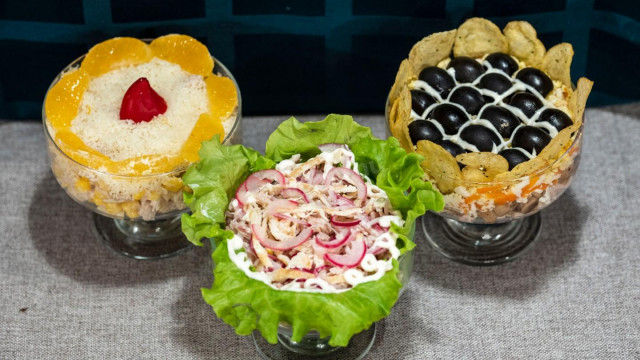
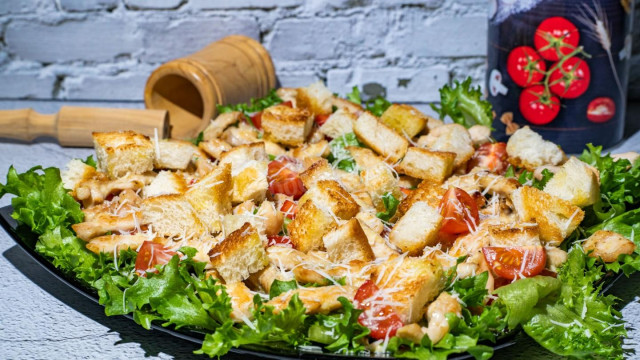
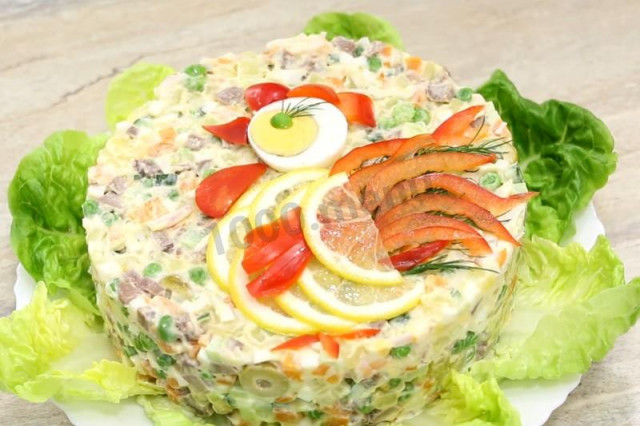


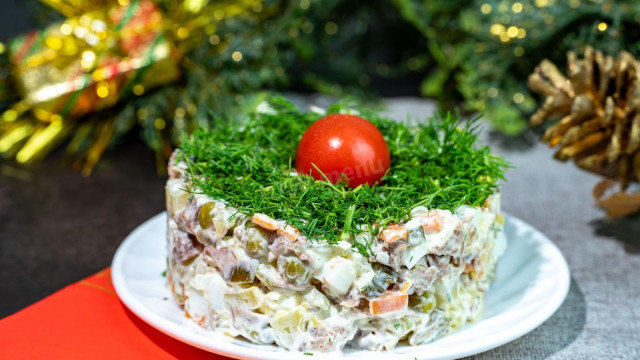

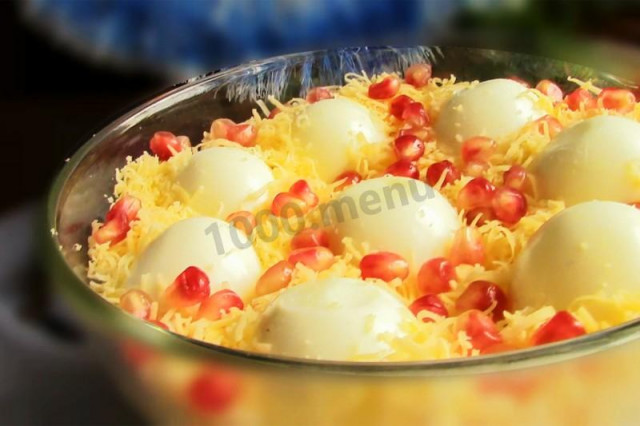
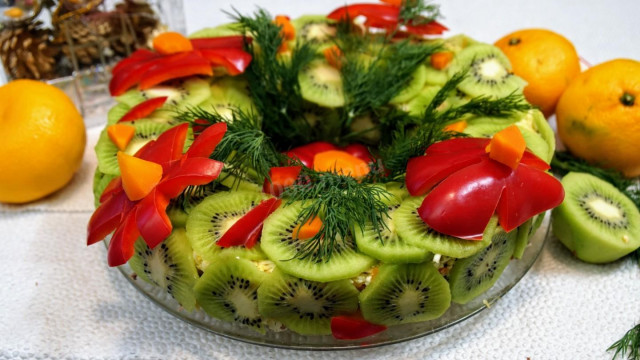
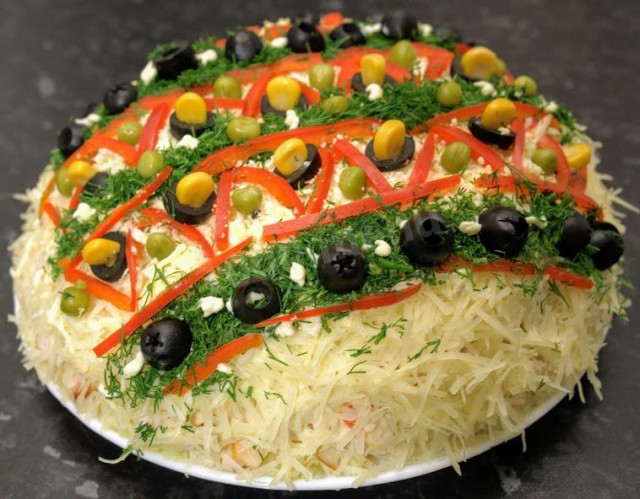


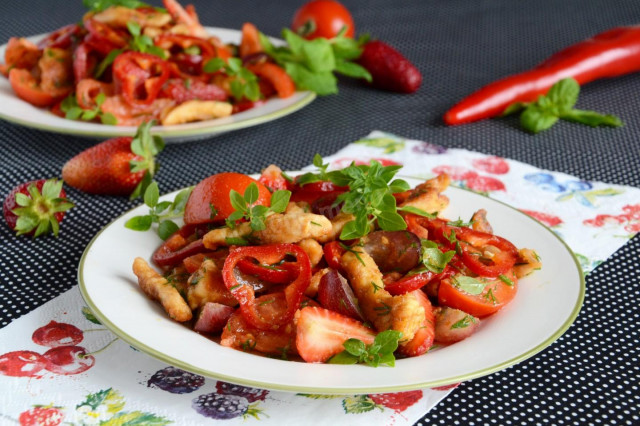
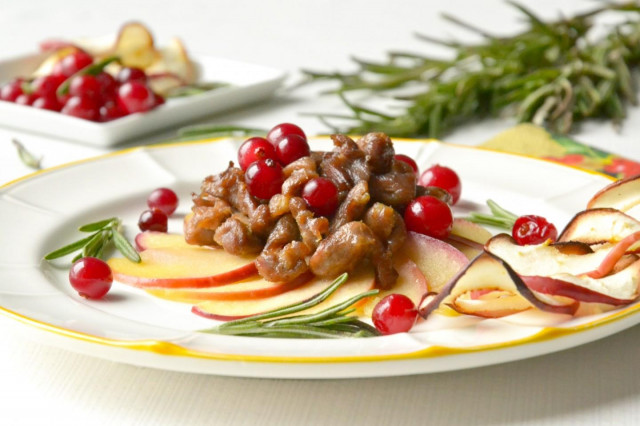
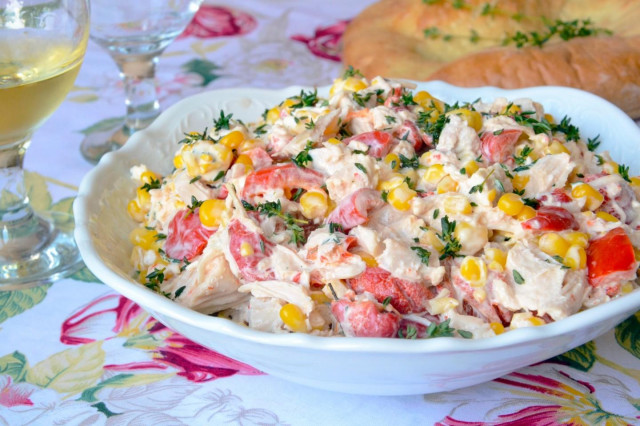
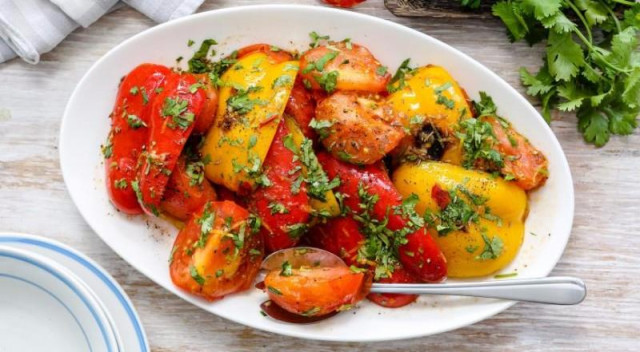
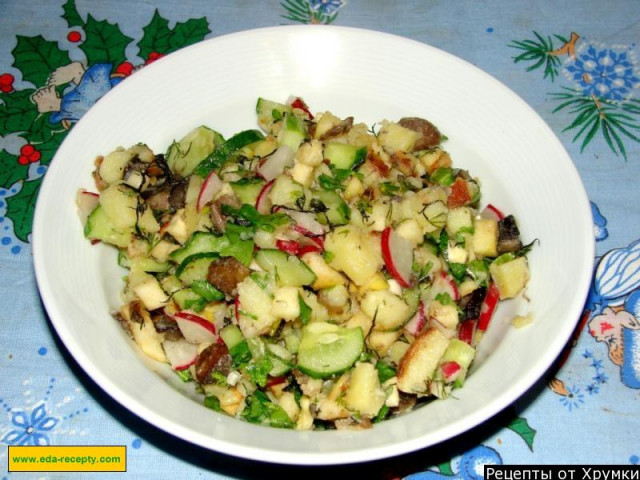
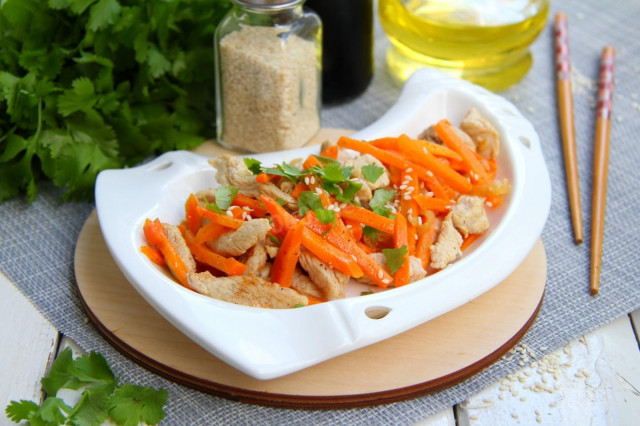
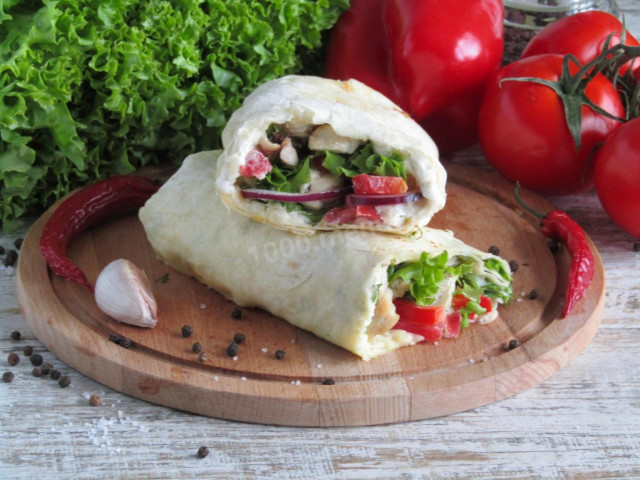
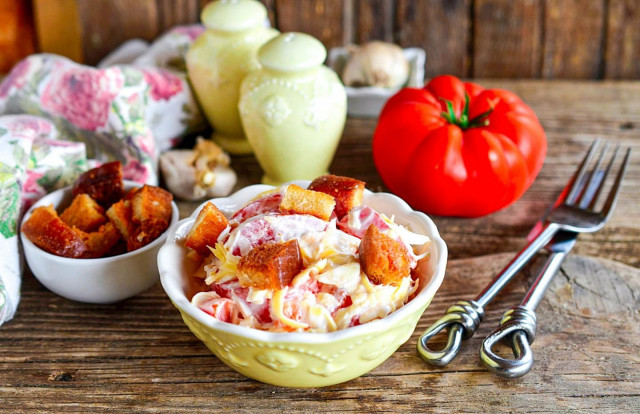
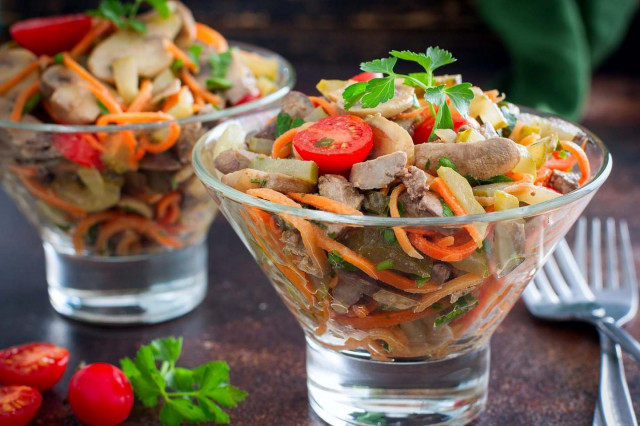
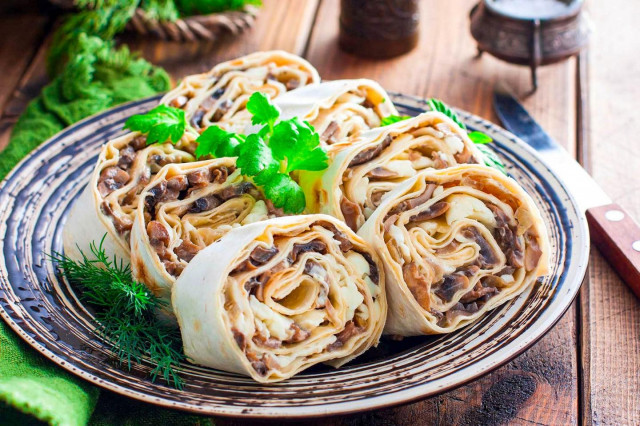
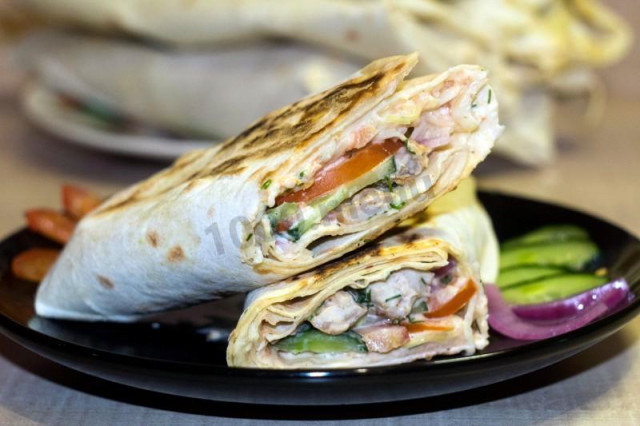
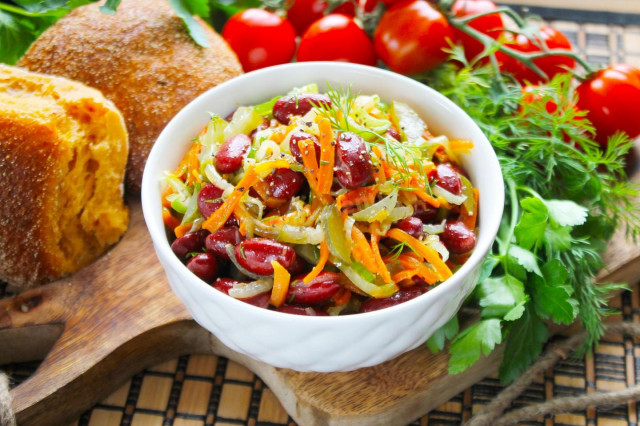

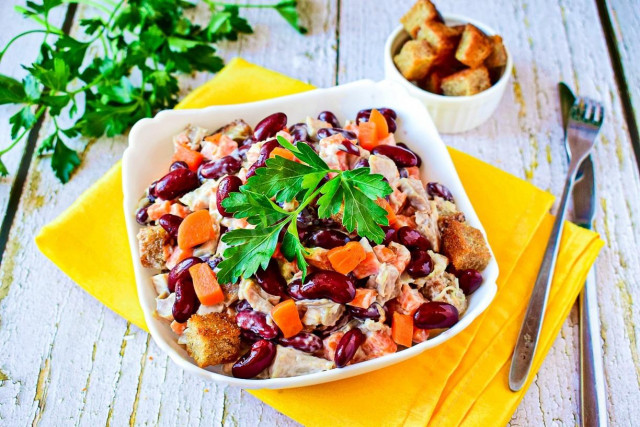
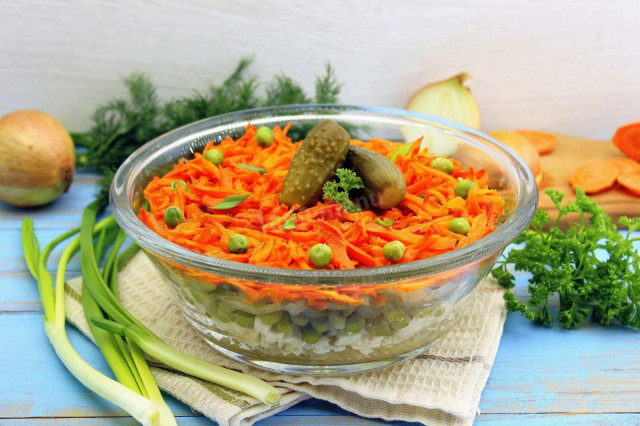
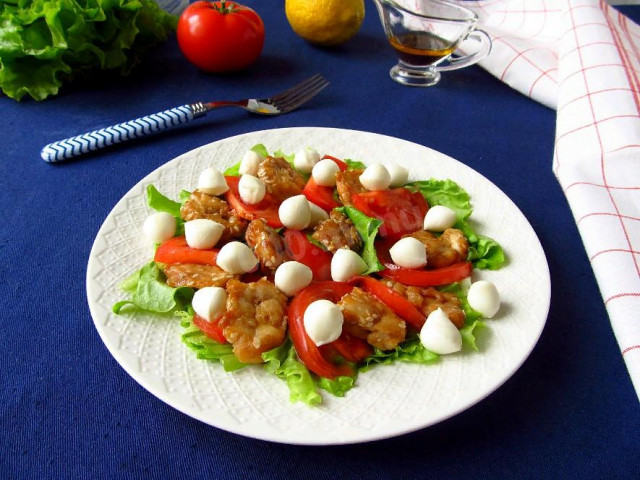
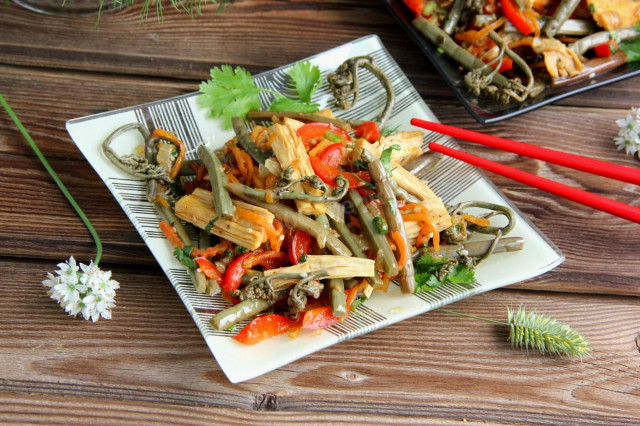
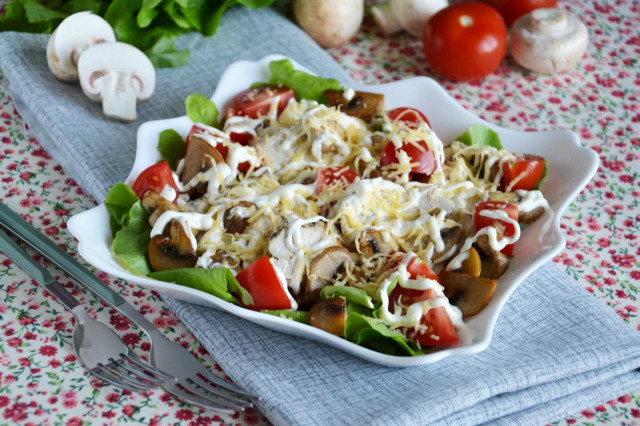

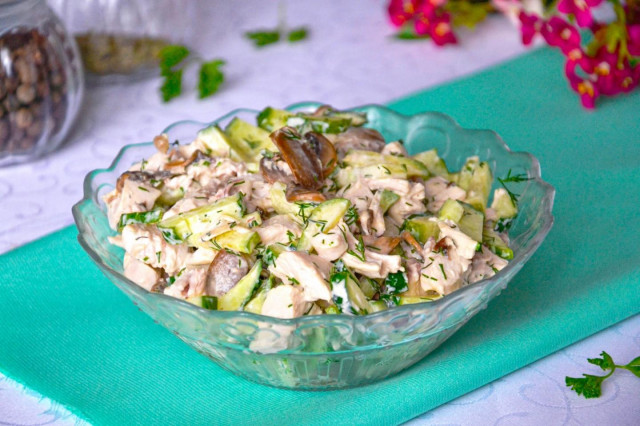
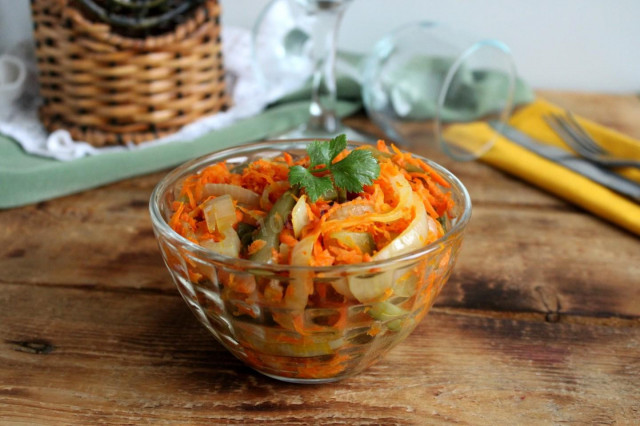

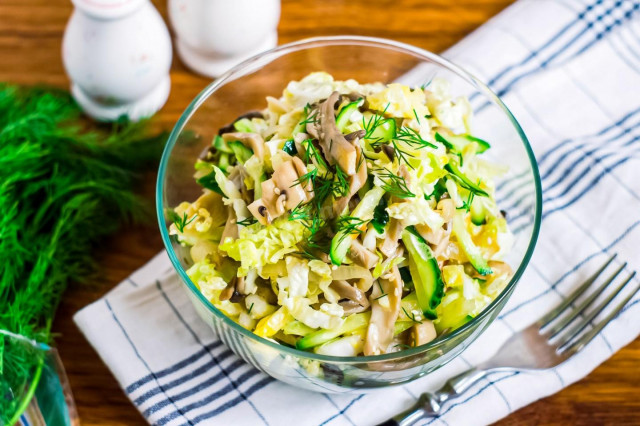
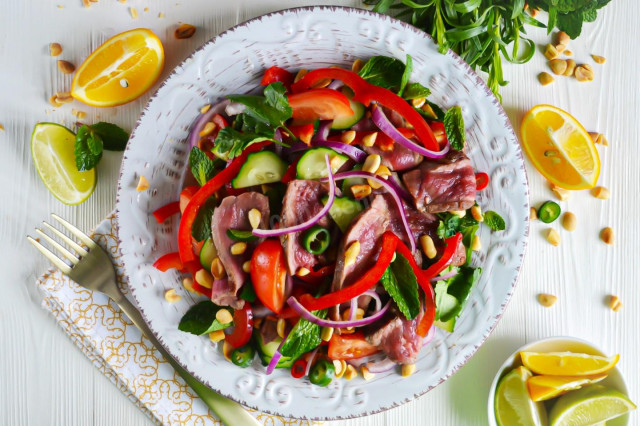
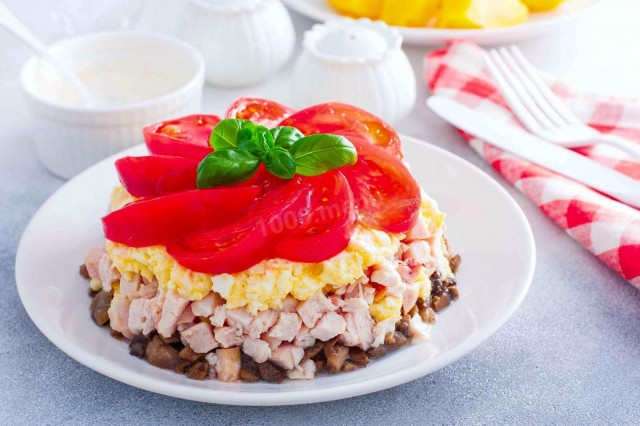
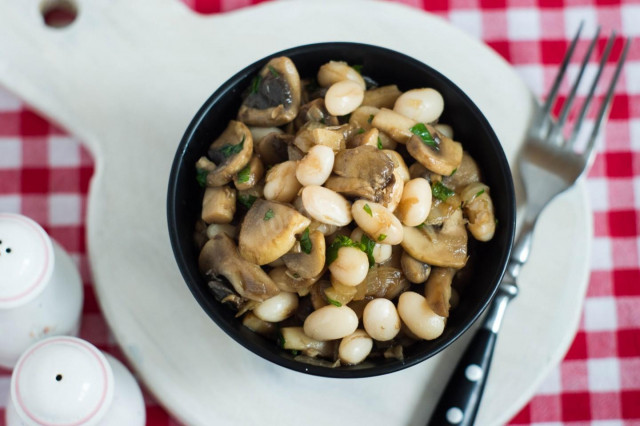
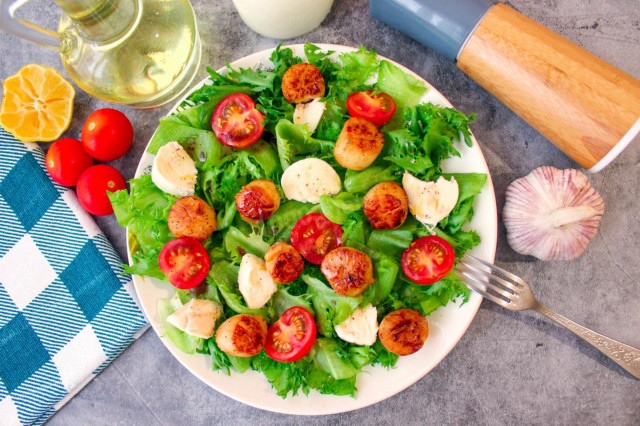
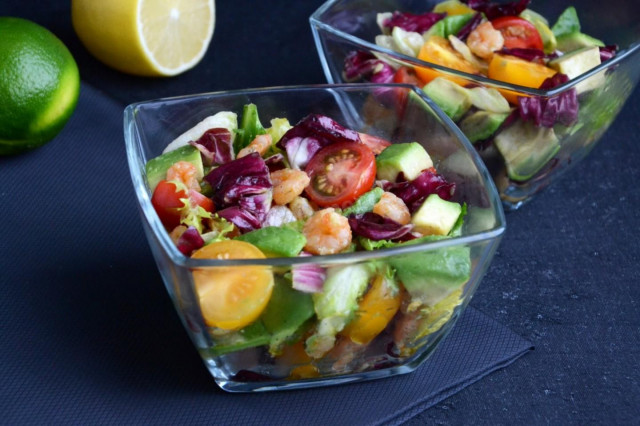
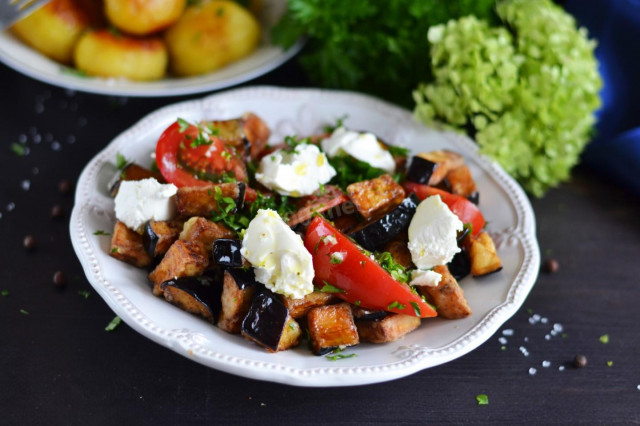

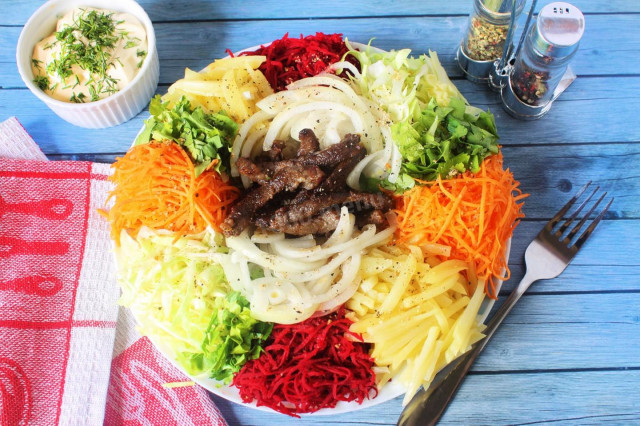
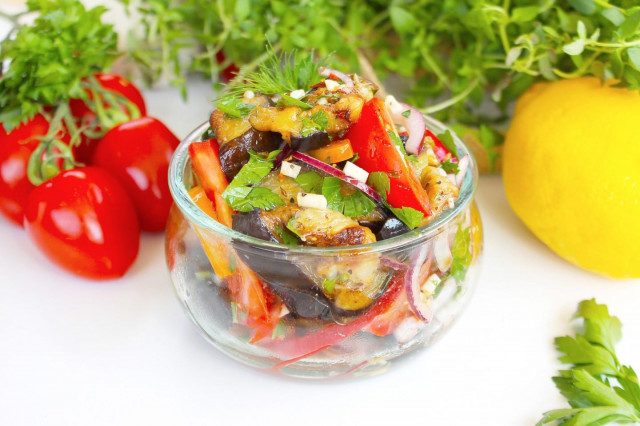
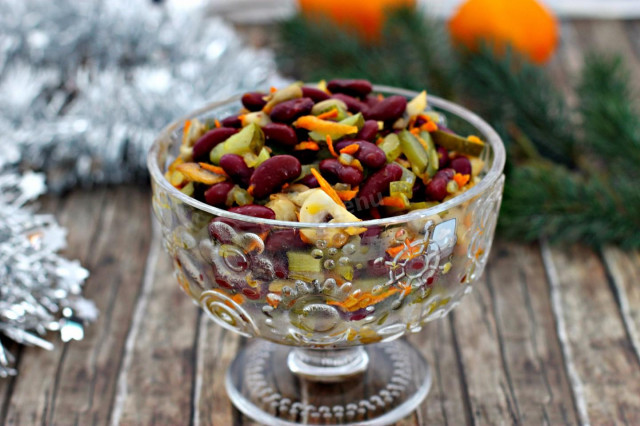
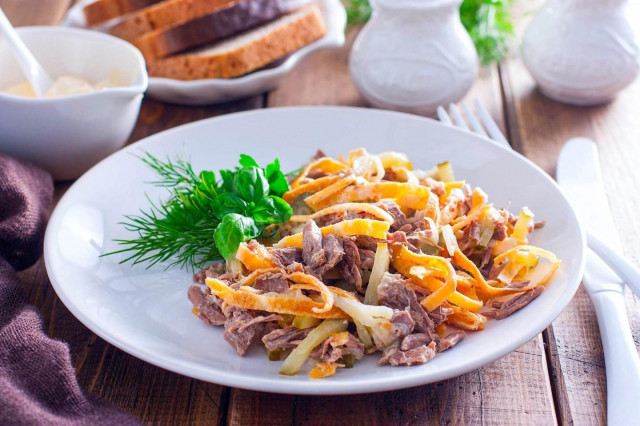
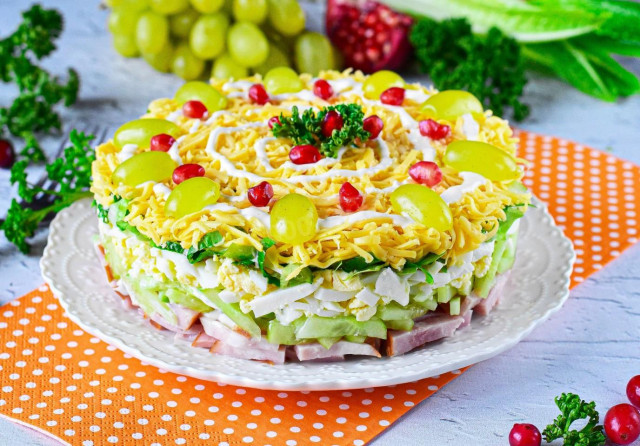
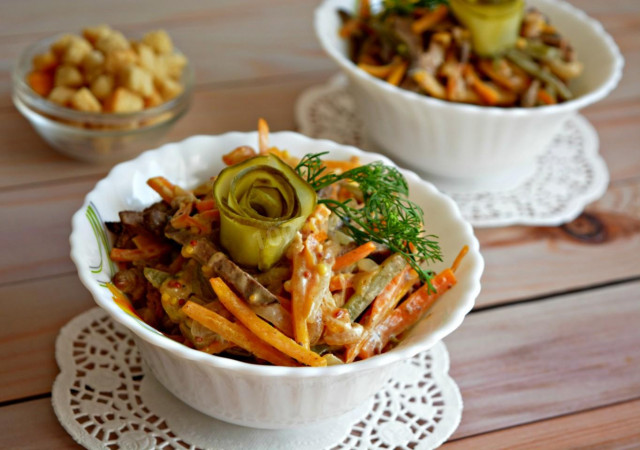
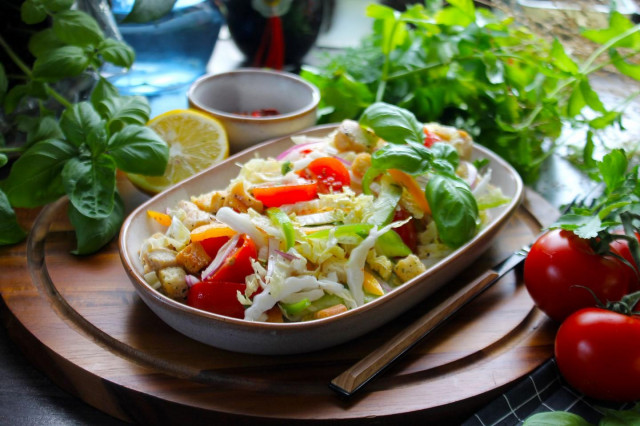
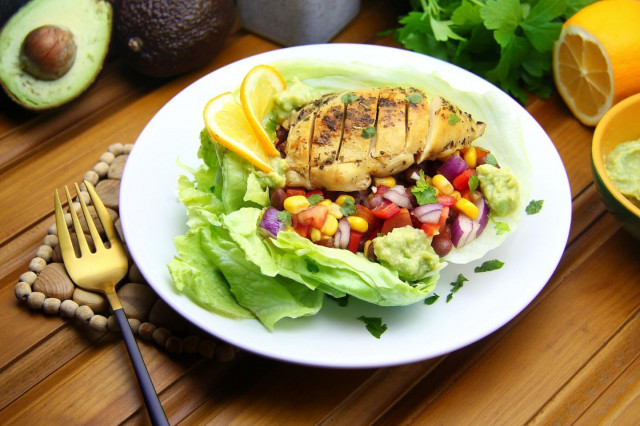
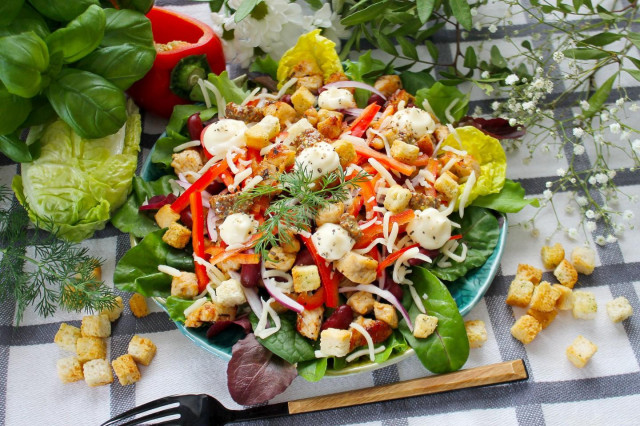
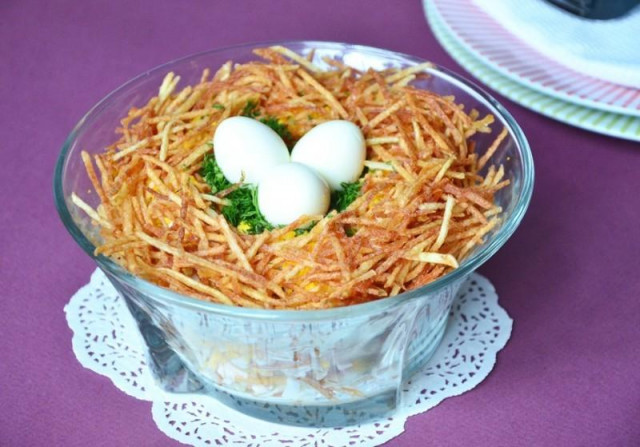
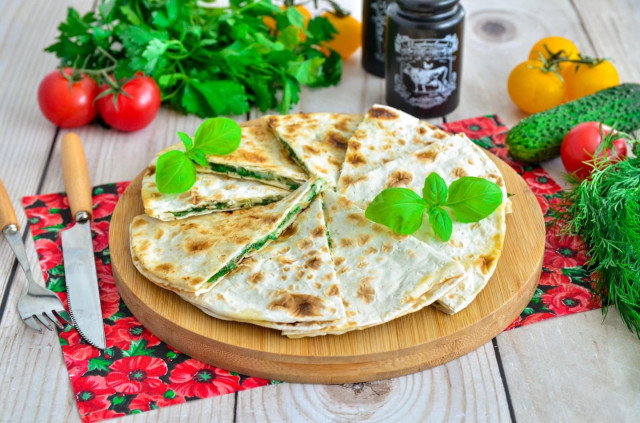
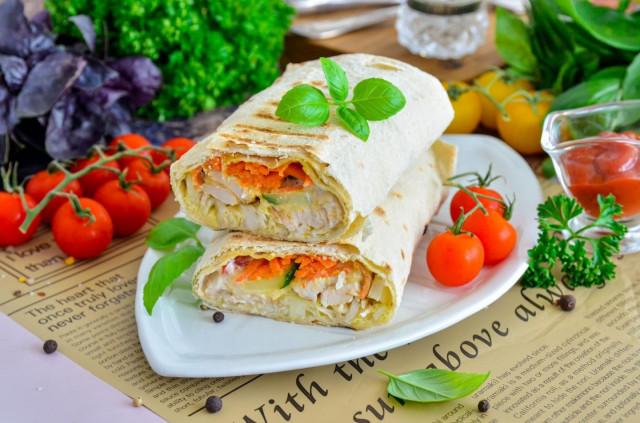
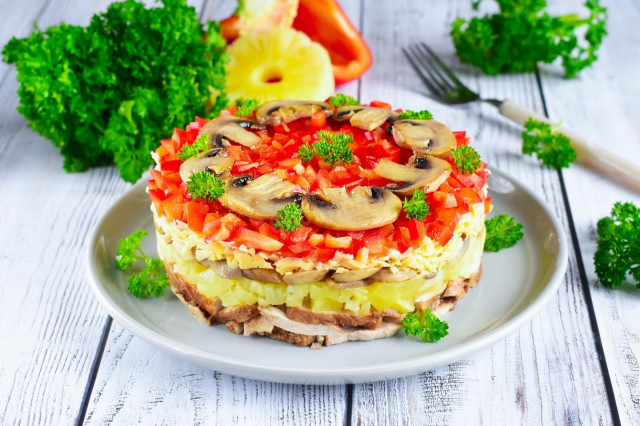
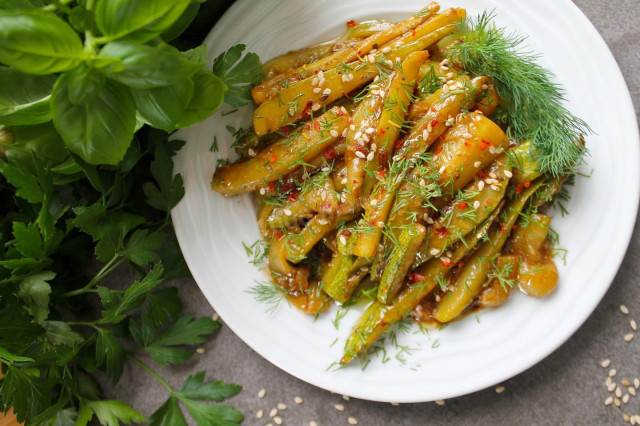
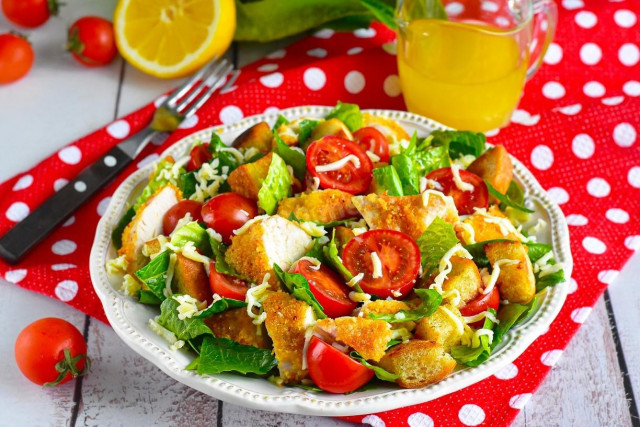
Their flavors are one of a kind and endlessly varied. There are salad recipes that need to be eaten right away and others that can be canned for the winter. Their makeup can include a great many ingredients: all sorts of meat (pork, lamb, beef), poultry (chicken, turkey, goose, or duck), seafood (squid, mussels, shrimp), any fish, every kind of vegetable, mushrooms, eggs, fruits, nuts, berries, and much more. A dressing is a mandatory component of any salad.
The five most commonly used ingredients in the recipes:
| Product | Calories per 100g | Protein g per 100g | Fats g per 100g | Carbohydrates g per 100g |
|---|---|---|---|---|
| Eggs | 157 | 12.7 | 10.9 | 0.7 |
| Carrots | 33 | 1.3 | 0.1 | 6.9 |
| Cucumbers | 15 | 0.8 | 0.1 | 2.6 |
| Hard cheese | 366 | 24.1 | 29.5 | 0.3 |
| Olive oil | 913 | 0 | 99.8 | 0 |
That role can be played by mayonnaise, sour cream, vegetable oil, soy sauce, natural yogurt, lemon juice, and more. The options are countless. Depending on the preferences of the cook and of the people to be fed, you can make salty and sweet, spicy and tangy, meat and vegetarian, high-calorie and diet-friendly, traditional or layered dishes. No festive meal is complete without this dish, but a light, delicate salad is also a great choice for everyday eating. Today there are thousands of variations on how to make a salad. You can pamper your household every day and surprise your loved ones with unusual, hearty, and savory dishes.