Skillet Banana Cake (No Oven)
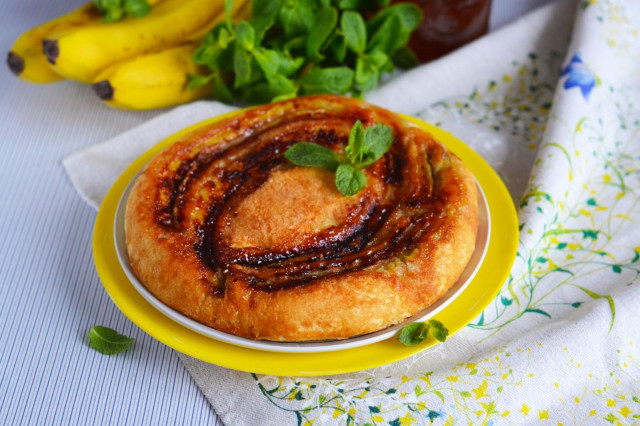
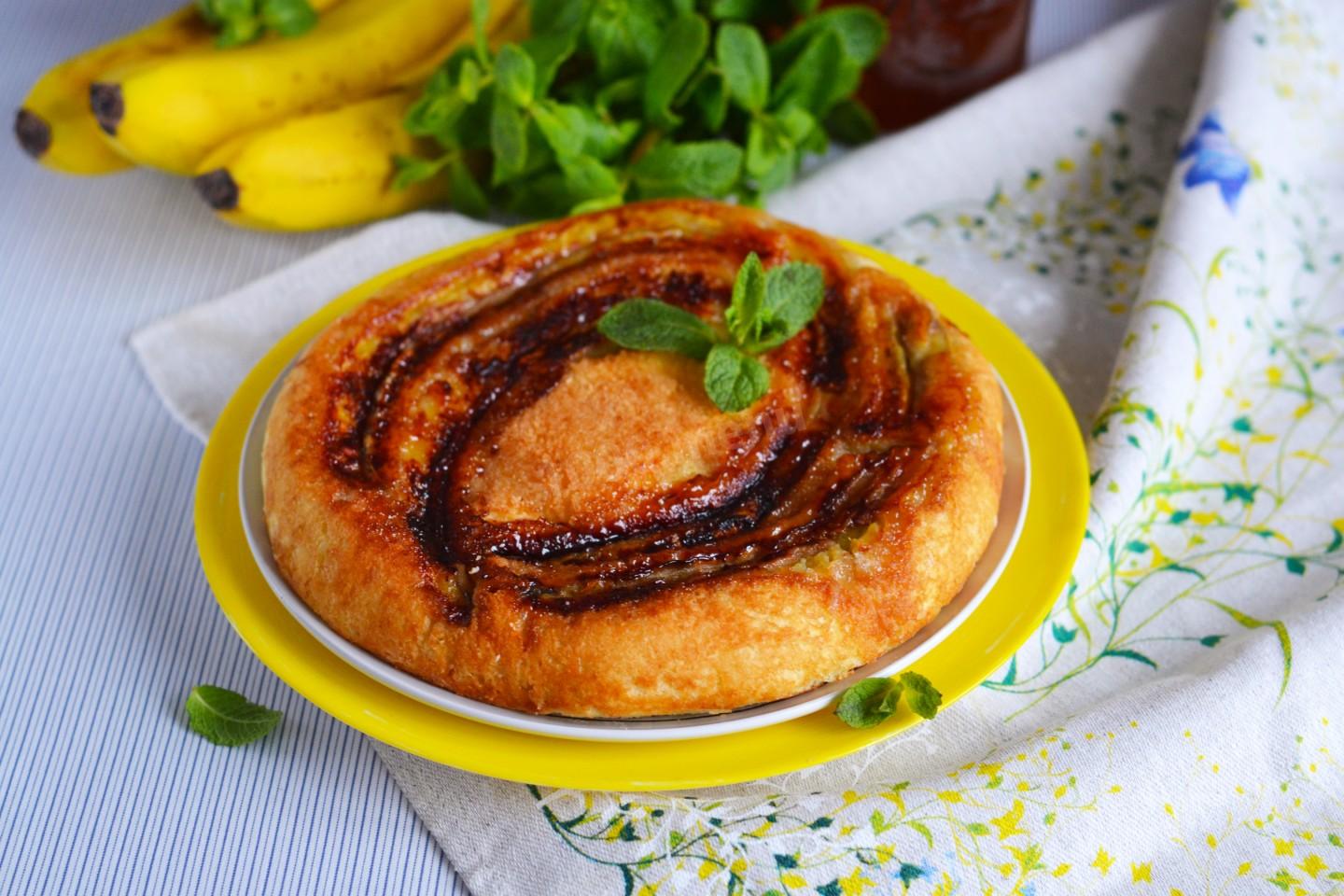
Delicious, made from simple ingredients, light, and no oven needed! This skillet banana cake comes together very quickly, with no oven required. It bakes up with a tasty, crisp sugar crust and a tender crumb. Just the thing for a cozy tea break!

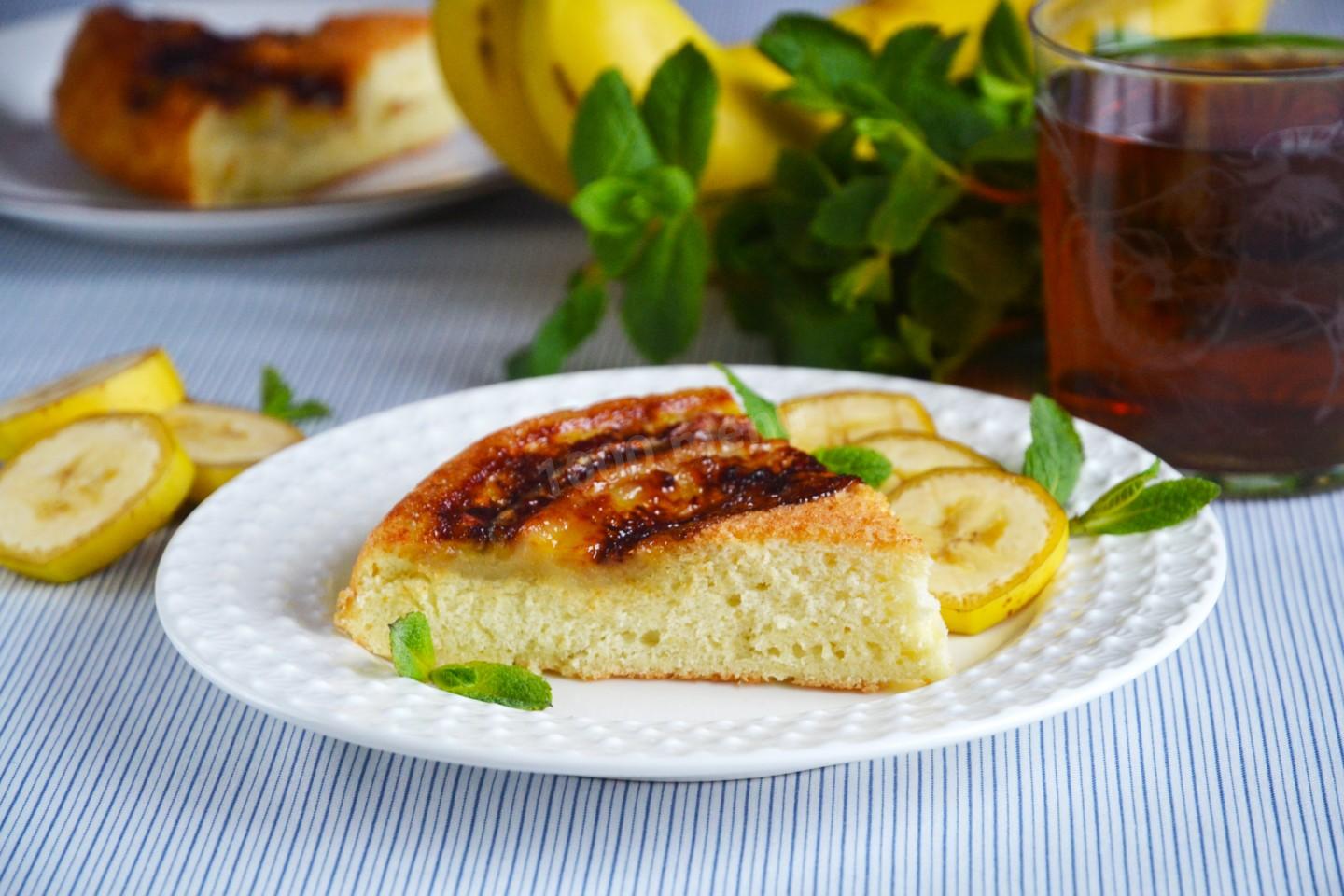
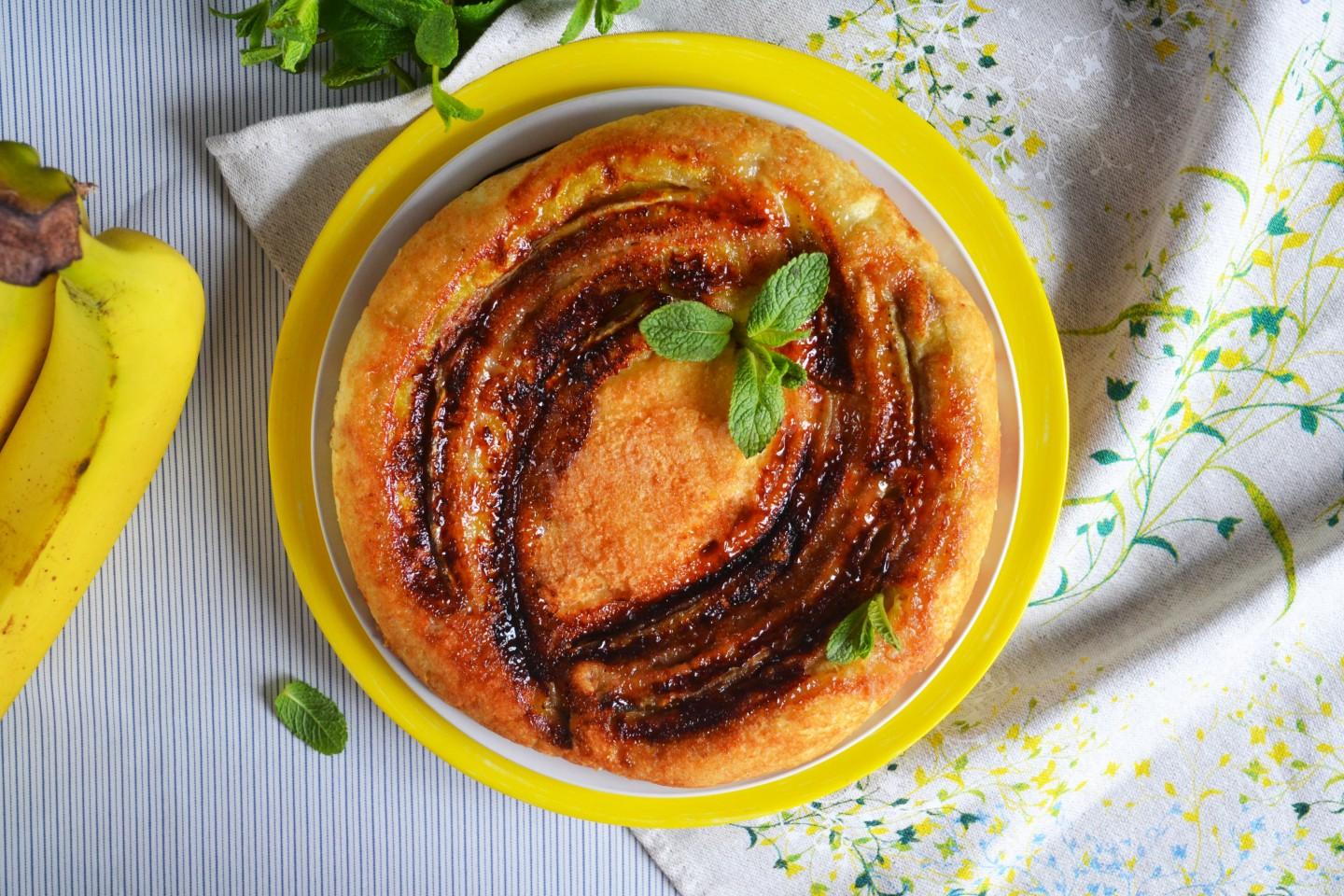
Cooking method
-
Step 1:
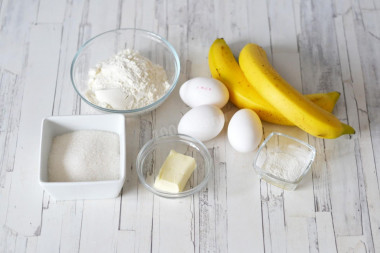
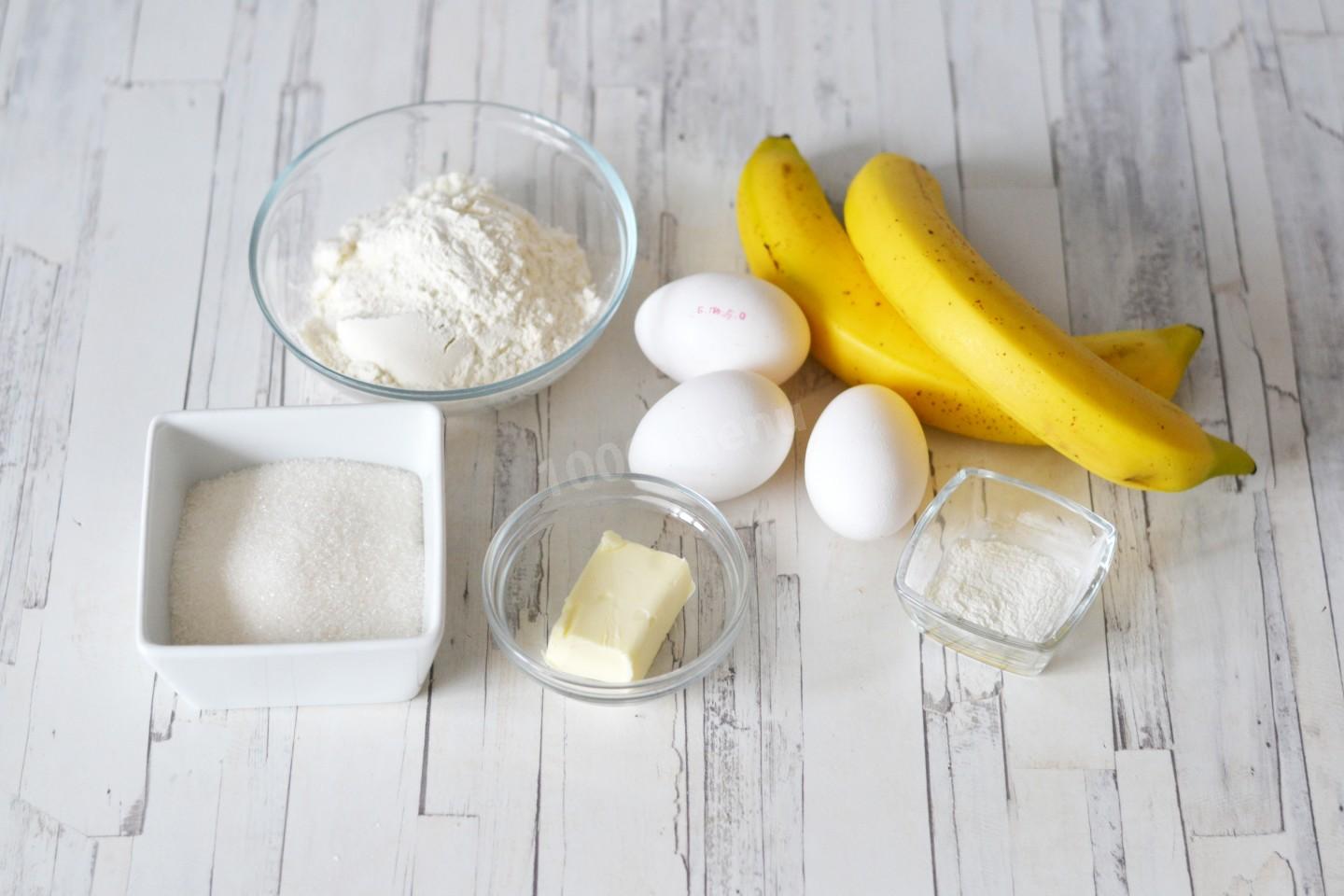
How do you make a skillet banana cake? Start by gathering the ingredients from the list. Use all-purpose flour. You want large eggs — if yours are small, use 4 instead of 3. Wash and dry the eggs and the bananas.
-
Step 2:
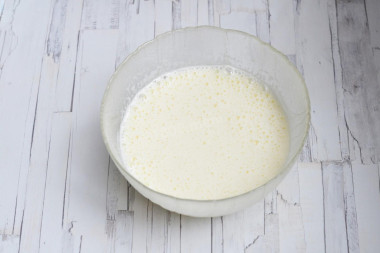
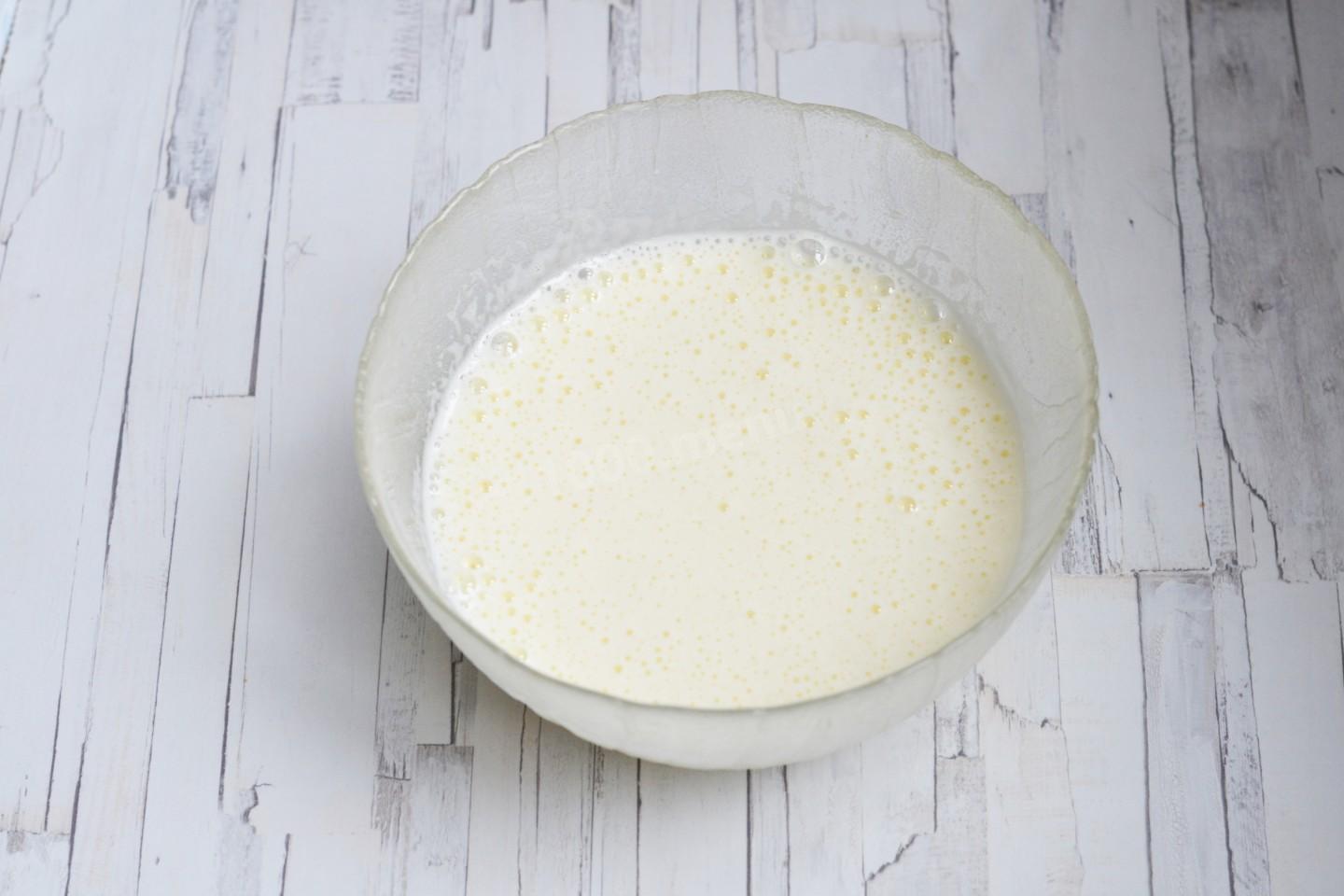
Crack the eggs into a bowl. Add 125 g of the sugar and beat with a mixer until fluffy. For a light, airy batter, be careful not to over-beat the eggs. The mixture should roughly triple in volume, lighten in color, and develop lots of air bubbles on the surface.
-
Step 3:
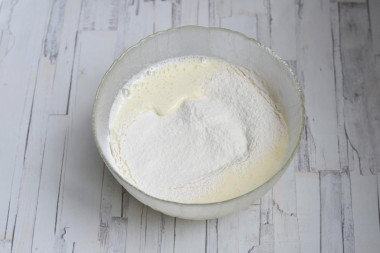
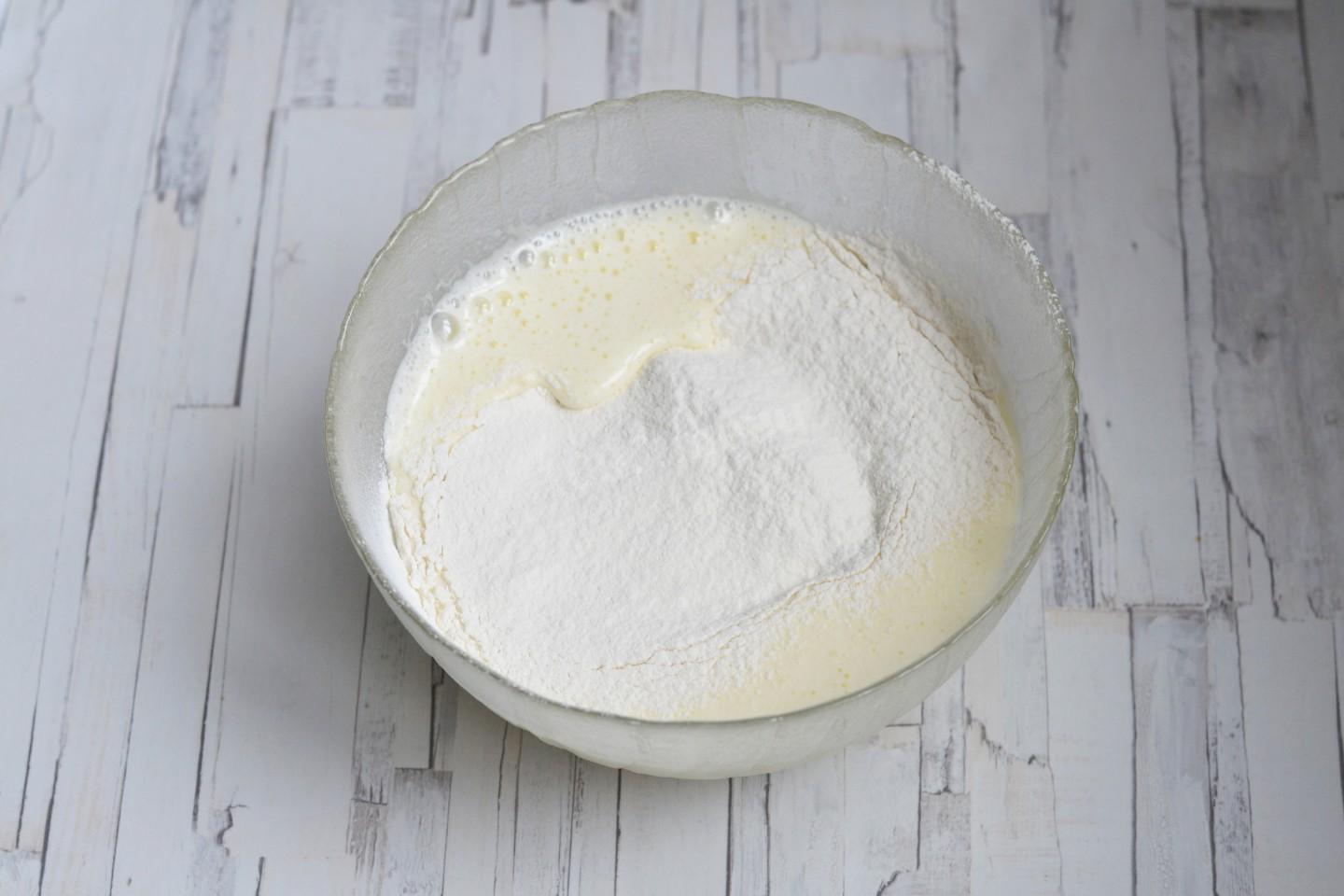
Sift the flour with the baking powder and add it to the batter in batches. I sift all the flour in at once, since I've made sponge batter dozens of times and have the feel for it. If you're new to this, I'd add the flour a little at a time and beat on the lowest speed so you don't deflate the whipped eggs. You may need a bit more or less flour than I do — go by the consistency of the batter.
-
Step 4:
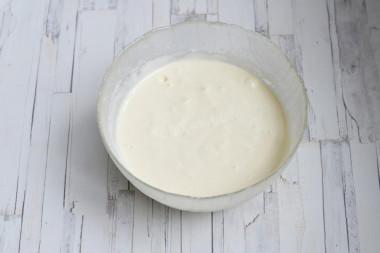
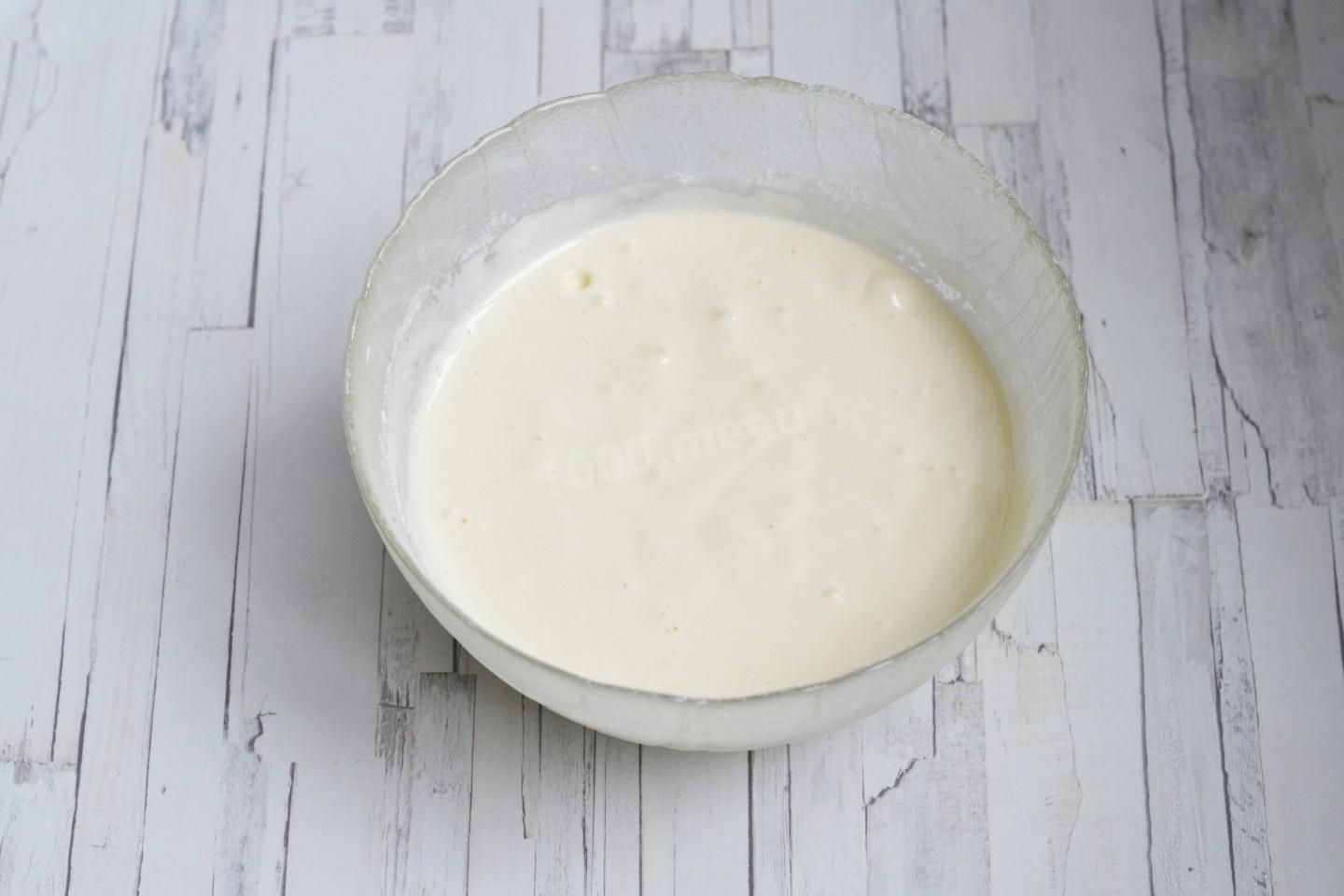
The batter should be pourable but slightly thick, with bubbles on the surface.
-
Step 5:
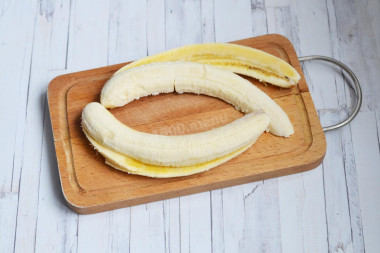
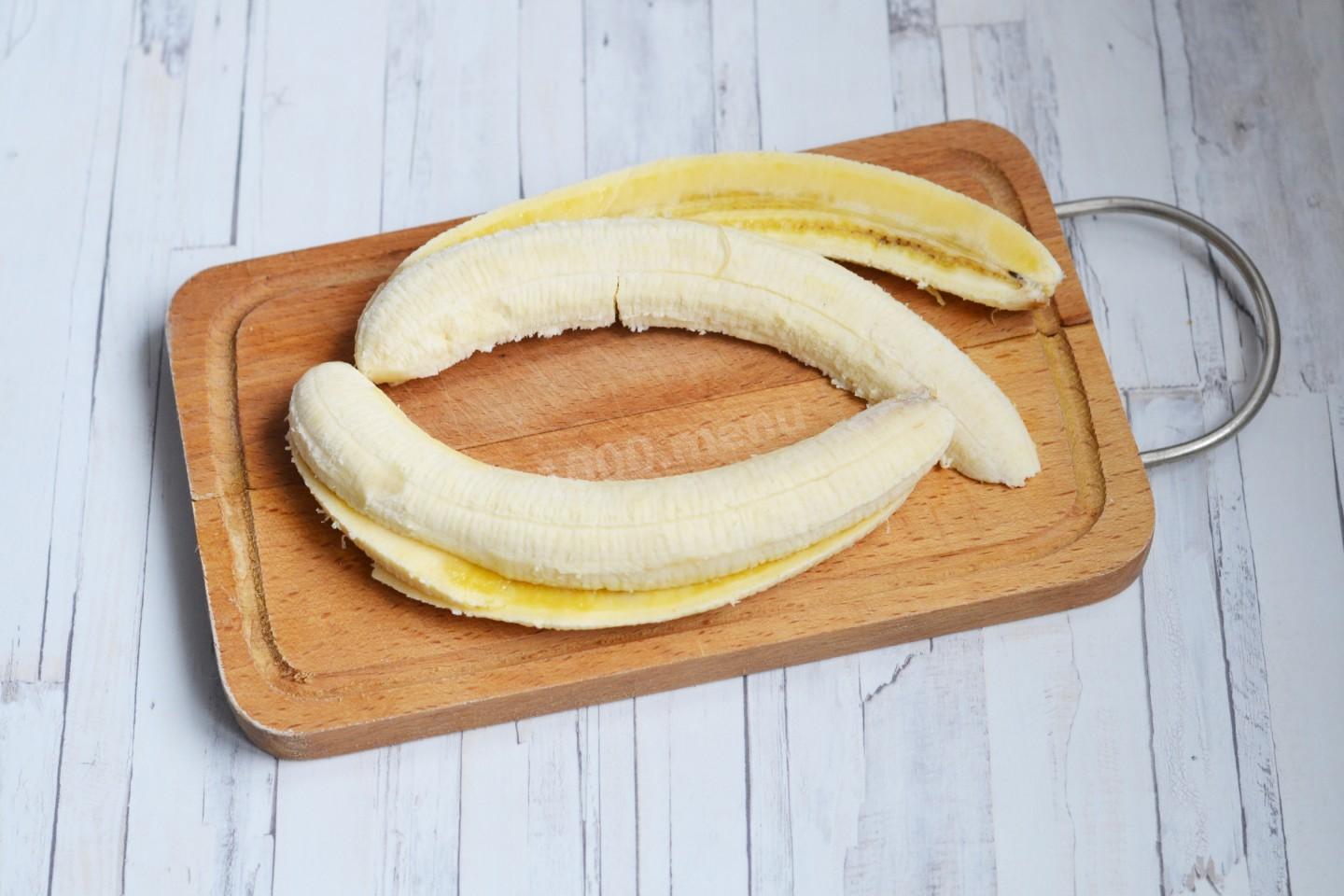
Peel the bananas. Slice them however you like — most often bananas for a cake are cut into rounds. I prefer a more interesting look, so I cut mine lengthwise. It's really important that the bananas aren't overripe: go for bright yellow skins, firm flesh, and not-too-sweet fruit. If your bananas are overripe, reduce the sugar, or the cake may turn out cloyingly sweet, which not everyone likes.
-
Step 6:
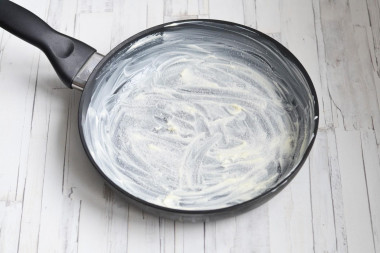
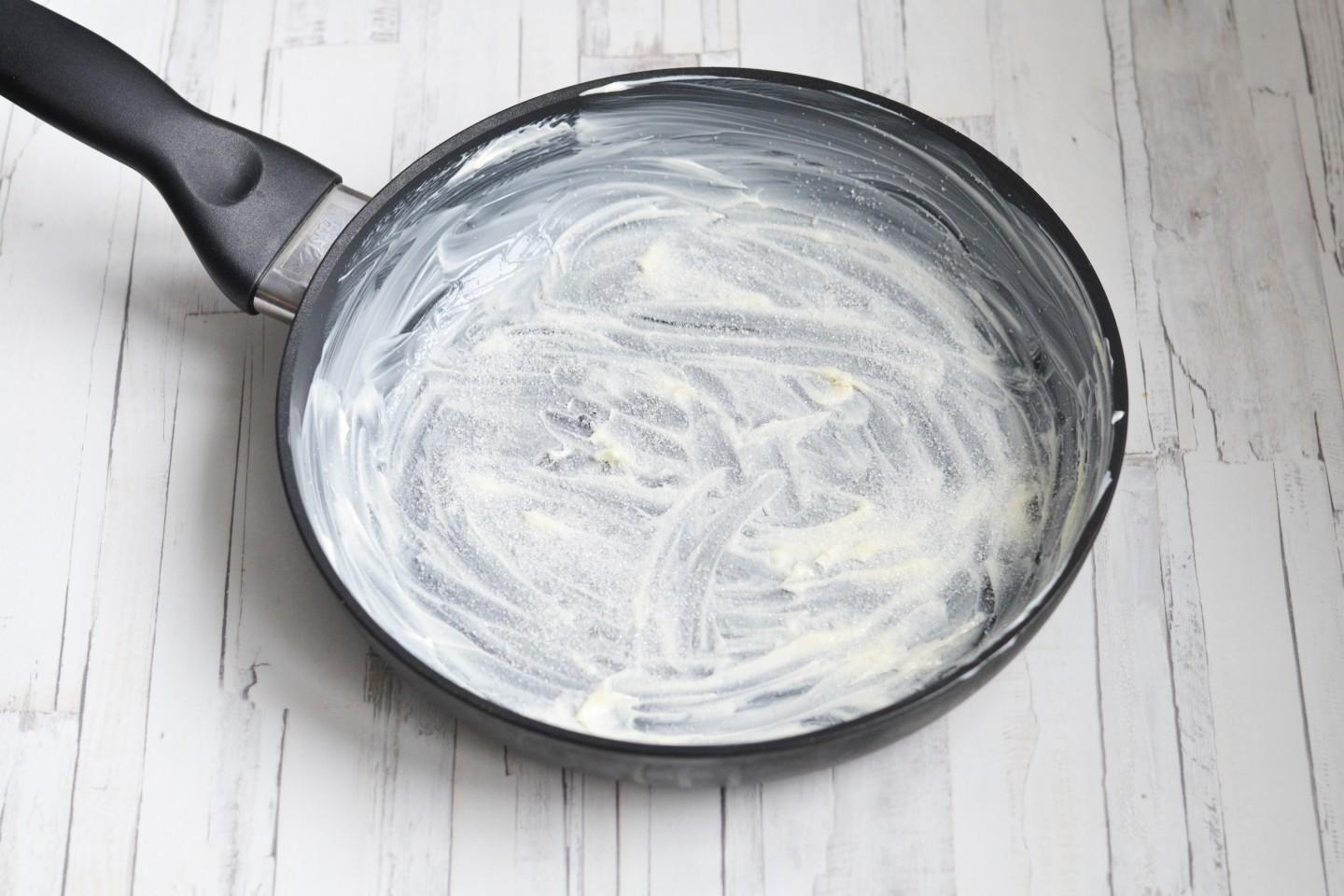
Generously butter the bottom and sides of the skillet. Let the butter sit at room temperature for 10–15 minutes first so it spreads more easily. Sprinkle the bottom of the skillet with the remaining sugar — this gives the cake a light, crisp caramel crust on top once it's flipped.
-
Step 7:
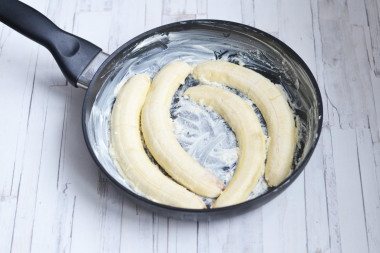
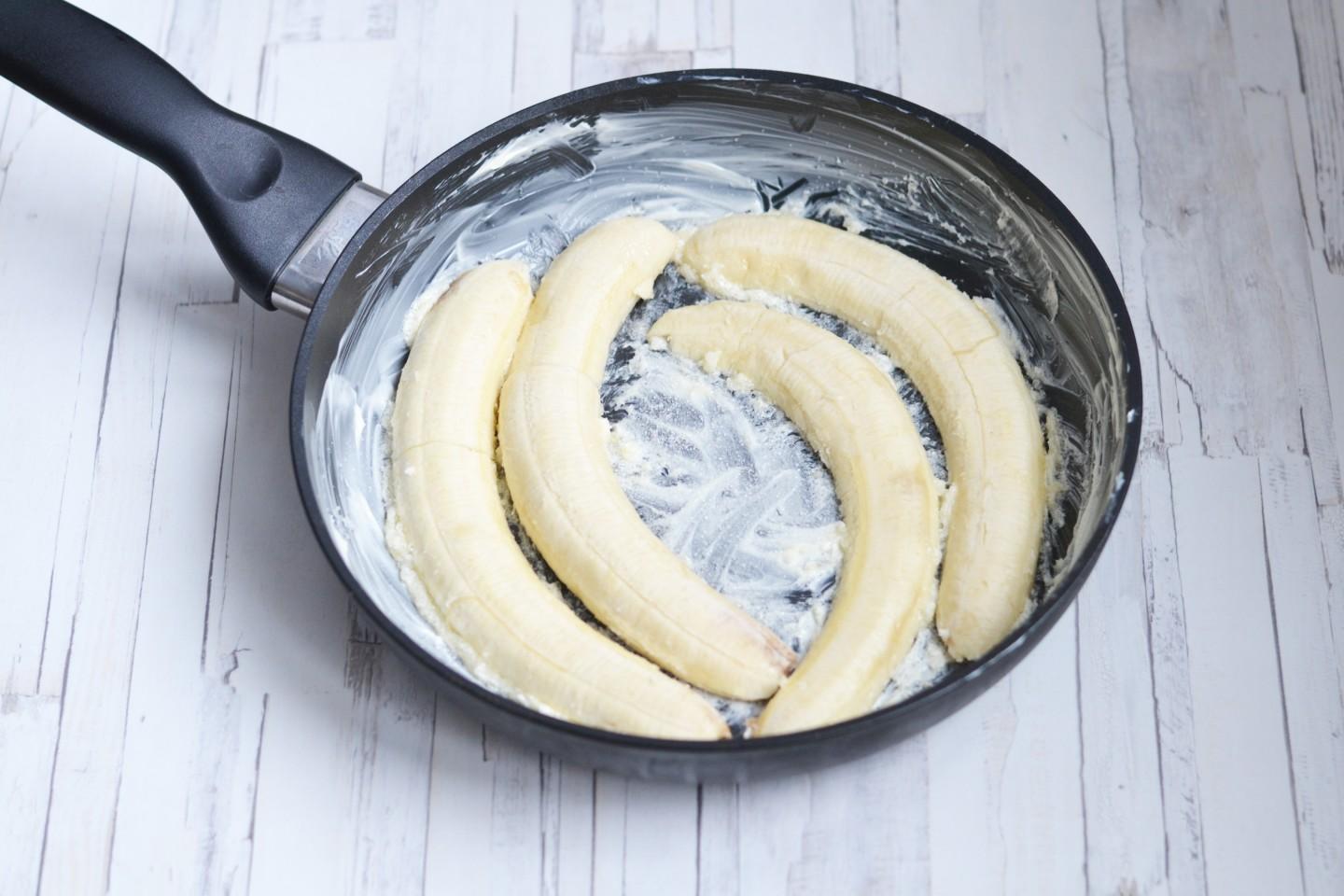
Arrange the bananas in the skillet. If you go with the same lengthwise cut I used, pick bananas that aren't too long so they fit fully in the skillet you're cooking in. Mine is 11 inches (28 cm) across.
-
Step 8:
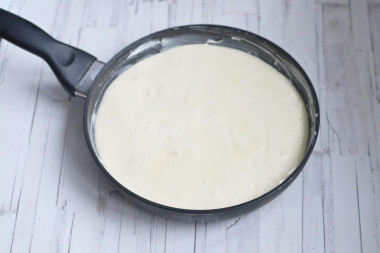
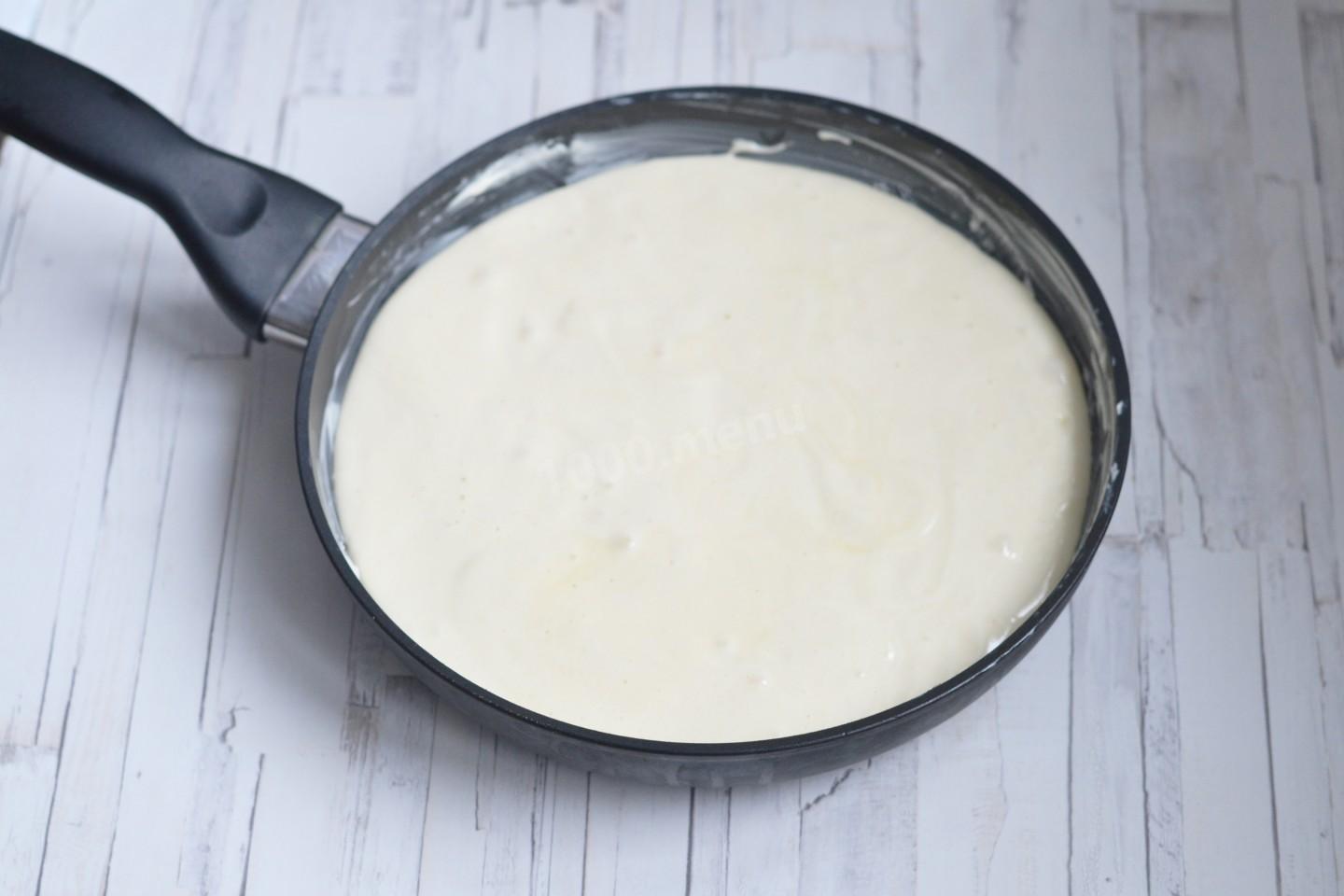
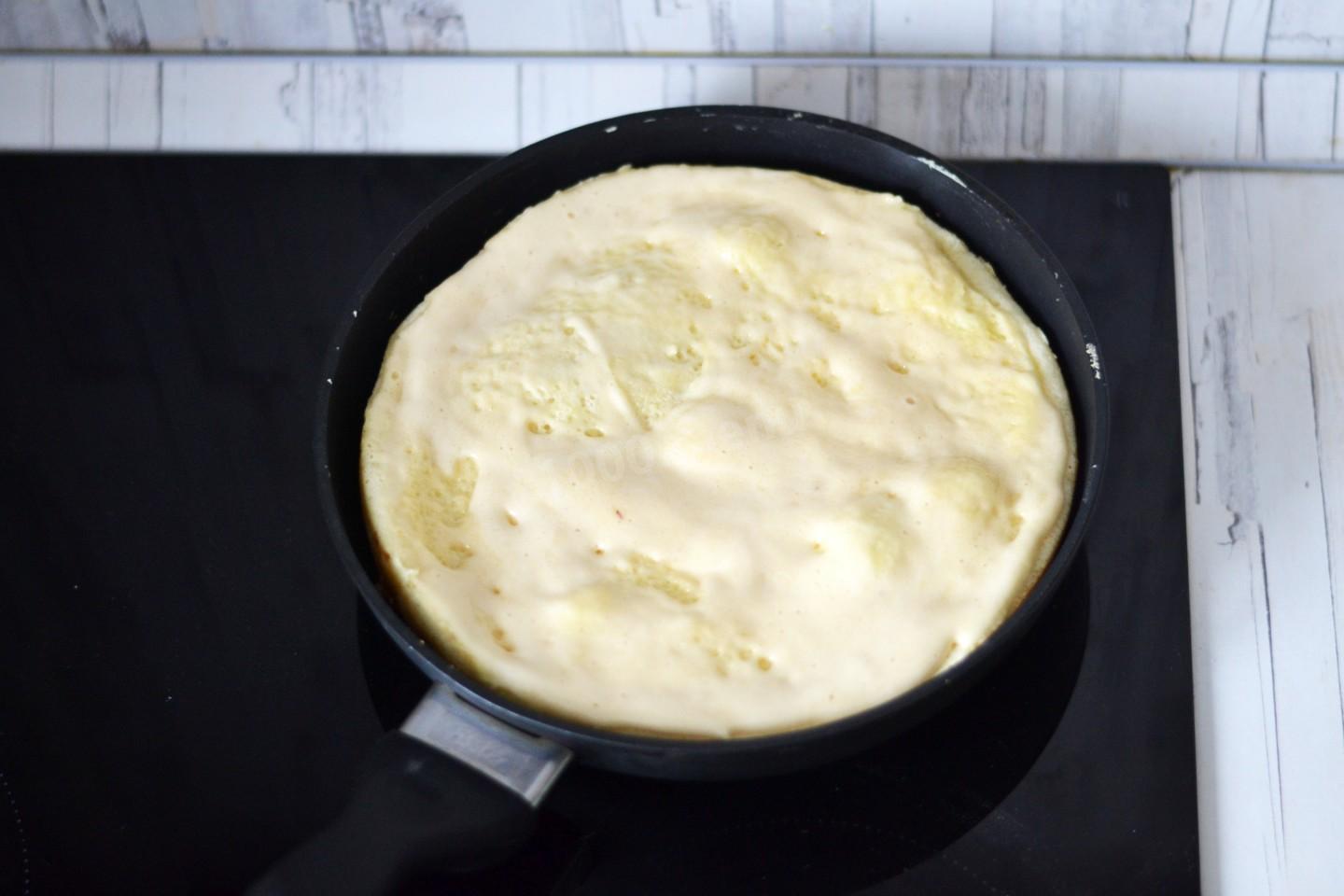
Pour the sponge batter evenly on top. It levels itself out into a smooth surface.
-
Step 9:
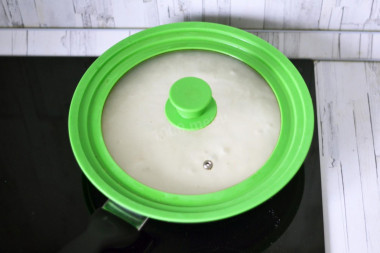
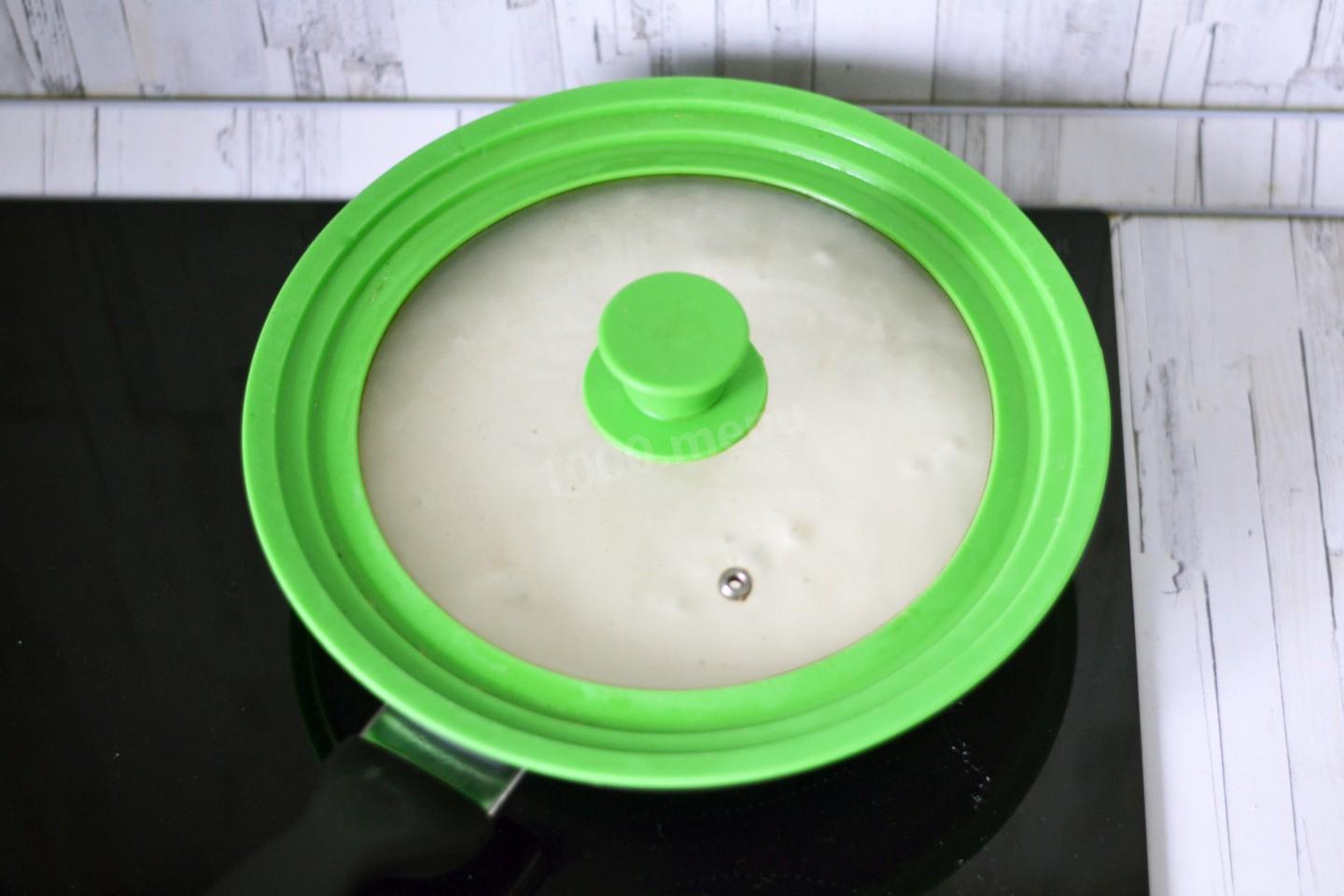
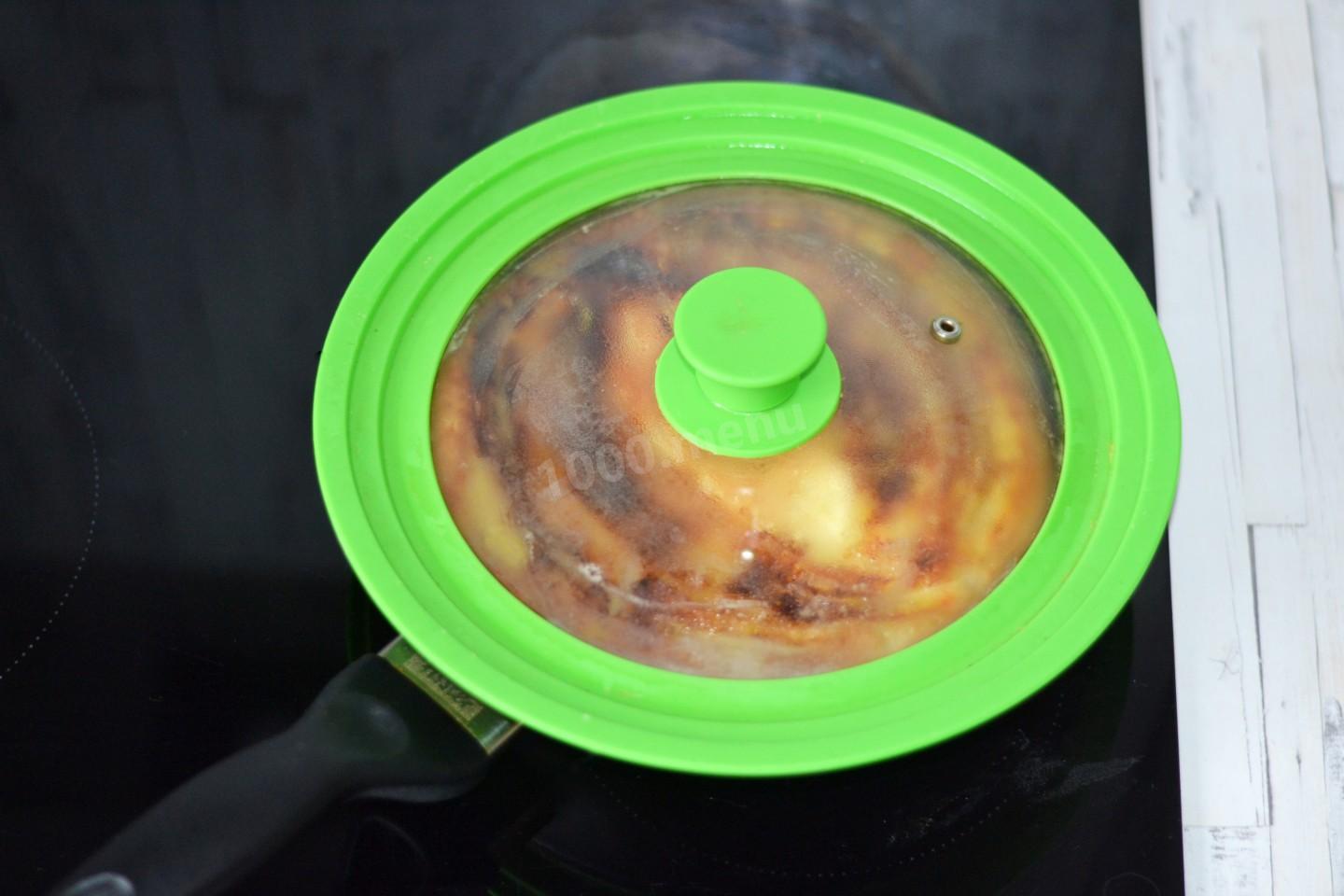
Set the skillet over medium heat and cover it. A domed lid is best here, so the batter has room to rise.
-
Step 10:
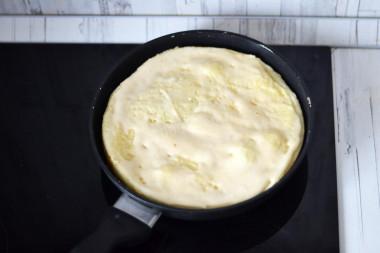
Cook the cake for about 10–15 minutes. It's best not to lift the lid at all for the first 5–7 minutes. After that, periodically run a spatula between the batter and the sides of the skillet so it doesn't stick. The exact time depends on your skillet and how high the heat is, so check now and then that the bottom isn't scorching.
-
Step 11:
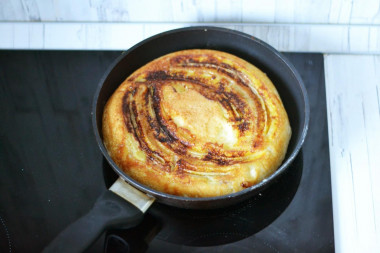
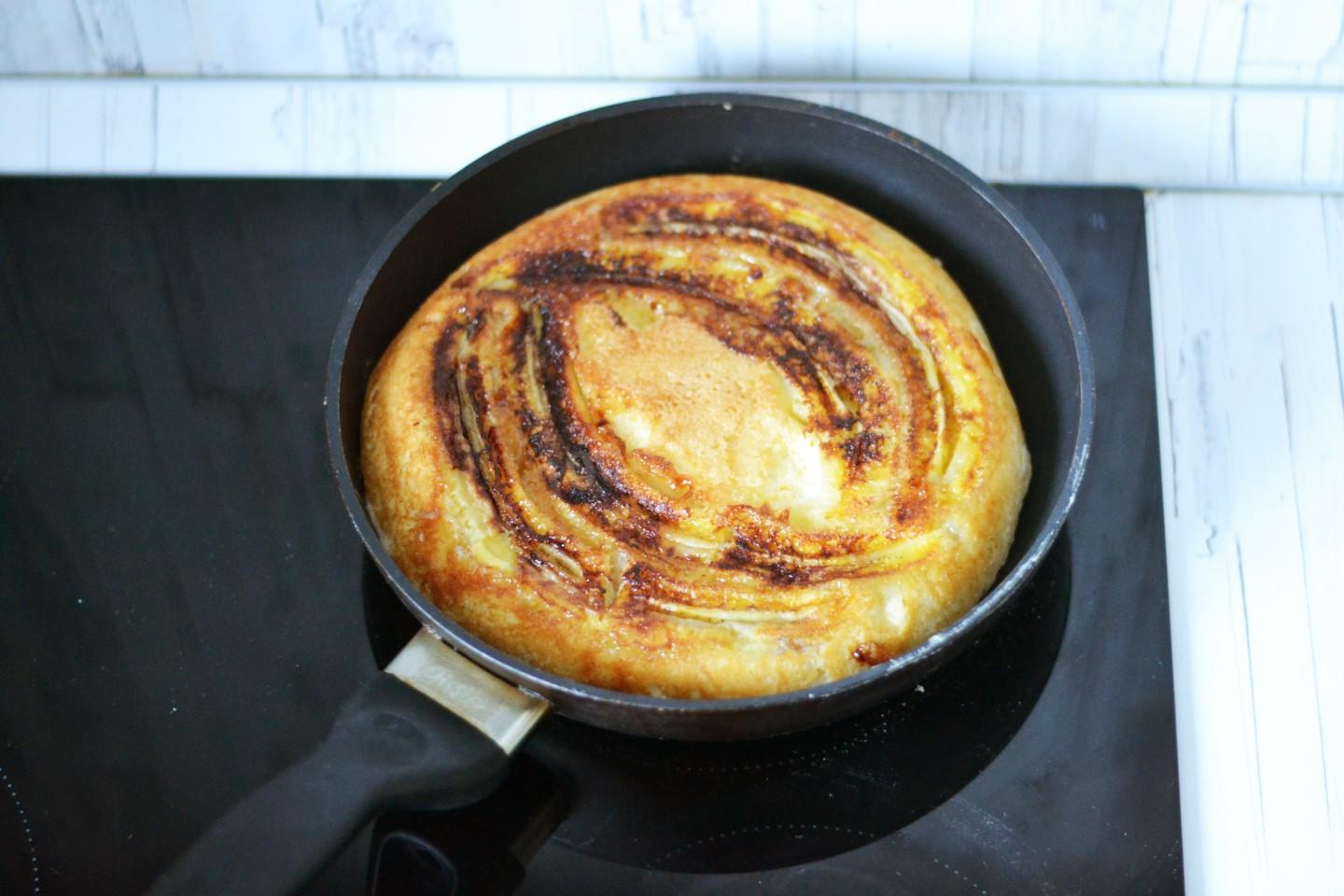
Once the top is well set, use two spatulas to carefully flip the cake so the bananas end up on top.
-
Step 12:
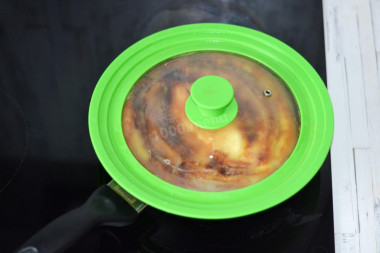
Cover the skillet again and keep cooking for about another 5–7 minutes.
-
Step 13:
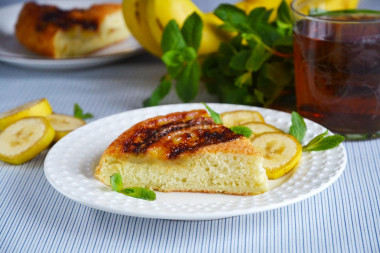
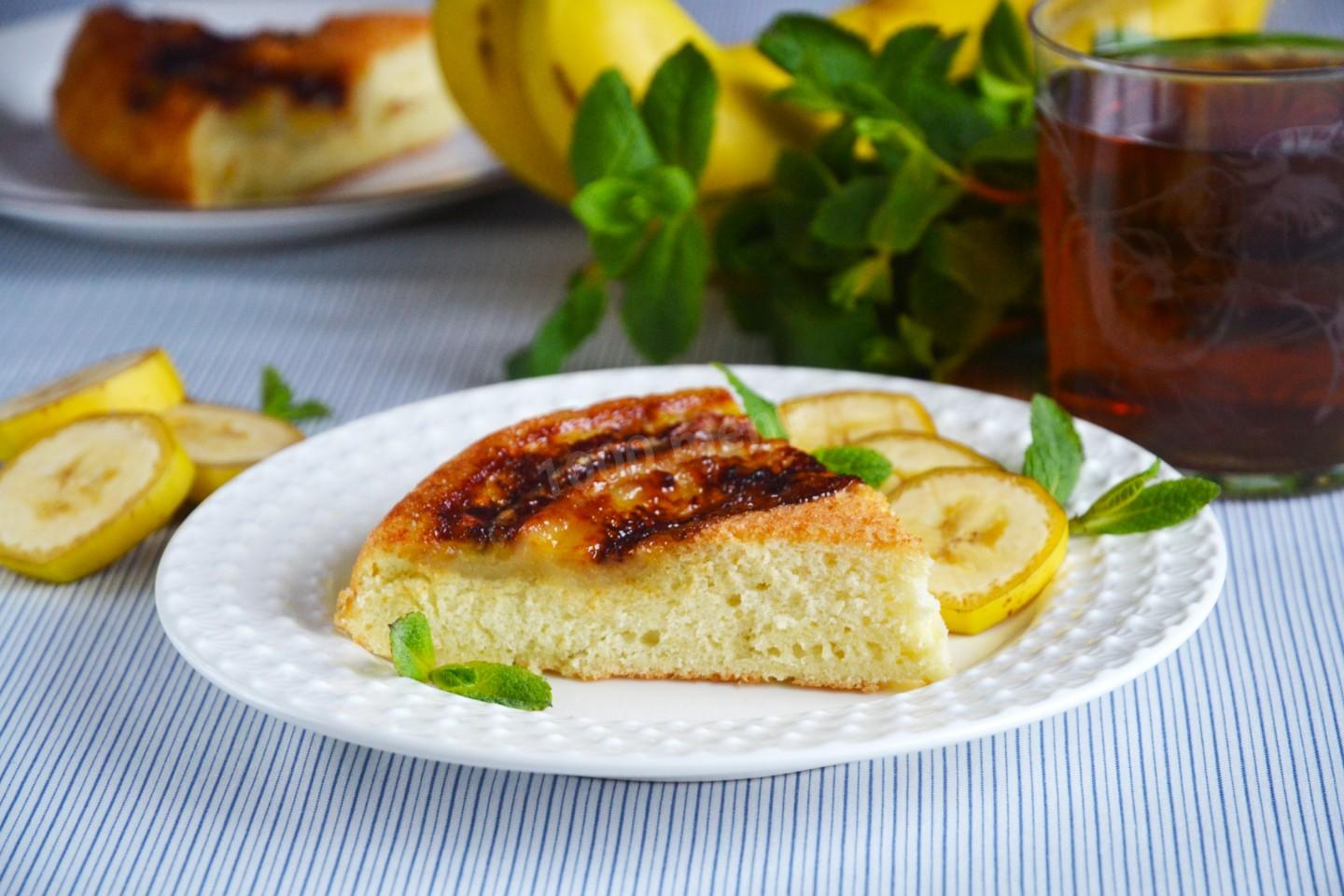
Transfer the finished banana cake to a platter and cut it into slices. Enjoy!
- Instead of arranging the bananas on the bottom of the skillet, you can cut them into small pieces and fold them into the batter.
- Be prepared to need a bit more or less flour than the recipe lists. Go by the desired batter consistency rather than the exact amount of flour. To avoid mistakes, read up on flour and its properties!
Caloric content of the products possible in the composition of the dish
- Chicken egg - 157 kcal/100g
- Egg white - 45 kcal/100g
- Egg powder - 542 kcal/100g
- Egg yolk - 352 kcal/100g
- Ostrich egg - 118 kcal/100g
- Bananas - 89 kcal/100g
- Whole durum wheat flour fortified - 333 kcal/100g
- Whole durum wheat flour universal - 364 kcal/100g
- Flour krupchatka - 348 kcal/100g
- Flour - 325 kcal/100g
- Granulated sugar - 398 kcal/100g
- Sugar - 398 kcal/100g
- Butter 82% - 734 kcal/100g
- Amateur unsalted butter - 709 kcal/100g
- Unsalted peasant butter - 661 kcal/100g
- Peasant salted butter - 652 kcal/100g
- Melted butter - 869 kcal/100g
- Baking powder - 79 kcal/100g