Pasta with Cheese
Everyone's favorite mac and cheese — a simple but delicious dish! The hardest part of this recipe is waiting for the water to boil. While the pasta cooks, grate the cheese, and a couple of minutes later you'll have a plate of fragrant pasta on the table.


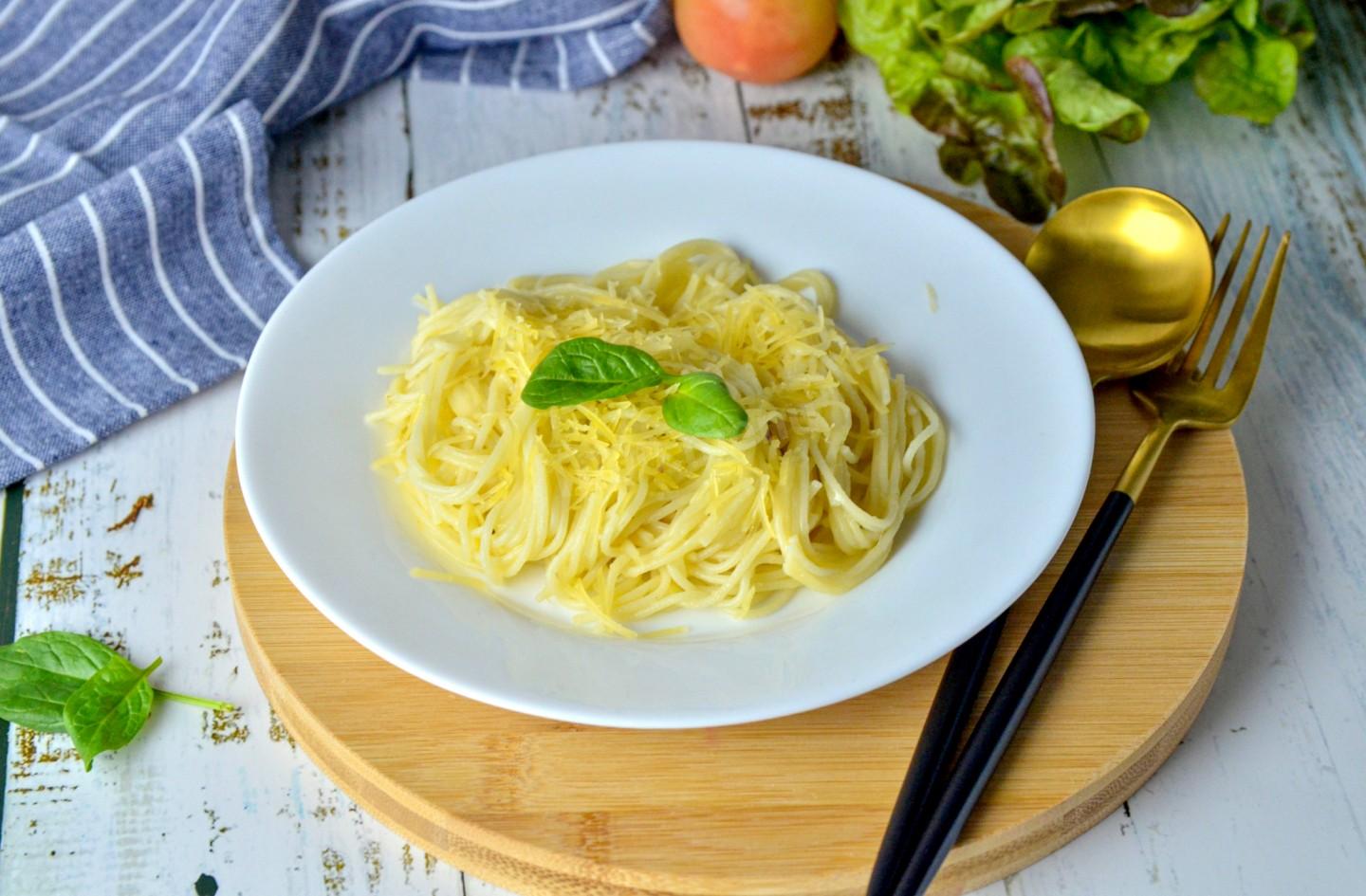
Cooking method
-
Step 1:
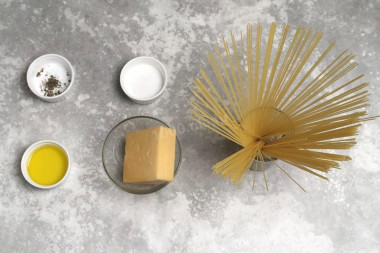
How do you make pasta with cheese? Gather your ingredients. I used spaghetti, but any kind of pasta will do. Choose any hard cheese you like — the main thing is that you enjoy its flavor.
-
Step 2:

Grate the cheese on a fine grater so it melts faster.
-
Step 3:

Set a large pot of water over the heat. Pasta is cooked at a rate of one liter of water per 100 grams. Bring it to a boil and add salt — slightly less than you'd normally use, since the cheese is salty enough to add the missing flavor. Drop the pasta into the water. Cook it for one minute less than the time on the package. Then drain it in a colander, first setting aside a cup of the cooking water.
-
Step 4:
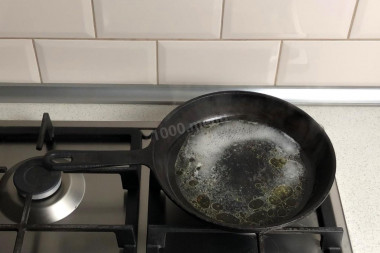
Heat the olive oil in a pan and add the freshly ground pepper. Let the oil warm a little with the pepper so the pepper releases its aroma. Pour in half a cup of the reserved pasta water and bring to a boil.
-
Step 5:
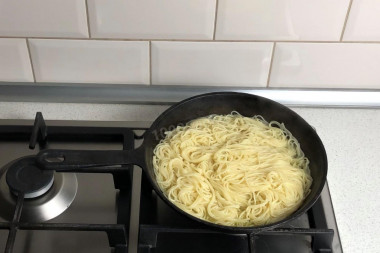
Add the pasta to the pan and toss it with the oil.
-
Step 6:
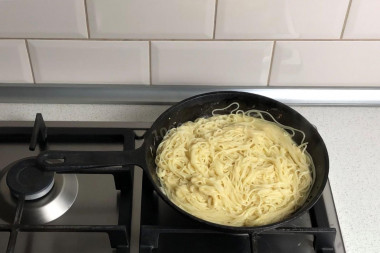
Add the grated cheese to the pasta, holding back a little for serving. Stir thoroughly until you have a smooth, creamy sauce. Add more of the reserved water if needed. Keep the pasta over the heat for about 2 minutes. Then divide it among plates and serve right away, sprinkled with the reserved cheese.


- We really liked this way of making pasta with cheese. I used to just boil it, add butter, and sprinkle it with cheese. It was tasty, but ordinary. Pasta made by this recipe really does come out coated in a creamy sauce, even though no cream is added. Every strand gets enveloped in melted cheese — an explosion of flavor! Plus the pepper adds its spicy note, though you can leave it out, especially if you're cooking for kids. The biggest factor in pasta dishes is choosing the right pasta. The tastiest is made from durum wheat: it doesn't go mushy when cooked, it has good nutritional qualities, and it tastes best. They say it doesn't make you gain weight :) When cooking, always follow the instructions on the pasta package.
Caloric content of the products possible in the composition of the dish
- Pasta, premium, fortified - 337 kcal/100g
- Pasta, premium, dairy - 309 kcal/100g
- Pasta, premium, egg - 342 kcal/100g
- Grade 1 flour pasta - 333 kcal/100g
- Premium flour pasta - 338 kcal/100g
- Boiled pasta - 135 kcal/100g
- Pasta - 338 kcal/100g
- Dutch cheese - 352 kcal/100g
- Swiss cheese - 335 kcal/100g
- Russian cheese - 366 kcal/100g
- Kostroma cheese - 345 kcal/100g
- Yaroslavsky cheese - 361 kcal/100g
- Altai cheese, 50% fat - 356 kcal/100g
- Soviet cheese - 400 kcal/100g
- Steppe cheese - 362 kcal/100g
- Uglich cheese - 347 kcal/100g
- Poshekhonsky cheese - 350 kcal/100g
- Lambert cheese - 377 kcal/100g
- Appenzeller cheese, 50% fat - 400 kcal/100g
- Chester cheese, 50% fat - 363 kcal/100g
- Edam cheese, 40% fat - 340 kcal/100g
- Cheese with mushrooms, 50% fat - 395 kcal/100g
- Emmental cheese, 45% fat - 420 kcal/100g
- Gouda cheese, 45% fat - 356 kcal/100g
- Amadeus cheese - 364 kcal/100g
- Dom Blanc cheese (semi-hard) - 360 kcal/100g
- Lo Spalmino cheese - 61 kcal/100g
- Etorki cheese (sheep, hard) - 401 kcal/100g
- White cheese - 100 kcal/100g
- Full-fat yellow cheese - 260 kcal/100g
- Altai cheese - 355 kcal/100g
- Kaunas cheese - 355 kcal/100g
- Latvian cheese - 316 kcal/100g
- Limburger cheese - 327 kcal/100g
- Lithuanian cheese - 250 kcal/100g
- Lake cheese - 350 kcal/100g
- Gruyère cheese - 396 kcal/100g
- Ground black pepper - 255 kcal/100g
- Salt - 0 kcal/100g
- Olive oil - 913 kcal/100g
Similar recipes
- Fast and tasty
- Homemade dinner
- National cuisine
- Second course
- Cheese
- Spices seasonings spices
- Fats and oils
- Pepper
- Salt
- Vegetable oil
- Mediterranean cuisine
- Cooking
- In a frying pan
- Simple dinner
- Inexpensive dinner
- The second is fast and delicious
- Dishes in 30 minutes
- Спагетти
- Made of solid cheese
- Simple quick dinner
- Inexpensive budget dinner
- No eggs
- Recipes for lean dishes without butter
- From pasta products