Homemade Lagman Noodles
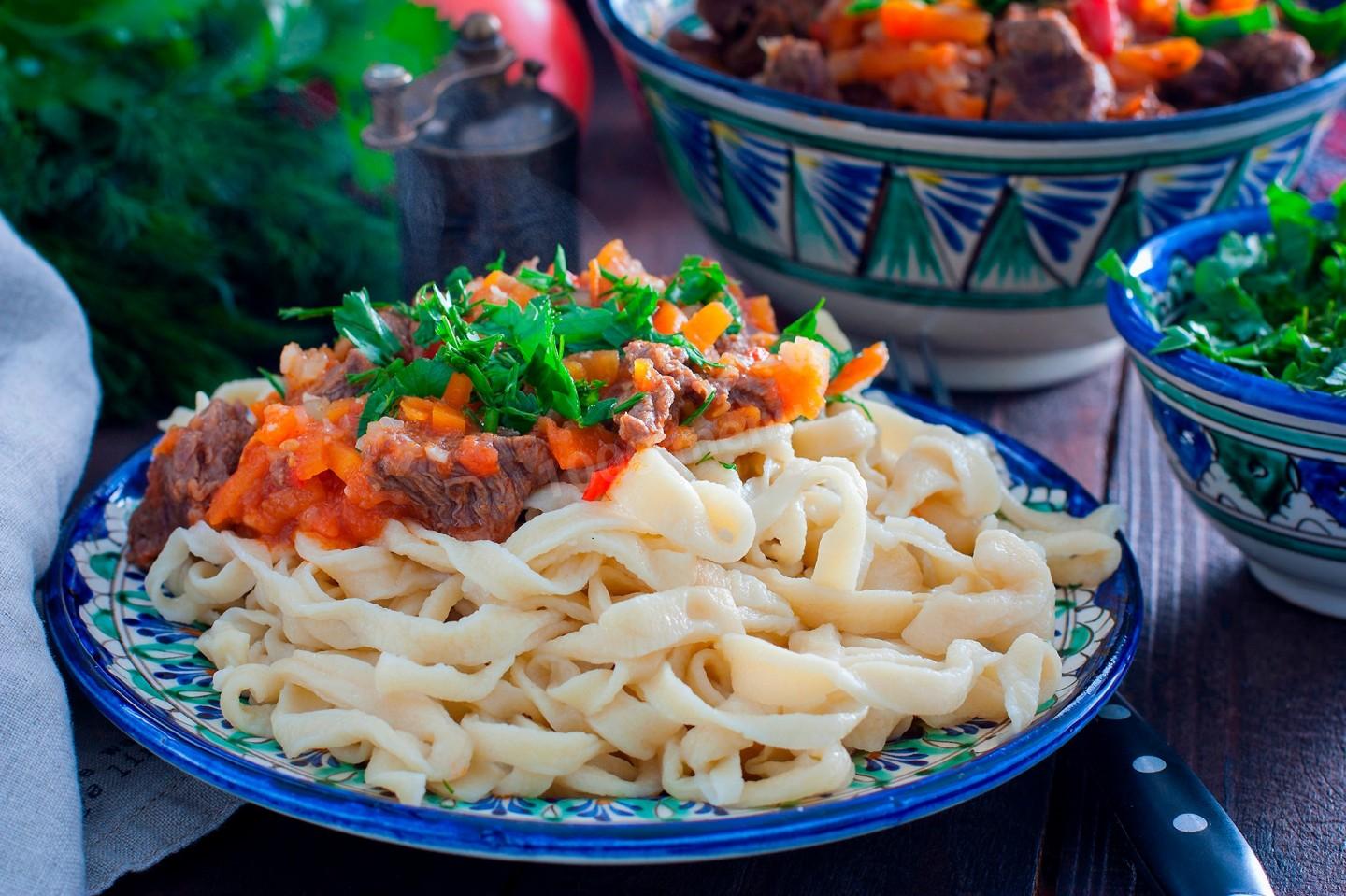
Simple homemade lagman noodles. Delicious! For the traditional dish "lagman," it's best to make the noodles at home. It's not a very complicated process, and you'll be proud of the result. What's more, homemade noodles are healthier than store-bought. They work for soups, lagman, or as a side dish with meat.


Cooking method
-
Step 1:

Gather the ingredients you'll need. I used amounts for two servings, but it's worth making more. Leftovers can always be frozen and kept in the freezer in a tightly sealed bag. By making noodles ahead, you'll save yourself effort and cooking time the next time around.
-
Step 2:
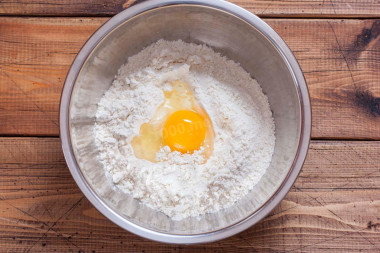
Sift the flour together with table salt into a deep bowl. This aerates it, making the dough more tender and easy to work with. Make a well in the center and crack in one large egg. It's best to use a farm egg with a bright orange yolk, which gives the noodles a lovely yellow color. Gently mix the flour with the egg using a spoon, then continue kneading by hand.
-
Step 3:
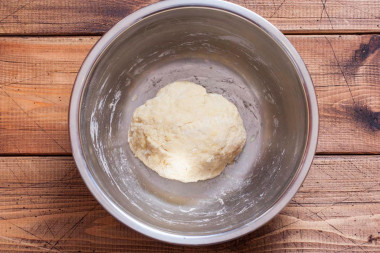
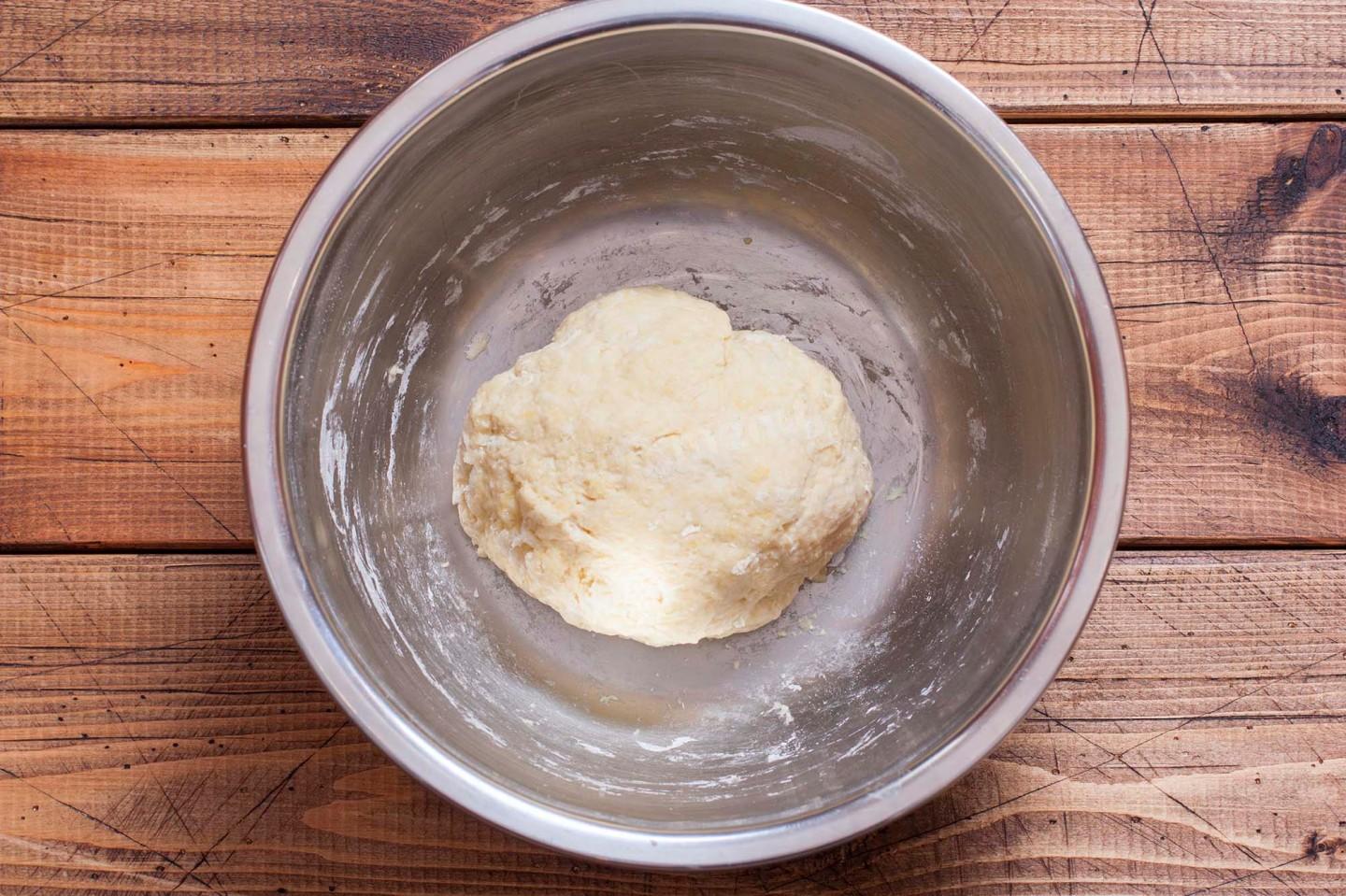
Pour the cold water and odorless vegetable oil into the bowl. Knead an elastic, fairly stiff, smooth dough that doesn't stick to your hands. Add as much flour as you need to reach the right consistency. Cover the bowl with a towel and leave it for 30 minutes so the gluten develops. The dough will become more pliable and won't tear when you roll it out. While the dough rests, knead it down four times.
-
Step 4:
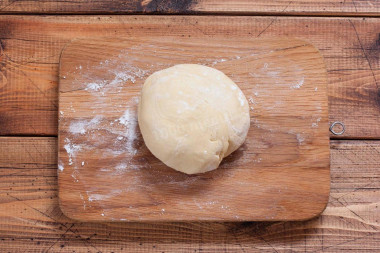
Dust the work surface with flour. Turn the dough out of the bowl and roll it into a thin sheet. The thinner you roll it, the tastier and more tender the noodles will be. Dust with a little flour as needed, but don't overdo it, or the dough will get stiffer and harder to roll out.
-
Step 5:
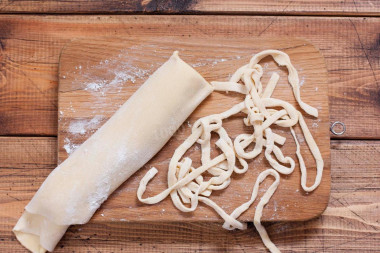
Dust the thinly rolled sheet of dough well with flour on both sides. Roll it up into a loose roll. With a long, sharp knife, cut thin rings 3–4 mm wide and separate them into strands. If they stick together, dust them with more flour. Spread them out on a tray or a large cutting board (also dusted with flour). Leave them to dry for 10–15 minutes, then turn them over so they dry on the other side too.
-
Step 6:
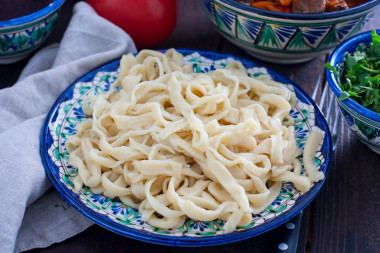
Bring water to a boil in a wide pot. Salt it. Add 1–2 tablespoons of vegetable oil so the noodles don't stick together. Cook the homemade noodles for about 3–4 minutes after the water returns to a boil. Taste them. It's important that the noodles are cooked through but not overcooked. How do you know they're done? Taste them — they should be springy but not tough. Drain them in a colander, rinse with cold boiled water, and let the liquid drain off. Serve the dish right away, while it's hot.




- These homemade noodles are wonderful served with meat gravy and vegetables. My family was absolutely delighted and asked me to make them more often.
- You can try making the noodles with equal parts durum wheat flour and all-purpose flour. Noodles like that hold a firmer texture when cooked, won't go mushy, and taste even better.
- If you're making noodles ahead, keep in mind that this dough dries out quickly. So while you work with the first portion of dough, cover the rest with a damp towel or wrap it in a plastic bag.
- Be prepared to need more or less flour than the recipe states. Go by how the dough should turn out (firm, soft, slack, and so on). For lots of useful information on why flour of the same type can have different properties, read this article.
Caloric content of the products possible in the composition of the dish
- Chicken egg - 157 kcal/100g
- Egg white - 45 kcal/100g
- Egg powder - 542 kcal/100g
- Egg yolk - 352 kcal/100g
- Ostrich egg - 118 kcal/100g
- Fortified whole durum wheat flour - 333 kcal/100g
- All-purpose whole durum wheat flour - 364 kcal/100g
- Semolina flour - 348 kcal/100g
- Flour - 325 kcal/100g
- Vegetable oil - 873 kcal/100g
- Salt - 0 kcal/100g
- Water - 0 kcal/100g