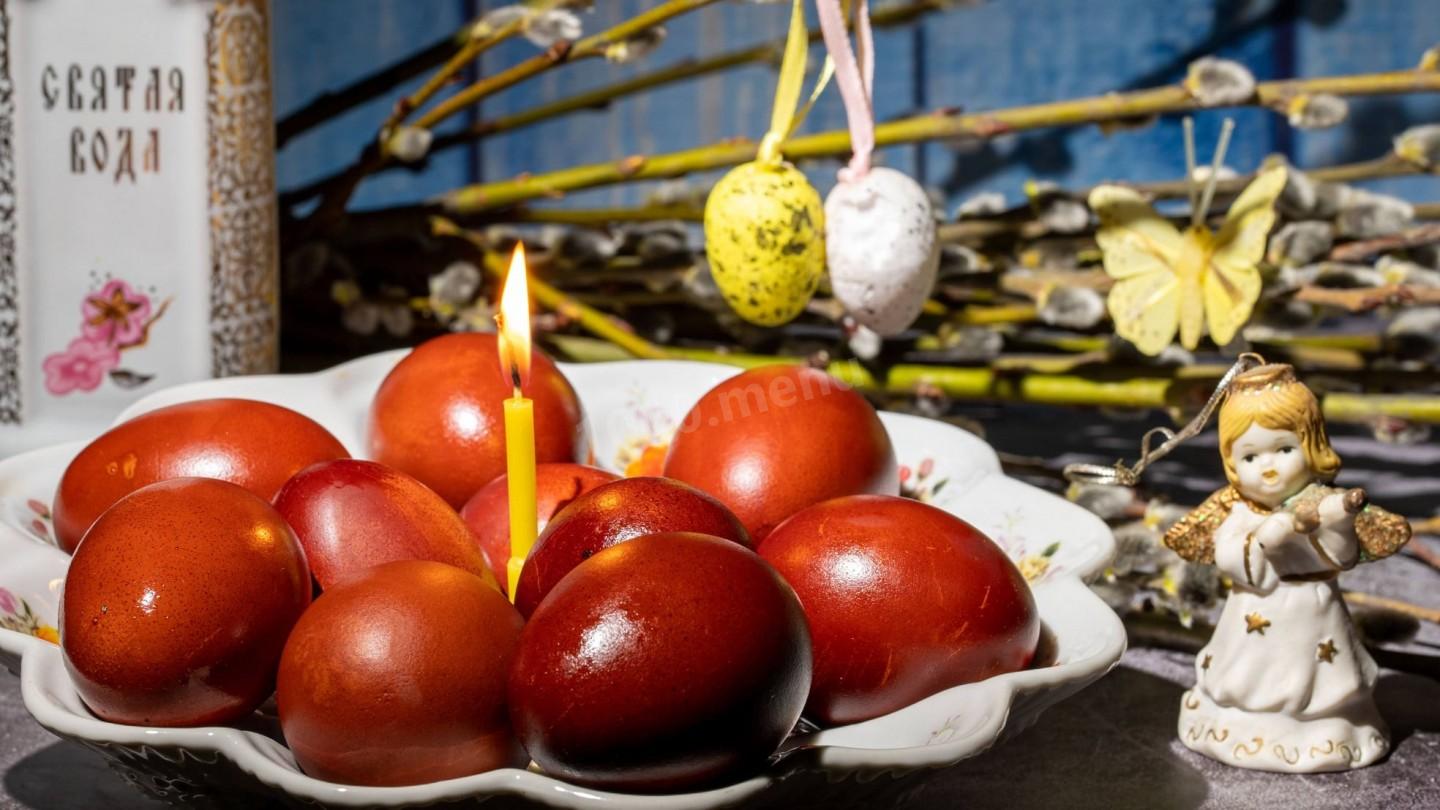
Easter Eggs Dyed with Onion Skins
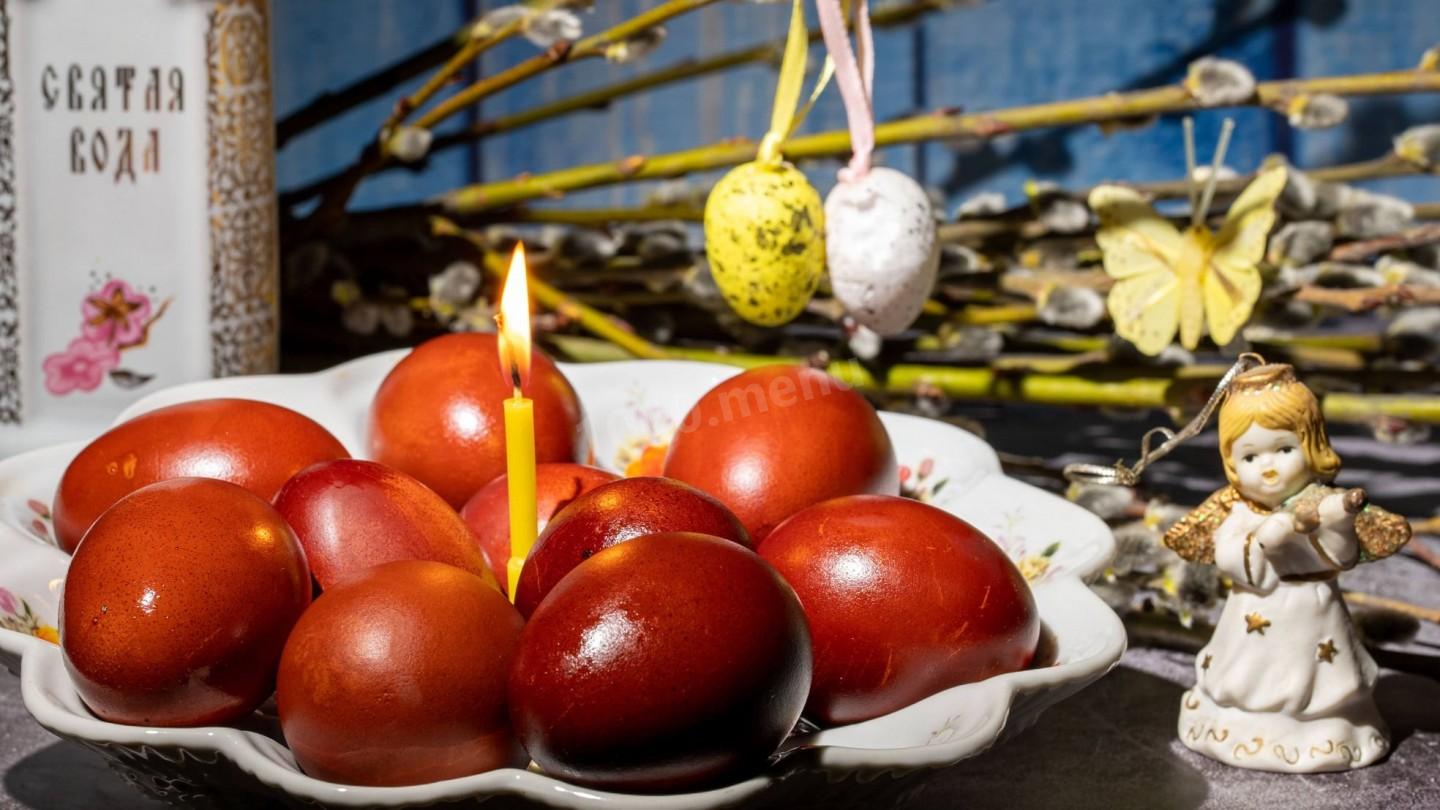
A wonderfully simple, old-fashioned way to color eggs! These Easter eggs, dyed with onion skins just like our grandmothers did, come together quickly, keep for a good while, and are sure to please.

Cooking method
-
Step 1:
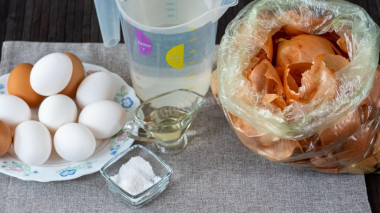
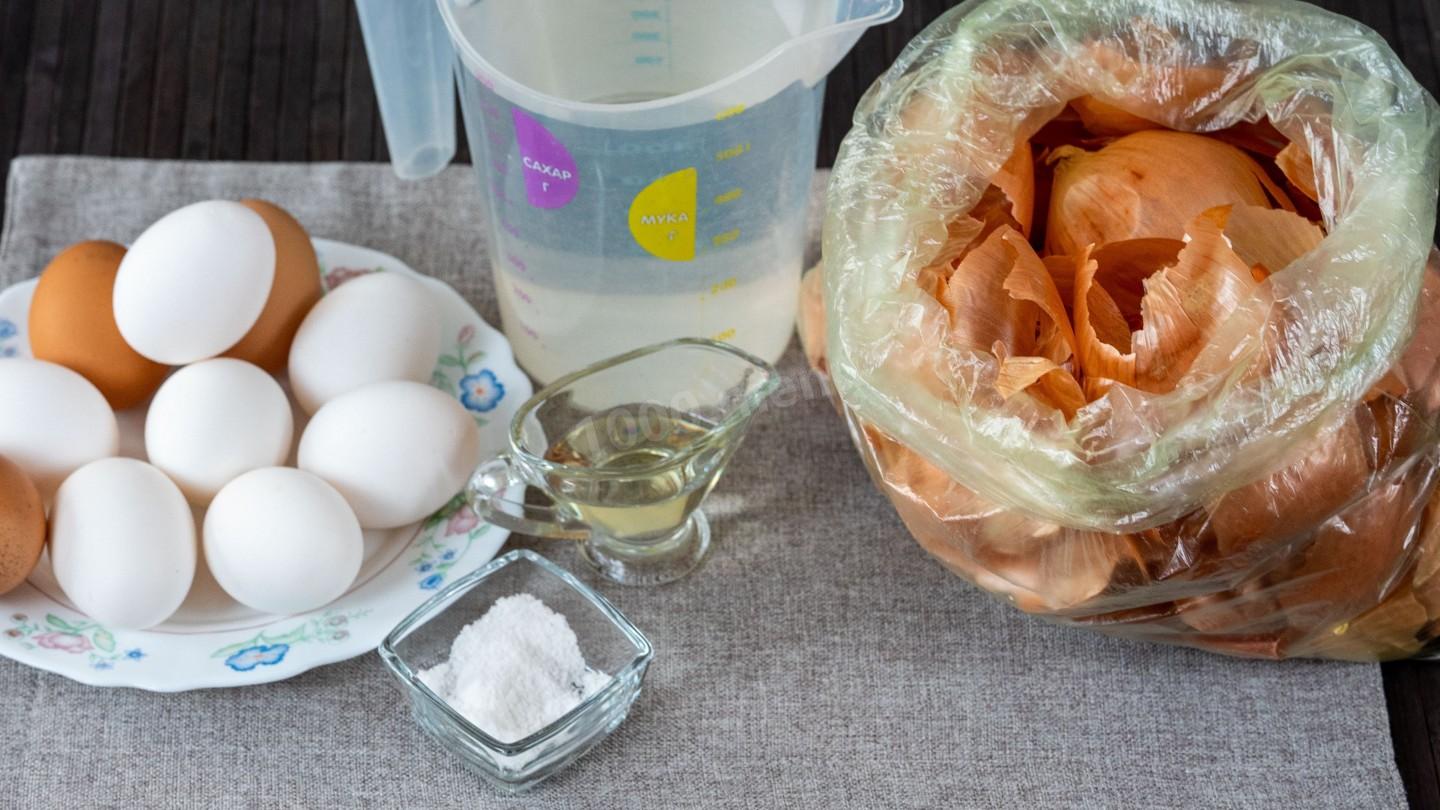
Want an easy way to boil and dye Easter eggs in a pot with onion skins that everyone will love? Start by gathering the few ingredients you need for this old-fashioned method.
-
Step 2:
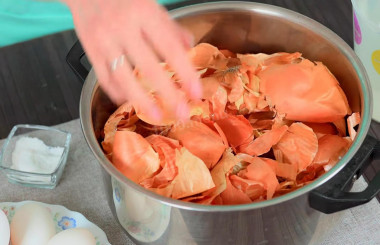
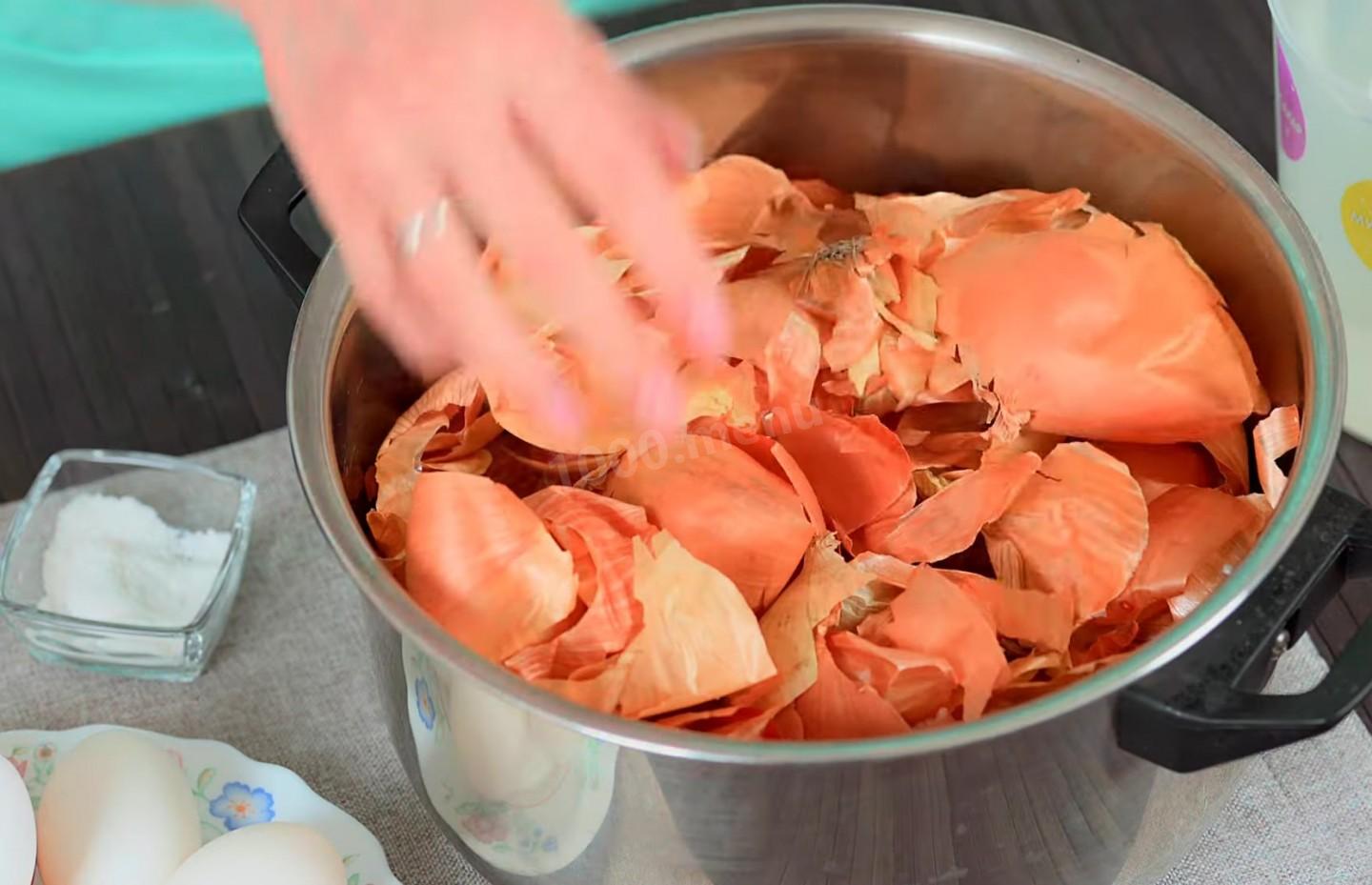
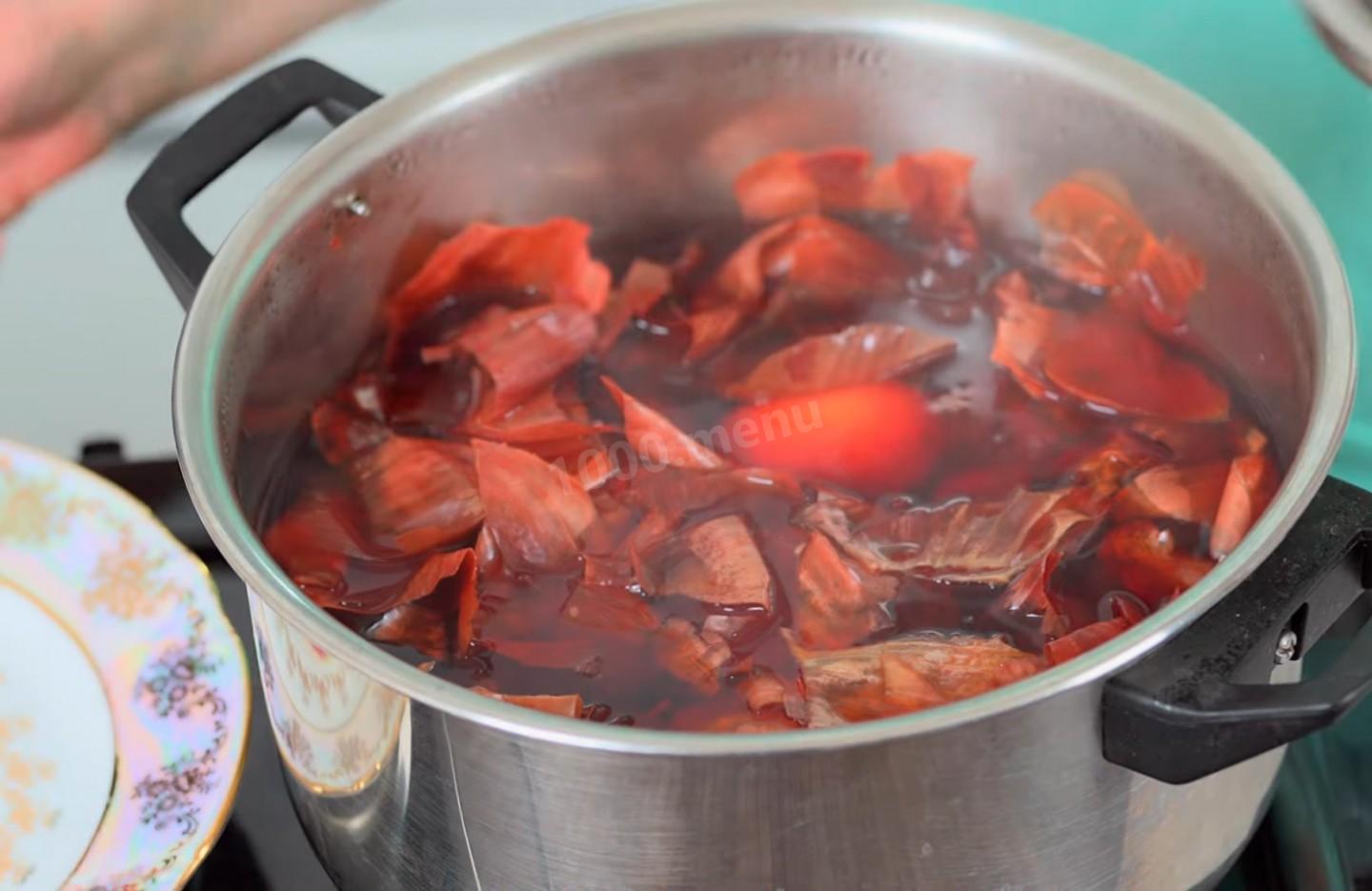
Take a large, heavy-bottomed pot. If you don't have one, lay a cloth on the bottom of a regular pot so the eggs don't crack while they cook. Add 50 grams of the onion skins to the pot.
-
Step 3:
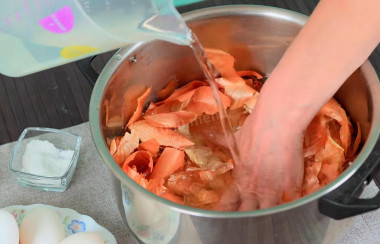
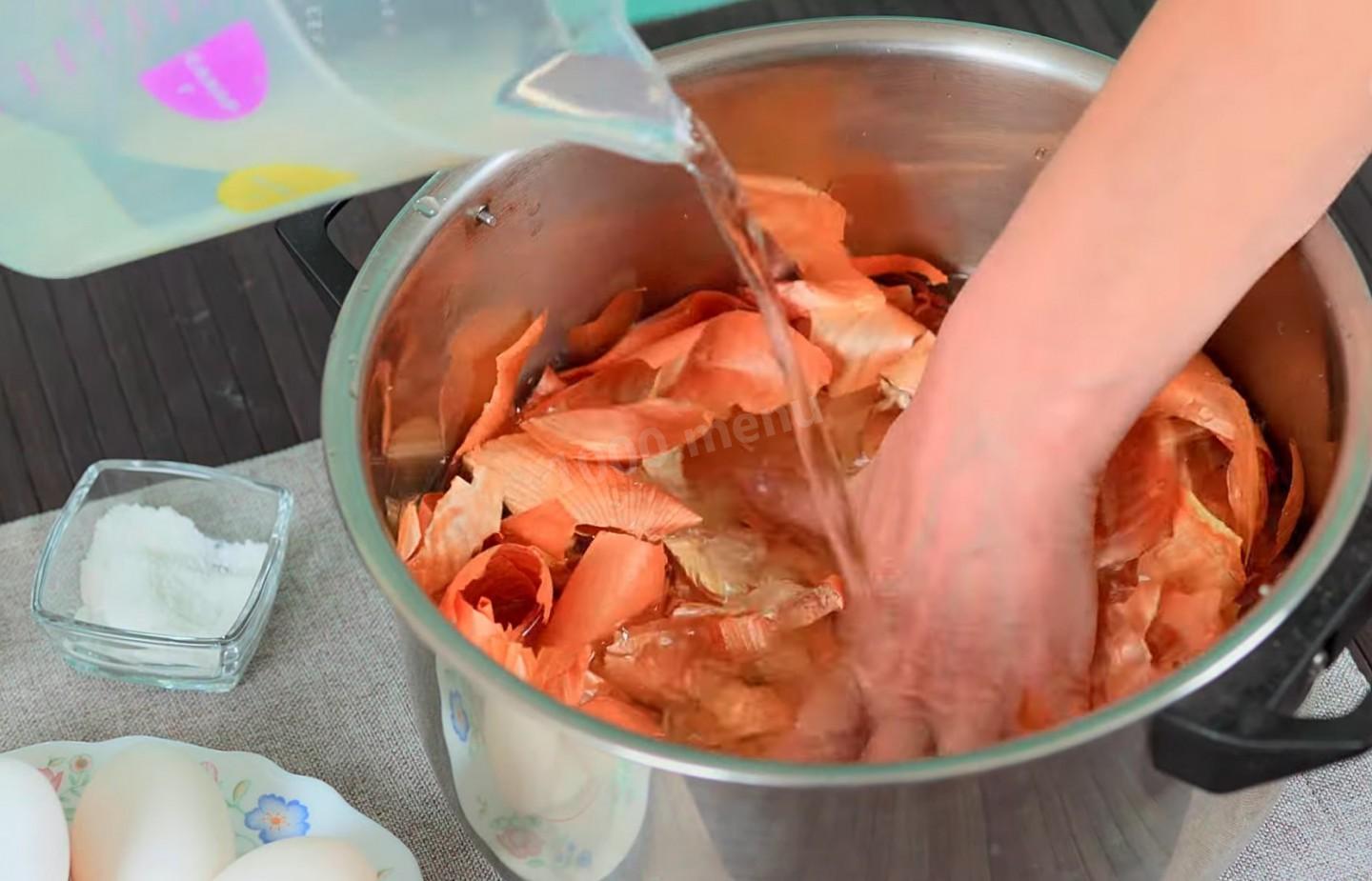
Pour in about 2.5 liters of water, enough to fully cover the skins, then add 1 tablespoon of salt.
-
Step 4:
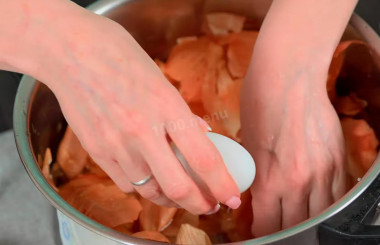
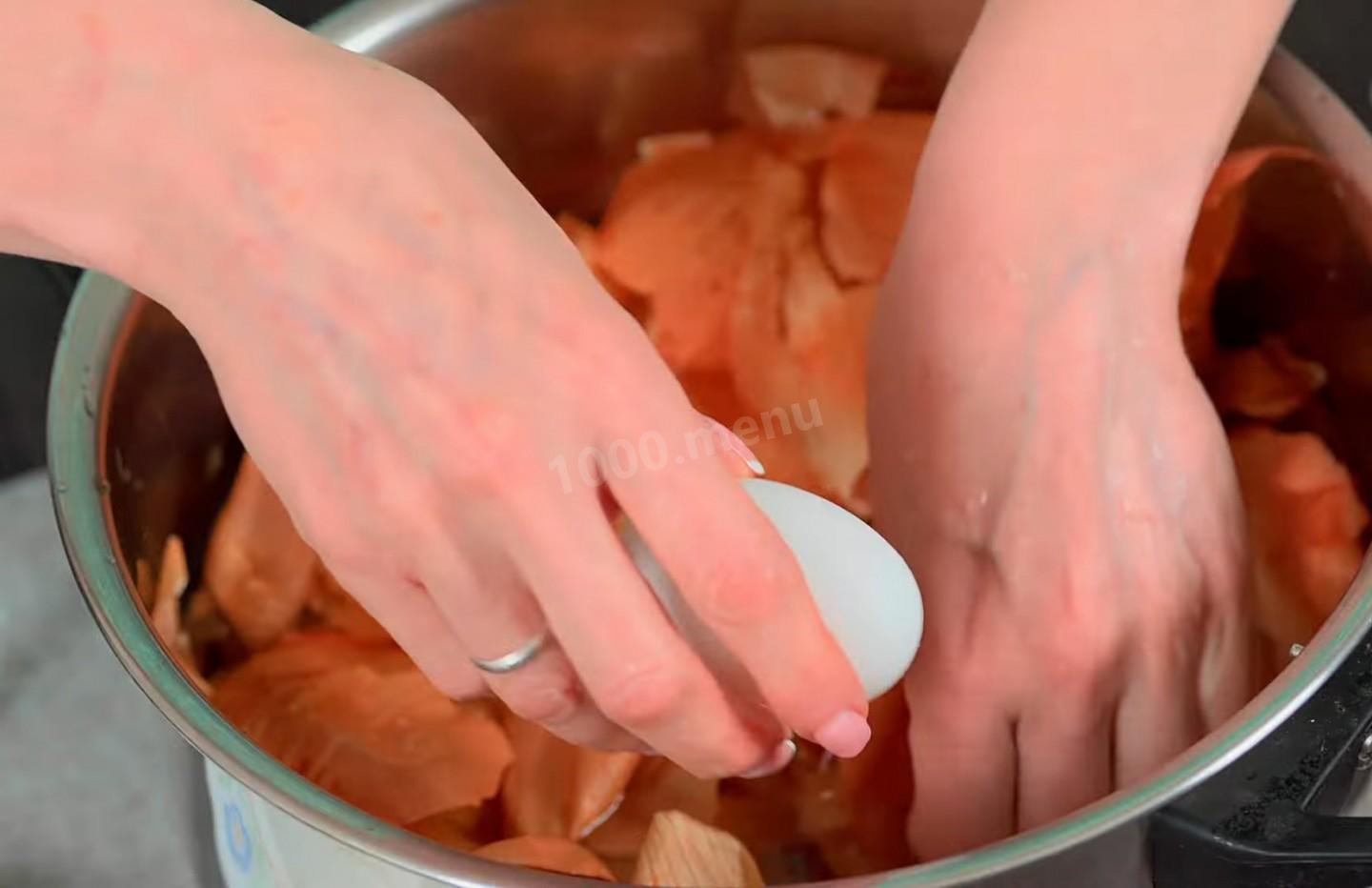
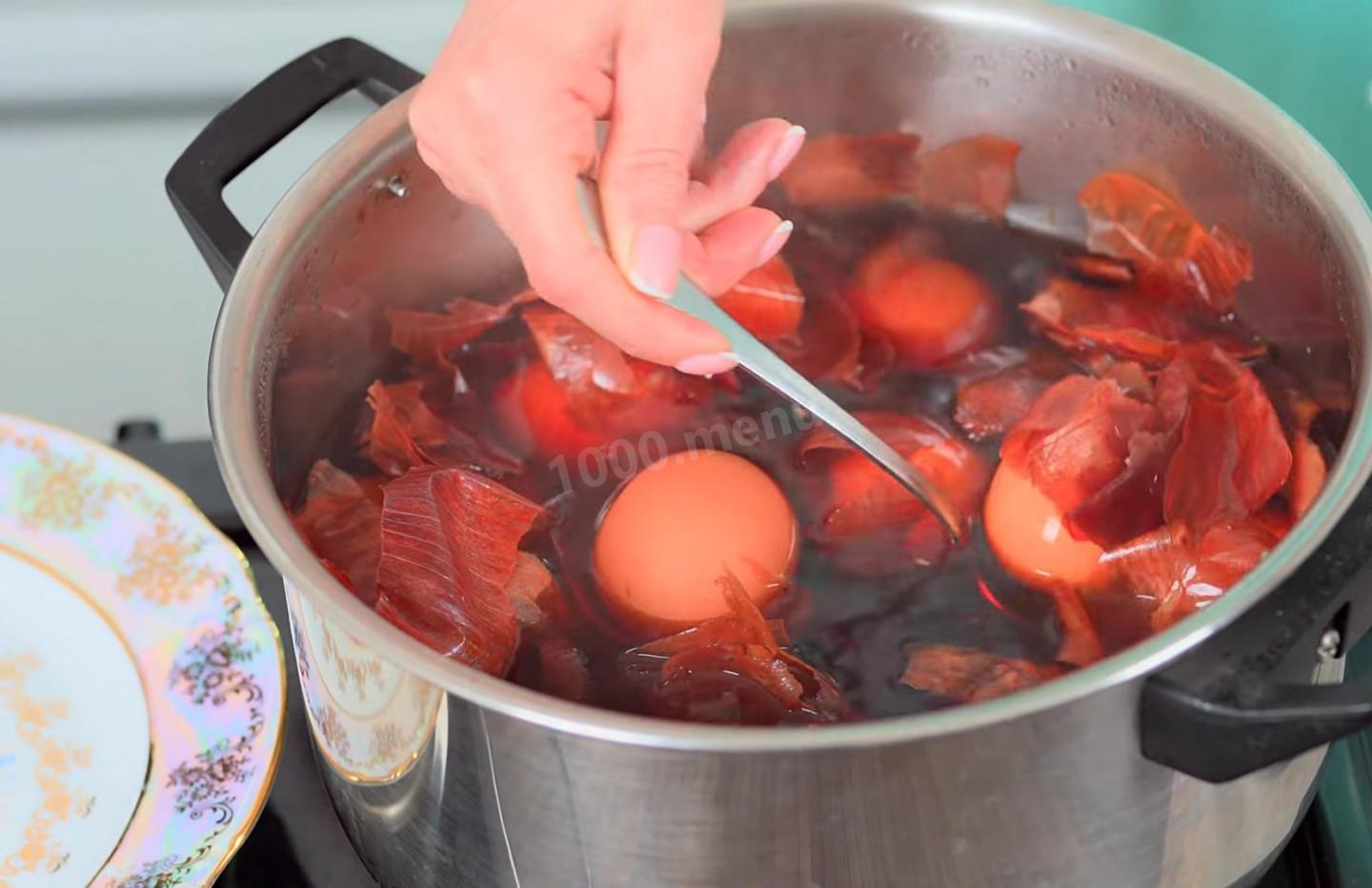
Add the eggs to the pot. Take them out of the fridge ahead of time and let them come to room temperature so they don't crack as they cook.
-
Step 5:
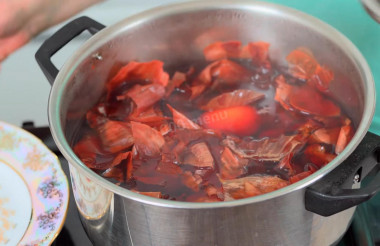
Set the pot over medium heat, cover, and bring the water to a boil.
-
Step 6:
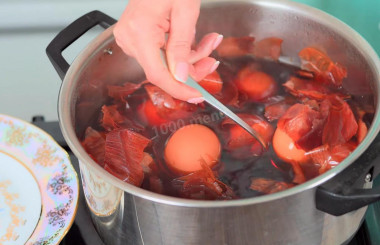
Nudge and rearrange the eggs so they sit on top of the skins, then cover, turn the heat to low, and keep cooking for one hour.
-
Step 7:
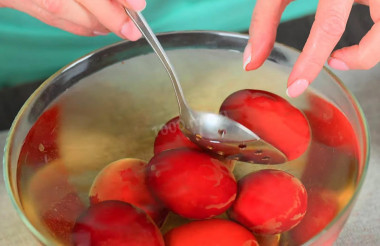
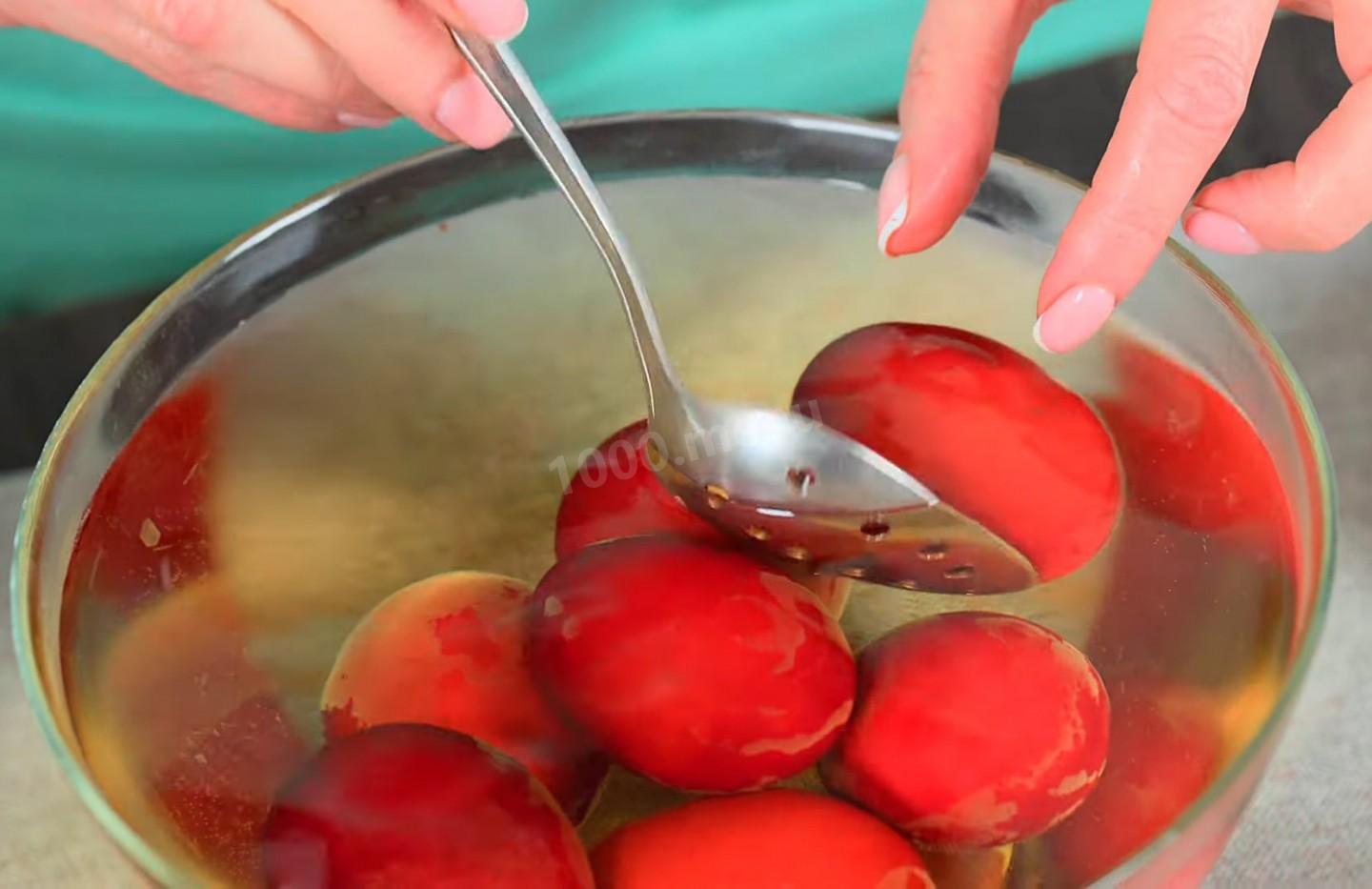
When the time is up, transfer the cooked, dyed eggs to a deep bowl of cold water and let them cool completely.
-
Step 8:
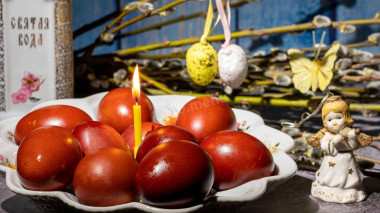
Buff the dyed eggs with a paper towel dipped in vegetable oil, then put them in a container or on a plate and refrigerate. Cook together, cook simply, cook the tastiest dishes at home from everyday ingredients with our recipes. Happy Easter!
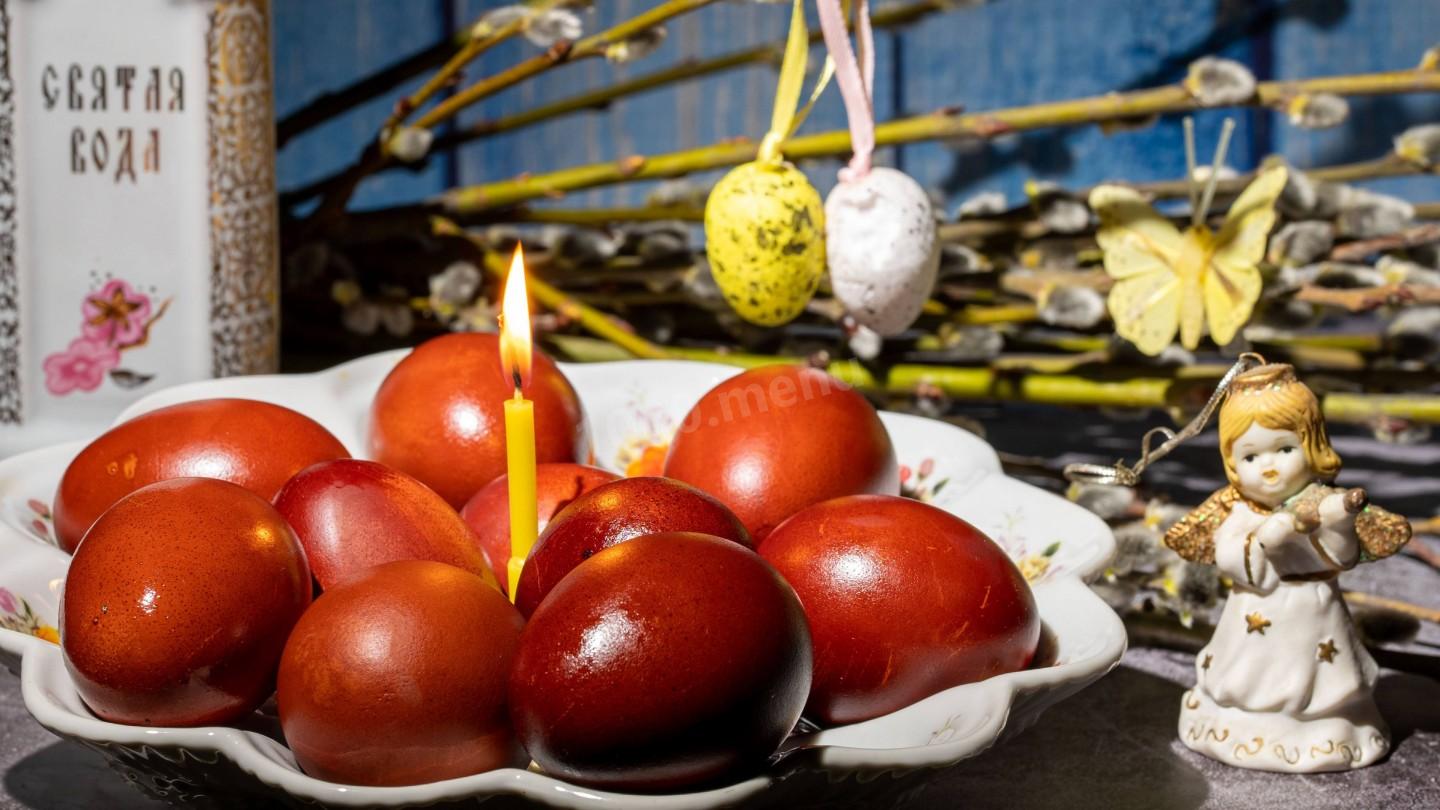
- These days there are countless ways to color Easter eggs, but we honor tradition and dye ours with onion skins the way our grandmothers and ancestors did for centuries — a safe, chemical-free method that won't cause any ill effects or allergies. It's an easy, simple, and beautiful way to color eggs for Easter. Dyeing eggs is one of the oldest Christian Easter traditions: according to legend, a white egg turned crimson when Mary Magdalene brought it to Emperor Tiberius to announce the resurrection of Christ. By custom, eggs are boiled and dyed on Holy (Maundy) Thursday; Friday is left free of chores, and on Saturday the holiday foods are blessed at the church service. The boiled, dyed eggs are kept in the fridge and brought out on Sunday for the egg-tapping game, then eaten. Happy Easter!
Caloric content of the products possible in the composition of the dish
- Vegetable oil - 873 kcal/100g
- Salt - 0 kcal/100g
- Water - 0 kcal/100g
- Chicken egg - 80 kcal/100g
- Onion husk - 0 kcal/100g