Varenyky with frozen cherries
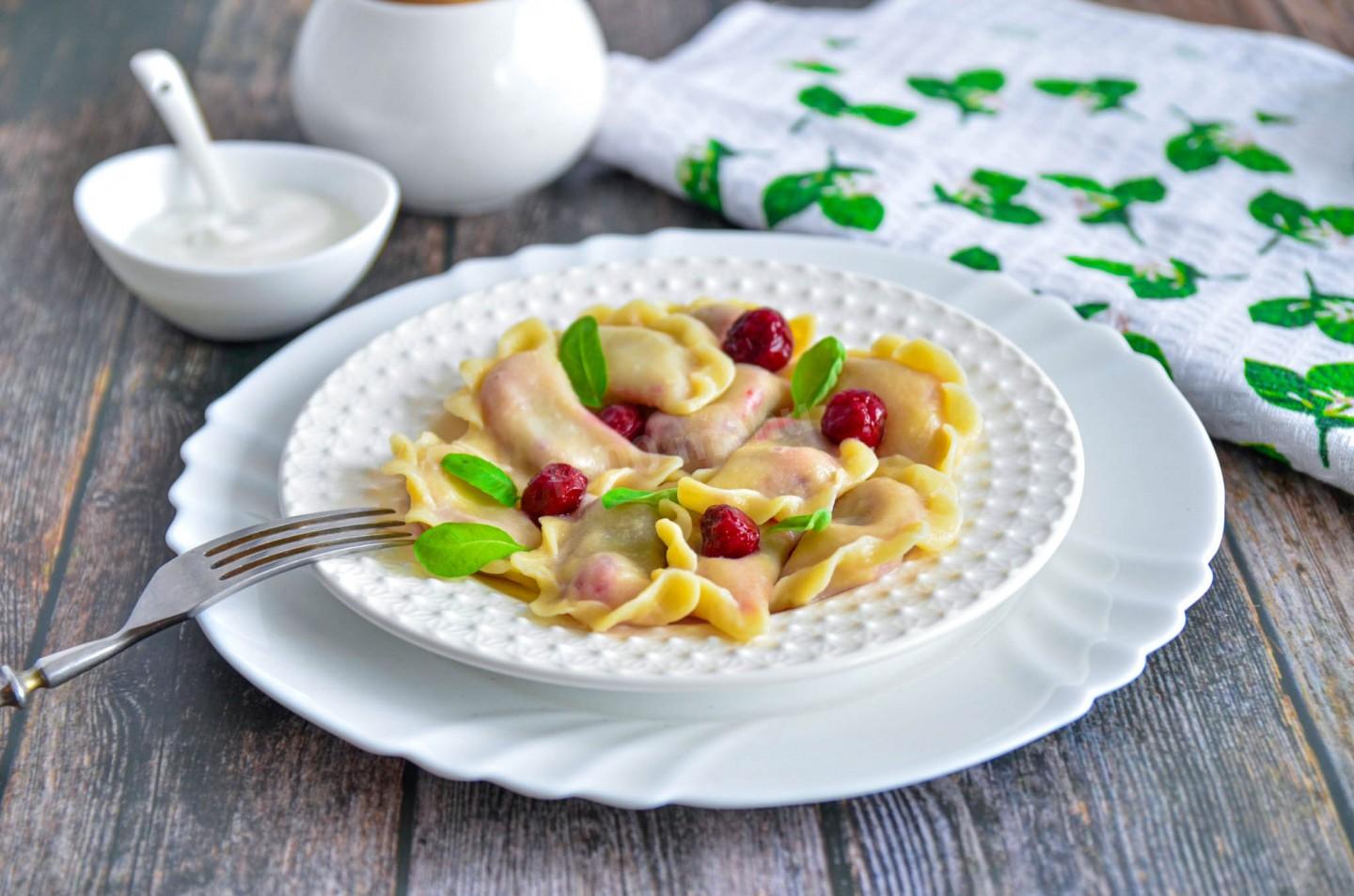
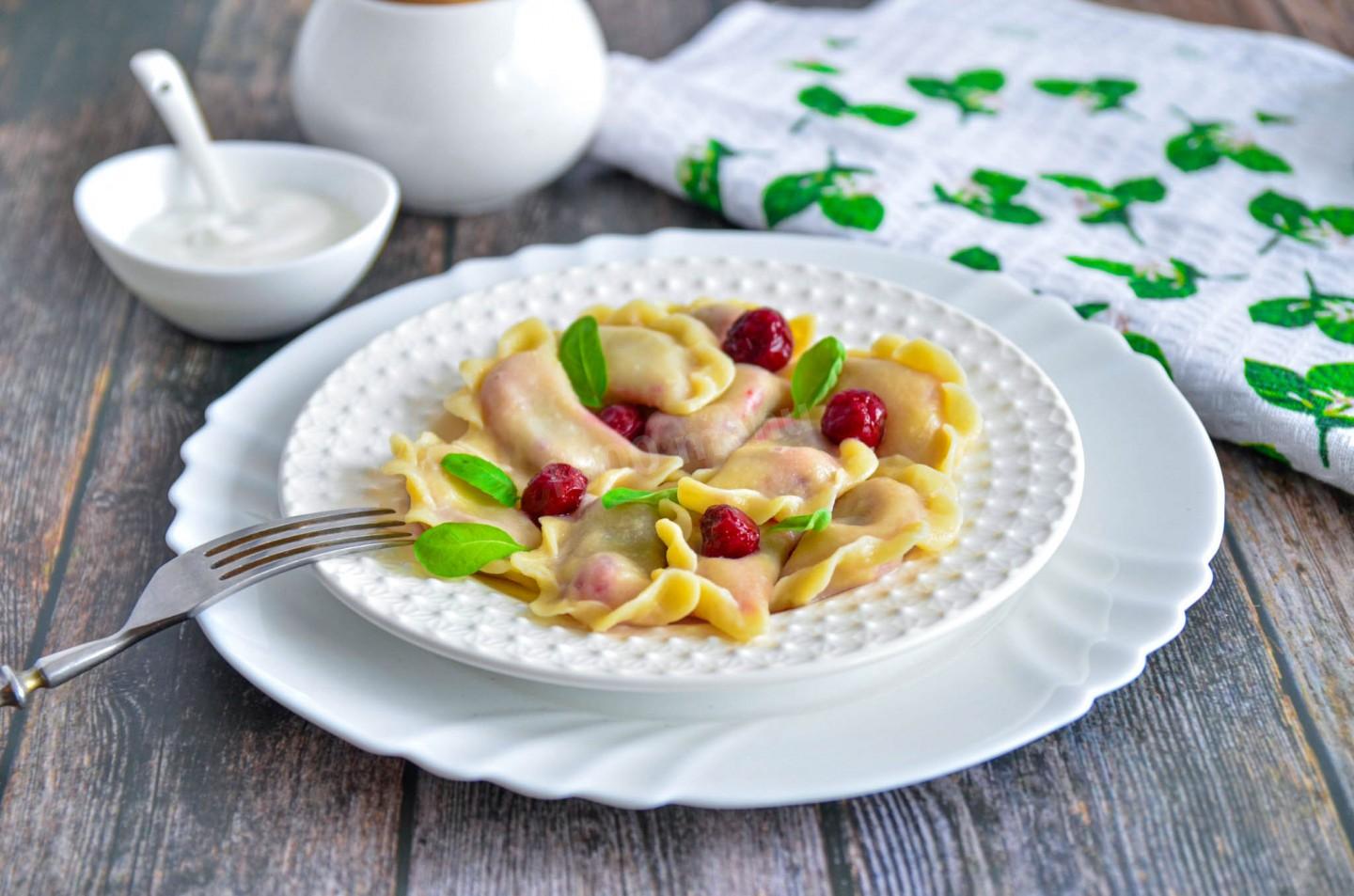
The most delicious, the most appetizing, and family-friendly! Varenyky with frozen cherries come out every bit as good as with fresh ones. And once you learn a couple of secrets, you'll be able to make them so they don't leak! Now you don't have to wait for summer to enjoy this tasty dish.

Cooking method
-
Step 1:
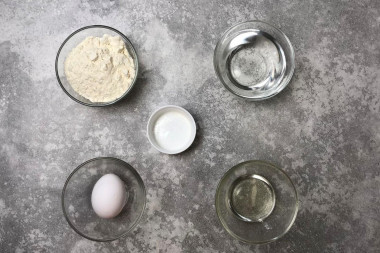
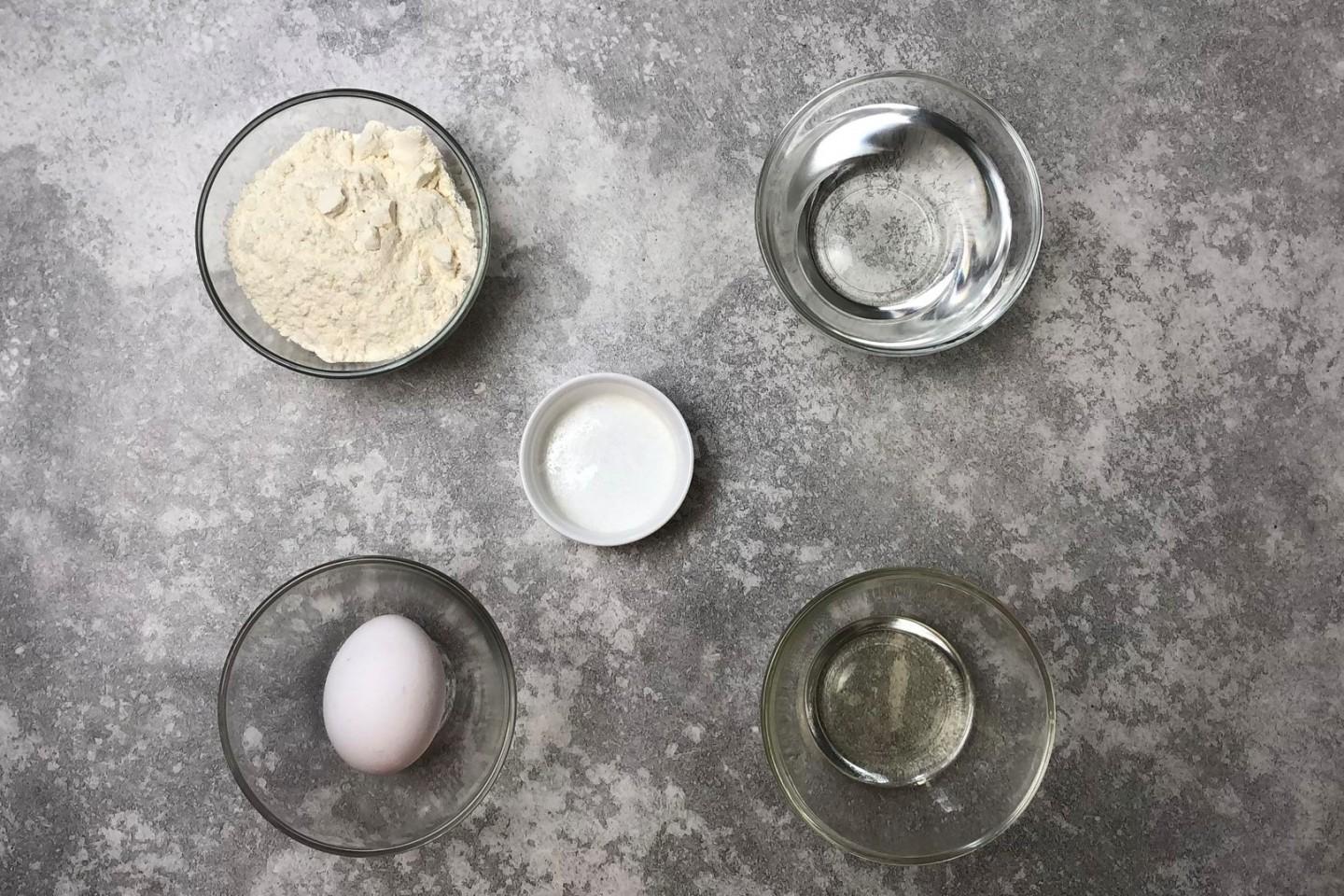
How do you make varenyky with frozen cherries? Gather the ingredients for the dough. Be sure to measure the flour and water with the same cup, so you won't need to add extra flour as you go.
-
Step 2:
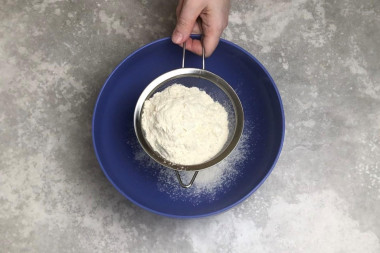
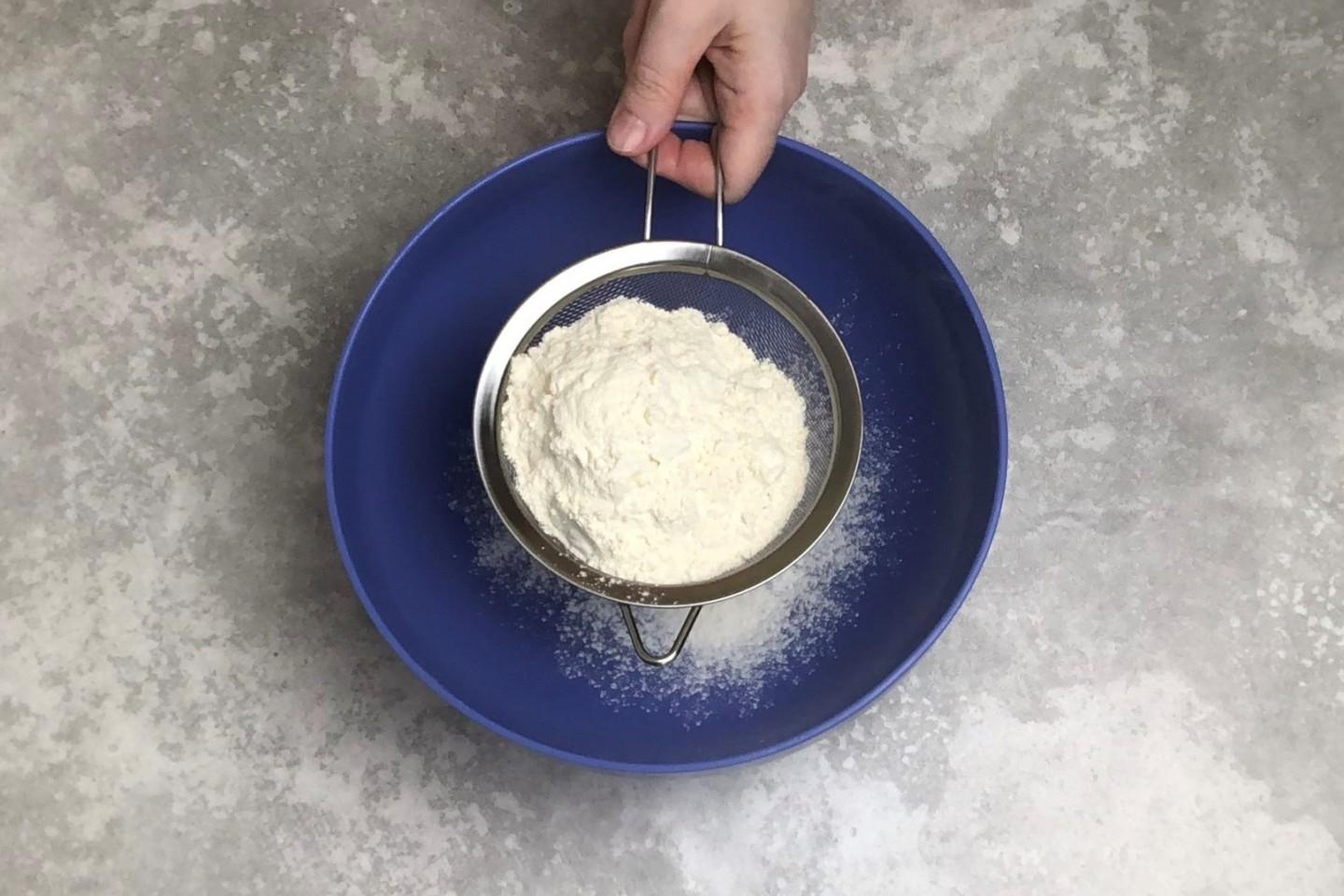
Take a bowl deep enough to knead in comfortably. Sift the flour into it. That aerates it, making the dough even more tender and soft. Add the salt to the flour and mix well.
-
Step 3:
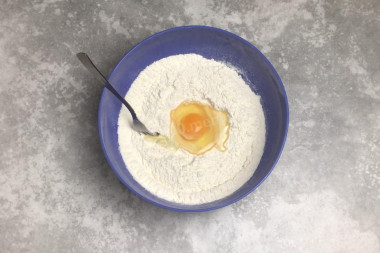
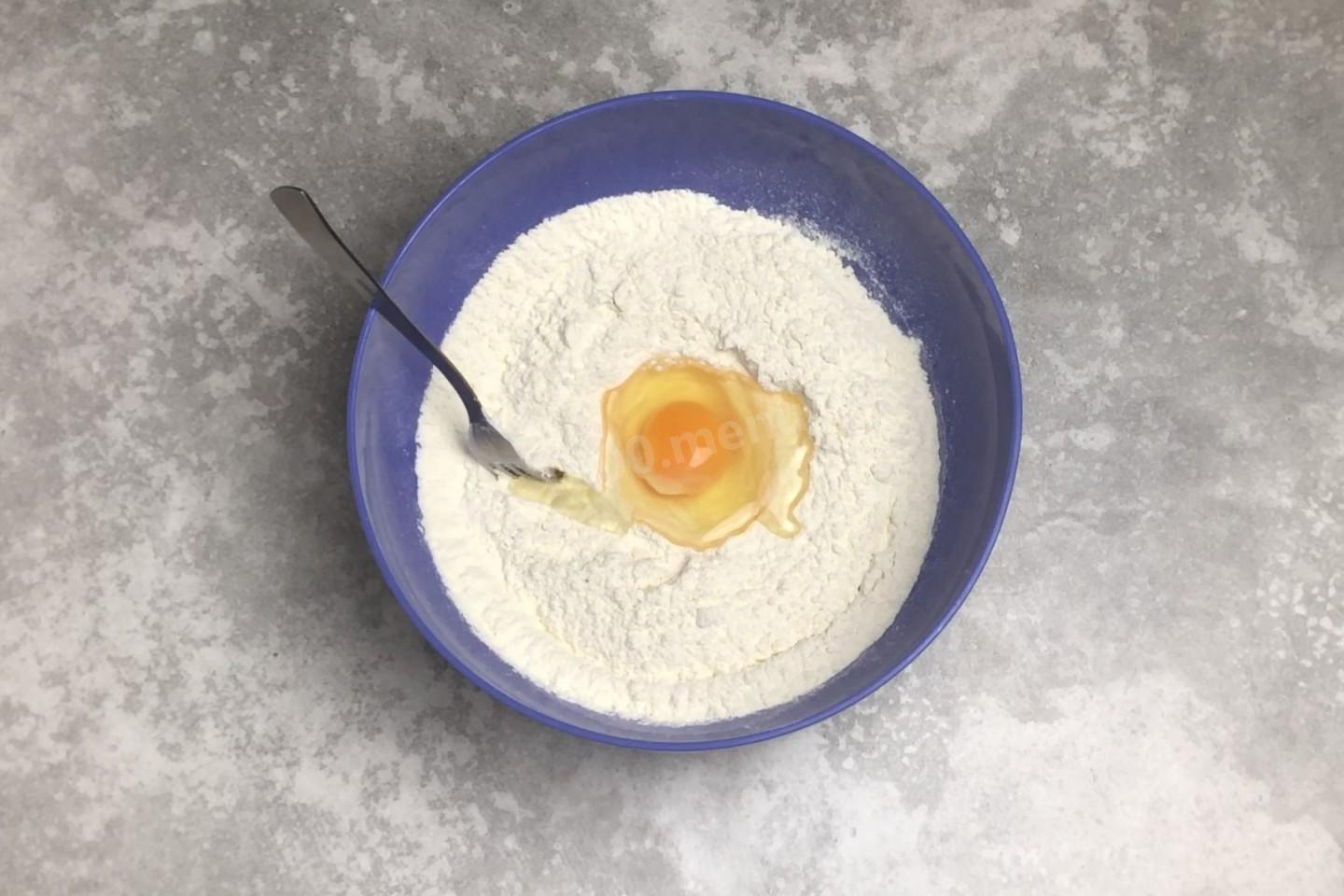
Make a well in the center of the flour. Crack in the egg and pour in the vegetable oil. With a fork, lightly whisk the egg and oil into the flour. Don't try to knead a dough yet — it won't work, there's too little liquid. Just mix in the egg and that's it.
-
Step 4:
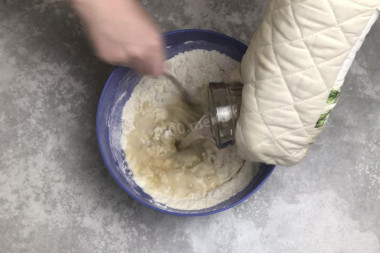
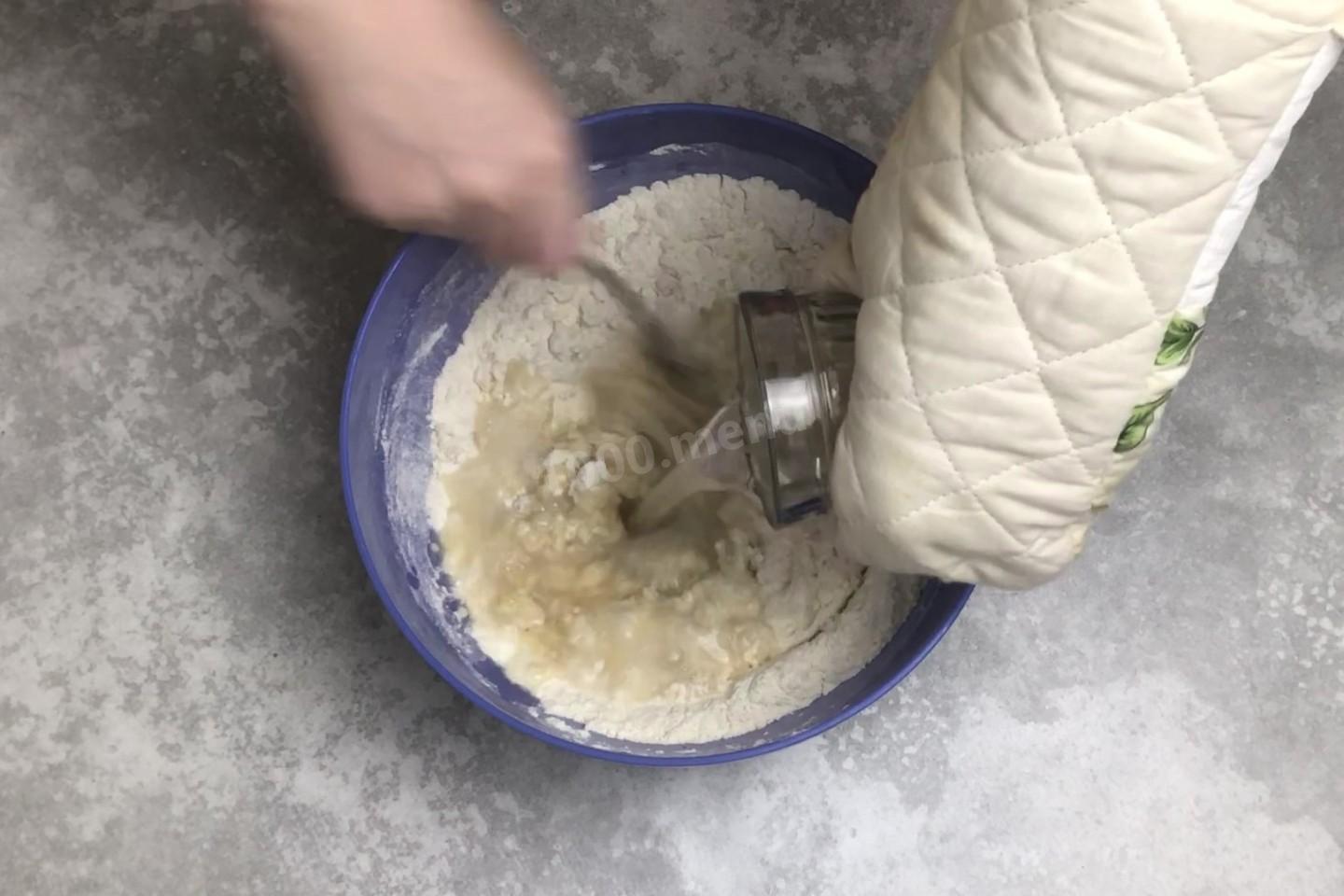
Boil the water and pour it into the cup. Right away, while it's still bubbling, pour the boiling water into the flour. Be sure to put a glove on your hand — it's very hot. As you pour, stir the flour briskly with a fork. This scalds the flour, the gluten develops very quickly, and the dough becomes very elastic and easy to work with.
-
Step 5:
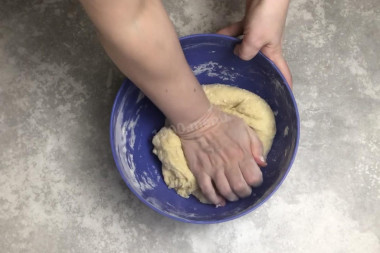
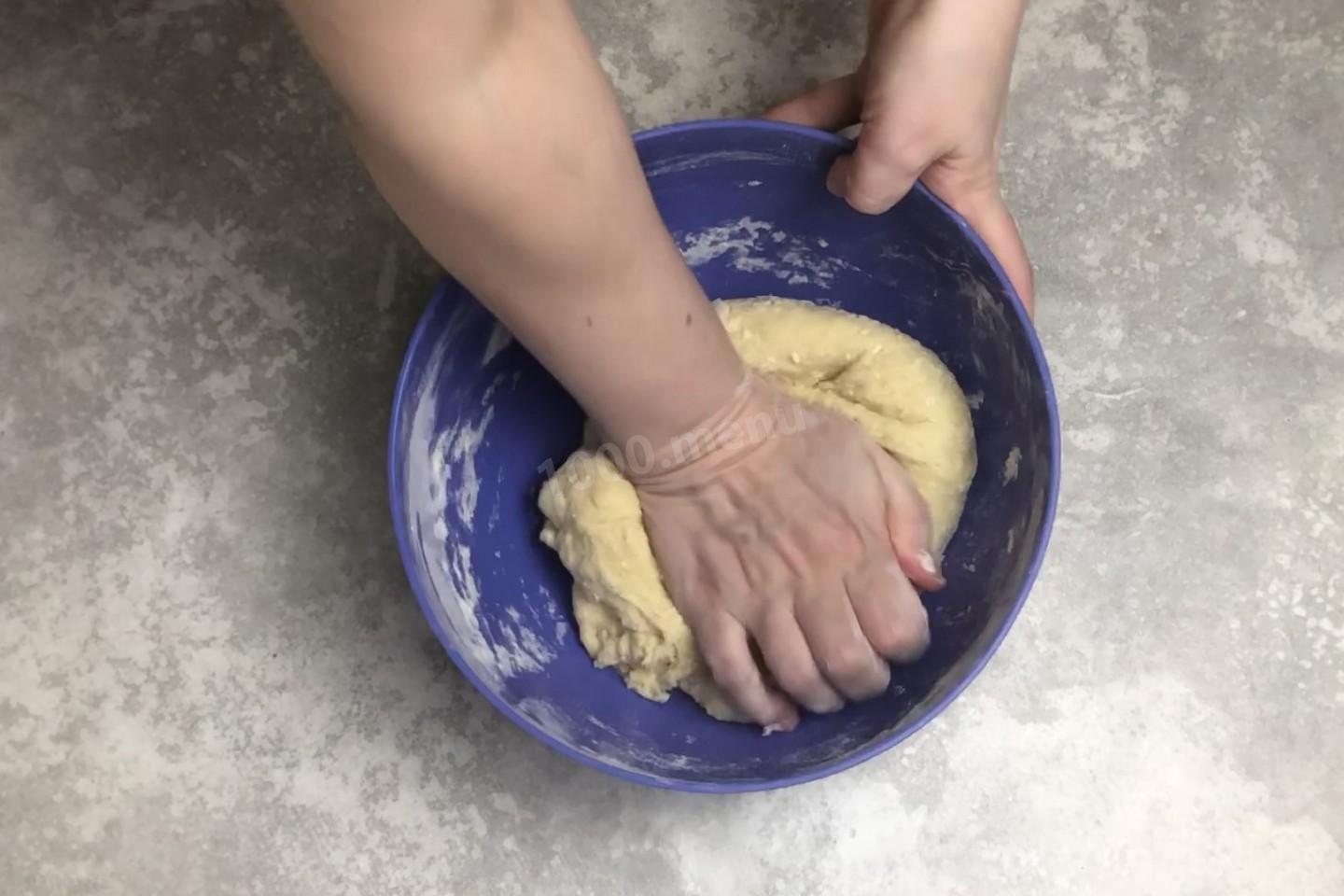
Once all the water is in, knead the dough with the fork — it's hot, be careful! But it cools off pretty quickly, and then you can use your hands. At first it'll seem like there's too much flour and not enough liquid. Don't rush to add more water; gradually all the flour will work in and the dough will come together smoothly.
-
Step 6:
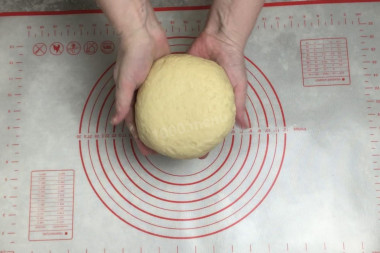
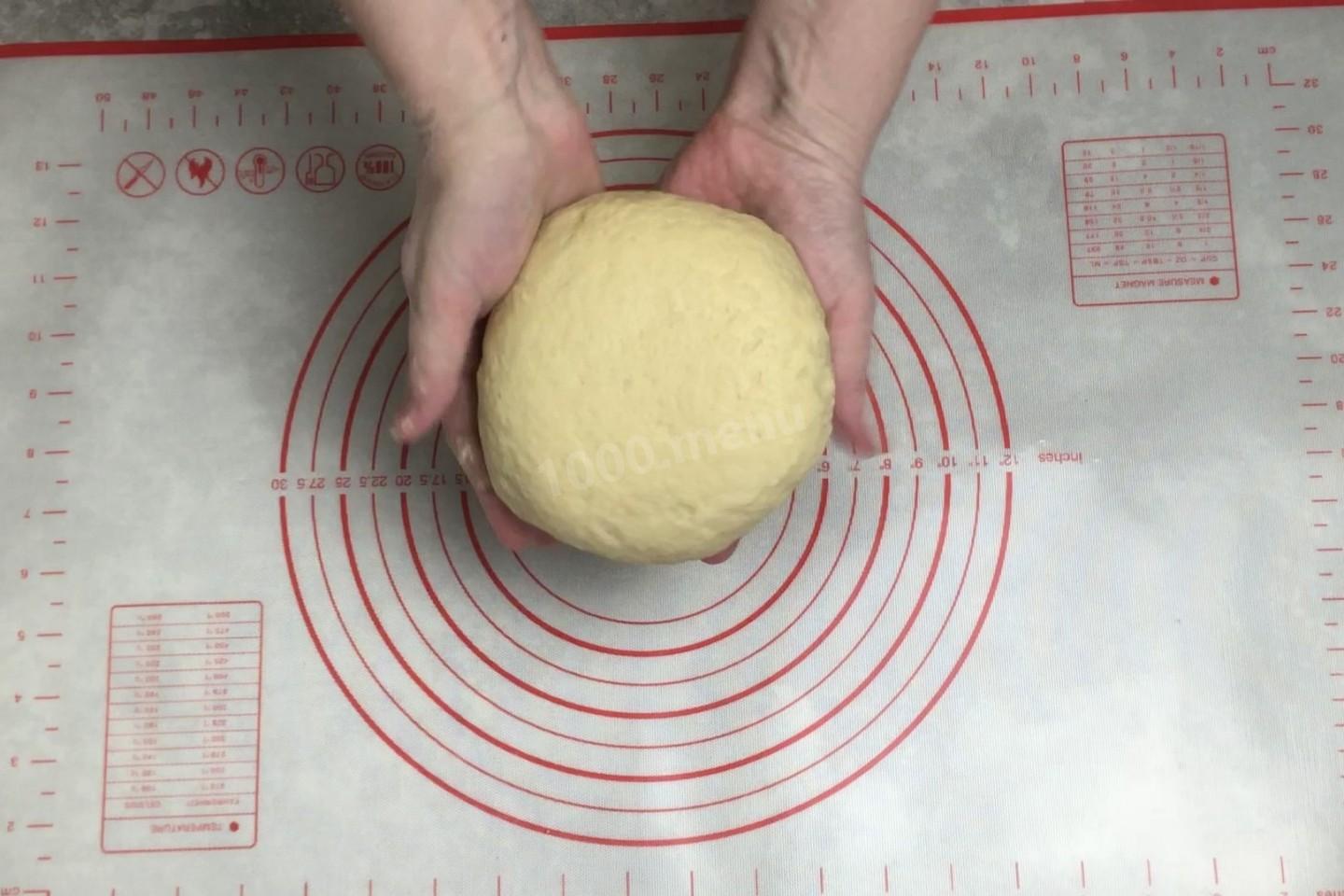
Finally, turn the dough out onto the work surface. It's not sticky at all — you won't even need to flour the surface. Knead the dough until smooth and gather it into a ball. Put the dough in a bowl, cover it with a towel, and let it rest for 20 minutes.
-
Step 7:
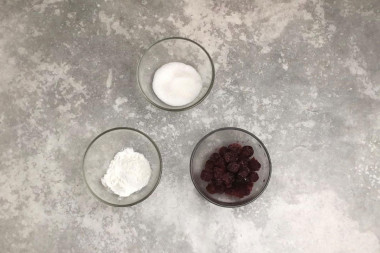
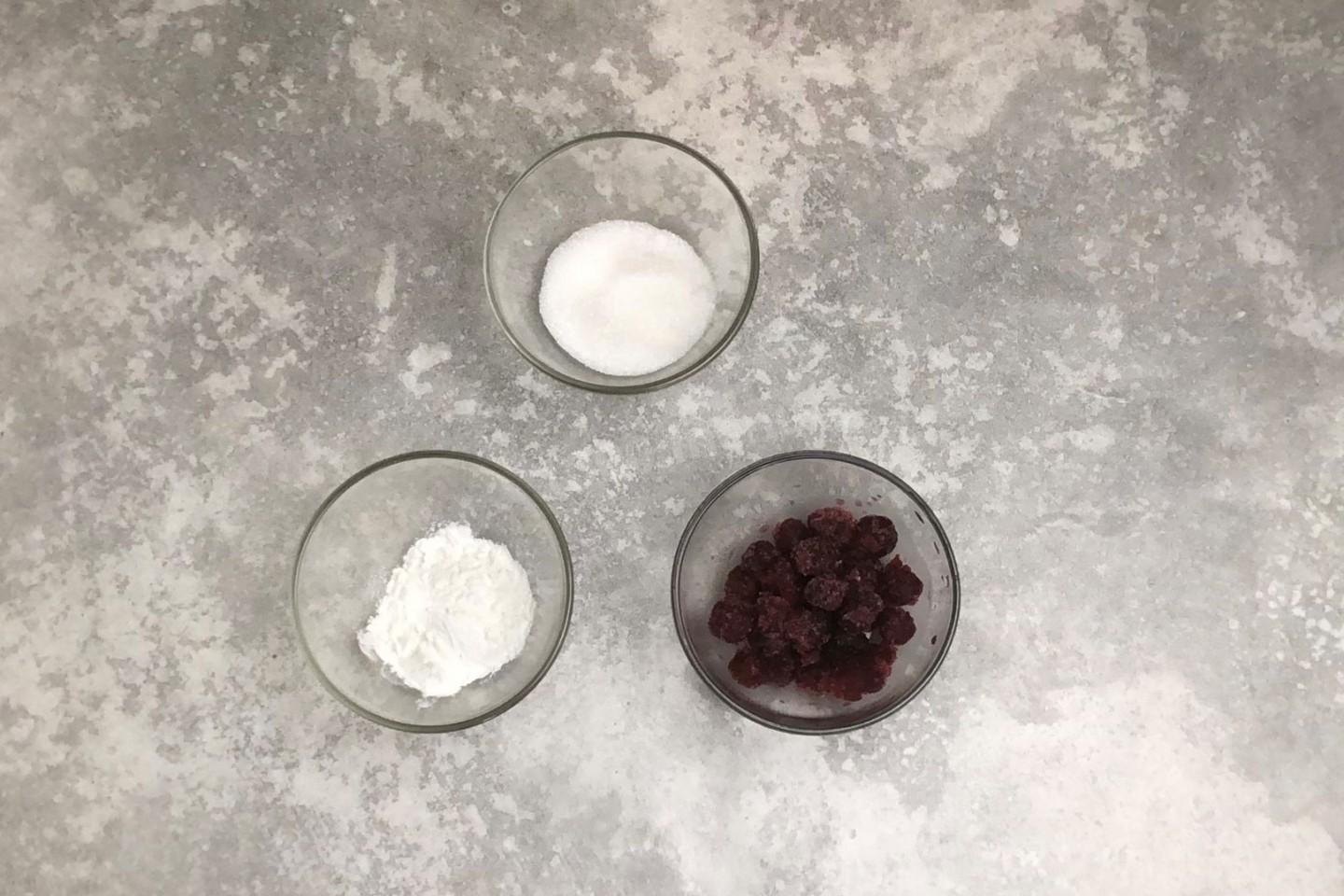
While the dough rests, prepare the filling. Don't thaw the cherries! That's the first secret to leak-free varenyky. The second secret is the starch. As they cook, the cherry juice mixes with the starch, thickens, and doesn't leak out.
-
Step 8:
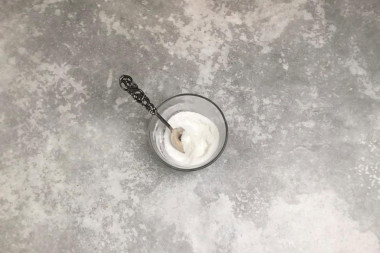
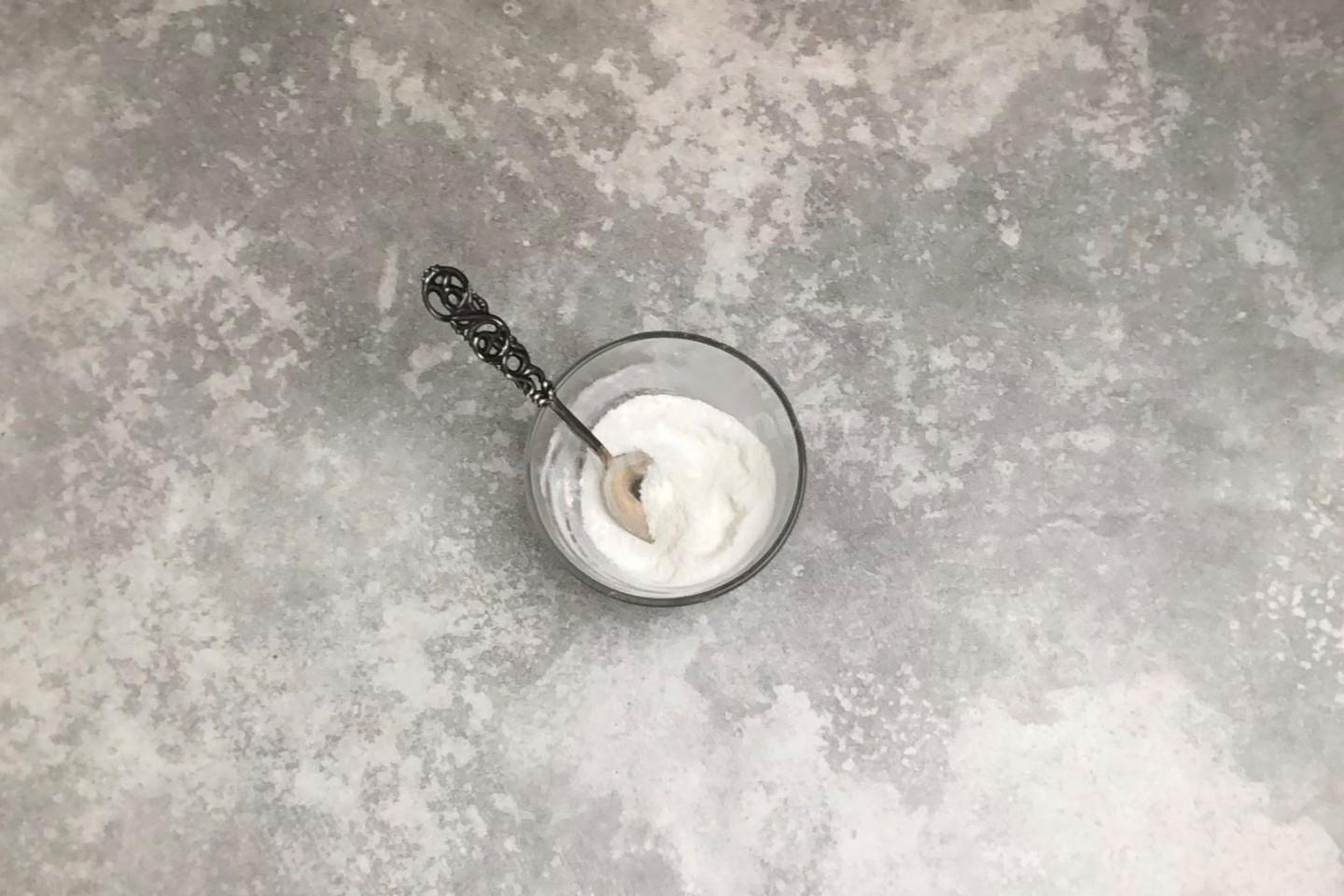
Mix the sugar with the starch.
-
Step 9:
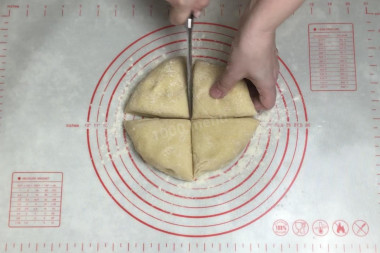
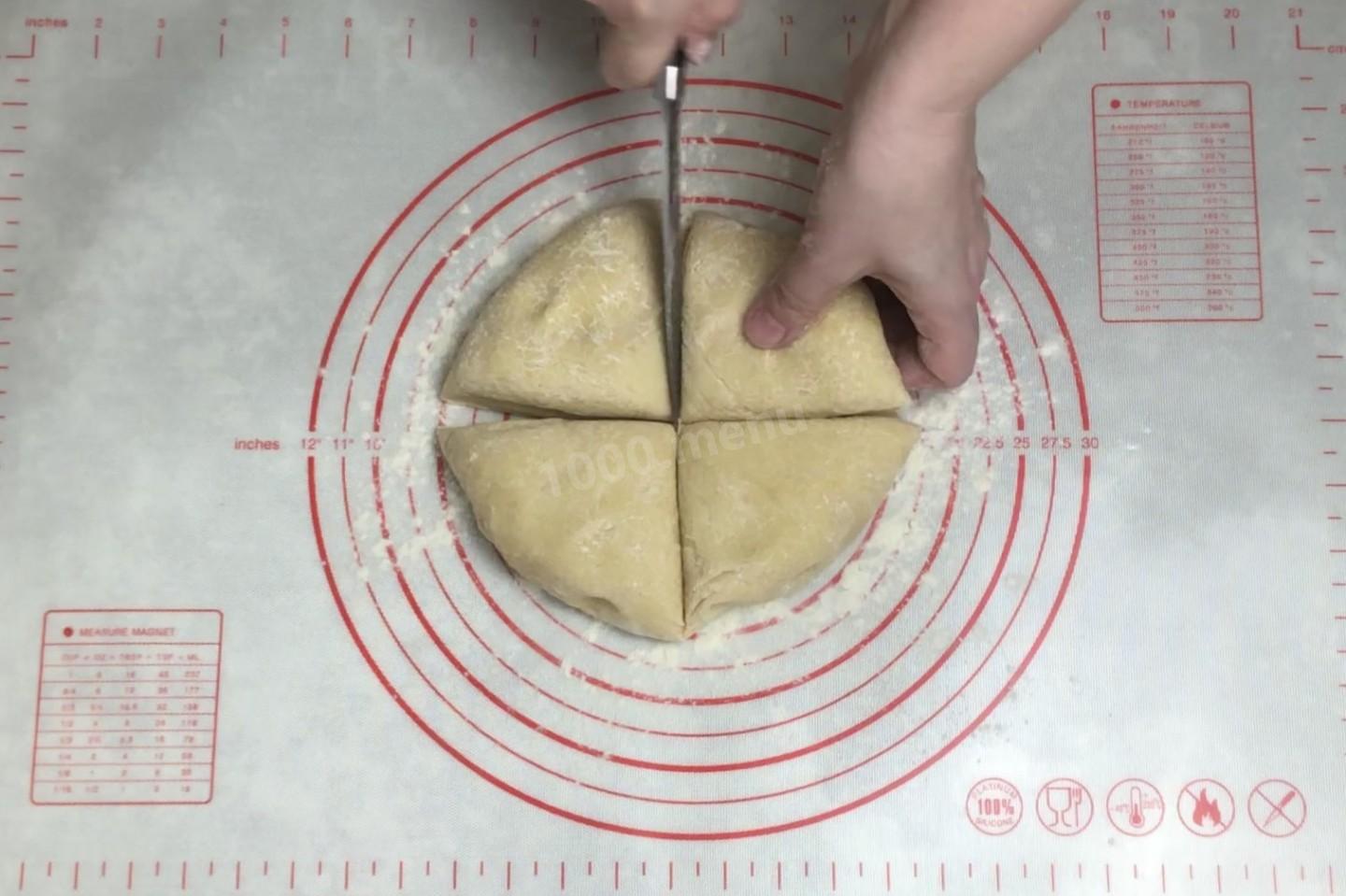
Divide the rested dough into 4 pieces. Work with one and put the other three back in the bowl.
-
Step 10:
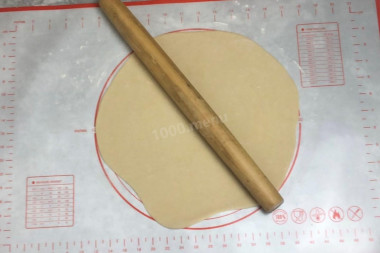
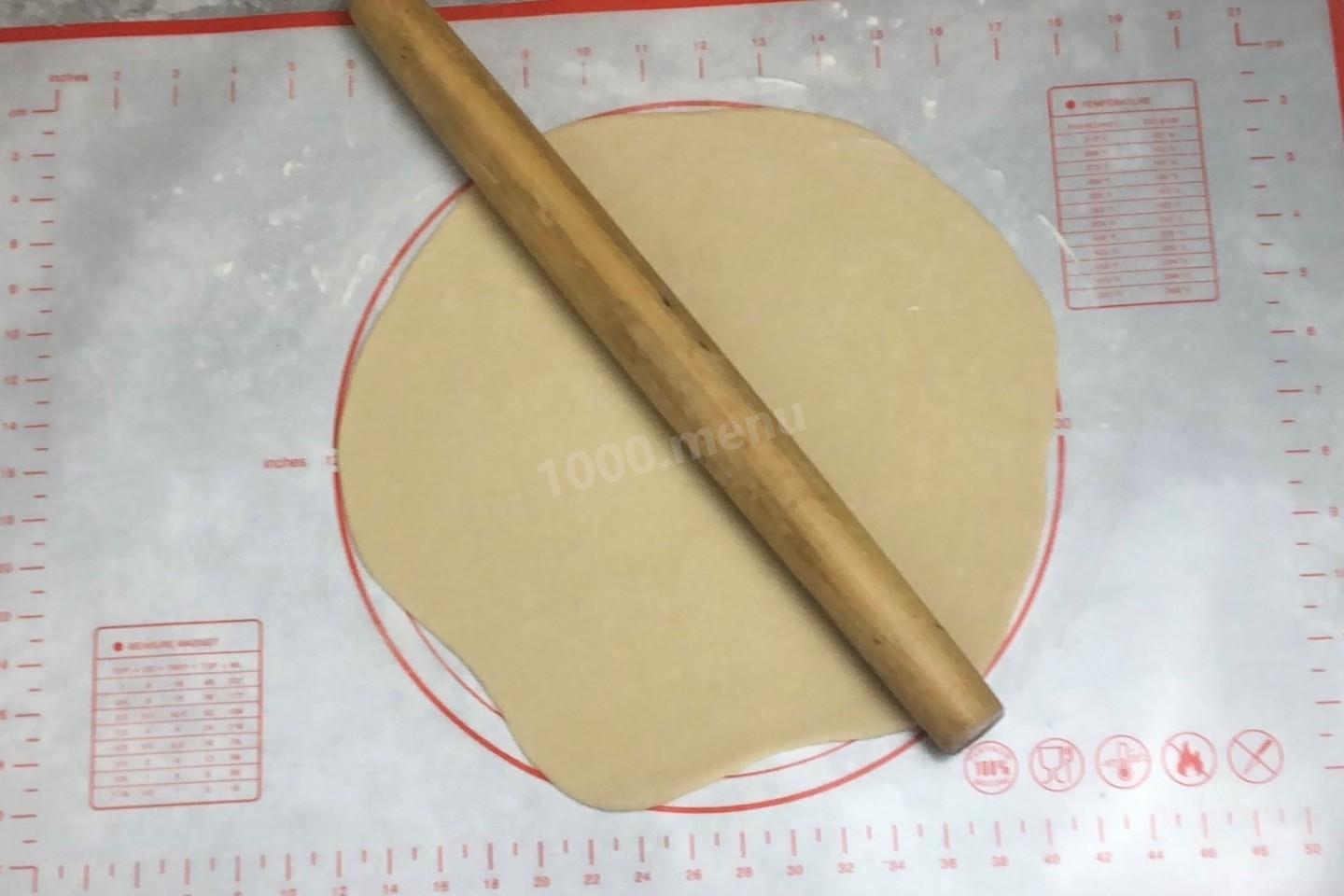
Roll the dough into a circle a few millimeters thick. Here I did have to add a little flour, since the dough got even softer after resting.
-
Step 11:
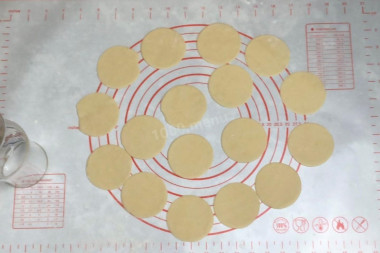
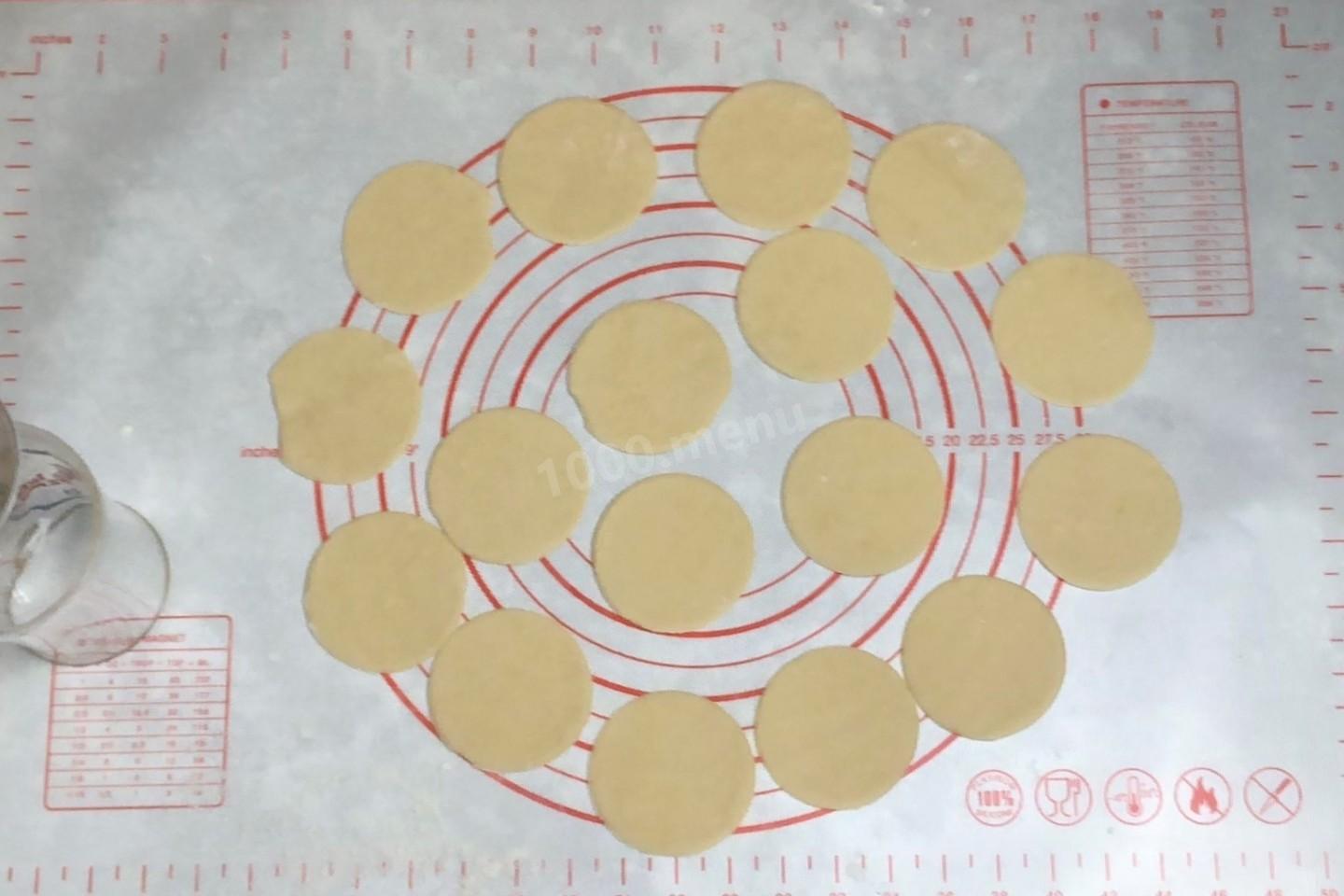
Cut out rounds with a cutter or a glass.
-
Step 12:
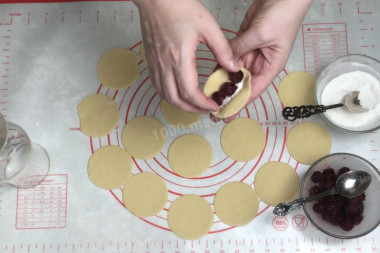
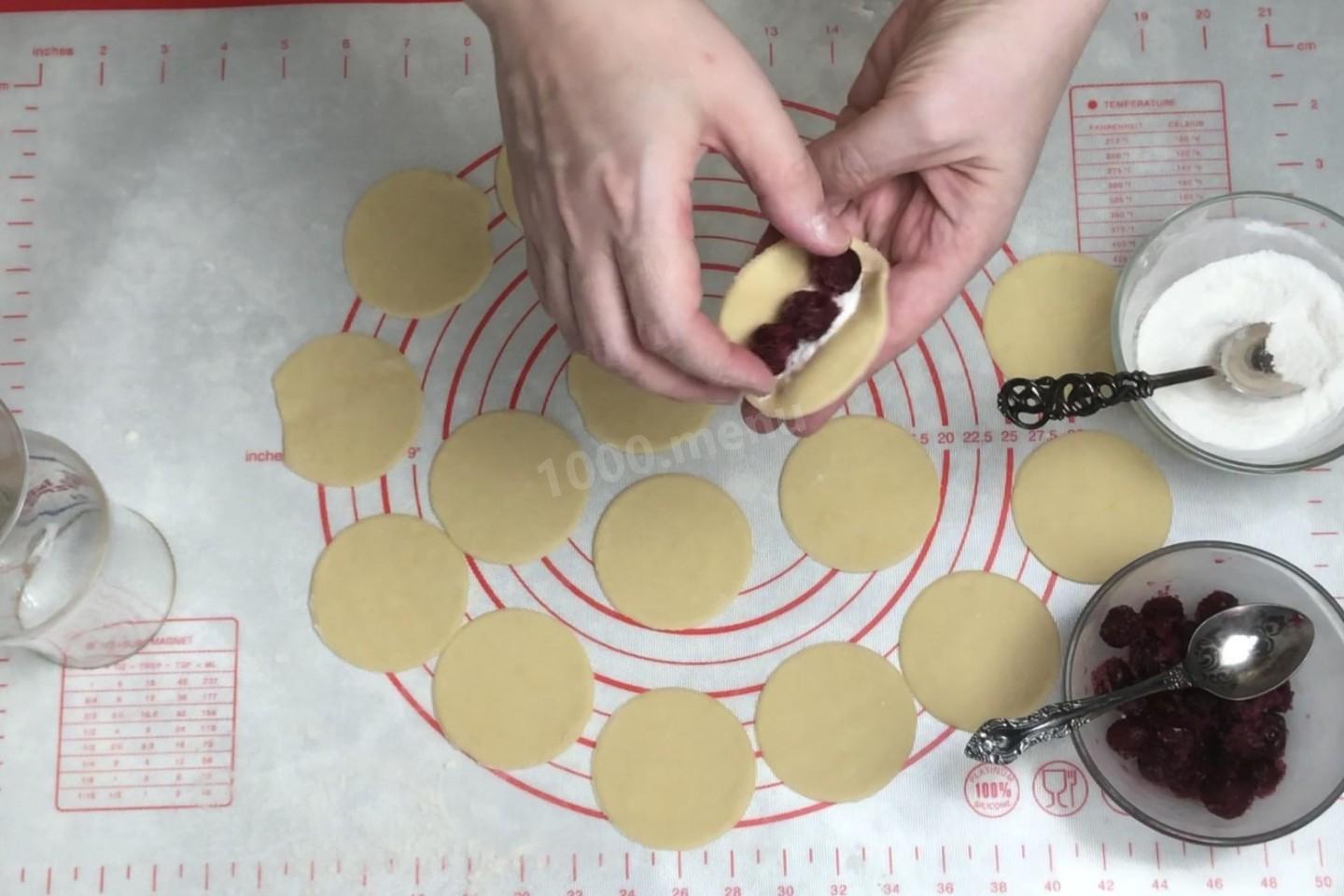
Only now take out a portion of the frozen cherries, about a quarter. Take a round and put 1/3 teaspoon of the sugar-starch mixture in the middle. Add a few cherries. Mine held 2 or 3 cherries each, depending on size.
-
Step 13:
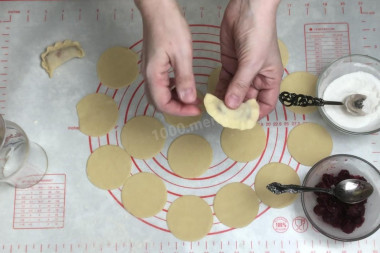
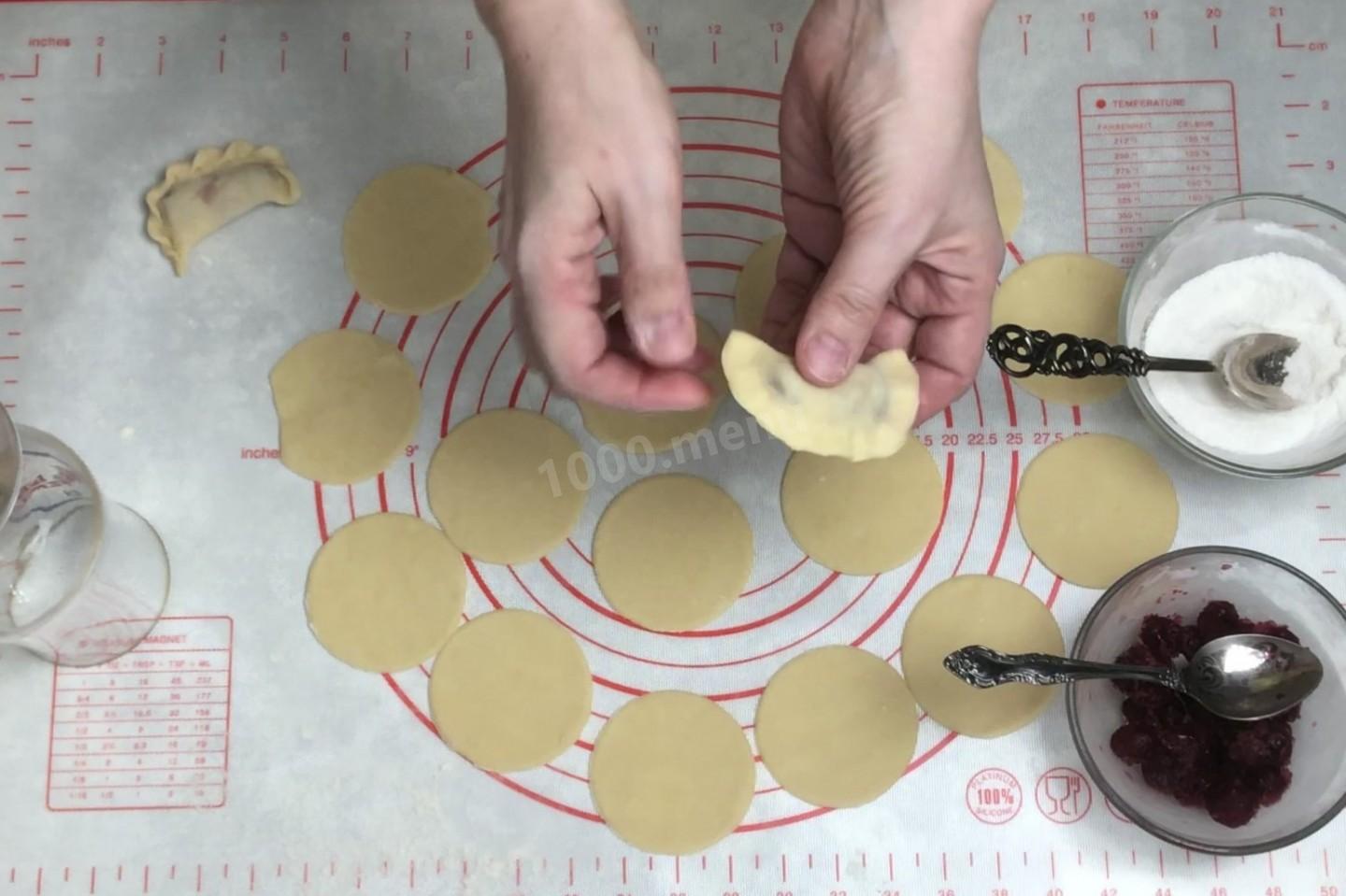
Seal the varenyk into a half-moon. You can reinforce the edge with a braided crimp. I was in a hurry toward the end and skipped the braiding, and the varenyky still held together fine. The braid just looks nicer.
-
Step 14:
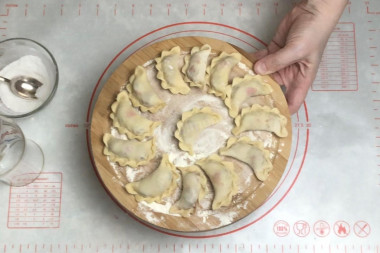
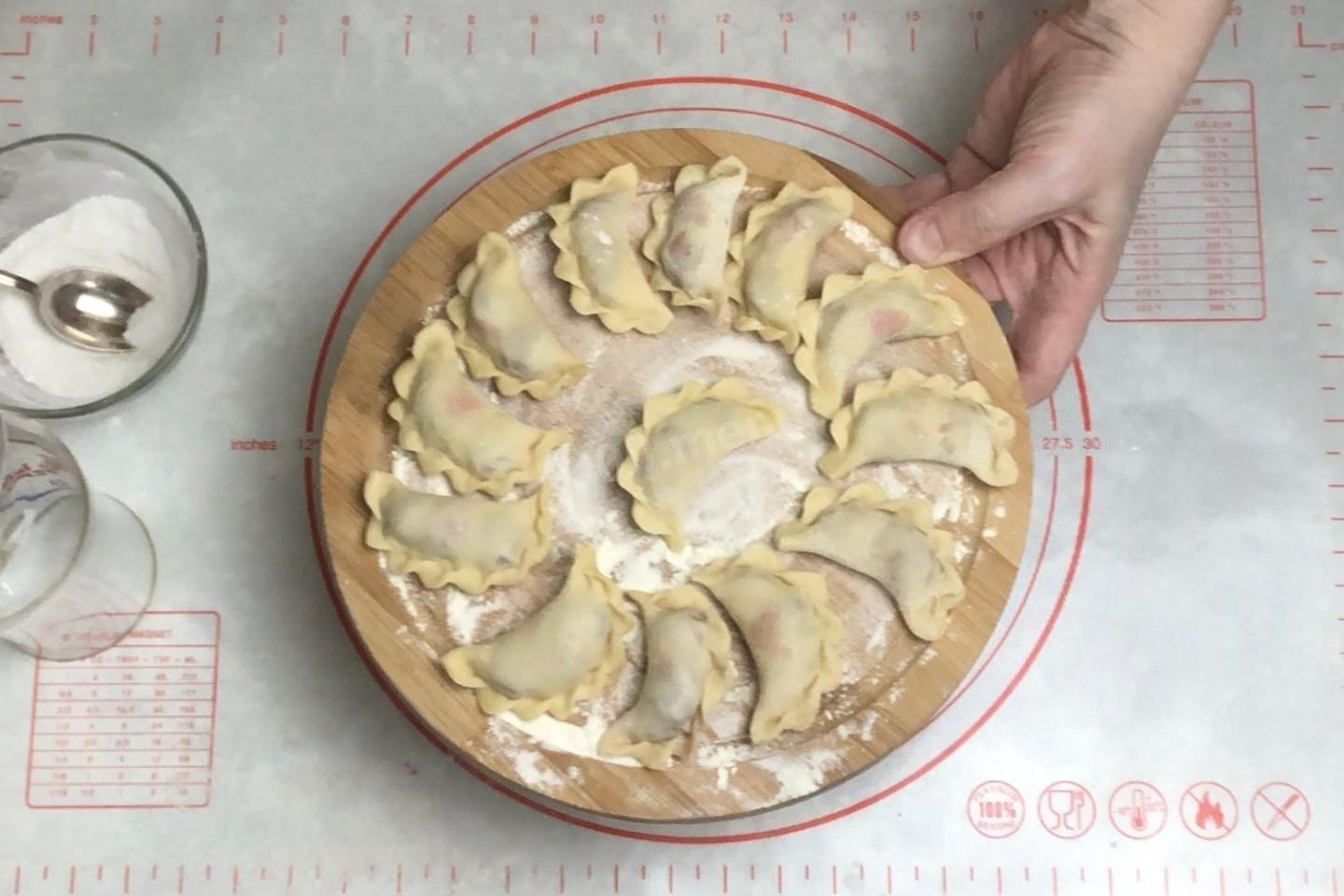
As soon as you finish the first batch of varenyky, put them on a floured board and pop them in the freezer. Or cook them right away. Don't leave them out for long — the cherries will thaw and leak. Move on to the next batch.
-
Step 15:
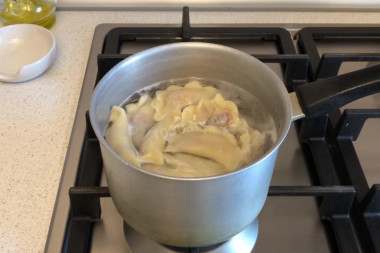
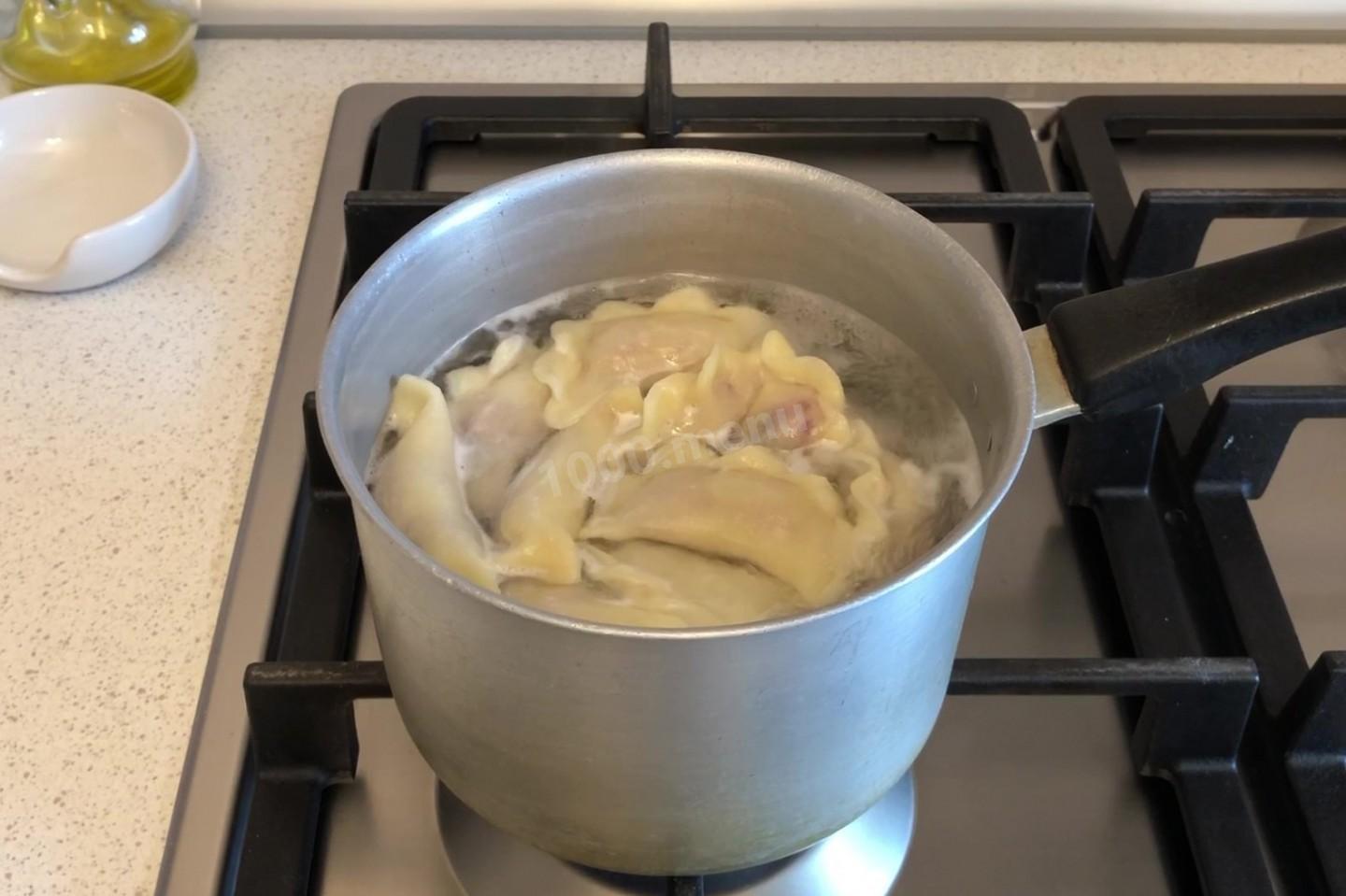
Cook the varenyky in salted water. Drop them into the boiling water and be sure to stir gently so the dough doesn't stick to the bottom. After it returns to a boil, cook for 3 minutes. All the varenyky should float to the top. Lift them out onto a plate with a slotted spoon. Serve with butter or sour cream. Enjoy!
- A really great recipe — from the dough to the filling. Not a single varenyk leaked while cooking! That's never happened to me before. Usually half the cherries would end up in the pot and the varenyky would turn blue and lose all their good looks. I'll make them this way even with fresh cherries, with the starch and sugar inside each varenyk instead of mixed straight into the cherries. I'll keep this dough in my repertoire for varenyky with other fillings and for pelmeni. It's very elastic, seals beautifully, and tastes good.
- Always wash eggs before using them, since even a seemingly clean shell can harbor harmful bacteria. It's best to use a food-safe wash and a brush.
- Be prepared that you may need more or less flour than the recipe calls for. Go by the desired consistency of the dough, not by the amount of flour. To avoid mistakes, read up on flour and its properties!
- For cooking, it's best to use filtered or bottled water with a neutral taste. If you use tap water, keep in mind that it can give the dish an unpleasant off-flavor.
Caloric content of the products possible in the composition of the dish
- Chicken egg - 157 kcal/100g
- Egg white - 45 kcal/100g
- Egg powder - 542 kcal/100g
- Egg yolk - 352 kcal/100g
- Ostrich egg - 118 kcal/100g
- Whole durum wheat flour fortified - 333 kcal/100g
- Whole durum wheat flour, universal - 364 kcal/100g
- Fine semolina flour - 348 kcal/100g
- Flour - 325 kcal/100g
- Granulated sugar - 398 kcal/100g
- Sugar - 398 kcal/100g
- Vegetable oil - 873 kcal/100g
- Salt - 0 kcal/100g
- Water - 0 kcal/100g
- Potato starch - 300 kcal/100g
- Frozen cherries - 46 kcal/100g
Similar recipes

- For breakfast
- Children's recipes
- National cuisine
- Second course
- Eggs
- Flour
- Berries
- Sweet
- Spices seasonings spices
- Fats and oils
- Other
- Salt
- Vegetable oil
- Water
- Starch
- Ukrainian cuisine
- Cooking
- Boiled dough vareniki
- Egg breakfast
- From cherries
- Vegetarianism
- Recipes for lean dishes without butter
- Sugar