Braised Potatoes on the Stovetop
Quick, budget-friendly, tasty, and simple! Braised potatoes in a skillet are a hearty, cheap dish for the whole family. Serve them on their own, or alongside any meat, fish, mushrooms, poultry, sauce, fresh vegetables, or herbs.

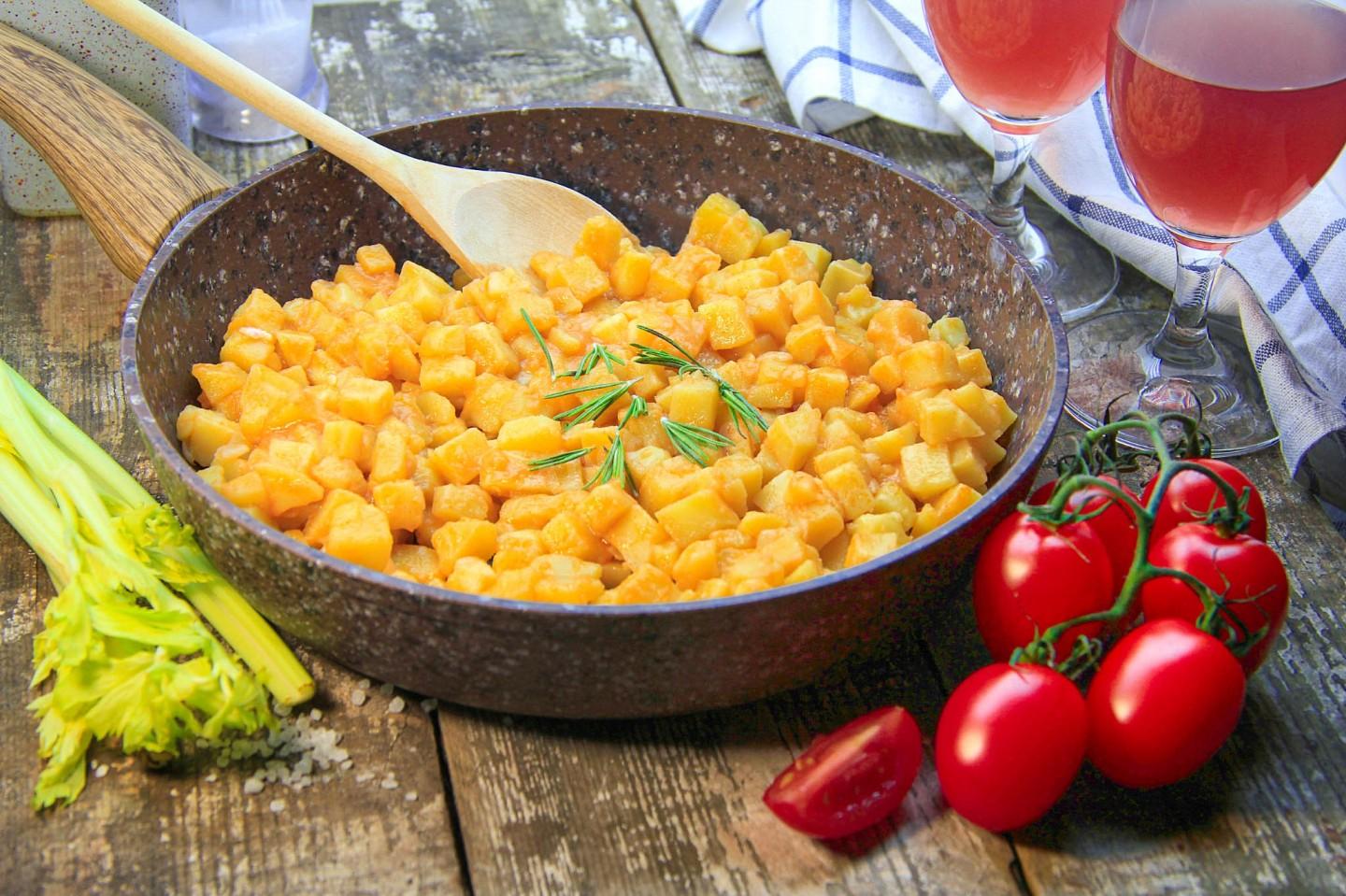
Cooking method
-
Step 1:
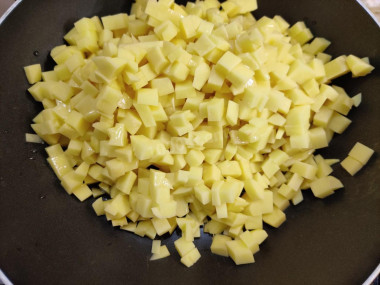
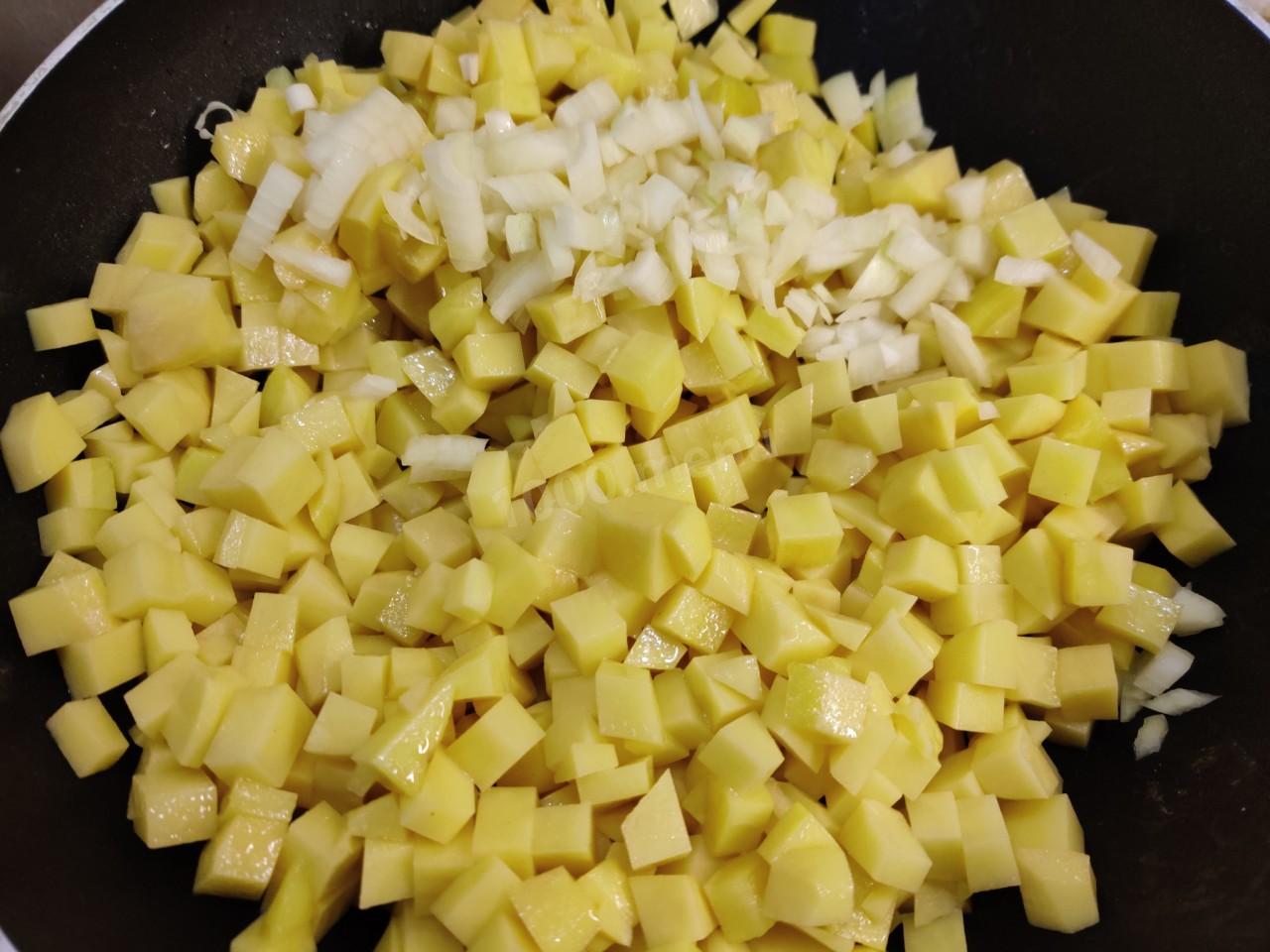
How do you braise potatoes in a skillet? Get your ingredients ready. Wash the potatoes and peel them — I like a vegetable peeler for this, but a small paring knife works too. Cut the peeled potatoes into medium cubes. Pour vegetable oil into a skillet and heat it up. Add the potatoes and lower the heat to medium.
-
Step 2:
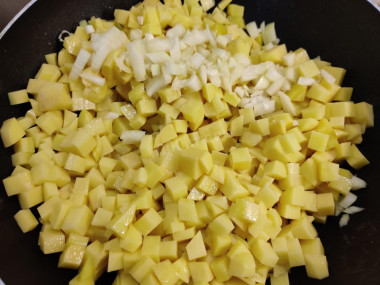
Peel the onion and chop it fine. Add it to the skillet with the potatoes. If the onion is hard to peel, soak it in warm water for a few minutes first.
-
Step 3:
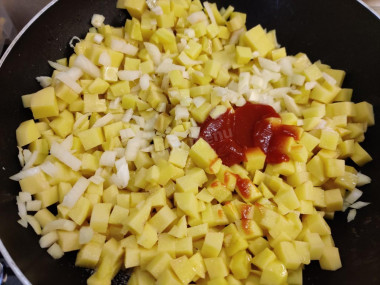
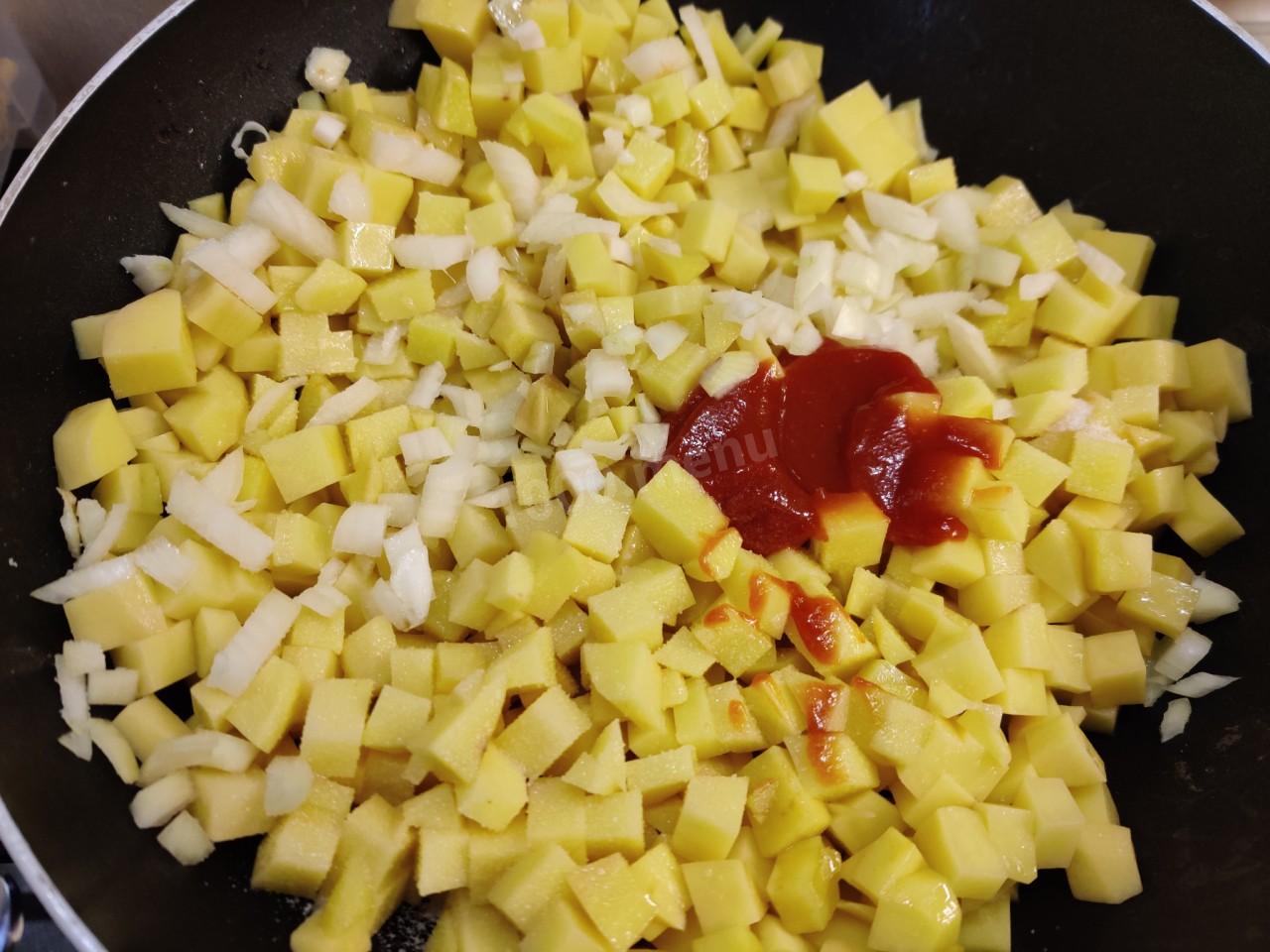
Add the tomato paste to the potatoes and onion. Season with salt and pepper to taste. You can swap the tomato paste for a clean-label ketchup (no dyes, artificial flavors, or flavor enhancers) — or skip it altogether.
-
Step 4:
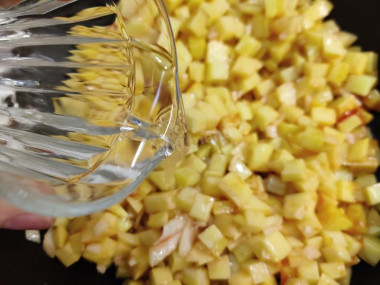
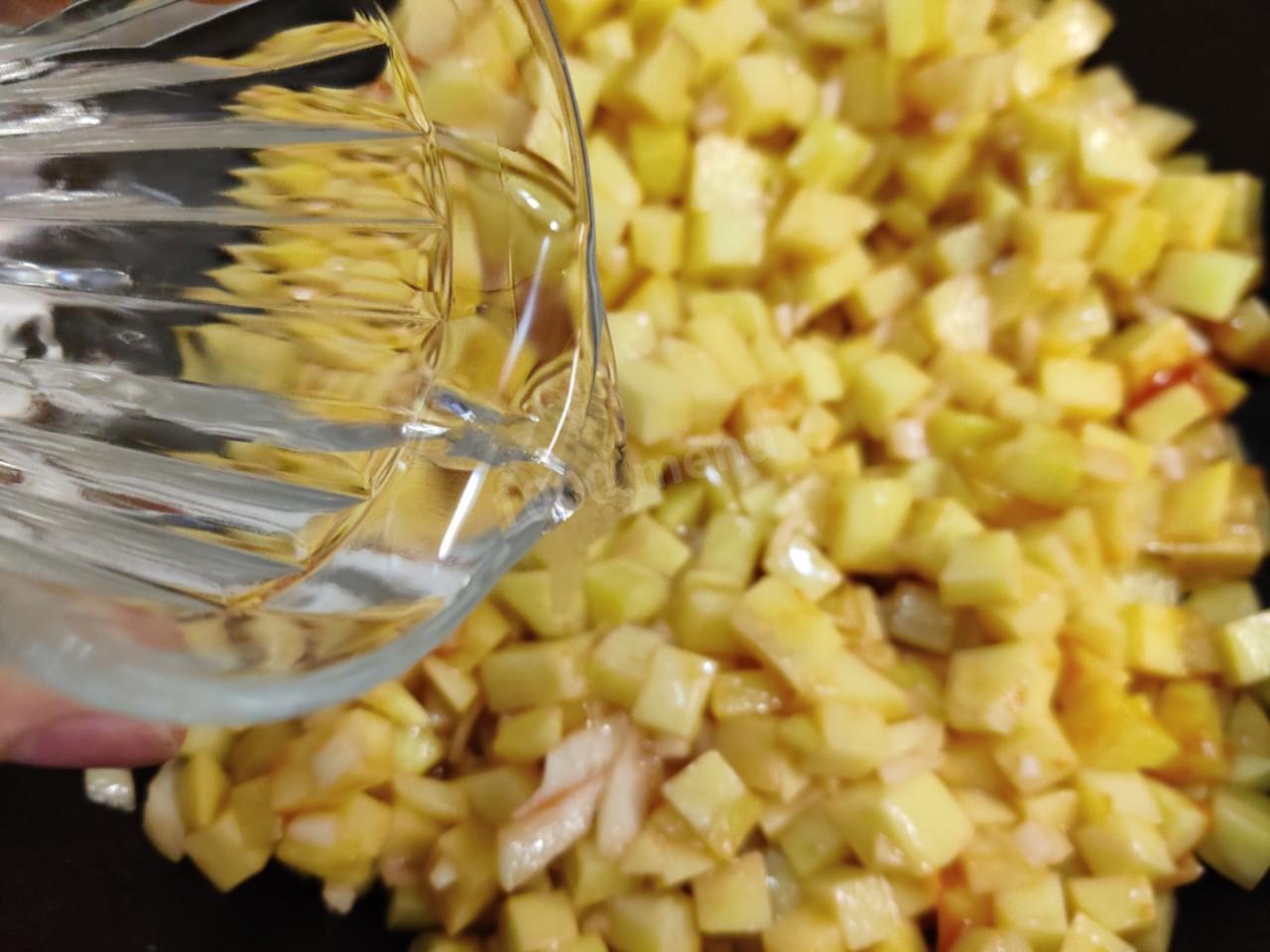
Add half a cup of room-temperature water to the skillet and stir everything well. I recommend bottled or filtered water.
-
Step 5:
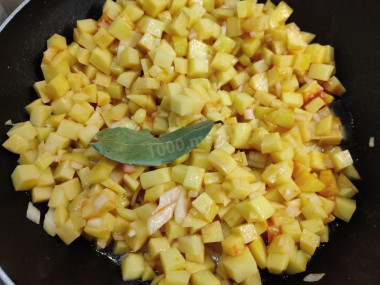
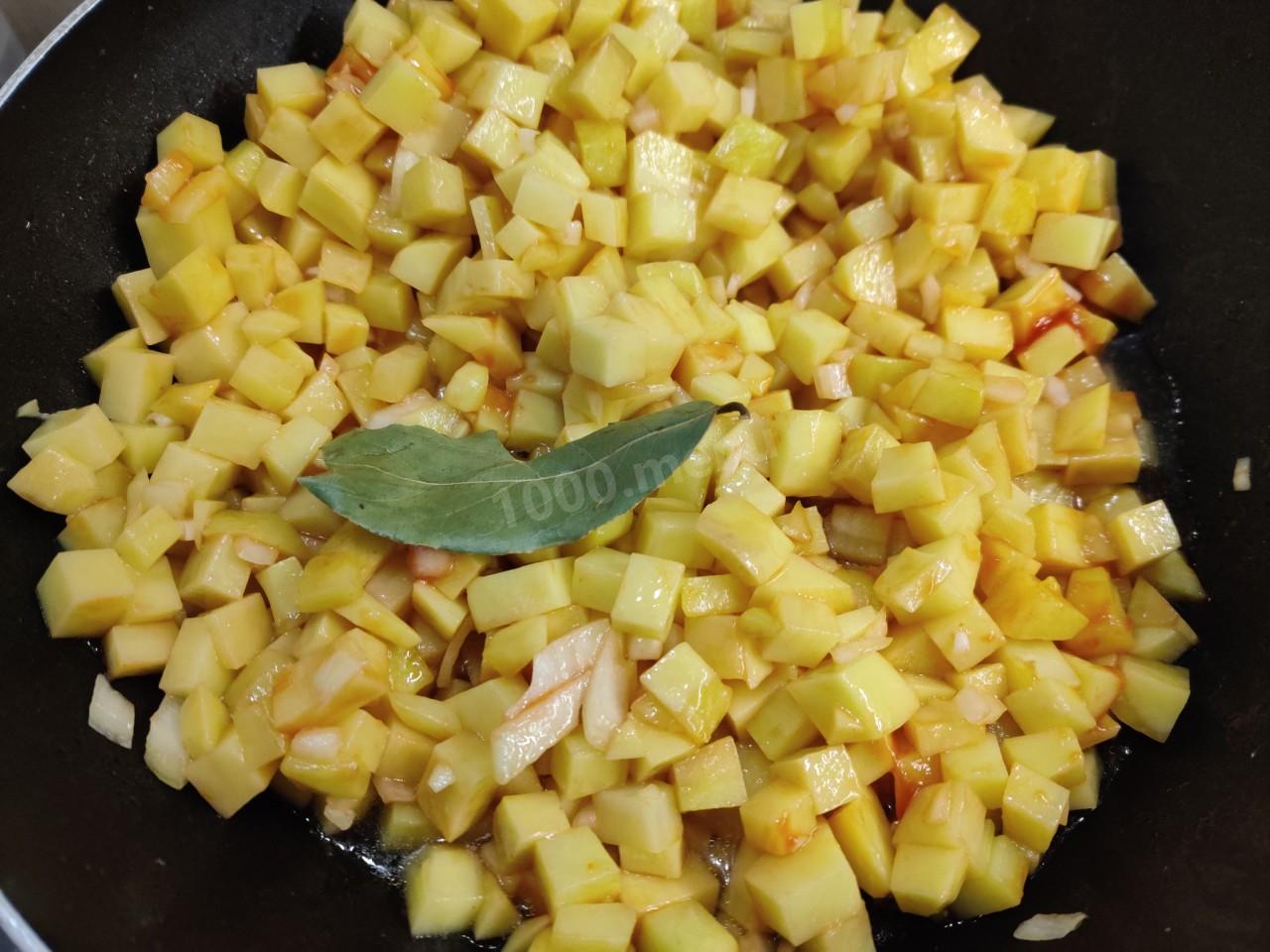
Add the bay leaf and braise the potatoes over low heat for half an hour, covered. Add a splash of cold water as needed along the way so the potatoes braise rather than fry. For the same reason, stir them now and then.

- Serve this side piping hot with any simple meat dish: steamed patties, meatballs, or meat cakes; baked or pan-fried white fish; braised poultry. It's also great with just a fresh vegetable salad dressed in olive oil. Braised potatoes keep in the fridge for up to two days. I love the gentle hint of bay leaf here — it gives the dish such a homey, cozy flavor. Cut the potatoes however you like; I go with smallish pieces for faster cooking. Bigger pieces will bump up the time a bit. One more thing: I cook the potatoes until done and then a little longer, until the edges of each piece soften and round off. That way the pieces sit in a bit of thick gravy — so good! Enjoy!
- To keep your eyes from stinging when you cut onions, rinse both the onion and the knife in cold water. Your cutting board won't hold on to that oniony smell if you rub it with a piece of lemon first.
- Root vegetables are best scrubbed with a brush or a stiff sponge under running water.
- Fry with an oil that has a high smoke point. Every oil is only good up to a certain temperature — its smoke point, past which it starts to burn and form harmful compounds. Refined oils hold up better to heat and have higher smoke points, so they're the safe choice for the stovetop, oven, or grill. The most common high-smoke-point picks are refined sunflower, olive, and grapeseed oil.
Caloric content of the products possible in the composition of the dish
- Onion - 41 kcal/100g
- Ripe potatoes - 80 kcal/100g
- Baked potatoes - 70 kcal/100g
- Mashed potatoes - 380 kcal/100g
- Boiled potatoes - 82 kcal/100g
- Potatoes in uniform - 74 kcal/100g
- Fried potatoes - 192 kcal/100g
- Bay leaf - 313 kcal/100g
- Vegetable oil - 873 kcal/100g
- Tomato paste - 28 kcal/100g
- Salt - 0 kcal/100g
- Water - 0 kcal/100g
- Ground hot pepper - 21 kcal/100g
Similar recipes
- Homemade dinner
- Second course
- Side dishes
- Vegetables
- Spices seasonings spices
- Fats and oils
- Other
- Bay leaf
- Pepper
- Salt
- Vegetable oil
- Water
- Tomato paste
- Stewing
- In a frying pan
- Inexpensive dinner
- Side dish to fish
- Side dish to cutlets
- Side dish to meat
- Side dish to chicken
- Side dish to steak
- Side dish to duck
- Inexpensive budget dinner
- From potatoes
- From onion
- No eggs
- Vegetarianism
- Recipes for lean dishes without butter