Vareniki with sauerkraut
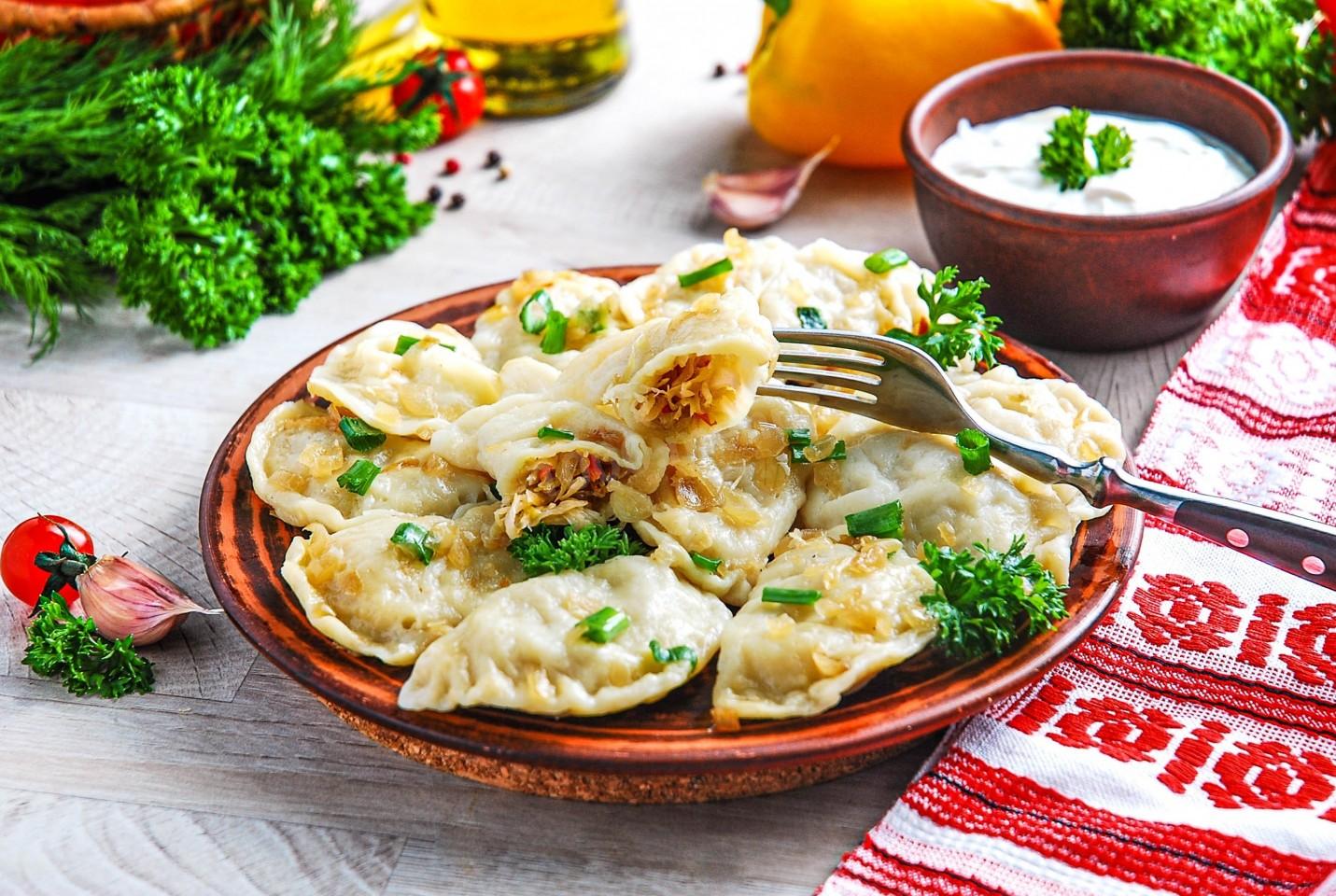
Simple, appetizing, melt-in-your-mouth, and homey-delicious! Vareniki (dumplings) with sauerkraut are a favorite for the whole family. The dough in this recipe is easy to handle—it rolls out beautifully and is a pleasure to work with. These dumplings will brighten up an everyday menu, but your guests won't turn down such a treat either!



Cooking method
-
Step 1:
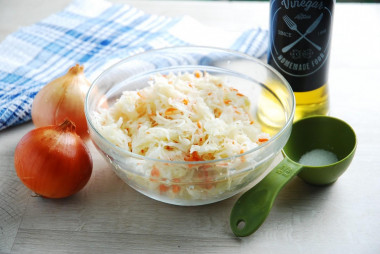
How do you make vareniki with sauerkraut? First, get the filling ingredients ready. Use tasty sauerkraut, ideally homemade, since the flavor of your dumplings depends on it.
-
Step 2:
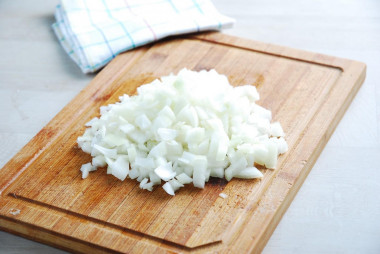
Peel the onion and rinse it in cold water. Cut it into cubes.
-
Step 3:
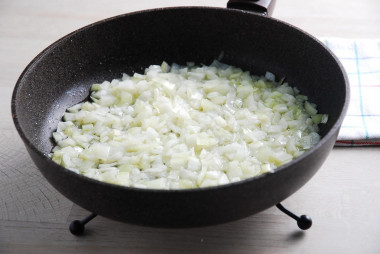
Pour vegetable oil into a skillet. I used olive oil, but you can use refined sunflower oil. Heat it well and add the chopped onion. Fry, stirring constantly, for about 6–7 minutes, until the onion turns golden.
-
Step 4:
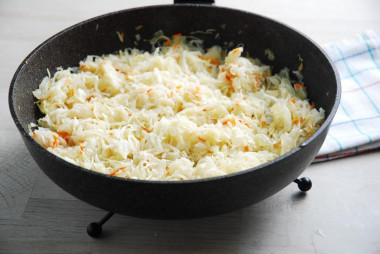
Squeeze the excess liquid out of the sauerkraut well, through several layers of cheesecloth or just with your hands. Add it to the onion in the skillet. Add 2–3 pinches of sugar. Stir. Simmer over low heat, covered, for about 25–30 minutes, stirring now and then. Transfer the finished filling to a bowl and let it cool.
-
Step 5:
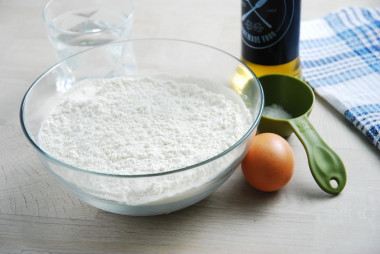
While the filling cools, you can make the dough. Get the ingredients ready. Use all-purpose flour. Sift it to aerate it. The egg and water should be at room temperature.
-
Step 6:
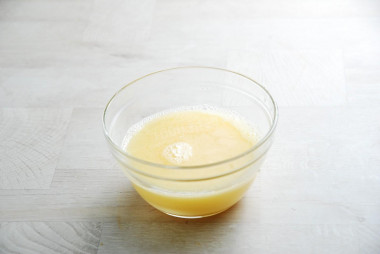
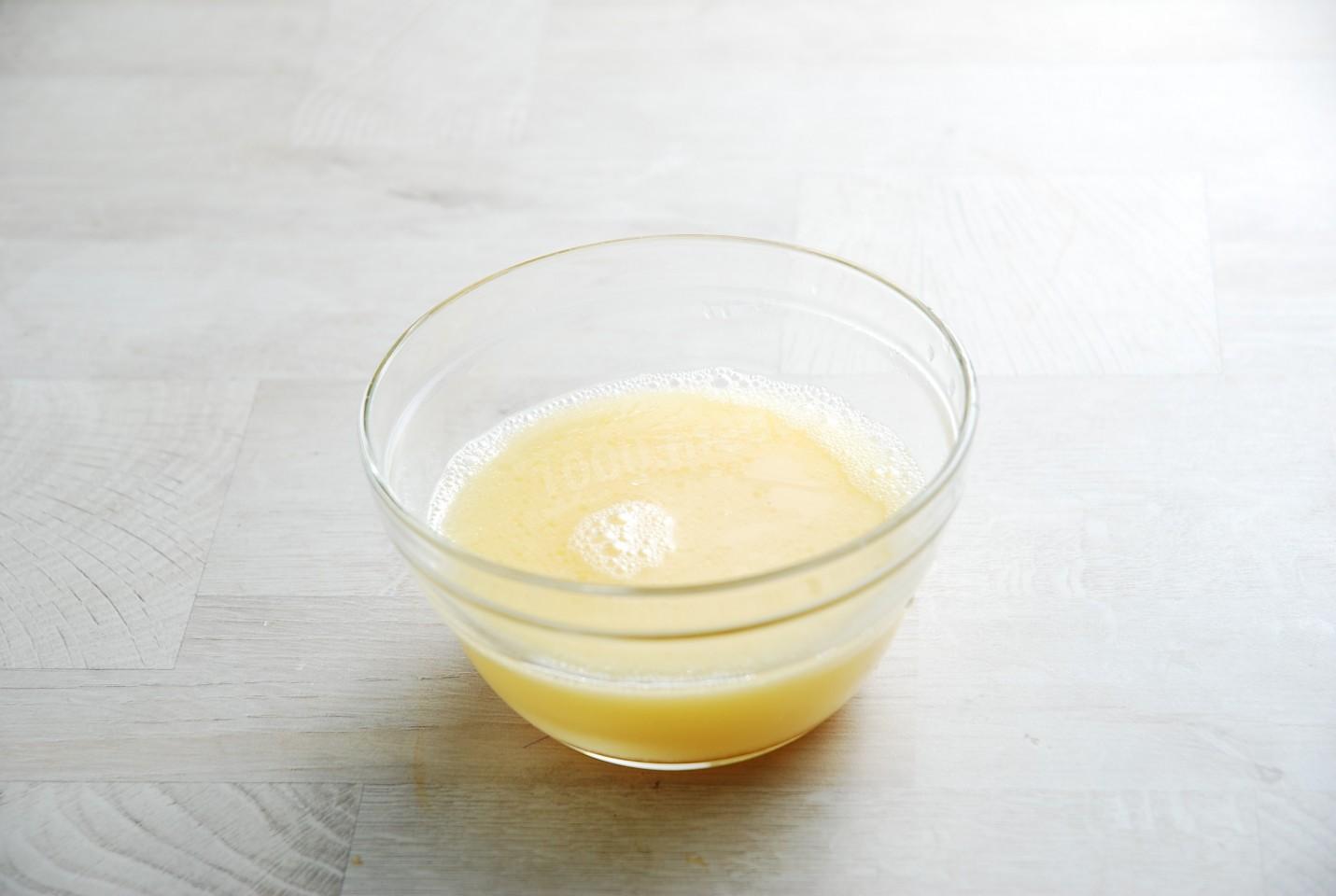
Crack the egg into a suitable bowl, add the water and 1 tablespoon of vegetable oil. Mix until smooth with a fork and pour it into the flour.
-
Step 7:
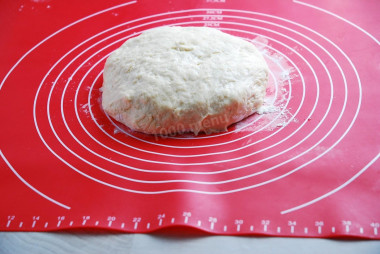
Knead a firm dough that doesn't stick to your hands. Since everyone's flour is different, you may need a bit more or less than the recipe states—go by the consistency of the dough. Cover it with a towel and let it rest for 40 minutes.
-
Step 8:

You can shape the dumplings the way many people are used to: roll the dough out into a sheet and cut out rounds with a cutter. Or you can roll part of the dough into a rope about 1–1.5 cm thick and slice it into equal-size pieces.
-
Step 9:
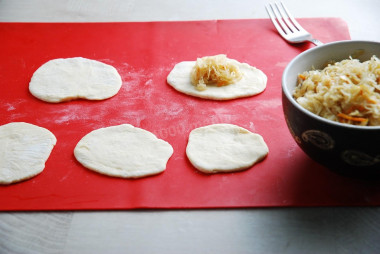
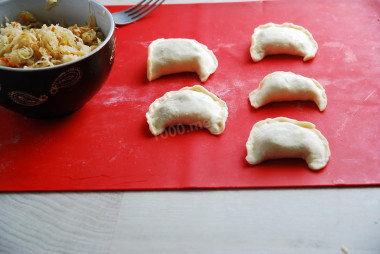
Next, dredge each piece of dough in flour and roll it out into rounds 1–1.5 mm thick. The thinner the dough, the tastier the dumplings. Put about 1 teaspoon of filling in the center of each round and pinch the edges sealed. Try to keep cabbage or grease off the edges of the dough, or it won't seal well and the dumplings will fall apart while cooking.
-
Step 10:
Grease the bottom of a pot with vegetable oil so the dumplings don't stick while cooking. Pour in water (about 3 quarts) and set it on the stove. When the water boils, add salt (1/2 tablespoon). With a spoon, swirl the water into a counterclockwise whirlpool. Drop in the dumplings (15 at a time). When they come back to a boil, turn the heat down to low and cook for about 4–6 minutes. The thicker the dough, the longer they'll take.
-
Step 11:
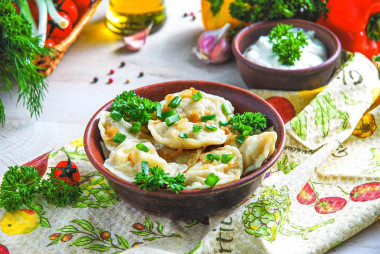
Lift the cooked dumplings out with a slotted spoon and drain them in a colander. Now transfer them to a bowl and add butter or the sautéed onion. Serve the sauerkraut vareniki hot with sour cream or garlic sauce. Enjoy your meal!




- Any oil is good only up to a certain temperature—its smoke point, at which the oil starts to burn and forms toxic compounds, including carcinogens. To learn how to gauge the frying temperature and choose the best oil for frying, and which oil is better not to use at all, read here.
- Be prepared to need more or less flour than the recipe states. Go by the consistency of the dough rather than the exact amount of flour. To avoid mistakes, read up on flour and its properties!
- For how to choose the perfect pot for soup, porridge, or pickling cucumbers, read the article about pots.
Caloric content of the products possible in the composition of the dish
- Vegetable oil - 873 kcal/100g
- Sauerkraut - 19 kcal/100g
- Salt - 0 kcal/100g
- Water - 0 kcal/100g
- Onion - 41 kcal/100g
- Wheat flour - 325 kcal/100g
- Chicken egg - 80 kcal/100g
Similar recipes


- Homemade dinner
- National cuisine
- Second course
- Eggs
- Vegetables
- Flour
- Spices seasonings spices
- Fats and oils
- Other
- Salt
- Vegetable oil
- Water
- Ukrainian cuisine
- Cooking
- Inexpensive dinner
- Boiled dough vareniki
- Second courses of cabbage
- Chicken eggs
- Inexpensive budget dinner
- From cabbage
- From onion
- Wheat flour
- Vegetarianism
- Recipes for lean dishes without butter