Rassolnik Soup Base for Winter (with Pickles)
A make-ahead soup base in jars — no potatoes or meat needed. Rassolnik is one of my all-time favorite soups. I make it often and in big batches, and recently I found a way to save time: just put up the base for this tasty soup in jars!



Cooking method
-
Step 1:
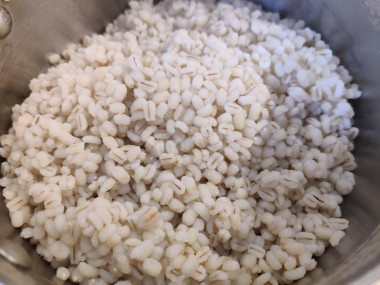
Rinse the pearl barley thoroughly in a colander under running water. Pour filtered water into a pot and cook the barley over medium heat until half-done, stirring occasionally so it doesn't stick to the bottom. Mine took about twenty minutes to get half-cooked; then I drained it in a colander.
-
Step 2:
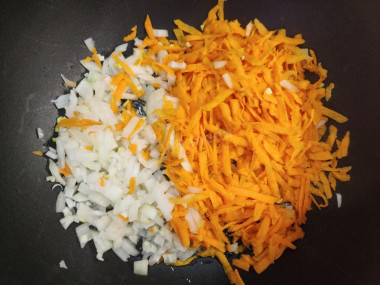
Scrub the carrots under running water and peel them, then grate on the coarse side of a box grater. Peel the onion and cut it into small dice. For the base I used a very deep nonstick skillet, but a pot works too. Heat the skillet over high heat and add the vegetable oil. Lower the heat to medium and sauté the onion and carrot until golden.
-
Step 3:
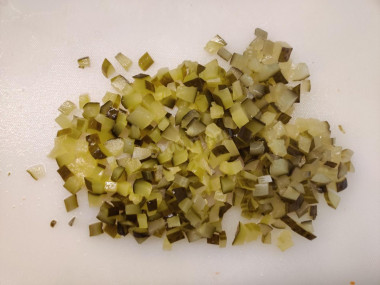
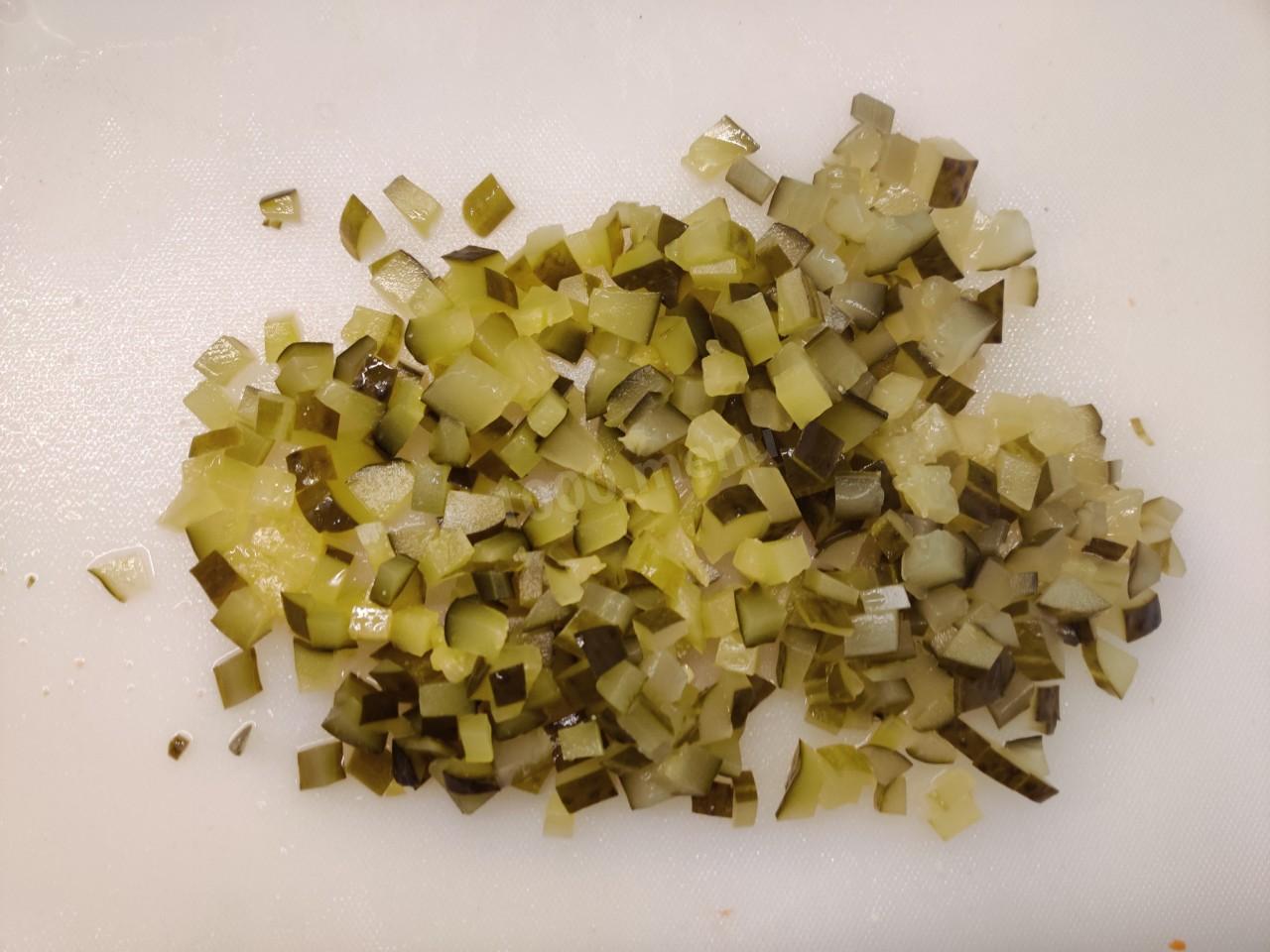
Rassolnik traditionally uses brined (salt-fermented) pickles. You can use vinegar pickles, but it won't be quite the same. Don't pour out the brine from the jar yet — you'll need it. Cut the pickles into small dice, or grate them on the coarse side of a box grater.
-
Step 4:
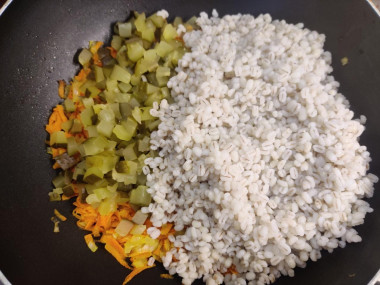
Add the half-cooked barley and the chopped pickles to the onion and carrot in the skillet.
-
Step 5:
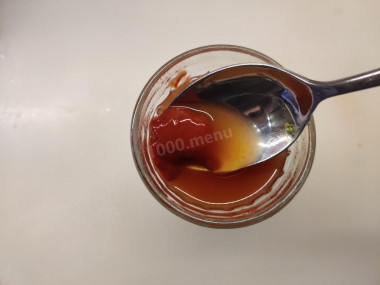
Stir the tomato paste into a cup of filtered water. Add the sugar and half the salt, so the finished dish doesn't end up too salty. The base will simmer in this liquid.
-
Step 6:
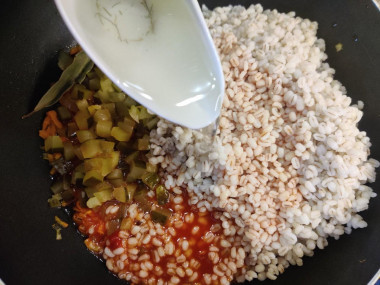
Pour the tomato liquid and a cup of pickle brine into the skillet. Add the bay leaf and allspice berries. My store-bought pickles only had half a cup of brine in the jar, so I topped it up with another half cup of filtered water.
-
Step 7:
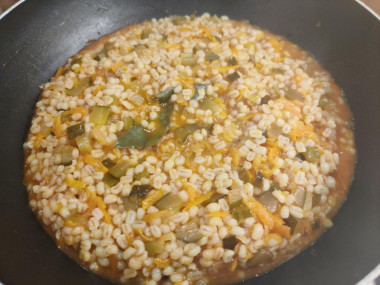
Simmer the base, covered, over low heat for 25-30 minutes. The time may vary depending on your stove.
-
Step 8:
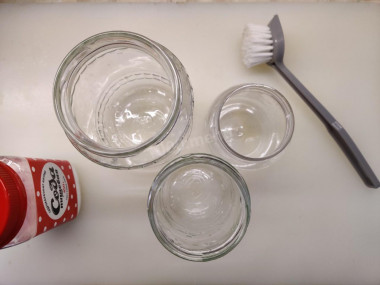
Meanwhile, scrub the jars with a baking-soda-dipped brush — soda is gentler on the environment than commercial dish soaps.
-
Step 9:
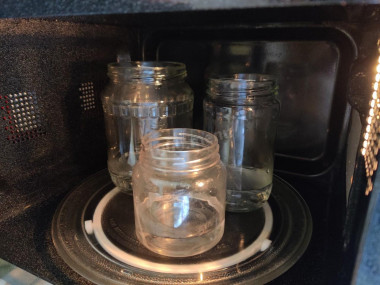
Sterilize the jars however you like. Here's my method: pour about half an inch of plain tap water into each and microwave for 3 minutes at 800 watts.
-
Step 10:

Condensation should form inside the jars — that means the sterilizing worked. Pour out the water. Just douse the lids and ladle with boiling water.
-
Step 11:
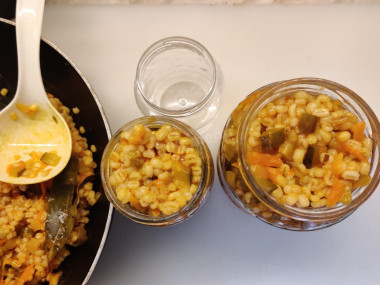
When the base is ready, taste it. If you're happy with it, spoon it into the jars (discard the bay leaf and allspice). Seal the jars, turn them upside down, and wrap them in a towel. Leave to cool completely, then store the base in the refrigerator.
-
Step 12:
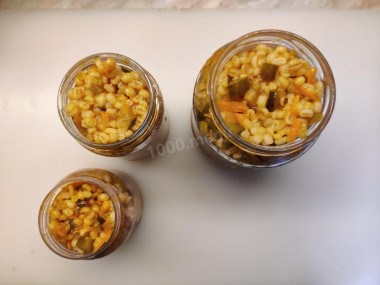
This amount made me three jars of base: 650 ml, 370 ml, and 250 ml. That's enough for three 2-liter pots of meatless rassolnik with added potatoes — or two pots if you like your soup thicker.




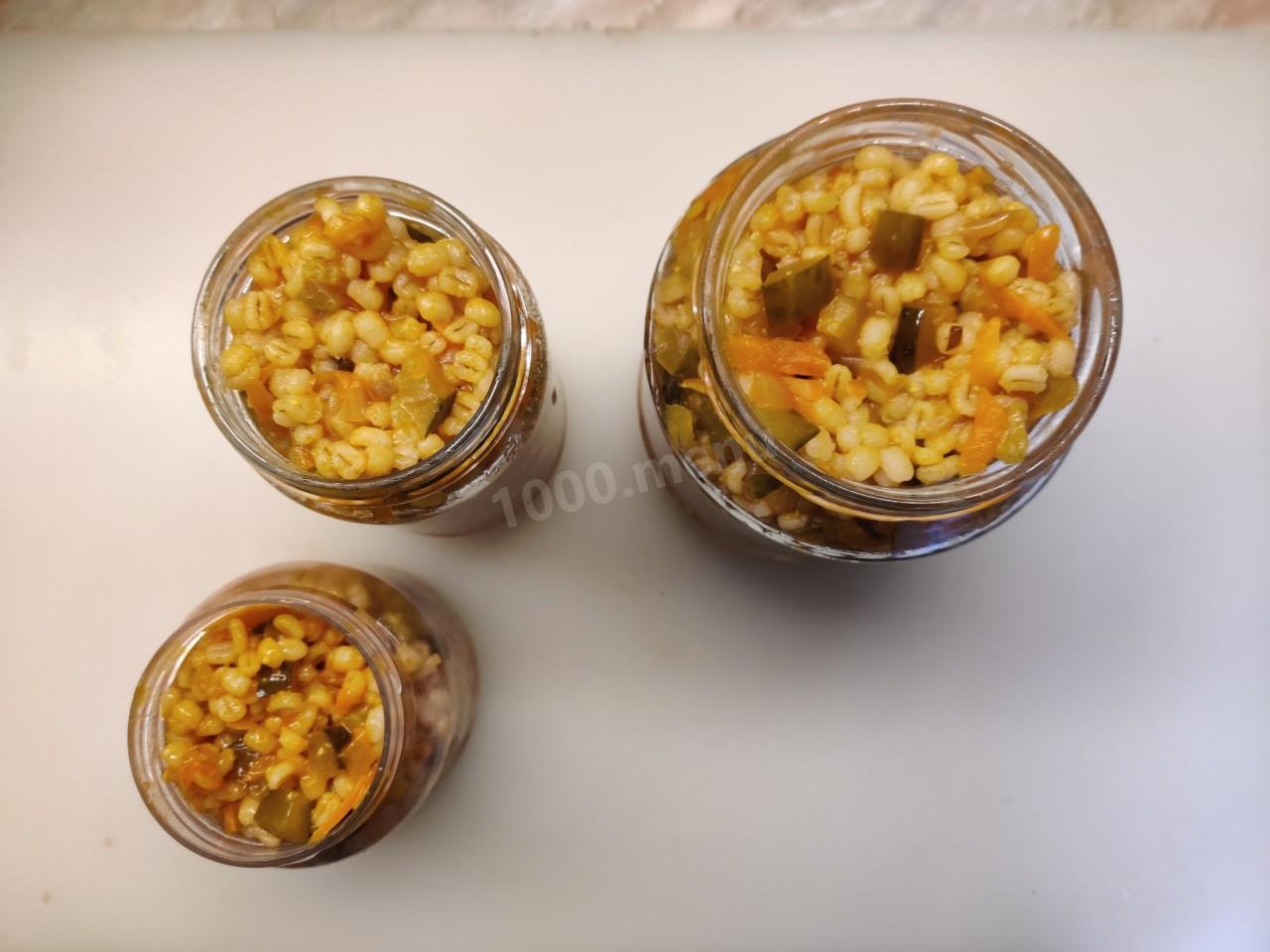
- With this base you can make rassolnik on meat broth or just water — you'll only need to add diced potatoes. Don't freeze the base with potatoes already in it, since they'll likely darken, turn mushy, and lose some flavor. Enjoy!
Caloric content of the products possible in the composition of the dish
- Onion - 41 kcal/100g
- Pearl barley - 340 kcal/100g
- Carrots - 33 kcal/100g
- Dried carrots - 275 kcal/100g
- Boiled carrots - 25 kcal/100g
- Bay leaf - 313 kcal/100g
- Granulated sugar - 398 kcal/100g
- Sugar - 398 kcal/100g
- Vegetable oil - 873 kcal/100g
- Tomato paste - 28 kcal/100g
- Salt - 0 kcal/100g
- Water - 0 kcal/100g
- Pickles - 11 kcal/100g
- Brine - 1 kcal/100g
- Allspice - 263 kcal/100g
Similar recipes
- National cuisine
- Old recipes
- Homemade preparations
- Semi-finished products
- Vegetables
- Sweet
- Cereals and cereal products
- Spices seasonings spices
- Fats and oils
- Other
- Bay leaf
- Pepper
- Salt
- Vegetable oil
- Water
- Tomato paste
- Russian cuisine
- Cooking
- Frying
- Stewing
- Vegetable blanks
- Brine
- From carrots
- From cucumbers
- From onion
- Vegetarianism
- Recipes for lean dishes without butter
- Sugar
- Pearl barley