Baked Pollock with Onions and Carrots
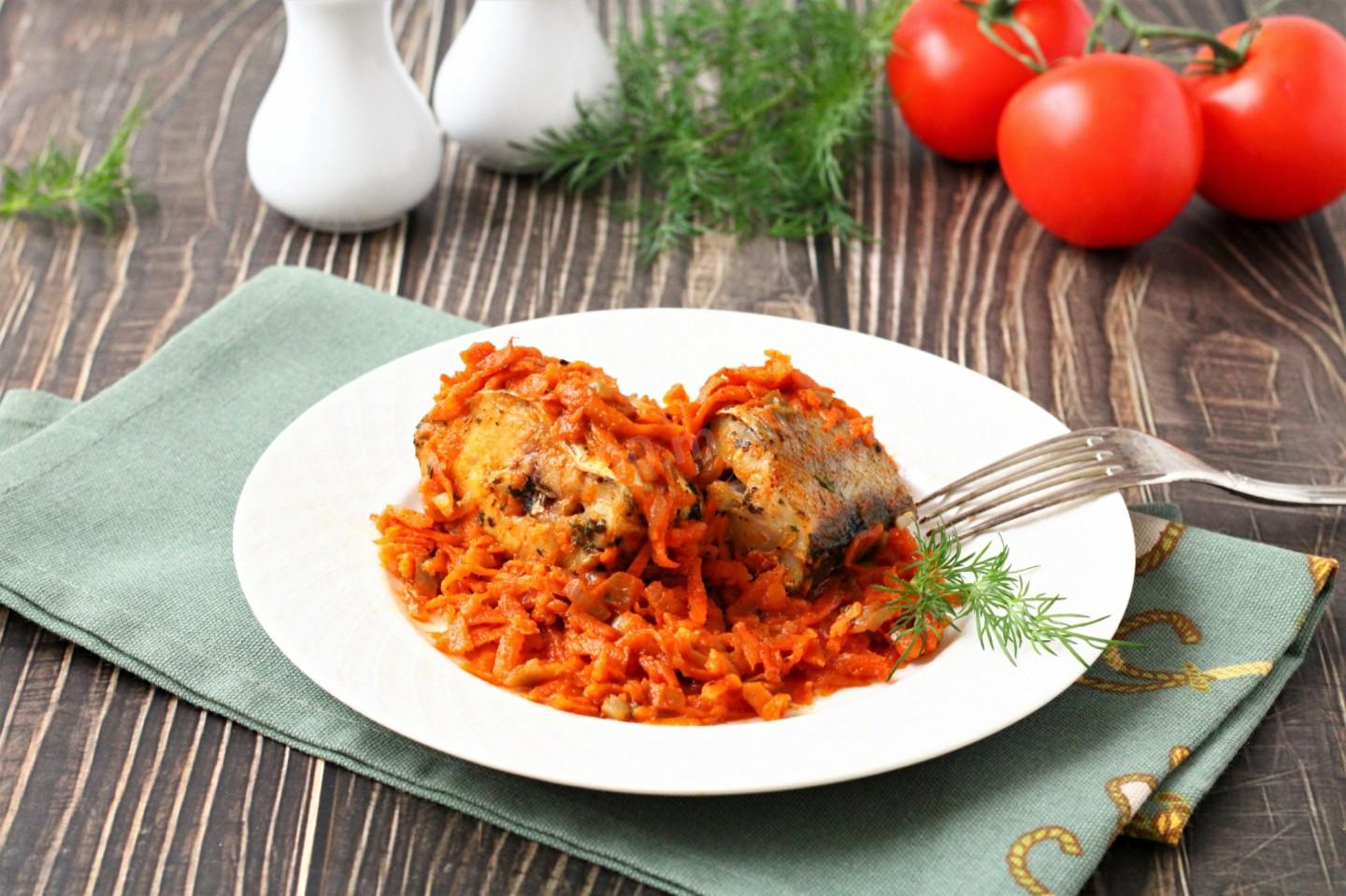
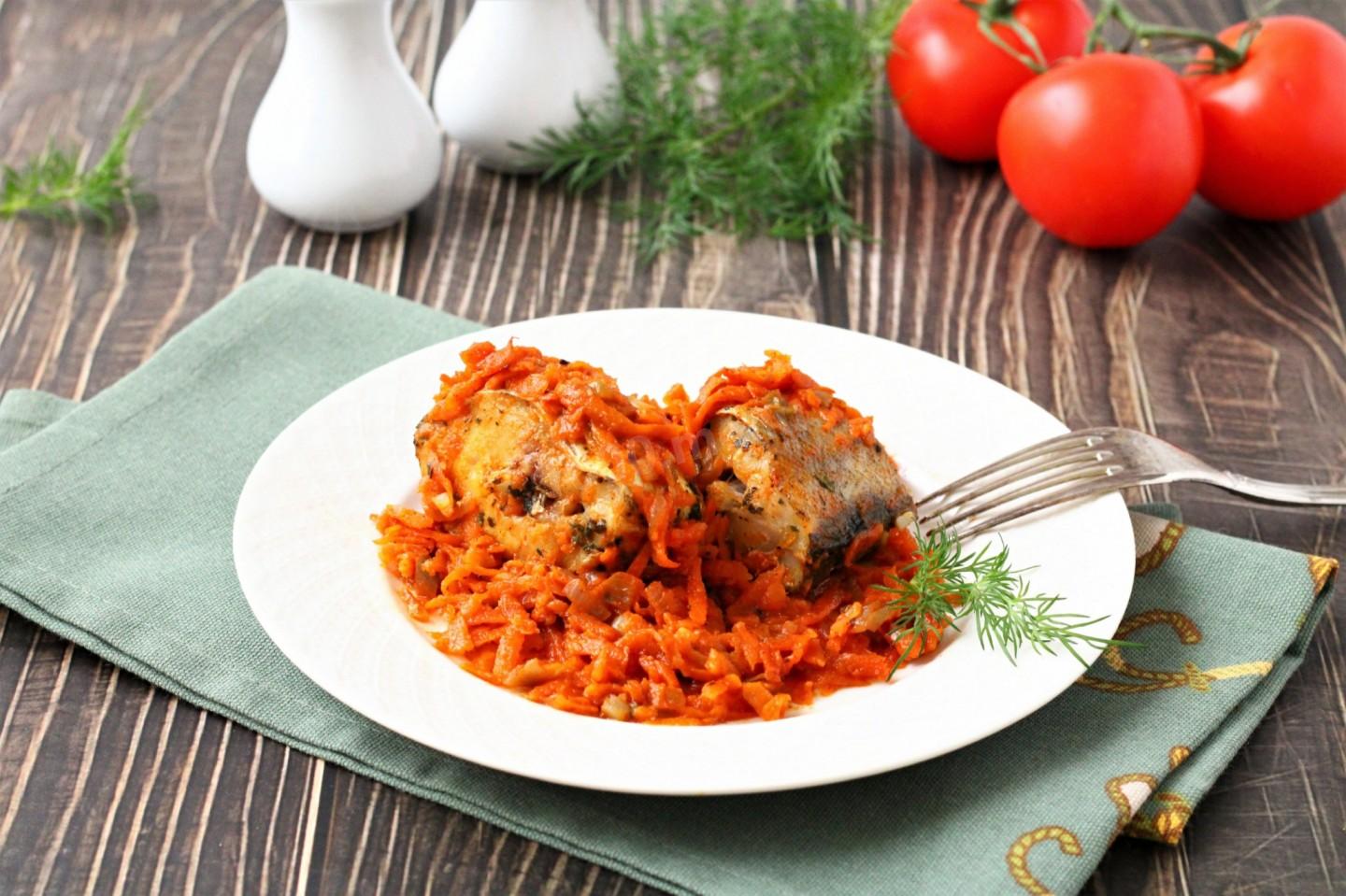
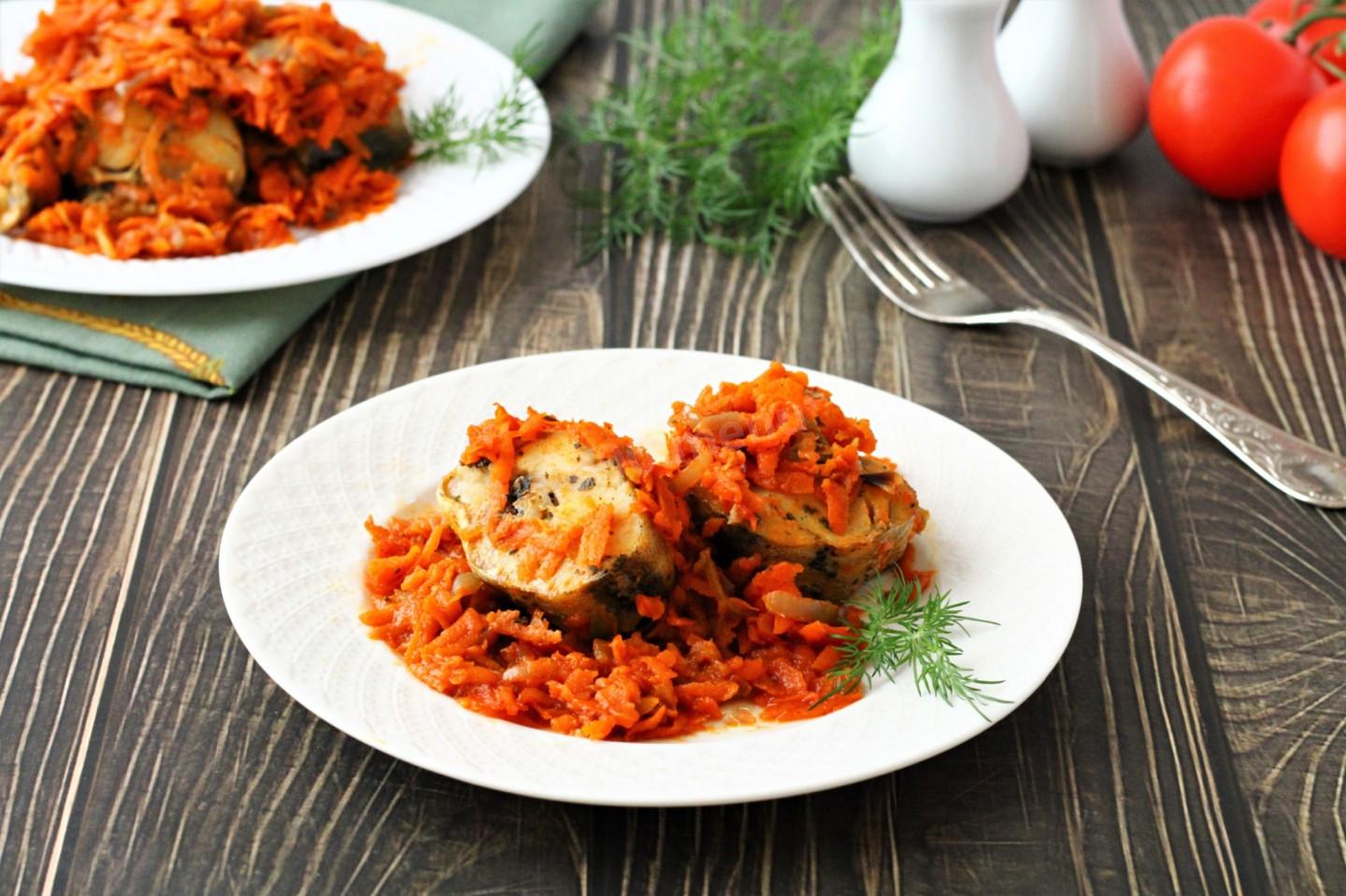
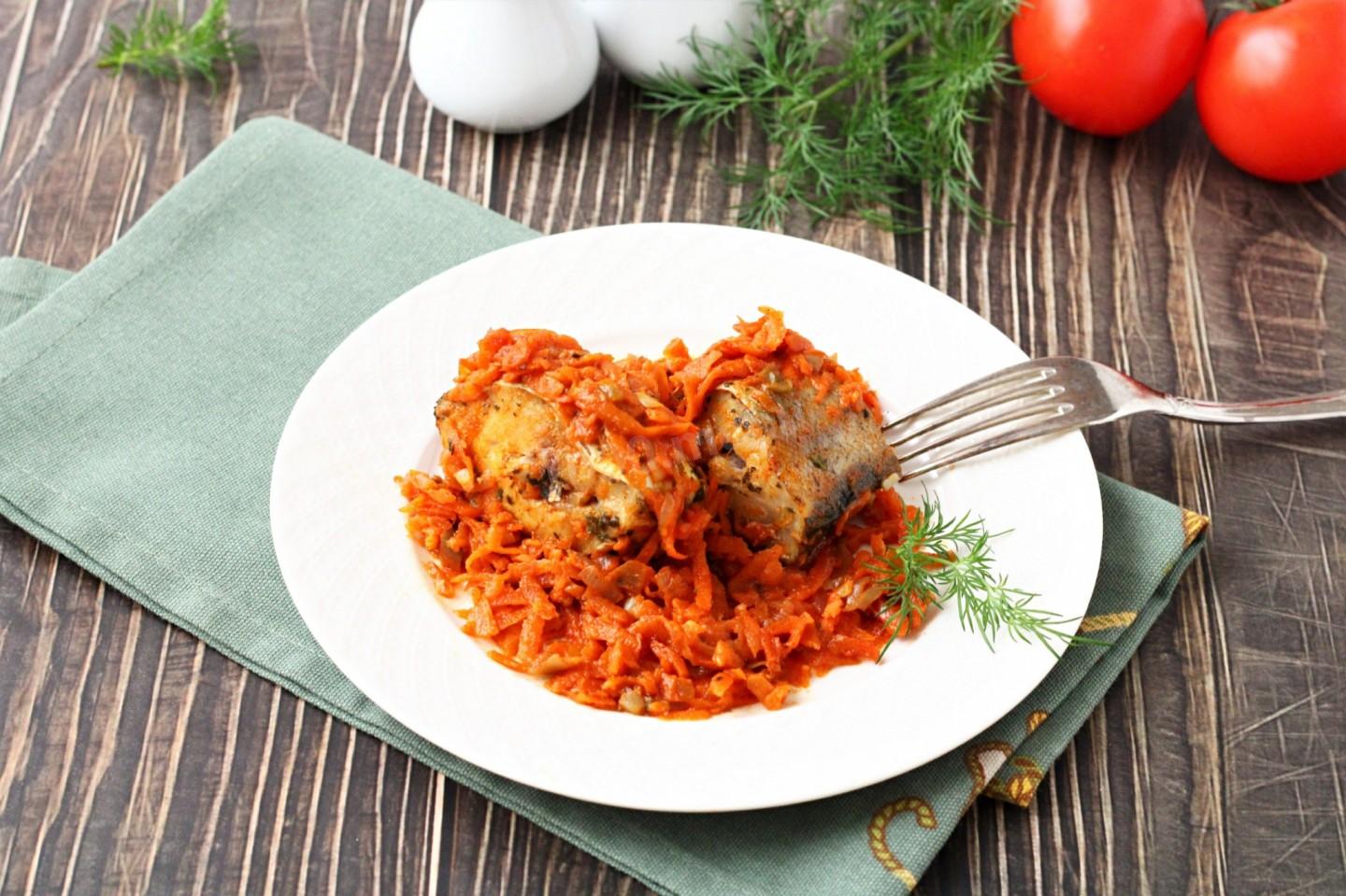
Even plain pollock can be made really delicious. Baked with carrots and onions, pollock turns out so much tastier — the vegetables give the fish new flavor and make it juicier and more fragrant. A simple, affordable recipe for a family dinner.
Cooking method
-
Step 1:
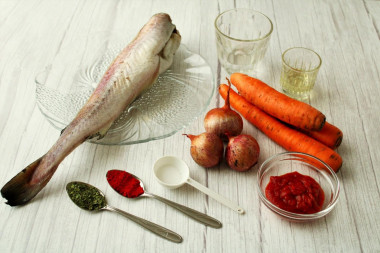
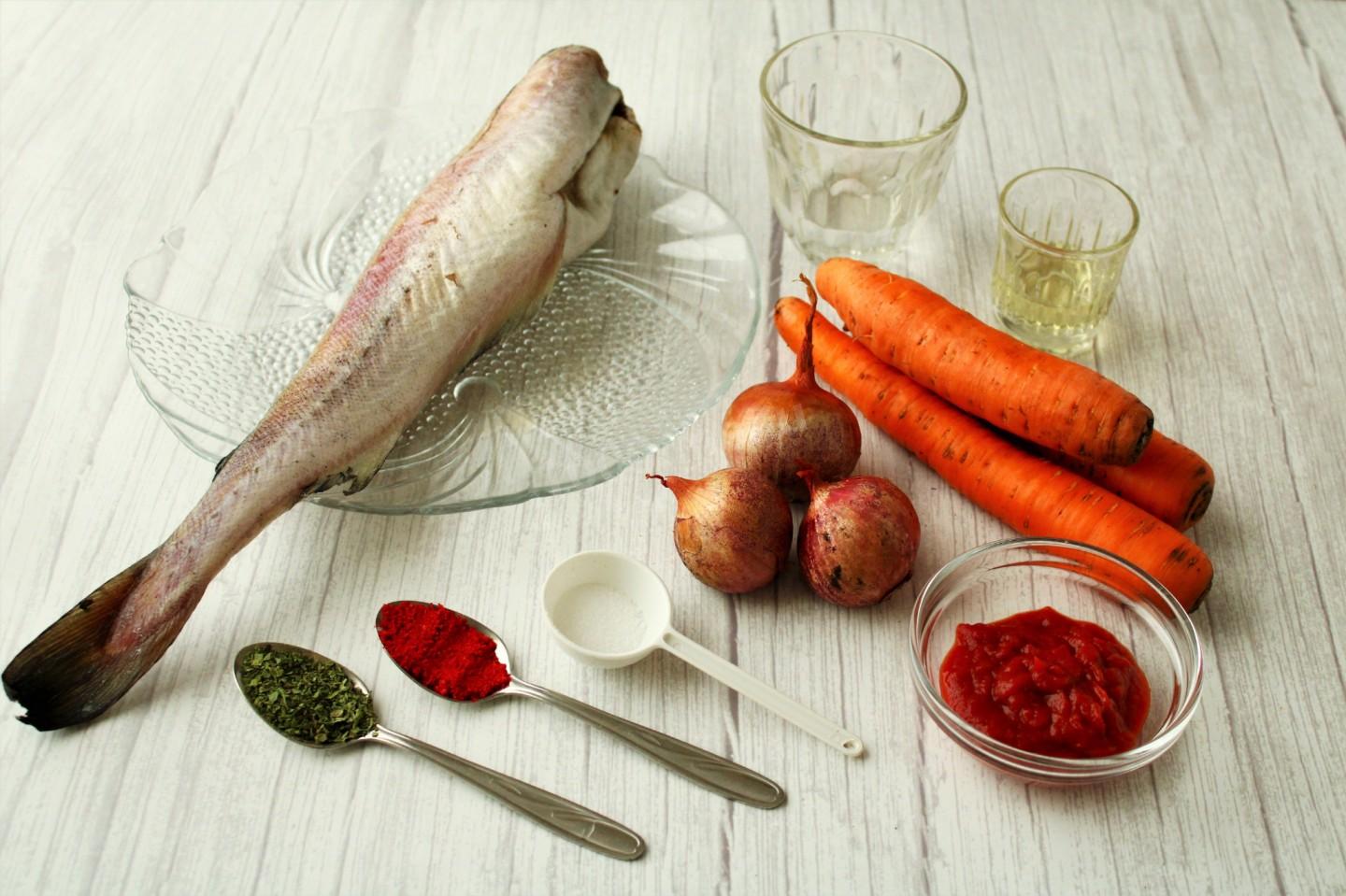
How do you bake pollock with onions and carrots? Gather your ingredients. If the fish is frozen, thaw it first at room temperature or in the refrigerator. Thawing slowly in the fridge is better, since it avoids a sharp temperature swing and helps the fish keep as much of its nutritional value as possible.
-
Step 2:
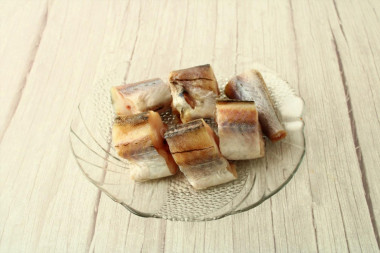
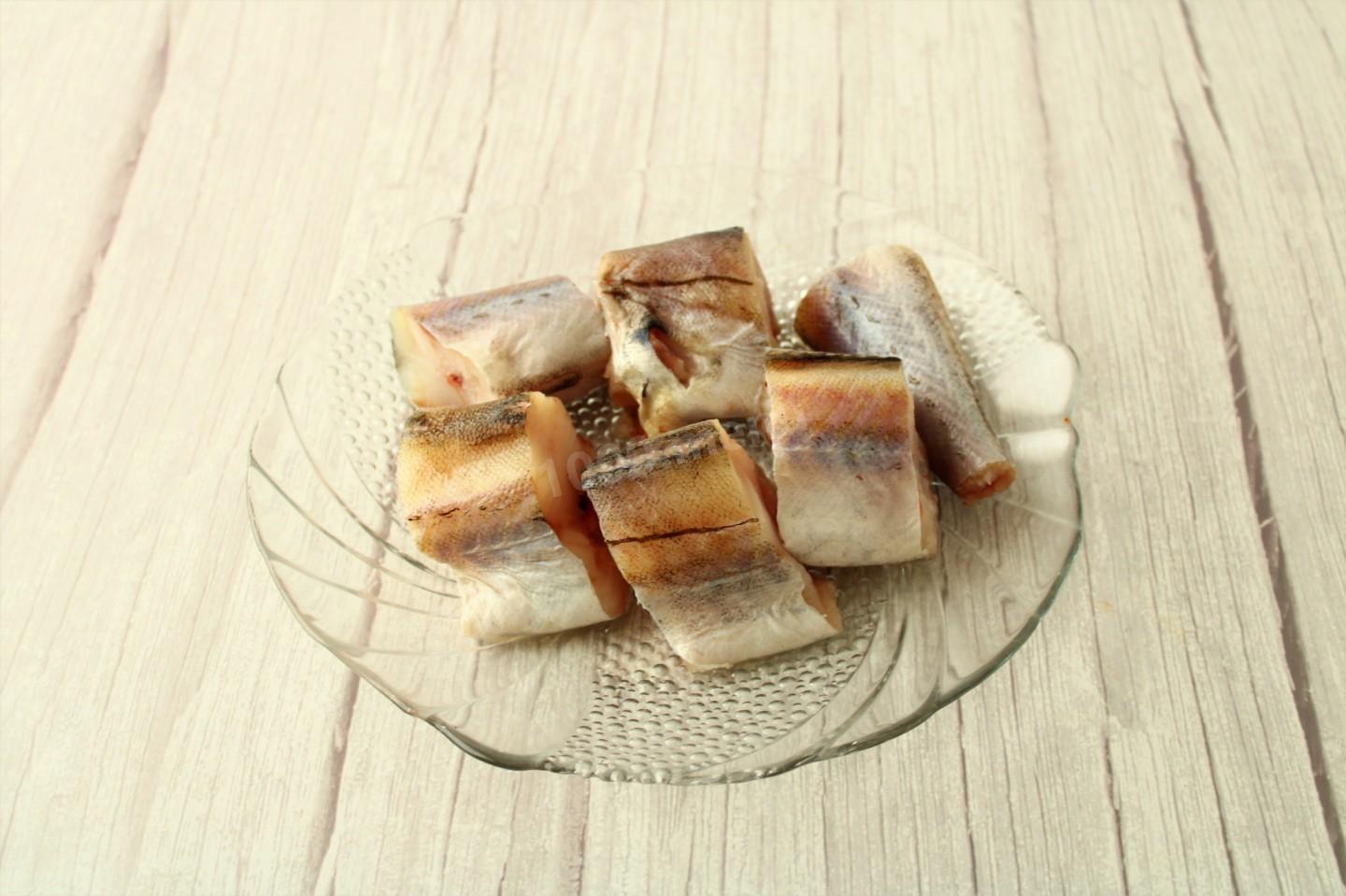
Snip off all the pollock's fins with scissors. Rinse the fish thoroughly under cold water, washing off any small scales. Remove the black membrane from inside the belly so the fish doesn't taste bitter. Pat it dry and cut it with a sharp knife into serving-size pieces.
-
Step 3:
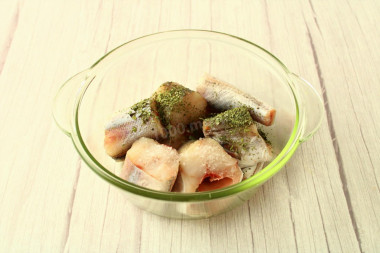
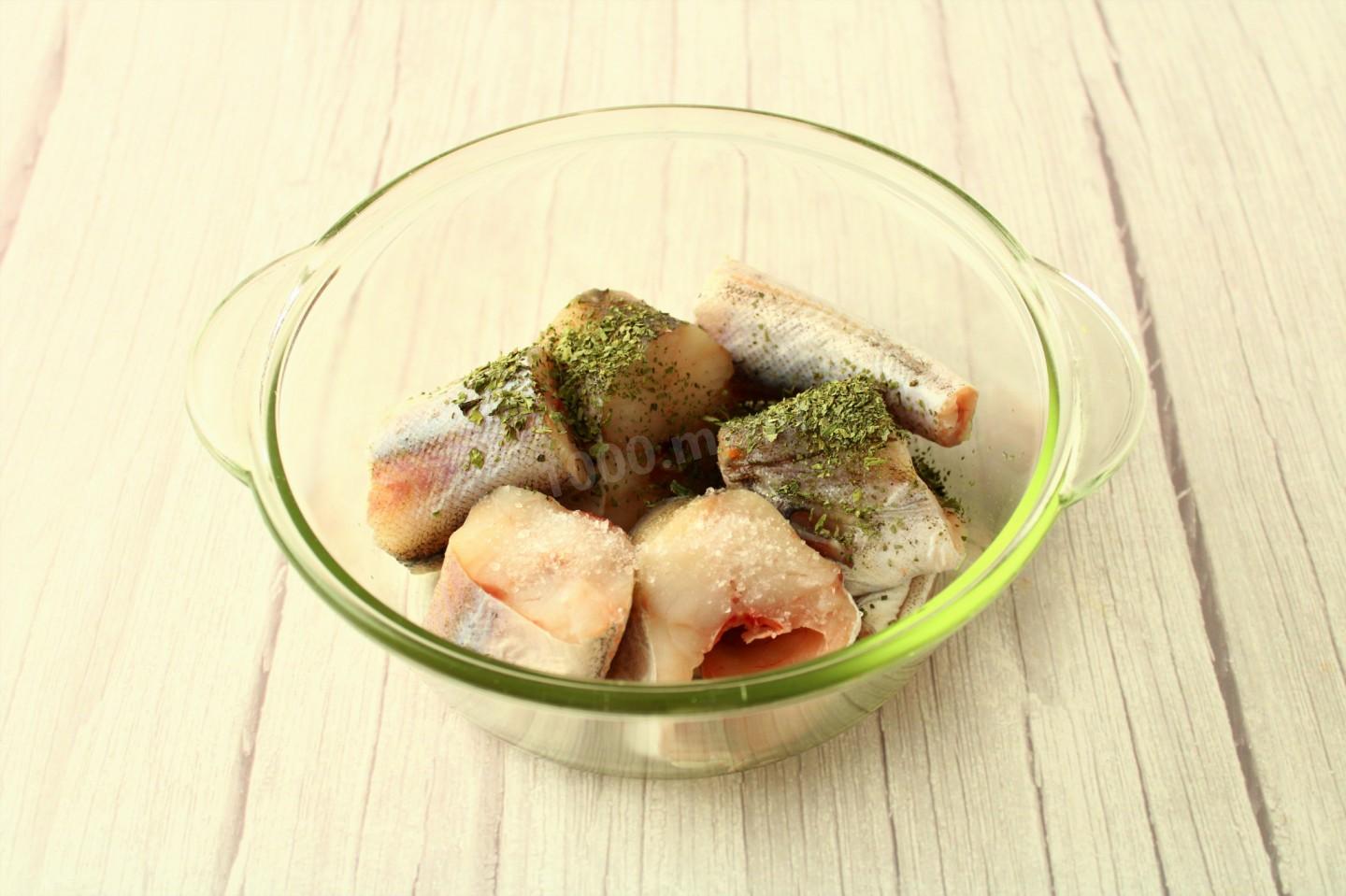
Put the fish in a bowl, season with salt, add your seasonings, and toss to coat. I used basil, but use any spices and herbs you like. Let the fish sit for 20 minutes to soak up the seasonings.
-
Step 4:
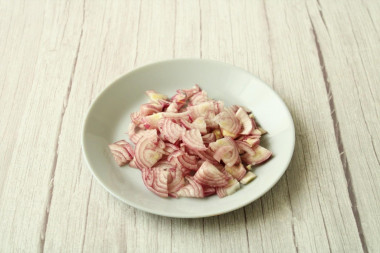
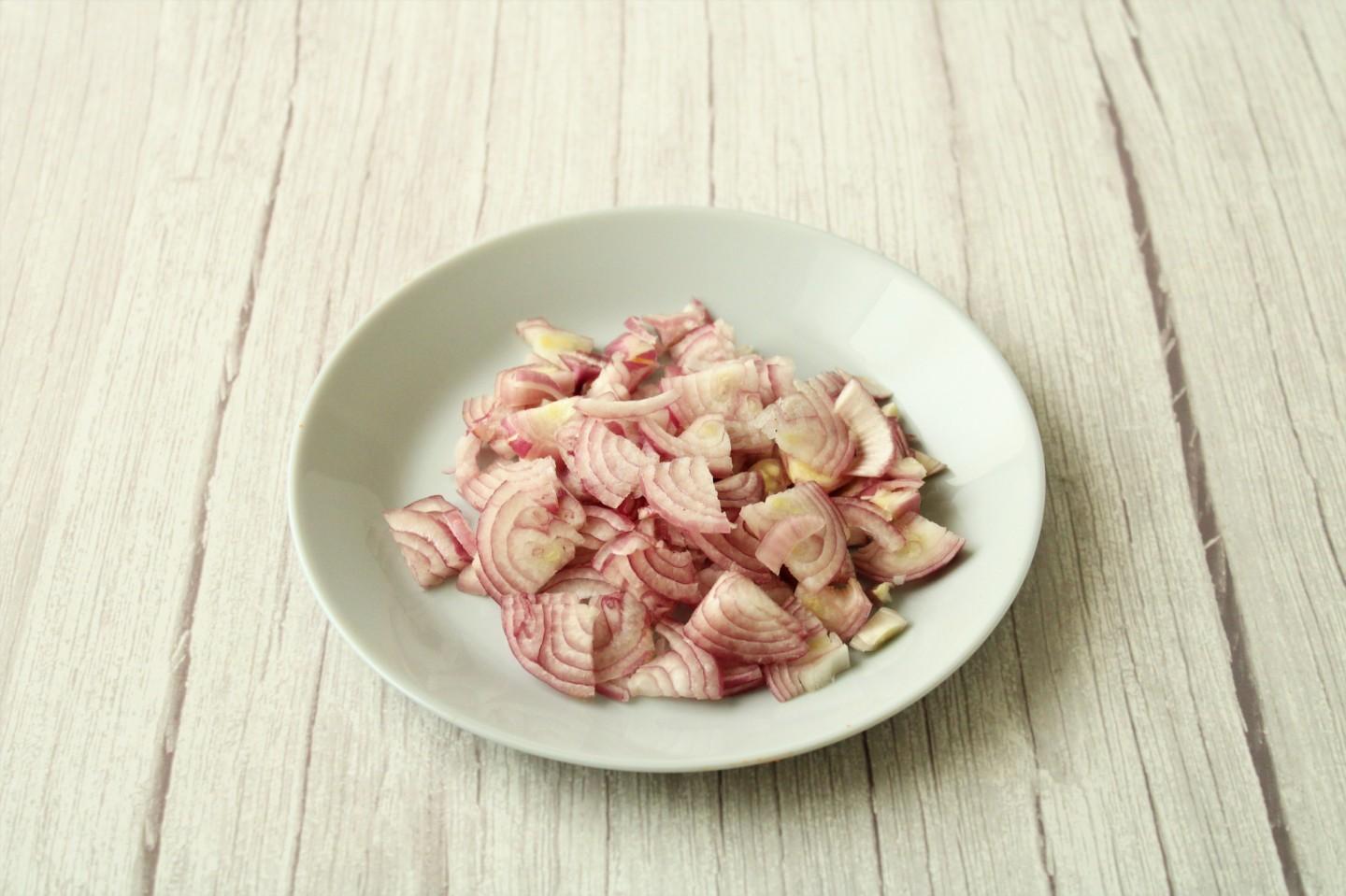
Peel and wash the onions. Cut them into thin quarter-rounds (that is, cut each onion ring into 4 pieces). You could also dice them or cut them into half-moons — whatever shape and size you prefer.
-
Step 5:
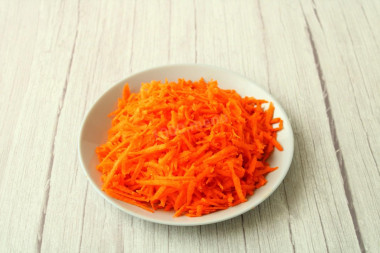
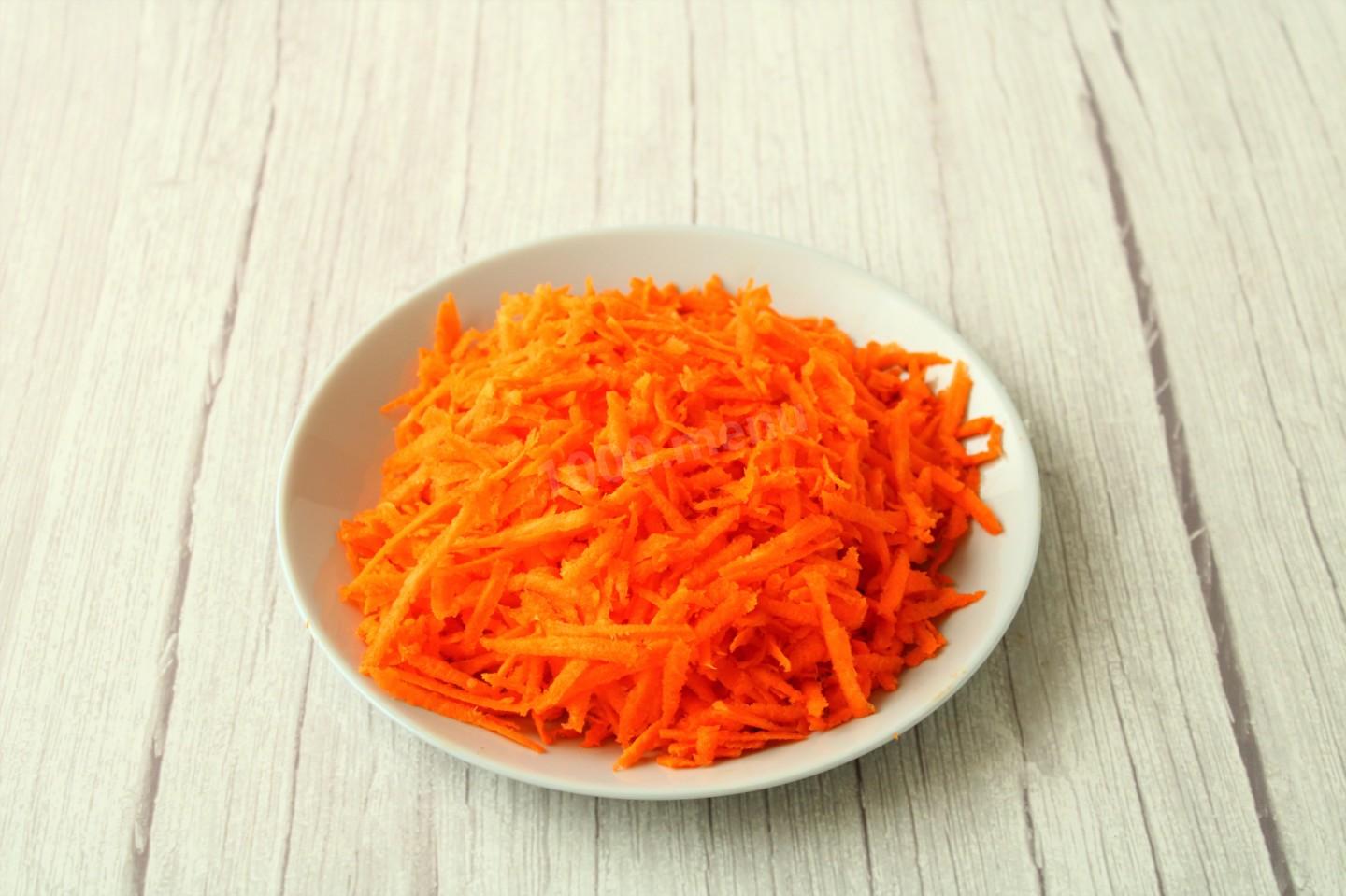
Scrub the carrots clean under running water with a brush, peel them, and grate them on the coarse side of a box grater.
-
Step 6:
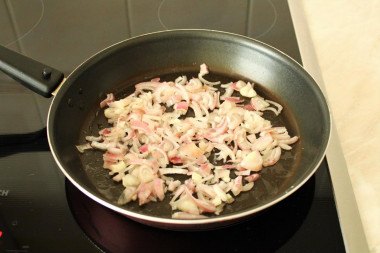
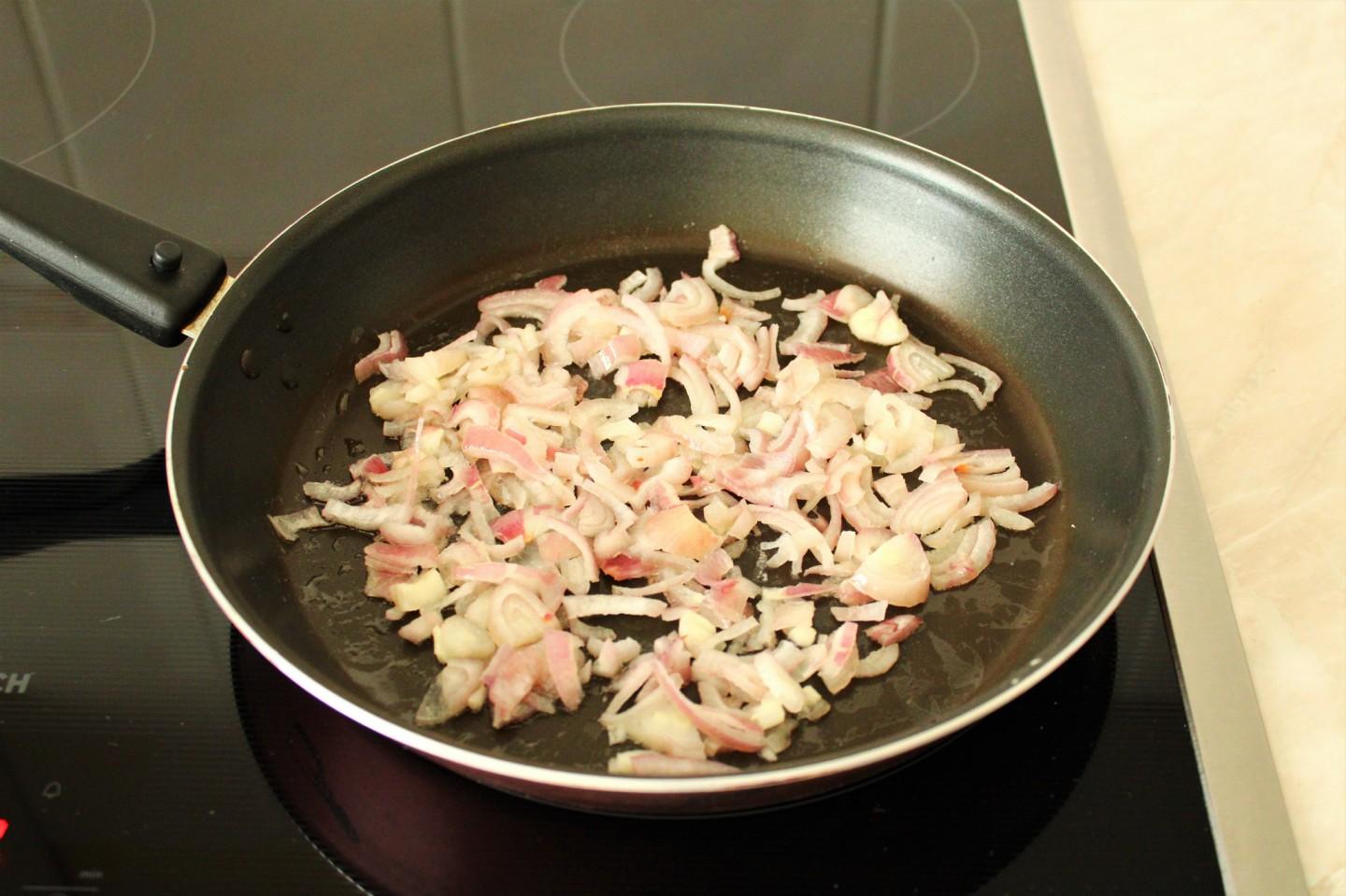
In a skillet with a little vegetable oil, fry the onion over medium heat for 3 minutes, stirring occasionally so it cooks evenly and doesn't burn.
-
Step 7:
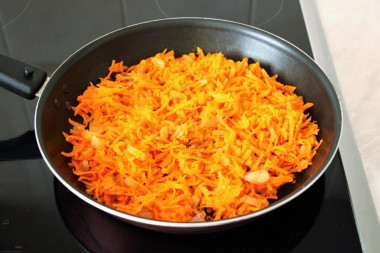
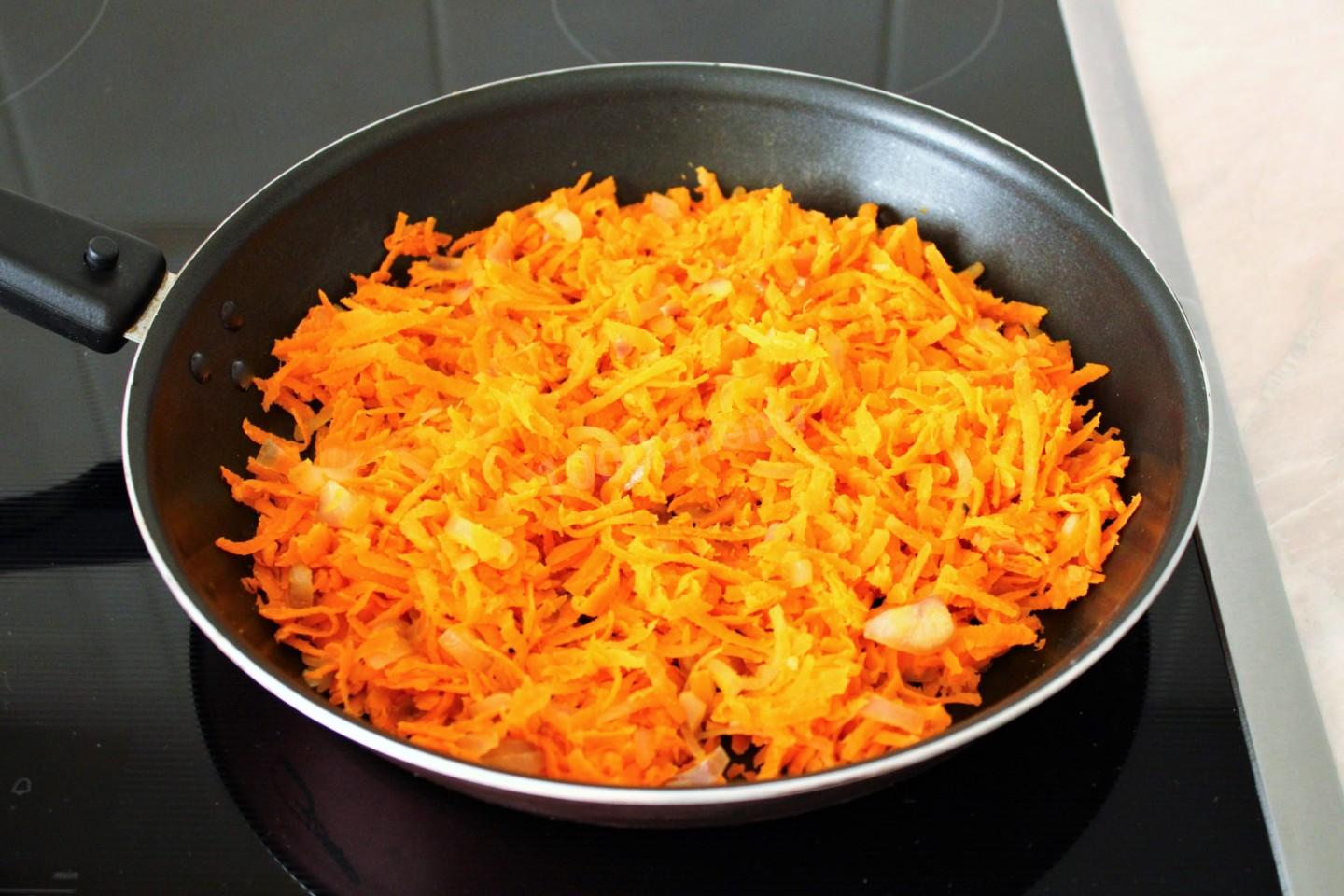
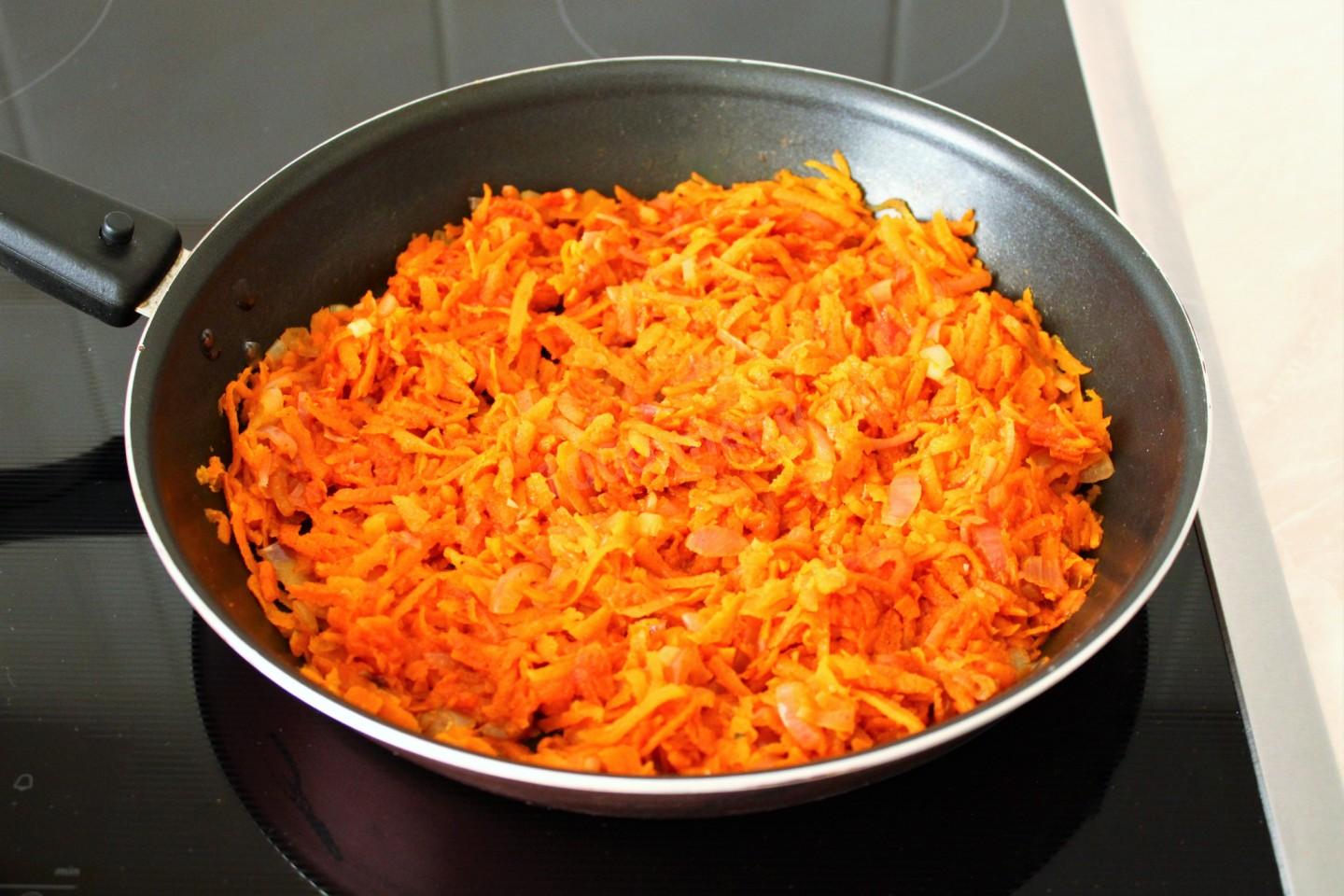
Add the carrots to the onion and stir. Keep frying, stirring, for another 5 minutes.
-
Step 8:
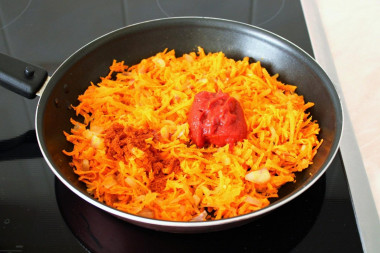
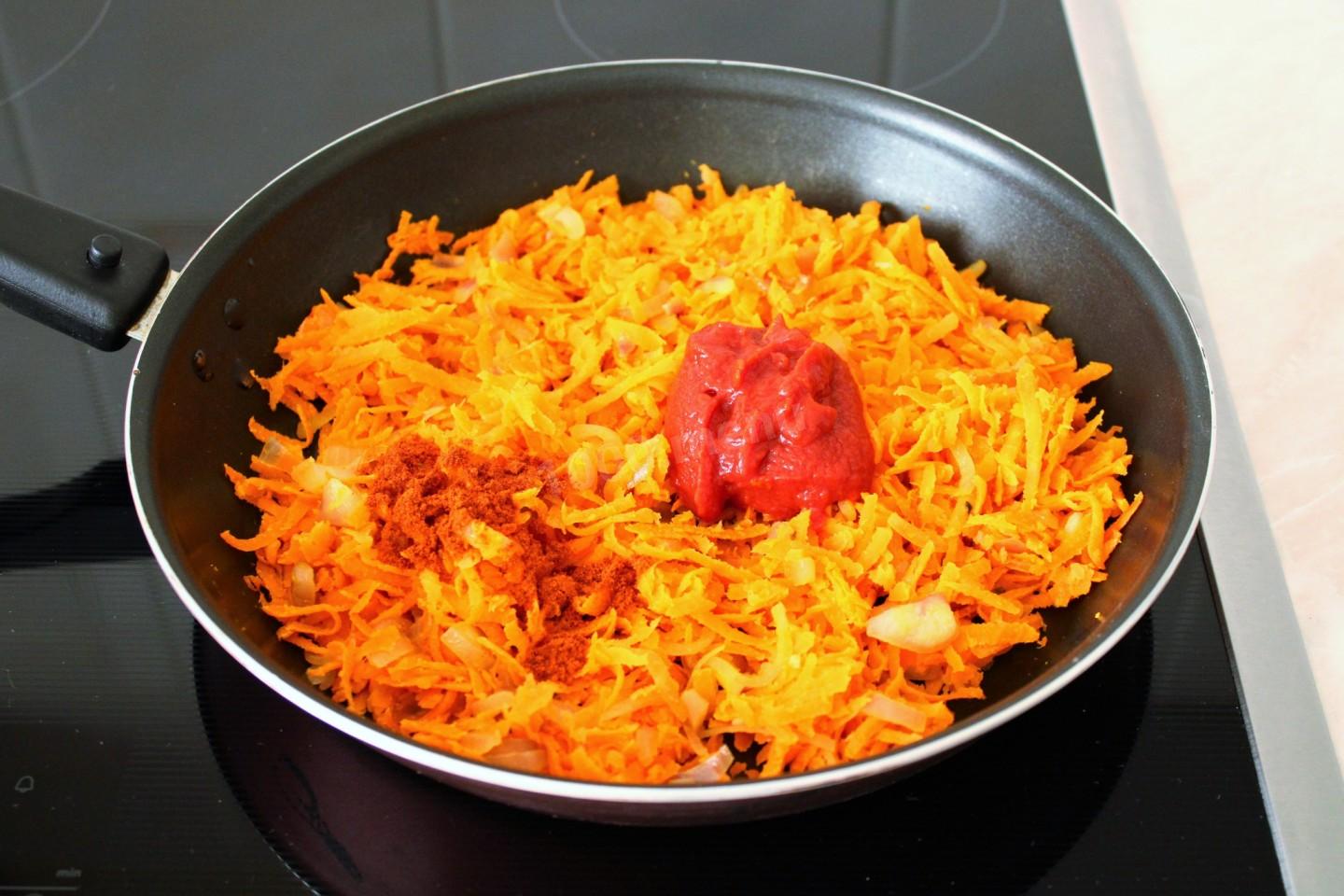
Add the tomato paste and paprika to the vegetables — they'll give them a nice color and extra flavor. Pour in the boiling water. Why boiling? So it doesn't stall the vegetables' cooking. Add a little salt and stir everything together.
-
Step 9:
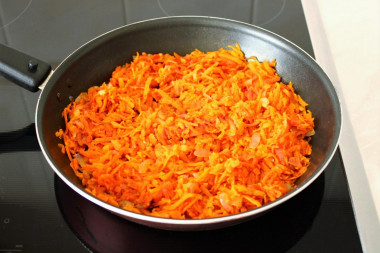
Simmer the vegetables over low heat, covered, until not quite done — they should still have a little firmness. They'll finish cooking in the oven with the fish.
-
Step 10:
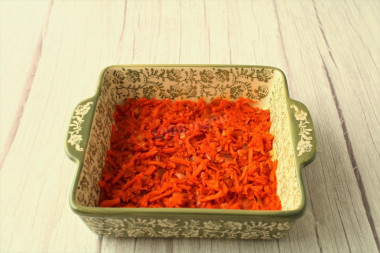
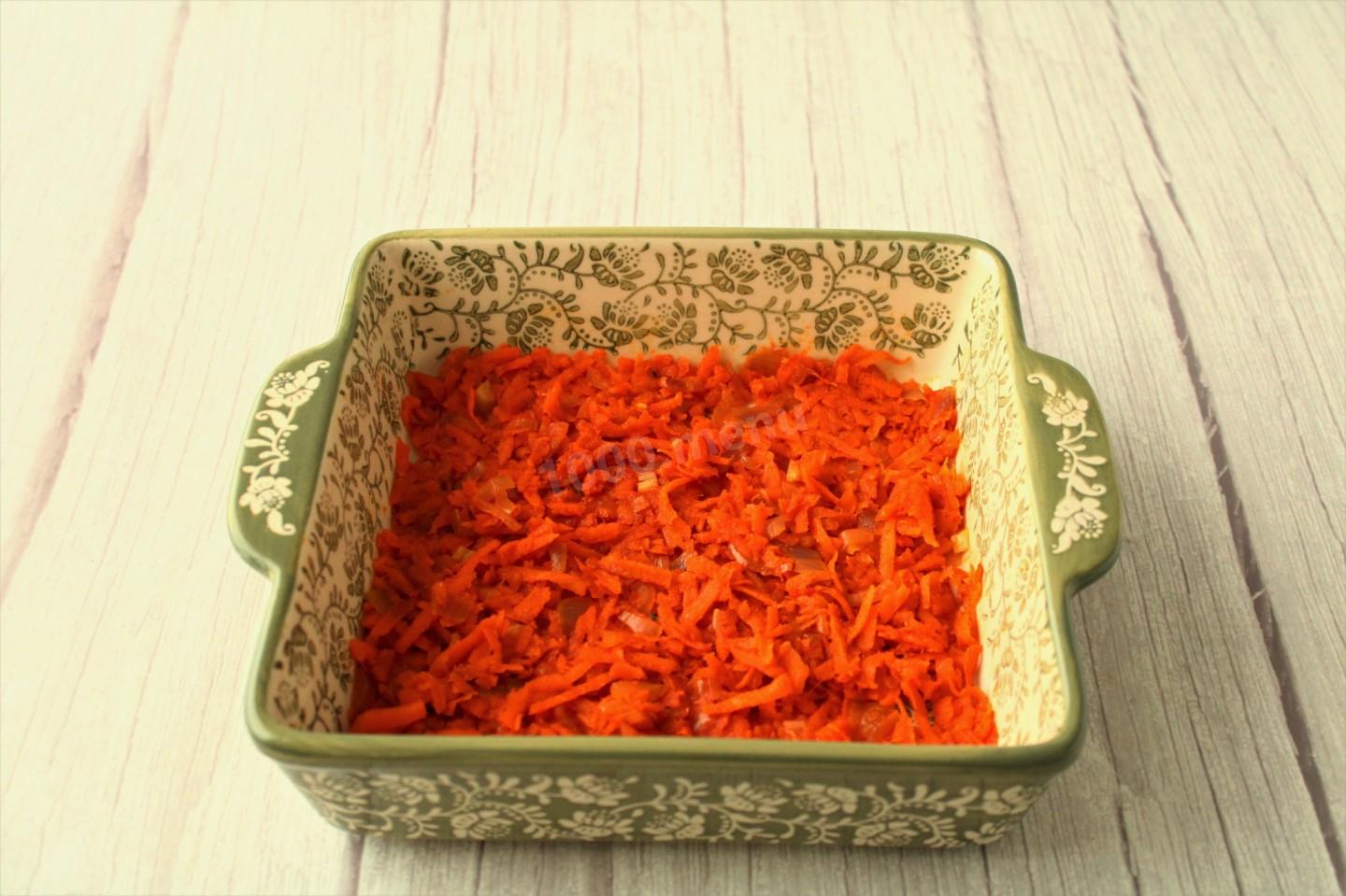
Spread about 1/3 of the vegetables evenly across the bottom of a baking dish.
-
Step 11:
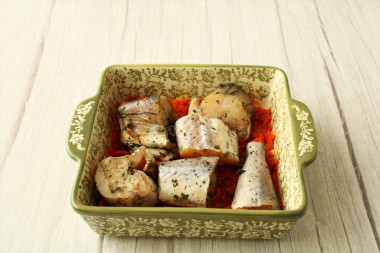
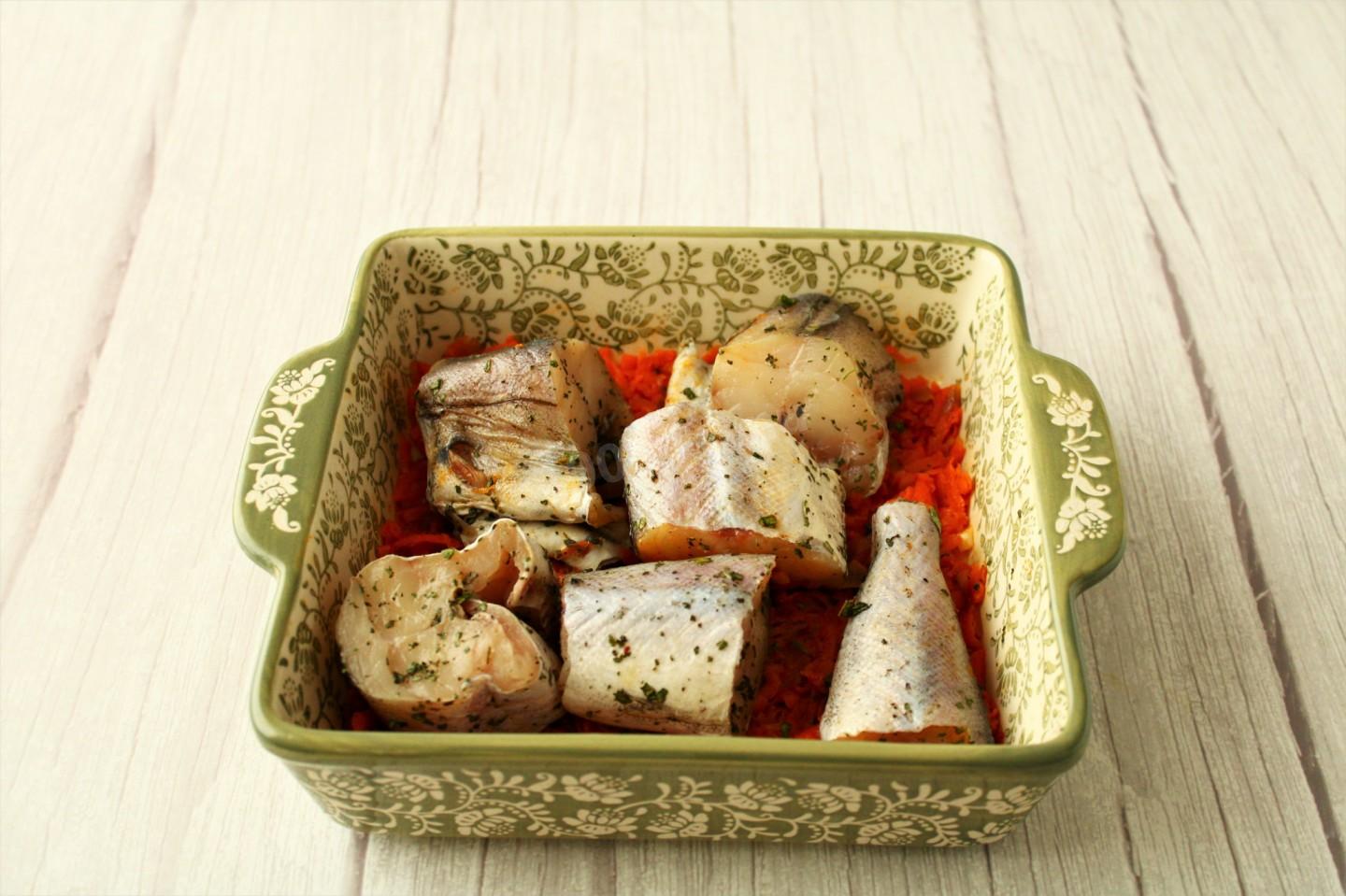
Lay the pollock pieces on top.
-
Step 12:
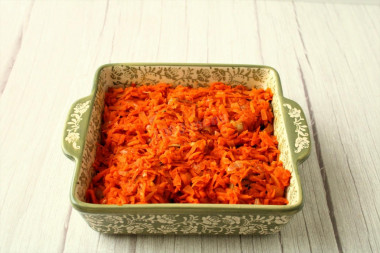
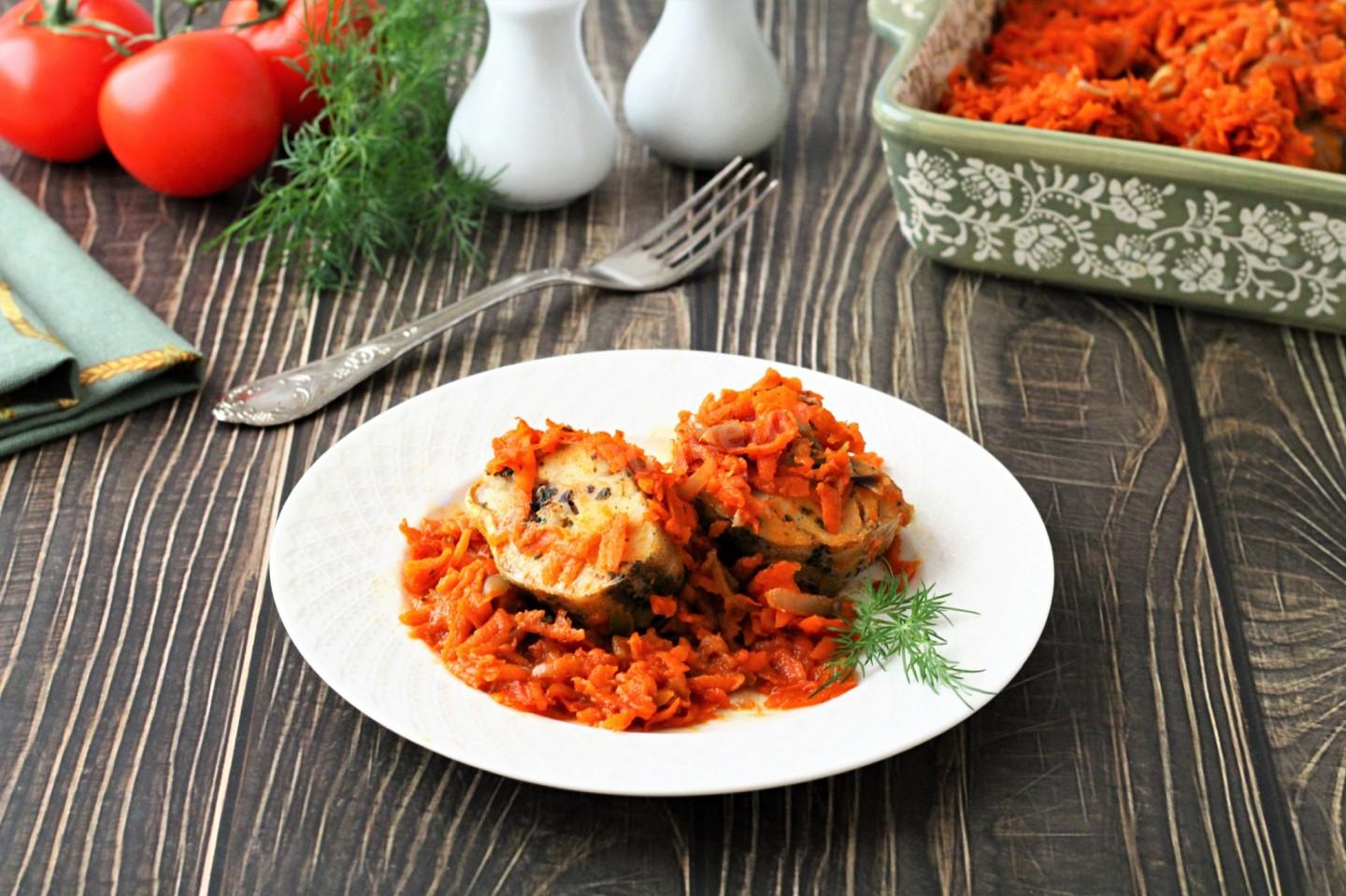
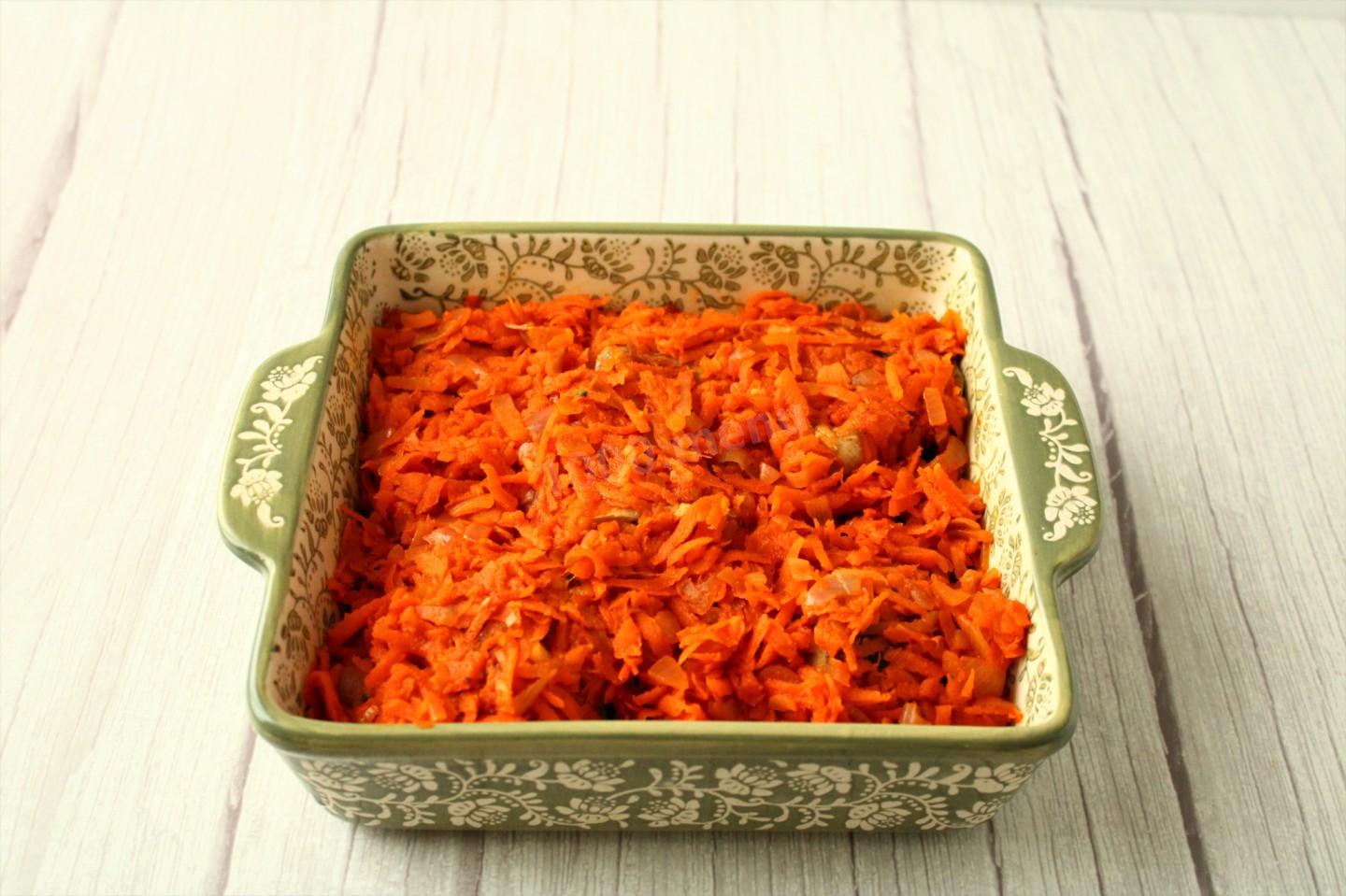
Cover the fish with the rest of the vegetables, ideally covering the pieces as completely as possible. As they bake, the tomato-paste vegetables soften and soak into the fish, making it more flavorful. The vegetable "blanket" also keeps the fish from drying out in the oven, so it stays juicy. You can cover the dish with foil for extra insurance.
-
Step 13:
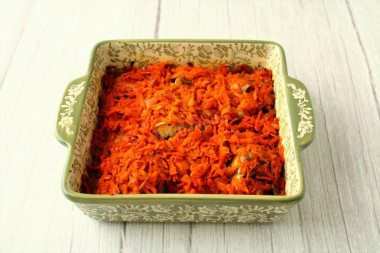
Bake the pollock and vegetables in an oven preheated to 350°F (180°C) for 25–30 minutes. The baking time can vary depending on your oven and the material of your baking dish.
-
Step 14:
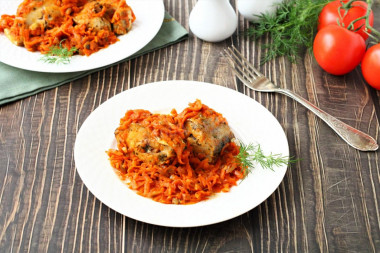
Serve the pollock and vegetables hot, with any side dish or on its own. Enjoy!
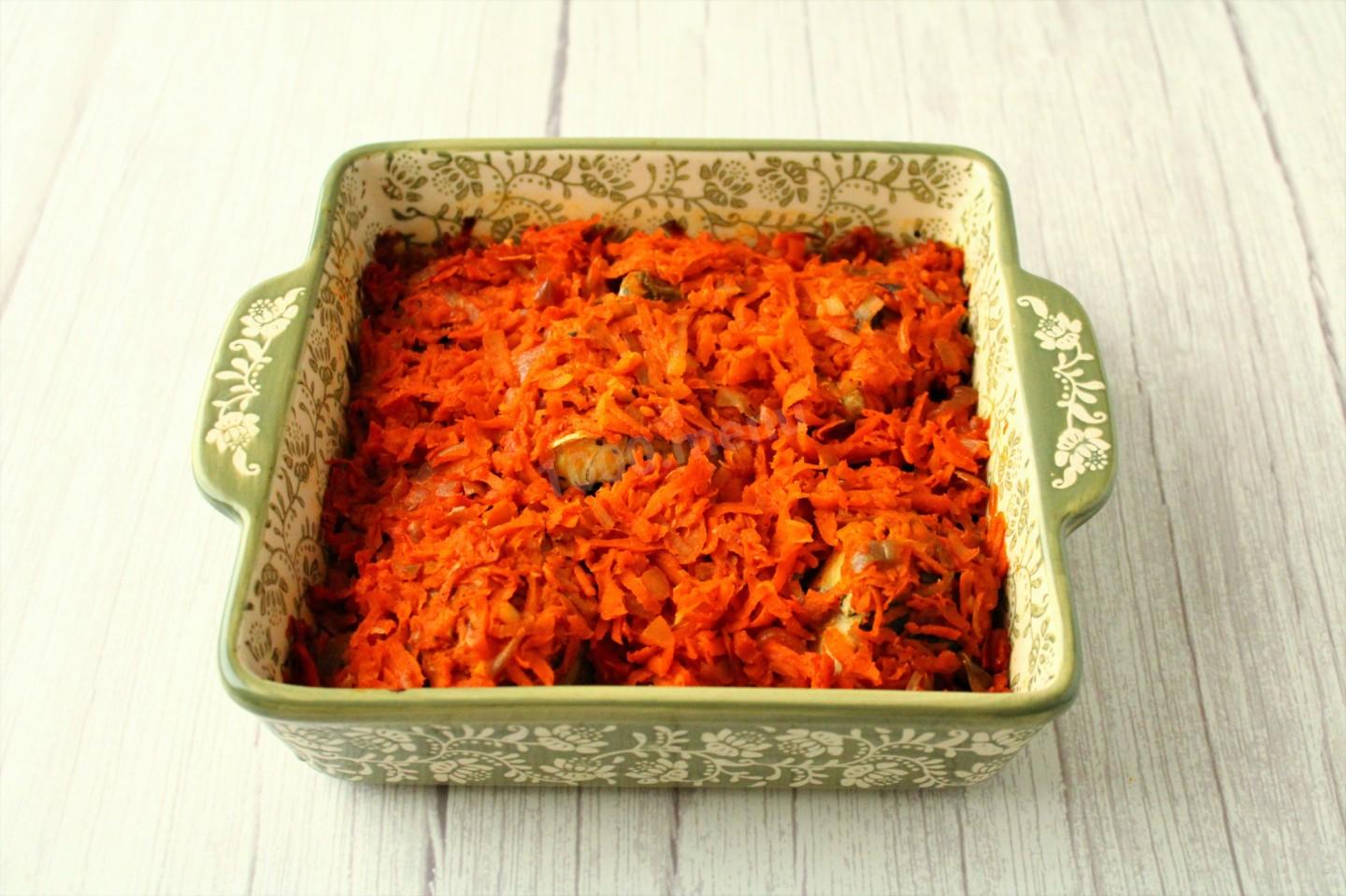
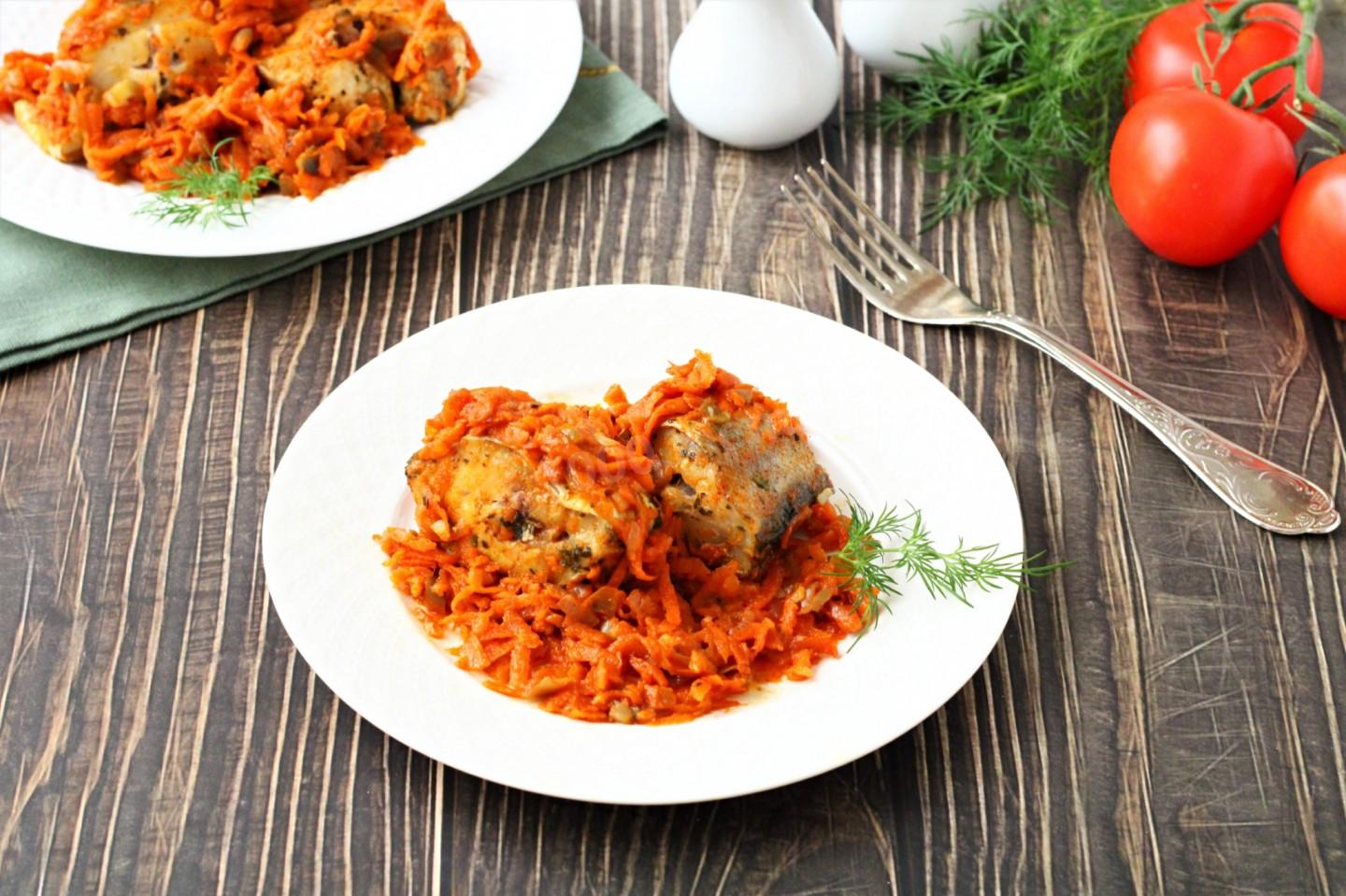
- You can use pollock fillets, which is much more convenient. But if you don't have time to break down a whole fish, or don't have fillets on hand, you can bake it in pieces. I baked mine in a 7 x 7 inch (18 x 18 cm) ceramic dish. Ceramic takes longer to heat up than aluminum or glass, so that affects the cooking time too.
- Keep in mind that every oven is different, so the temperature and cooking time may vary from what's listed here. For any baked dish to come out well, it helps to know your own oven's quirks.
- Every oil is only good up to a certain temperature — its smoke point — beyond which it starts to burn and forms harmful compounds. It's worth learning which oil is best for frying and which to avoid altogether.
Caloric content of the products possible in the composition of the dish
- Carrots - 33 kcal/100g
- Dried carrots - 275 kcal/100g
- Boiled carrots - 25 kcal/100g
- Boiled pollock - 79 kcal/100g
- Pollock fresh - 72 kcal/100g
- Fresh basil - 27 kcal/100g
- Dried basil - 251 kcal/100g
- Vegetable oil - 873 kcal/100g
- Tomato paste - 28 kcal/100g
- Salt - 0 kcal/100g
- Water - 0 kcal/100g
- Onion - 41 kcal/100g
- Paprika - 289 kcal/100g
Similar recipes


- Second course
- Fish and seafood
- Vegetables
- Spices seasonings spices
- Fats and oils
- Other
- Basil
- Pepper
- Salt
- Vegetable oil
- Water
- Tomato paste
- Frying
- Stewing
- Oven roasting
- In a frying pan
- Stewed vegetables
- Fish second course
- Fish in the oven
- Fish with vegetables
- Pollock
- Vegetables in the oven
- From carrots
- From onion
- No eggs
- Recipes for lean dishes without butter