Chinese-Style Sweet-and-Sour Eggplant
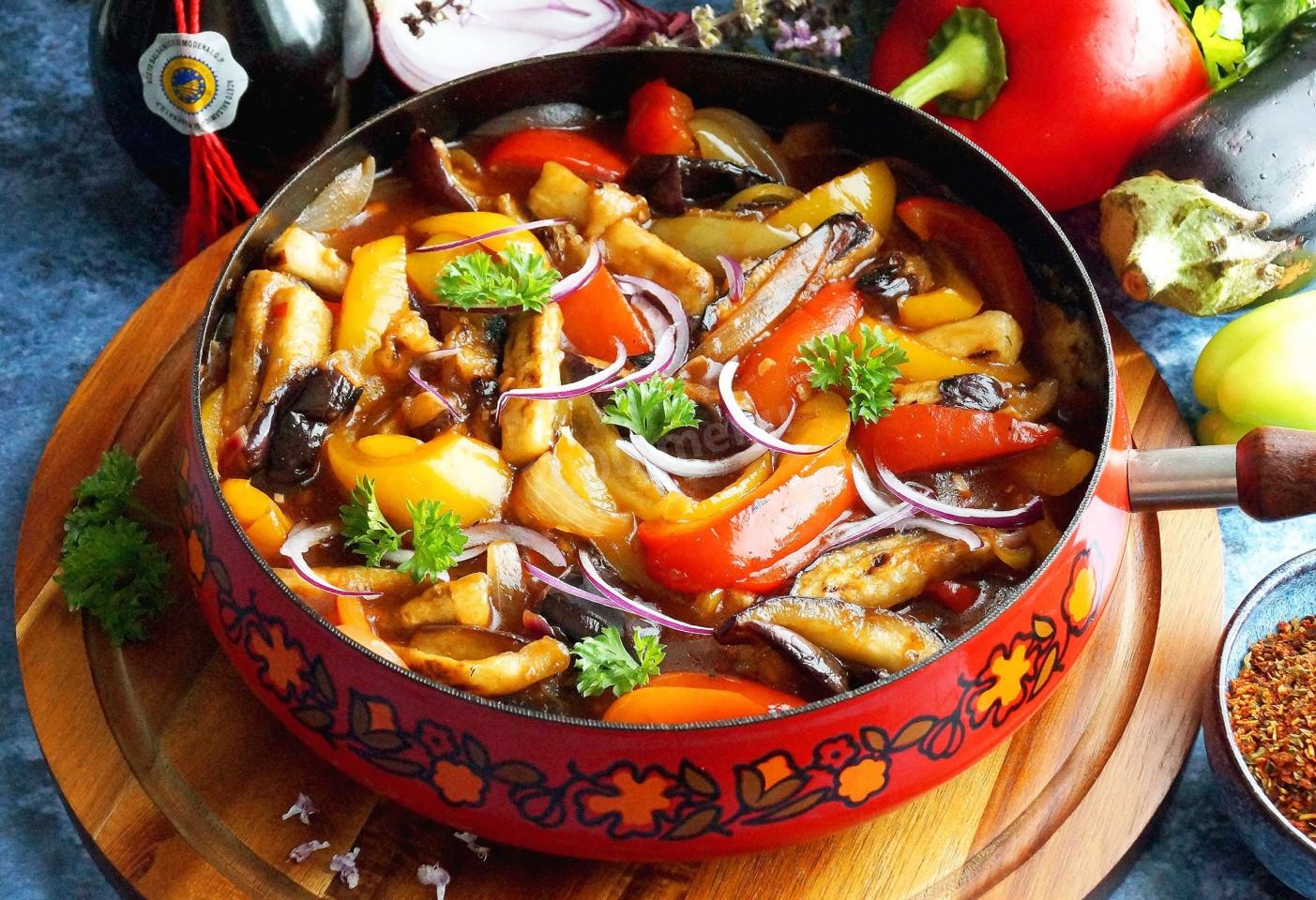
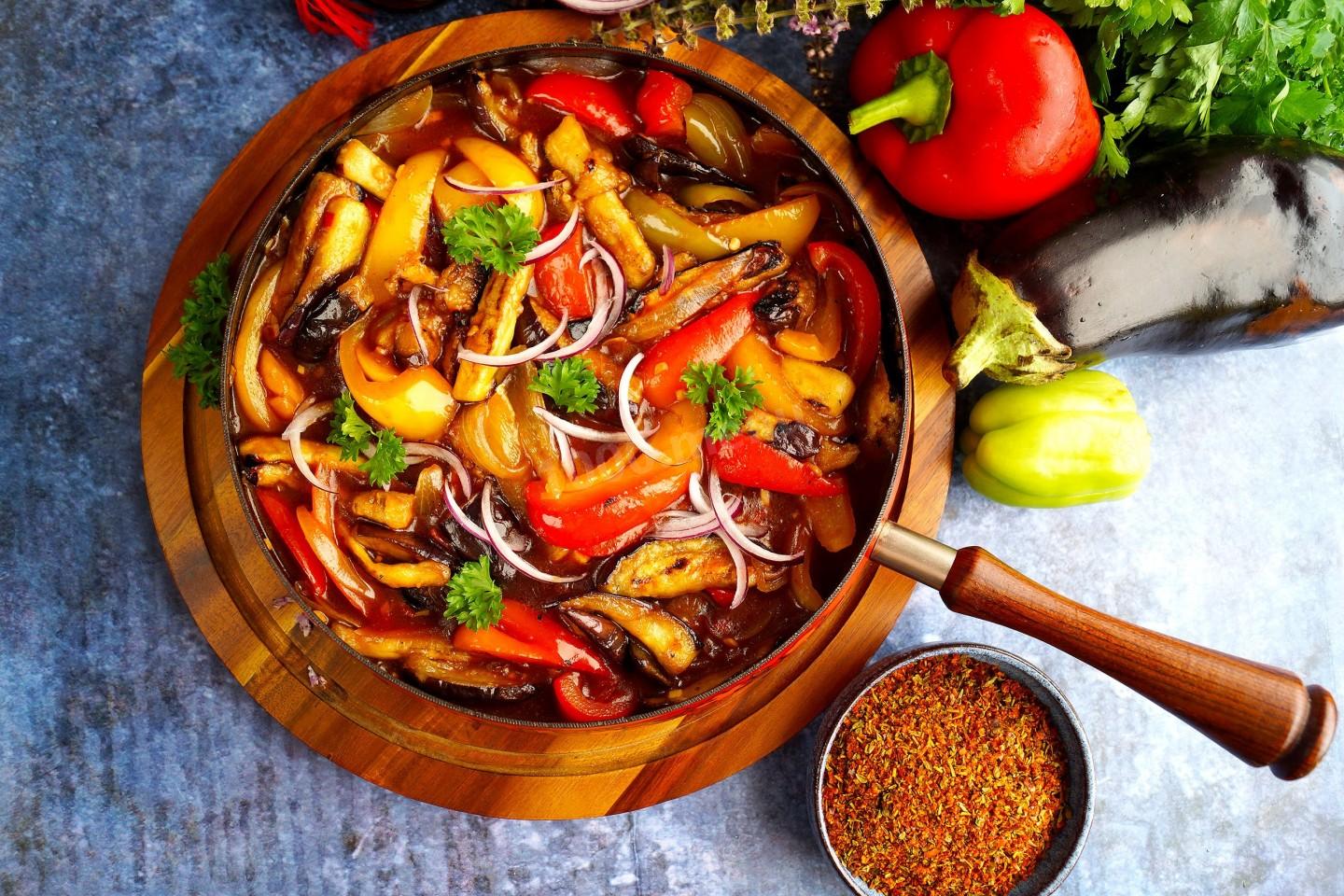
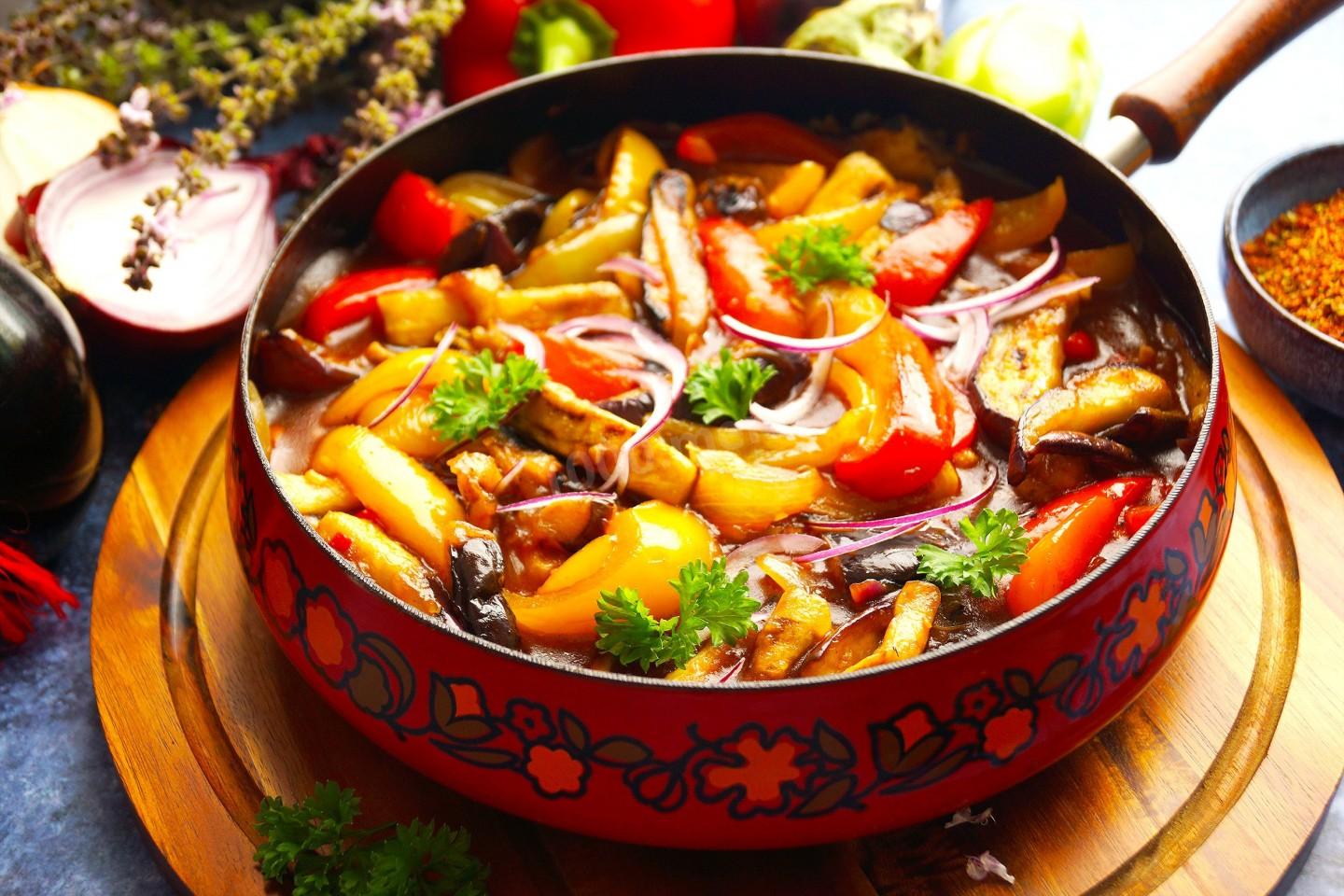
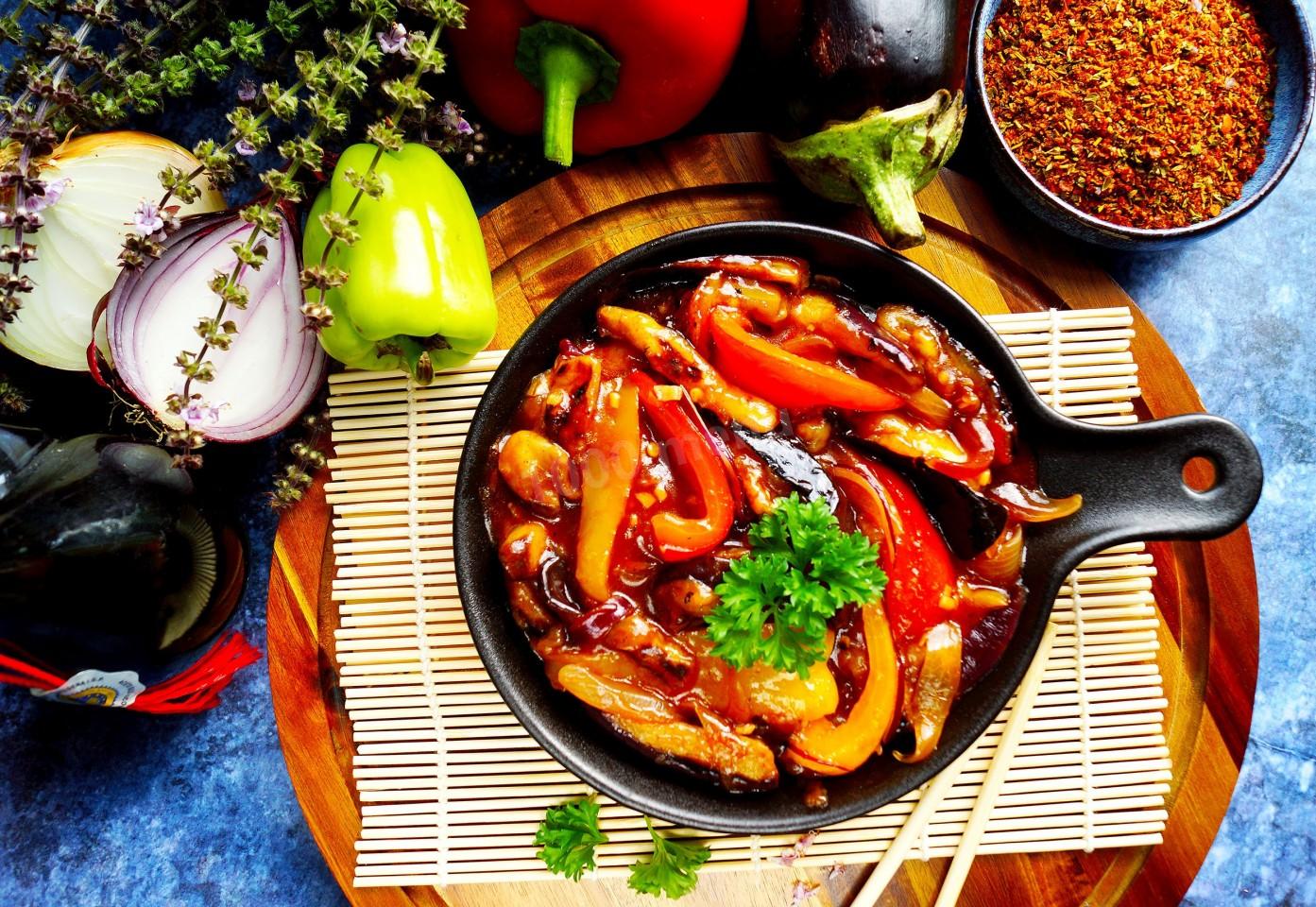
Gorgeous, savory, juicy, with a bright flavor all its own. This Chinese-style sweet-and-sour eggplant will win over anyone who loves the vegetable! Mouthwatering, fragrant, and incredibly tasty, simmered in a glossy sauce — a perfect light bite.

Cooking method
-
Step 1:
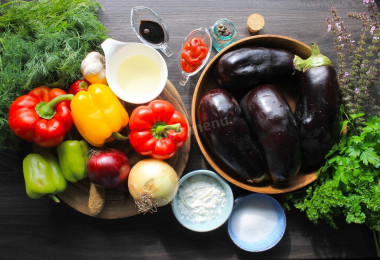
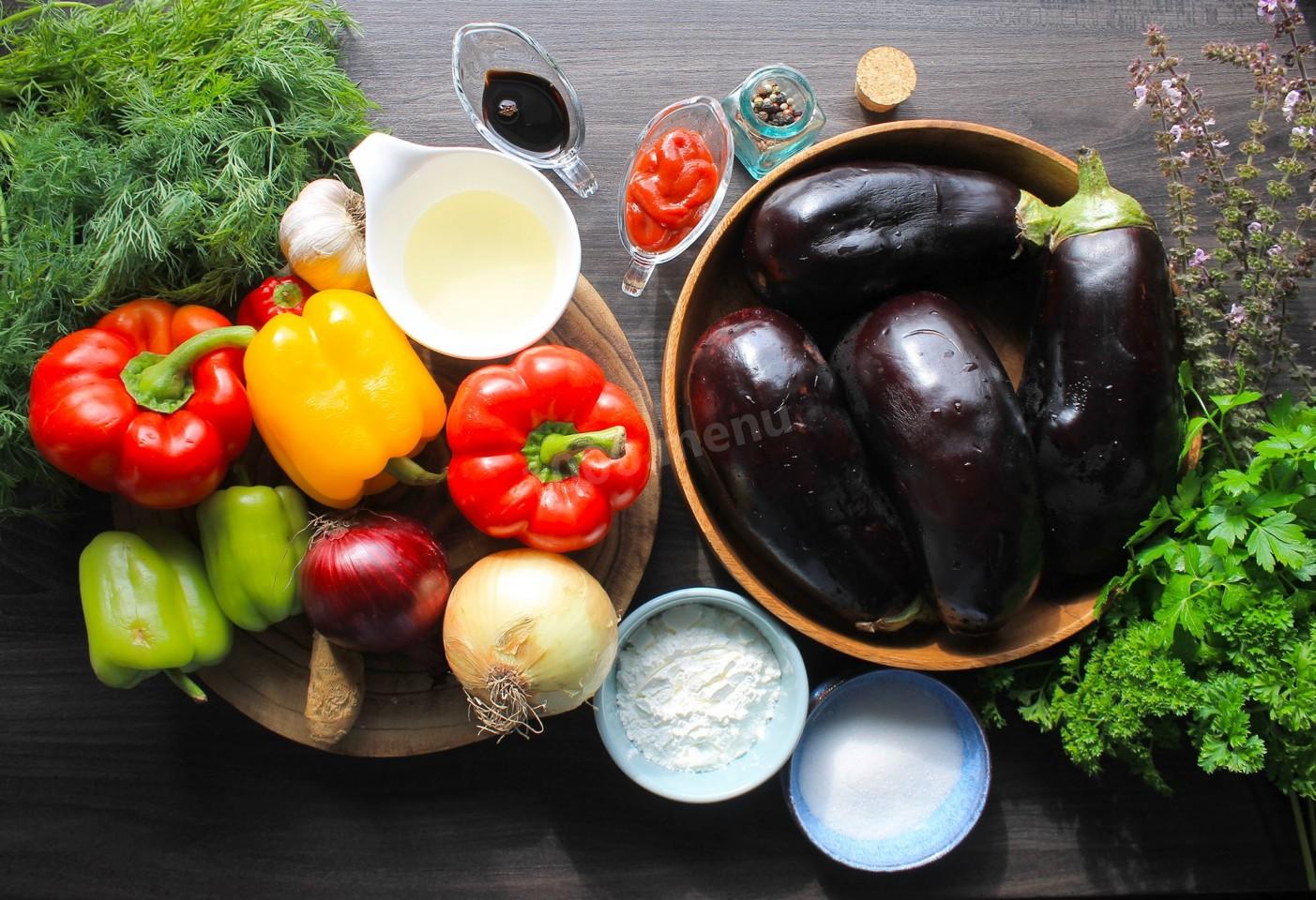
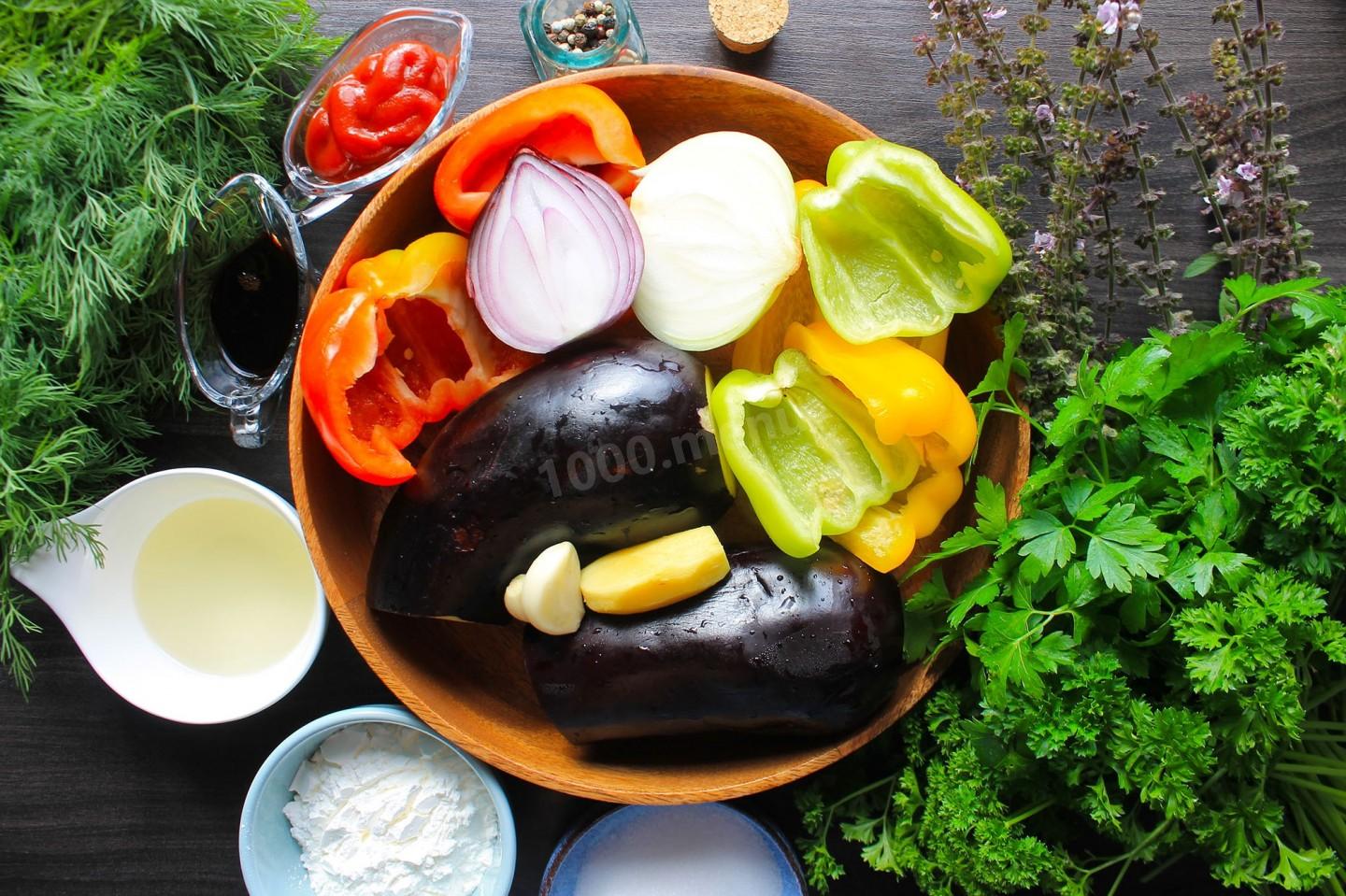
How do you make sweet-and-sour eggplant? Gather all the ingredients listed in the recipe. I used two kinds of onion — regular yellow and red.
-
Step 2:
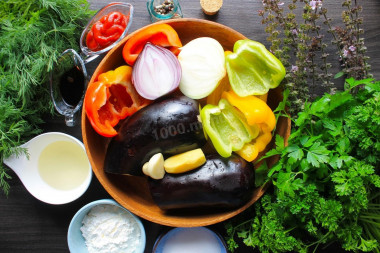
Peel the onion, garlic, and ginger. Rinse all the vegetables in clean water and pat them dry with paper towels. Trim the stem ends off the eggplant. Halve the bell peppers and scoop out the cores and seeds. If you use peppers of different colors, the dish will turn out incredibly bright and appetizing.
-
Step 3:
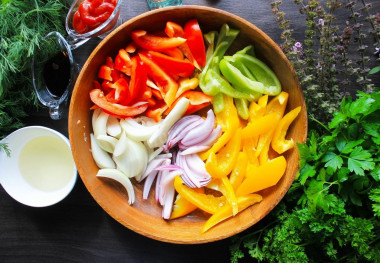
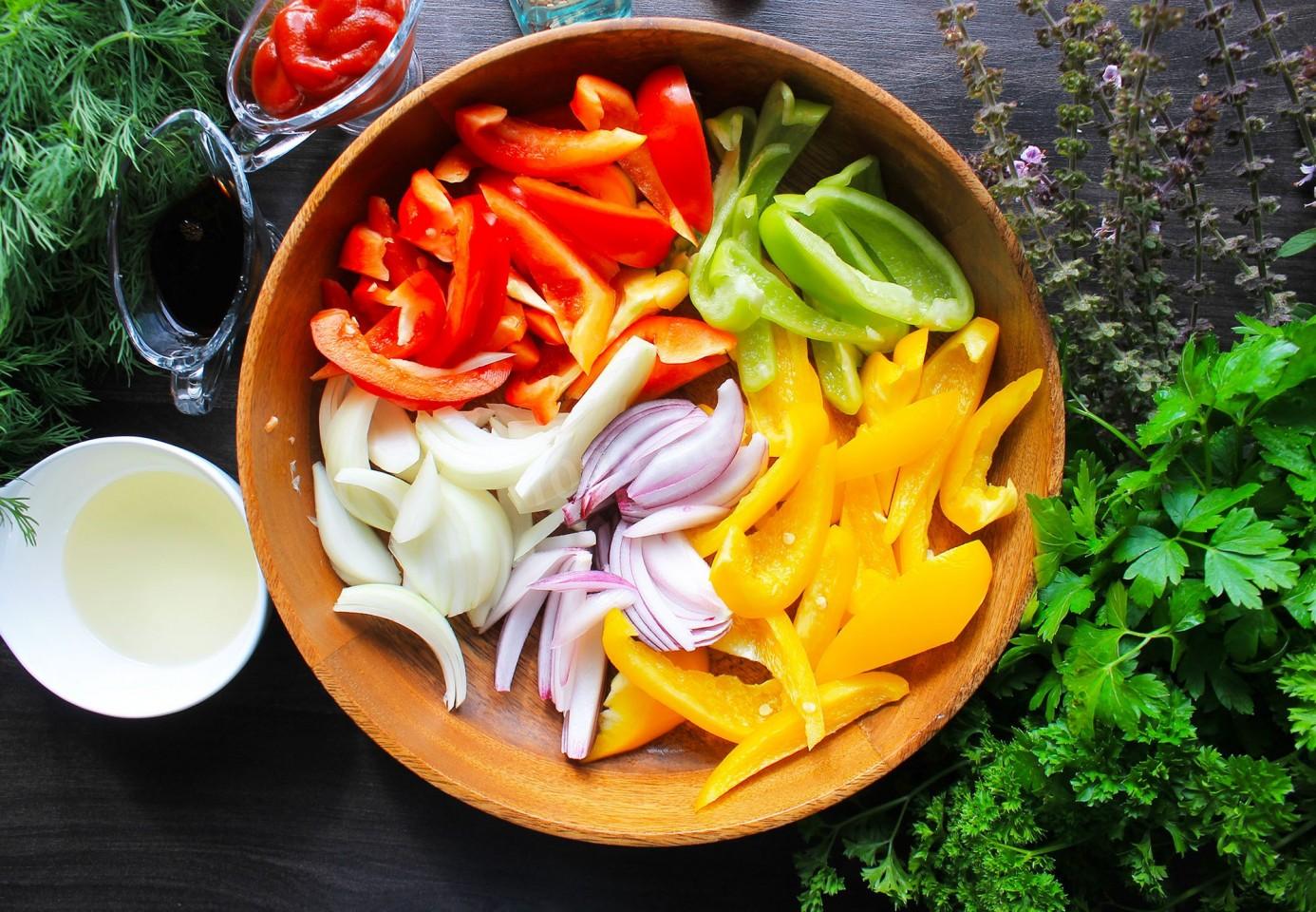
Slice the bell peppers and onion into medium-thick strips.
-
Step 4:
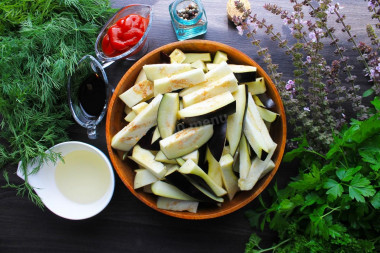
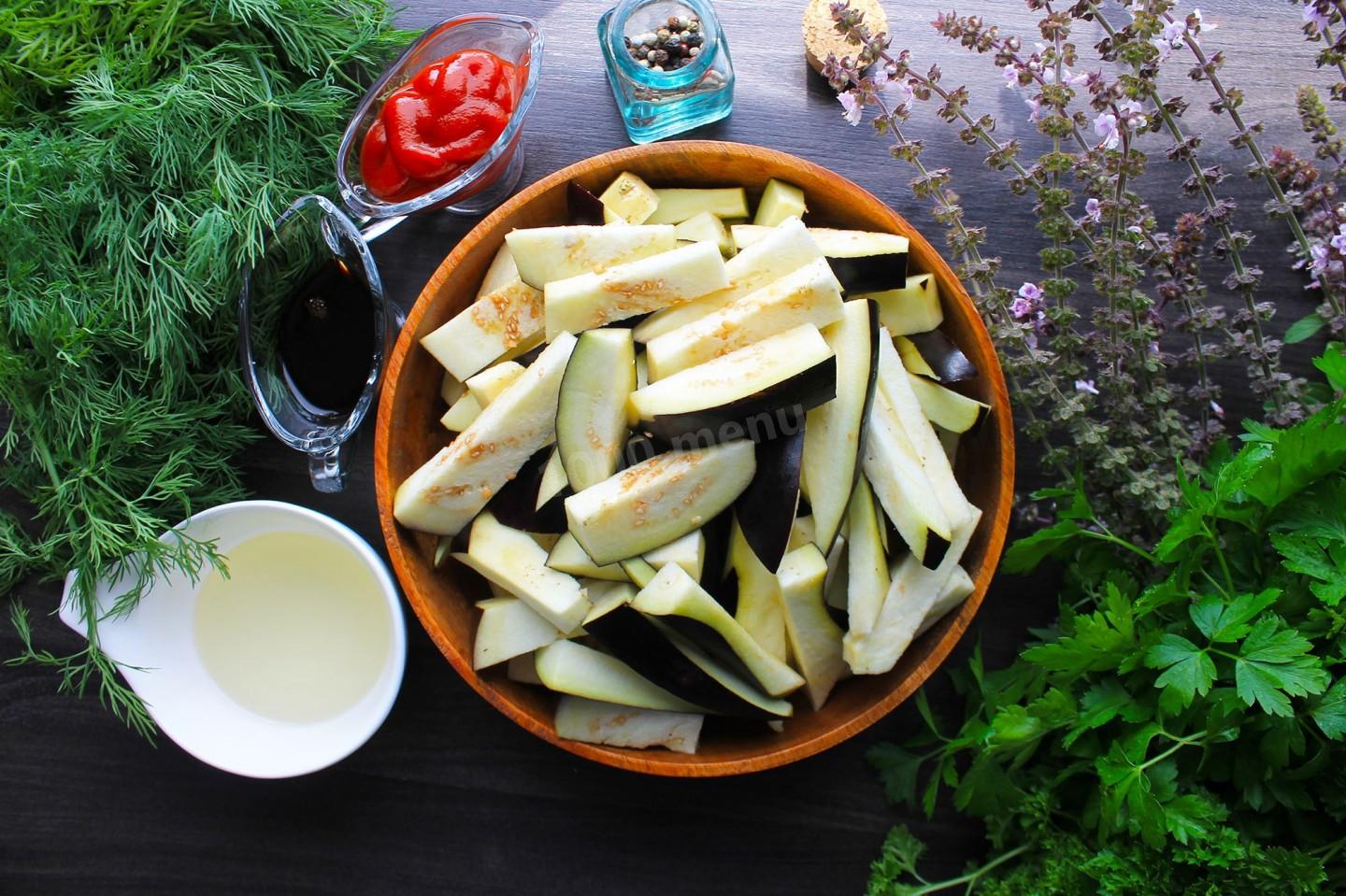
Cut the eggplant into sticks, as shown in the photo.
-
Step 5:
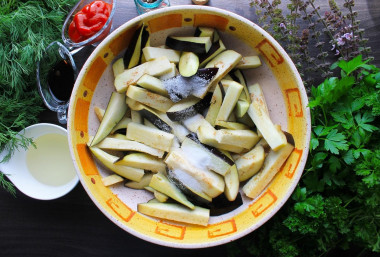
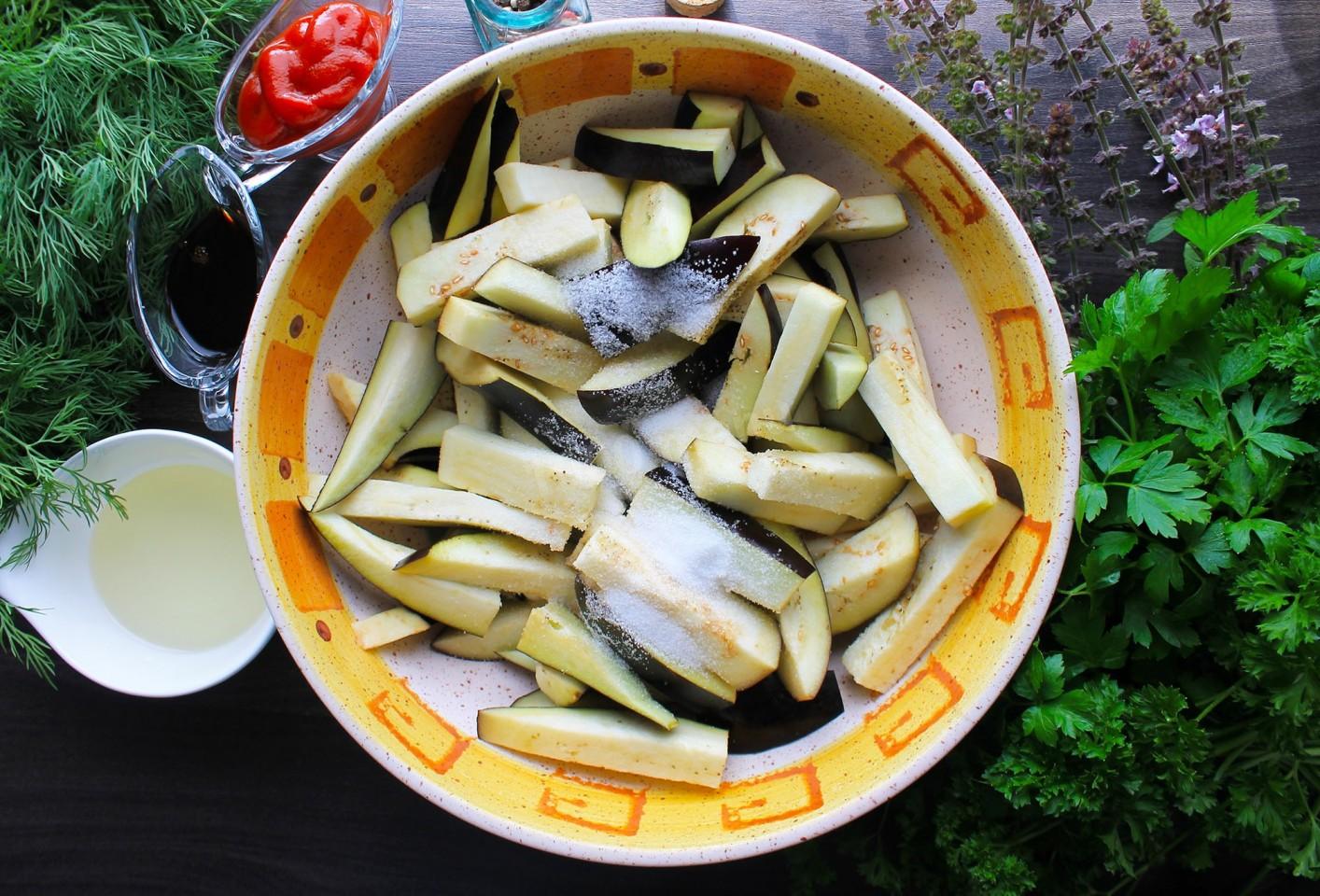
Some eggplant can be bitter. If yours is, put the pieces in a deep bowl, add 1 level tablespoon of salt, and toss. Let sit for 15–20 minutes, then rinse and squeeze out the excess water. Lay the pieces on paper towels and pat dry.
-
Step 6:
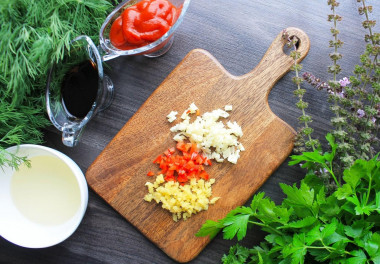
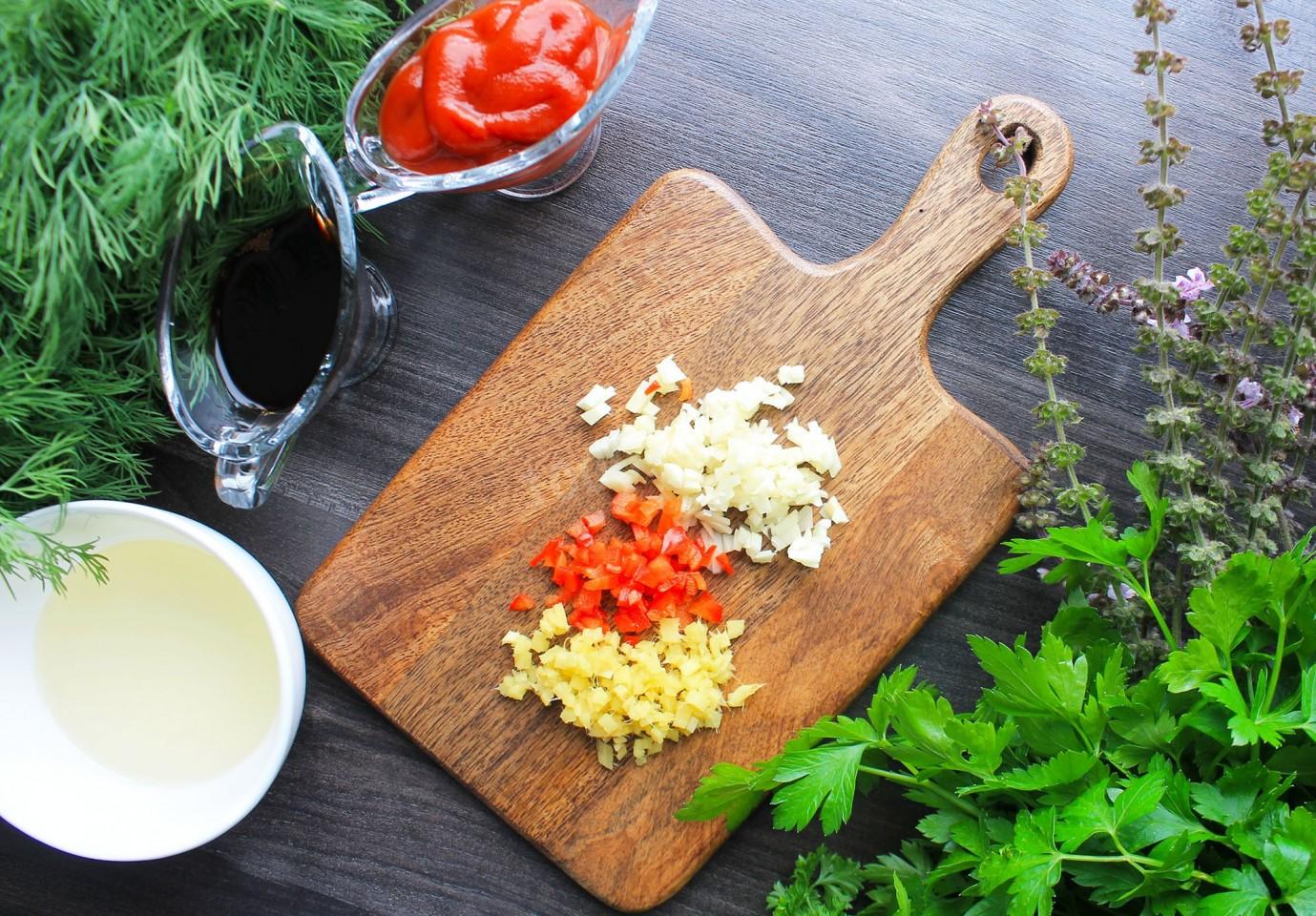
Mince the garlic, chili, and ginger as finely as you can. Instead of a fresh chili, you can use dried ground hot pepper.
-
Step 7:
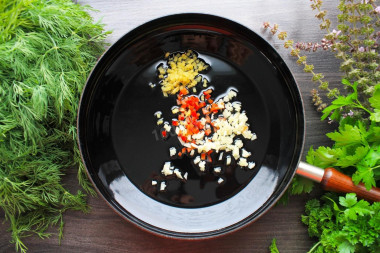
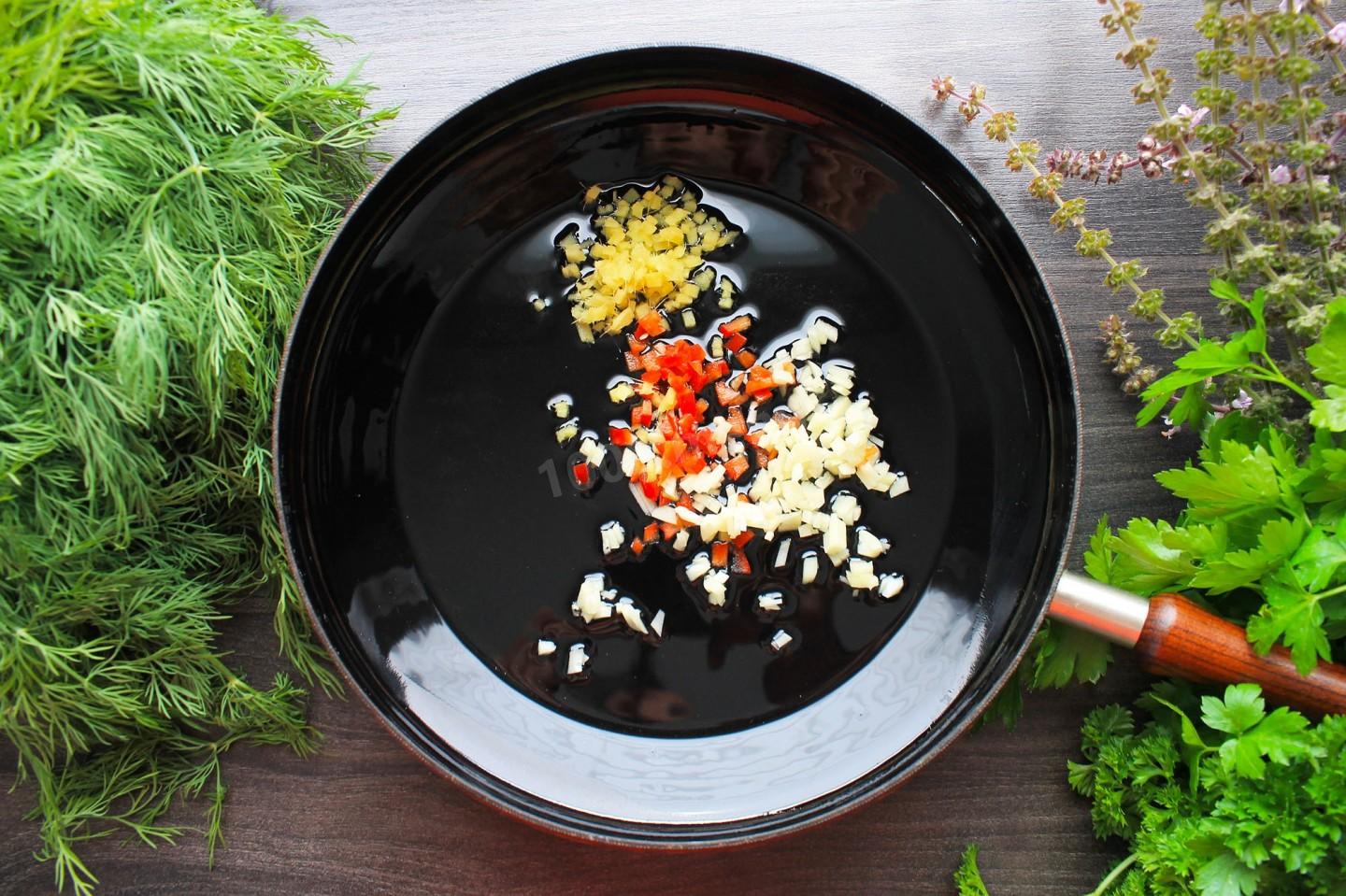
Heat the vegetable oil in a high-sided skillet or a wok. Stir-fry the garlic, ginger, and chili for 1 to 3 minutes, stirring constantly with a wooden spatula so nothing scorches.
-
Step 8:
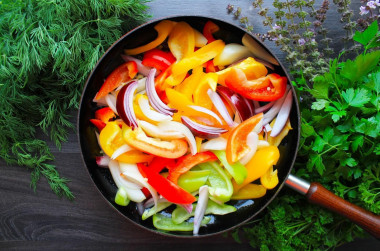
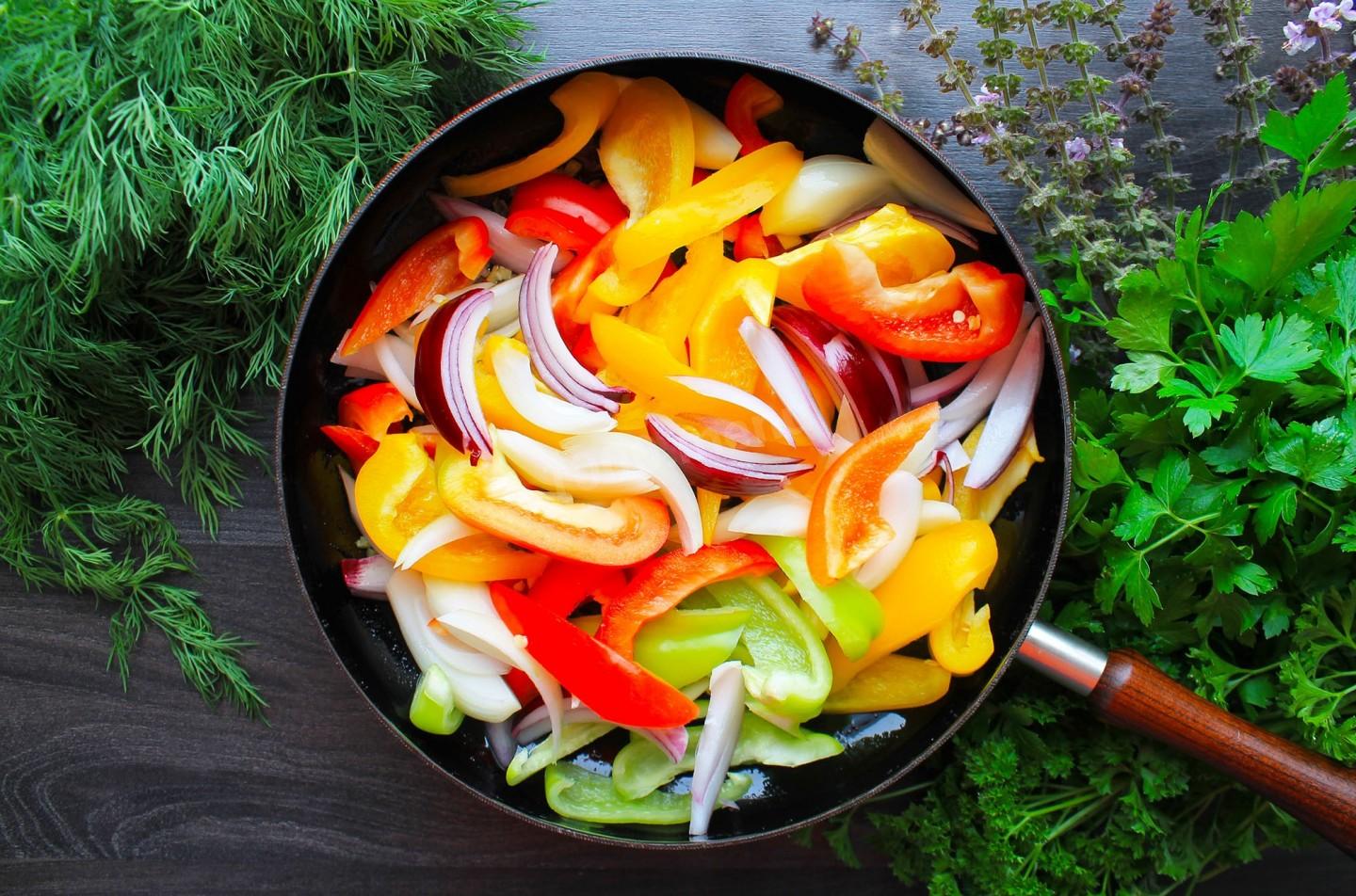
Add the bell pepper and onion to the pan. Stir-fry over high heat for 4–5 minutes, stirring often.
-
Step 9:
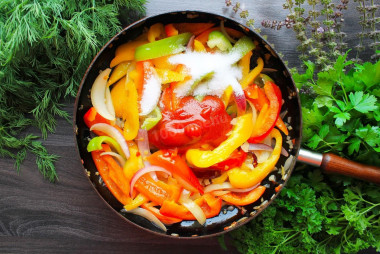
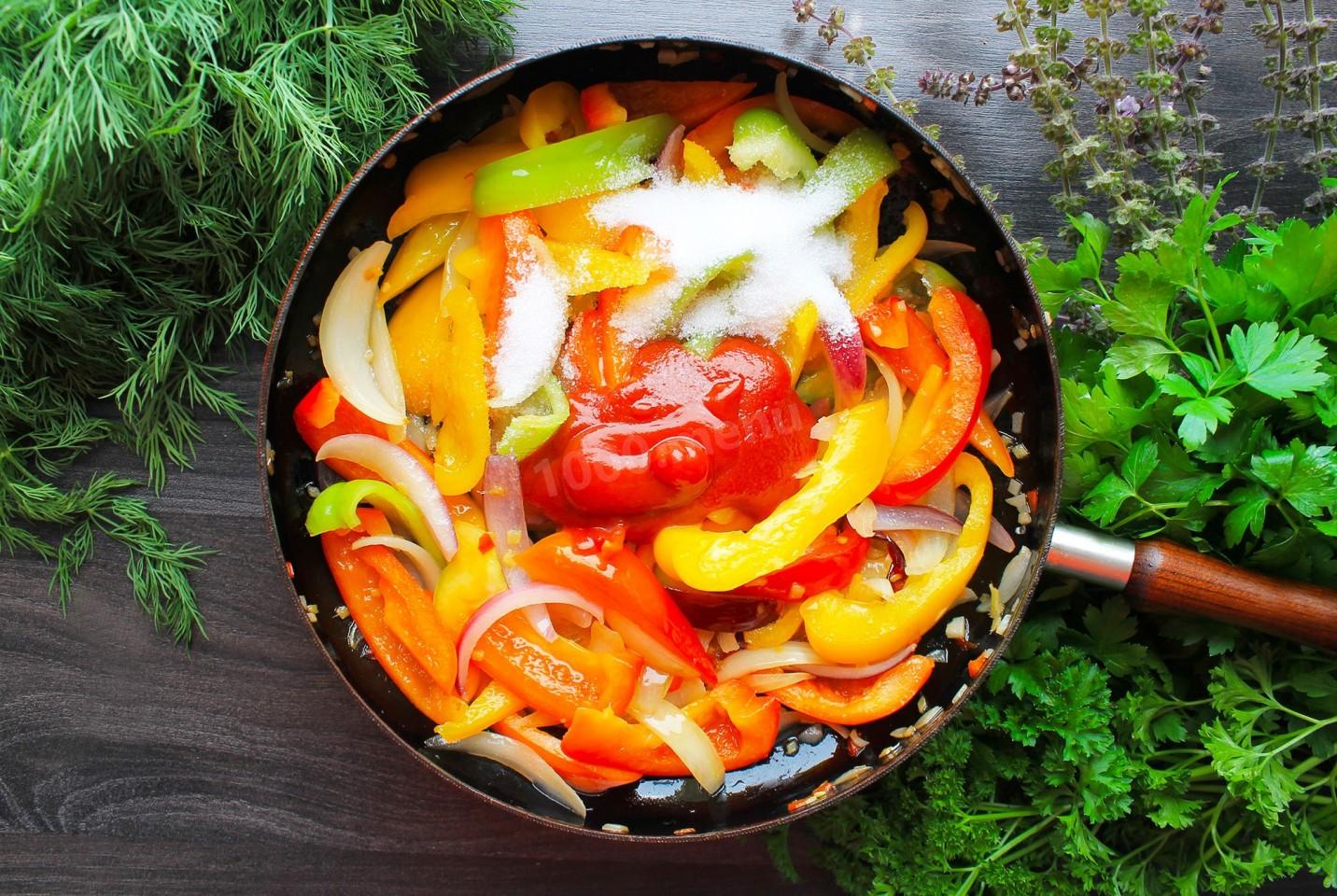
Add the tomato paste and sugar. You can use honey in place of the sugar. Add the sugar gradually — 2 tablespoons may be too much for your taste. It's better to adjust at the end and sweeten a little more if needed.
-
Step 10:
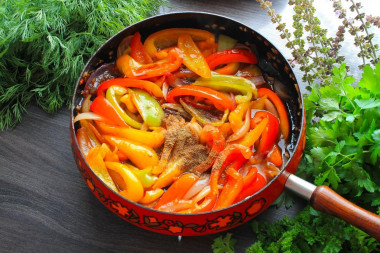
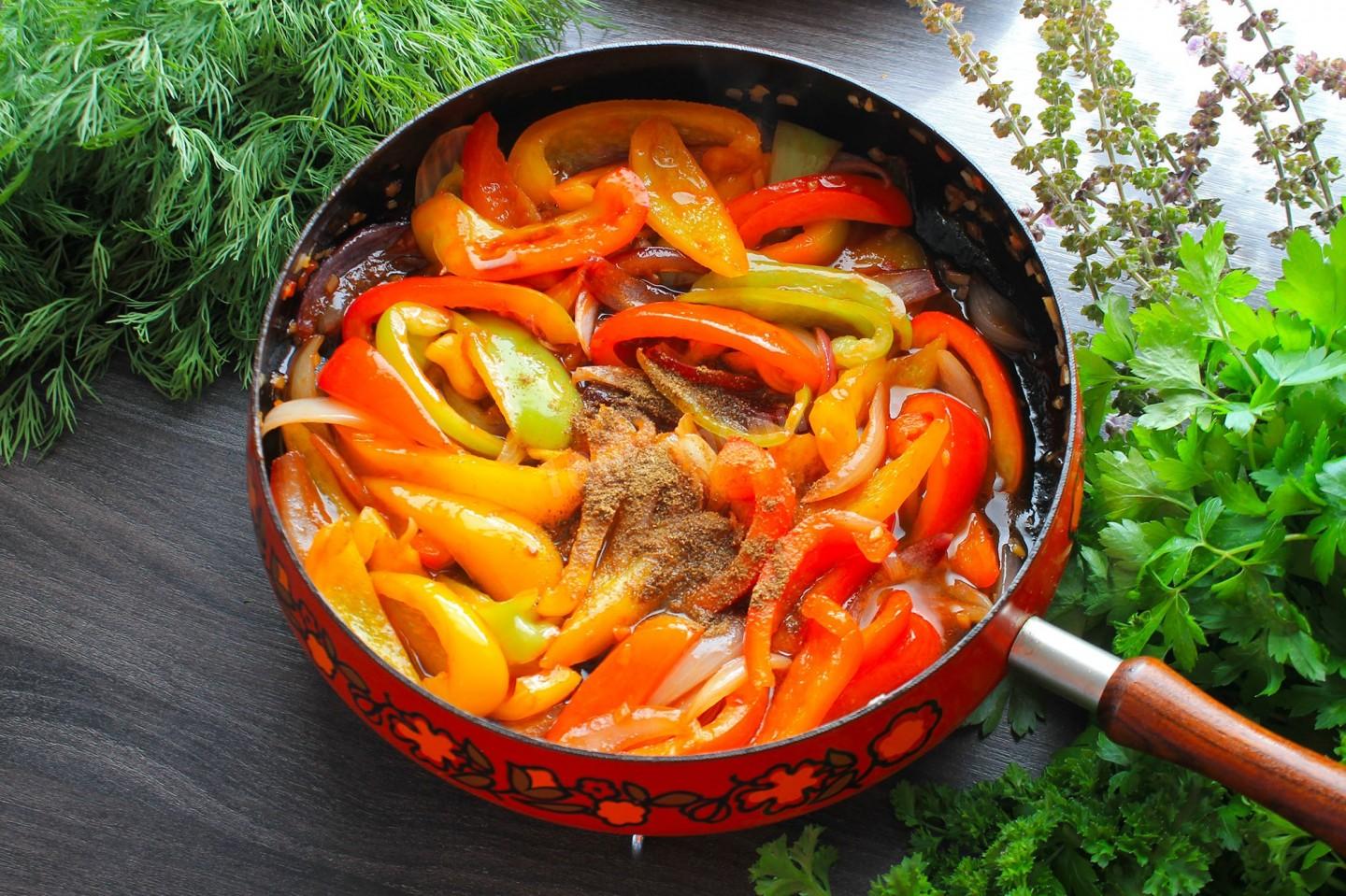
Warm everything through for about 2 minutes. Pour in the soy sauce and apple cider vinegar. (I sometimes use freshly squeezed lemon juice instead of the vinegar — it works great here too.) Add the ground coriander and a little ground black pepper. Stir.
-
Step 11:
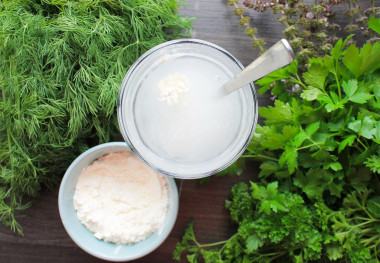
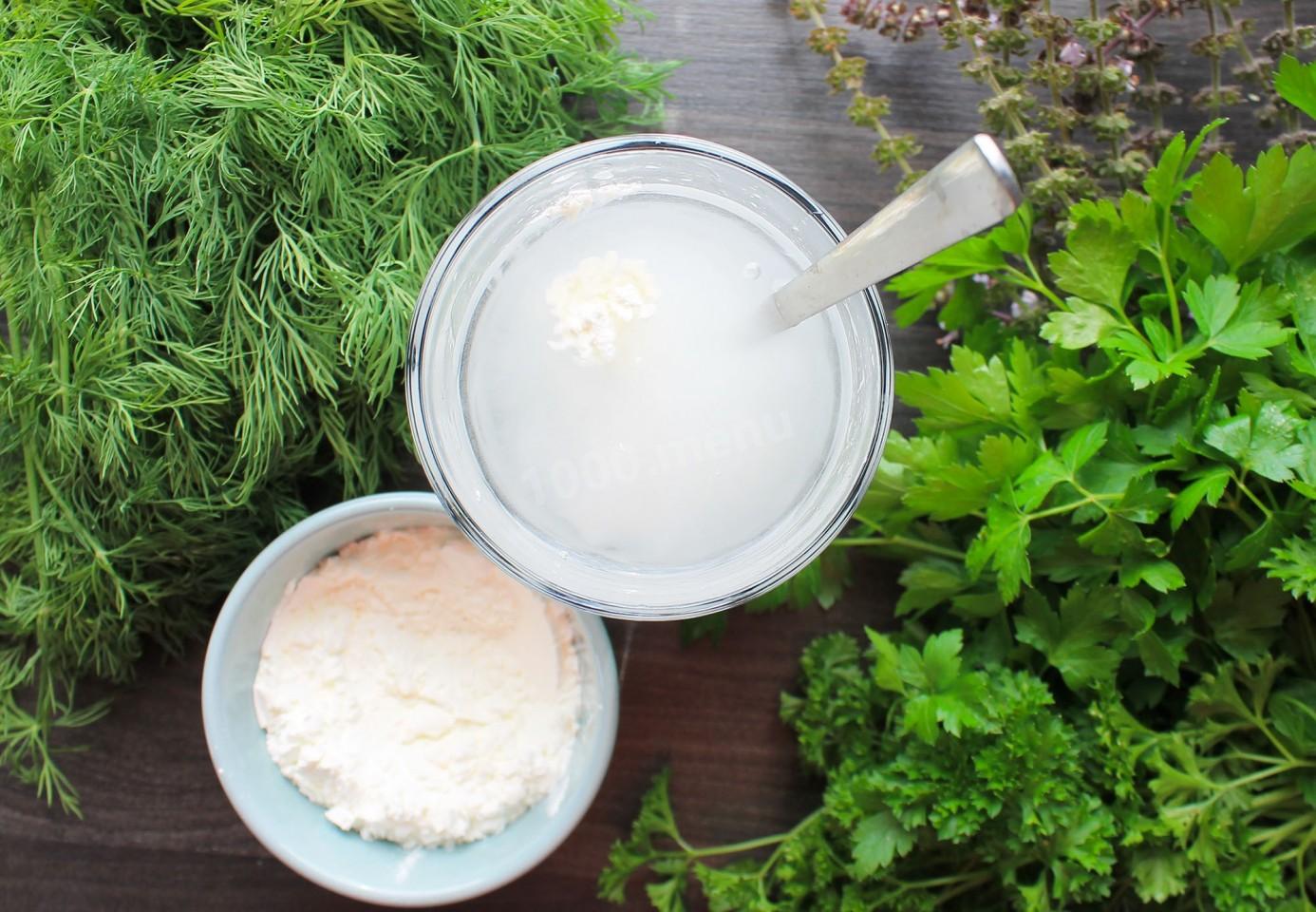
Dissolve one tablespoon of cornstarch in a cup of cold water.
-
Step 12:
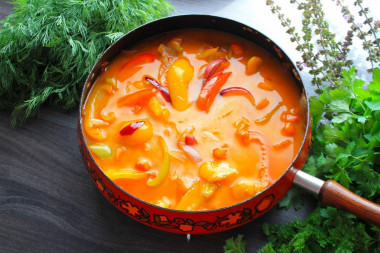
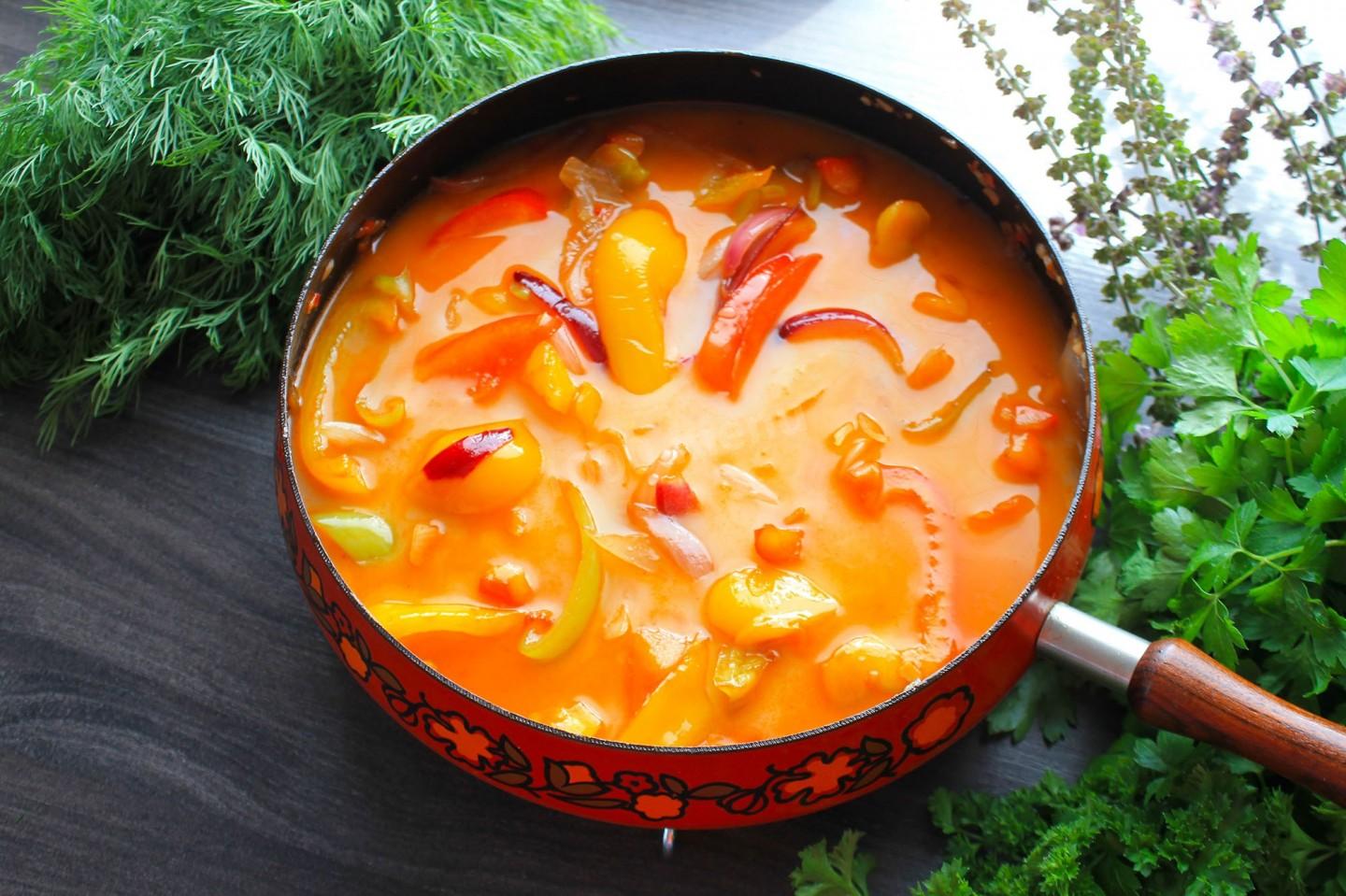
Pour the cornstarch slurry into the pan and bring to a boil. Turn the heat down to medium and let the vegetables simmer for about five minutes; the starch will thicken the sauce. Take the pan off the heat and turn to the eggplant.
-
Step 13:
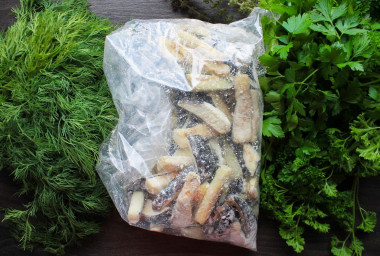
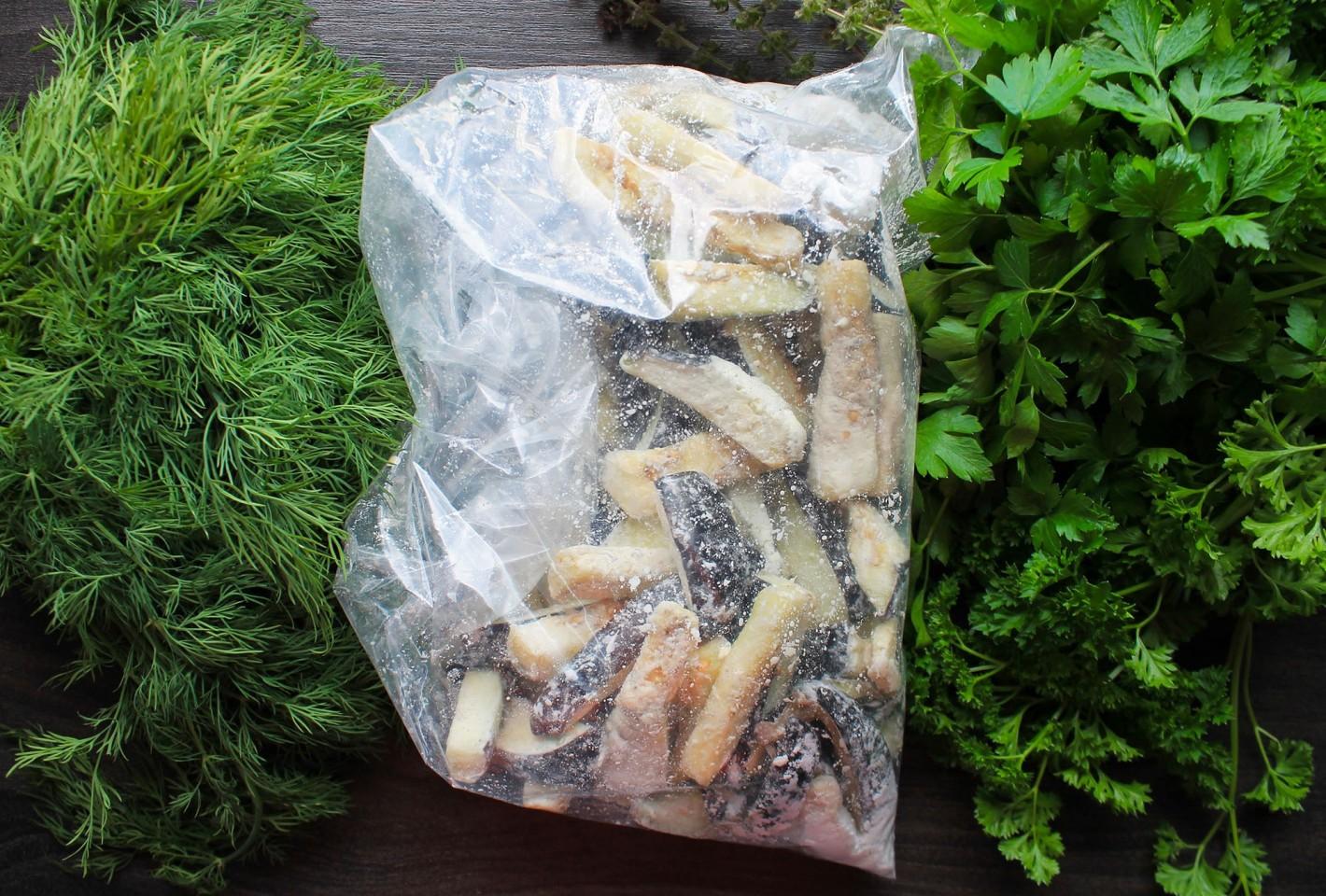
Put the remaining 3 tablespoons of cornstarch in a plastic bag, add the eggplant sticks, and shake well so the starch coats the pieces evenly. Heat the remaining vegetable oil in a clean skillet and fry the eggplant until golden on all sides.
-
Step 14:
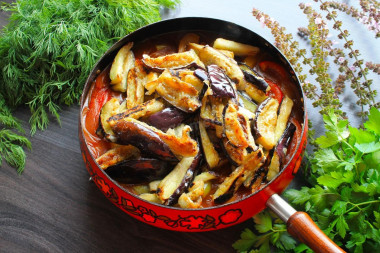
Add the eggplant to the pan with the sauce, stir, and bring to a boil over high heat. Salt to taste and boil for 2–3 minutes. Taste again and add whatever it needs (salt, sugar, or vinegar).
-
Step 15:
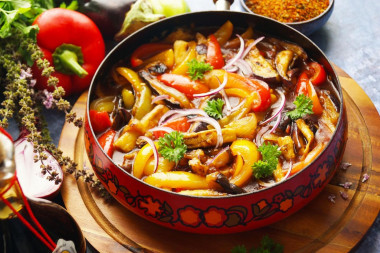
The eggplant is ready to serve! If you like, garnish with fresh herbs and thin slivers of red onion.
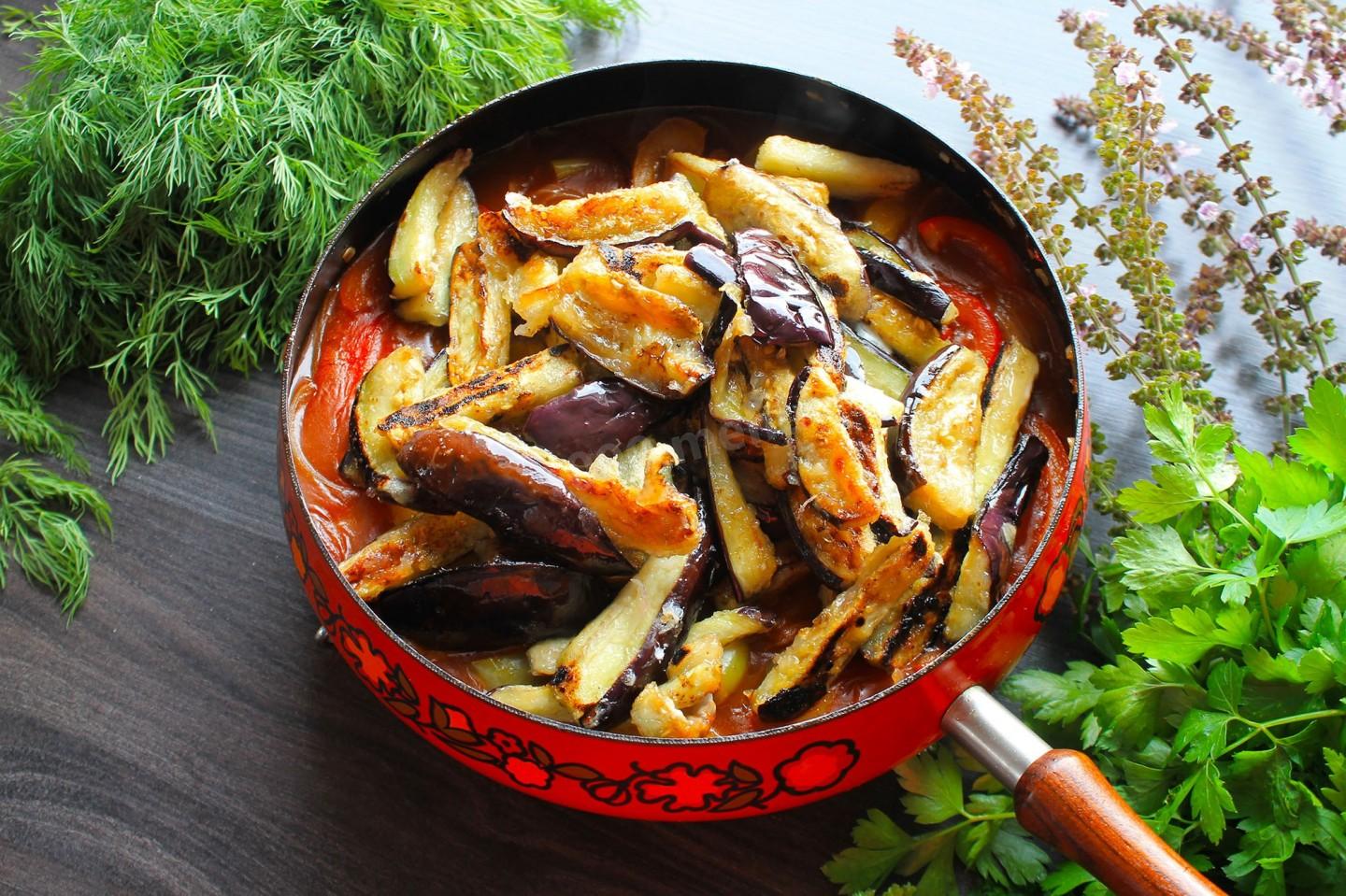
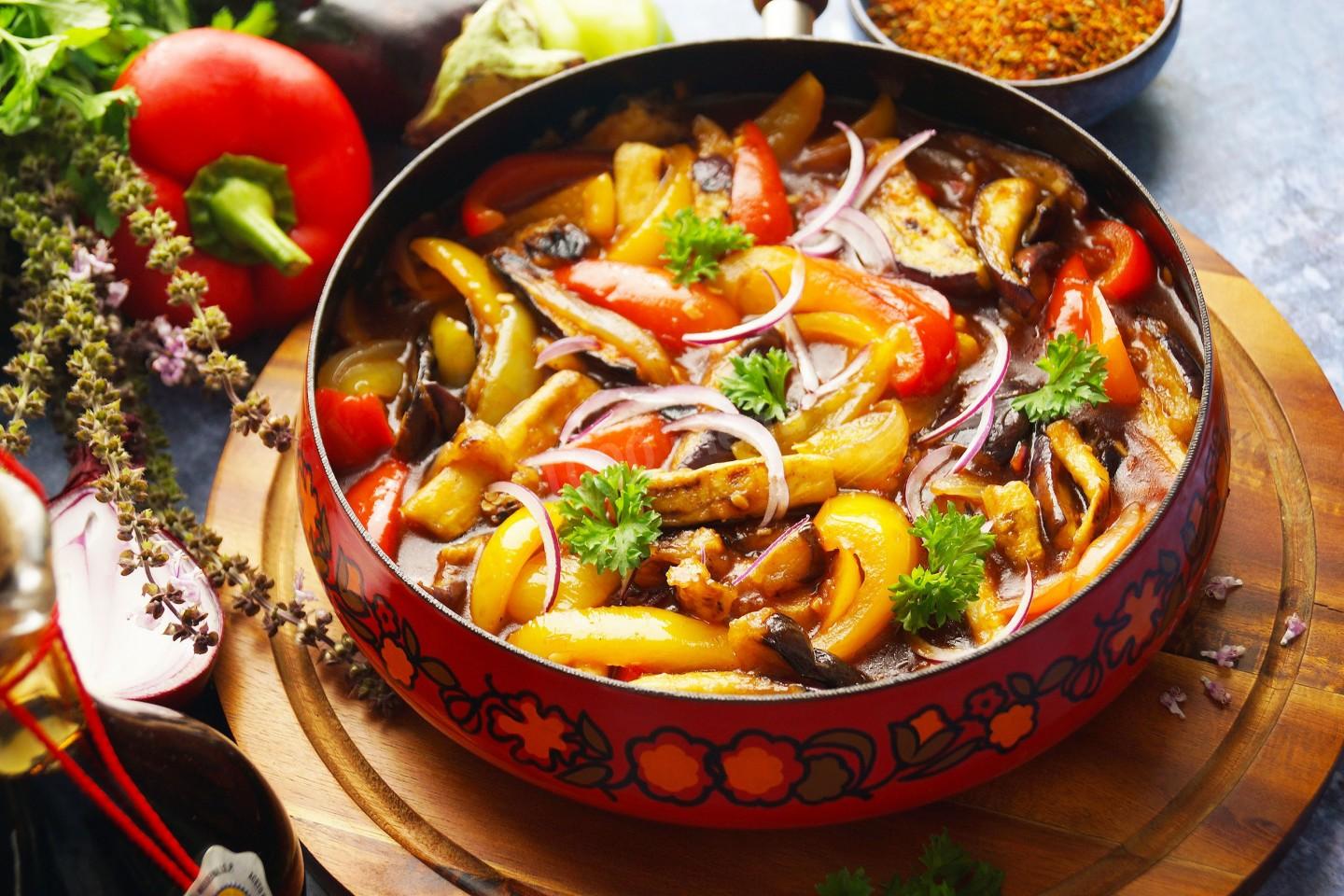
- This eggplant pairs beautifully with fish or steamed rice. Enjoy!
- If you use a store-bought spice blend, be sure to read the label. These blends often already contain salt, so account for that or you risk over-salting the dish.
- Everyone's sense of salty, sweet, bitter, spicy, sour, and hot is different, so always season to your own taste. If you're using a seasoning for the first time, remember that some are especially easy to overdo — chili pepper, for one.
- Use a high-smoke-point oil for frying. Every oil is only good up to a certain temperature — its smoke point — beyond which it starts to burn and forms harmful compounds. Unrefined oils generally have a low smoke point, while refined oils stand up to heat much better. For frying, roasting, or grilling, reach for a refined oil such as sunflower, olive, or grapeseed.
Caloric content of the products possible in the composition of the dish
- Onion - 41 kcal/100g
- Sweet pepper - 27 kcal/100g
- Eggplant - 24 kcal/100g
- Garlic - 143 kcal/100g
- Ginger - 80 kcal/100g
- Dry ginger - 347 kcal/100g
- Pickled ginger - 51 kcal/100g
- Soy sauce - 51 kcal/100g
- Granulated sugar - 398 kcal/100g
- Sugar - 398 kcal/100g
- Vegetable oil - 873 kcal/100g
- Tomato paste - 28 kcal/100g
- Salt - 0 kcal/100g
- Water - 0 kcal/100g
- Apple cider vinegar - 14 kcal/100g
- Chili pepper - 40 kcal/100g
- Corn starch - 329 kcal/100g
- Ground coriander - 25 kcal/100g
Similar recipes





- Homemade dinner
- National cuisine
- Second course
- Side dishes
- Semi-finished products
- Vegetables
- Sweet
- Spices seasonings spices
- Fats and oils
- Other
- Garlic
- Ginger
- Кинза
- Pepper
- Salt
- Vinegar
- Vegetable oil
- Water
- Starch
- Tomato paste
- Asian cuisine
- Frying
- Stewing
- Stewed vegetables
- Eggplant second course
- Sauce
- From eggplant
- From sweet pepper
- From onion
- No eggs
- Vegetarianism
- Recipes for lean dishes without butter
- Sugar