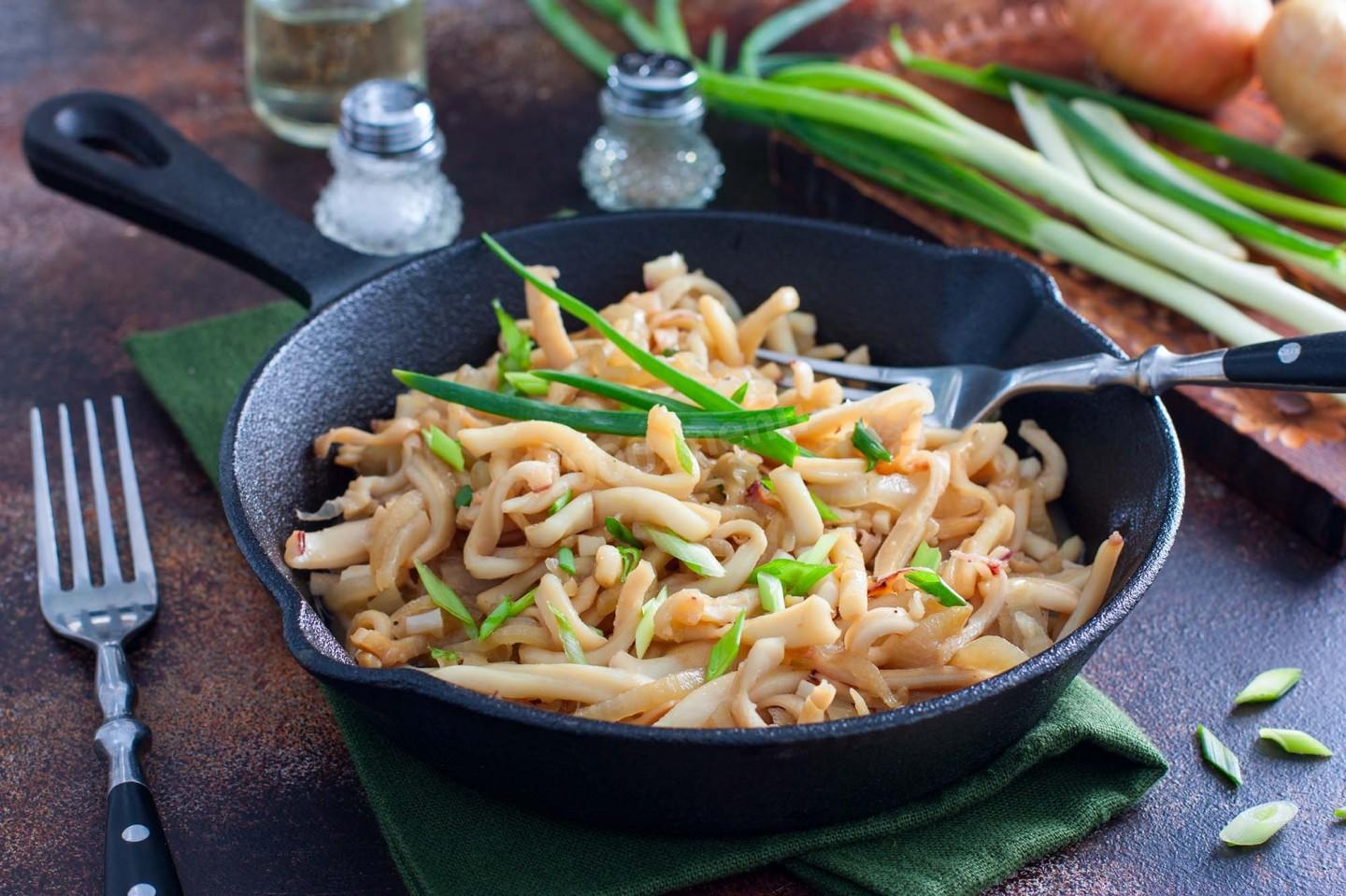
Pan-Fried Squid in Garlic Soy Sauce
Tasty, simple, quick, and easy! Squid pan-fried in soy sauce with garlic comes together in a matter of minutes — from prepping the ingredients to putting the dish on the table takes 20 minutes at most. It's a perfect weeknight dinner!

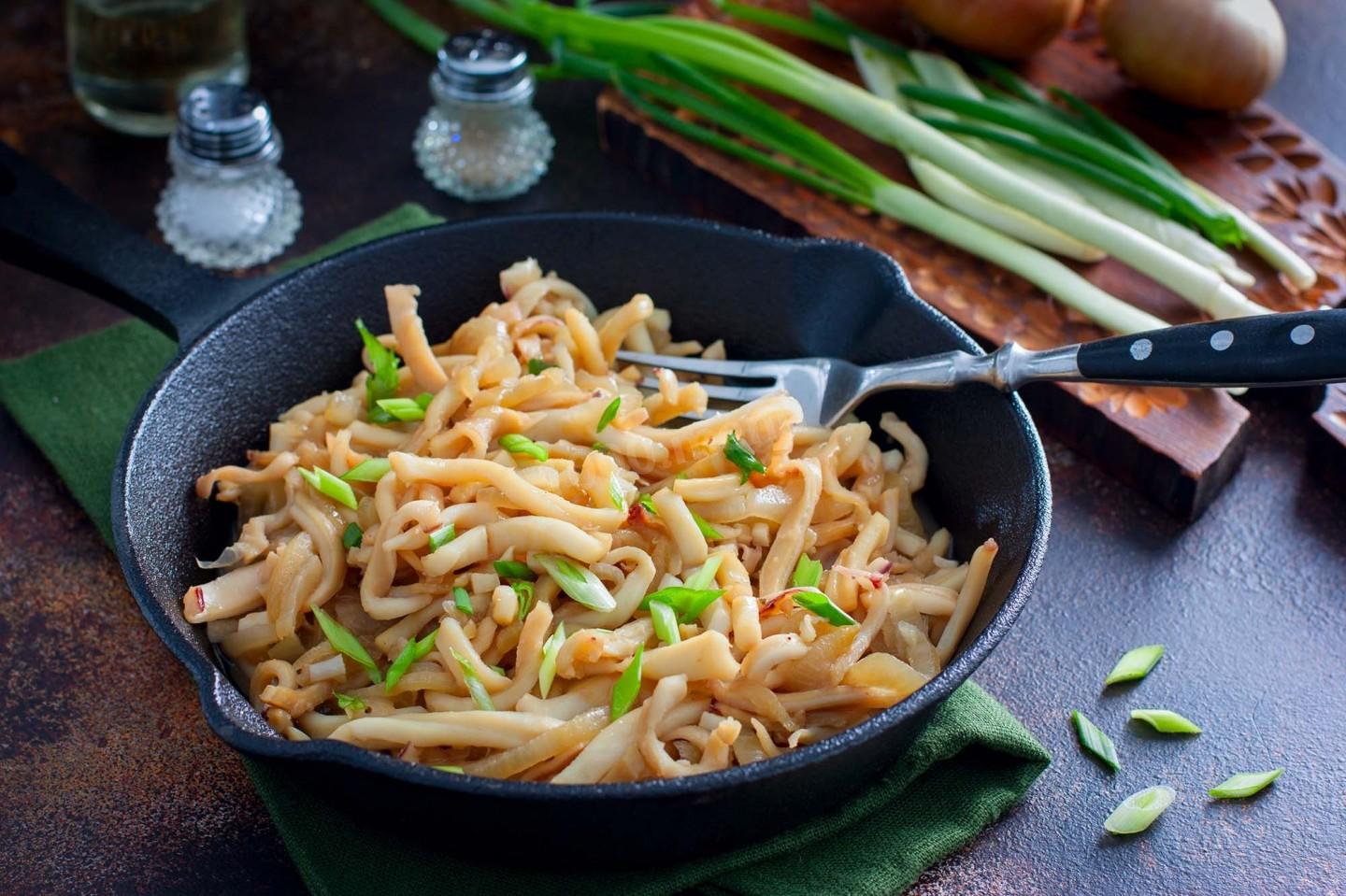
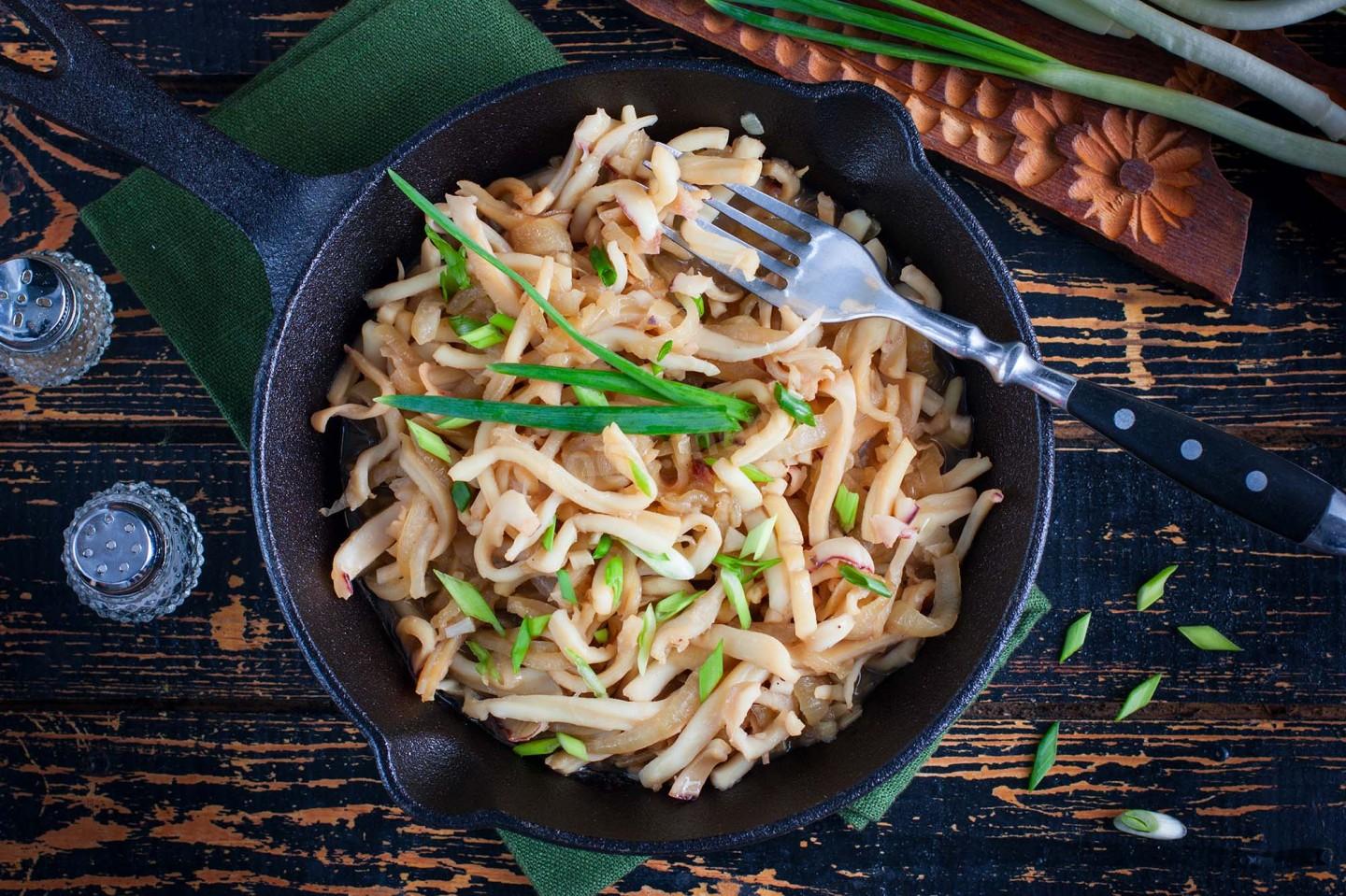
Cooking method
-
Step 1:
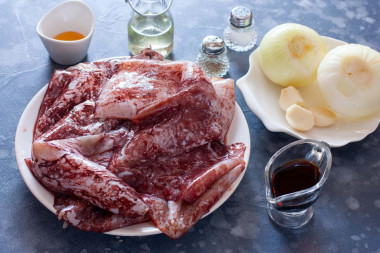
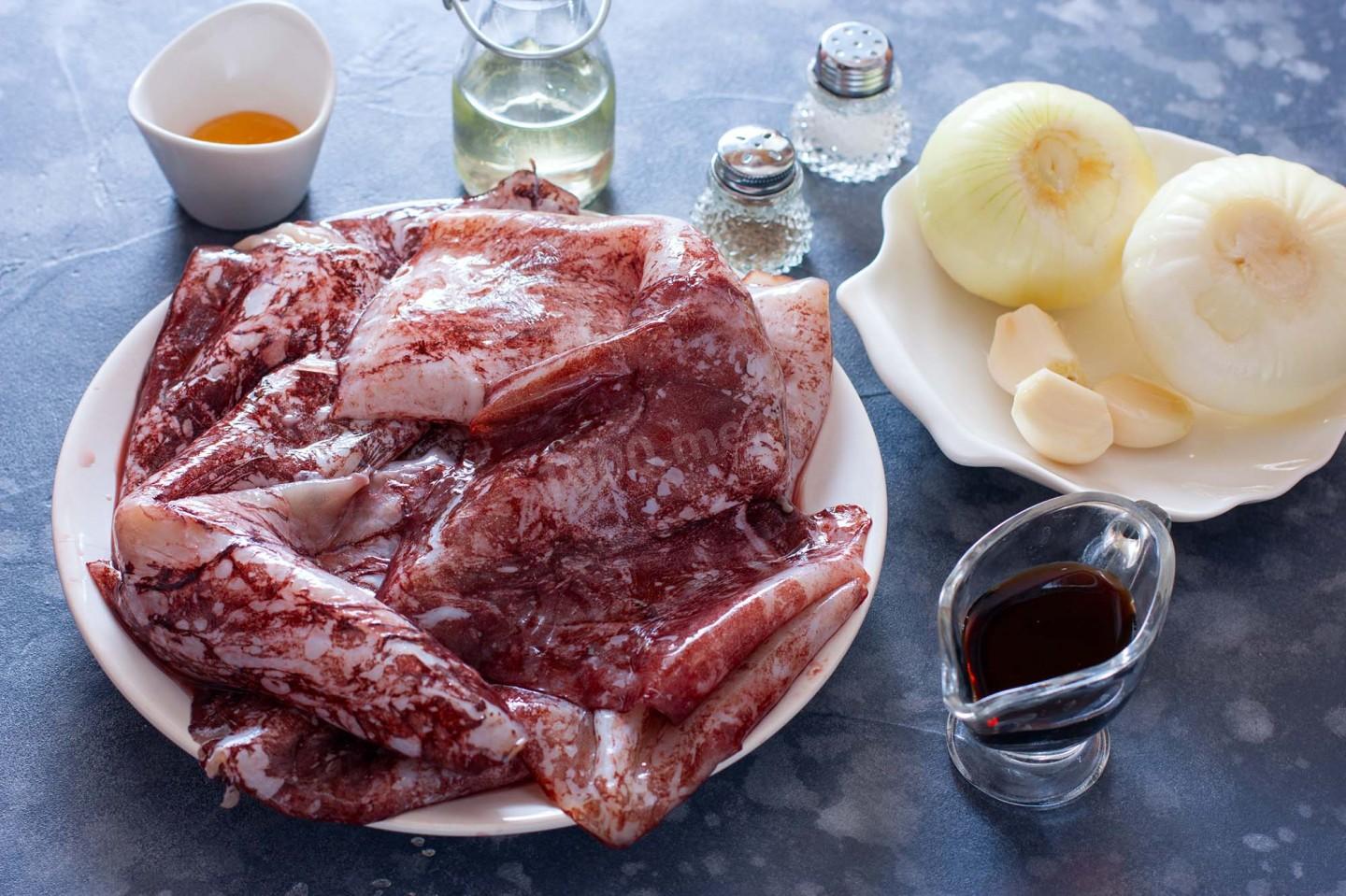
How do you fry squid in soy sauce? Gather your ingredients. Squid is usually sold frozen, so thaw it first — either in water or somewhere no warmer than about 65°F (18°C). My squid weighed 650 g (about 1.4 lb) total. The onions were medium-sized and the garlic cloves were large, so I used 3. Have your vegetable oil ready for frying and set out a deep skillet. If honey doesn't agree with you, feel free to leave it out.
-
Step 2:
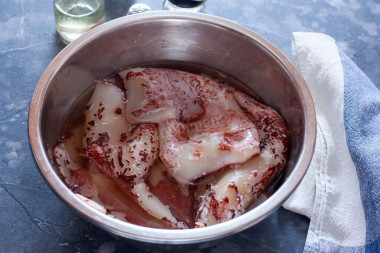
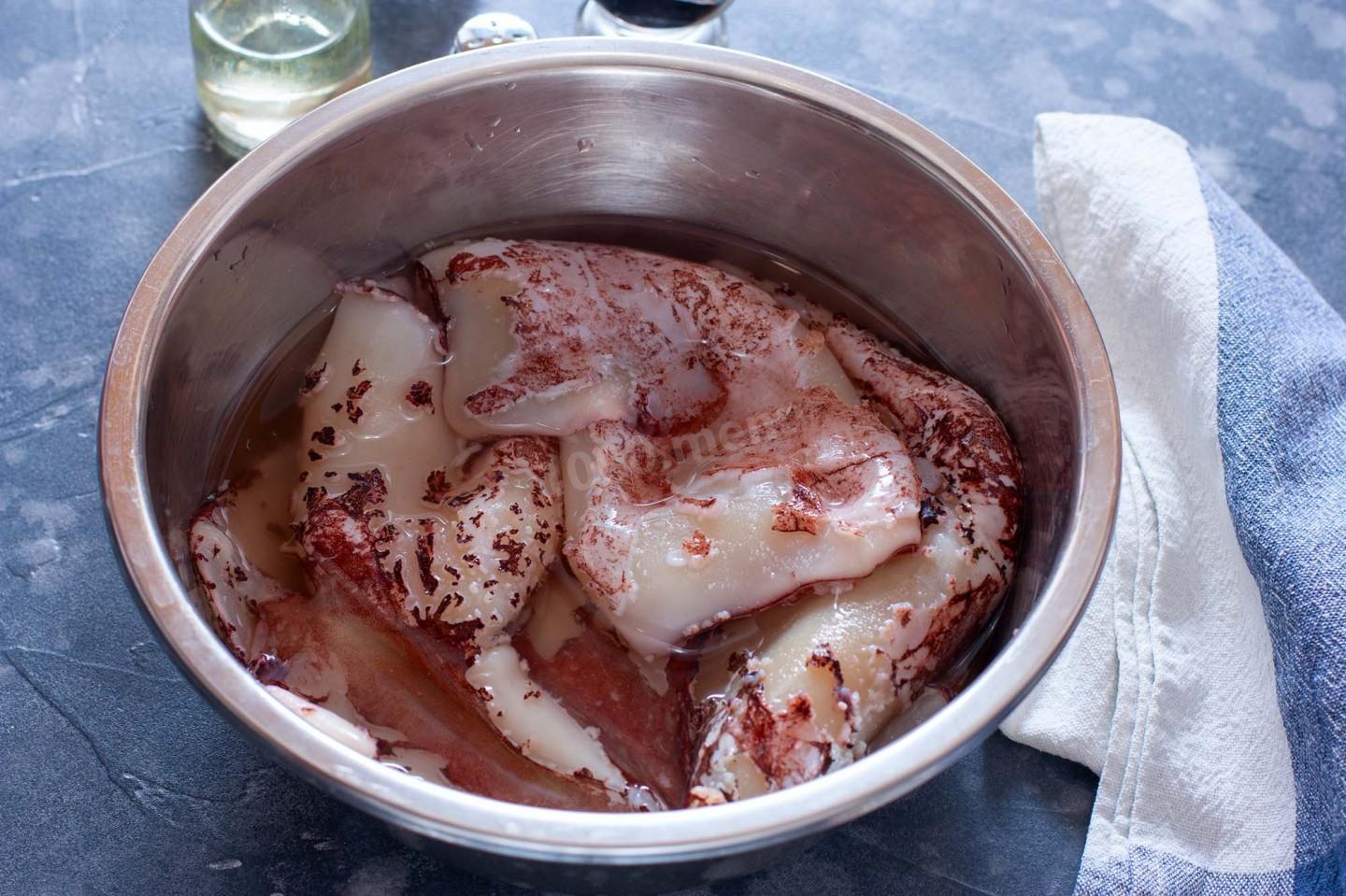
Pour boiling water over the thawed squid, then immediately plunge it into cold water — this makes the outer membrane much easier to peel off.
-
Step 3:
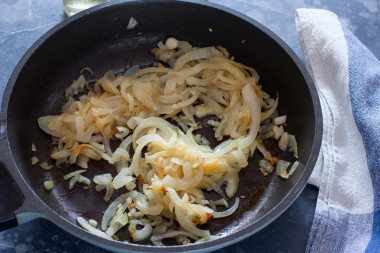
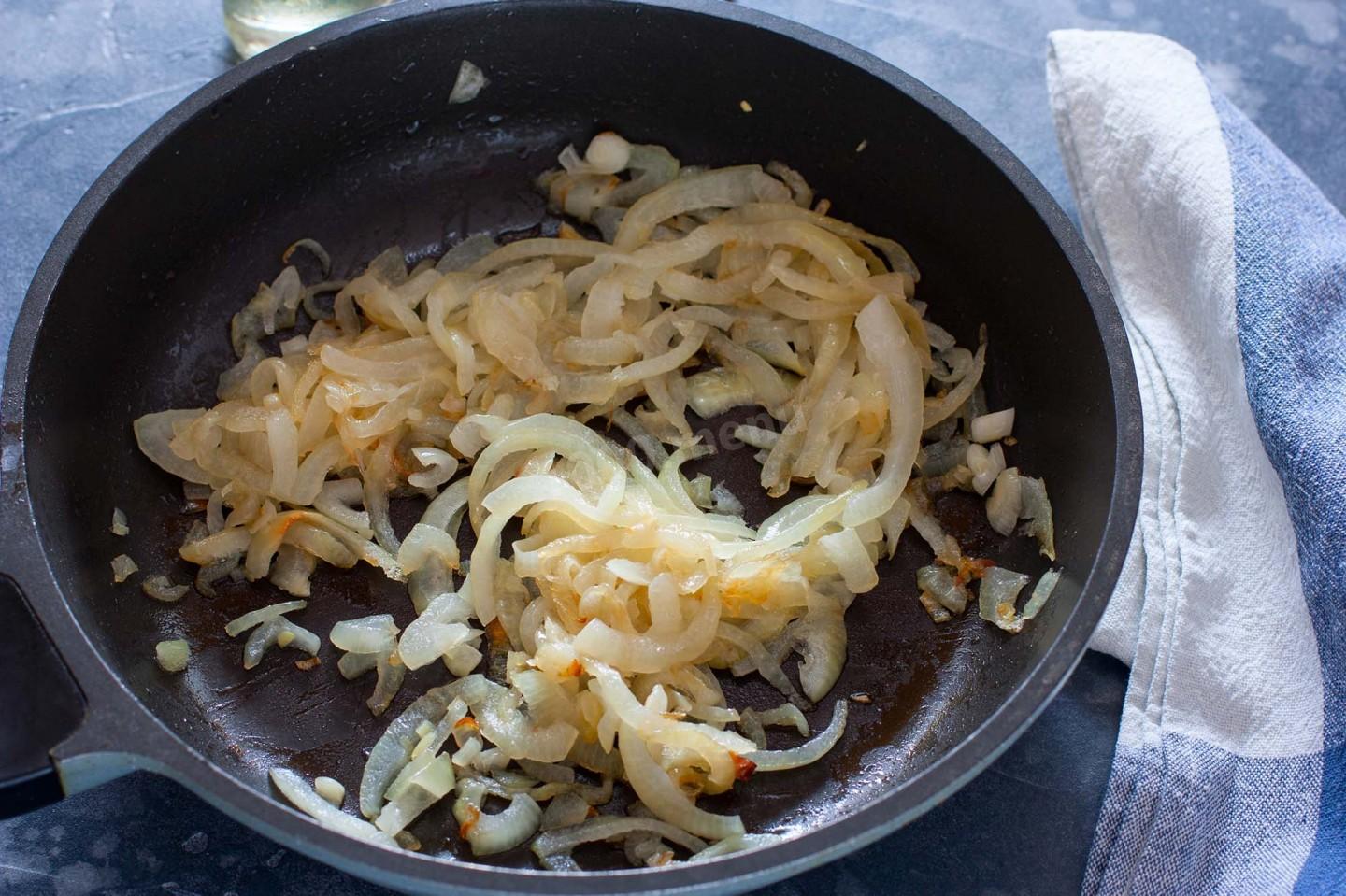
Peel the onion and cut it into slivers or half-moons. Heat the vegetable oil in the skillet and add the onion. Fry over medium heat until golden, stirring so it doesn't burn.
-
Step 4:
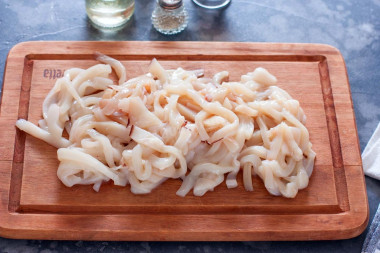
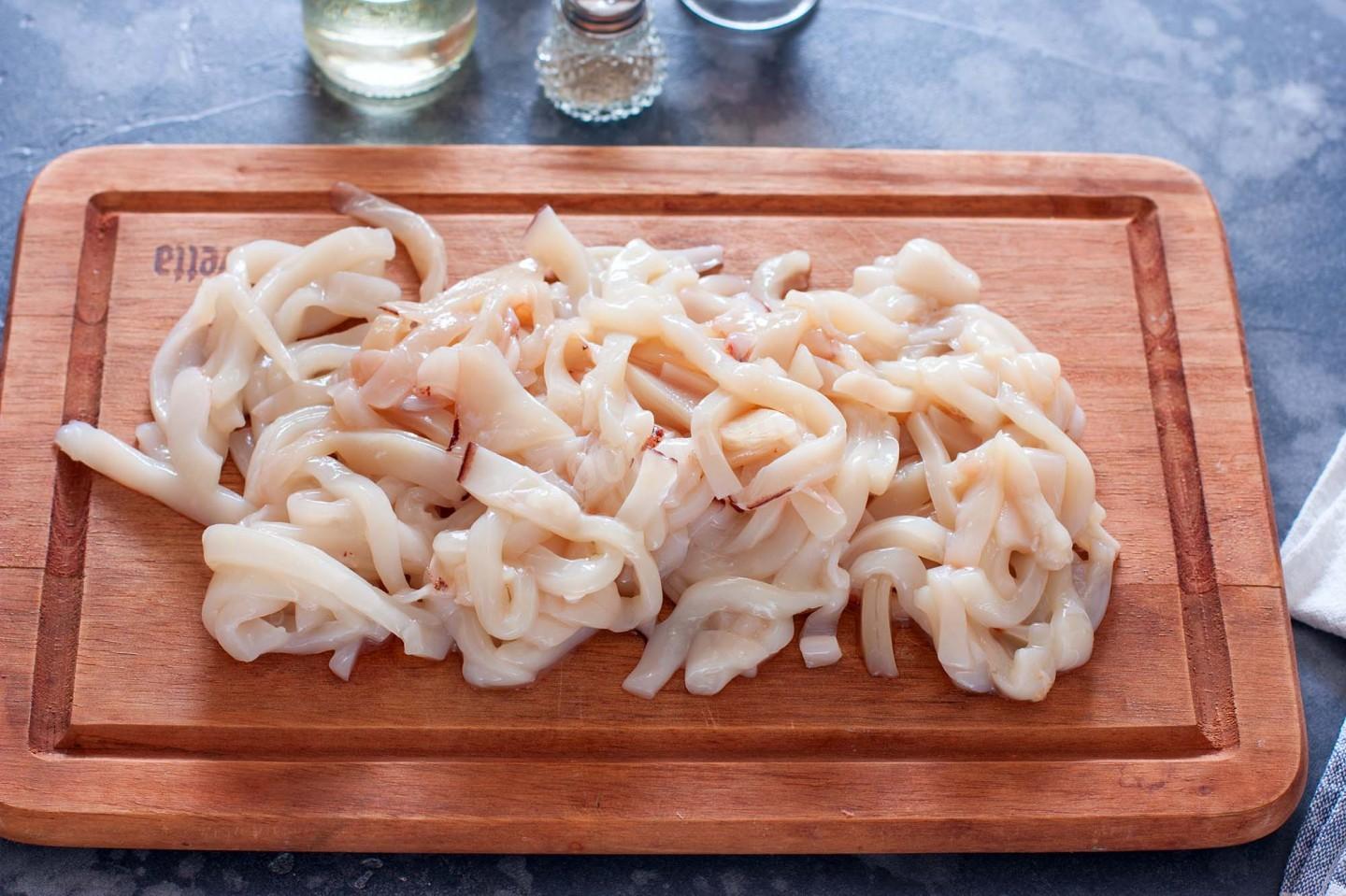
Peel off the squid membrane, remove the insides, and rinse under cold water. Pat the squid dry with a paper towel and cut it into strips.
-
Step 5:

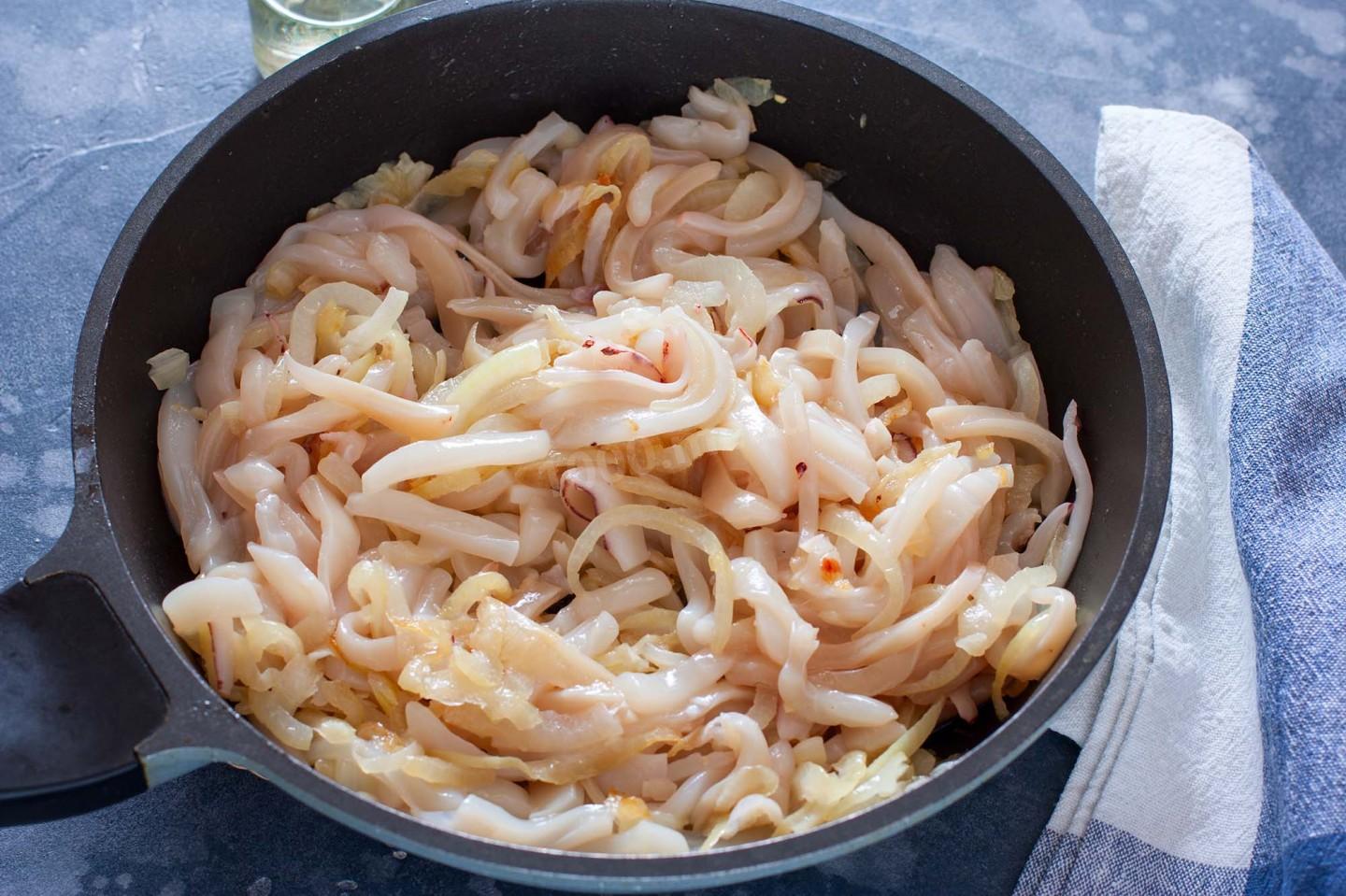
Add the squid strips to the fried onion and cook together for about a minute over medium heat, stirring constantly.
-
Step 6:
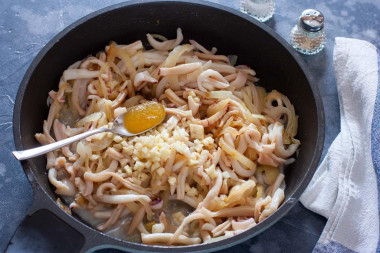
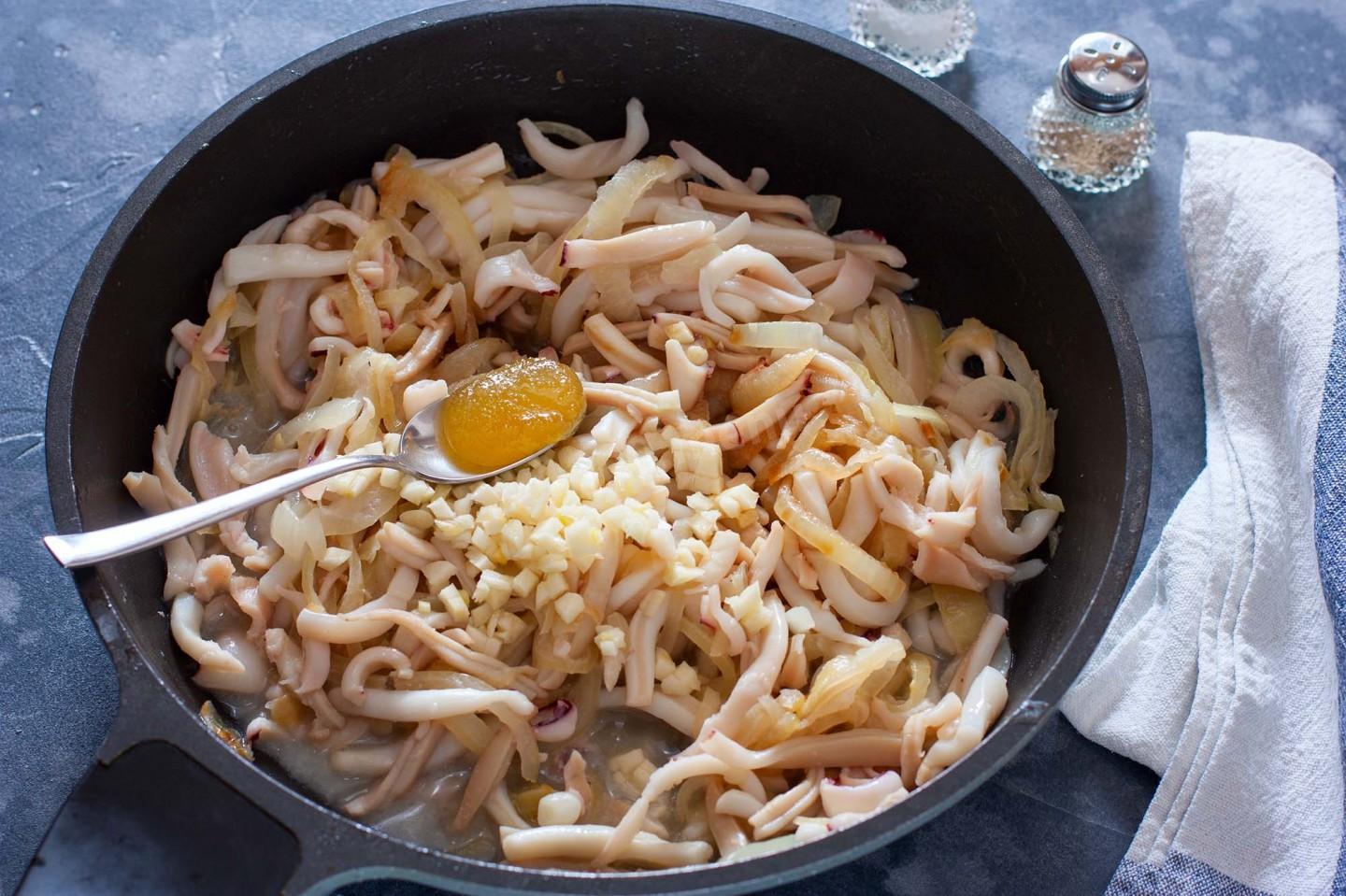
Add the honey, finely diced garlic, soy sauce, a little salt (remember the soy sauce is already salty), and ground black pepper to taste. Stir everything together and fry for 1–2 minutes, stirring as it cooks.
-
Step 7:

Serve the squid hot. It's great over rice, potatoes, or pasta, and it also makes a nice quick bite with fresh bread.
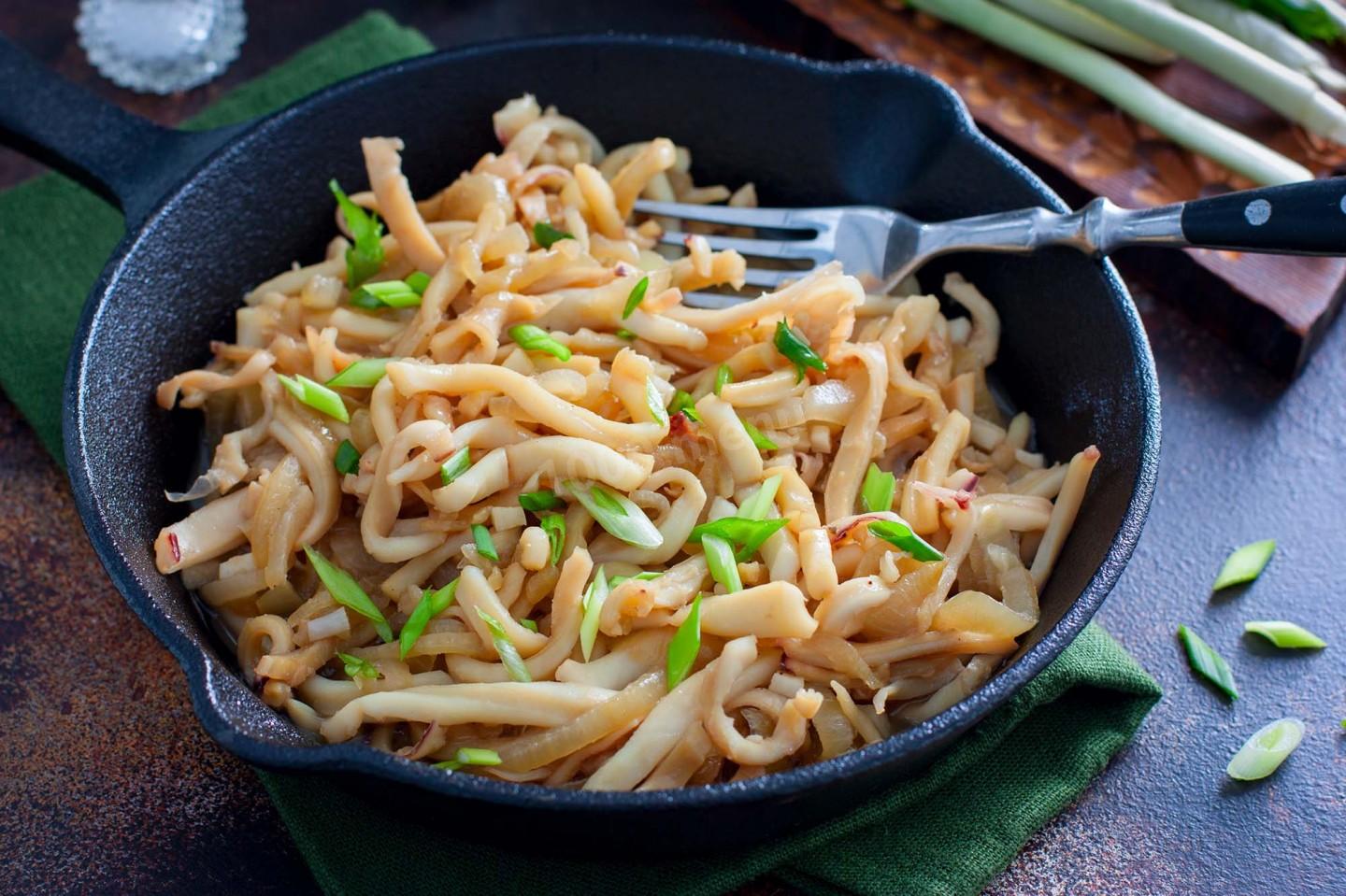
- If you love squid, you'll definitely enjoy this recipe. To switch up how you cook this seafood, add a little zip and savory depth with onion, garlic, and soy sauce. It's delicious!
- Use an oil with a high smoke point for frying. Oils are only healthy up to a certain temperature — the smoke point — beyond which they start to burn and form toxic compounds, including carcinogens. Unrefined oils, with few exceptions, have a low smoke point; they're full of unfiltered organic particles that burn quickly. Refined oils handle heat better and have a higher smoke point. If you're cooking in the oven, in a skillet, or on the grill, make sure you're using a high-smoke-point oil. The most common ones are refined sunflower, olive, and grapeseed oil.
- Here's an easy way to tell if the oil in the pan is hot enough: dip in a wooden spatula. If bubbles gather around it, you're ready to start frying.
- When adding soy sauce to a dish, keep in mind that it's quite salty. Cut back on the total amount of salt, or you risk over-salting.
Caloric content of the products possible in the composition of the dish
- Honey - 400 kcal/100g
- Fried squid - 175 kcal/100g
- Boiled squid - 110 kcal/100g
- Squid fresh - 74 kcal/100g
- Garlic - 143 kcal/100g
- Ground black pepper - 255 kcal/100g
- Soy sauce - 51 kcal/100g
- Vegetable oil - 873 kcal/100g
- Salt - 0 kcal/100g
- Onion - 41 kcal/100g