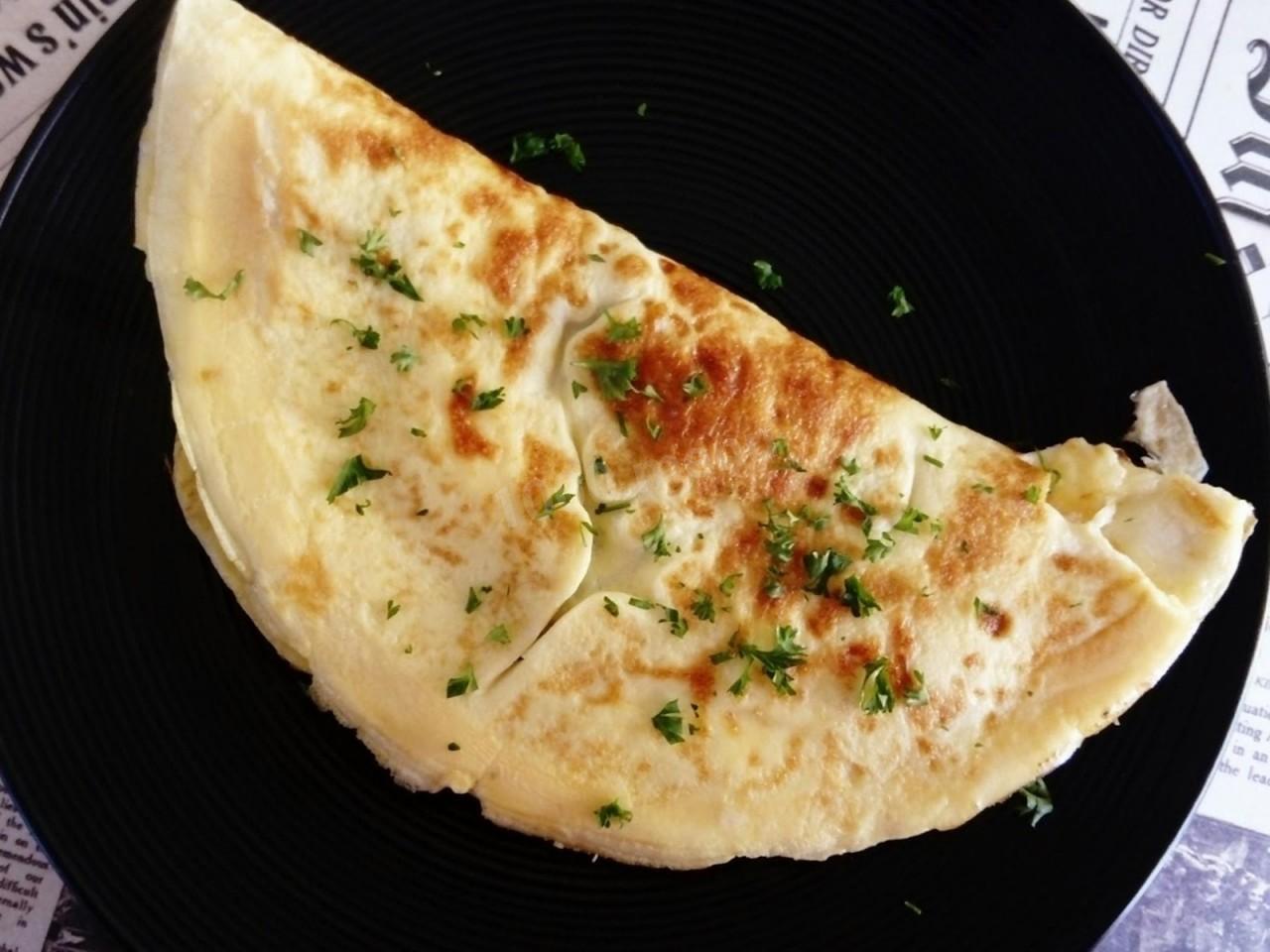
No-Oil Omelet in a Skillet
A quick, tasty, and wholesome dish! This no-oil skillet omelet makes a hearty, nourishing breakfast and a great start to a productive day. It calls for just a handful of the simplest ingredients. Want a bigger serving? Just scale up the amounts to suit.
Yara
Recipe author
No-Oil Omelet in a Skillet
Nutrients and energy value of the composition of the recipe
By weight of the composition:
Proteins 48 %
10 g
Fats 43 %
9 g
Carbohydrates 10 %
2 g
76 kcal
GI:
100
/
0
/
0
- How do you make an omelet without any oil in a skillet? This one is remarkably simple and very quick. And since it uses no vegetable oil or any other frying fat at all, it's especially light and nourishing. You need just a few ingredients — mainly eggs and milk. Use fresh eggs; the milk can be any fat content you like or happen to have on hand. Since mixing takes only a couple of minutes, it makes sense to get the pan ready first. Use a small nonstick skillet (sized to the amount of food), since you'll be cooking without oil. Set it on the stove to heat. While it warms, crack the eggs carefully into a small bowl or deep plate, making sure no shell gets in. Pour in a little cold milk and whisk it all together with a whisk or a table fork. Don't overbeat the eggs and skip the mixer — you don't need a fluffy foam, just the whites, yolks, and milk blended into a smooth liquid. Season with salt and ground black pepper to taste and stir again. Pour it straight onto the hot pan. Turn the heat down to low and cover the omelet with a lid. Cook the eggs like this for 12 to 15 minutes, just until the center is no longer runny. The low heat lets it cook through evenly. Using a spatula, fold the finished omelet in half and slide it onto a plate. Sprinkle with fresh herbs to serve. Enjoy!
- Every oil is good only up to its smoke point — the temperature at which it starts to burn and form harmful compounds. Learn to gauge the right frying temperature and pick the best oil for the job (and which ones to skip altogether).
- Important: the wrong pan can ruin even the best recipe. Learn how to choose the ideal pan for different dishes.
- How can you tell if an egg is fresh? Crack it into a separate container. First, there should be no off smell. The white of a fresh egg is clear and clean, and the yolk holds its shape — shiny, domed, and firm rather than runny.
Caloric content of the products possible in the composition of the dish
- Whole cow's milk - 68 kcal/100g
- Milk 3.5% fat content - 64 kcal/100g
- Milk 3.2% fat content - 60 kcal/100g
- Milk 1.5% fat content - 47 kcal/100g
- Concentrated milk 7.5% fat content - 140 kcal/100g
- Milk 2.5% fat content - 54 kcal/100g
- Ground black pepper - 255 kcal/100g
- Salt - 0 kcal/100g
- Fresh frozen soup greens in a package - 41 kcal/100g
- Greenery - 41 kcal/100g
- Chicken egg - 80 kcal/100g
Similar recipes
Related and additional categories: