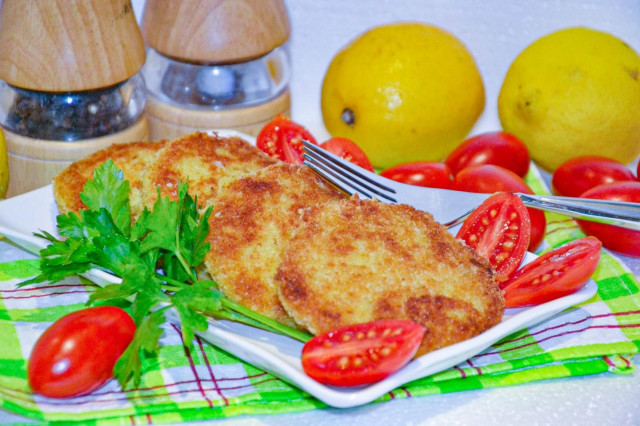
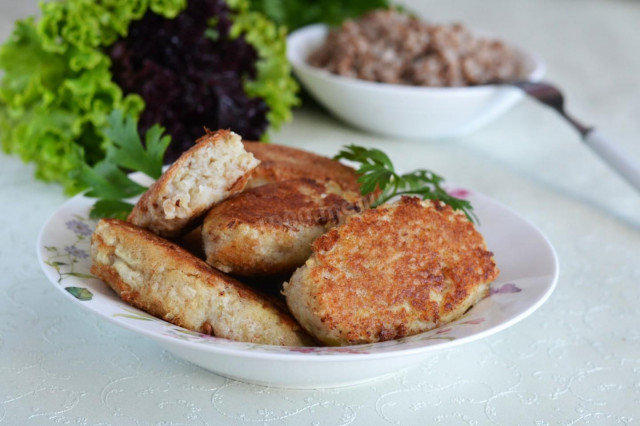

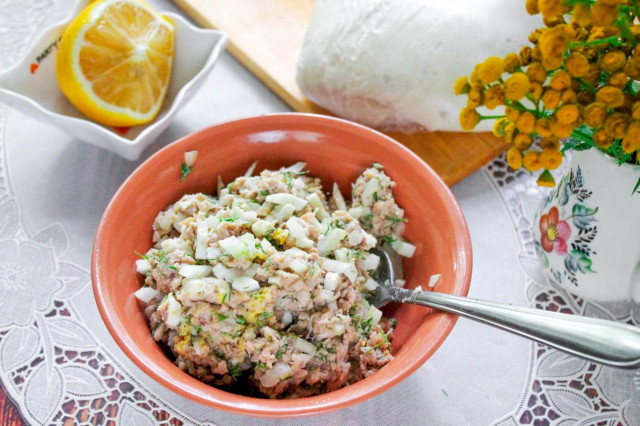
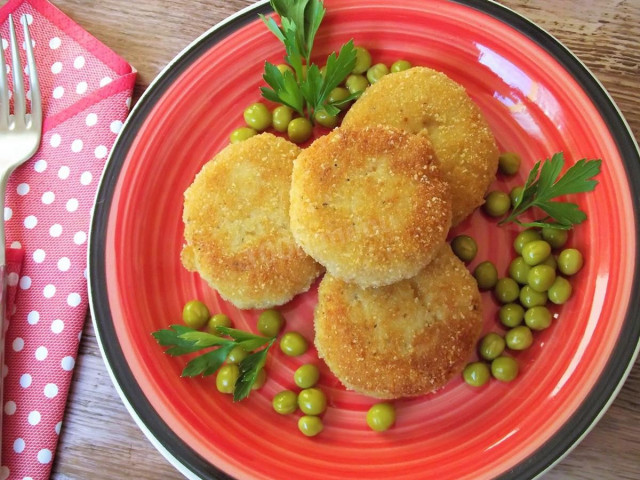

Store-bought minced fish is most often made from the most common types of inexpensive fish like pollock, hake, burbot and blue whiting. It may also include sea bass, horse mackerel, cod, flounder, shark and greenling. In rare cases the exact composition is listed on the label; as a rule, manufacturers limit themselves to naming a few fish. So if you have doubts about the product you're buying, it makes sense to make the mince yourself. Luckily, that's not difficult.
Minced fish is most often found in recipes with these five products:
| Product | Number of recipes with a combination | Calories per 100g | Protein g per 100g | Fats g per 100g | Carbohydrates g per 100g |
|---|---|---|---|---|---|
| Onion | 6 | 41 | 1.4 | 0 | 10.4 |
| Breadcrumbs | 5 | 347 | 16 | 1.2 | 70 |
| Eggs | 4 | 157 | 12.7 | 10.9 | 0.7 |
| Chicken eggs | 3 | 80 | 12.7 | 10.9 | 0.3 |
| Butter | 3 | 734 | 0.5 | 82.5 | 0.8 |
The ready-made product already contains additives needed for long storage, along with salt, sugar and acids. This can affect the taste of the final dish, but only a little. Though that doesn't mean more salt, say, won't be needed — you'll have to taste as you go while cooking.
For minced fish to be ready, say, for frying cutlets, its makeup has to be enriched, made juicier and more tender. Cream, raw grated potato, the crumb of white bread soaked in milk, fried onion — all of this helps improve the taste and make the meat tender. It's also fine to add various vegetables to the mince, like cabbage, carrots and pumpkin. Or flour and grains such as wheat, semolina or corn.
To bind it, use a chicken egg or that same raw potato. Both can be replaced with a spoonful of starch. You can mix grated cheese, cottage cheese and pieces of fruit such as apples or pears into the mince.
Many home cooks will tell you that the best cutlets come out when minced fish is mixed with chicken in a 3:1 ratio.
When cooking, keep in mind that minced fish is more watery than meat mince. You can solve this by adding breadcrumbs to it.