Fried Kefir-Dough Hand Pies with Green Onion and Egg
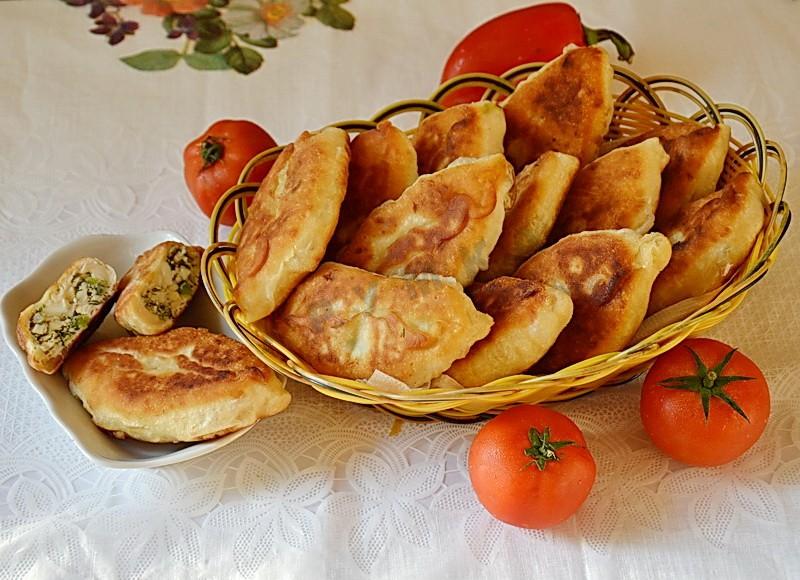
Tender, soft hand pies with a tasty, juicy filling — hot off the stove! I love working with kefir dough. It's always soft and easy to handle, and this recipe is no exception. The filling needs to be juicy and tender, and sour cream really helps here — it's a perfect fit. And yes, someone will say: whoa, 10 eggs just for the filling! But here's the thing — kefir-dough pies puff up a lot as they fry, and if you skimp on the filling, the finished pie tastes bland: all dough, not enough filling. This amount of ingredients gave me 18 pies. The finished pies come out really appetizing, tasty, and satisfying. On the second day (I set some aside on purpose for the experiment — otherwise they wouldn't have lasted :) ) they still don't go stale, which is another nice bonus.
Cooking method
-
Step 1:
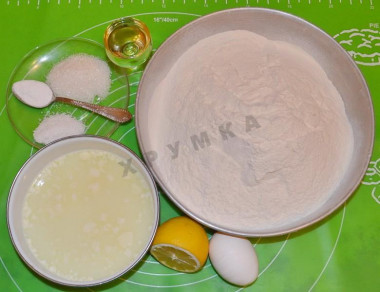
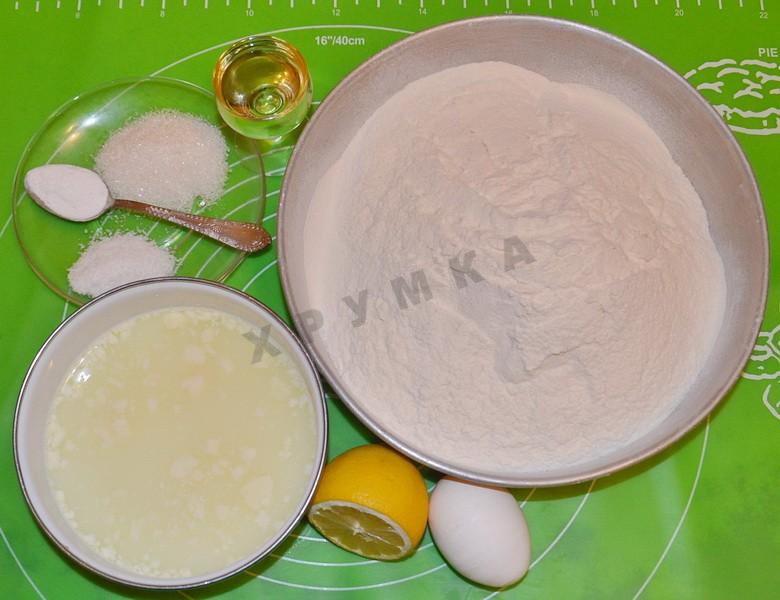
The ingredients for the dough. If you're measuring the flour by the cup, measure out the amount you need BEFORE sifting, then sift it! The kefir for the dough must be at room temperature. If you're taking it straight from the fridge, warm it slightly.
-
Step 2:
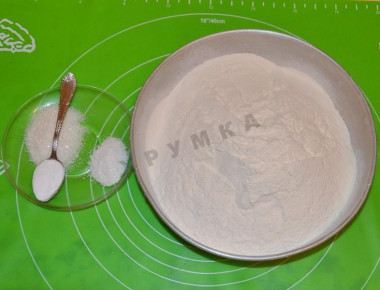
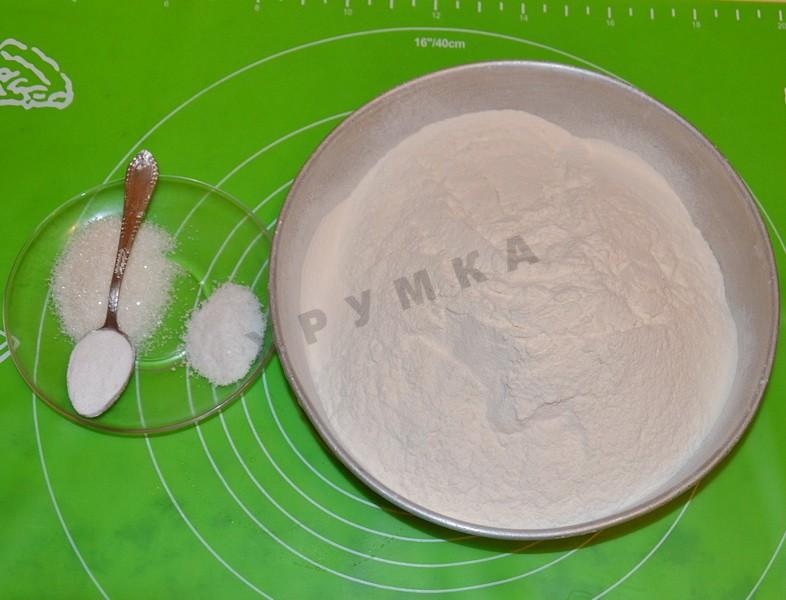
Sift the flour and add the salt. If you're using baking powder instead of soda, this is the moment to stir it into the flour. Mix everything well.
-
Step 3:
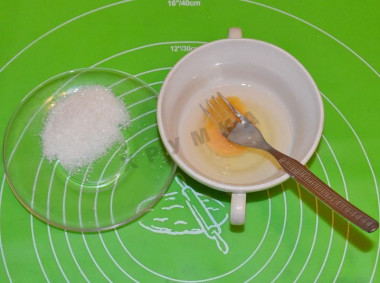
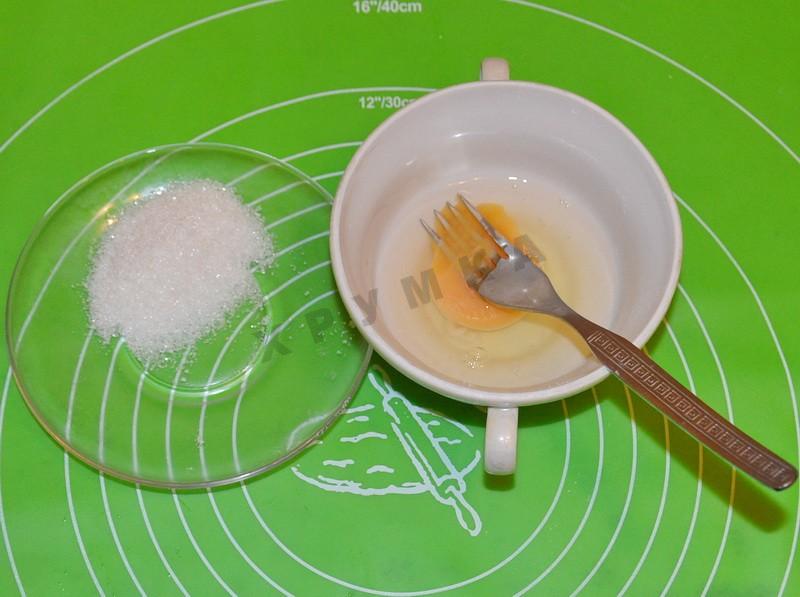
Beat the egg with the sugar — a fork works just fine.
-
Step 4:
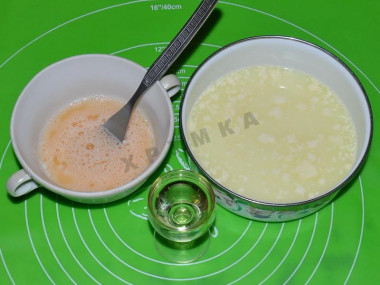
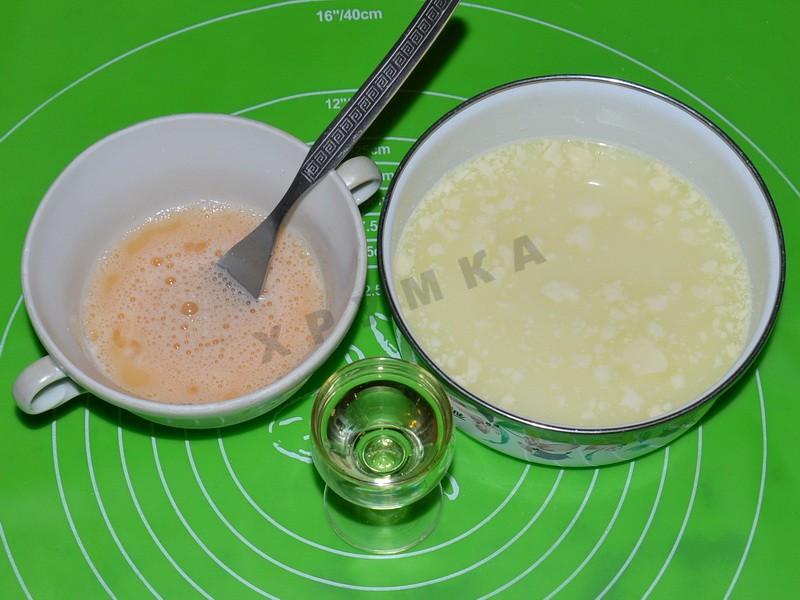
Combine the egg mixture with the kefir and 3 tablespoons of oil (save the last tablespoon for later), and stir until smooth.
-
Step 5:
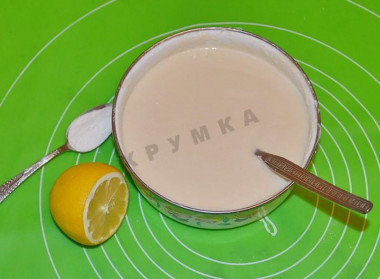
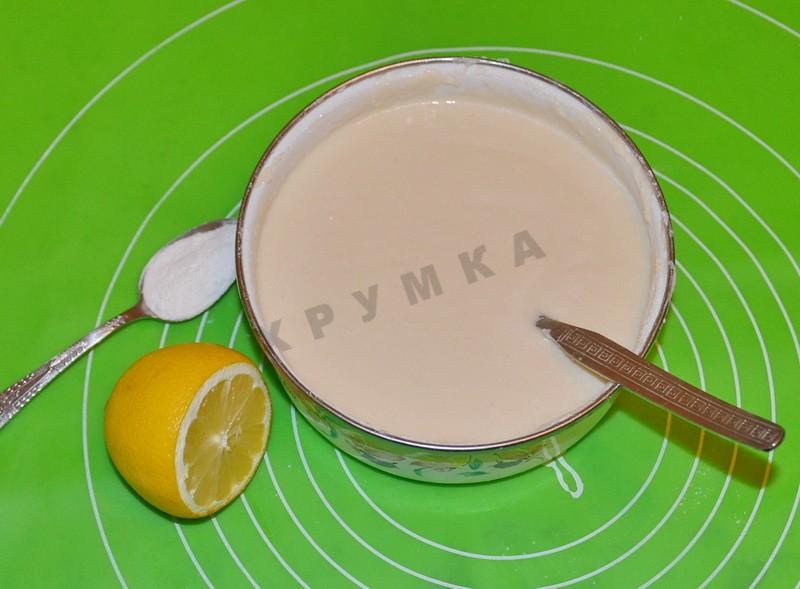
Add half the flour and mix well. You want a loose batter about the consistency of light sour cream. If you're using baking soda rather than baking powder, slake it with lemon juice (or vinegar) and add it to the dough right away. Keep mixing with the fork, then add the rest of the flour.
-
Step 6:
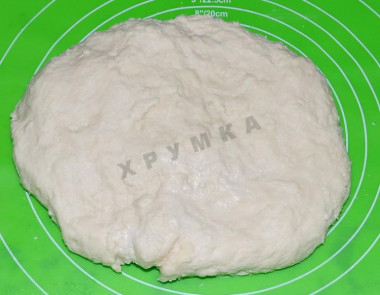
As soon as the dough starts coming together into a ball, turn it out onto the counter. Dust the surface (in my case a silicone mat) with the remaining flour. Keep the last tablespoon of oil within reach and continue kneading with both hands. Once the dough has picked up all the flour from the counter, it will start sticking to your hands. Coat your palms with oil and keep kneading until it's absorbed.
-
Step 7:
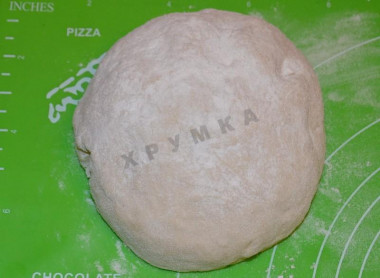
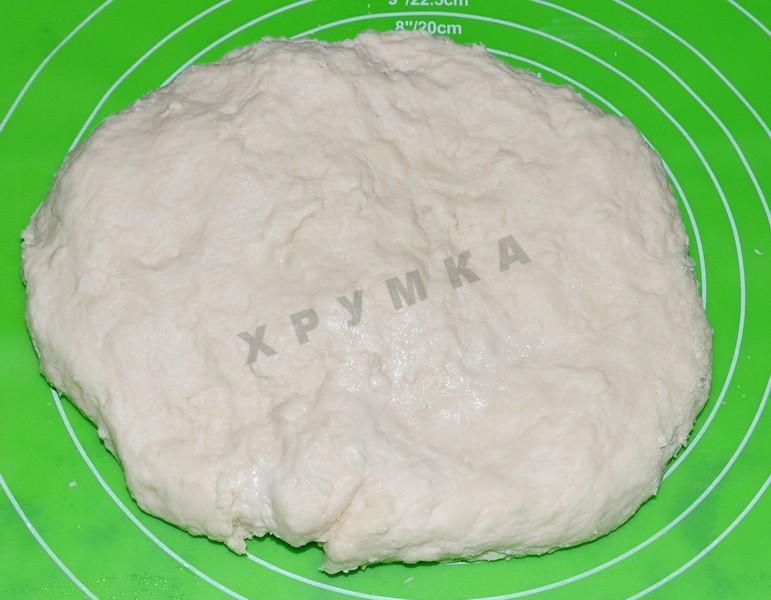
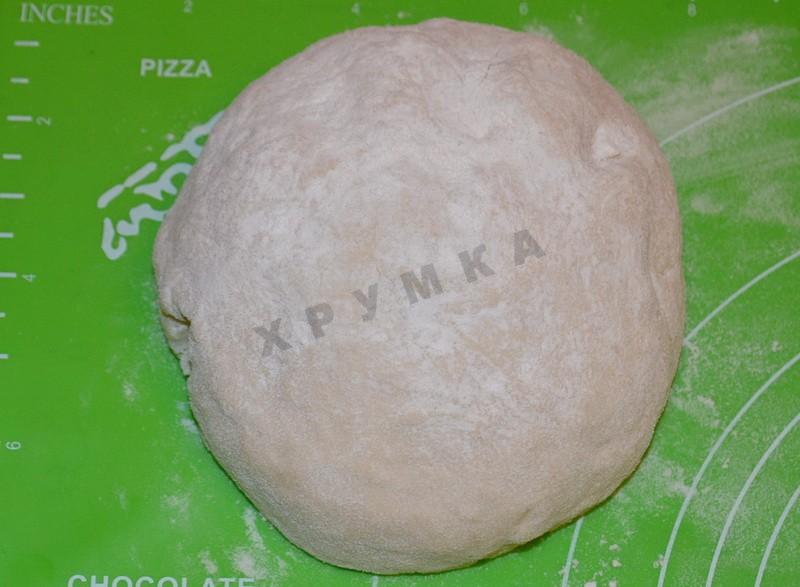
Knead until smooth, about 3 minutes — that's plenty. You should end up with a smooth, very tender, very soft kefir dough. It may still be a little sticky. Whatever you do, don't add more flour — better too little than too much! Shape the dough into a ball, dust it with flour, and put it in a covered pot or a bag. Kefir dough needs to rest for 20–30 minutes before frying.
-
Step 8:
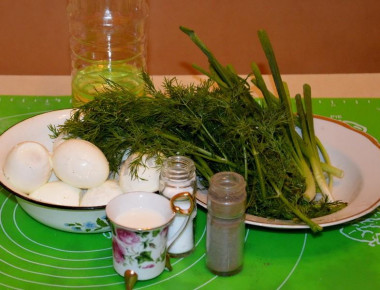
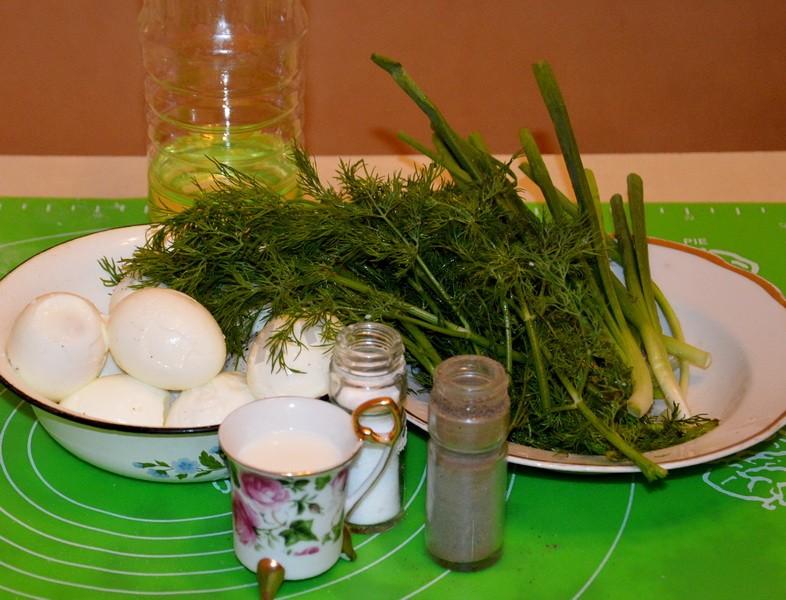
The ingredients for the filling. Hard-boil the eggs (once the water boils, cook them no longer than 10 minutes — 7 to 8 is better, otherwise the yolks of overcooked eggs get a gray ring) and peel them. Sort and wash the herbs. The finished pies will be fried in vegetable oil.
-
Step 9:
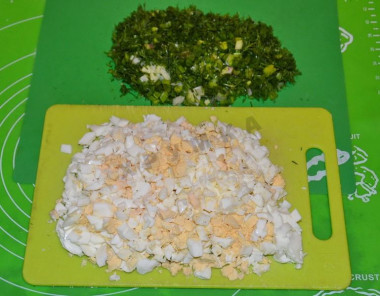
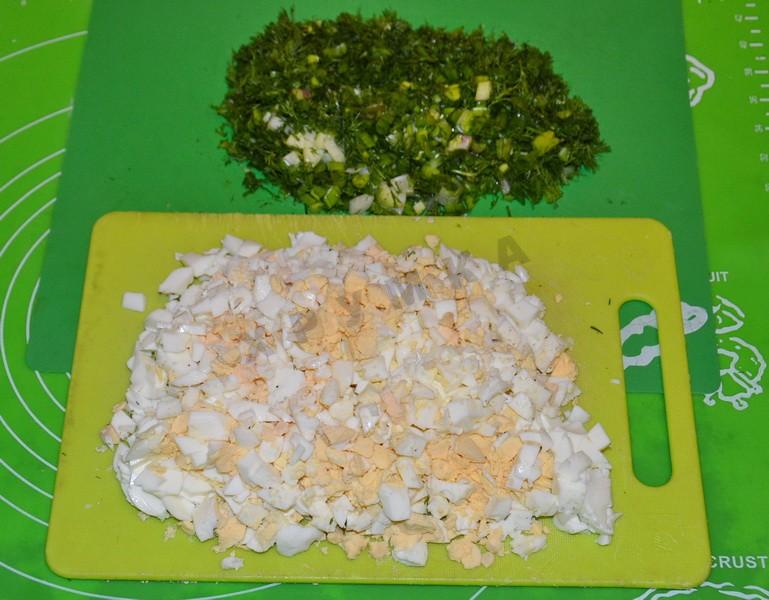
Chop the herbs — green onion and dill. Cut the eggs into small cubes.
-
Step 10:
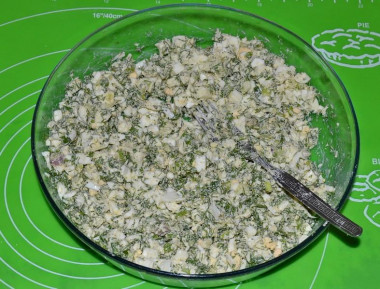
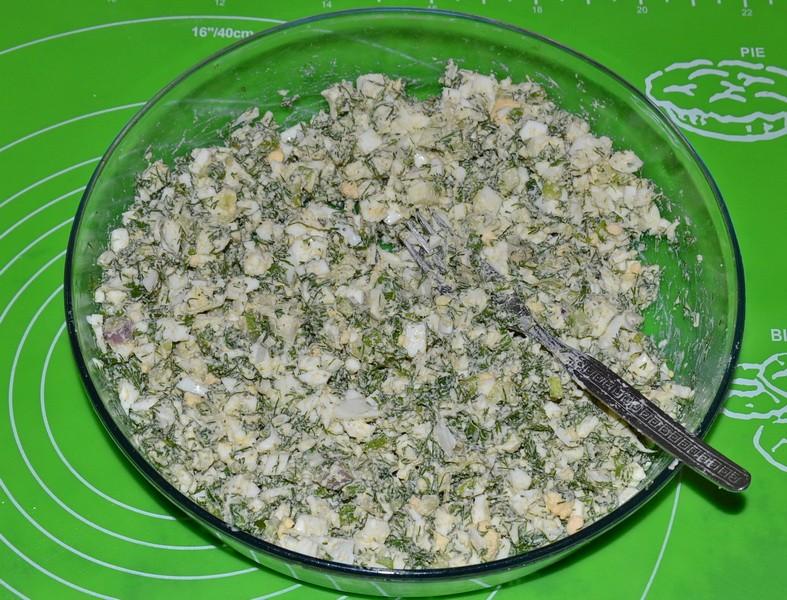
Put the herbs and eggs in a deep bowl and add 2–3 tablespoons of full-fat sour cream for juiciness. Season with salt and pepper and mix until even.
-
Step 11:
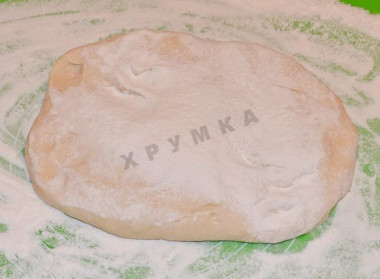
Back to the dough. It's now elastic and less sticky. Dust a clean, dry counter well with flour, turn the dough out onto it, and dust the top with flour too.
-
Step 12:
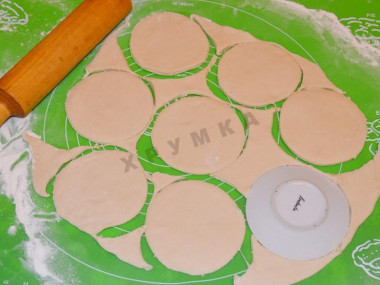
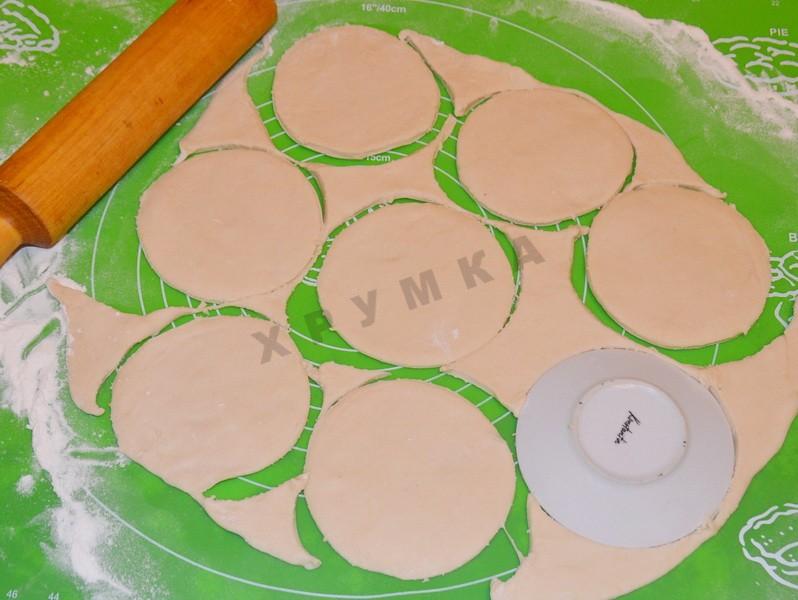
Roll the kefir dough out from the center toward the edges, without dragging the rolling pin back — use light, smooth strokes, no jerking or forcing, since the dough is very pliable and stretches easily. Roll it into a circle or oval about 6–7 mm (1/4 inch) thick, keeping an eye out so it doesn't dry out. Dust with flour as needed. Find a small saucer about 8.5–9 cm (3 1/2 inches) across to use as a template and cut out rounds with a knife.
-
Step 13:
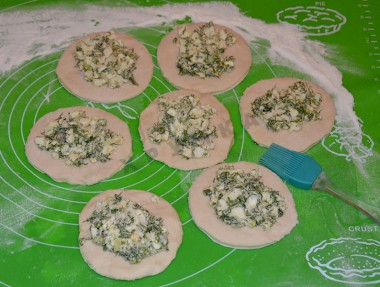
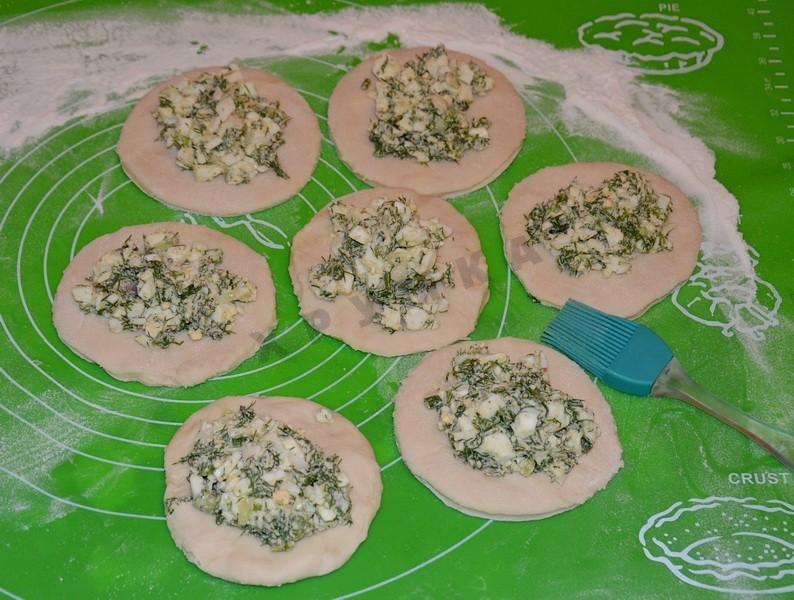
Take each round and brush off the excess flour on the side you'll put the filling on. Place 1.5–2 tablespoons of filling in the center of each round.
-
Step 14:
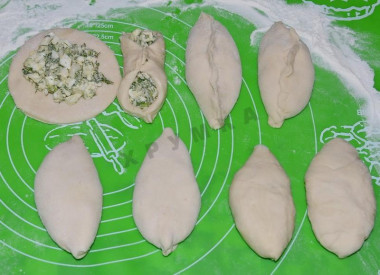
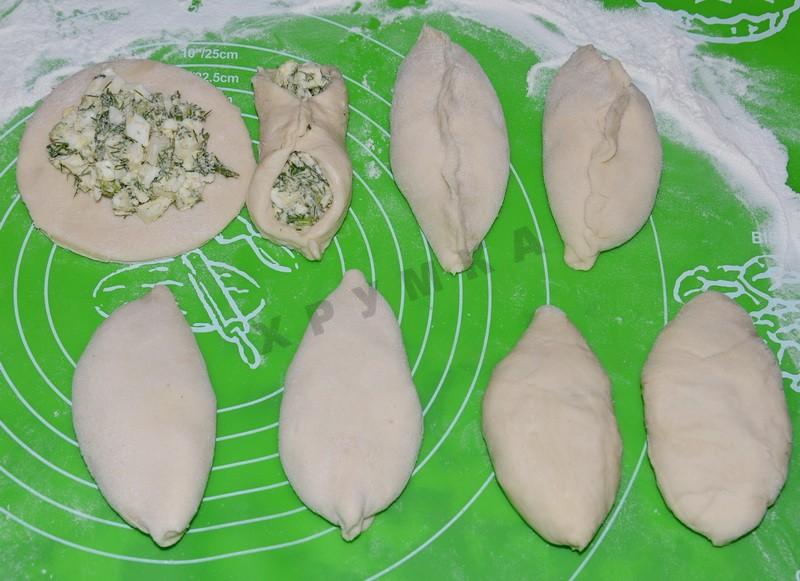
Kefir dough doesn't stretch, and you can't stretch it any further — it's already thinly rolled — so start sealing each pie from the middle. Bring the edges together, pinch firmly, and work toward one end. Then go back to the middle and pinch toward the other end. Turn the finished pie seam-side down, tuck the pointed ends under, and press it gently against the counter with your palm to spread the filling evenly through the pie.
-
Step 15:
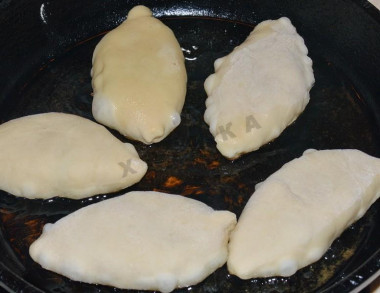
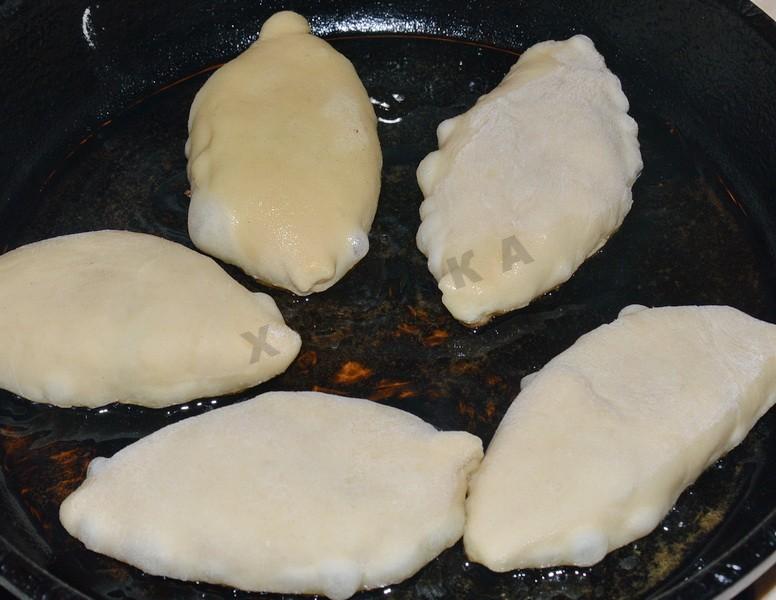
Heat a dry skillet until it just starts to haze — no oil! Then lower the heat, and only once the fierce heat eases, pour in oil (enough to reach halfway up the pies) and heat it. Don't let the oil smoke — it should fry without burning. Keep an eye on the heat the whole time you're frying. Kefir-dough pies puff up a lot, so give them plenty of room in the pan.
-
Step 16:
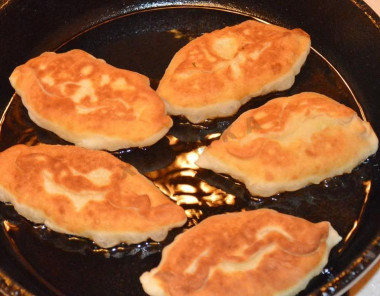
Fry the pies on both sides until golden. Keep in mind that the dough keeps darkening after frying, so don't overdo them. To be sure your pies are cooked through, break the first one in half. If the dough looks raw, lower the heat, wait a bit, and keep frying. A just-fried pie usually has a firm crust, but after resting for 2–3 minutes it turns incredibly soft.

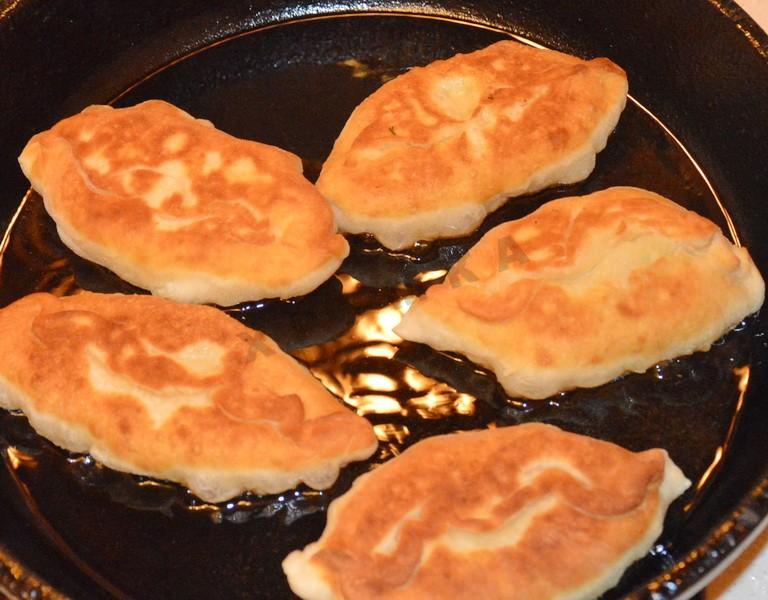
- Tips: 1. Always let the dough rest before shaping the pies. The gluten swells, which makes the dough wonderfully easy to roll and shape — and that means the pies come out fluffy, airy, and delicious. 2. To check whether the oil is ready for frying, dip in a slightly damp toothpick tip: the oil should crackle gently, not spit. 3. Put any leftover dough scraps into a plastic bag right away. You can make pies from them only if you gather the scraps, press them firmly back into a ball, roll it out, and cut fresh rounds — essentially rolling the dough a second time. It's best not to roll it a third time, since you won't get fluffy pies anymore; better to fry the last bits into small flatbreads to go with tea. 4. Kefir-dough pies don't soak up much oil, but if you'd still like to blot the excess, transfer each fresh batch to a paper towel as you take them out of the pan.
Caloric content of the products possible in the composition of the dish
- Sour cream with 30% fat content - 340 kcal/100g
- Sour cream of 25% fat content - 284 kcal/100g
- Sour cream with 20% fat content - 210 kcal/100g
- Sour cream of 10% fat content - 115 kcal/100g
- Sour cream - 210 kcal/100g
- Chicken egg - 157 kcal/100g
- Egg white - 45 kcal/100g
- Egg powder - 542 kcal/100g
- Egg yolk - 352 kcal/100g
- Ostrich egg - 118 kcal/100g
- Dill greens - 38 kcal/100g
- Whole durum wheat flour fortified - 333 kcal/100g
- Whole durum wheat flour universal - 364 kcal/100g
- Flour krupchatka - 348 kcal/100g
- Flour - 325 kcal/100g
- Granulated sugar - 398 kcal/100g
- Sugar - 398 kcal/100g
- Kefir fat - 62 kcal/100g
- Kefir of 1% fat content - 38 kcal/100g
- Low-fat kefir - 30 kcal/100g
- Kefir 'doctor beefy' 1,8% fat content - 45 kcal/100g
- Kefir 2.5% fat content - 53 kcal/100g
- Wine vinegar (3%) - 9 kcal/100g
- Vinegar 9% - 11 kcal/100g
- Balsamic vinegar - 88 kcal/100g
- Apple vinegar - 14 kcal/100g
- Vinegar - 11 kcal/100g
- Vegetable oil - 873 kcal/100g
- Green onion - 19 kcal/100g
- Salt - 0 kcal/100g
- Baking soda - 0 kcal/100g
- Allspice - 263 kcal/100g
Similar recipes
- For breakfast
- Second course
- Baking
- Eggs
- Dairy products
- Vegetables
- Flour
- Sweet
- Spices seasonings spices
- Fats and oils
- Other
- Pepper
- Salt
- Dill
- Vinegar
- Vegetable oil
- Baking soda
- Frying
- Patties
- Baked on kefir
- Yeast-free baking
- Pastries with sour cream
- Unsweetened pastries
- Egg breakfast
- Kefir
- Sour cream
- From onion
- Vegetarianism
- Recipes for lean dishes without butter
- Sugar