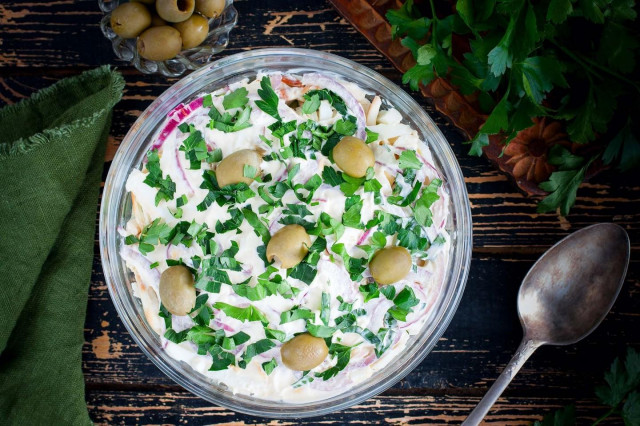
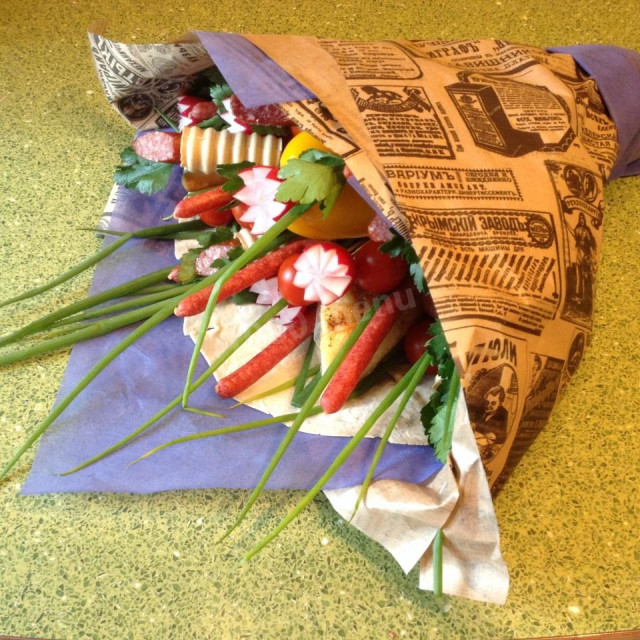
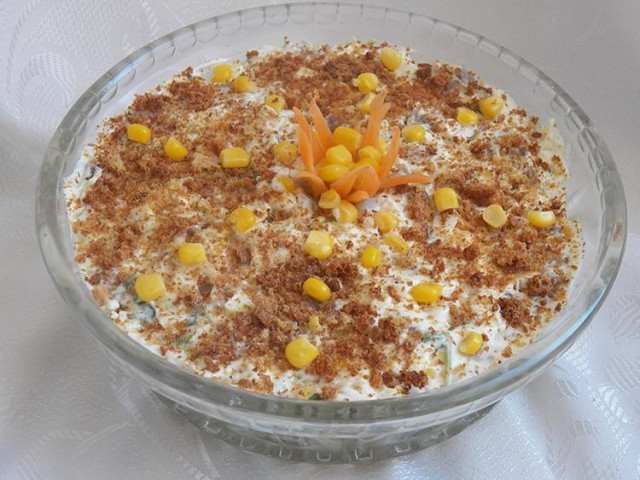
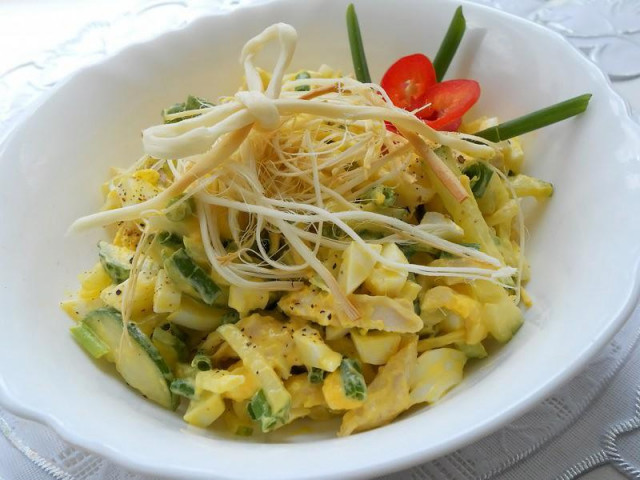
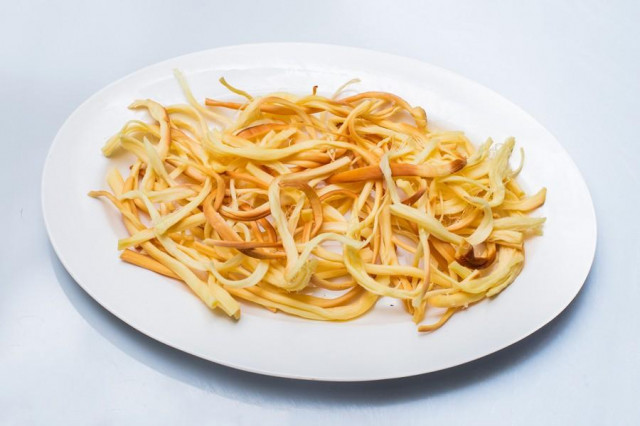

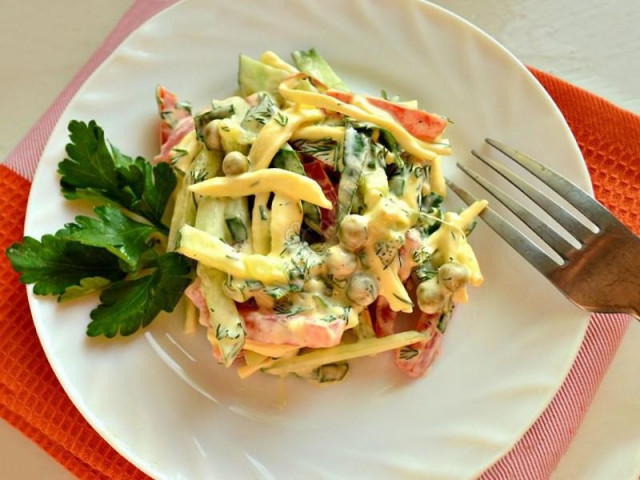
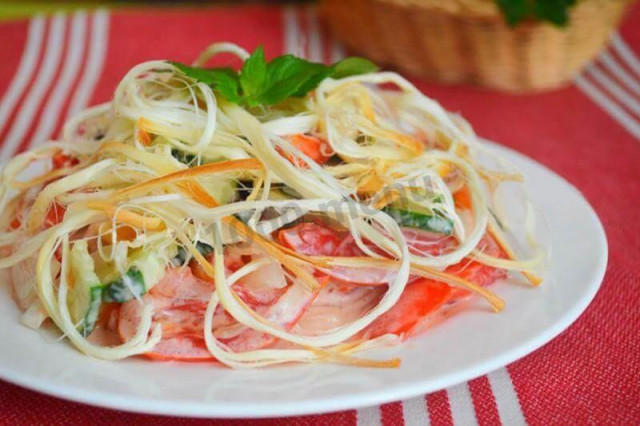
However, its use in cooking is not limited to serving with a frothy, heady drink. In skilled hands the woven fibers can become a handy element for creating an unusual presentation — they can be used both simply as an interesting decoration and to tie up rolls or stuffed pancakes. Indeed, not everyone likes skewers or toothpicks, but a fully edible product that holds together, say, layers of fragrant meat harmoniously paired with a mix of vegetables is something you simply cannot turn down.
Pigtail cheese is most often found in recipes with these five products:
| Product | Number of recipes with a combination | Calories per 100g | Protein g per 100g | Fats g per 100g | Carbohydrates g per 100g |
|---|---|---|---|---|---|
| Eggs | 5 | 157 | 12.7 | 10.9 | 0.7 |
| Cucumbers | 4 | 15 | 0.8 | 0.1 | 2.6 |
| Canned corn | 3 | 79 | 2.4 | 0.5 | 17.4 |
| Bell pepper | 2 | 27 | 1.3 | 0 | 5.7 |
| Tomatoes | 2 | 23 | 1.1 | 0.2 | 3.8 |
Even so, recipes for dishes with pigtail cheese are mostly salads, snacks and sandwiches. Pigtail cheese pairs well with ham, chicken, tomatoes, crab sticks, carrots, corn, olives, bell peppers and mushrooms. To make something zesty, you can combine chechil or suluguni with pineapple. A salad with croutons is also a good idea. As you can see, all of these options are easy to pull off. These products are available at the nearest supermarket, and the main ingredient will surely play a special role in an ensemble of original flavors.