How to Properly Brew Coffee in a Cezve
Incomparably delicious, the very best, with a secret ingredient! How do you brew coffee in a cezve? There are several important details that will help you get a perfect cup. The right kind of coffee, the right ingredients, the classic brewing method and the same care in serving — it all matters!


Cooking method
-
Step 1:
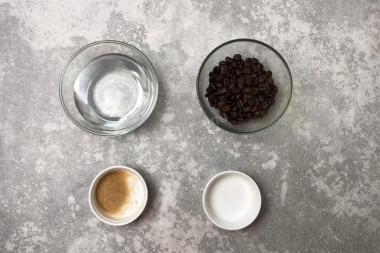
How do you make a proper cup of coffee in a cezve? Gather your ingredients. Use only whole-bean coffee, and it should be fresh — no more than a month from the roast date. The best variety for brewing in a cezve is Arabica: it's less bitter, has a stronger aroma, and is milder than robusta. Use bottled water — it's softer than any filtered water. You can skip the sugar, but if you use it, go for cane sugar. Plus a pinch of salt — it brings out the flavor of the coffee.
-
Step 2:
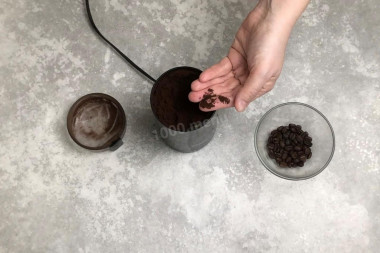
The best choice for a cezve is freshly ground beans — and you should grind them right before brewing. A fine grind is ideal. Grind the coffee for at least 40 seconds, in bursts of about 20 seconds so you don't overheat the grinder, which can also spoil the flavor. Check the grind with your fingers — it should be a soft, velvety powder.
-
Step 3:

Take a cezve — coffee tastes better in a copper one, but stainless steel works too. Spoon in the coffee at a rate of 2 teaspoons per serving. Add the sugar and salt. Don't worry — the salt won't make it taste salty; it just enhances the coffee's aroma. Mix all the ingredients thoroughly. Then pour in water at a rate of 100–120 ml per serving. No more stirring is needed — set the spoon aside.
-
Step 4:
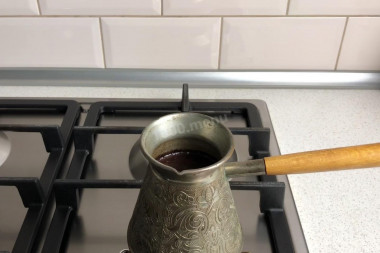
Here I'd like to give you a closer look at the water level in the cezve. Mine is fairly large, for several servings. The water shouldn't rise above the narrowest part of the cezve — there'd be nowhere for it to rise as it brews.
-
Step 5:
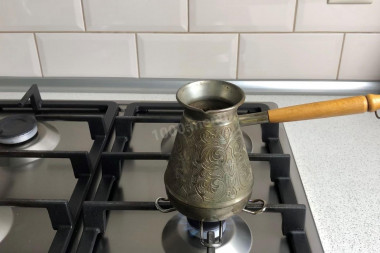
Set the cezve over medium heat. The coffee will gradually warm up, and a layer of crema (foam) will start to form on top. As soon as this begins, turn the heat down to the lowest setting and start watching the foam closely.
-
Step 6:

The foam will start to rise, threatening to "boil over" the cezve. At that very moment, take the cezve off the heat and wait for the coffee to settle and the foam to subside. Return the cezve to the heat and repeat — wait for the foam to rise, lift it off, let it settle. Do this 4 times. This helps with extraction — the process by which the coffee releases its essential oils. But don't let the coffee actually boil — the best brewing temperature is 95–96°C.
-
Step 7:
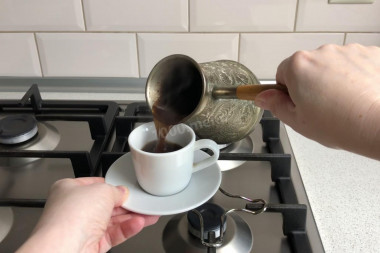
At the end, turn off the heat and pour a spoonful of cold or ice water into the cezve — this makes the coffee grounds settle to the bottom. Wait a bit longer for the extraction to finish, one or two minutes. Then pour the coffee into warmed cups to preserve its aroma. You can simply rinse the cups with boiling water beforehand. Serve.


- Coffee brewed by all the rules is far tastier and more aromatic. What vessel you use, what kind of beans, how you grind them and then brew them — it all matters enormously. Give it a try; it's not hard at all, and you'll feel the difference!
Caloric content of the products possible in the composition of the dish
- Salt - 0 kcal/100g
- Water - 0 kcal/100g
- Brown sugar - 394 kcal/100g
- Ground coffee - 200 kcal/100g