Braised Beef and Potatoes
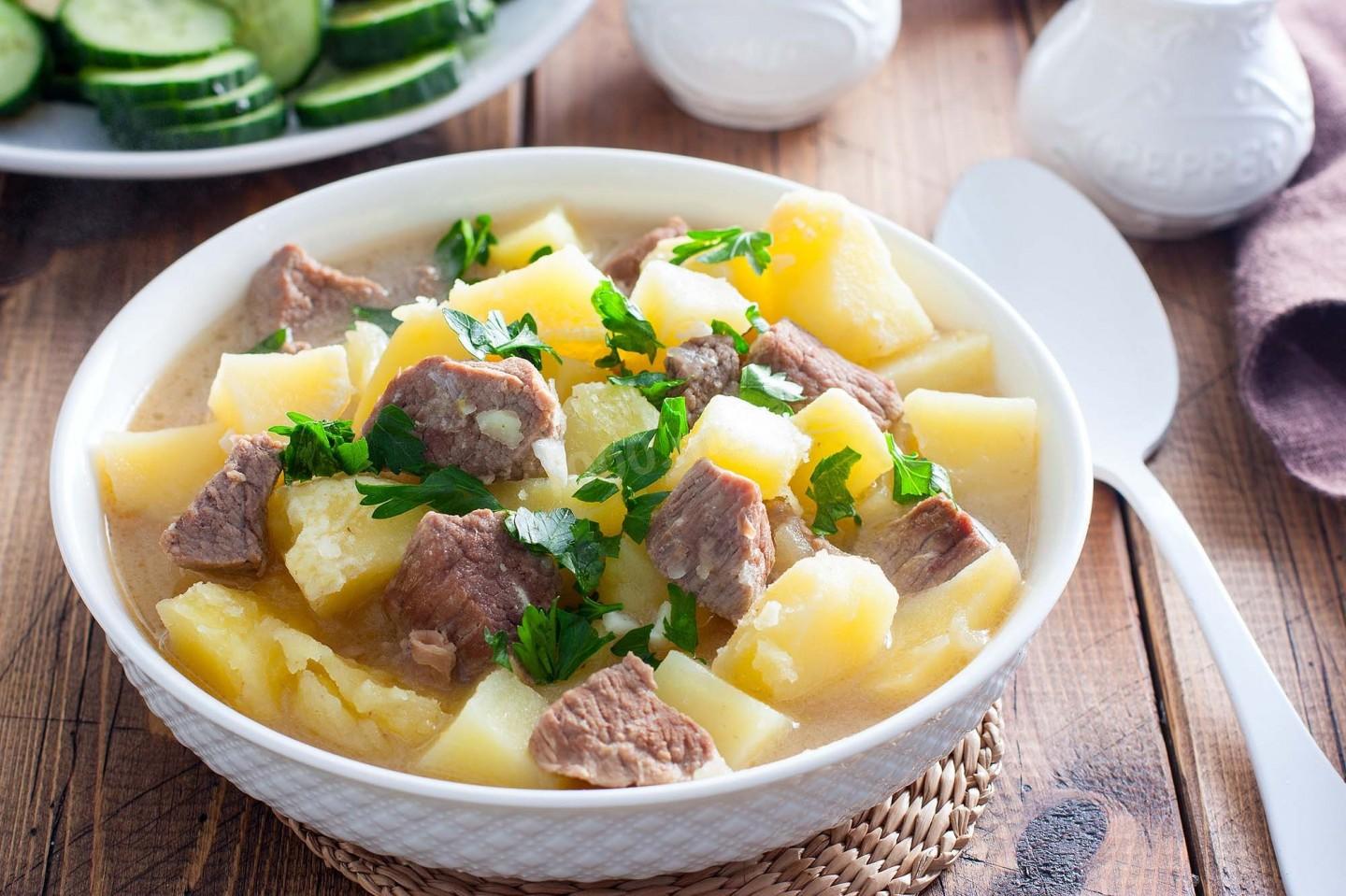
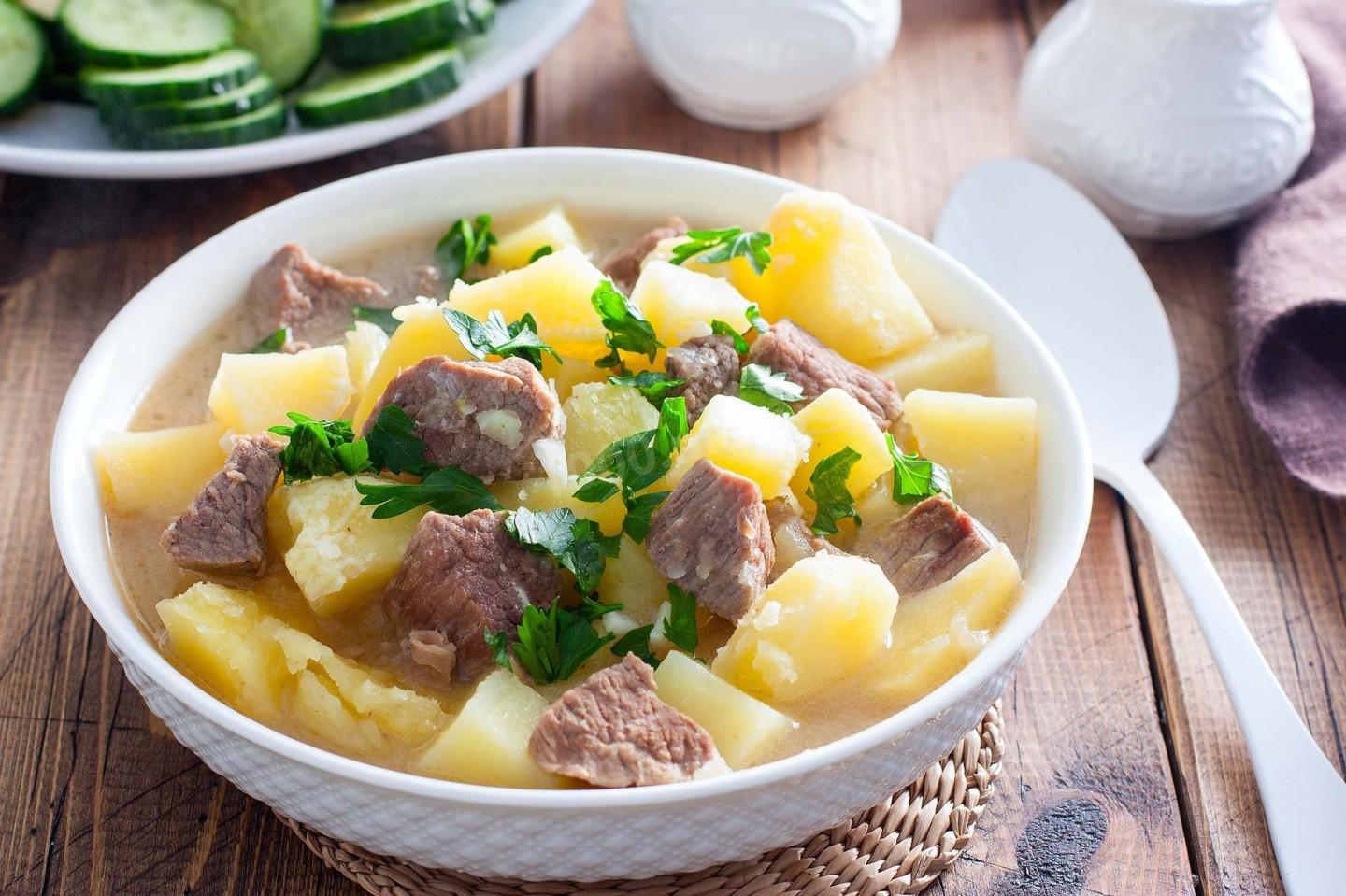
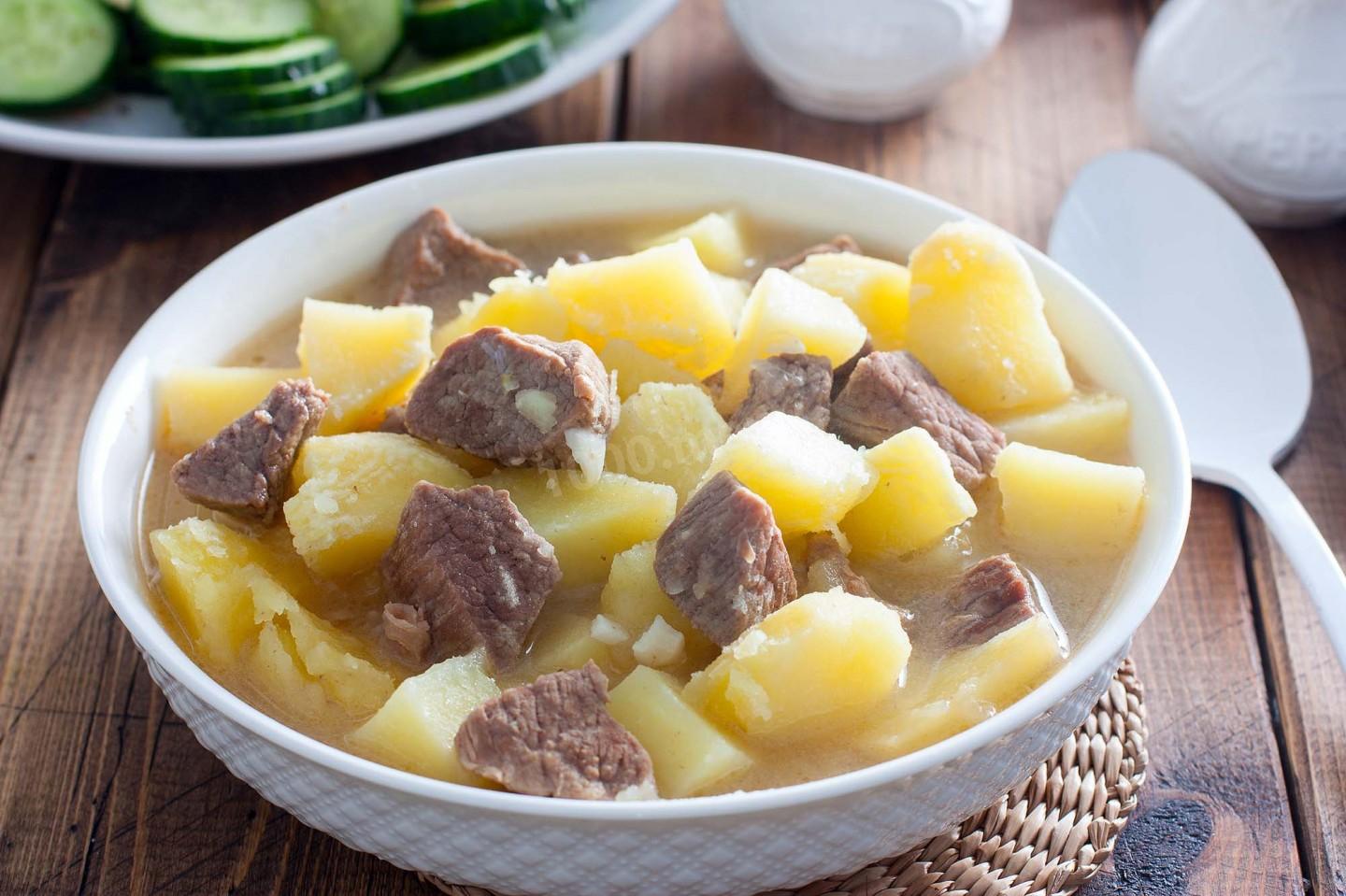
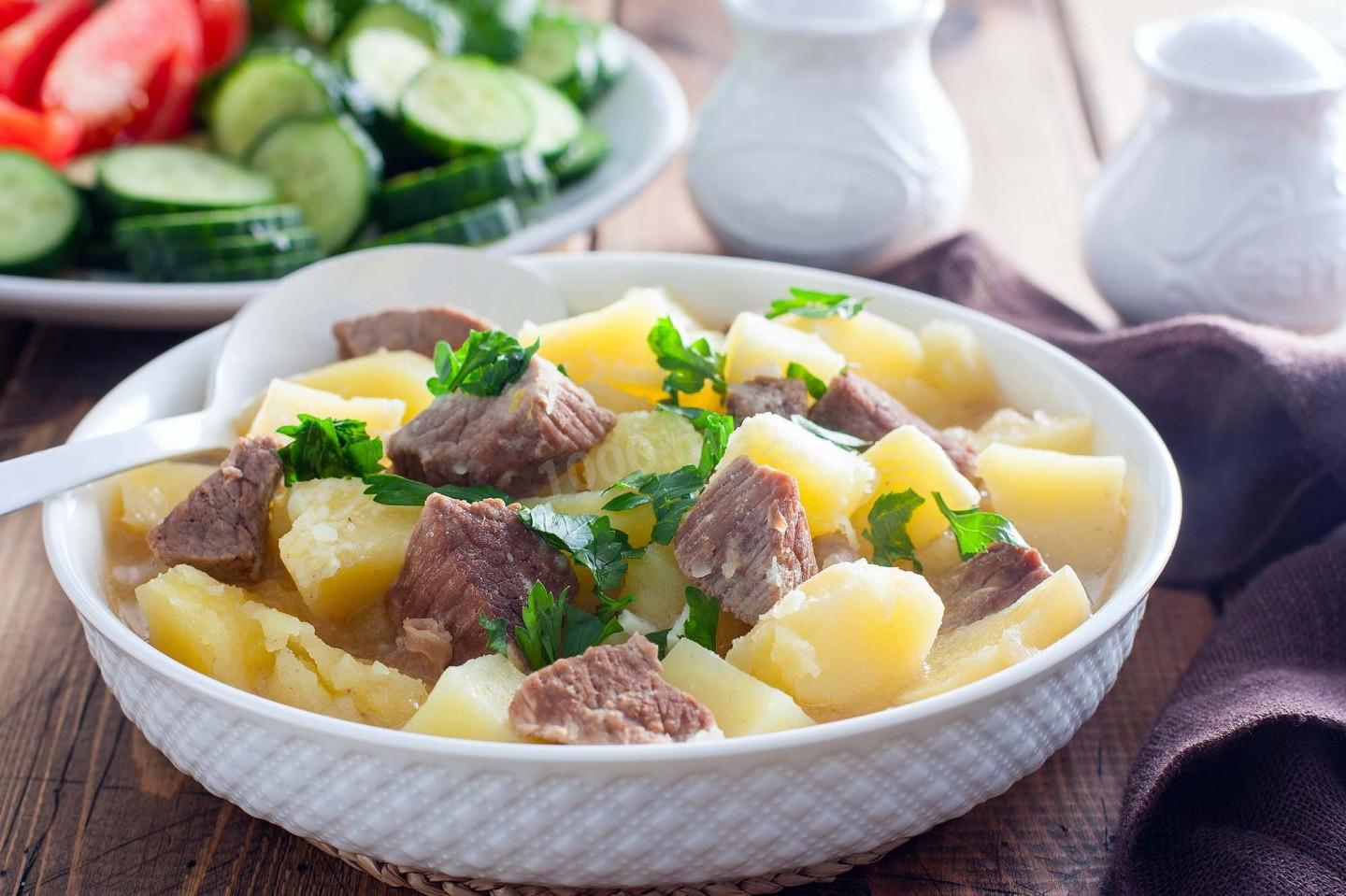
A hearty, complete dinner of potatoes and beef. It's a genuinely simple supper for the whole family. It may take a bit longer than it would with chicken, but the flavor is well worth it. A dish everyone will enjoy.

Cooking method
-
Step 1:
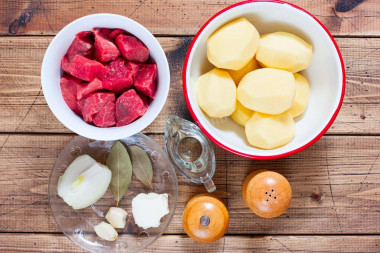
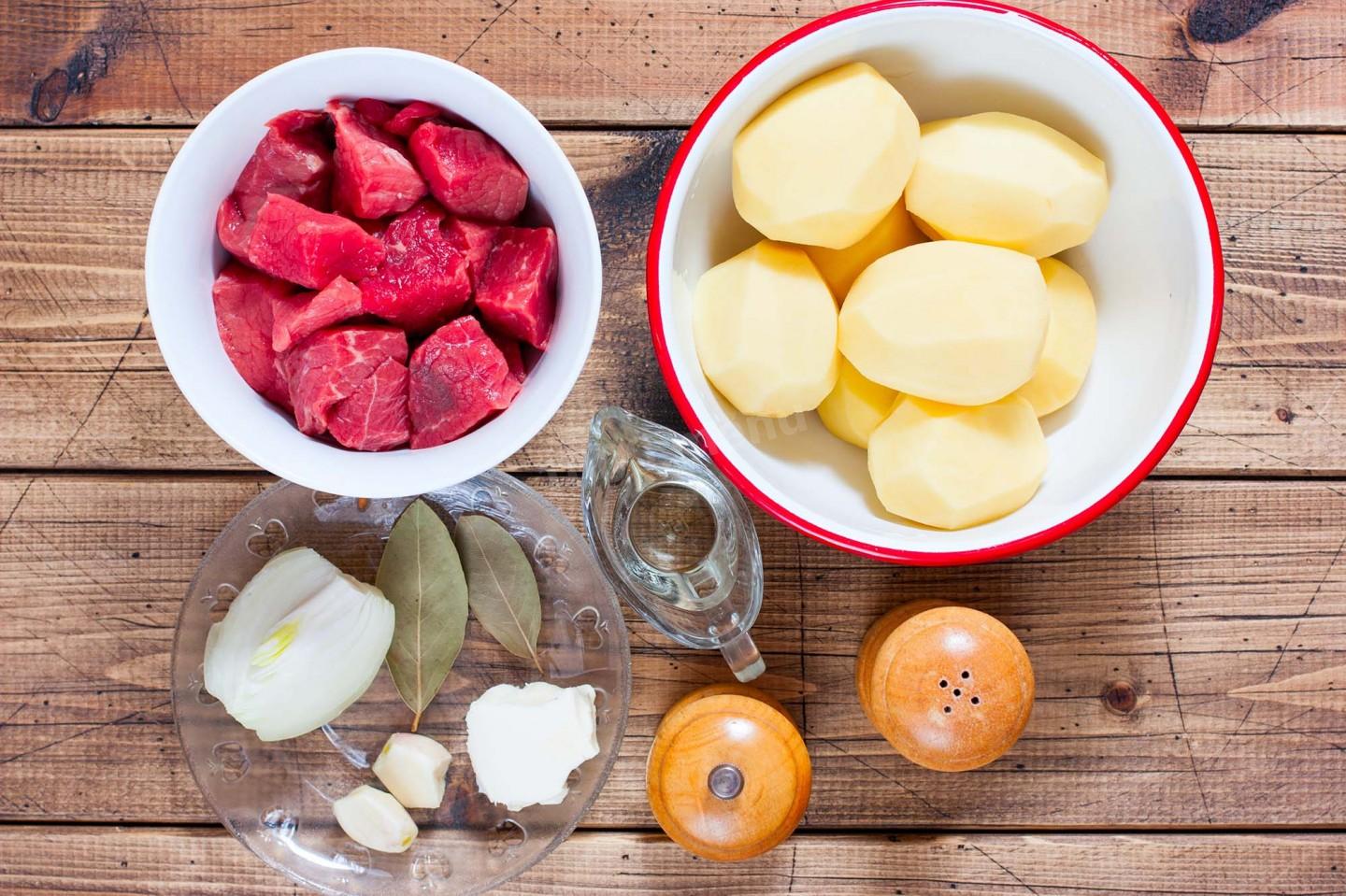
How do you make braised beef and potatoes? Gather the ingredients listed. Fresh, never-frozen beef is best; if that's not an option, thaw the meat gently in the fridge first. Pick a low-starch potato so it holds its shape as it cooks. You'll need vegetable oil for searing the beef, and you can choose whatever spices you like. Have a heavy-bottomed pot ready.
-
Step 2:
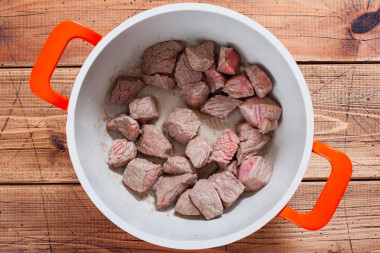
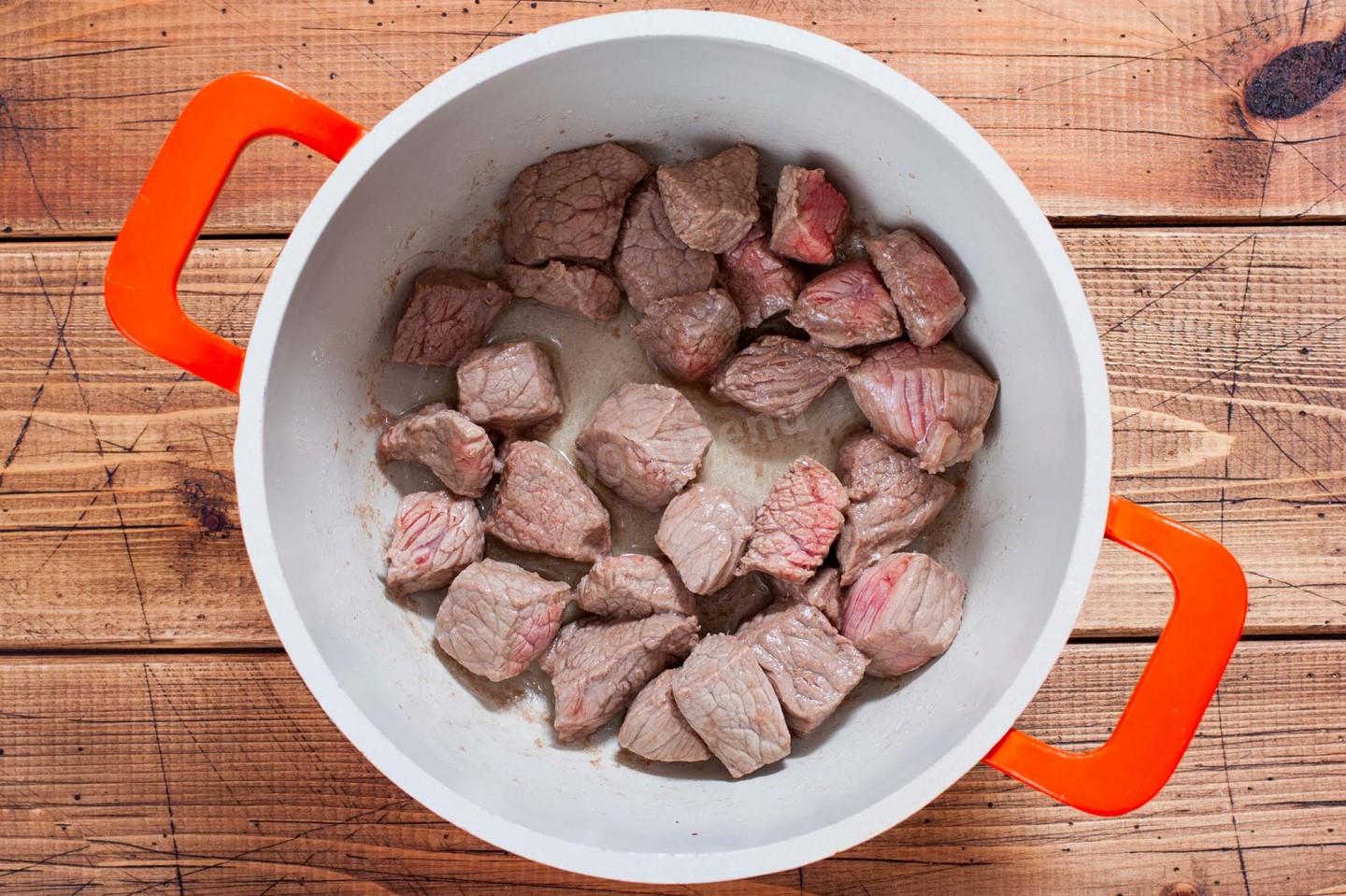
For this dish, go with young beef free of sinew — you can even use veal. If the meat is on the older side, you may need to add to the cooking time in step 3. Rinse the beef under cold running water and pat it dry with a paper towel. Cut it into large cubes. Pour vegetable oil into the pot and heat it up. Lay the beef in a single layer and brown it evenly on all sides.
-
Step 3:
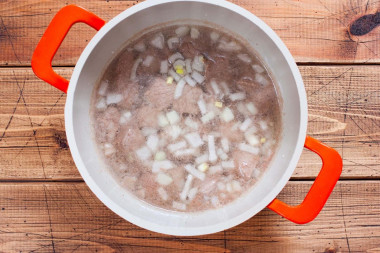
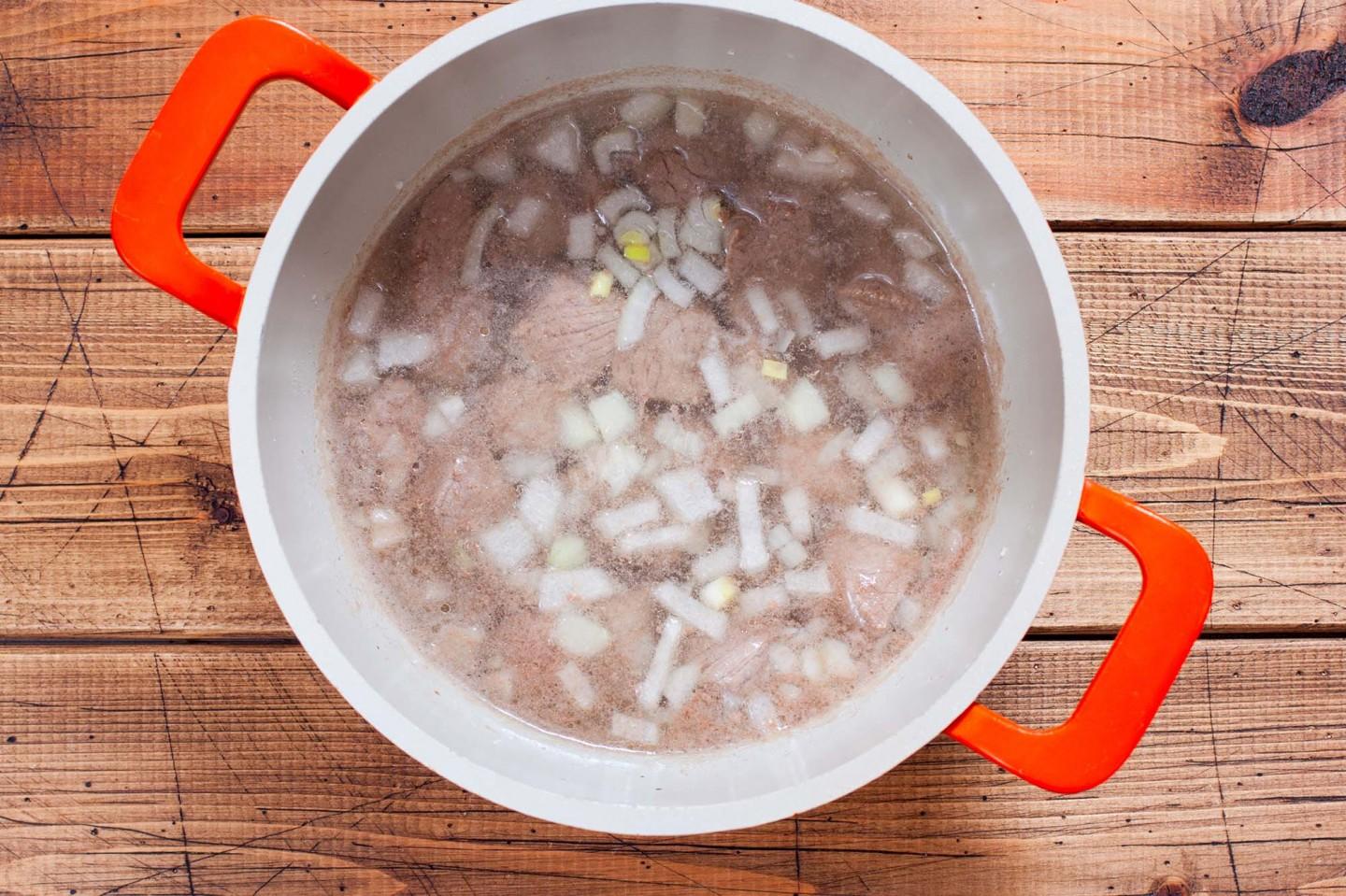
Add the chopped onion to the meat and cook together for a couple of minutes, then pour in hot water so it just barely covers the beef. Lower the heat, cover the pot, and braise until the meat is tender. Depending on the cut, that can take anywhere from 30 minutes to 2 hours. To keep foam and scum down while it braises, you can cover the raw meat with water, bring it to a boil, then drain, rinse, and sear as described in this step.
-
Step 4:
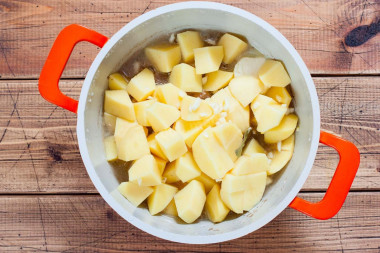
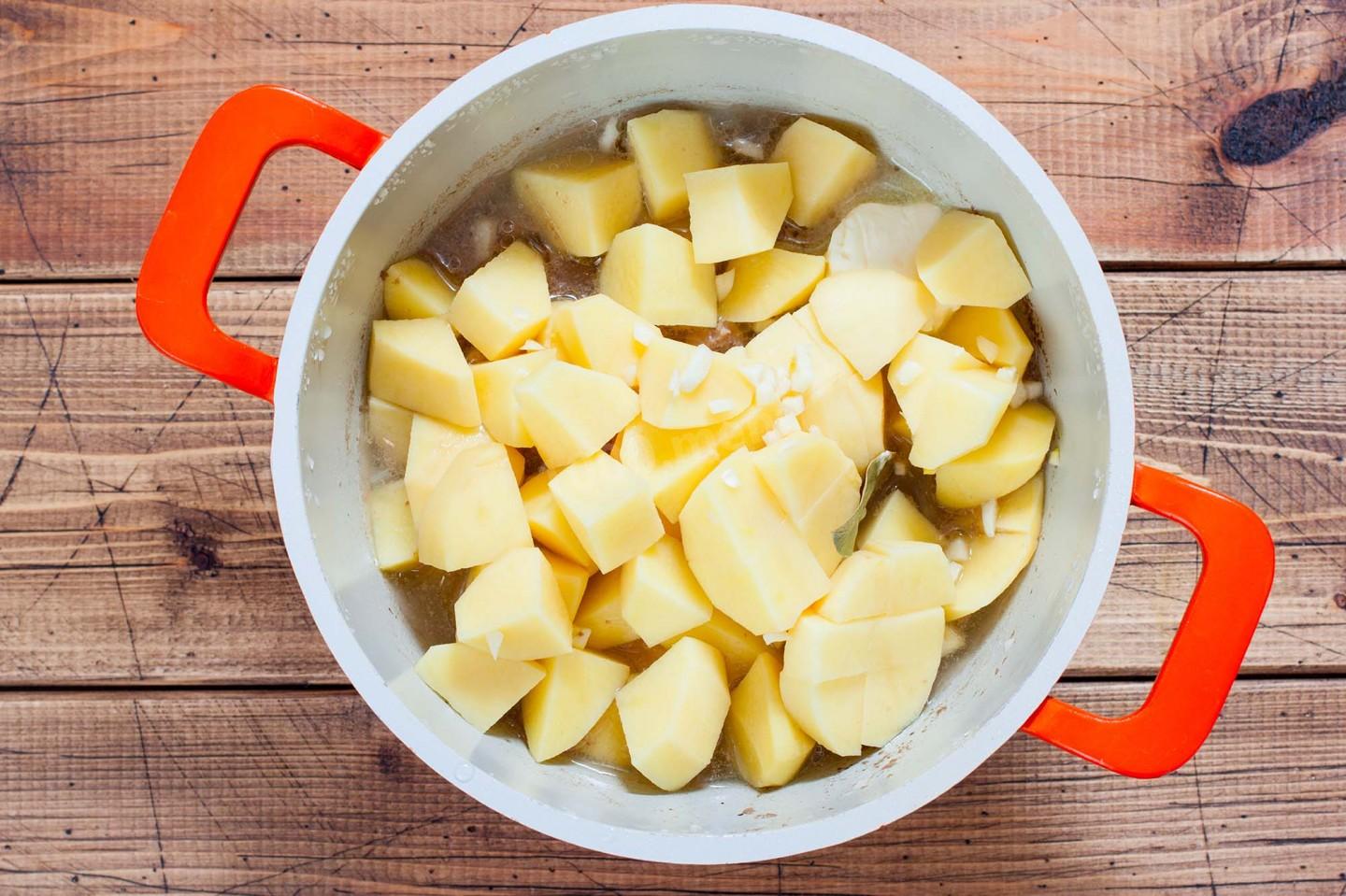
Wash and peel the potatoes and cut them into large cubes. Peel and mince the garlic. Once the beef is tender, add the potatoes, minced garlic, butter, salt, and ground black pepper to taste (toss in your favorite spices too), along with the bay leaf. Stir everything, cover the pot, and braise until done (15–20 minutes). Don't stir again after this, so the potatoes stay whole. Add a splash of water if needed.
-
Step 5:
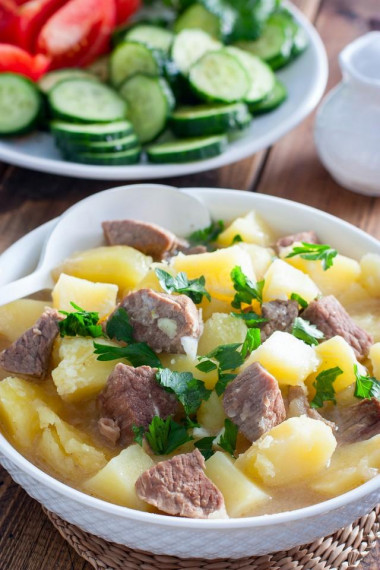
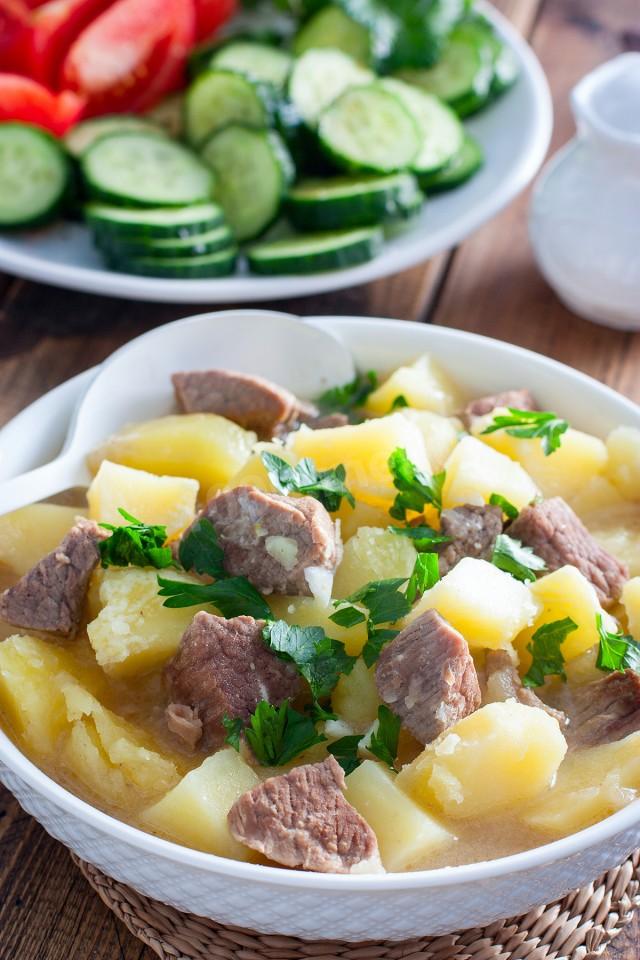
Serve the braised beef and potatoes hot — it's a full meal on its own. When plating, sprinkle the potatoes with chopped fresh dill or parsley. A fresh vegetable salad or some homemade pickles round it out nicely.
- Every oil is only good up to a certain temperature — its smoke point, past which it starts to burn and form harmful compounds, including carcinogens. It's worth knowing which oil to reach for when frying and which to skip.
- If you're using a ready-made spice blend, always check the label. These mixes often already contain salt, so factor that in or you risk over-salting the dish.
- Keep in mind that how you thaw your ingredients has a lot to do with the quality and flavor of the finished dish. It's worth learning the best way to defrost and the mistakes to avoid.
Caloric content of the products possible in the composition of the dish
- Onion - 41 kcal/100g
- Ripe potatoes - 80 kcal/100g
- Baked potatoes - 70 kcal/100g
- Mashed potatoes - 380 kcal/100g
- Boiled potatoes - 82 kcal/100g
- Potatoes in uniform - 74 kcal/100g
- Fried potatoes - 192 kcal/100g
- Garlic - 143 kcal/100g
- Bay leaf - 313 kcal/100g
- Ground black pepper - 255 kcal/100g
- Butter 82% - 734 kcal/100g
- Amateur unsalted butter - 709 kcal/100g
- Unsalted peasant butter - 661 kcal/100g
- Peasant salted butter - 652 kcal/100g
- Melted butter - 869 kcal/100g
- Vegetable oil - 873 kcal/100g
- Salt - 0 kcal/100g
- Beef fillet (steak) - 189 kcal/100g
- Beef fillet (roast beef) - 381 kcal/100g