Skillet Buckwheat with Cabbage
Simple, colorful, juicy, fragrant, and filling even without meat! Skillet buckwheat with cabbage comes out fluffy and remarkably good. Serve this grain dish on its own or as a side for meat, poultry, or fish. You're sure to love how quick and easy it is!

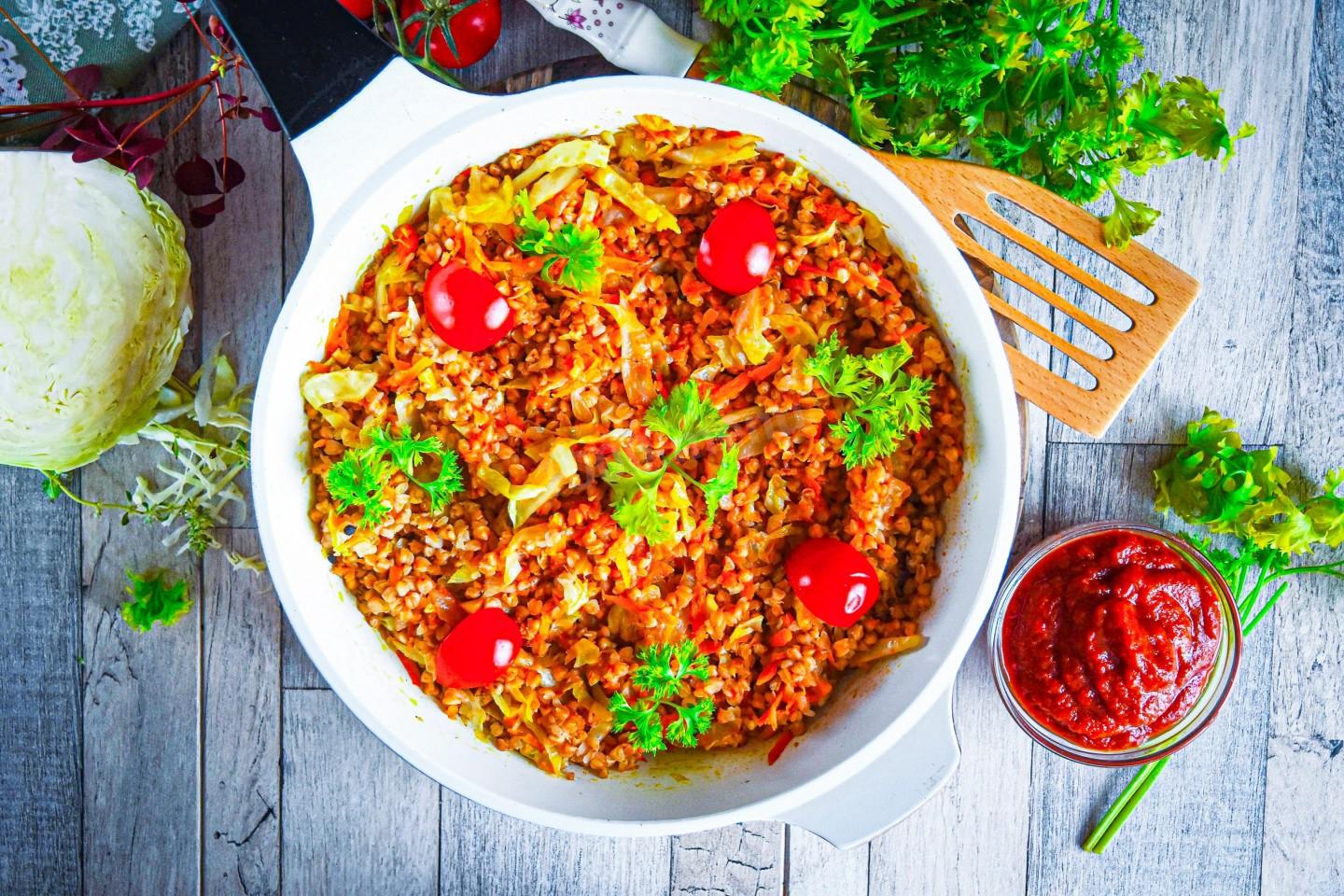
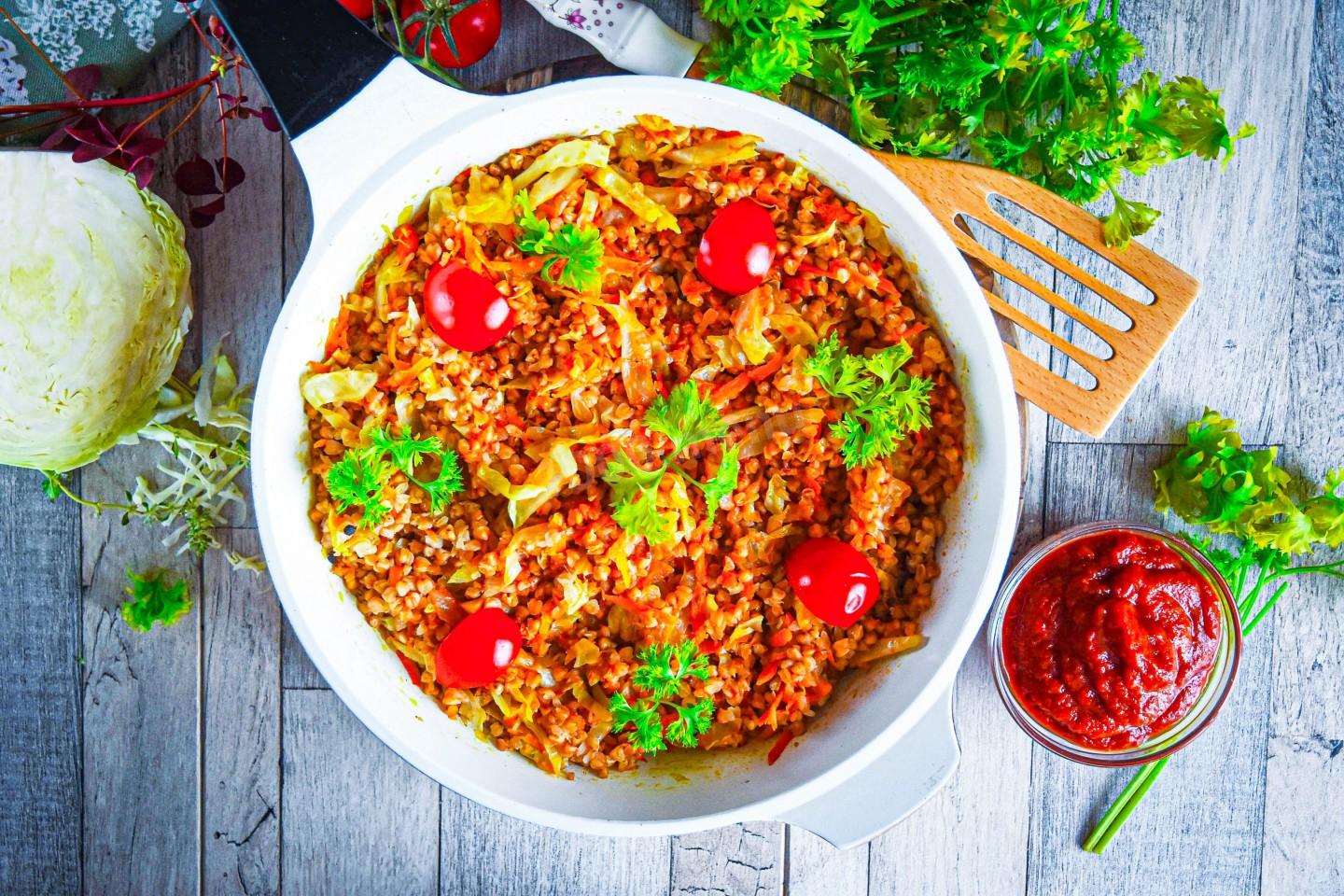
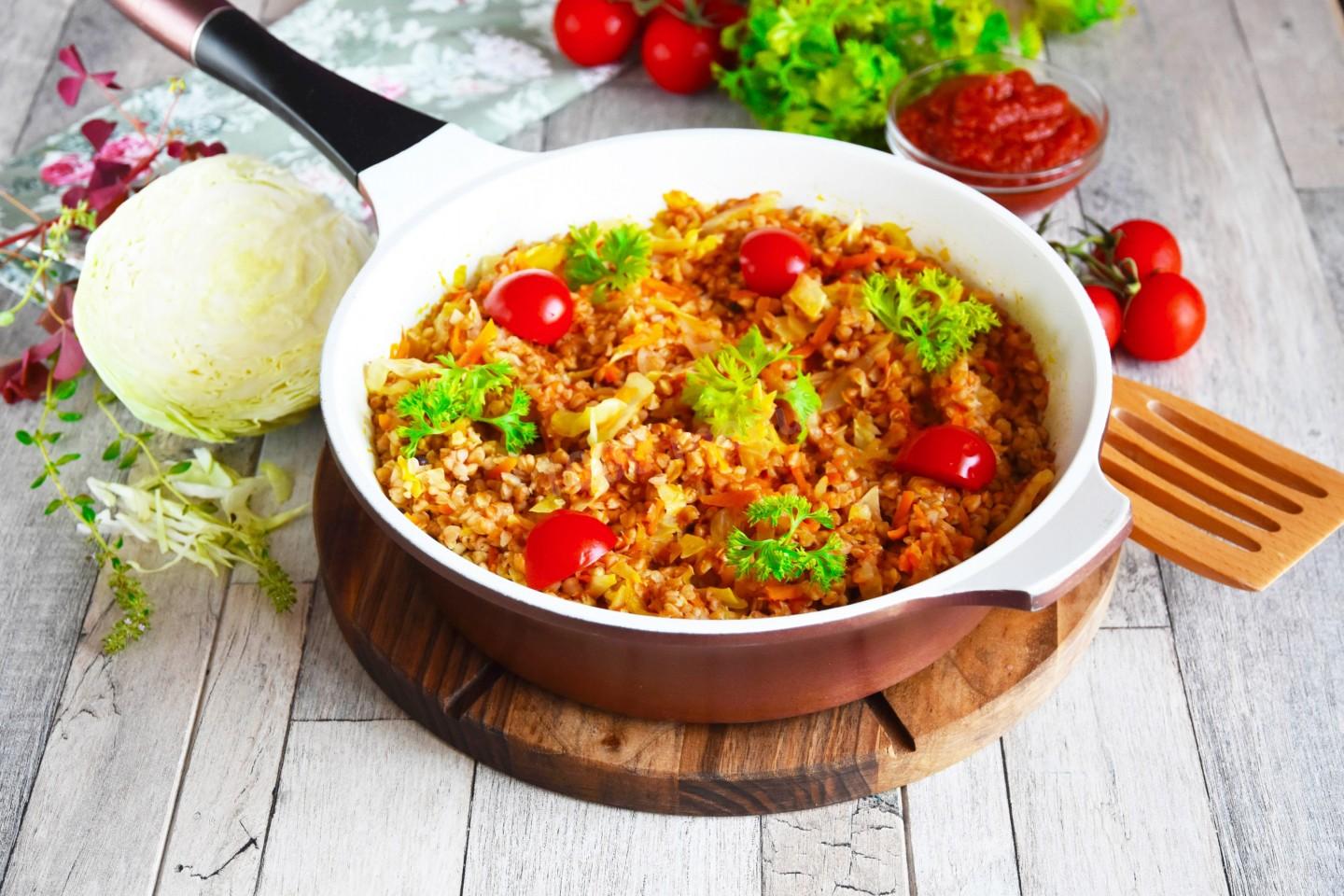
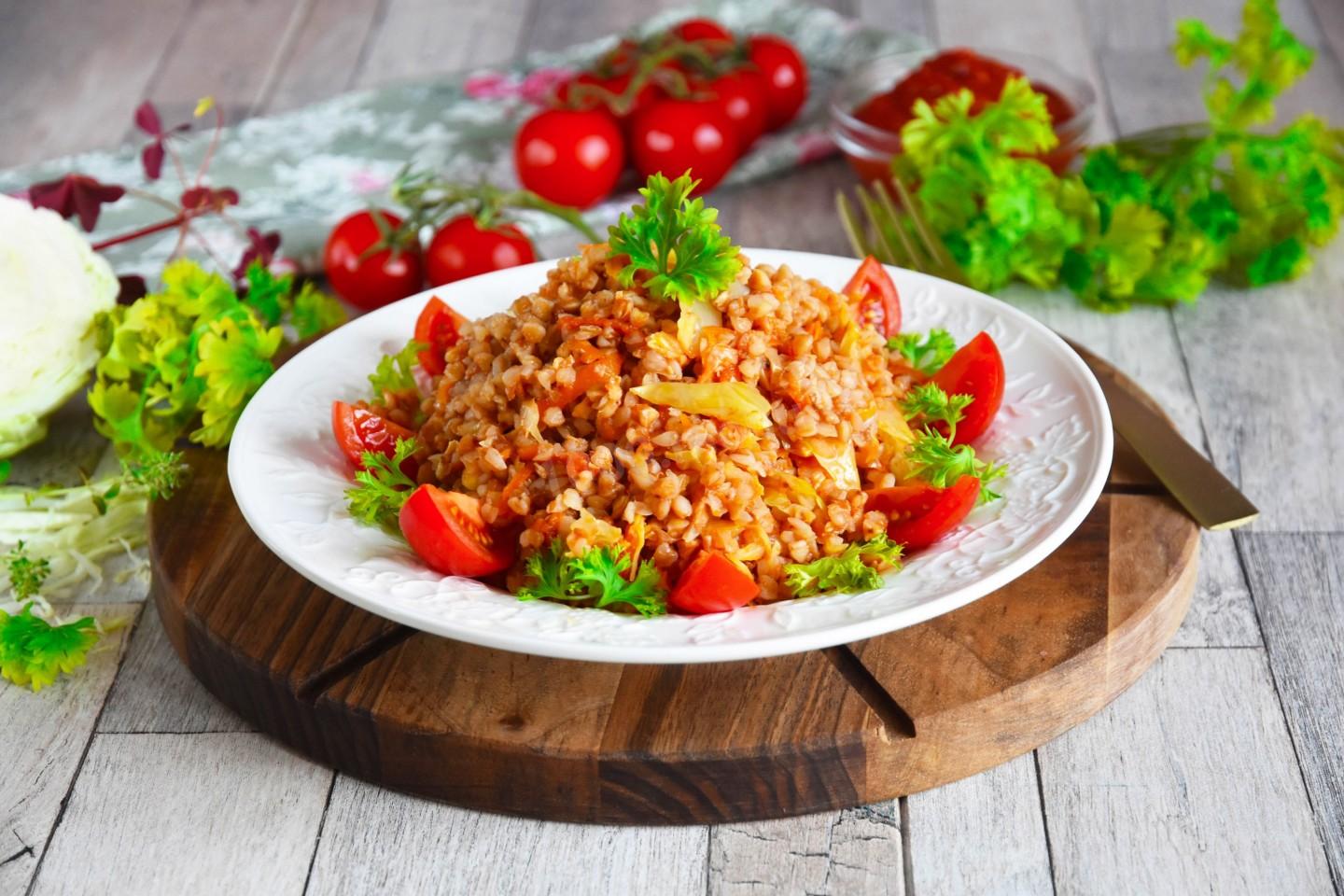
Cooking method
-
Step 1:
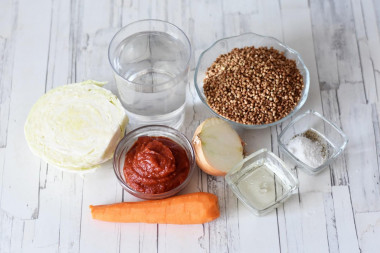
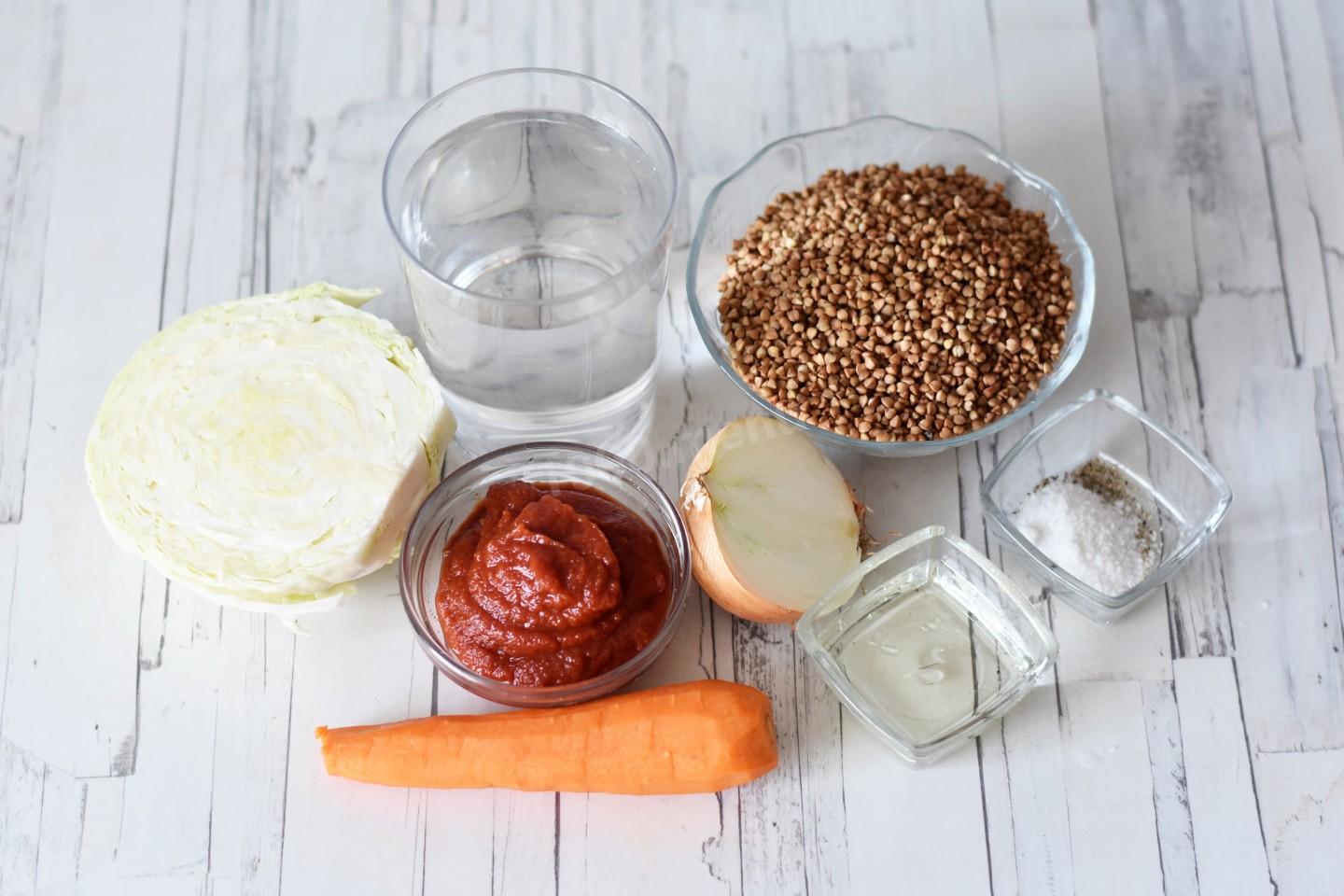
How do you make skillet buckwheat with cabbage? It's easy. Start by gathering the ingredients listed. This dish is at its best with young, juicy cabbage. You can swap the tomato paste for ketchup or fresh, finely chopped, peeled tomatoes.
-
Step 2:
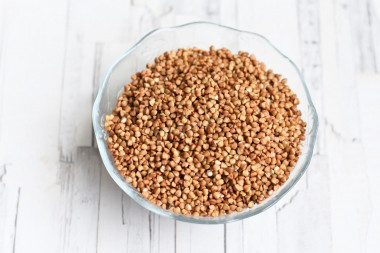
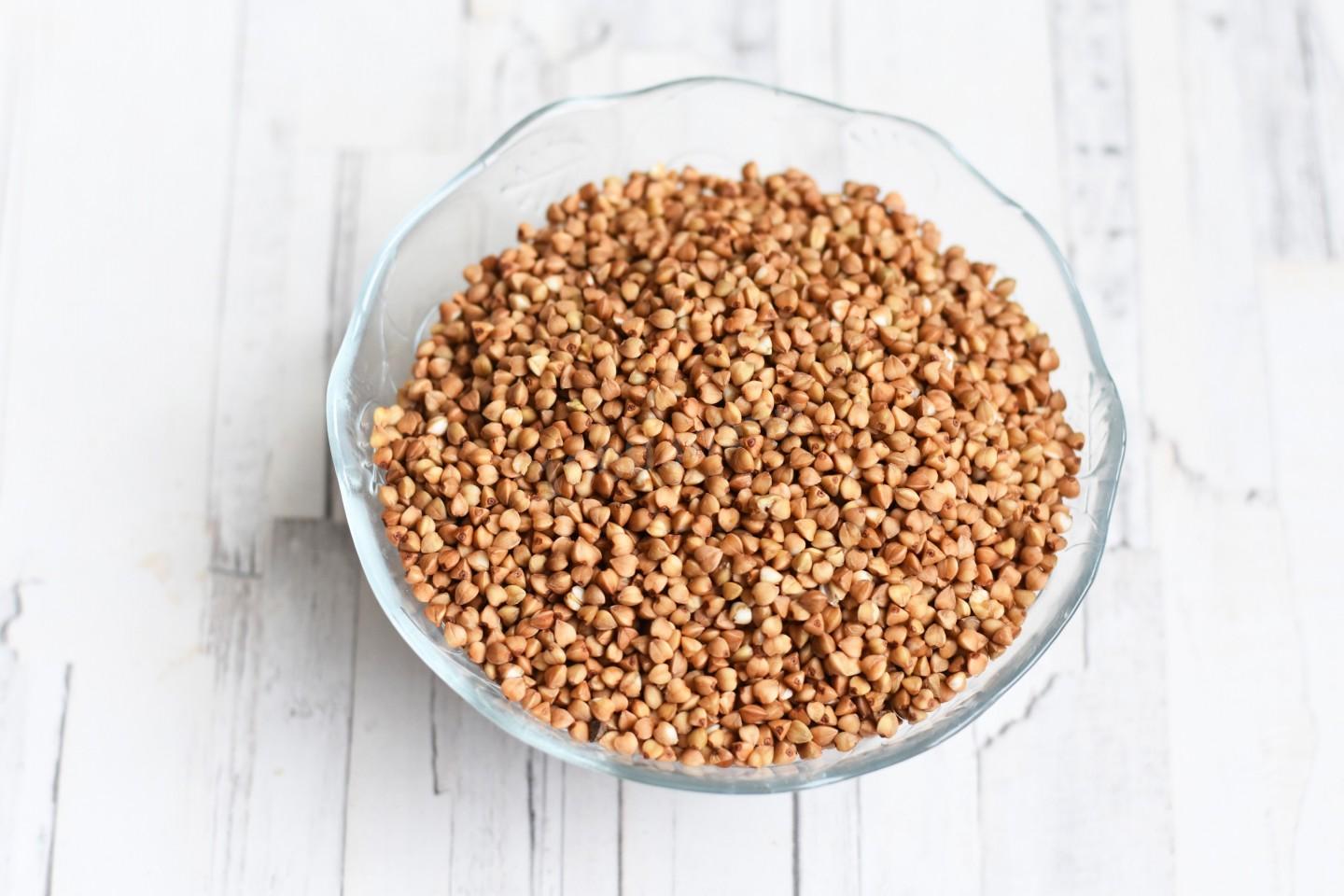
Pick over the buckwheat and rinse it well until the water runs clear. Drain it in a colander and let the water run off.
-
Step 3:
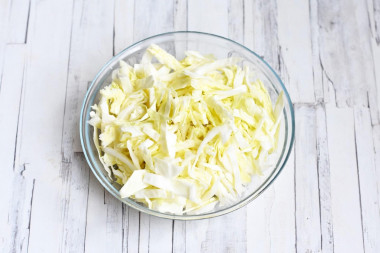
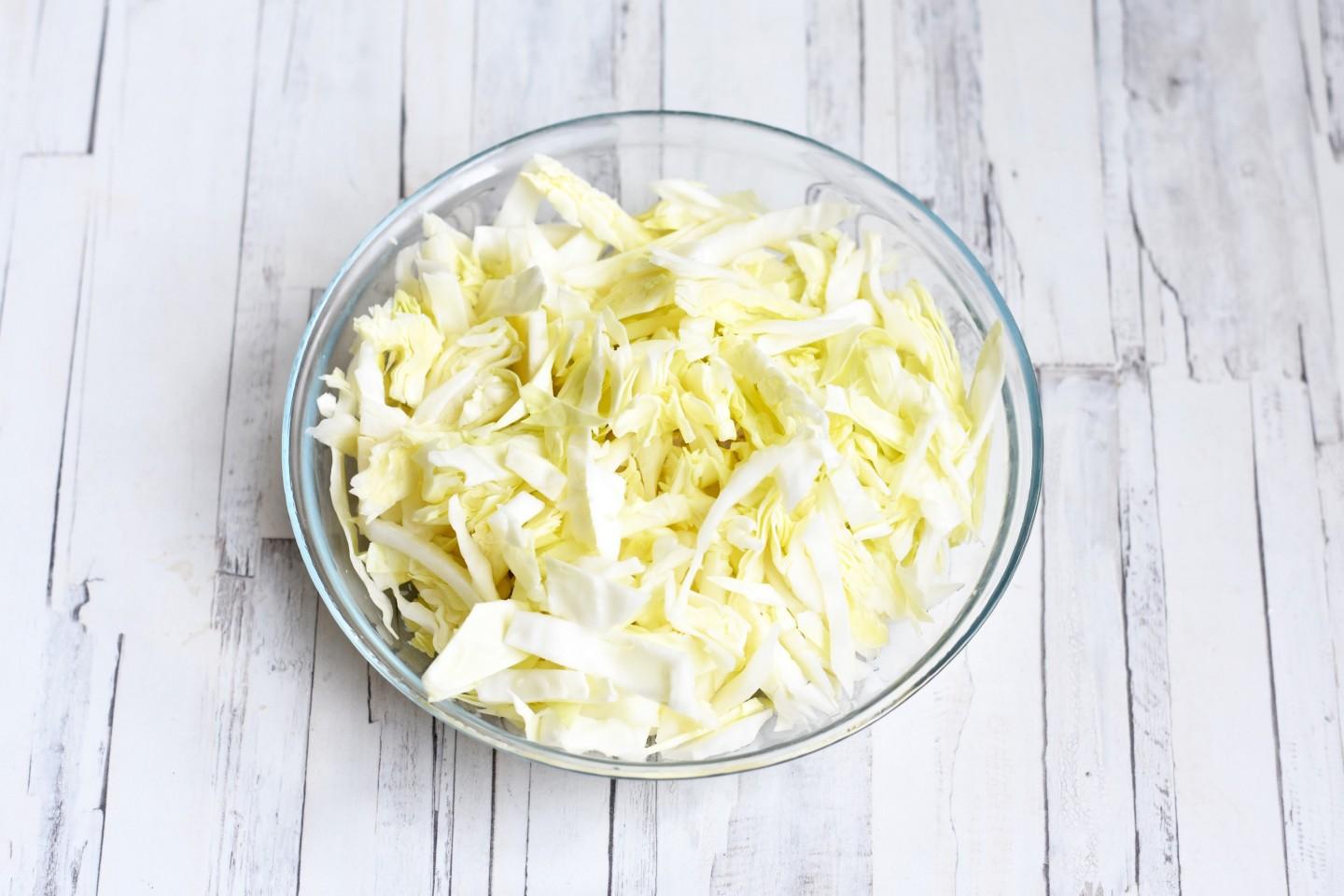
Peel off the outer leaves of the cabbage and shred it. Cut it very fine or a little coarser — whatever you prefer.
-
Step 4:
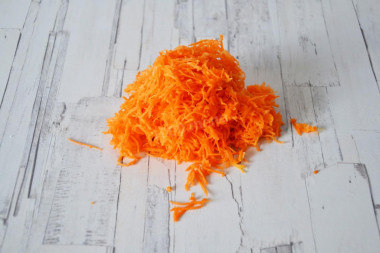
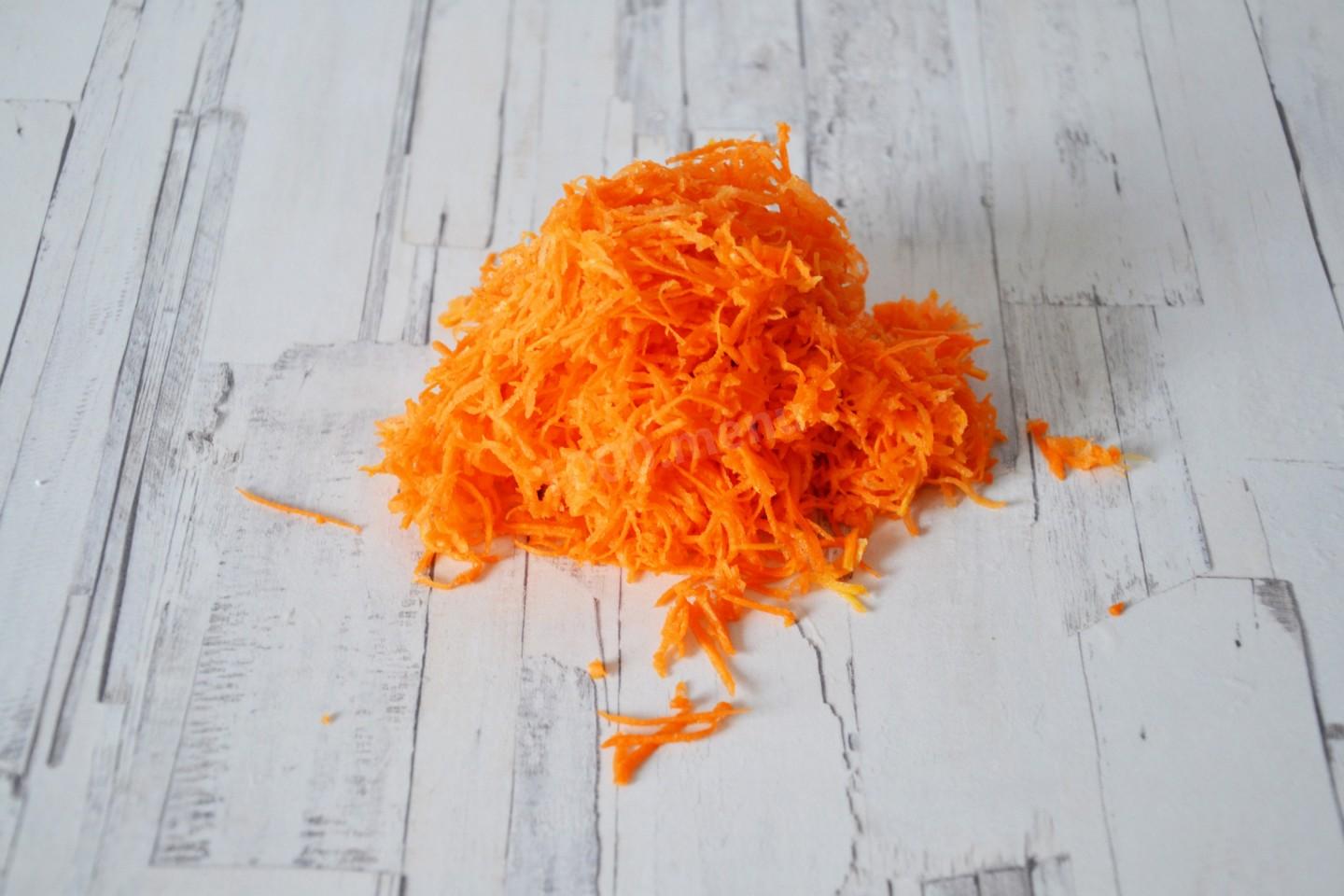
Peel the carrot and grate it on the large holes of a box grater.
-
Step 5:
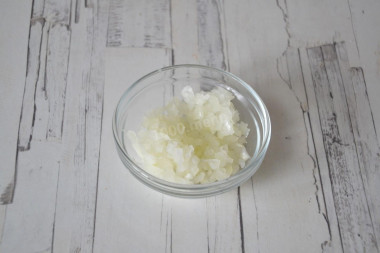
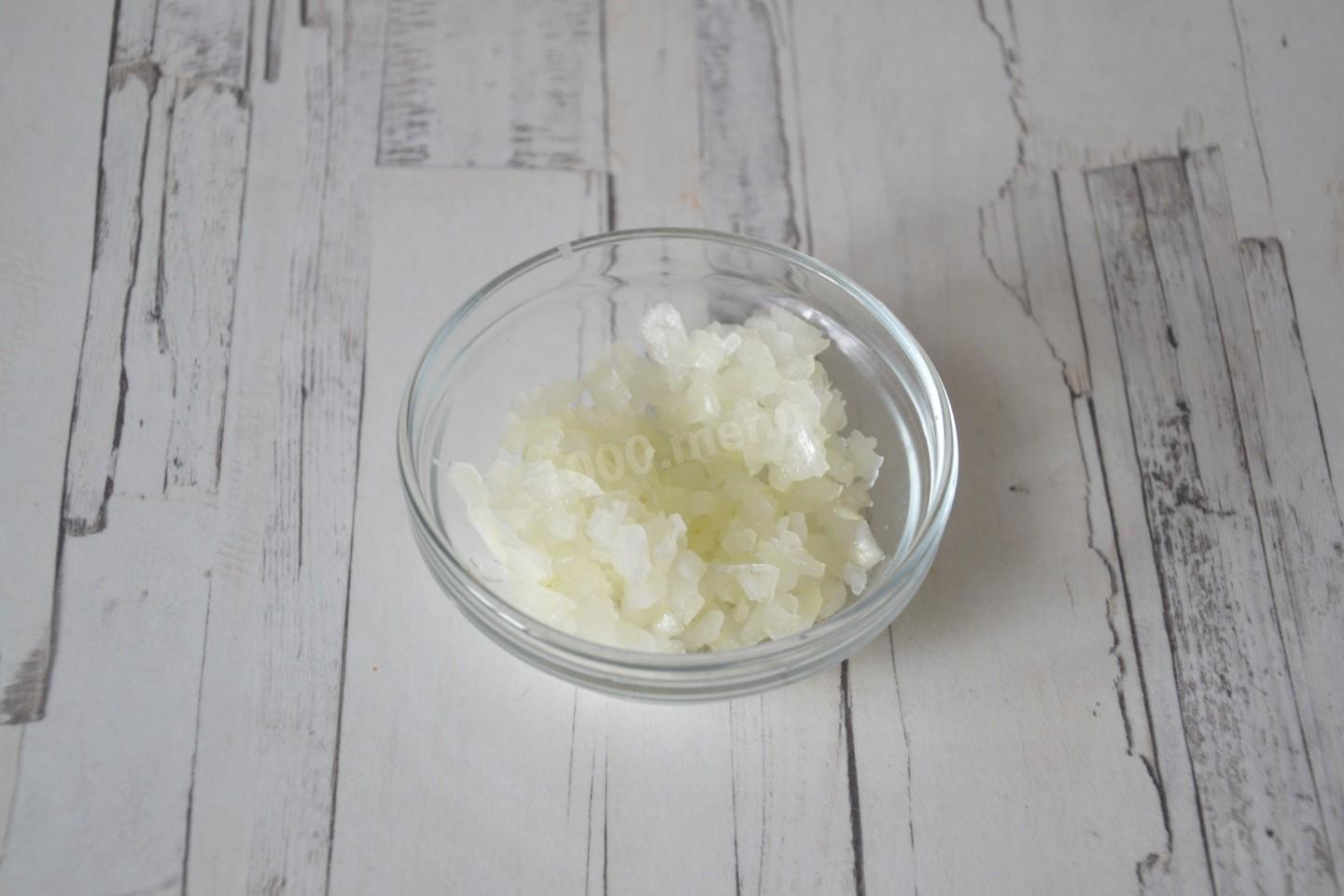
Cut the onion into small dice. If you or your family aren't fans of onion pieces in the finished dish, drop in a whole onion along with the buckwheat (step 9). It'll cook down as it braises, give up all its juices, and you can toss it out afterward.
-
Step 6:
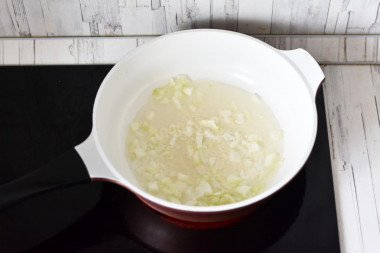
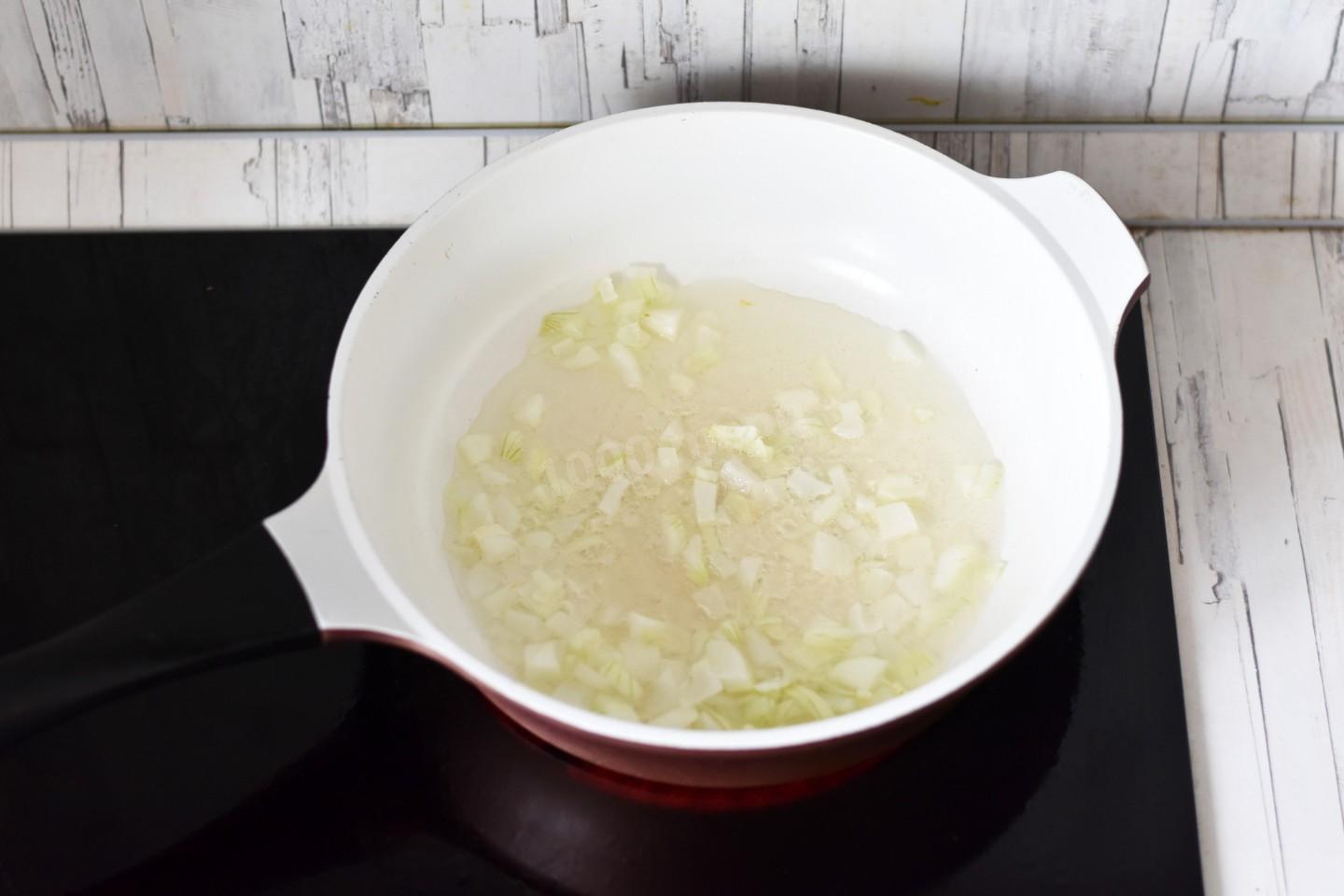
Heat the vegetable oil in a skillet. Add the onion and sauté over medium heat until translucent.
-
Step 7:
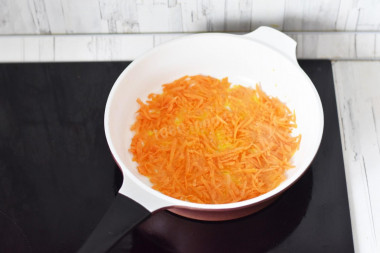
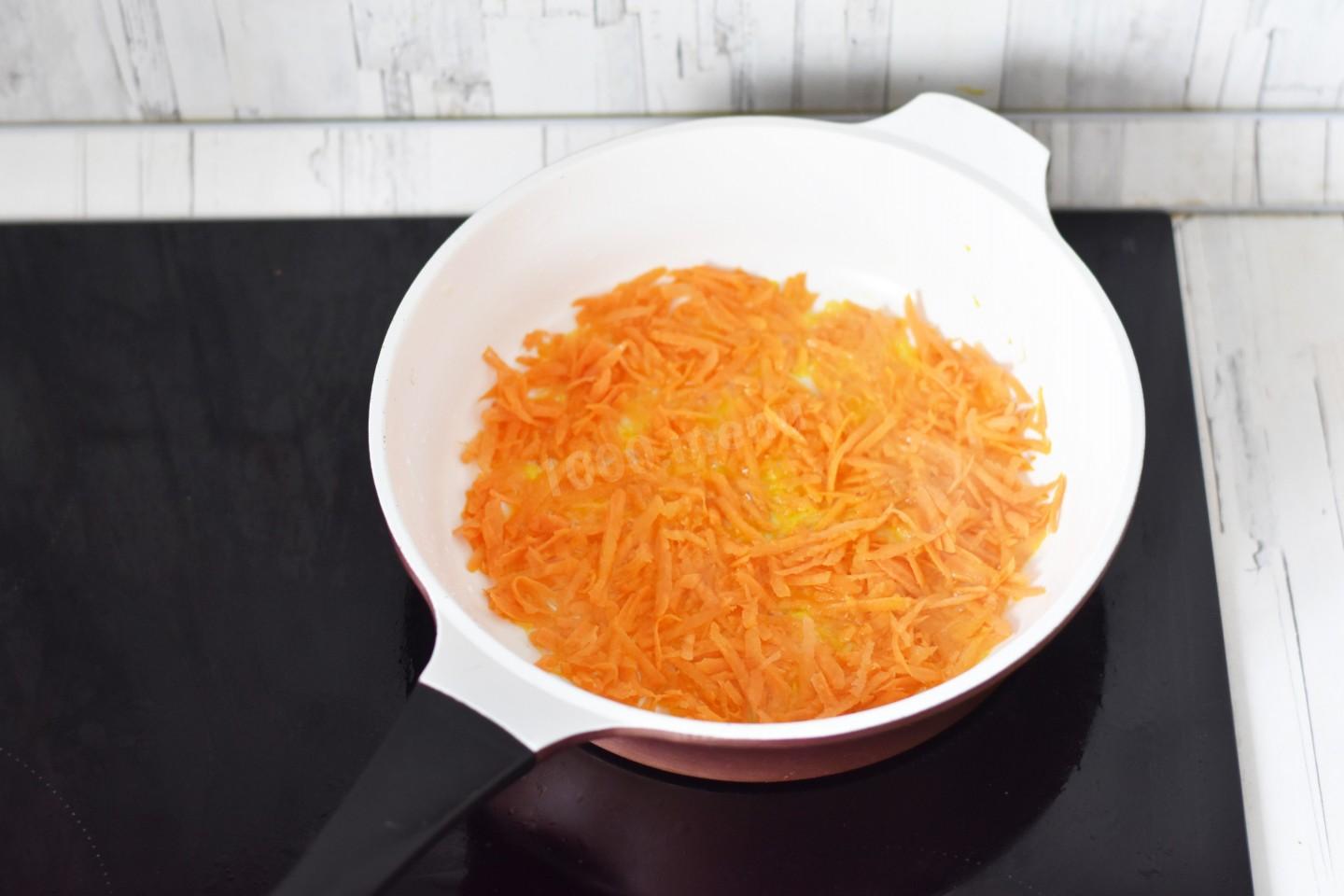
Add the carrot to the skillet and cook until soft.
-
Step 8:
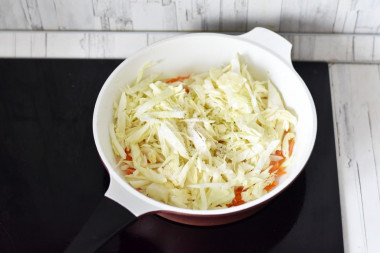
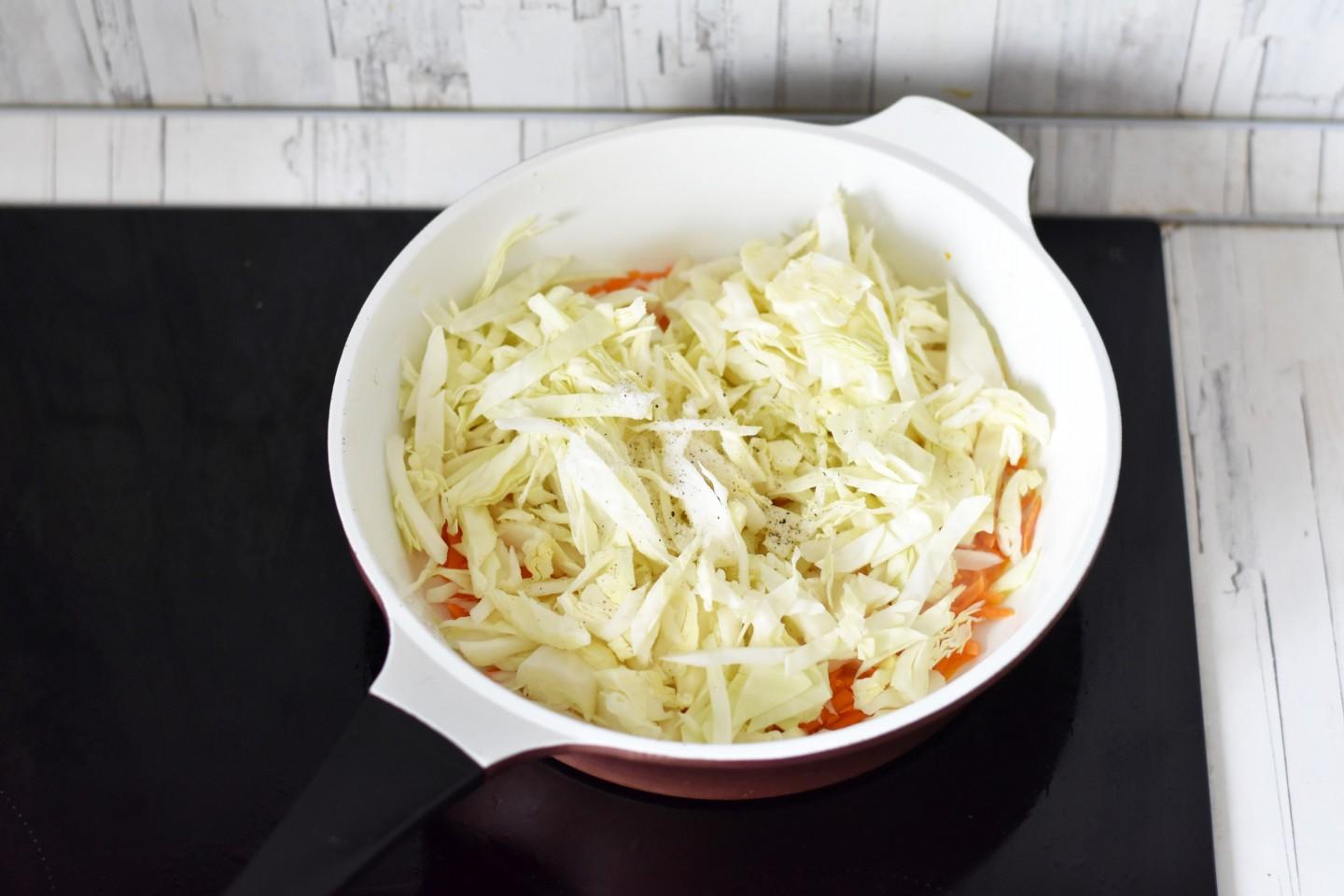
Add the cabbage, salt, and pepper to taste. Stir everything and simmer over low heat for 10 minutes, stirring now and then. The cabbage should turn almost soft. Depending on how juicy and fresh it is, it may need a bit more or less time.
-
Step 9:
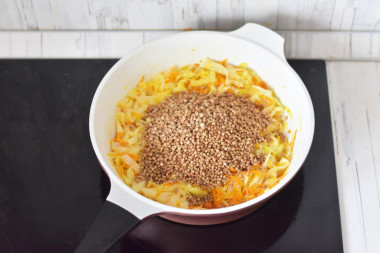
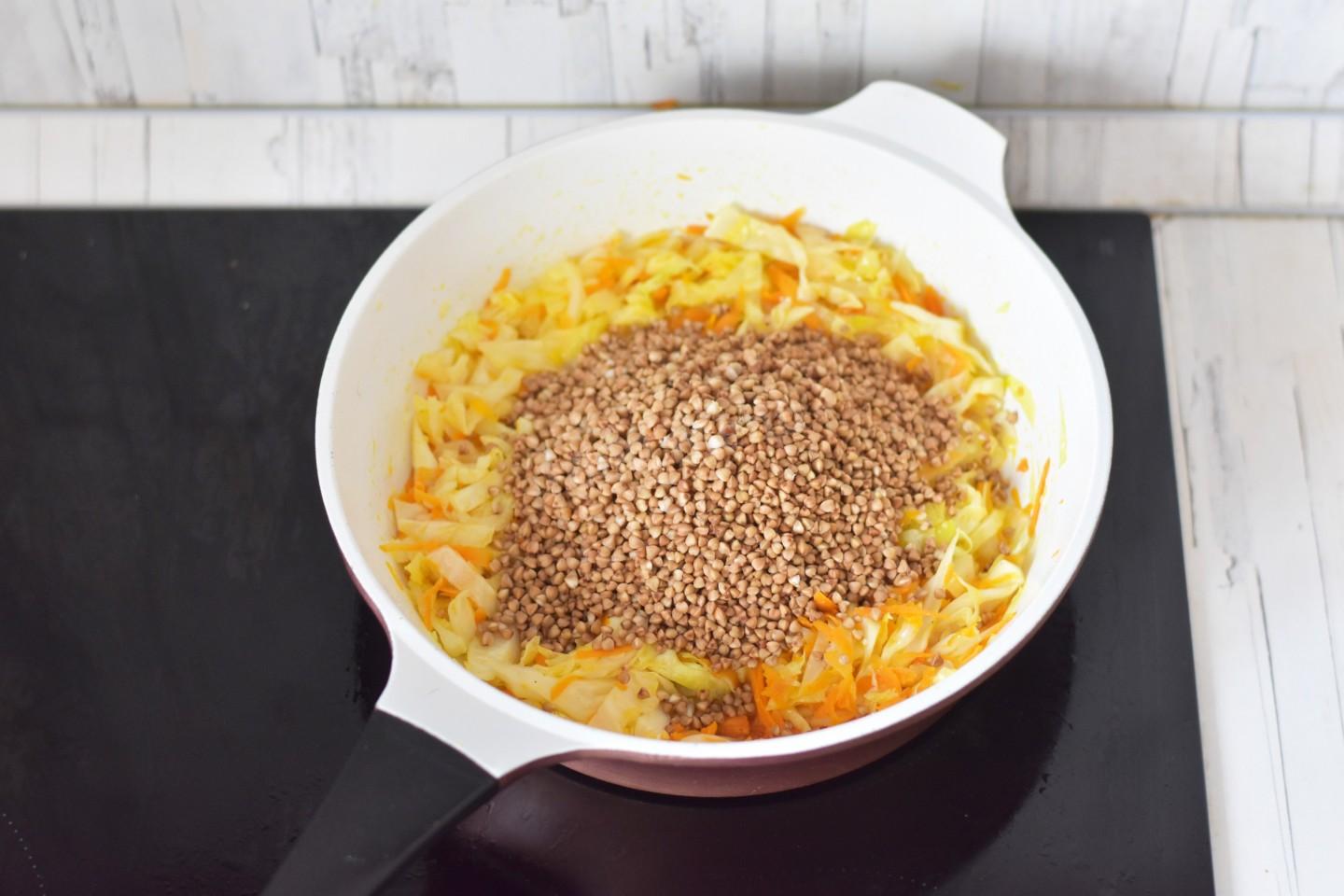
When the cabbage is nearly done, stir in the rinsed buckwheat.
-
Step 10:
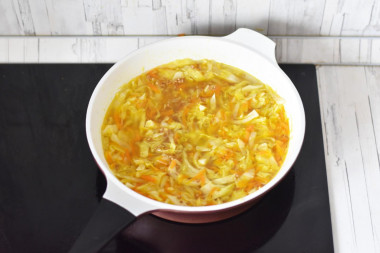
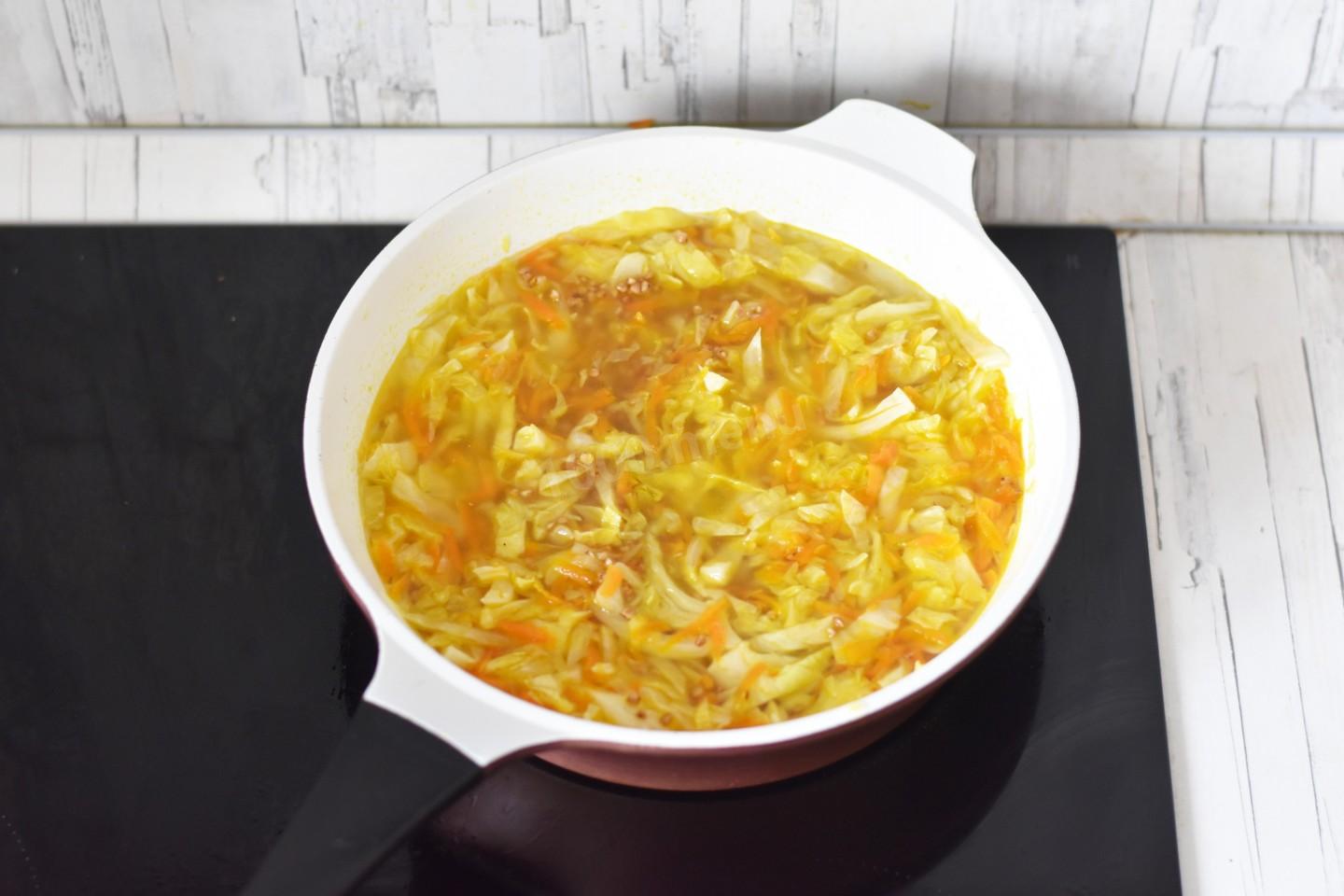
Pour in enough water to fully cover everything in the skillet.
-
Step 11:
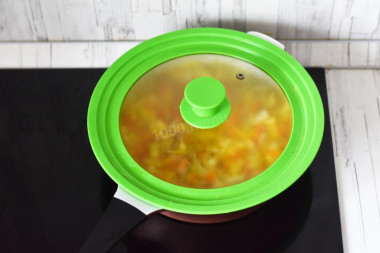
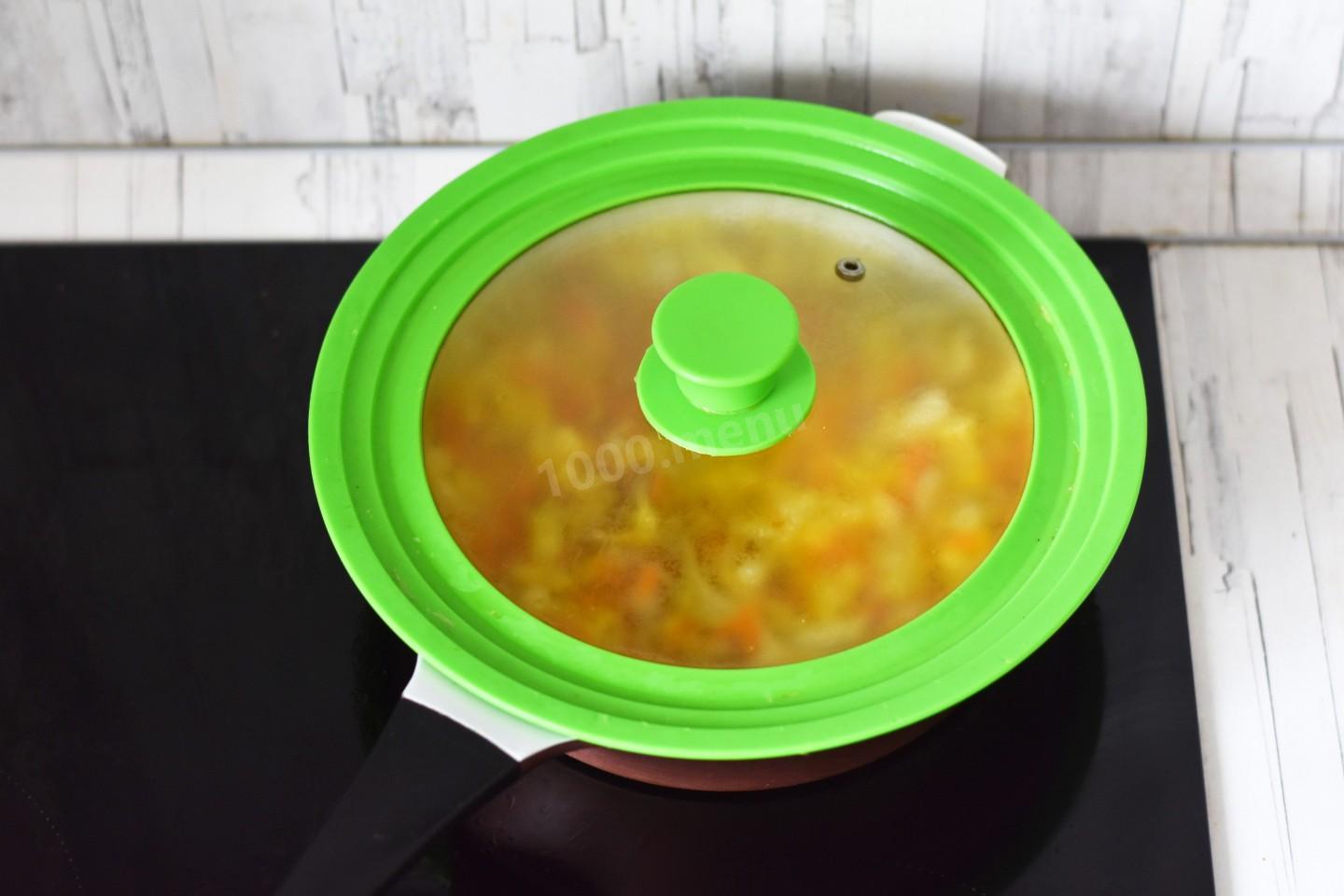
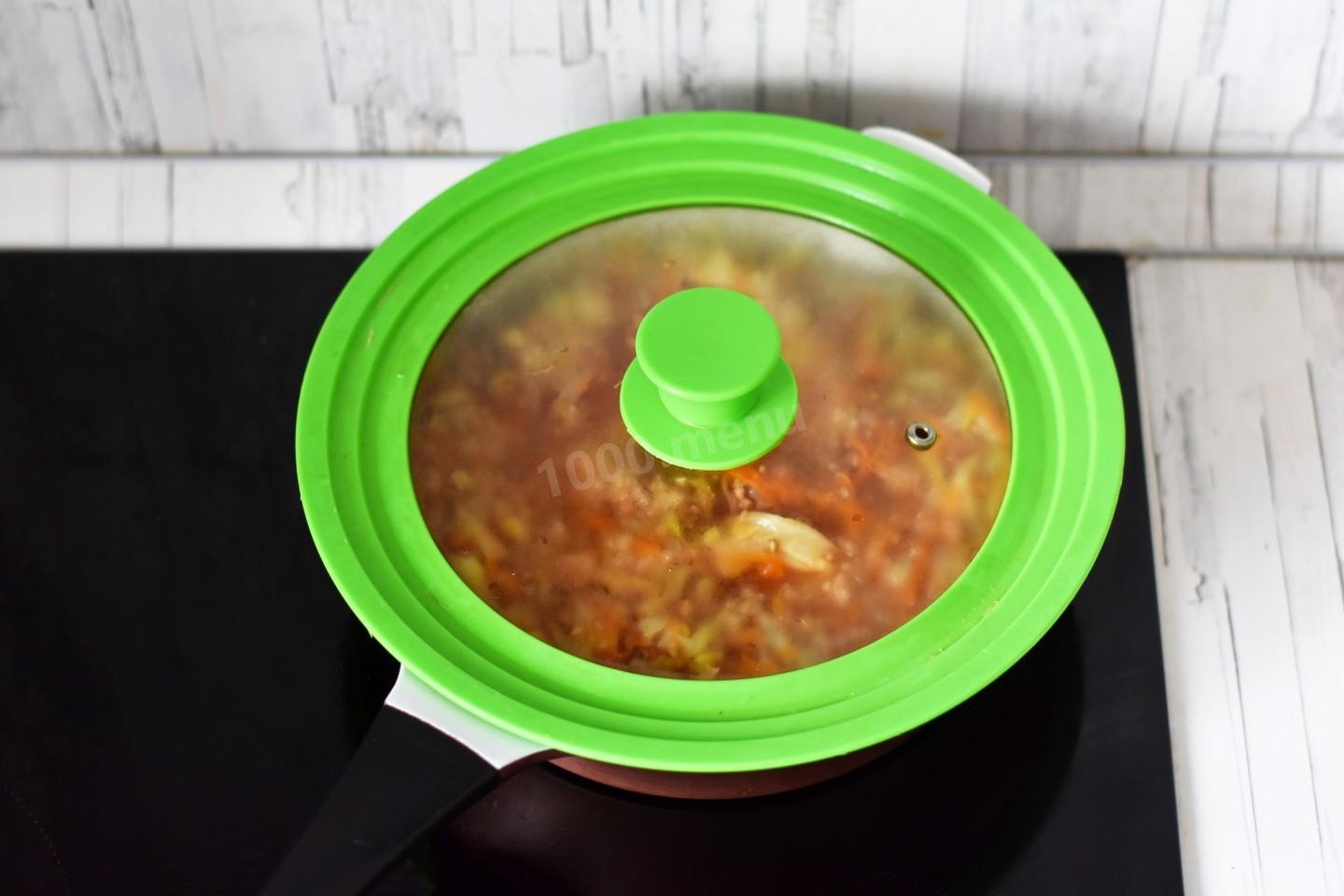
Bring to a boil over medium heat, then cover and simmer over low heat for 10–12 minutes.
-
Step 12:
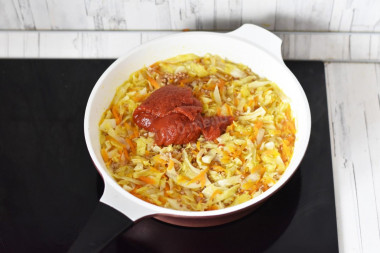
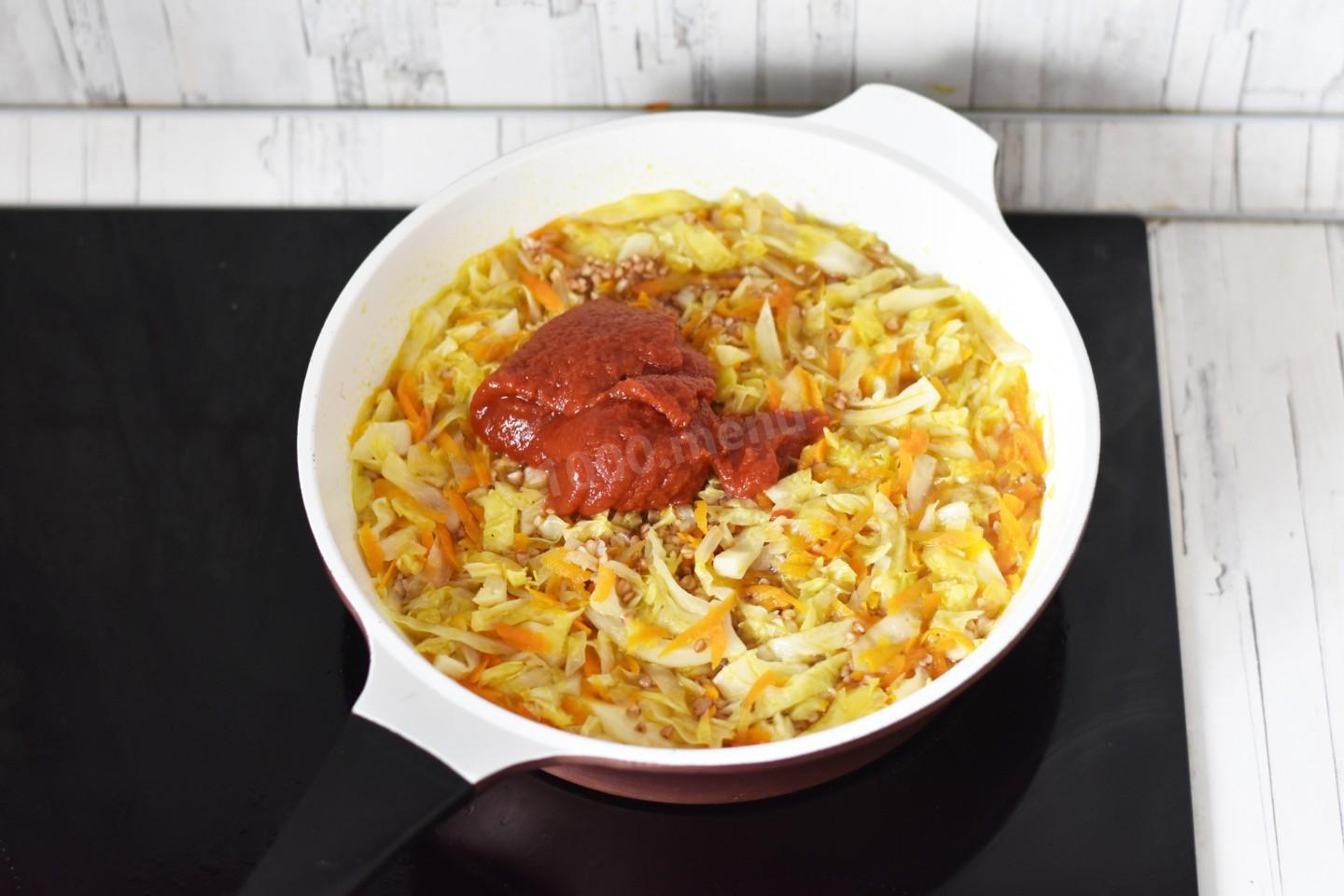
Stir in the tomato paste. By now the buckwheat will have swelled a little and soaked up some of the liquid, but not all of it. If the skillet is completely dry, pour in another 50 ml (about 1/4 cup) of water.
-
Step 13:
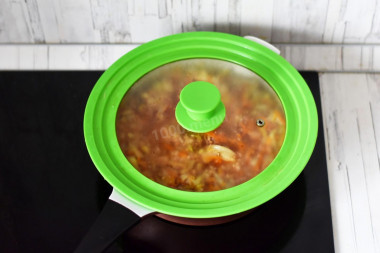
Stir everything well and braise the buckwheat and cabbage another 5–7 minutes, or a little longer, covered, until done. Any extra liquid should boil off completely or get absorbed into the vegetables and grain. Enjoy!
- For all the ins and outs of cooking buckwheat and how to pick a good batch so the dish turns out great, it's worth reading up on the grain.
- You can swap the buckwheat for any other grain you like. The cooking time may go up or down as a result. And remember that some grains (pearl barley, for one) need to be soaked first.
- Since everyone's tolerance for salt, sweet, bitter, tangy, and heat is different, always season to your own taste. If you're trying a spice for the first time, keep in mind that some are especially easy to overdo — chili pepper, for example.
Caloric content of the products possible in the composition of the dish
- Onion - 41 kcal/100g
- Green cabbage - 46 kcal/100g
- Fresh frozen green cabbage in a package - 45 kcal/100g
- Buckwheat (whole grain) - 335 kcal/100g
- Dark buckwheat flour - 333 kcal/100g
- Light buckwheat flour - 347 kcal/100g
- Boiled buckwheat - 163 kcal/100g
- Buckwheat - 313 kcal/100g
- Ground black pepper - 255 kcal/100g
- Vegetable oil - 873 kcal/100g
- Tomato paste - 28 kcal/100g
- Salt - 0 kcal/100g
- Water - 0 kcal/100g
Similar recipes
- Homemade dinner
- Second course
- Vegetables
- Cereals and cereal products
- Spices seasonings spices
- Fats and oils
- Other
- Pepper
- Salt
- Vegetable oil
- Water
- Tomato paste
- Stewing
- Porridge recipes
- Stewed vegetables
- Second courses of cabbage
- From cabbage
- From onion
- No eggs
- Vegetarianism
- Recipes for lean dishes without butter
- Buckwheat