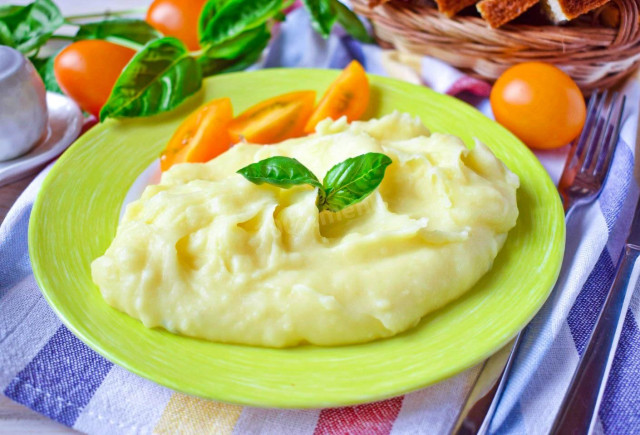
Custard Cream with Condensed Milk
Incredibly delicious, fluffy, and thick — for cakes and pastries! I love custard cream made with condensed milk. It's perfect for all kinds of cakes, profiteroles, and other pastries. The pairing of condensed milk with a tender egg-and-butter base is just perfect!



Cooking method
-
Step 1:
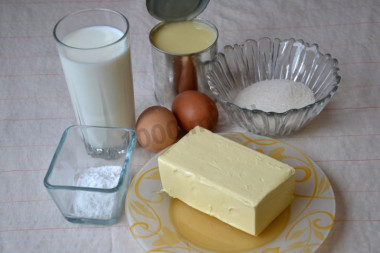
How do you make custard cream with condensed milk? Choose fresh eggs and good-quality butter and condensed milk — whether the cream succeeds depends largely on them. Take the butter out of the refrigerator ahead of time so it comes to room temperature.
-
Step 2:
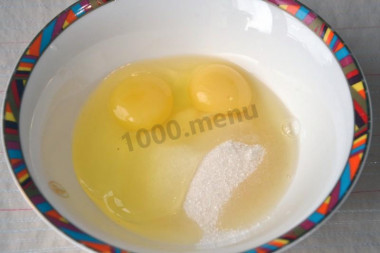
Beat the eggs with the sugar.
-
Step 3:
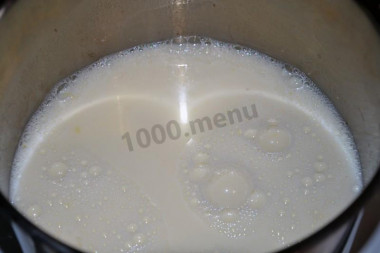
Bring the milk to a boil. Pour the egg mixture into the milk in a thin stream, stirring the milk constantly so the eggs don't curdle.
-
Step 4:
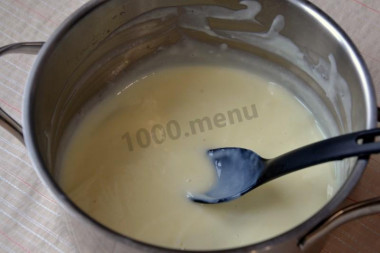
Cook the egg-milk mixture over low heat, stirring constantly, until it thickens. The thicker, the better — but watch carefully that the cream doesn't scorch on the bottom. At first the mixture is thin, then it starts to thicken. Cook it until it's dense enough to be hard to stir, and a spoon or whisk leaves deep tracks that don't fill in right away. As it cools, the cream will thicken even more.
-
Step 5:
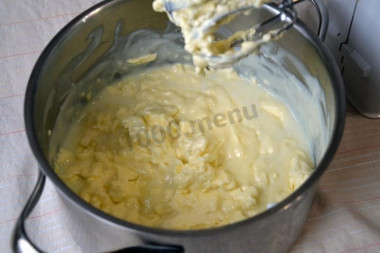
Cool the egg-milk mixture to room temperature, add the butter, and beat it well with a mixer. Important! Both the egg-milk mixture and the butter must be the same temperature (room temperature or a little below), or the cream will separate.
-
Step 6:
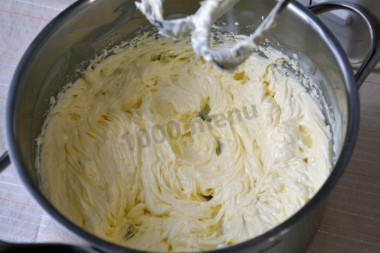
The whipped mixture should double in volume.
-
Step 7:
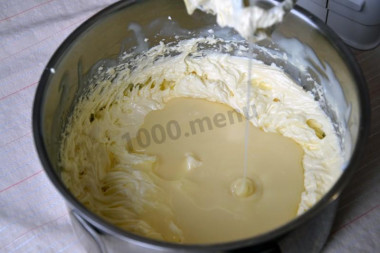
Add the condensed milk and vanilla and beat again until smooth. The condensed milk thins the cream a little, but it should still come out fluffy and thick. The cream is ready!


- This much cream is enough for a Napoleon cake of 22 layers, 7–8 inches (18–20 cm) across.
- Tip: With custard, the key is to keep the eggs from curdling when you add them to the boiling milk. If you pour them in all at once without stirring, they'll curdle, of course. So it's important to add the eggs to the milk in a thin stream while stirring constantly. Another option is to temper the eggs: pour a little hot milk into the beaten eggs in a thin stream, stirring, then carefully pour everything back into the pot with the rest of the milk.
Caloric content of the products possible in the composition of the dish
- Whole cow's milk - 68 kcal/100g
- Milk 3.5% fat content - 64 kcal/100g
- Milk 3.2% fat content - 60 kcal/100g
- Milk 1.5% fat content - 47 kcal/100g
- Concentrated milk 7.5% fat content - 140 kcal/100g
- Milk 2.5% fat content - 54 kcal/100g
- Chicken egg - 157 kcal/100g
- Egg white - 45 kcal/100g
- Egg powder - 542 kcal/100g
- Egg yolk - 352 kcal/100g
- Ostrich egg - 118 kcal/100g
- Granulated sugar - 398 kcal/100g
- Sugar - 398 kcal/100g
- Condensed milk with sugar - 324 kcal/100g
- Butter 82% - 734 kcal/100g
- Amateur unsalted butter - 709 kcal/100g
- Unsalted peasant butter - 661 kcal/100g
- Peasant salted butter - 652 kcal/100g
- Melted butter - 869 kcal/100g
- Vanilla sugar - 379 kcal/100g