Skillet Potatoes with Kefir
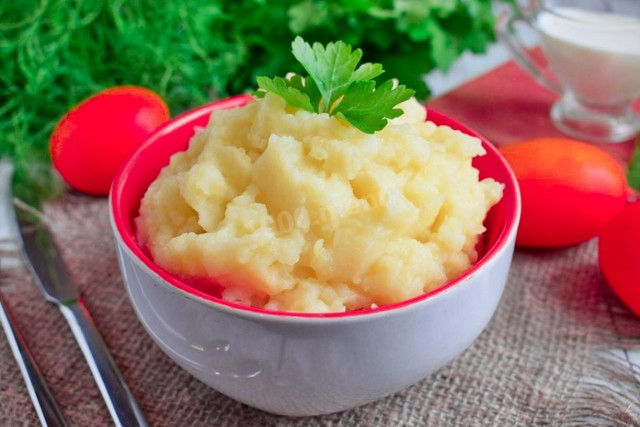
An unusual flavor, original and appetizing — for dinner! Skillet potatoes with kefir (a tangy fermented-milk drink) is a dish that'll add variety to your menu. What makes it unusual is that the potatoes go through boiling, frying, and braising all in one process. These potatoes can be a dish on their own or a side.



Cooking method
-
Step 1:
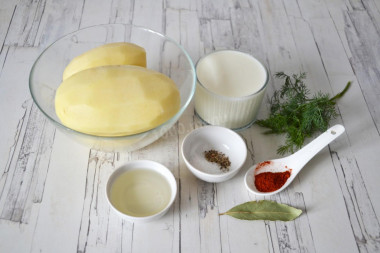
How do you make skillet potatoes with kefir? Get the ingredients ready. Kefir of any fat content works; depending on its tang, the potatoes will be more or less sour.
-
Step 2:
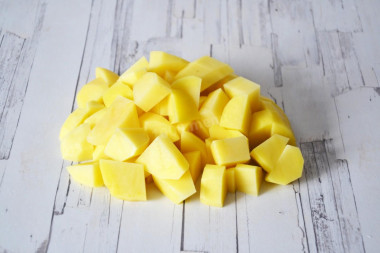
Scrub the potatoes well with a brush, peel them, and cut into medium cubes.
-
Step 3:
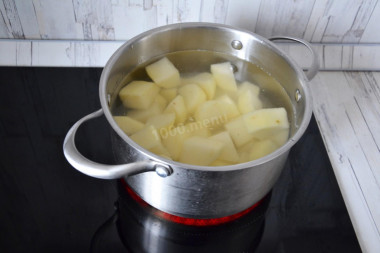
Pour water into a pot, bring it to a boil, and salt it. Add the potatoes and cook for about 10 minutes over medium heat, until half done.
-
Step 4:
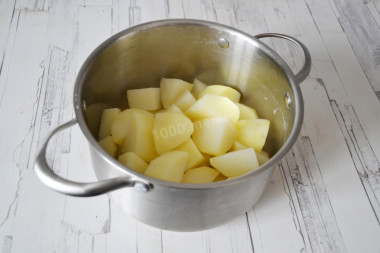
After that, drain the water off the potatoes. The potatoes should stay firm and not fall apart, so they keep their shape through the frying and braising.
-
Step 5:
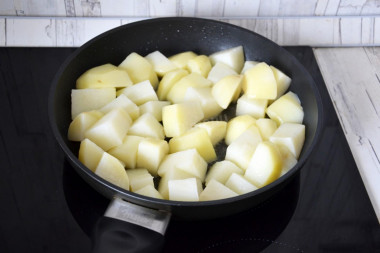
Heat the vegetable oil in a skillet over medium heat. Add the potatoes and fry, stirring gently, for 5 minutes.
-
Step 6:

Salt and pepper the potatoes and sprinkle with dried paprika. You can vary the spices to your taste.
-
Step 7:
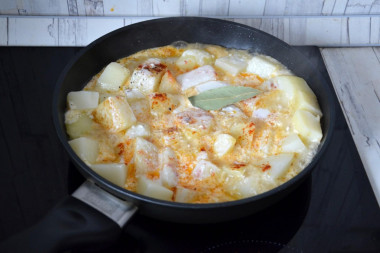
Pour the kefir over the potatoes. Stir gently so the spices and kefir spread evenly over all the potatoes.
-
Step 8:
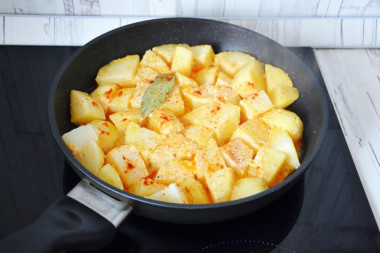
Add the bay leaf to the pan. Cover and braise the potatoes until the liquid has completely cooked off. If all the liquid evaporates before the potatoes are done, add a little more kefir and braise until tender. Check doneness with a knife — it should pierce the pieces easily.
-
Step 9:
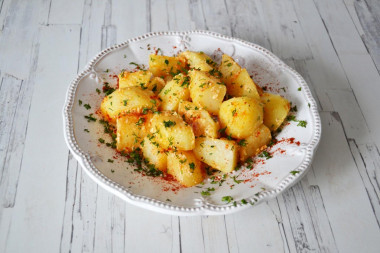
Wash the dill, pat dry, and chop finely. Sprinkle the potatoes with fresh dill and serve. Enjoy!


- Instead of frying and braising in a skillet, you can put the half-boiled potatoes in a baking dish, sprinkle with spices, and pour the kefir over. Then bake in the oven until done — it comes out just as tasty. And if you sprinkle grated cheese on top too, it'll be downright impossible to stop eating.
- Use an oil with a high smoke point for frying! Every oil is good only up to a certain temperature — its smoke point, beyond which it starts to burn and form toxic compounds, including carcinogens. Unrefined oils, with rare exceptions, have a low smoke point: they're full of unfiltered organic particles that scorch quickly. Refined oils handle heat better and have a higher smoke point. If you're cooking in the oven, in a pan, or on the grill, make sure you use a high-smoke-point oil. The most common ones: refined sunflower, olive, and grapeseed.
- Root vegetables are best scrubbed with a brush or stiff sponge under running water.
Caloric content of the products possible in the composition of the dish
- Ripe potatoes - 80 kcal/100g
- Baked potatoes - 70 kcal/100g
- Mashed potatoes - 380 kcal/100g
- Boiled potatoes - 82 kcal/100g
- Potatoes in their skins - 74 kcal/100g
- Fried potatoes - 192 kcal/100g
- Bay leaf - 313 kcal/100g
- Ground black pepper - 255 kcal/100g
- Dill greens - 38 kcal/100g
- Kefir fat - 62 kcal/100g
- Kefir of 1% fat content - 38 kcal/100g
- Low-fat kefir - 30 kcal/100g
- Kefir 'doctor beefy' 1,8% fat content - 45 kcal/100g
- Kefir 2.5% fat content - 53 kcal/100g
- Vegetable oil - 873 kcal/100g
- Salt - 0 kcal/100g
- Paprika - 289 kcal/100g