Green Tomatoes in Adjika for Winter
A great vegetable side for any occasion! These green tomatoes in adjika stay whole through the winter because they're firmer and don't fall apart when cooked. They make a wonderful appetizer for a holiday table or an everyday meal.



Cooking method
-
Step 1:
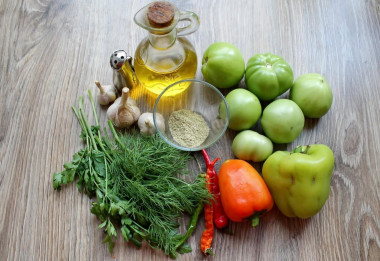
How do you make tomatoes in adjika? Adjika is a spicy Georgian pepper-and-garlic paste. Prep all the ingredients. Use tomatoes that are just on the verge of ripening—a couple more days and they'd start to turn red. That way the finished preserve won't be bitter.
-
Step 2:
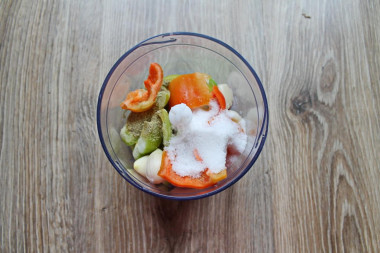
Peel the garlic; remove the stem and seeds from the bell pepper and cut it into pieces. For a very spicy result, leave the seeds in the hot pepper. Put everything in a blender, add the oil, salt, and khmeli-suneli, and blend until smooth.
-
Step 3:
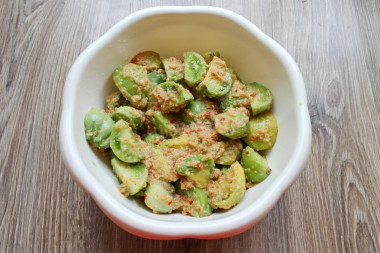
Cut the tomatoes into 4–6 pieces, depending on their size. Put them in a bowl, pour the spicy mixture over them, and stir. Cover and refrigerate for 4 hours.
-
Step 4:
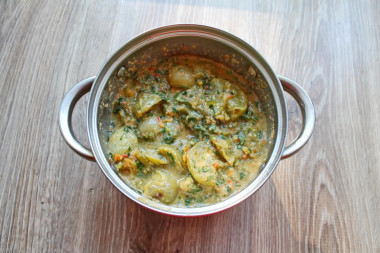
Transfer everything to a heavy-bottomed pot, pour in the water, and stir. Set over medium heat and bring to a boil. Reduce the heat to low and cook for 30 minutes, watching that nothing scorches.
-
Step 5:
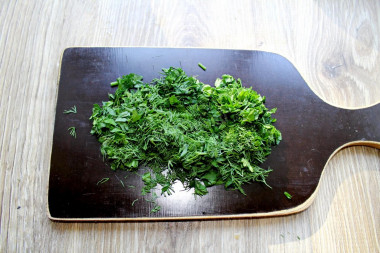
Finely chop the herbs and add them to the pot with the tomatoes and adjika. Stir everything together and cook for another 5 minutes.
-
Step 6:
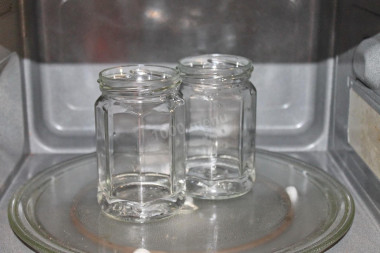
Wash the jars and lids thoroughly and sterilize them.
-
Step 7:
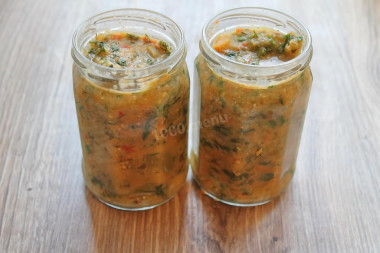
Pack the hot mixture into the jars right up to the top and seal tightly with the boiled lids.
-
Step 8:
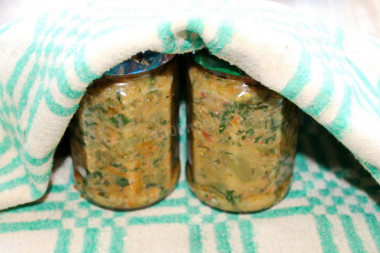
Wrap the jars in a blanket and leave them until completely cooled.
-
Step 9:
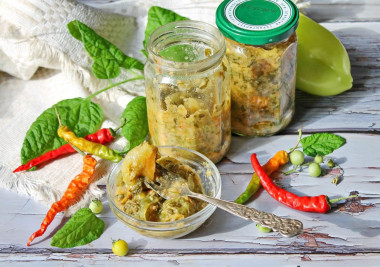
Enjoy!


- Keep in mind that ingredients like salt, sugar, vinegar, and vinegar substitutes are used in winter preserves not just for flavor but, above all, as preservatives. So never cut back on the salt or sugar, and don't swap in a weaker vinegar than the recipe calls for—otherwise it won't do its preserving job and the preserve will spoil.
- Follow the basic canning rules so your preserve keeps well and trouble-free: wash the vegetables thoroughly even if you peel them; remove any debris, dirt, or soil from the produce and herbs; discard anything that's started to rot; don't reduce the amount of preservatives, and follow the recipe's tips; sterilize the empty jars (10 minutes for 0.5 L / 1 pint; 15 minutes for 1 L / 1 qt; 20 minutes for 2 L; 25 minutes for 3 L) and boil the lids for 10 minutes; when sealing with a seaming tool, make sure the lids sit tightly against the jar; turn the jars upside down to check the seal.
- If you're new to canning and don't have much experience with home preserves, it's safer to process the filled jars even if the recipe says you don't have to. That way they won't swell in storage if something went wrong—if you under- or over-measured an ingredient or strayed from the method. Jars usually swell for just one reason: a buildup of excess gas, which forms because microorganisms got into the preserve. Either way, swollen jars have nothing to do with the quality of a recipe that's worked before.
Caloric content of the products possible in the composition of the dish
- Sweet pepper - 27 kcal/100g
- Garlic - 143 kcal/100g
- Parsley greens - 45 kcal/100g
- Dill greens - 38 kcal/100g
- Vegetable oil - 873 kcal/100g
- Hot capsicum - 40 kcal/100g
- Hop-suneli - 417 kcal/100g
- Salt - 0 kcal/100g
- Water - 0 kcal/100g
- Green tomatoes - 20 kcal/100g