Pan-Fried Pork Bites
Craving kebabs in the middle of winter? Whip them up quickly at home. This tasty, tender meat tastes a lot like grilled kebab, and it comes together in just a few minutes without ever leaving the house. The key is to use pork with a little marbling of fat that isn't from an old animal.

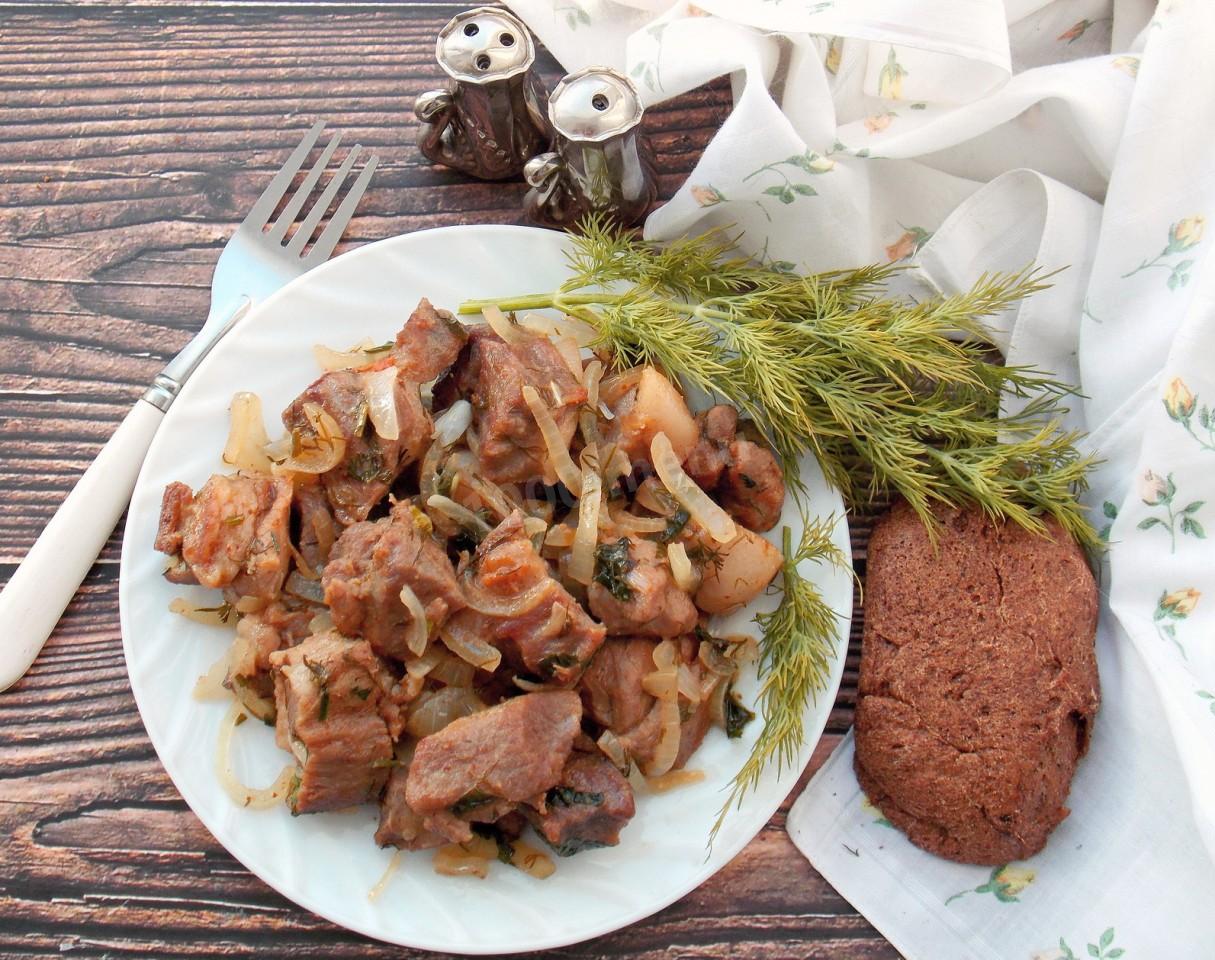
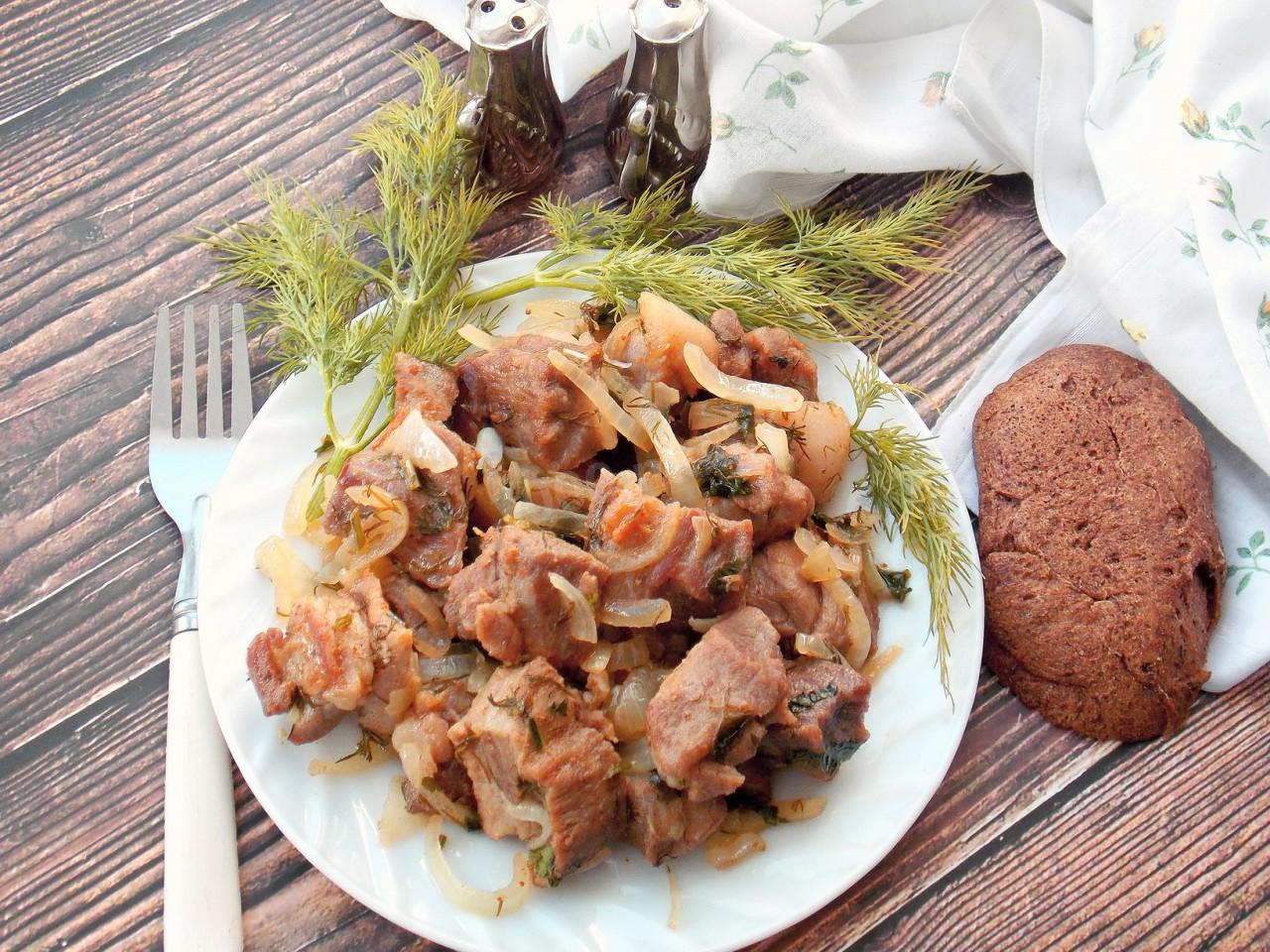
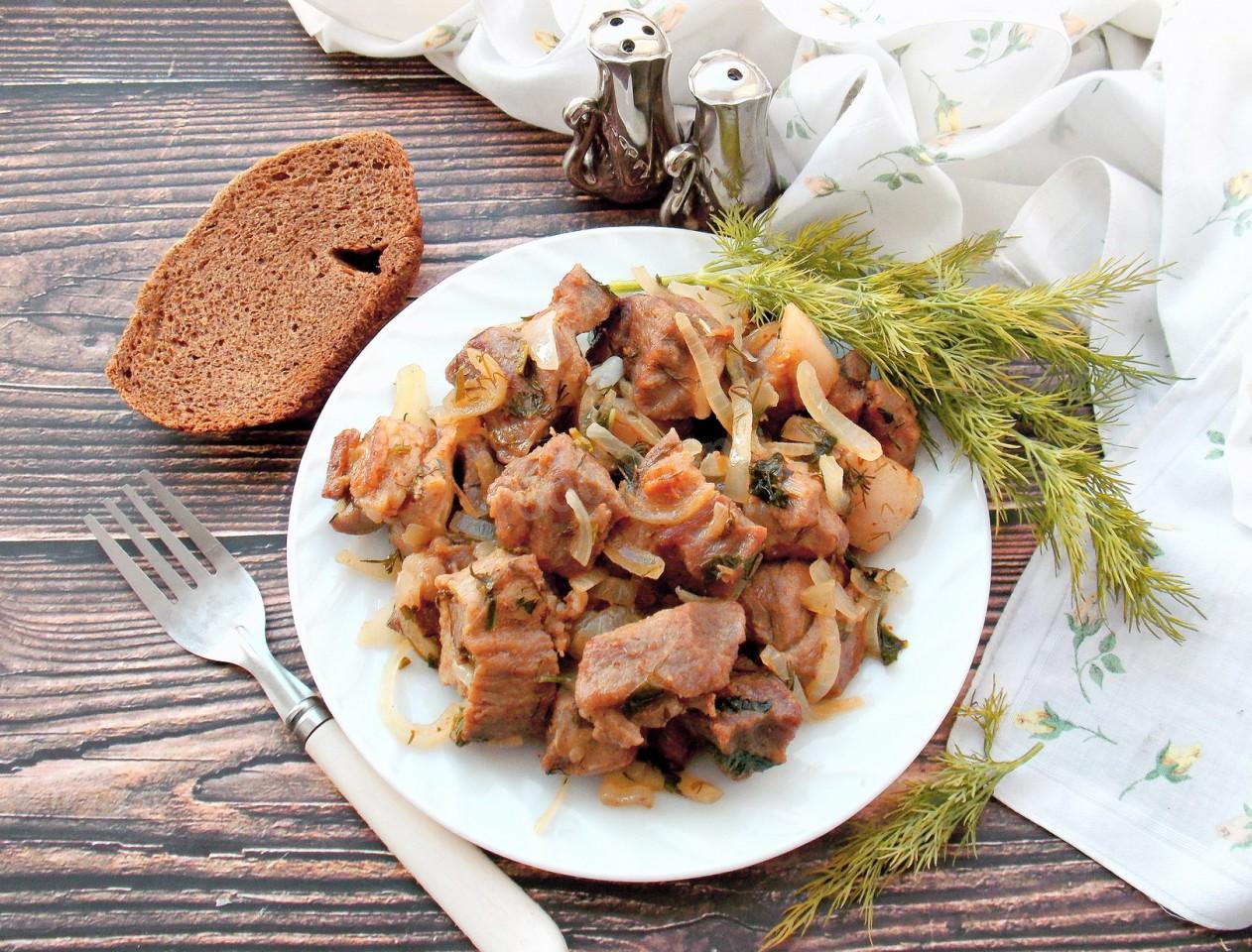
Cooking method
-
Step 1:
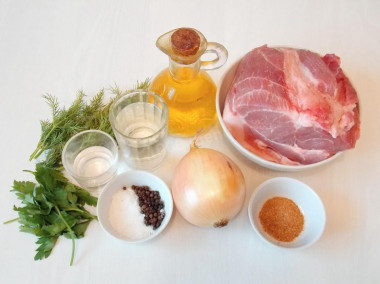
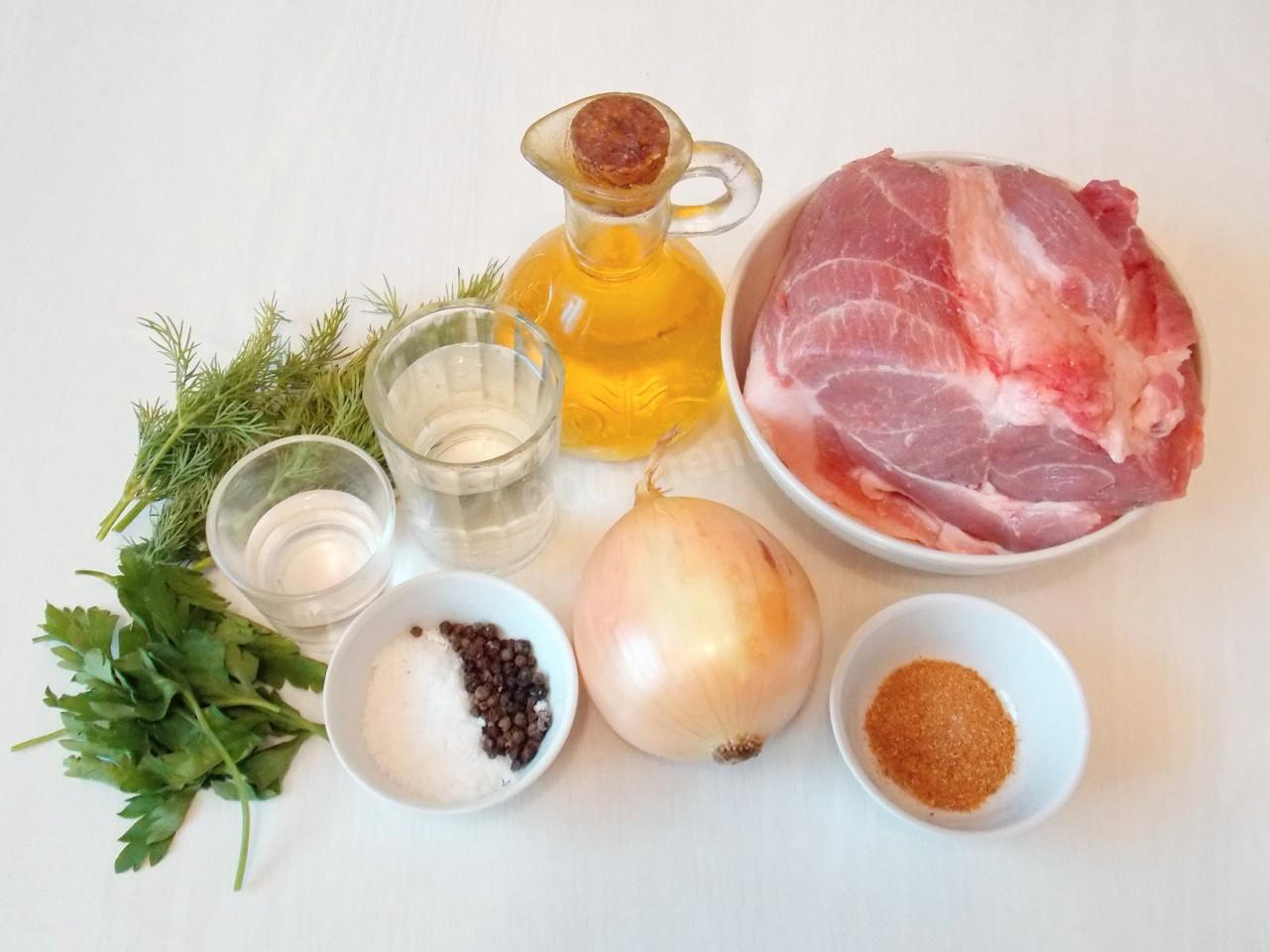
How do you make pan-fried pork bites? Gather all the ingredients you'll need.
-
Step 2:
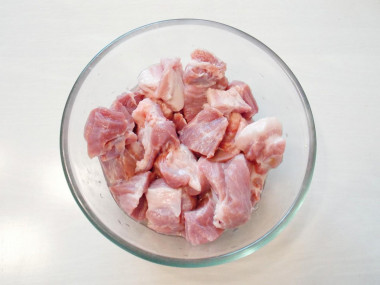
Rinse the meat and be sure to pat it thoroughly dry with paper towels or sturdy napkins. Now cut the meat into pieces about 1¼ inches (3 cm) on a side. That's the ideal size — smaller pieces will dry out, and larger ones may not cook through in the time given. Be sure to cut across the grain, which keeps the meat tender rather than rubbery.
-
Step 3:
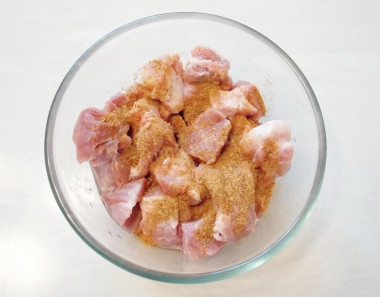
Put the meat in a bowl and add the spices. I use dry adjika (a spicy Georgian pepper blend) and black pepper, but use whatever you like — just adjust the amount to their heat and makeup. Mix well so the spices coat the meat evenly.
-
Step 4:
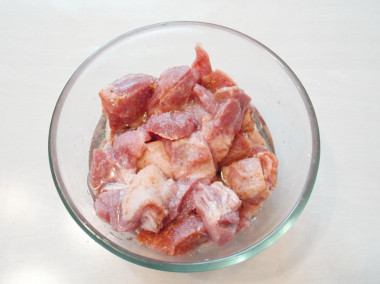
Pour half of the vegetable oil into the bowl with the meat and stir to combine.
-
Step 5:
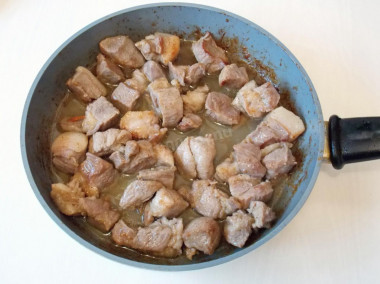
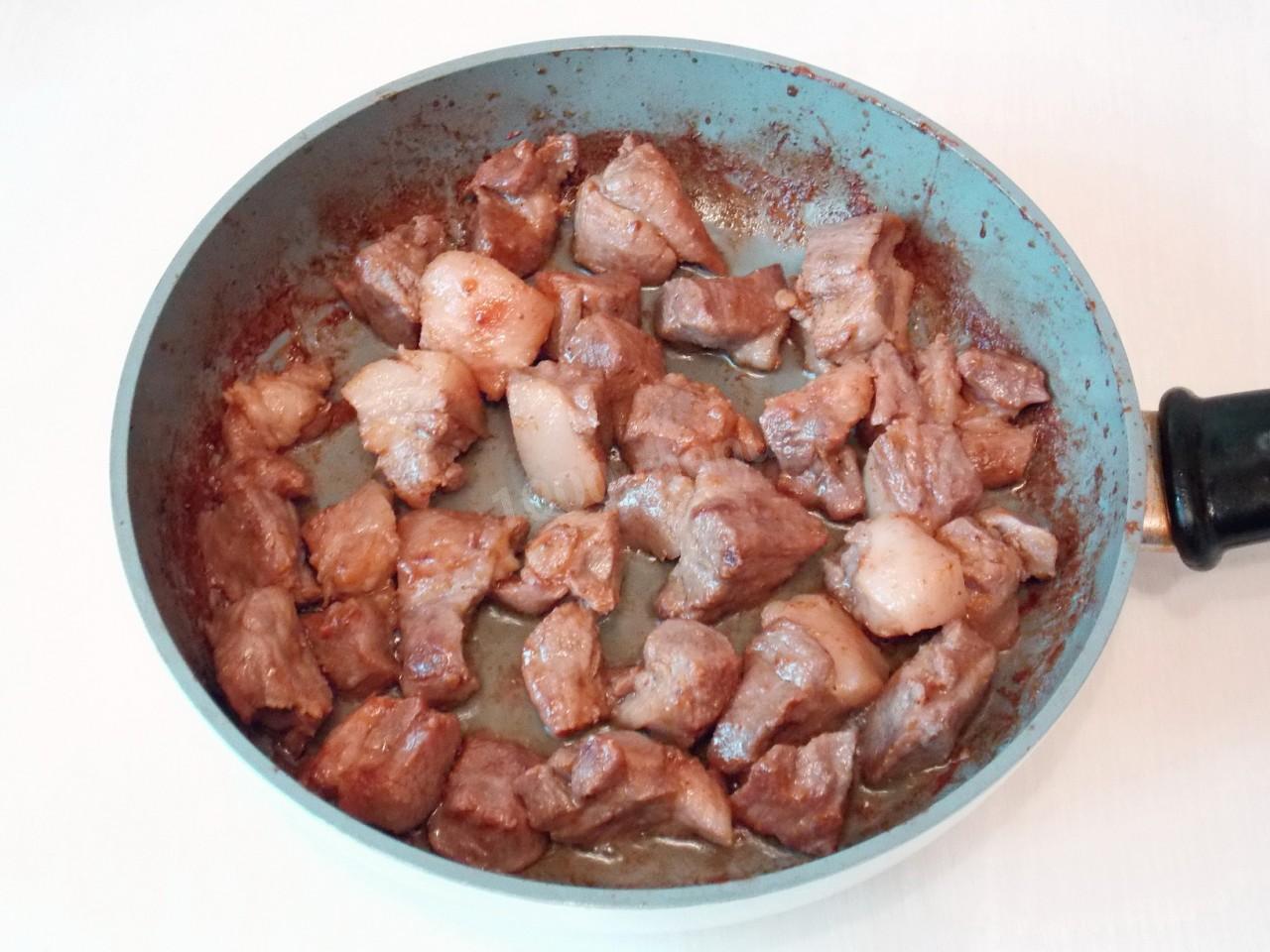
Pour the remaining oil into a skillet, set it over high heat, and let it get hot. Add the pieces of meat carefully — watch out for splattering juices. Fry the meat over high heat, stirring, for 8 minutes. Stir the vinegar together with the water and pour it into the skillet.
-
Step 6:
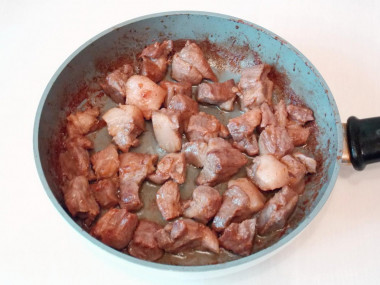
Simmer the meat over medium heat until the liquid has evaporated completely.
-
Step 7:
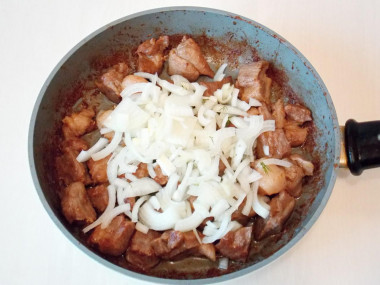
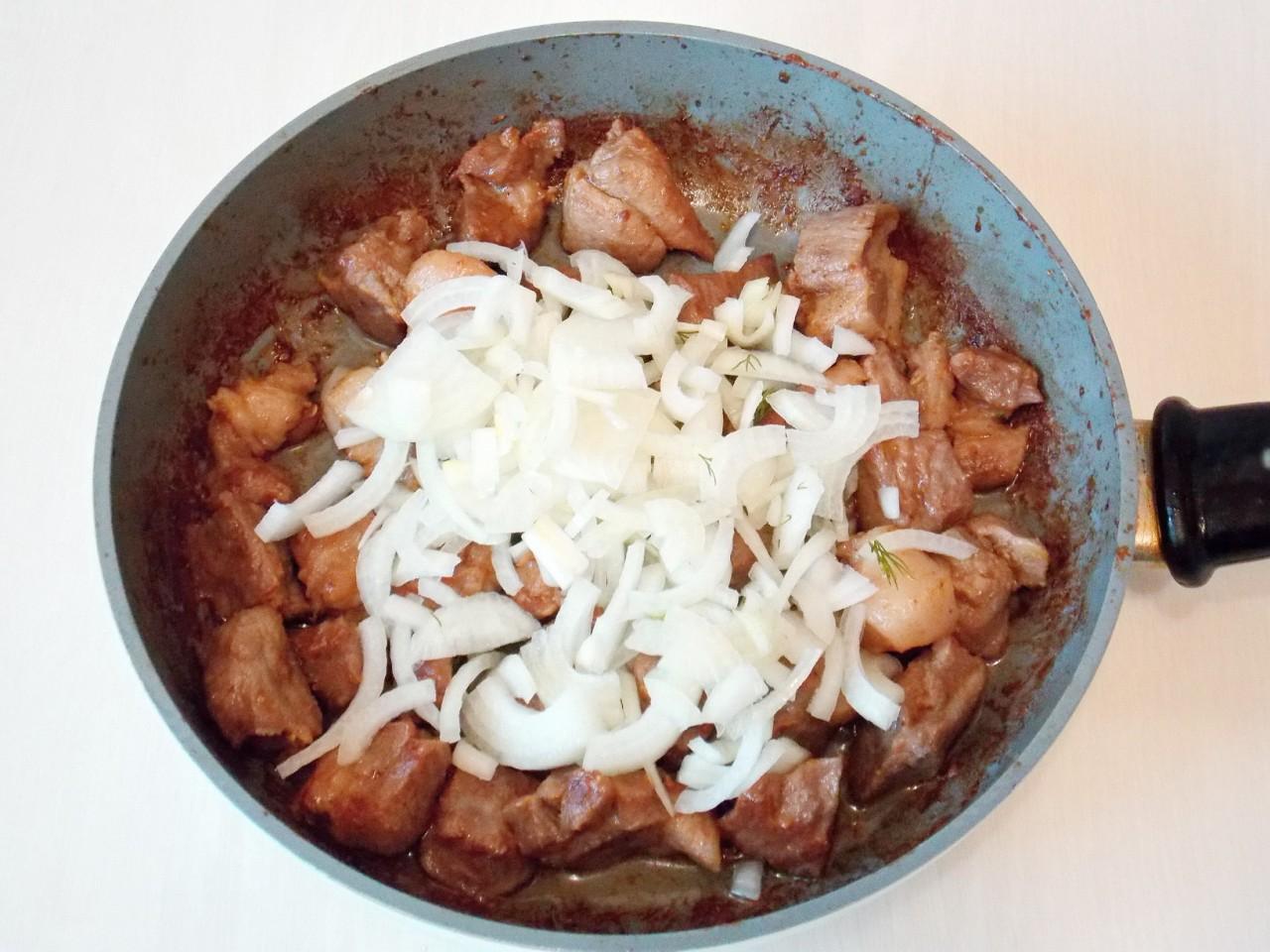
Peel the onion, rinse it, and slice it thinly into quarters. Add the onion to the skillet with the meat.
-
Step 8:
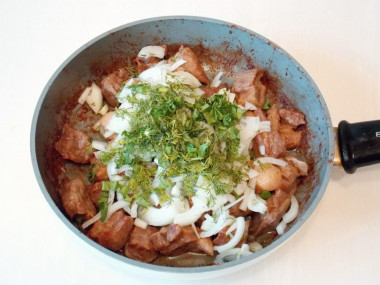
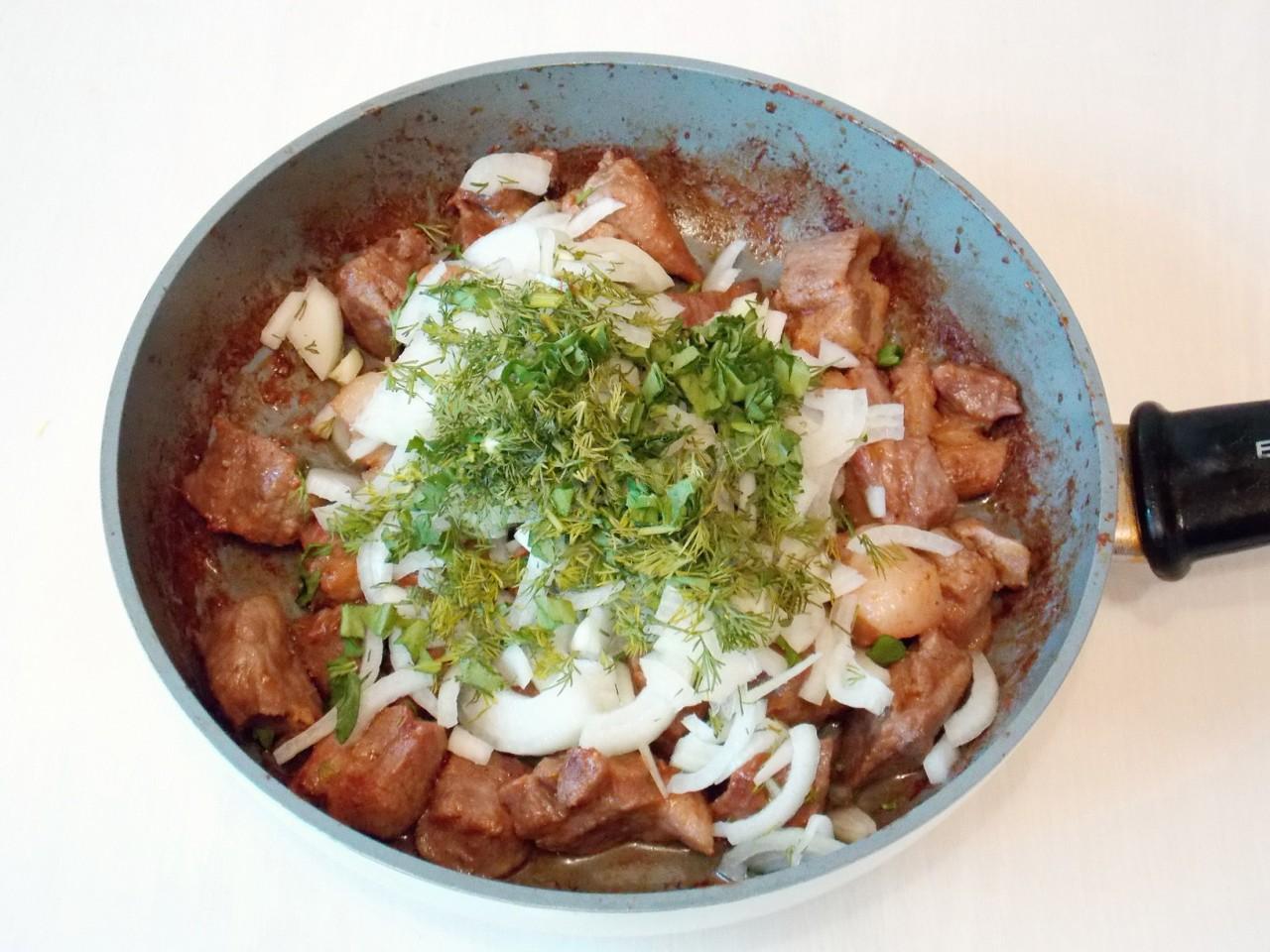
Rinse the parsley and dill, shake off the water, and chop them.
-
Step 9:
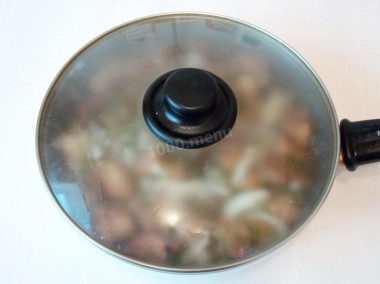
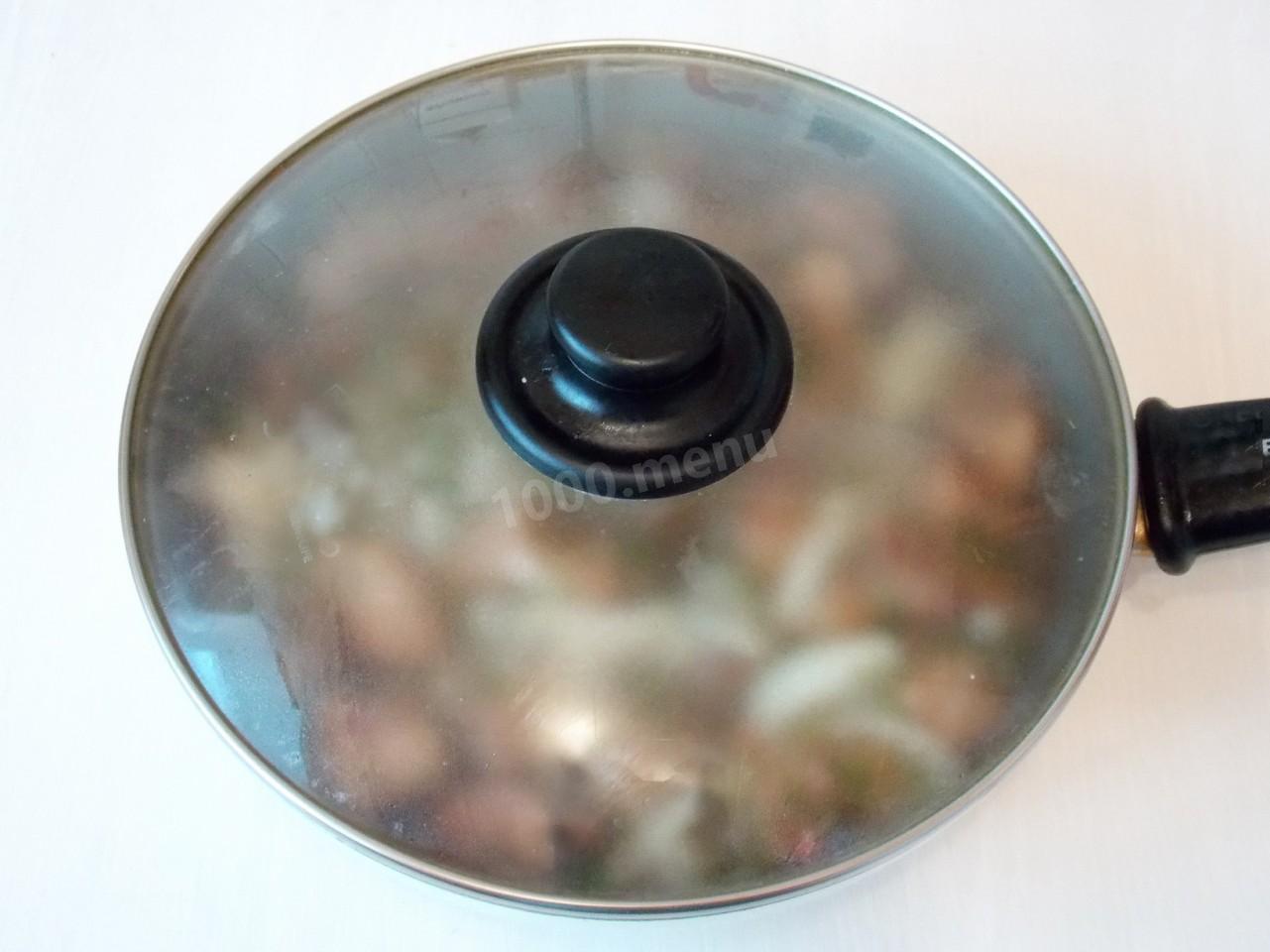
Stir the meat together with the onion and herbs, cover with a lid, and leave over low heat for two minutes.
-
Step 10:
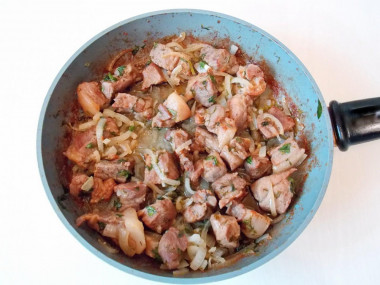
Take the lid off the skillet, stir once more, and remove from the heat.
-
Step 11:
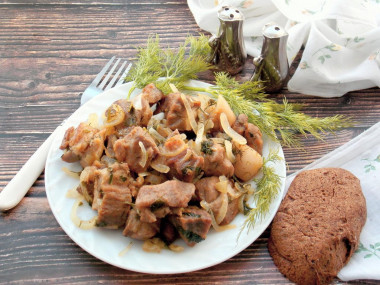
Our pan-fried pork bites are ready. Divide among plates and serve.
-
Step 12:
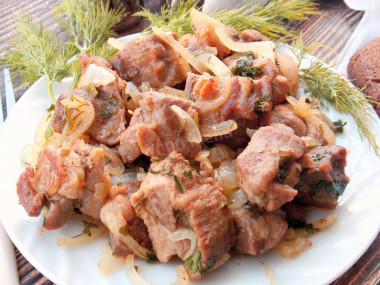
Enjoy!
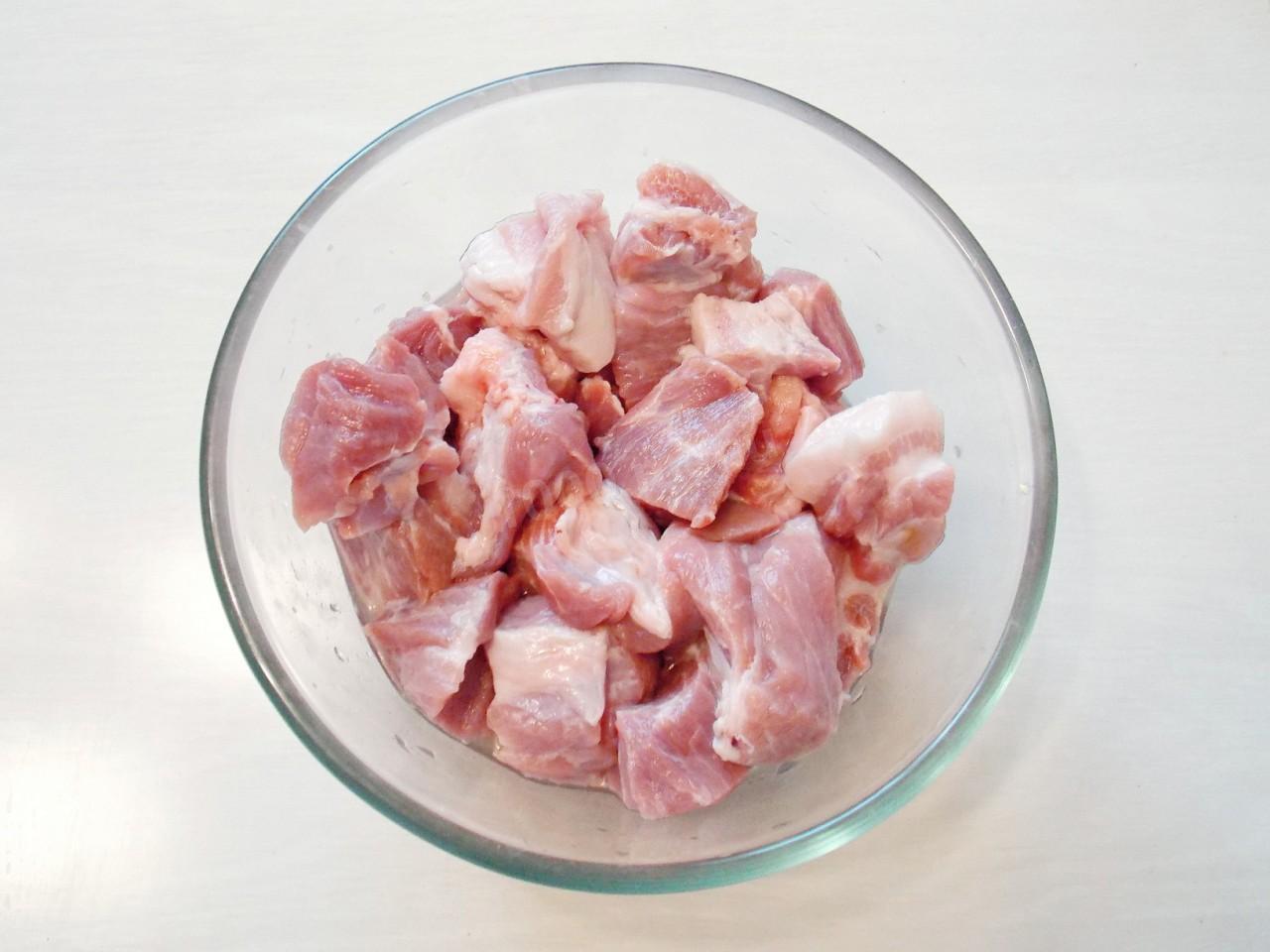
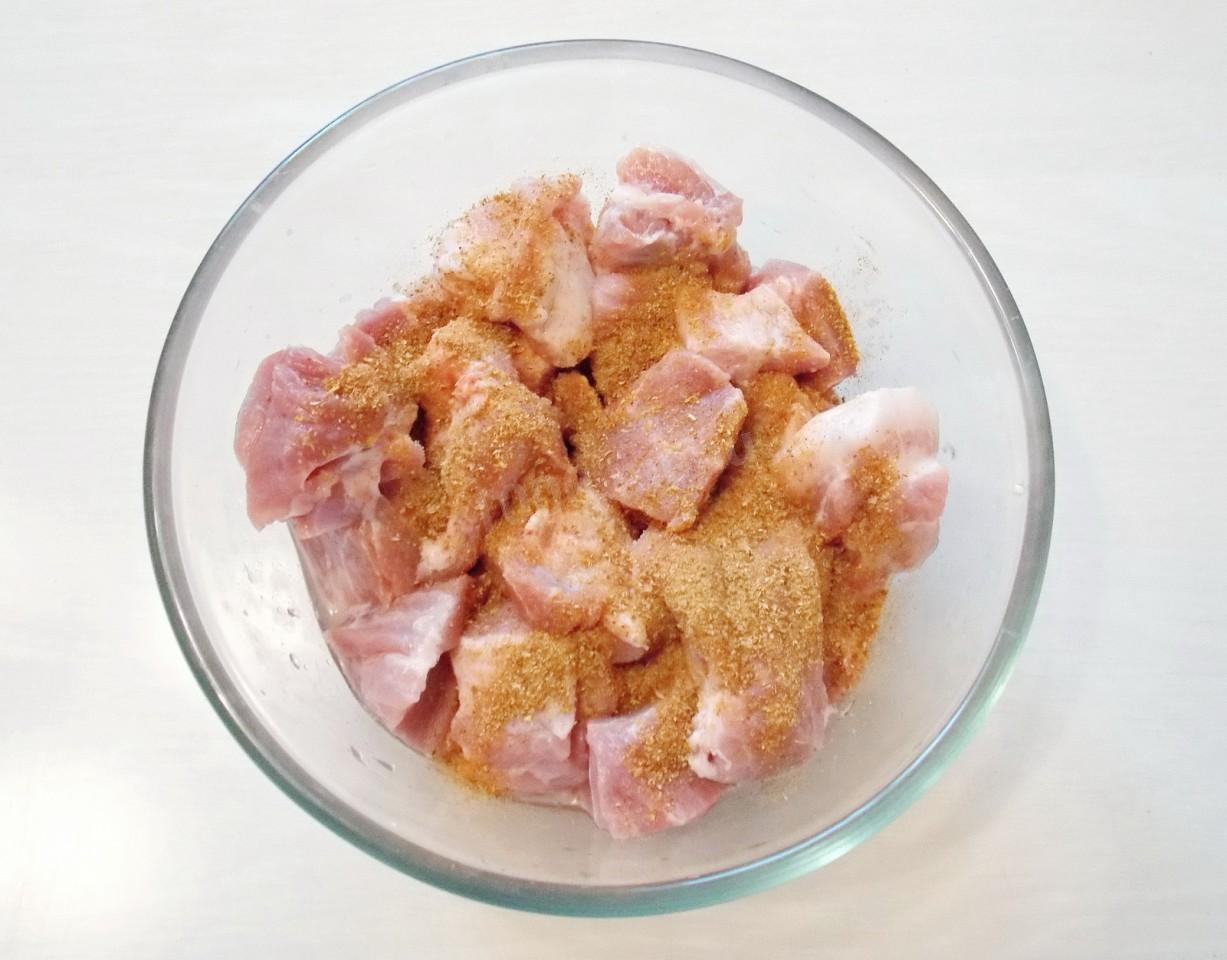
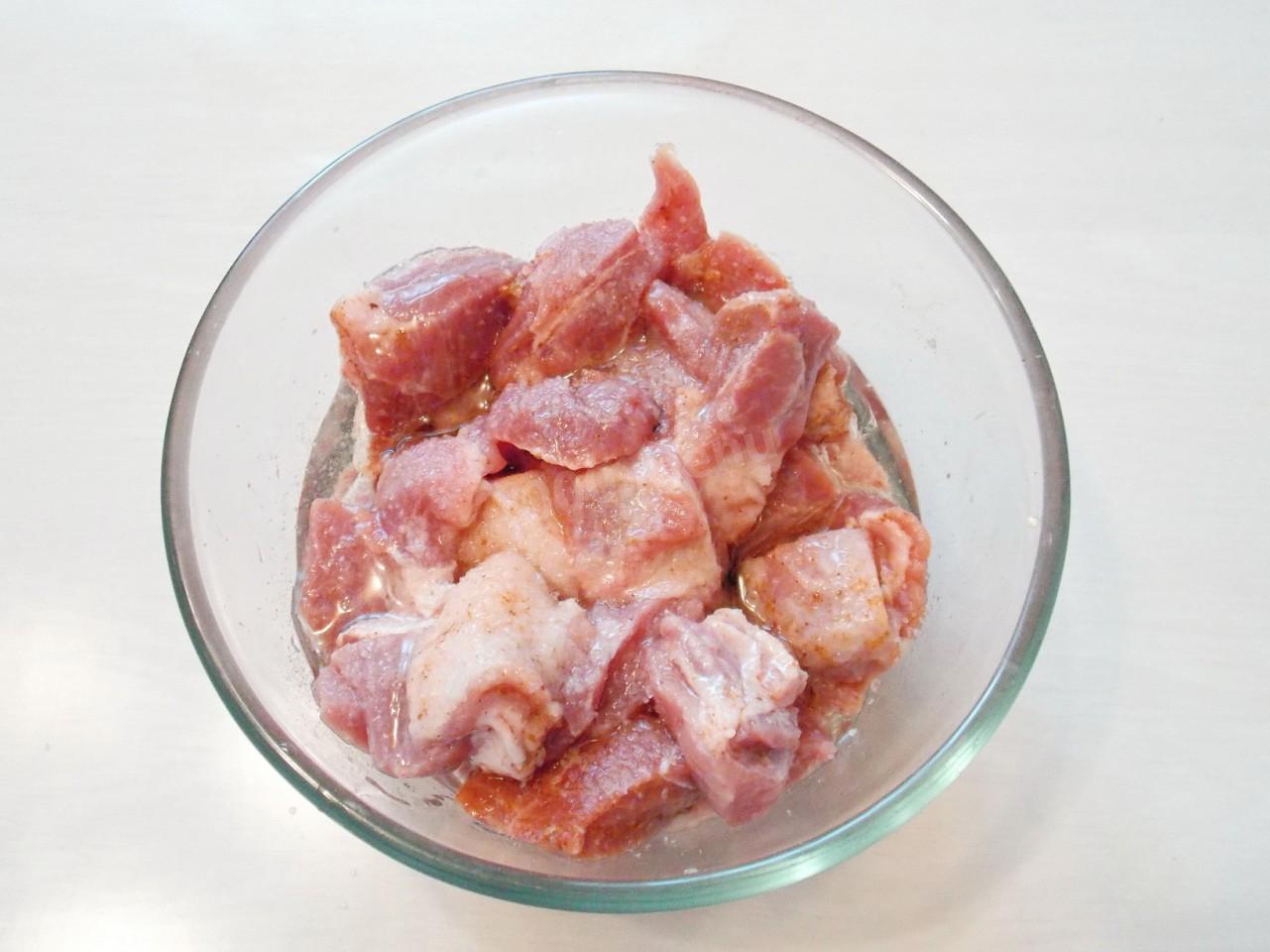
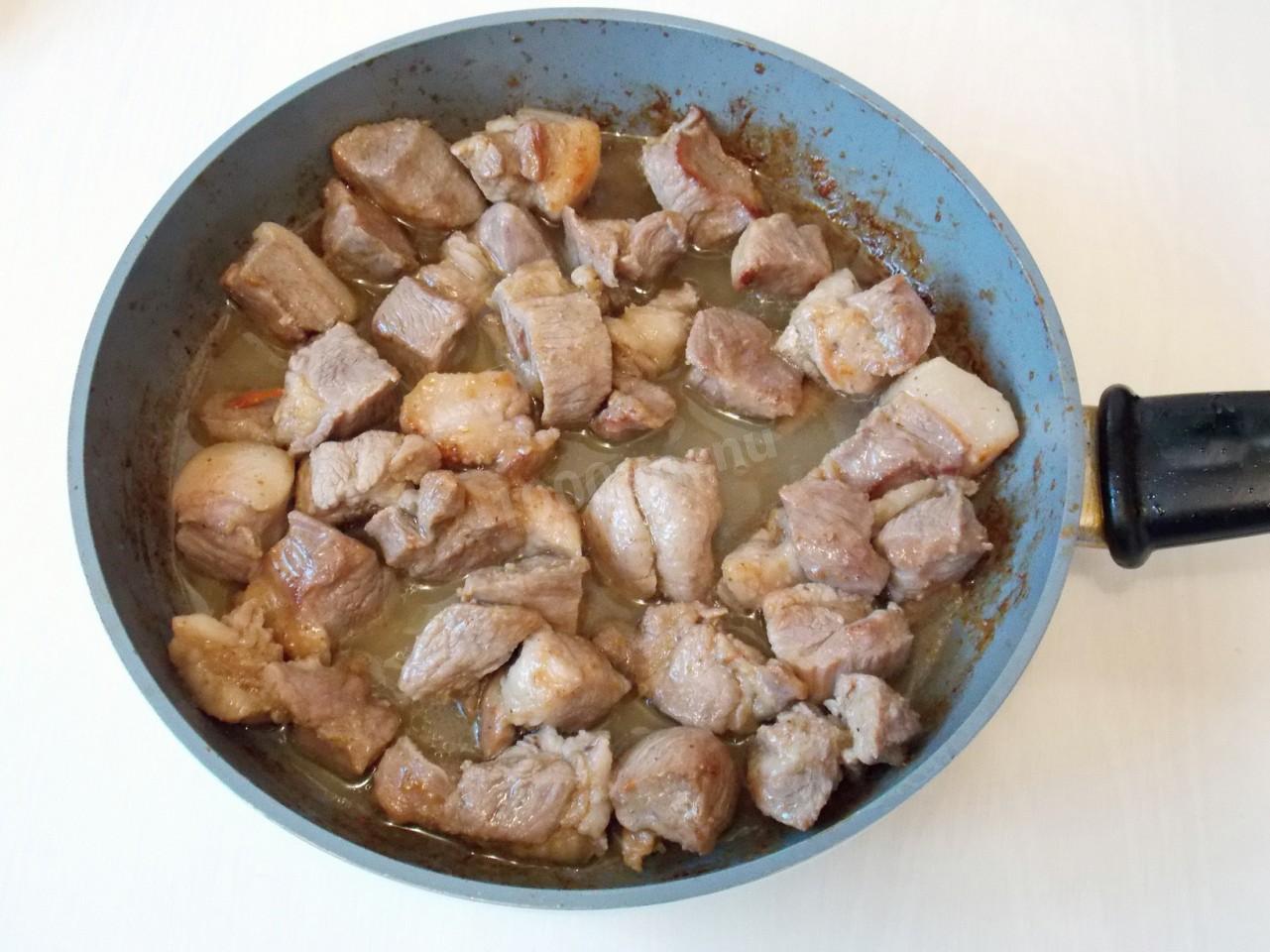
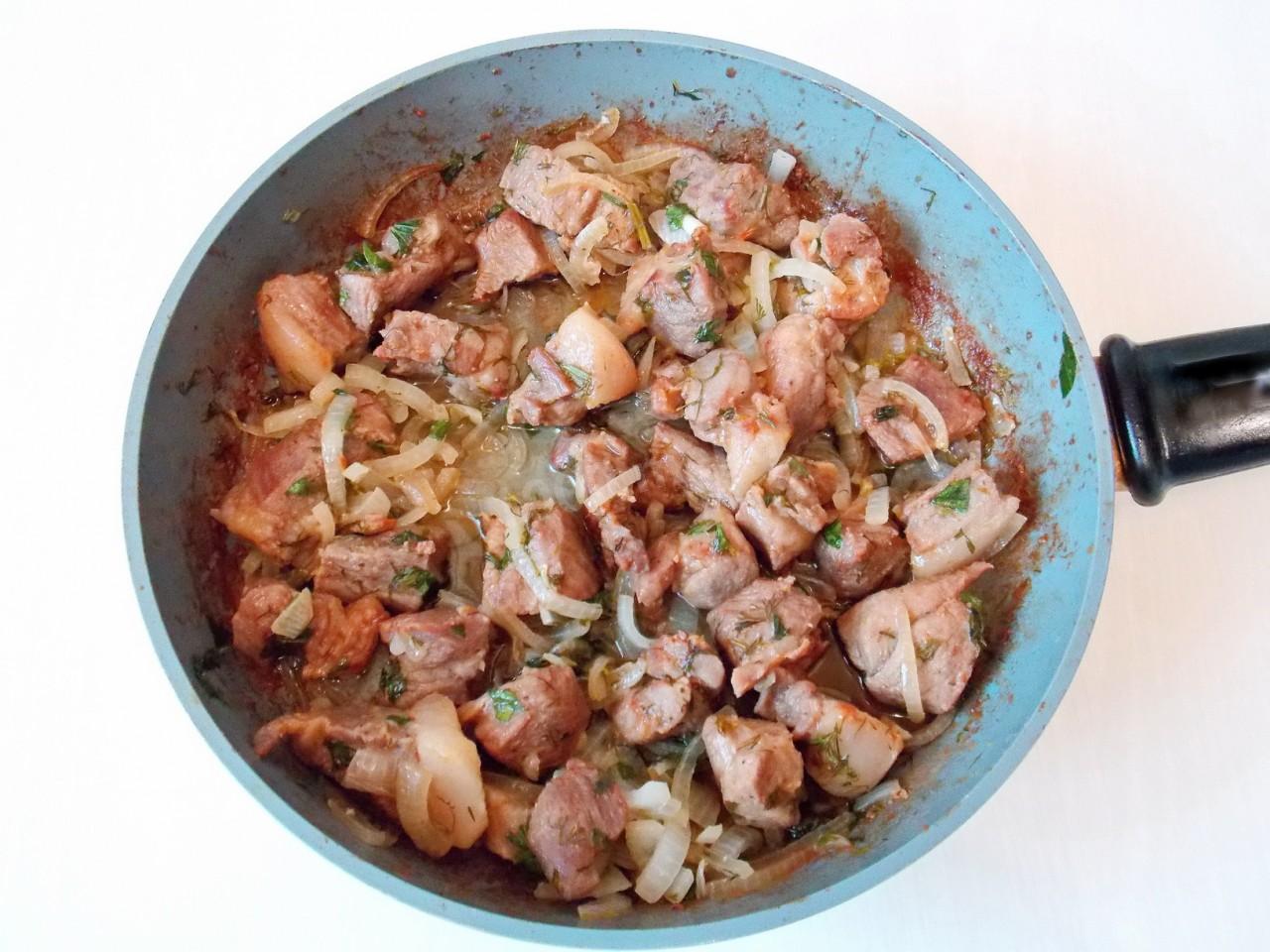
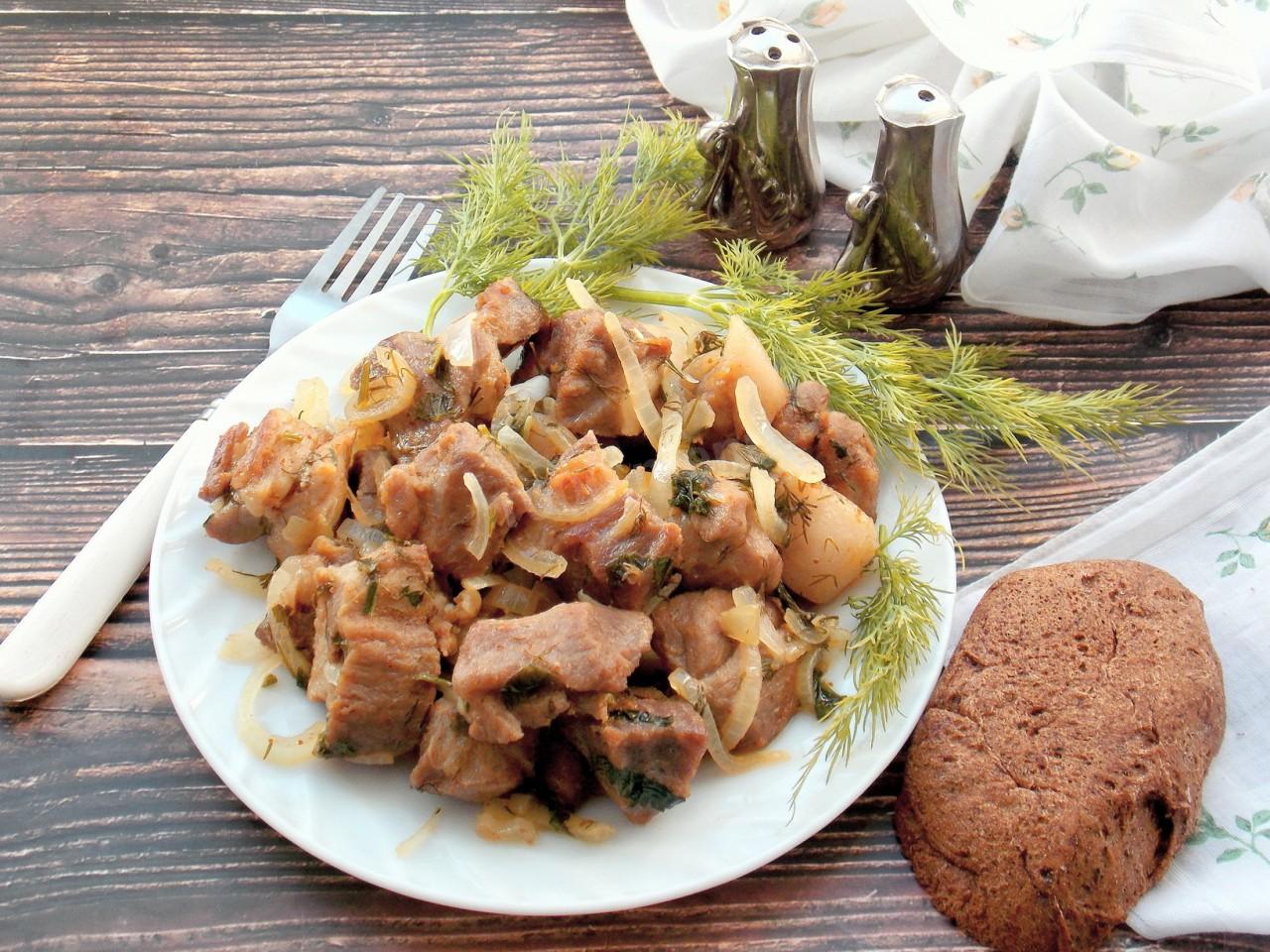
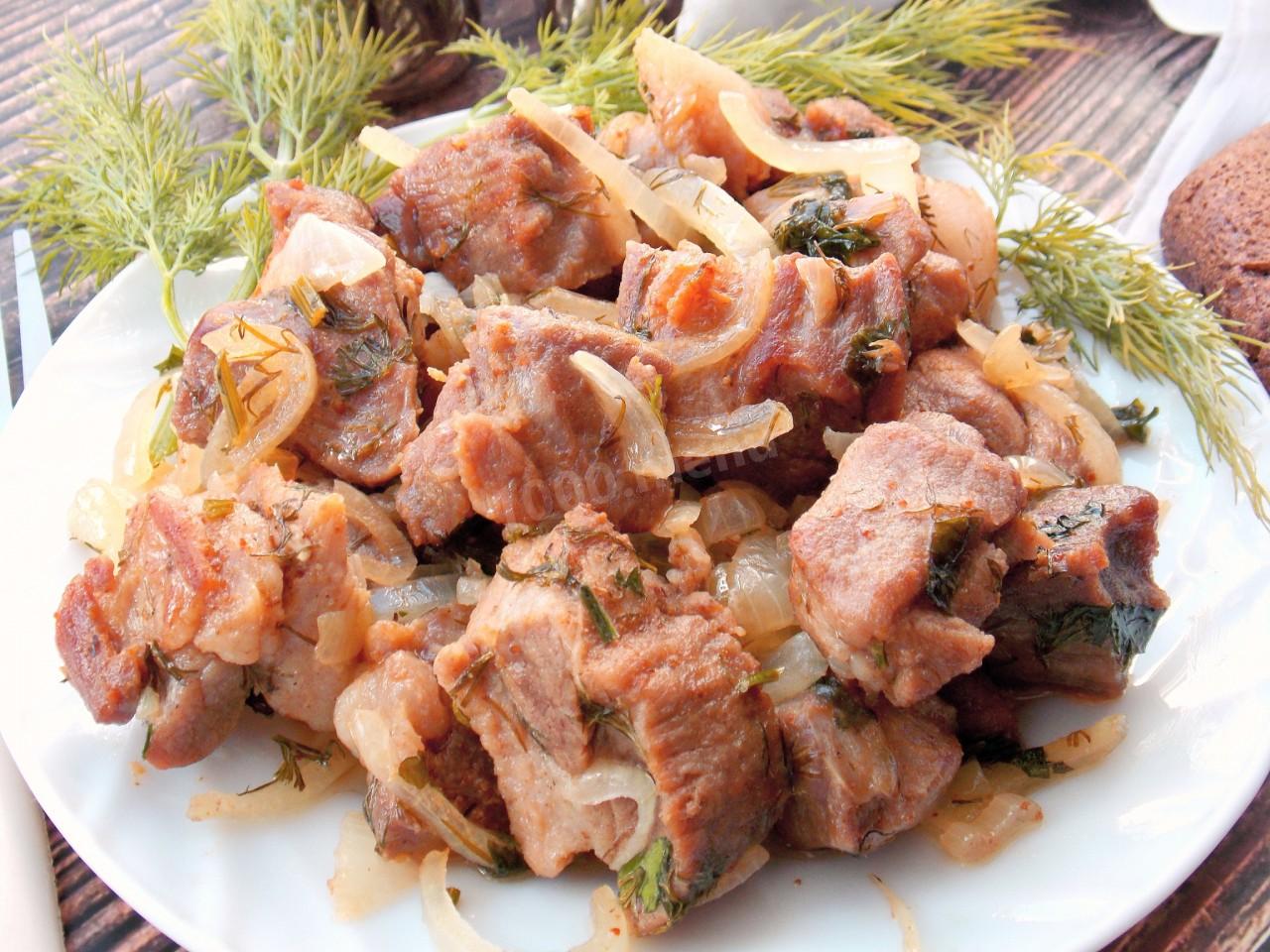
- This pork is a lifesaver when you need to feed your family something hearty and delicious. Pork tenderloin, neck, loin, or rib meat works best. In a pinch you can use shoulder, though it will come out a bit tougher. Feel free to add more onion and herbs — it all comes down to your taste.
- Important! The wrong skillet can ruin even the best recipe. For all the details on choosing the perfect pan for different dishes, read here.
- Any oil is only good up to a certain point — its smoke point, where it starts to burn and form toxic compounds, including carcinogens. To learn how to gauge frying temperature, which oils are best for frying, and which are better left out entirely, read here.
- You can use any other meat in this dish besides pork. Keep in mind that the cooking time, as well as the flavor and calorie count, will change. Beef, for example, takes longer to cook than pork, while chicken breast or turkey takes less.
Caloric content of the products possible in the composition of the dish
- Pork fat - 333 kcal/100g
- Pork meat - 357 kcal/100g
- Pork - low-fat roast - 184 kcal/100g
- Pork chop on a bone - 537 kcal/100g
- Pork - schnitzel - 352 kcal/100g
- Pork Shoulder - 593 kcal/100g
- Boar's leg - 113 kcal/100g
- Pork - 259 kcal/100g
- Parsley greens - 45 kcal/100g
- Dill greens - 38 kcal/100g
- Vegetable oil - 873 kcal/100g
- Salt - 0 kcal/100g
- Water - 0 kcal/100g
- Onion - 41 kcal/100g
- Spices dry - 240 kcal/100g
- Apple cider vinegar - 14 kcal/100g
Similar recipes

- Homemade dinner
- Second course
- Meat and meat products
- Vegetables
- Spices seasonings spices
- Fats and oils
- Other
- Parsley
- Salt
- Dry spices
- Dill
- Vinegar
- Vegetable oil
- Water
- Frying
- Stewing
- In a frying pan
- Stewed vegetables
- Meat second course
- Pork
- Meat for dinner
- From onion
- No eggs
- Recipes for lean dishes without butter