Skillet Teriyaki Pork
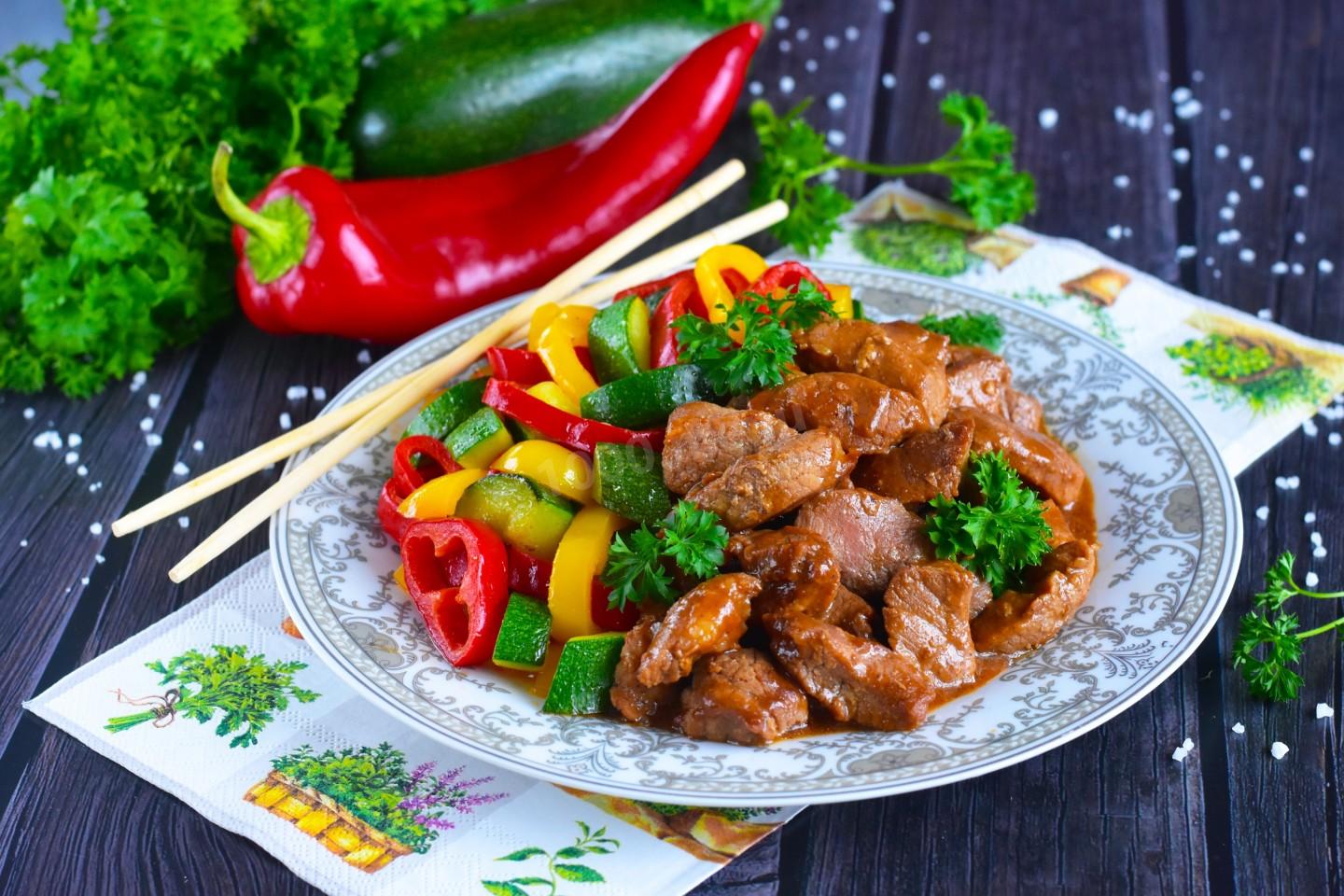
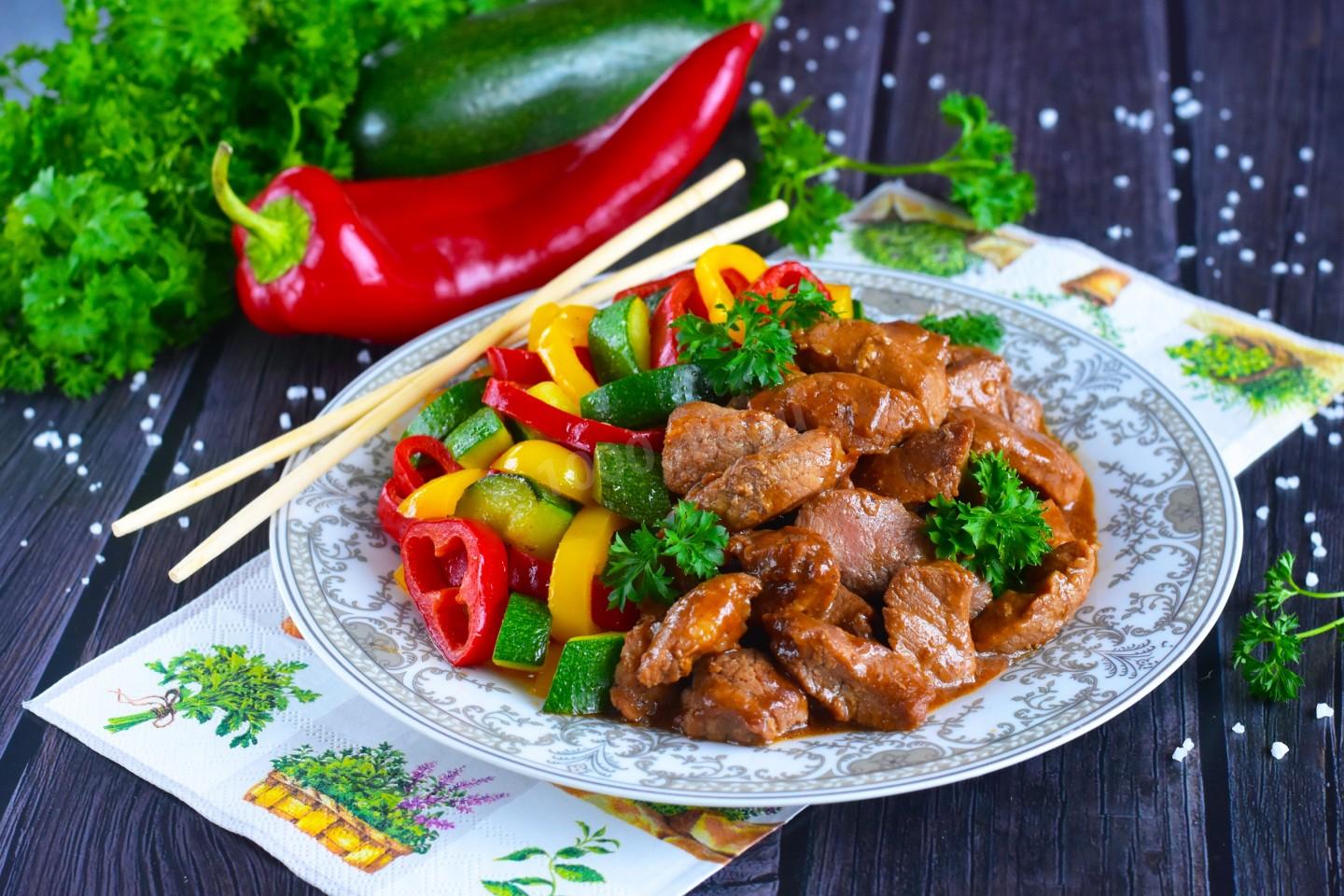
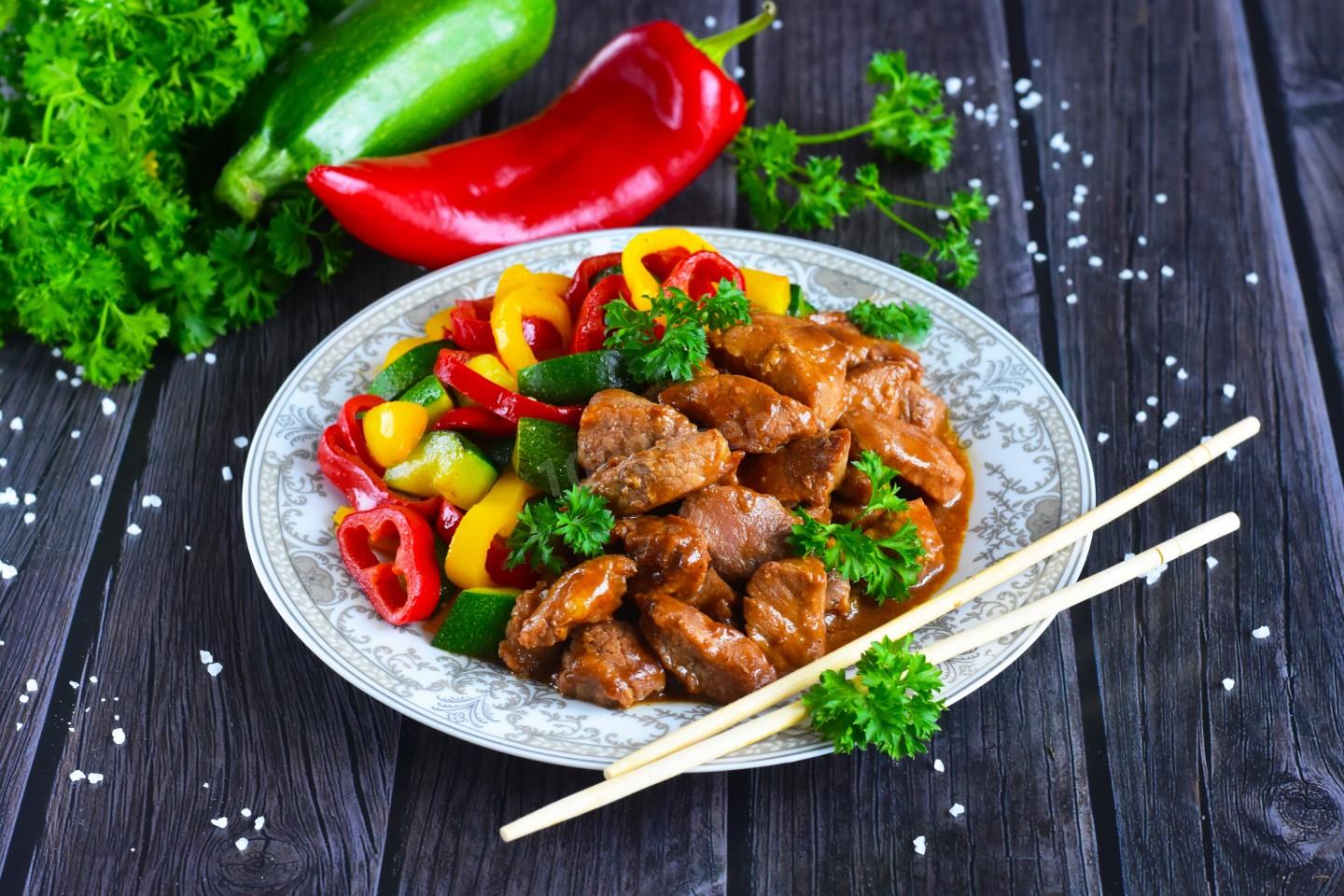
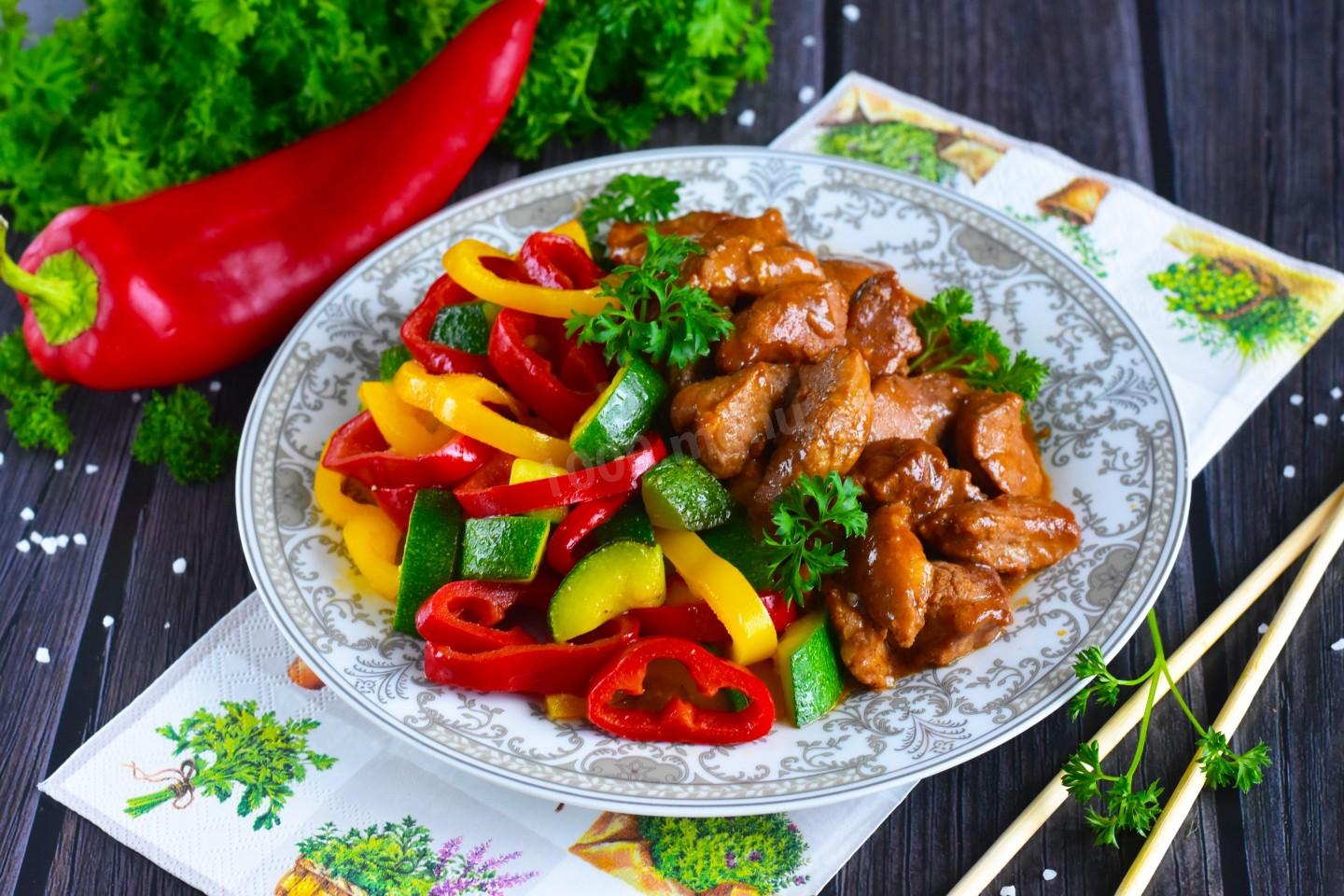
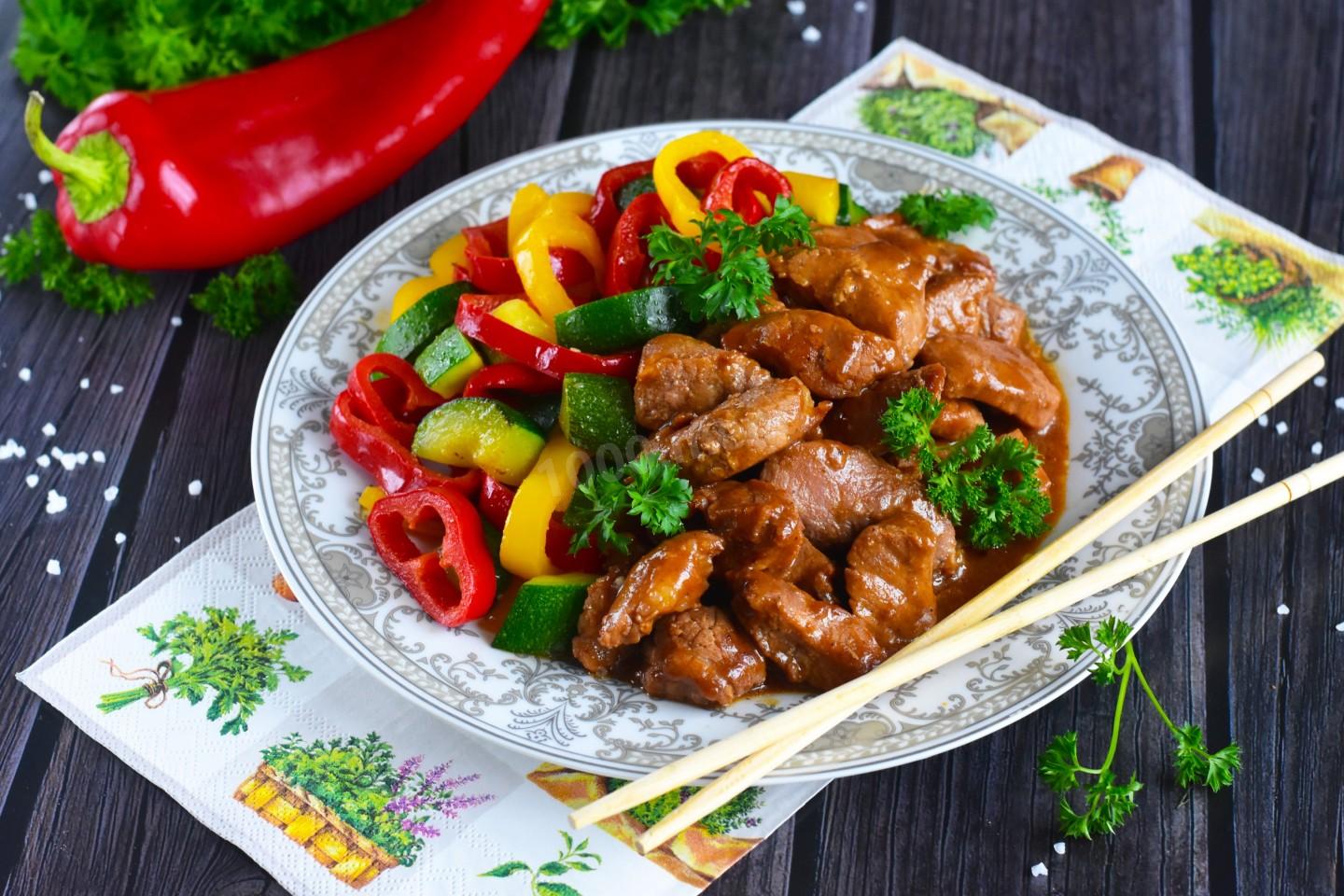
Juicy meat with a colorful vegetable side — perfect for a special dinner! Teriyaki pork is an incredibly tasty, good-looking, and appetizing Asian-style dish. The sweet-and-savory sauce gives the meat a juicy, unforgettable flavor and aroma. Serve it with a side of quick-fried vegetables!

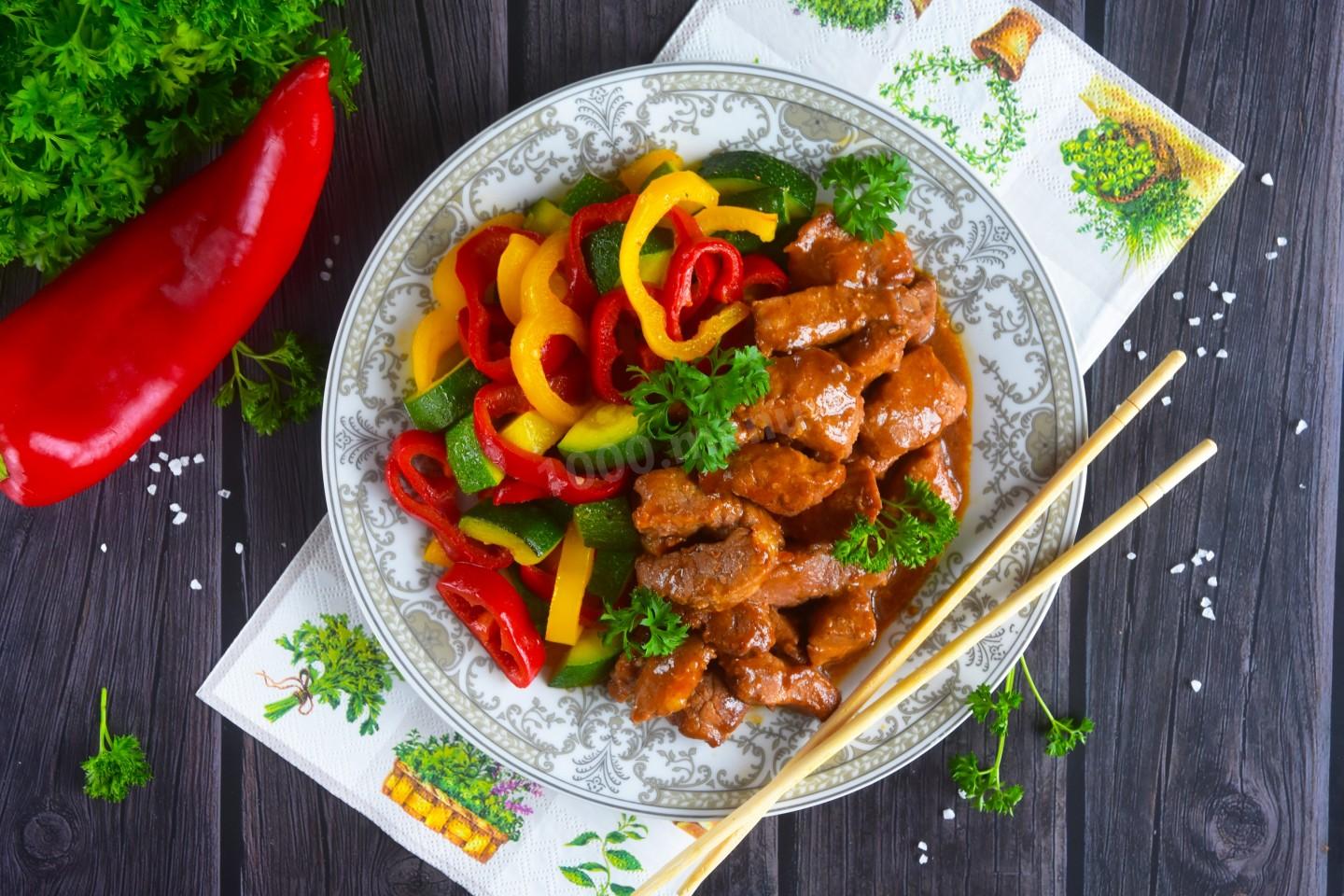
Cooking method
-
Step 1:
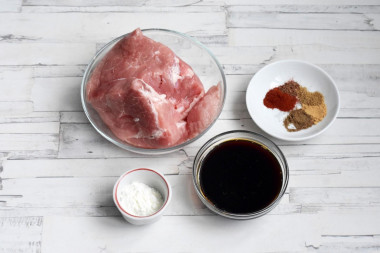
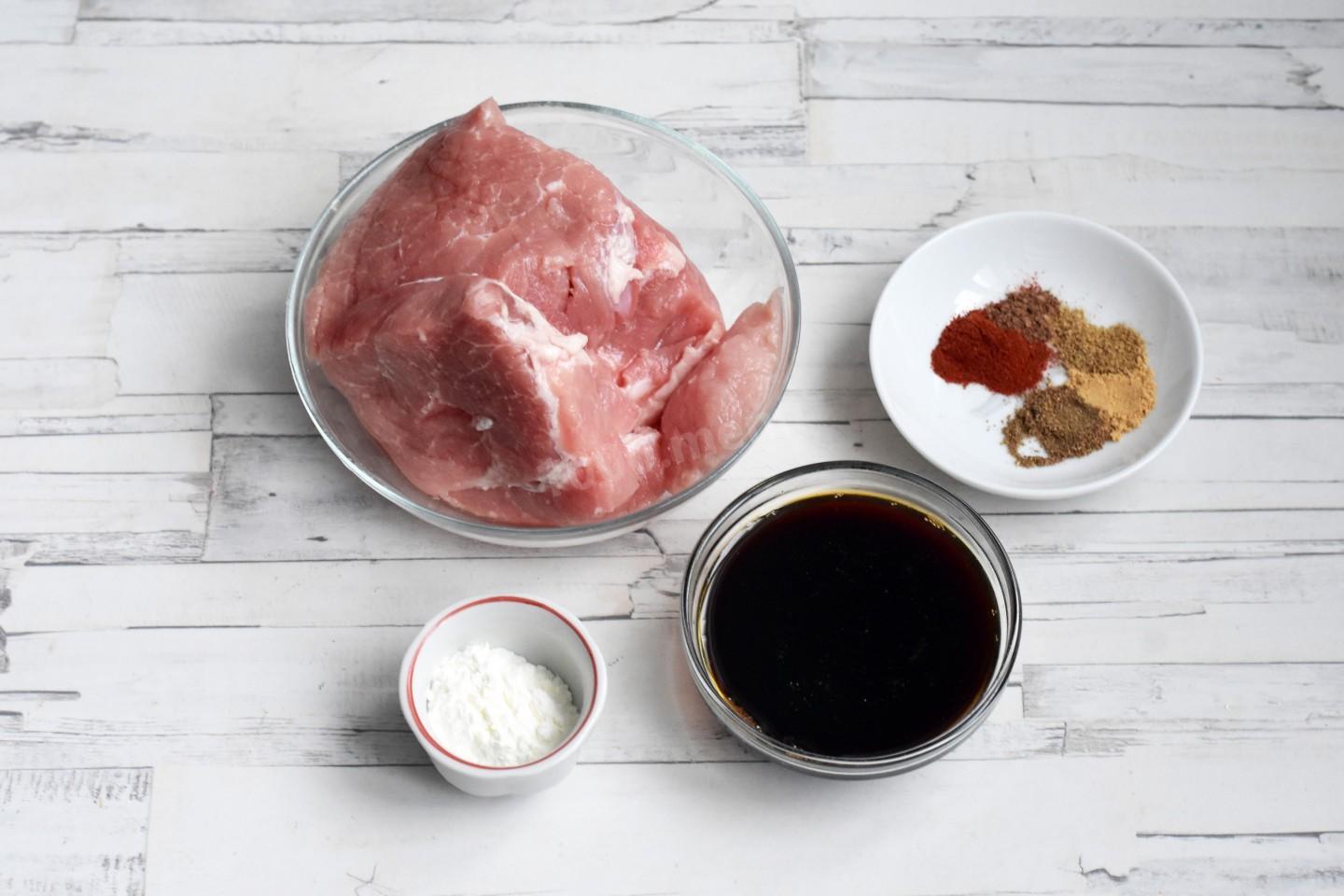
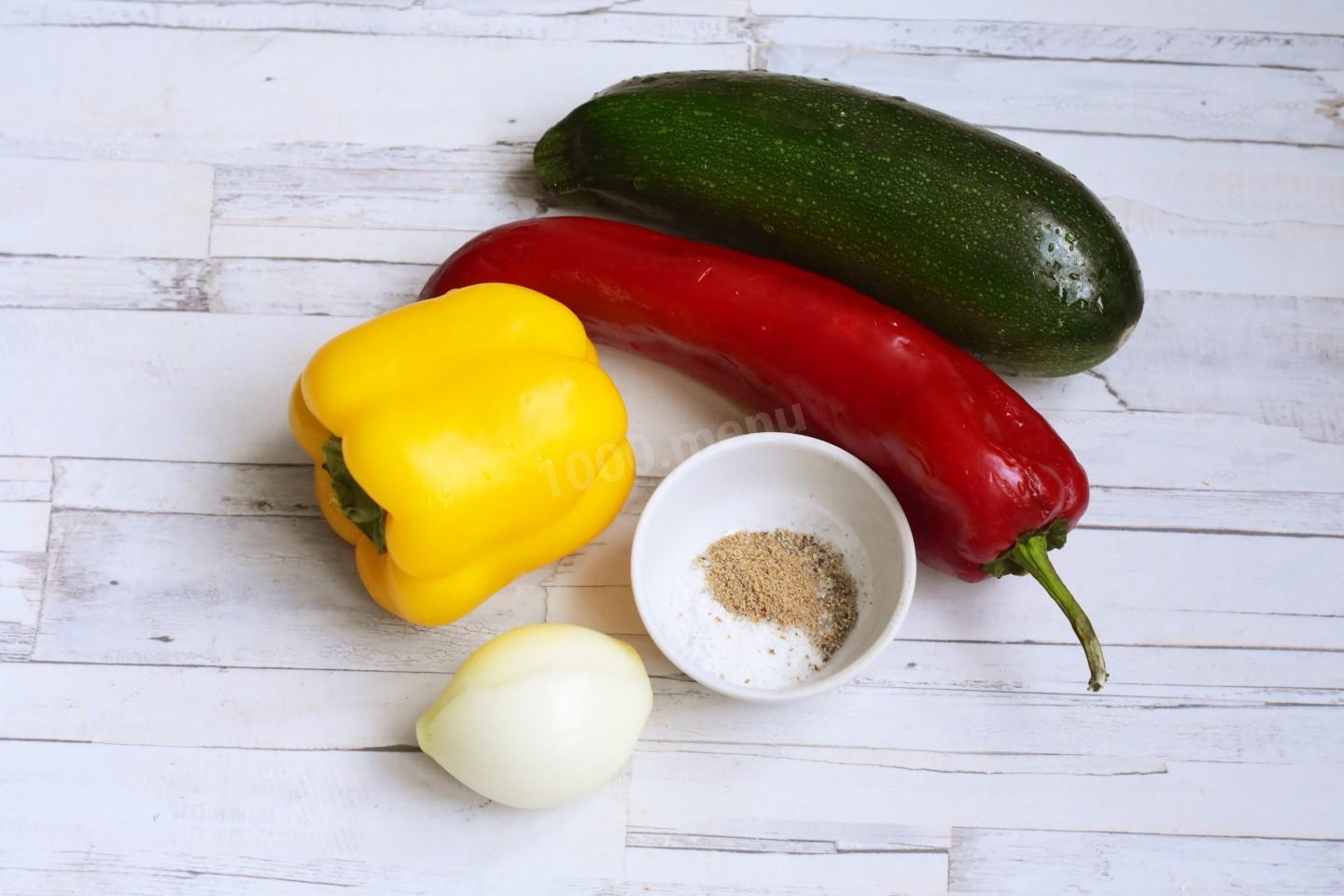
How do you make delicious skillet teriyaki pork? It's easy. First, gather all the ingredients on the list. What meat can you use besides pork? Anything — beef, lamb, chicken, or turkey all work. Just keep in mind that the calorie count and cooking time will change.
-
Step 2:
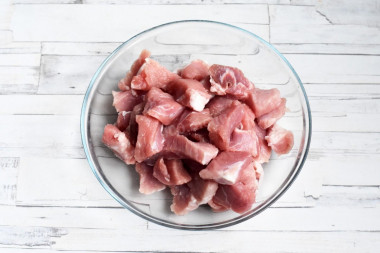
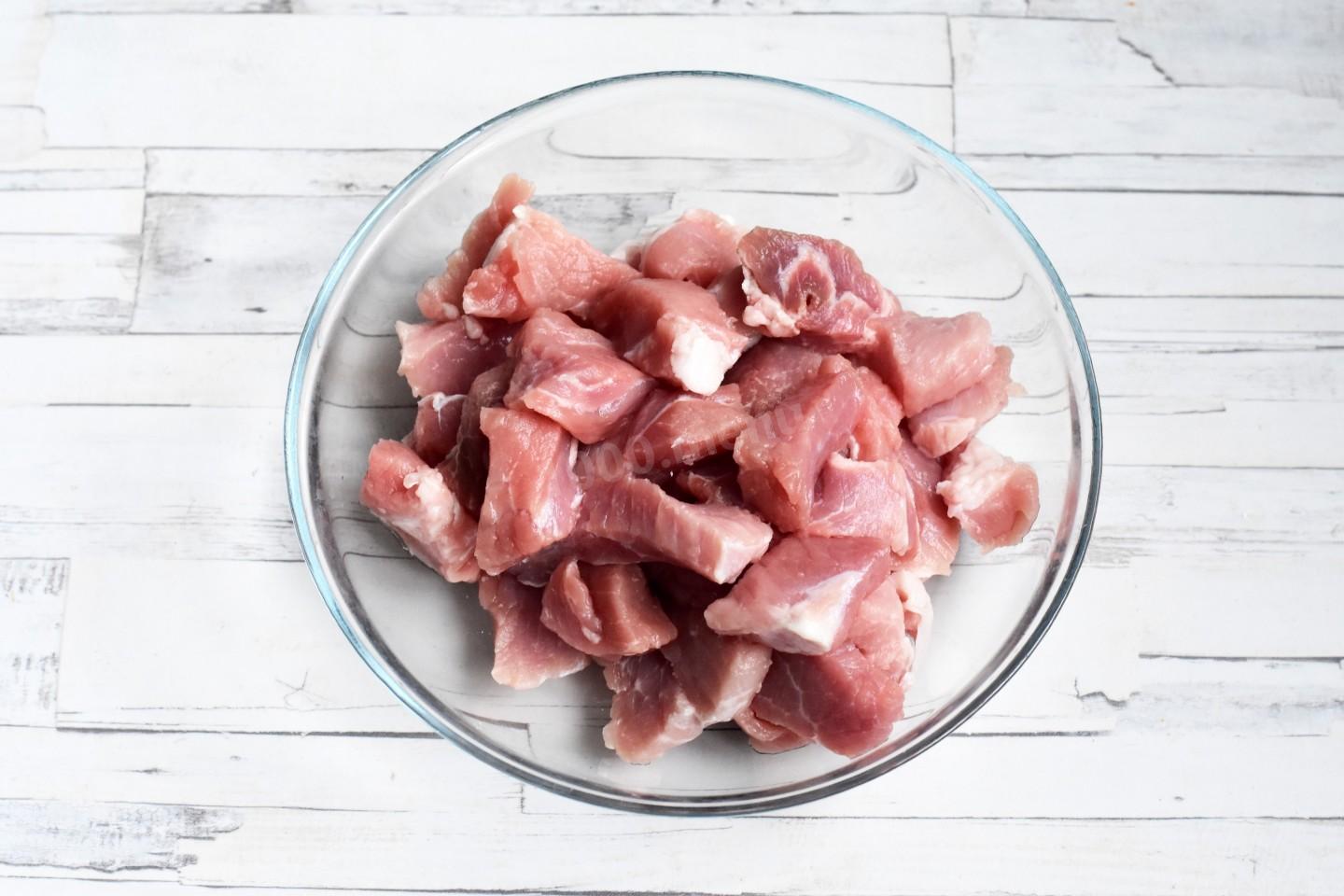
Rinse the pork, pat it dry, and cut it into medium pieces. Use boneless pork — just the flesh. Pick whatever cut you like: leg, shoulder, loin, neck, tenderloin, and so on. I used shoulder and trimmed off the excess fat first.
-
Step 3:
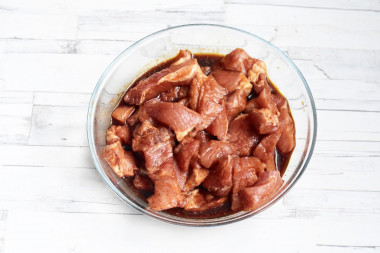
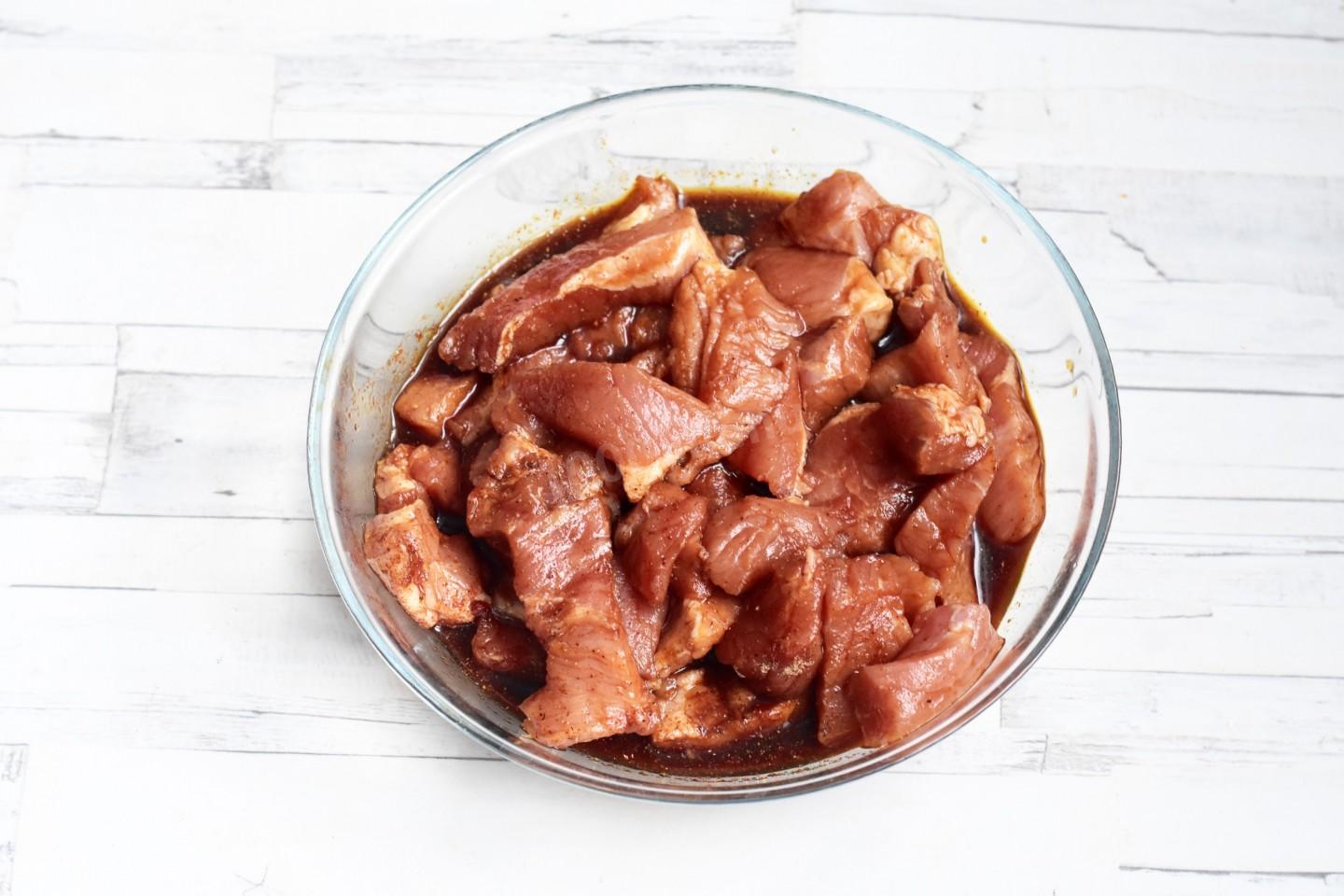
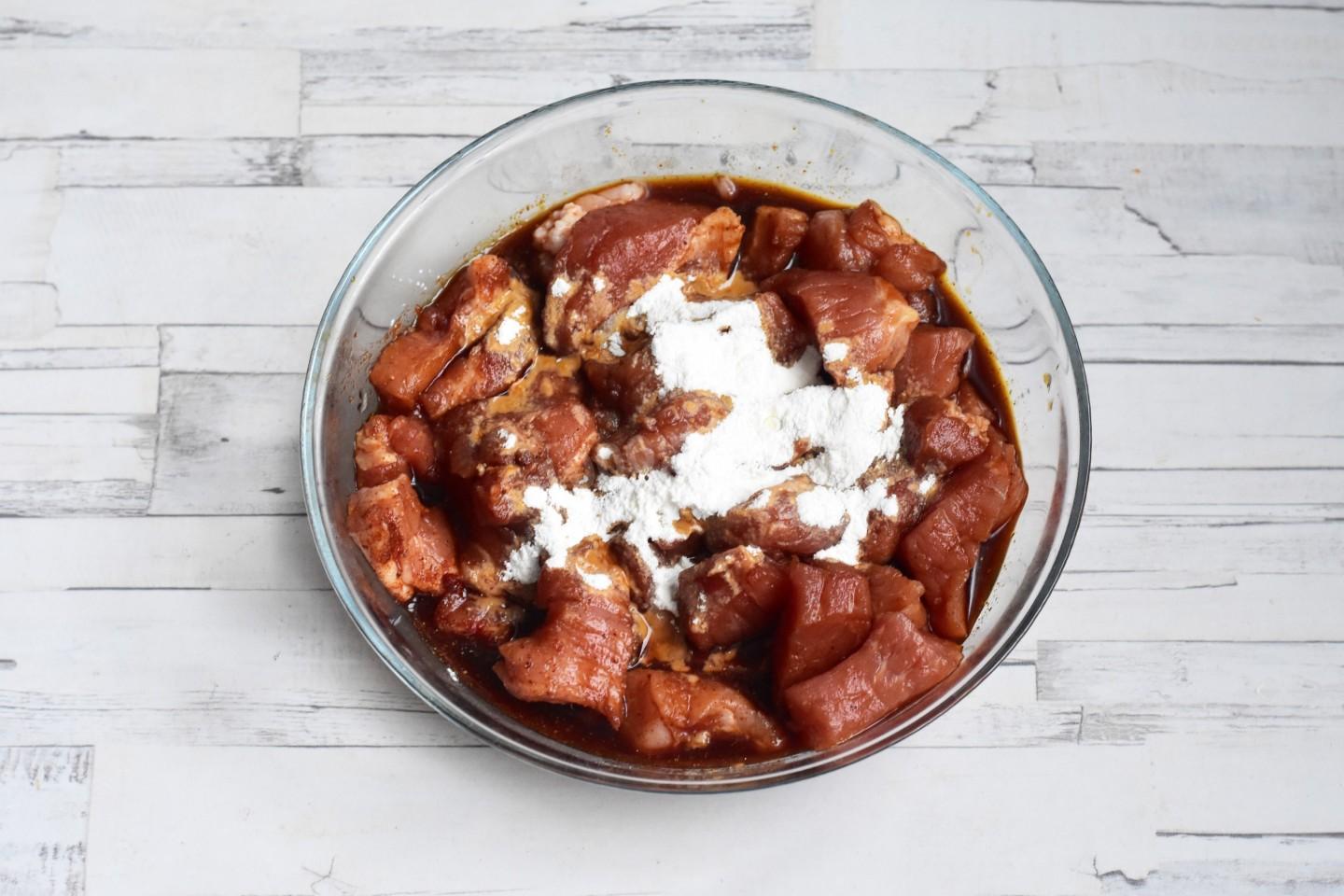
Put the meat in a bowl and pour the teriyaki sauce over it.
-
Step 4:
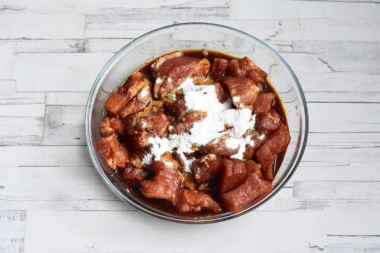
Add the cornstarch and spices and mix well. Depending on the brand, teriyaki sauce can be thin and watery or a bit thick. If yours is already thick, you can skip the cornstarch. Let the meat marinate for 30 minutes.
-
Step 5:
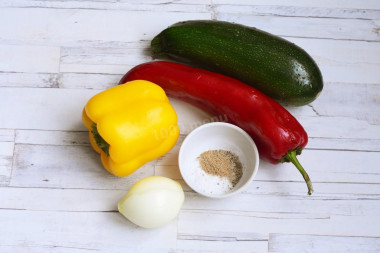
Now prep the vegetables for the side. You can skip the side entirely or swap in a different one you like. Any summer squash works in place of the zucchini.
-
Step 6:
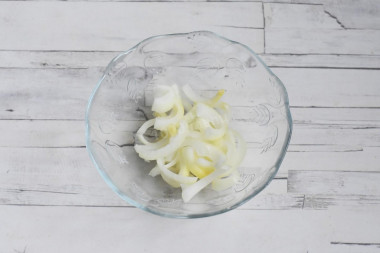
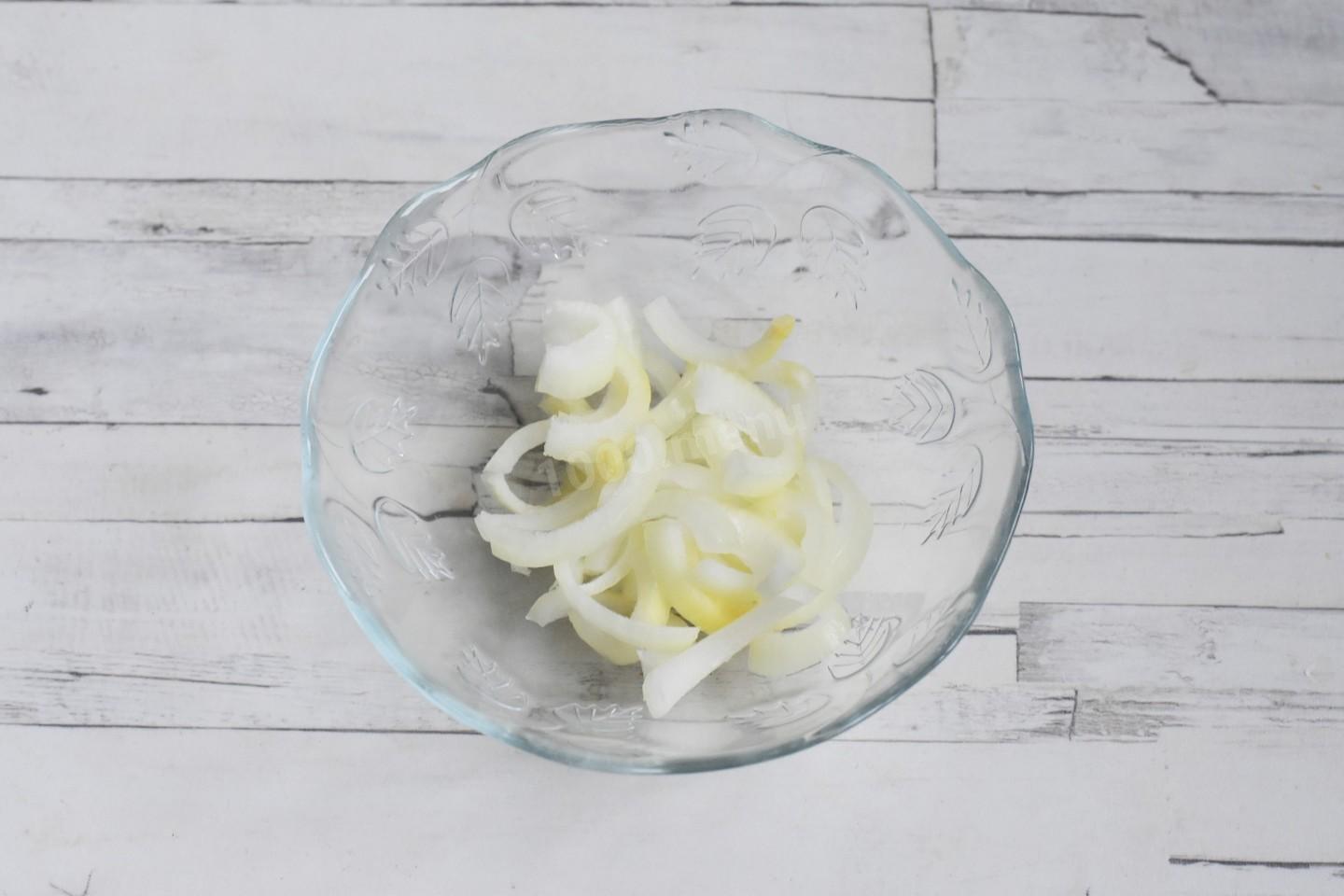
Peel the onion and cut it into half-moons.
-
Step 7:
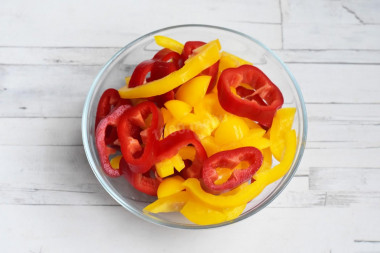
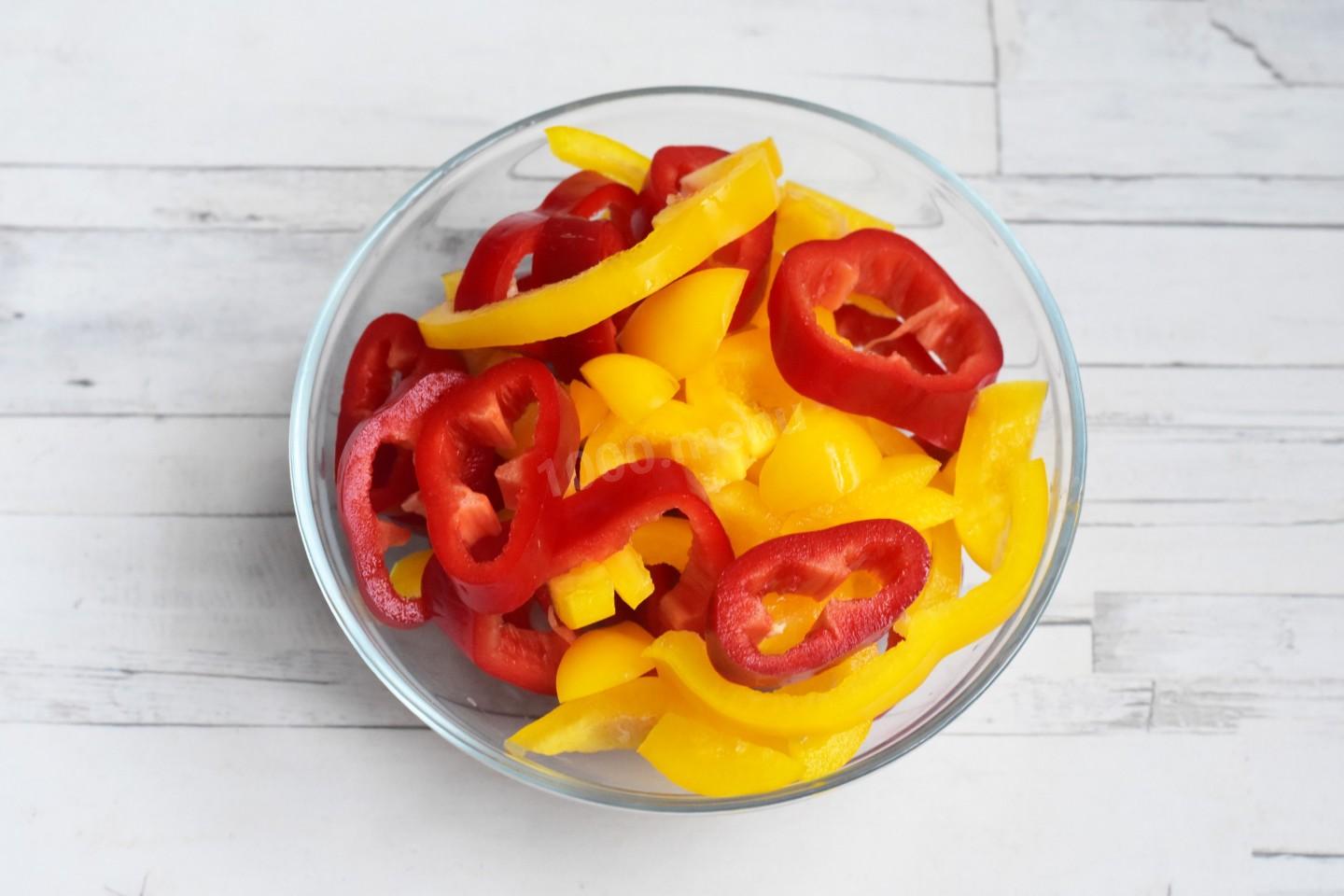
Core and seed the bell peppers and cut them into rounds or strips. Using peppers of different colors makes the side dish look as good as it tastes.
-
Step 8:
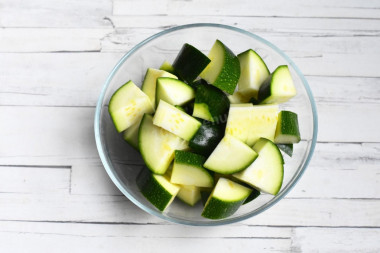
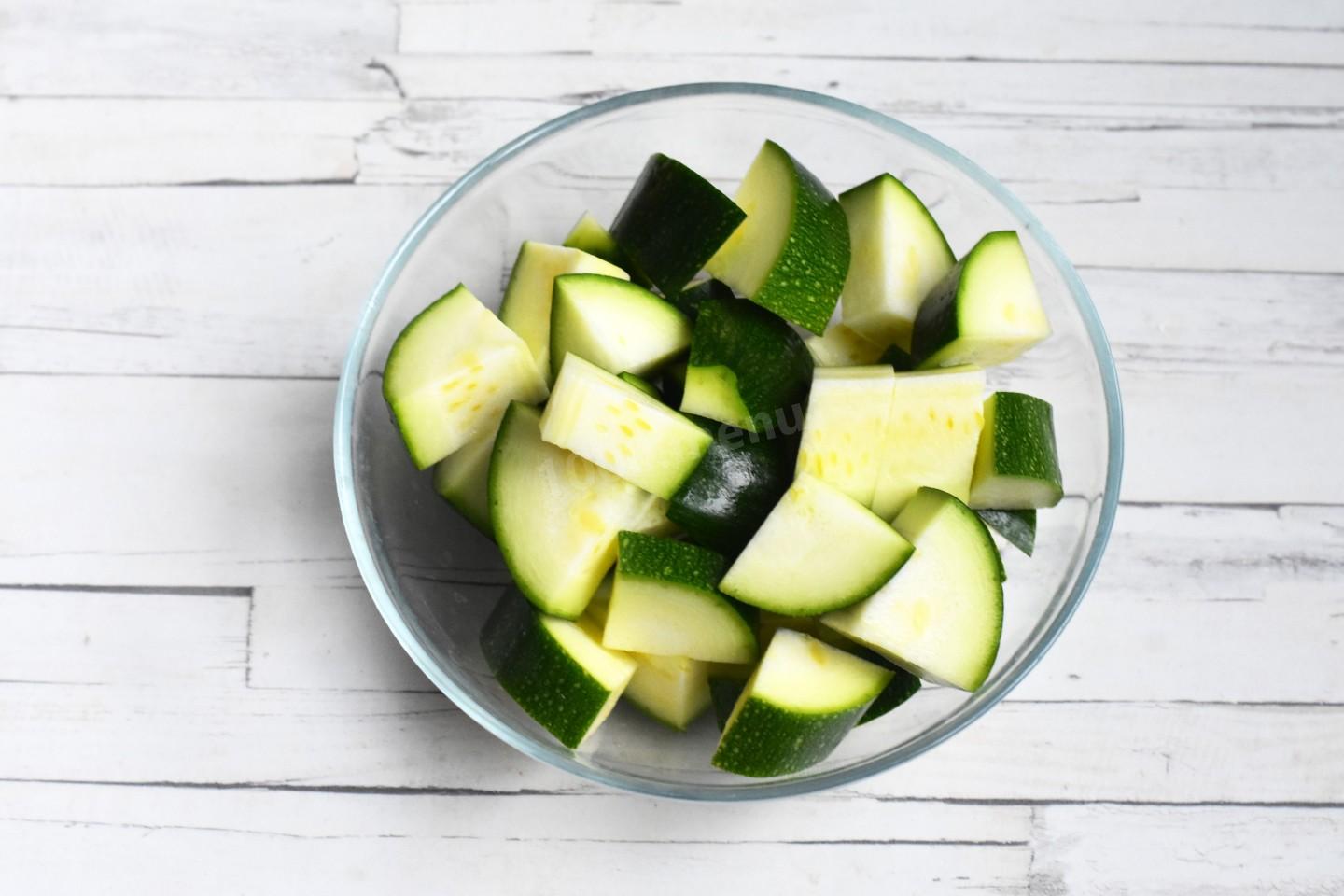
Wash the zucchini and cut it into medium pieces. Mine was thin, so I cut it into quarters.
-
Step 9:
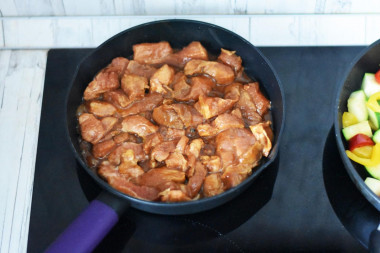
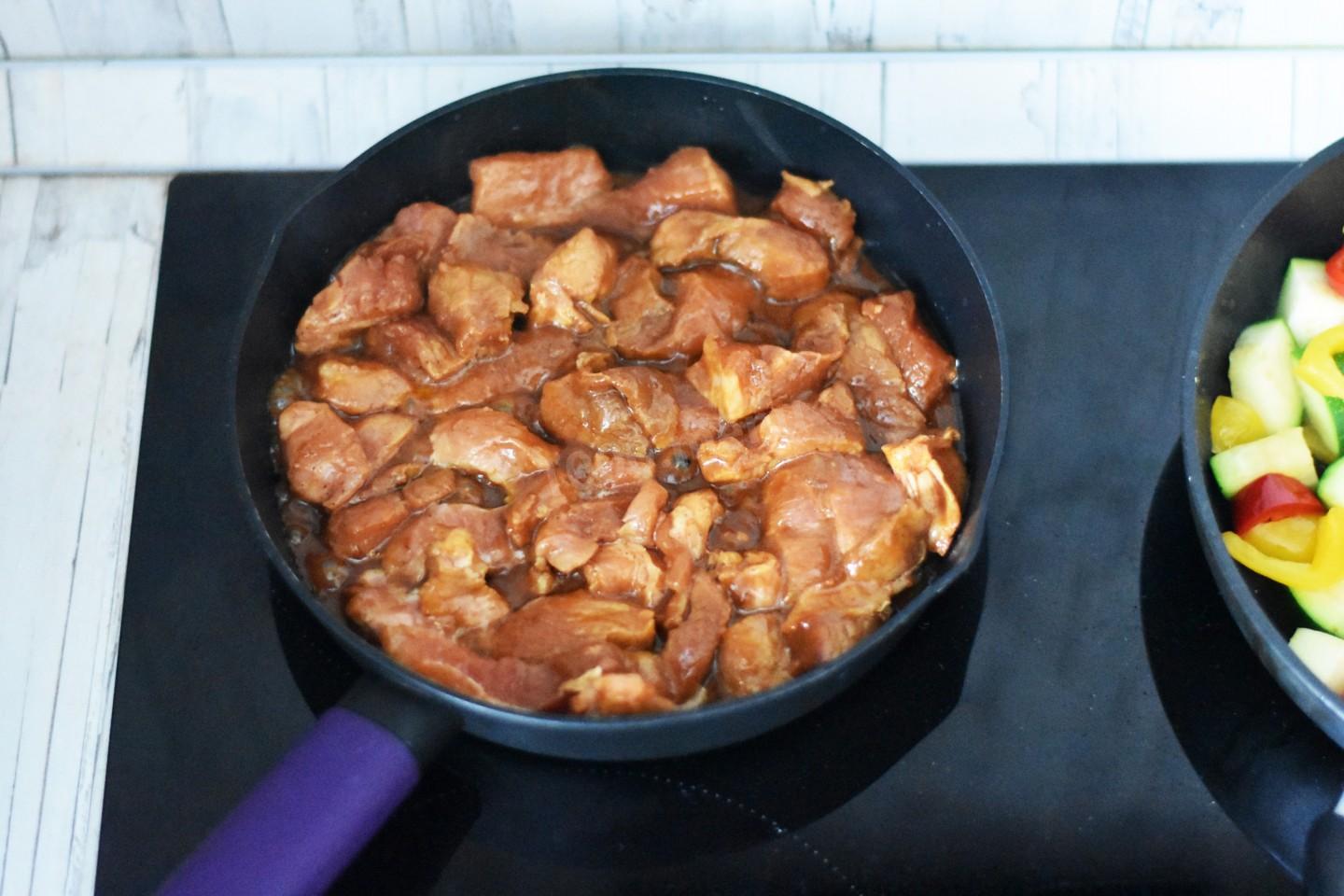
Add the pork along with its sauce to a well-heated skillet and stir-fry over high heat until cooked through, about 10–15 minutes. The exact time depends on your pan and how big you cut the meat.
-
Step 10:
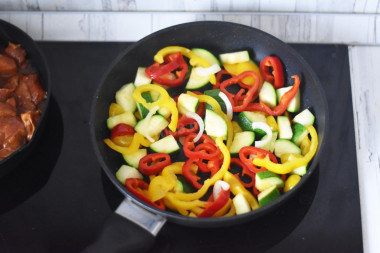
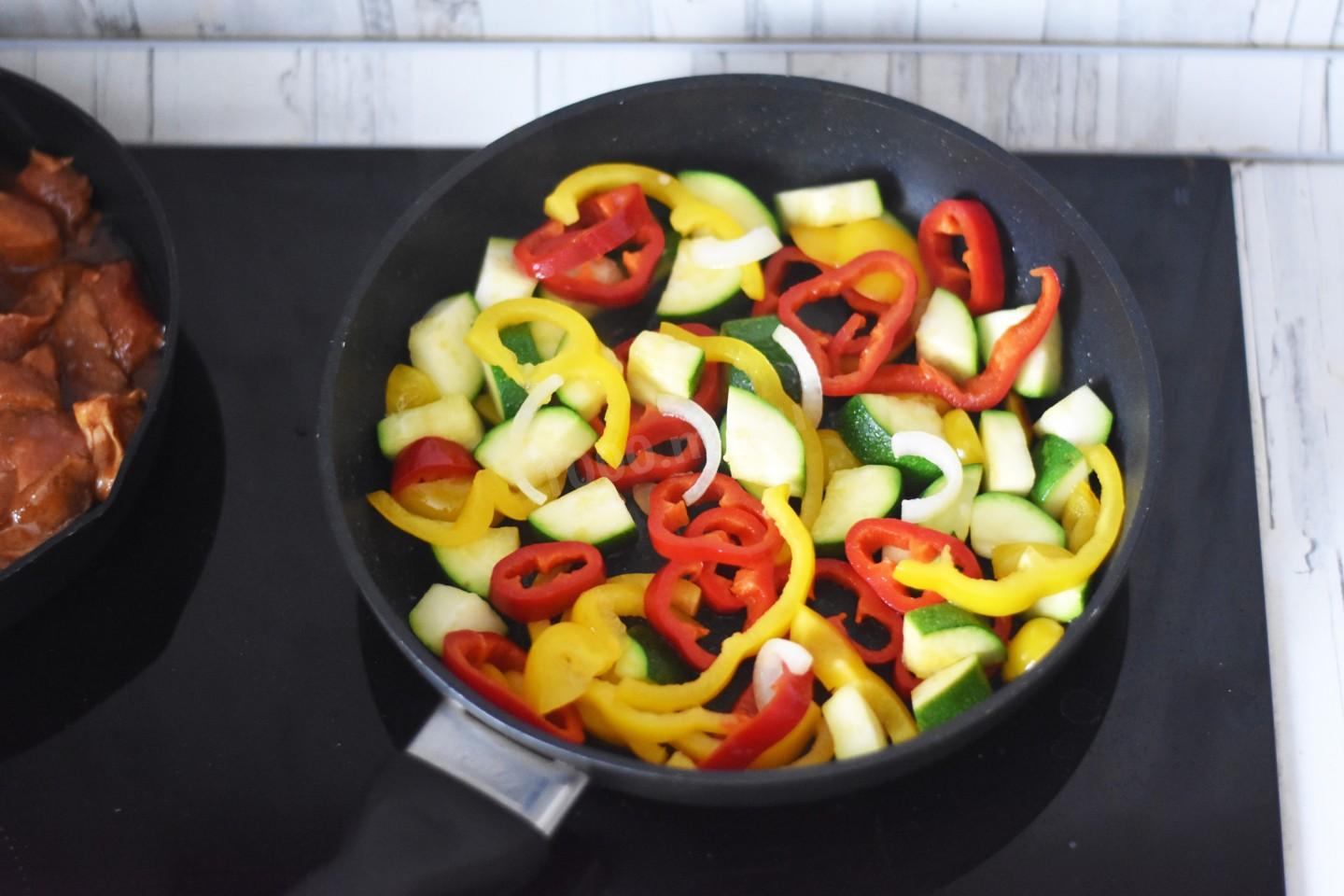
In a second skillet, heat the oil over medium-high heat (I used 7 out of 9 on my stove), then add the zucchini, bell pepper, and onion. Stir-fry until the vegetables are tender, about 5–7 minutes.
-
Step 11:
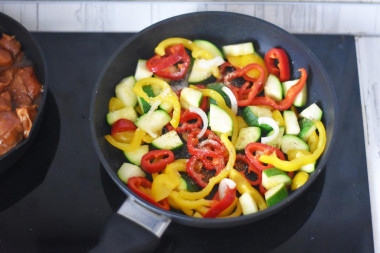
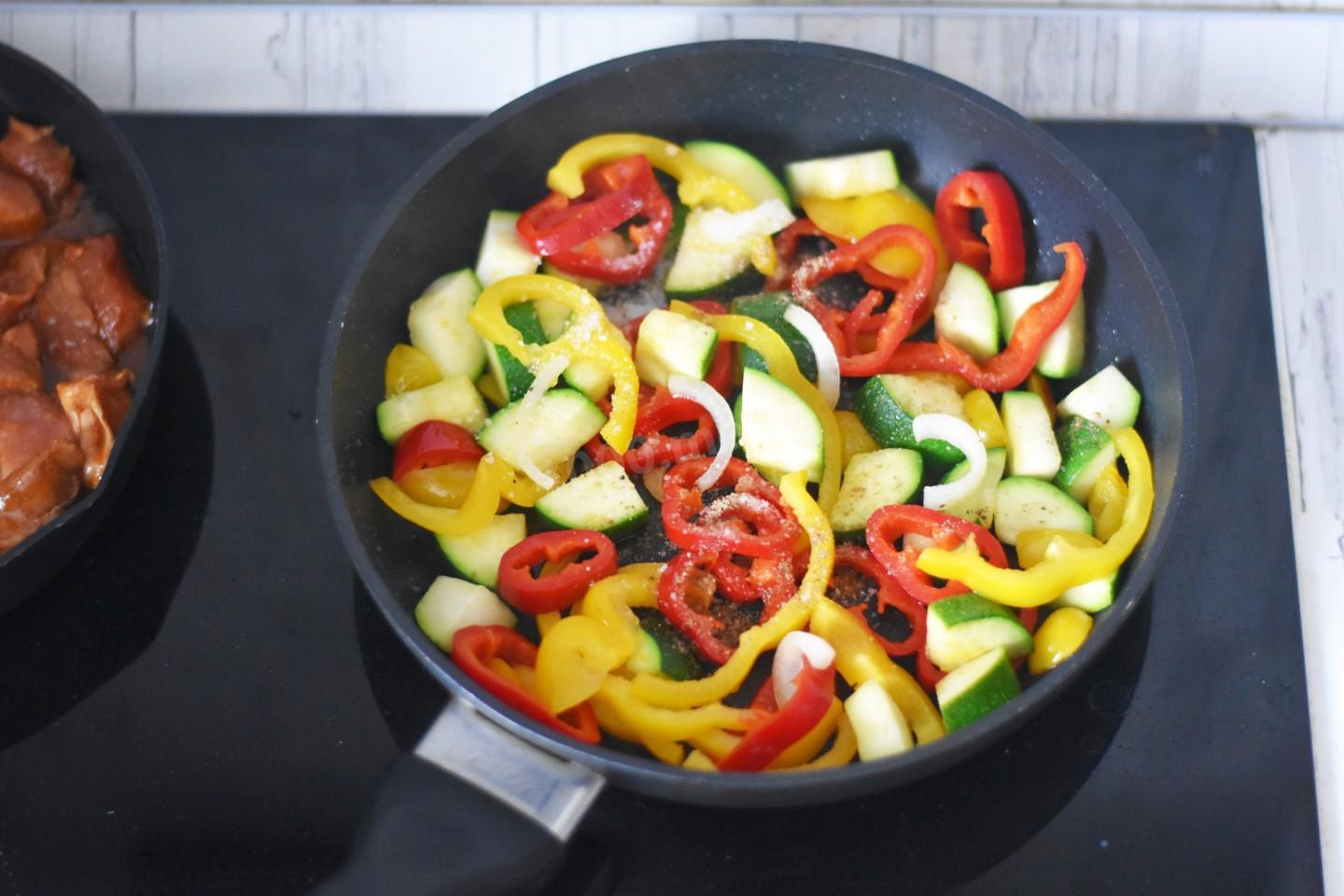
At the very end, season the vegetables with salt and pepper and toss. The side is ready. It's best to cook the meat and vegetables at the same time in two skillets, so everything finishes together.
-
Step 12:
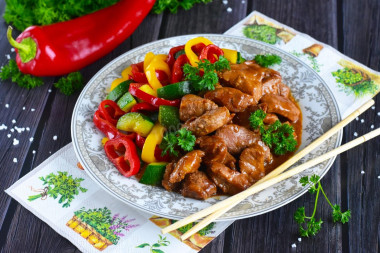
Plate the fried vegetables and pork. If you like, sprinkle the dish with sesame seeds and chopped parsley. Enjoy!
- Everyone's taste for salt, sweetness, bitterness, heat, acidity, and spice is different, so always add seasonings to your own taste. And if you're trying a new spice for the first time, remember that some are easy to overdo (chili pepper, for one) — go light.
- Every oil is only good up to a certain temperature — its smoke point — beyond which it starts to burn and forms harmful compounds. Choose an oil with a high smoke point for frying.
Caloric content of the products possible in the composition of the dish
- Onion - 41 kcal/100g
- Pork fat - 333 kcal/100g
- Pork meat - 357 kcal/100g
- Pork - low-fat roast - 184 kcal/100g
- Pork chop on a bone - 537 kcal/100g
- Pork - schnitzel - 352 kcal/100g
- Pork Shoulder - 593 kcal/100g
- Boar's leg - 113 kcal/100g
- Pork - 259 kcal/100g
- Sweet pepper - 27 kcal/100g
- Ground black pepper - 255 kcal/100g
- Vegetable oil - 873 kcal/100g
- Salt - 0 kcal/100g
- Paprika - 289 kcal/100g
- Corn starch - 329 kcal/100g
- Ground coriander - 25 kcal/100g
- Garlic powder - 331 kcal/100g
- Zucchini - 16 kcal/100g
- Teriyaki sauce - 89 kcal/100g
Similar recipes


- National cuisine
- Second course
- Homemade preparations
- Meat and meat products
- Semi-finished products
- Vegetables
- Spices seasonings spices
- Fats and oils
- Other
- Garlic
- Кинза
- Pepper
- Salt
- Vegetable oil
- Starch
- Asian cuisine
- Frying
- Marinating
- In a frying pan
- Meat second course
- Vegetable blanks
- Meat blanks
- Marinades
- Pork
- Sauce
- From zucchini
- From sweet pepper
- From onion
- Recipes for lean dishes without butter