Braised Rabbit with Potatoes
The perfect dinner: fast, delicious, filling, and good for you! This skillet-braised rabbit with potatoes is a great introduction to the meat if you've never cooked it before. Everything comes together beautifully — rabbit, potatoes, onion, carrot, and a tomato braising liquid.



Cooking method
-
Step 1:
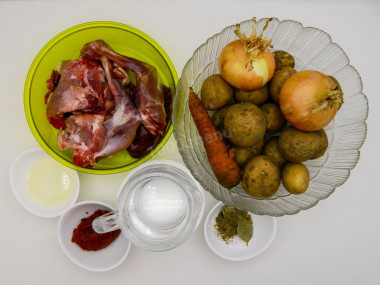
How do you make braised rabbit with potatoes? Start by gathering all your ingredients. You can use any part of the rabbit for braising — I used the front and lower cuts, saving the fattier pieces for roasting. Use whatever spices you like. If you go with a premade blend, be sure to check the label: these mixes often already contain salt, so keep that in mind or you risk oversalting. Boil the water ahead of time; it needs to go in hot.
-
Step 2:
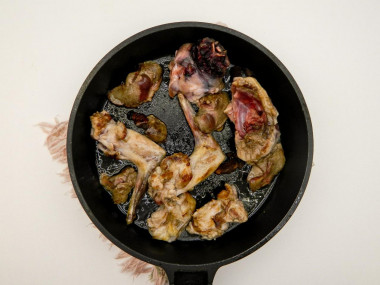
Look the rabbit over carefully for any bits of fur and remove them. Rinse it under running water and cut it into serving pieces with a knife. Don't use a cleaver — bone splinters can end up lodged in the meat. For braising, use a Dutch oven or, like me, a heavy-bottomed skillet with high sides. Heat the vegetable oil in the pan and brown the rabbit on both sides.
-
Step 3:
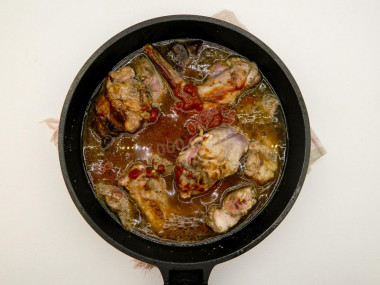
Pour the hot water over the rabbit and add half the salt, the spices, and the tomato paste. Cover and simmer over medium heat for about 20 minutes, until roughly half the liquid has cooked off.
-
Step 4:
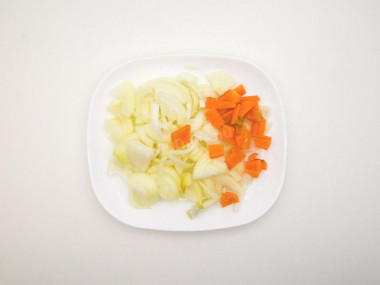
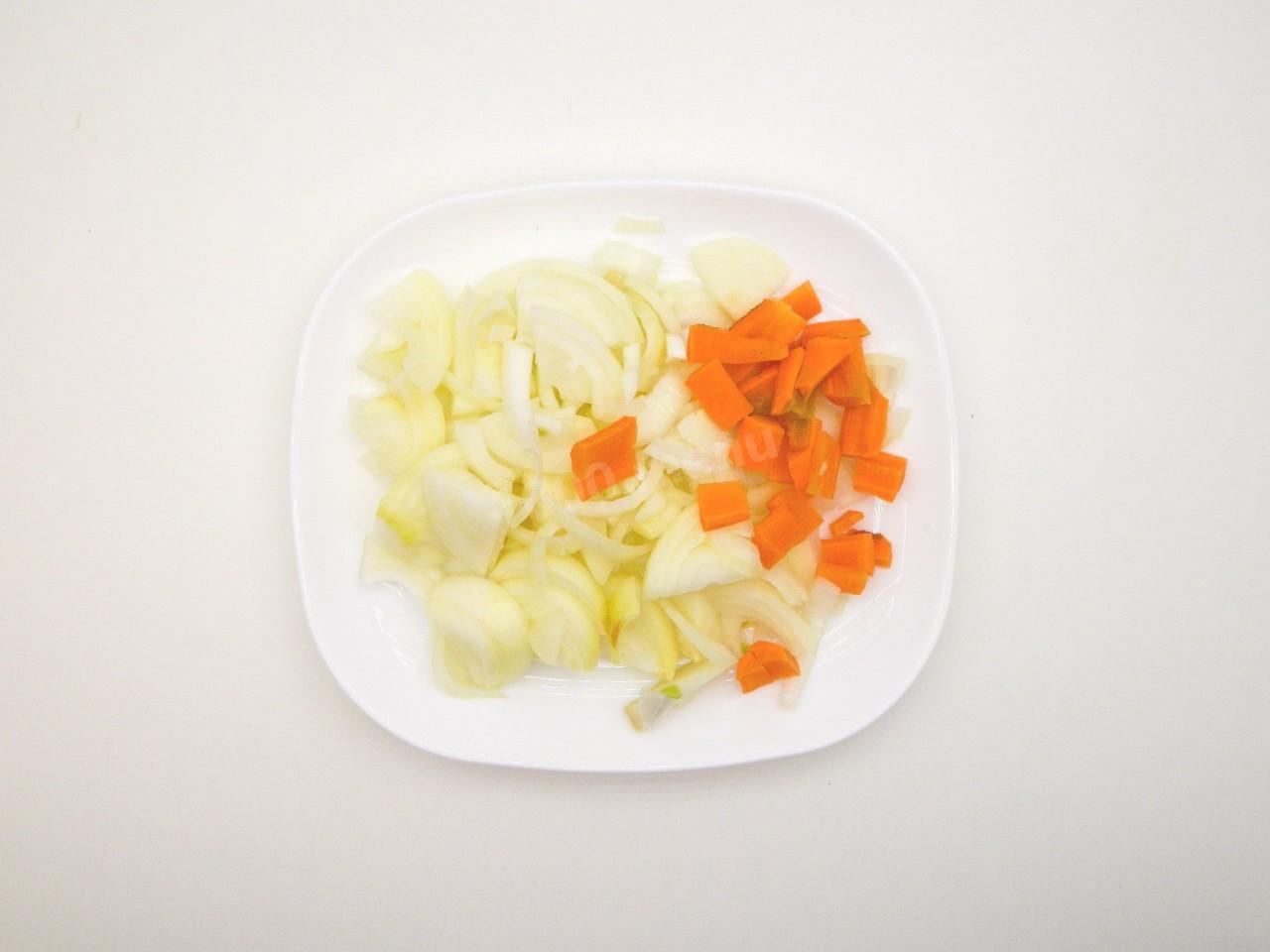
While the rabbit braises, prep the vegetables. Wash and peel the carrot and onions. Cut the onion into half-moons or smaller, and the carrot into large or medium pieces.
-
Step 5:

Peel, wash, and cut the potatoes into large chunks.
-
Step 6:
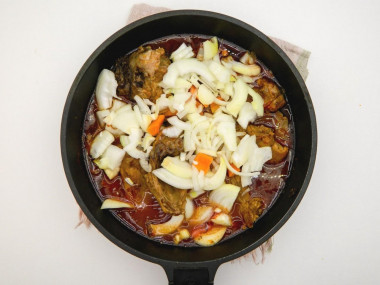
Once about half the liquid has cooked off, add the onion and carrot to the rabbit. Stir, cover, and simmer for 15 minutes over medium or low heat. Keep in mind these times are approximate — every stove is different — so taste as you go.
-
Step 7:
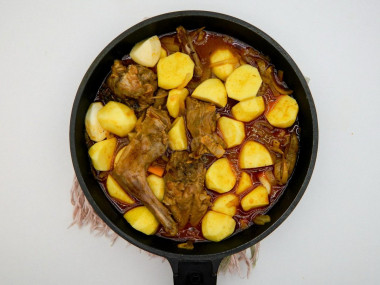
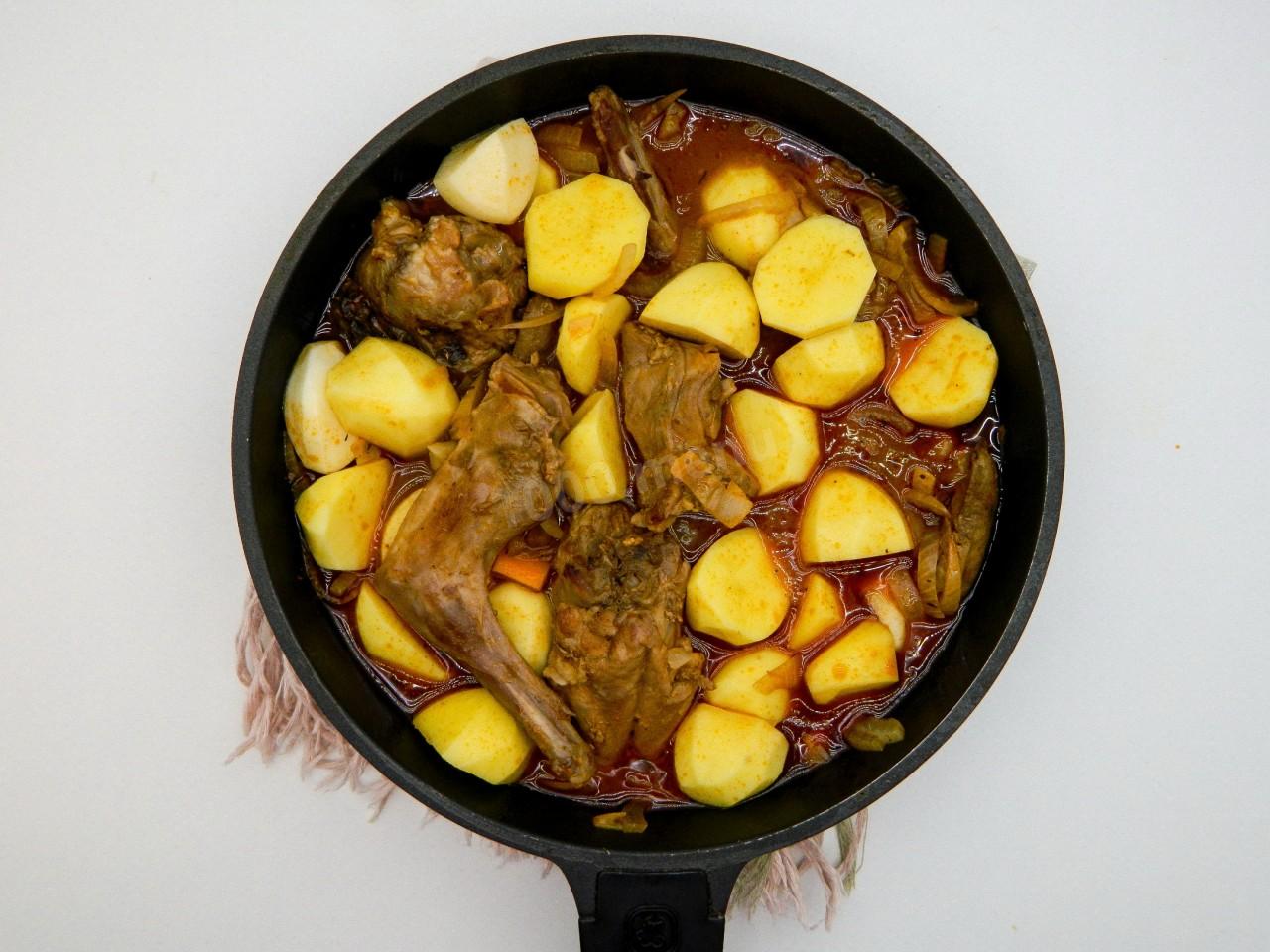
Add the potatoes, add more salt if needed, and simmer for another 20 minutes.
-
Step 8:
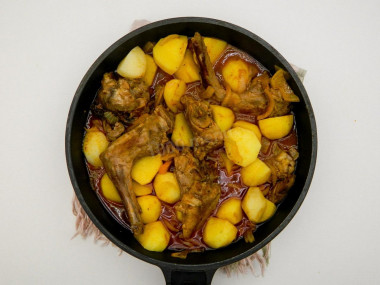
Once the potatoes are done, take the pan off the heat. To check the potatoes, pierce one with a knife and lift: if it slides back off, it's done; if it clings to the knife, braise a little longer and check again.


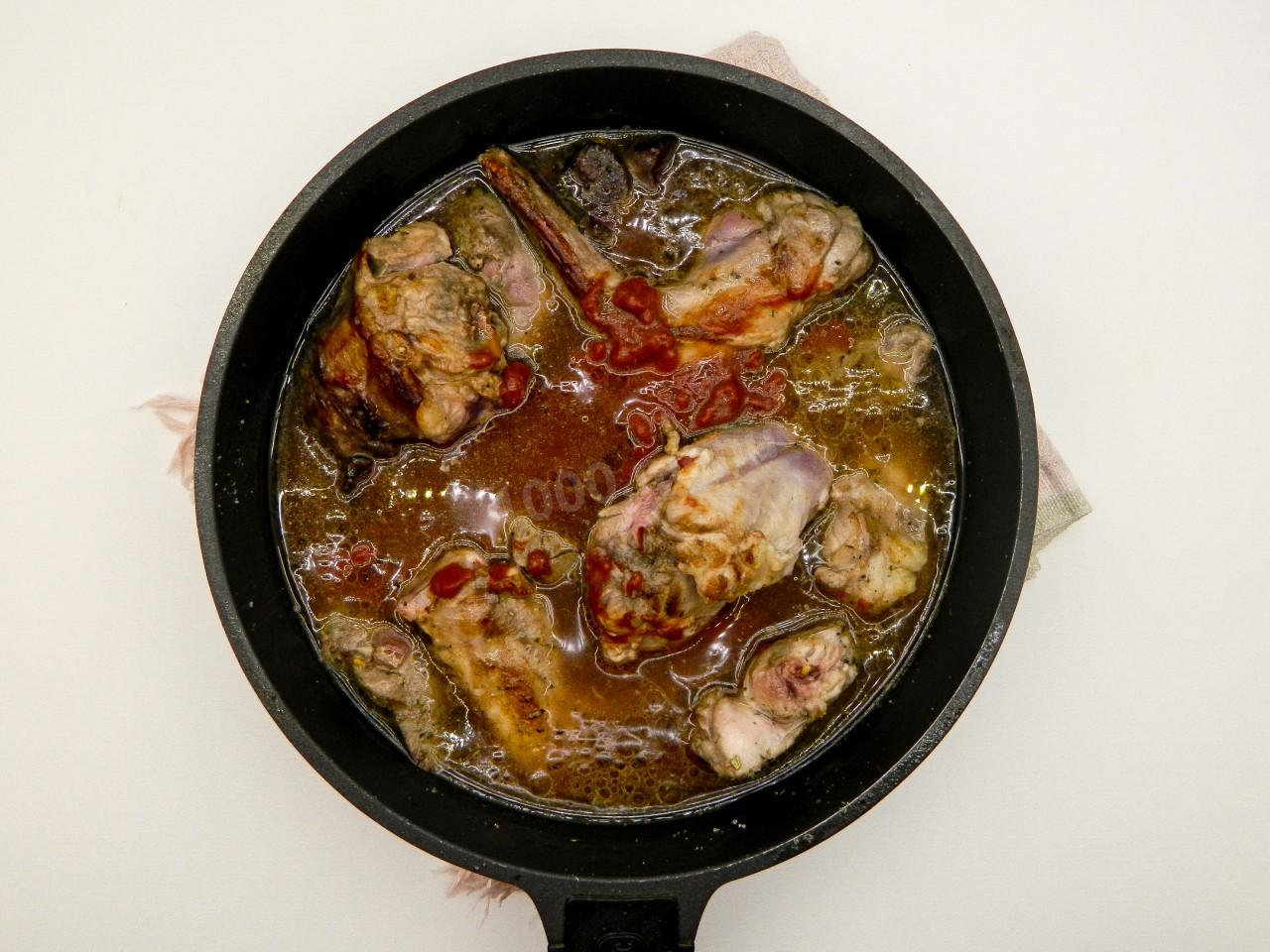



- Serve the rabbit and potatoes warm. Round it out with any vegetables you like — fresh, roasted, or pickled. The rabbit comes out wonderfully tender in this recipe.
- Keep in mind that how you cut the carrot shapes the final dish: grated carrot cooks down into a purée and blends evenly into everything, while carrot cut into strips or cubes holds its shape.
- Fry with an oil that has a high smoke point! Every oil is only good up to a certain temperature — its smoke point — beyond which it starts to burn and form harmful compounds, including carcinogens. Most unrefined oils have a low smoke point and are full of unfiltered particles that scorch quickly, while refined oils stand up to heat much better. For roasting, pan-frying, or grilling, reach for a high-smoke-point oil such as refined sunflower, olive, or grapeseed.
- You can swap the tomato paste in this recipe for canned tomatoes in their own juice, fresh tomatoes, or ketchup.
Caloric content of the products possible in the composition of the dish
- Ripe potatoes - 80 kcal/100g
- Baked potatoes - 70 kcal/100g
- Mashed potatoes - 380 kcal/100g
- Boiled potatoes - 82 kcal/100g
- Potatoes in uniform - 74 kcal/100g
- Fried potatoes - 192 kcal/100g
- Carrots - 33 kcal/100g
- Dried carrots - 275 kcal/100g
- Boiled carrots - 25 kcal/100g
- Rabbit meat (sliced) - 188 kcal/100g
- Fried rabbit - 241 kcal/100g
- Bay leaf - 313 kcal/100g
- Vegetable oil - 873 kcal/100g
- Tomato paste - 28 kcal/100g
- Salt - 0 kcal/100g
- Water - 0 kcal/100g
- Onion - 41 kcal/100g
- Spices dry - 240 kcal/100g
Similar recipes
- Second course
- Meat and meat products
- Vegetables
- Spices seasonings spices
- Fats and oils
- Other
- Bay leaf
- Salt
- Dry spices
- Vegetable oil
- Water
- Tomato paste
- Frying
- Stewing
- In a frying pan
- Stewed vegetables
- Meat second course
- Rabbit
- From carrots
- From potatoes
- From onion
- No eggs
- Recipes for lean dishes without butter