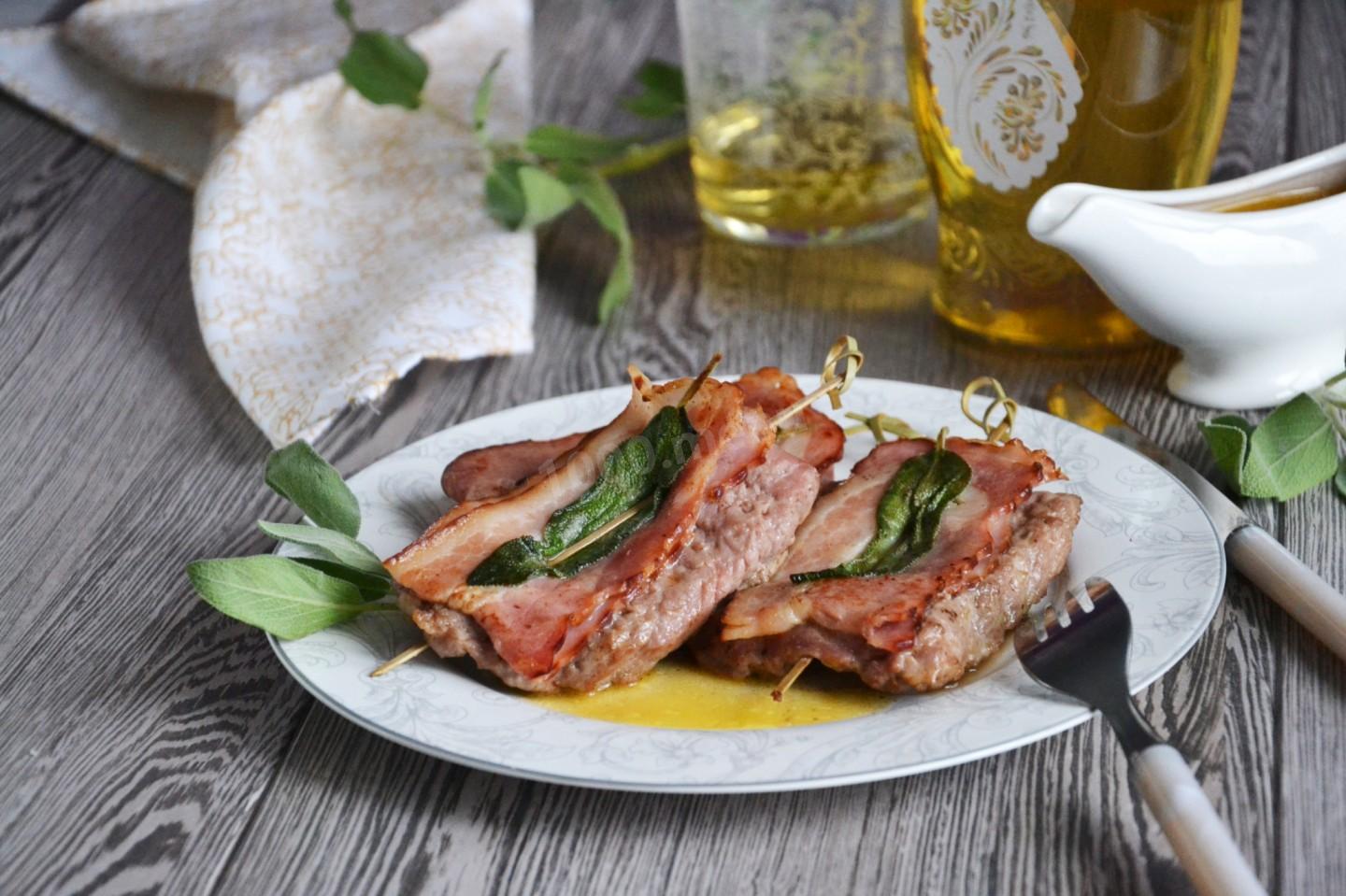
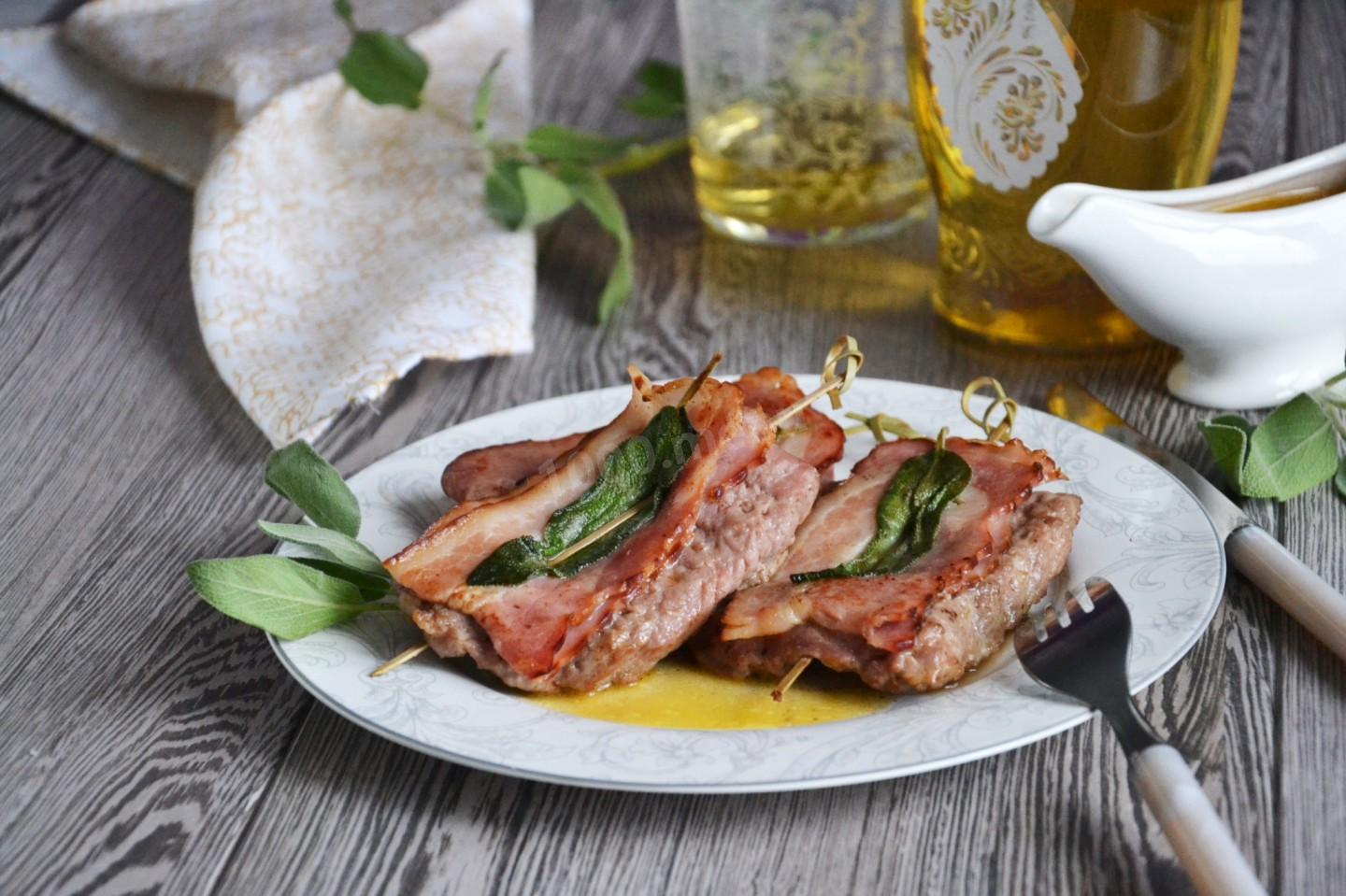
Beef Saltimbocca alla Romana
A dish straight from the heart of Italy on your table. "Saltimbocca" literally means "jumps in the mouth" (Italian: salt'im bocca!). It's a thin veal or beef cutlet pan-fried with a slice of Parma ham and a sage leaf, finished in an irresistible pan sauce.

Cooking method
-
Step 1:
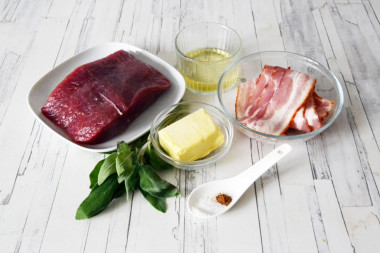
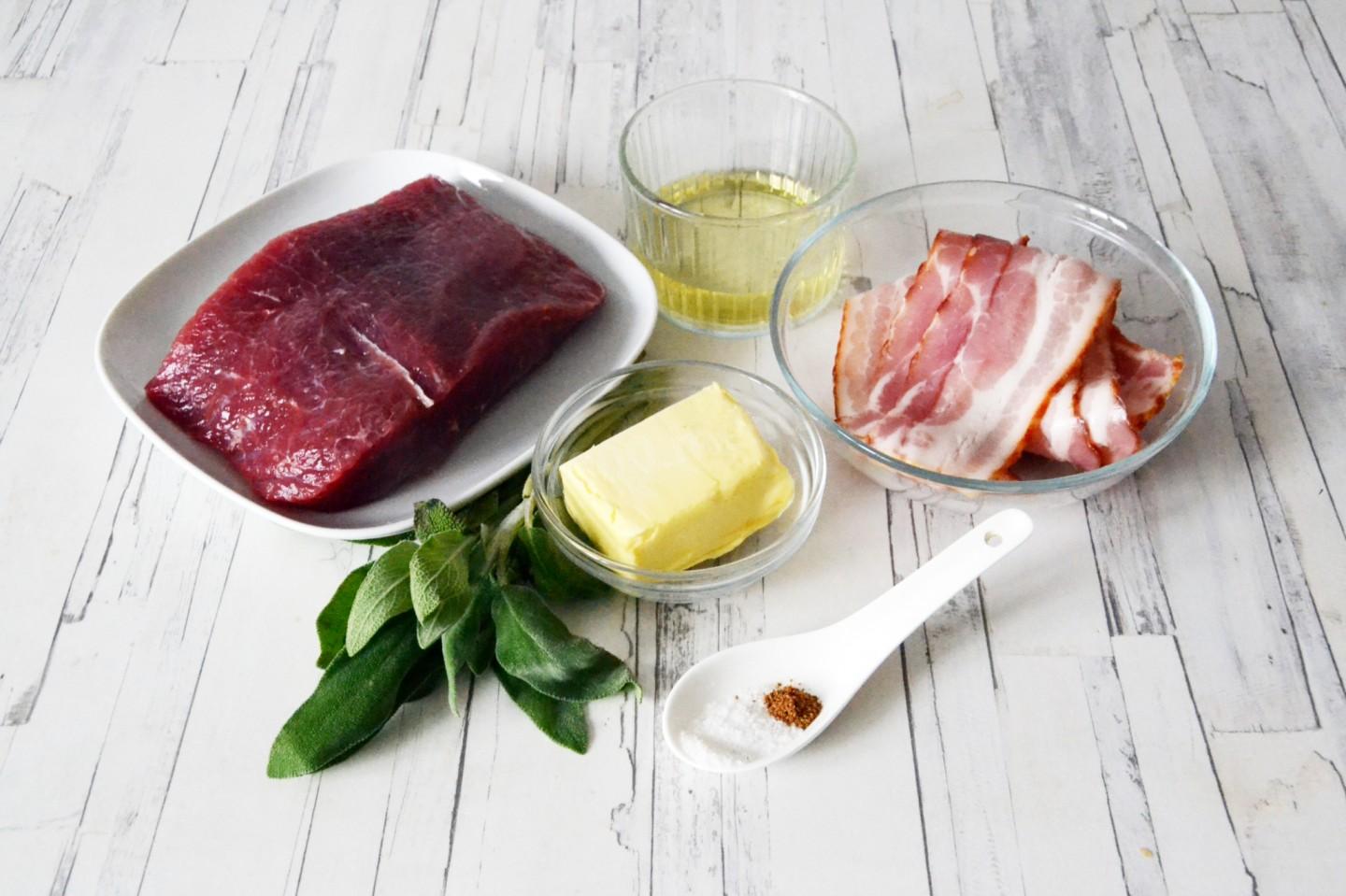
Gather your ingredients. For beef saltimbocca alla romana you'll need: veal or beef; dry-cured bacon or prosciutto (or Parma ham); fresh sage; butter; dry white wine; and salt and ground black pepper.
-
Step 2:
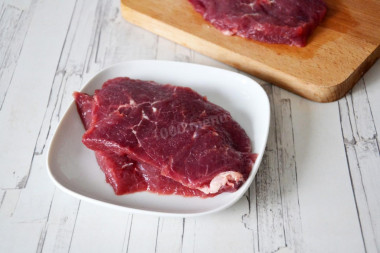
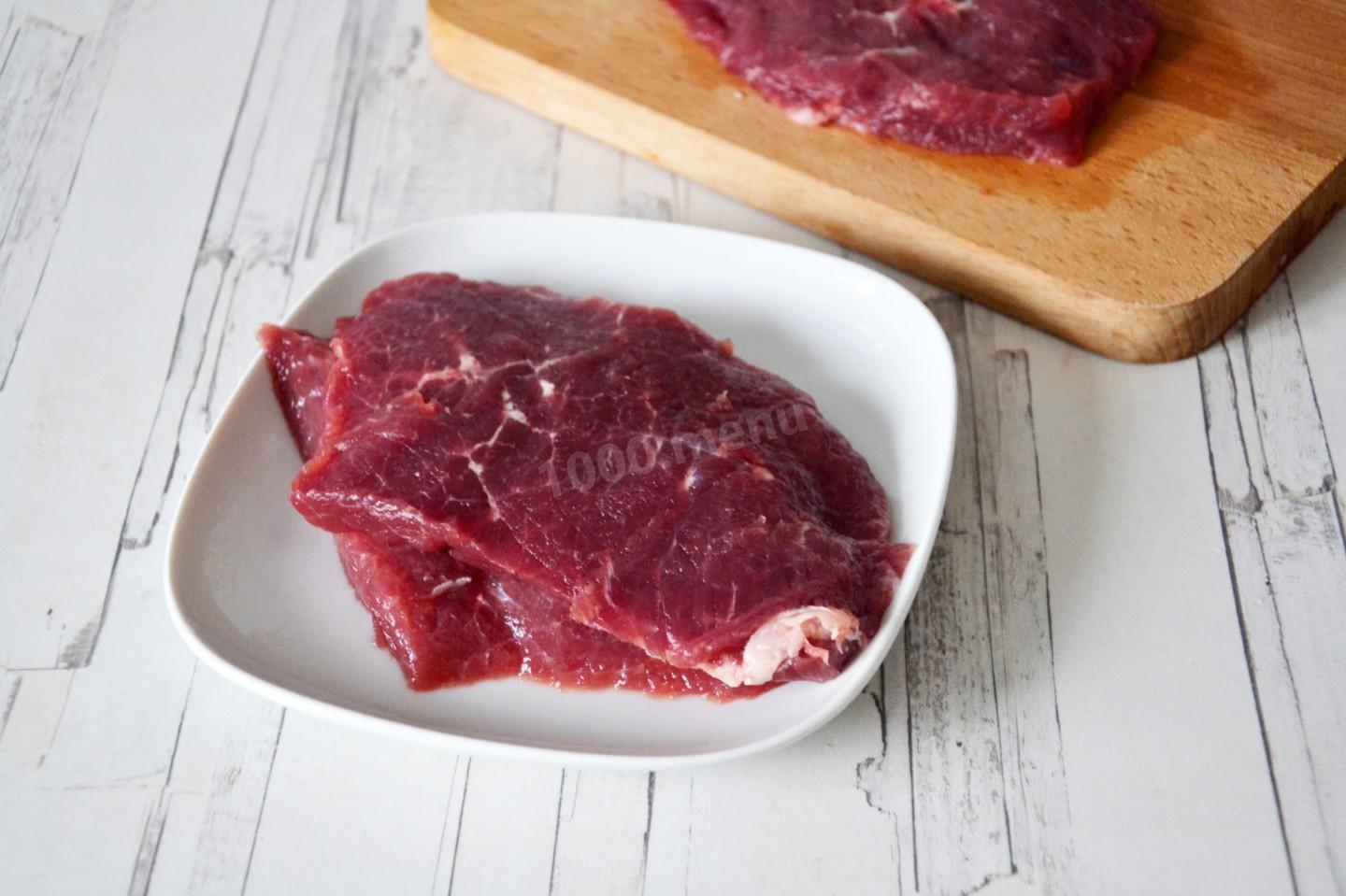
Rinse the beef and pat it dry.
-
Step 3:
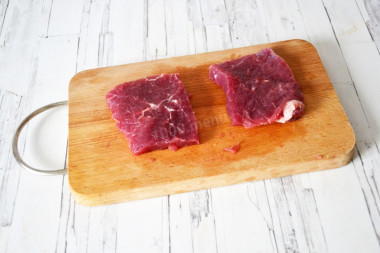
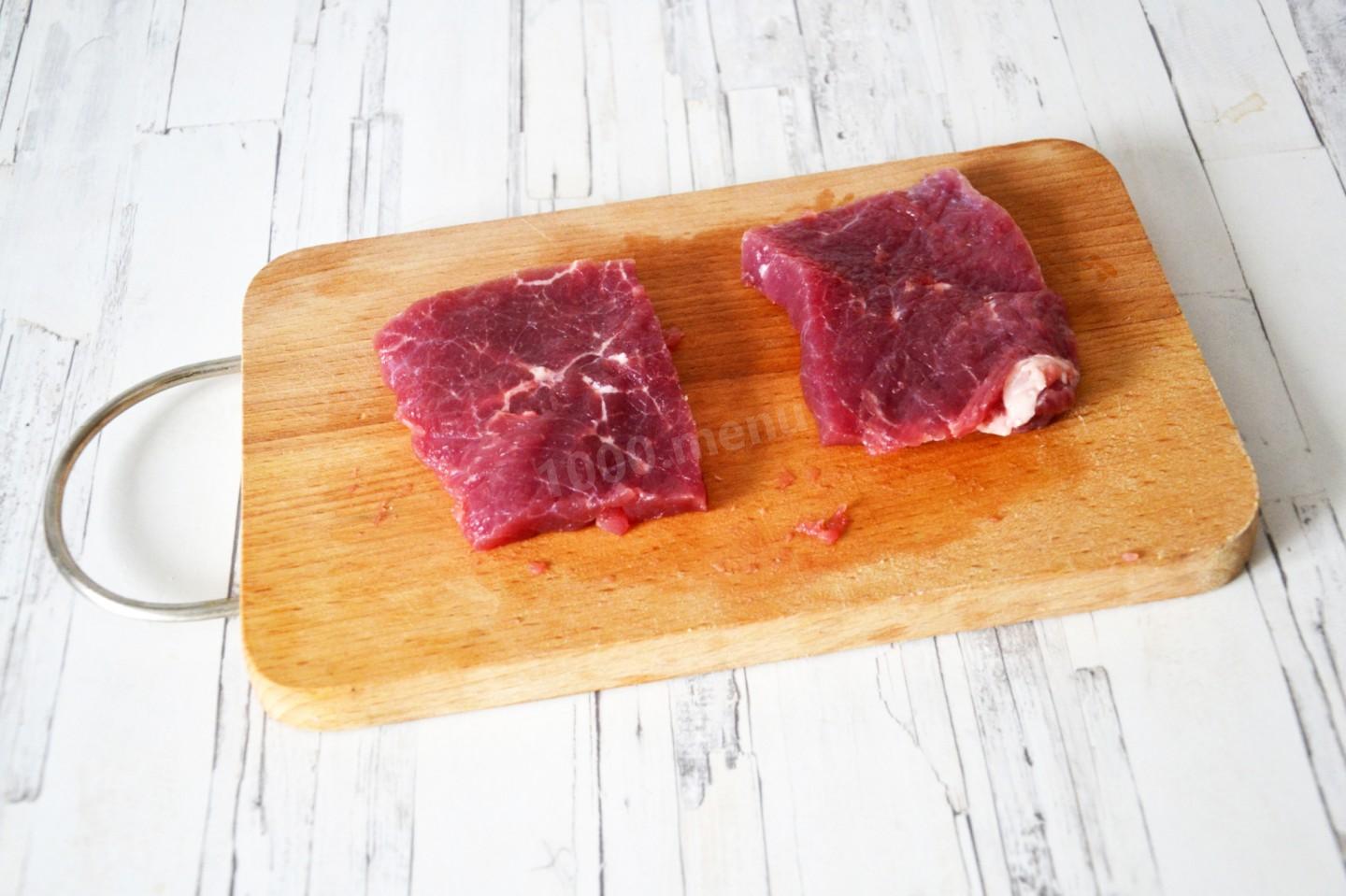
Cut the beef across the wide part into 4-5 even slices, no more than 1/2 inch (1 cm) thick.
-
Step 4:
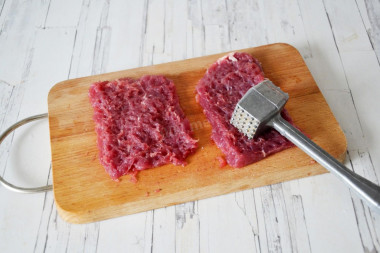
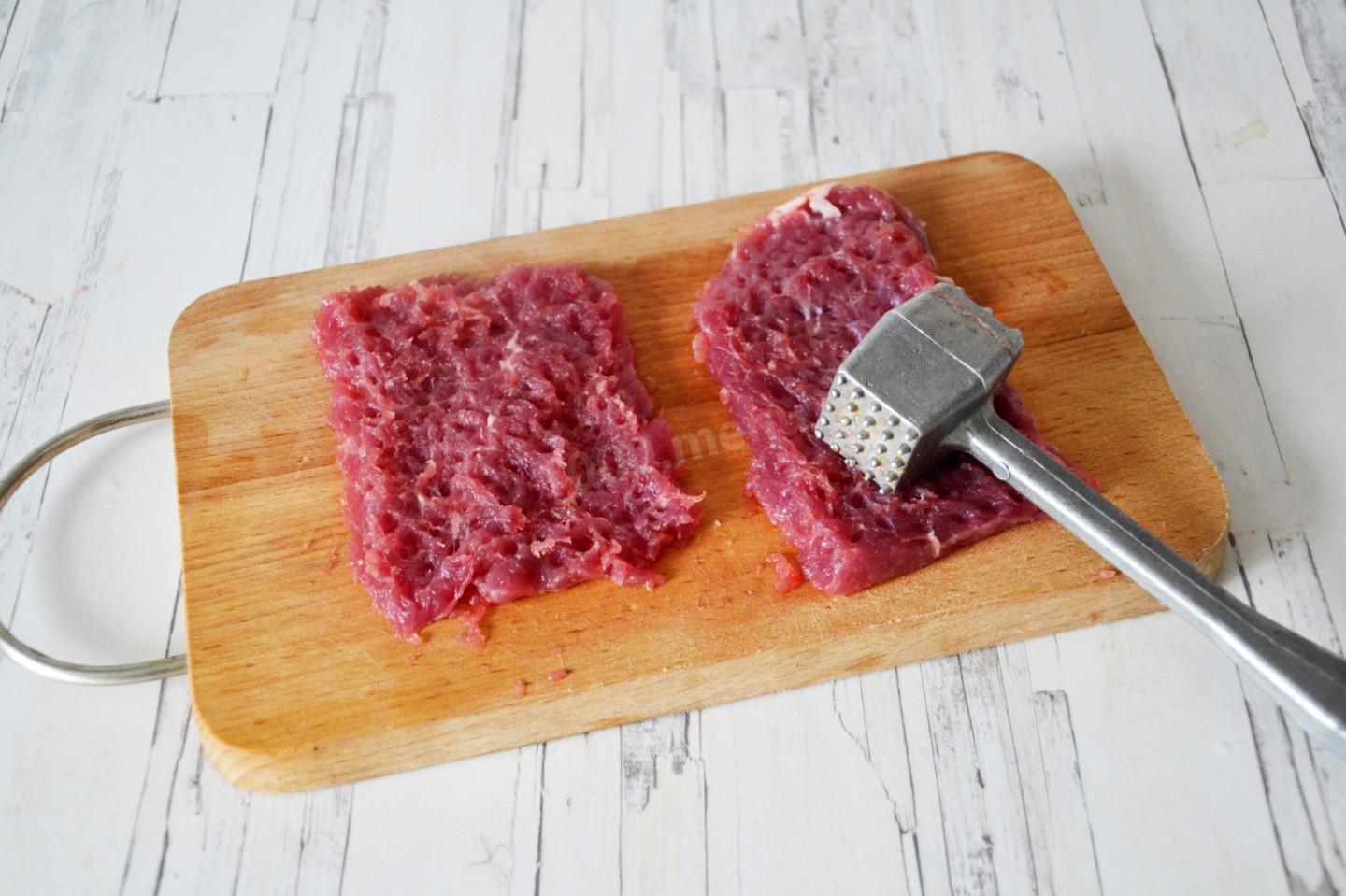
Pound each slice on both sides with a meat mallet until as thin as you can get it.
-
Step 5:
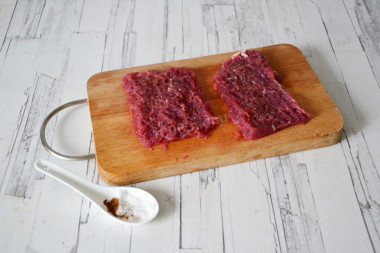
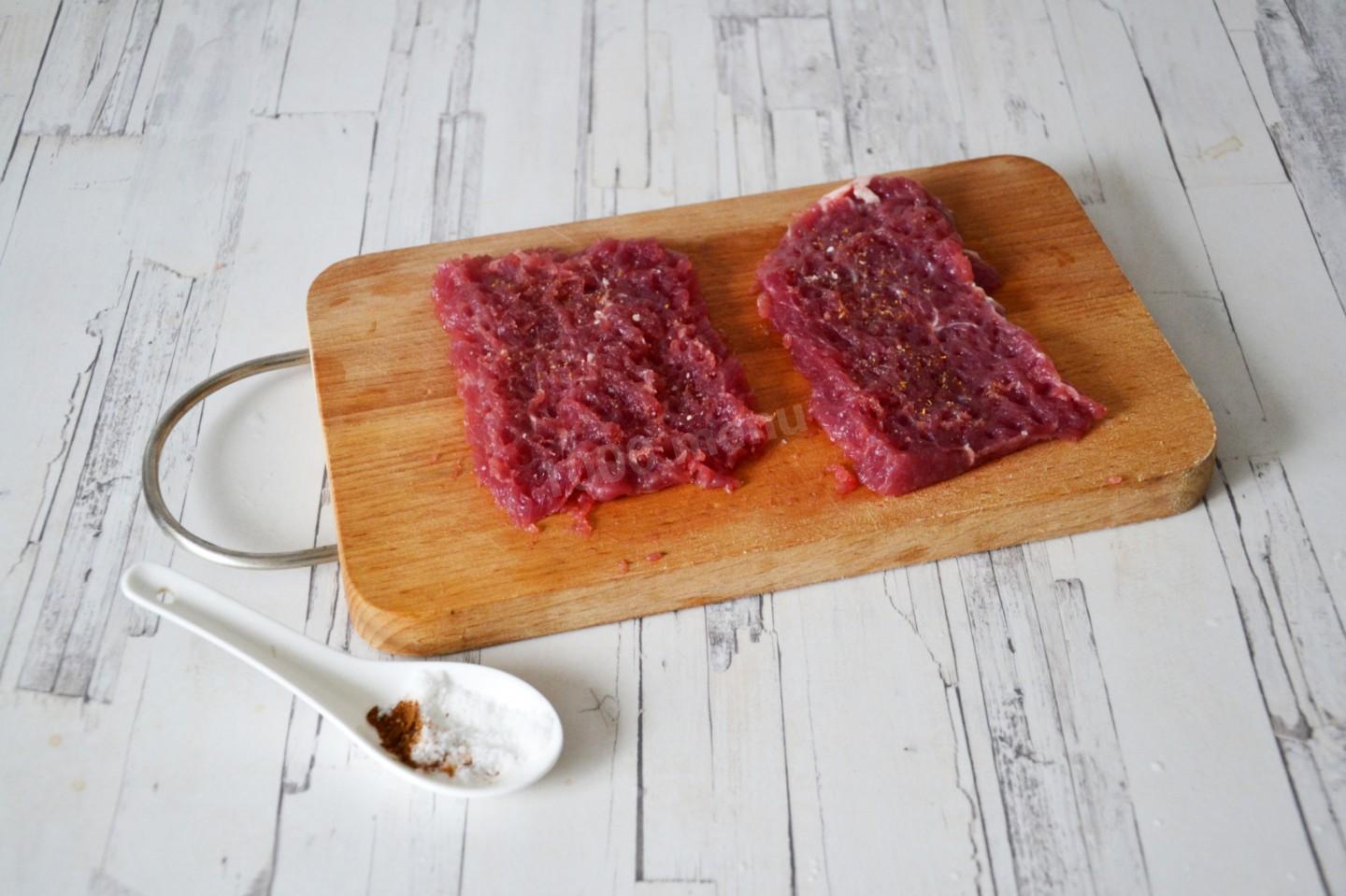
Lightly season each slice of beef with salt and pepper.
-
Step 6:
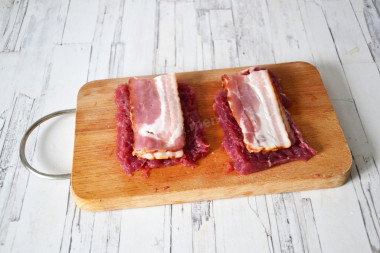
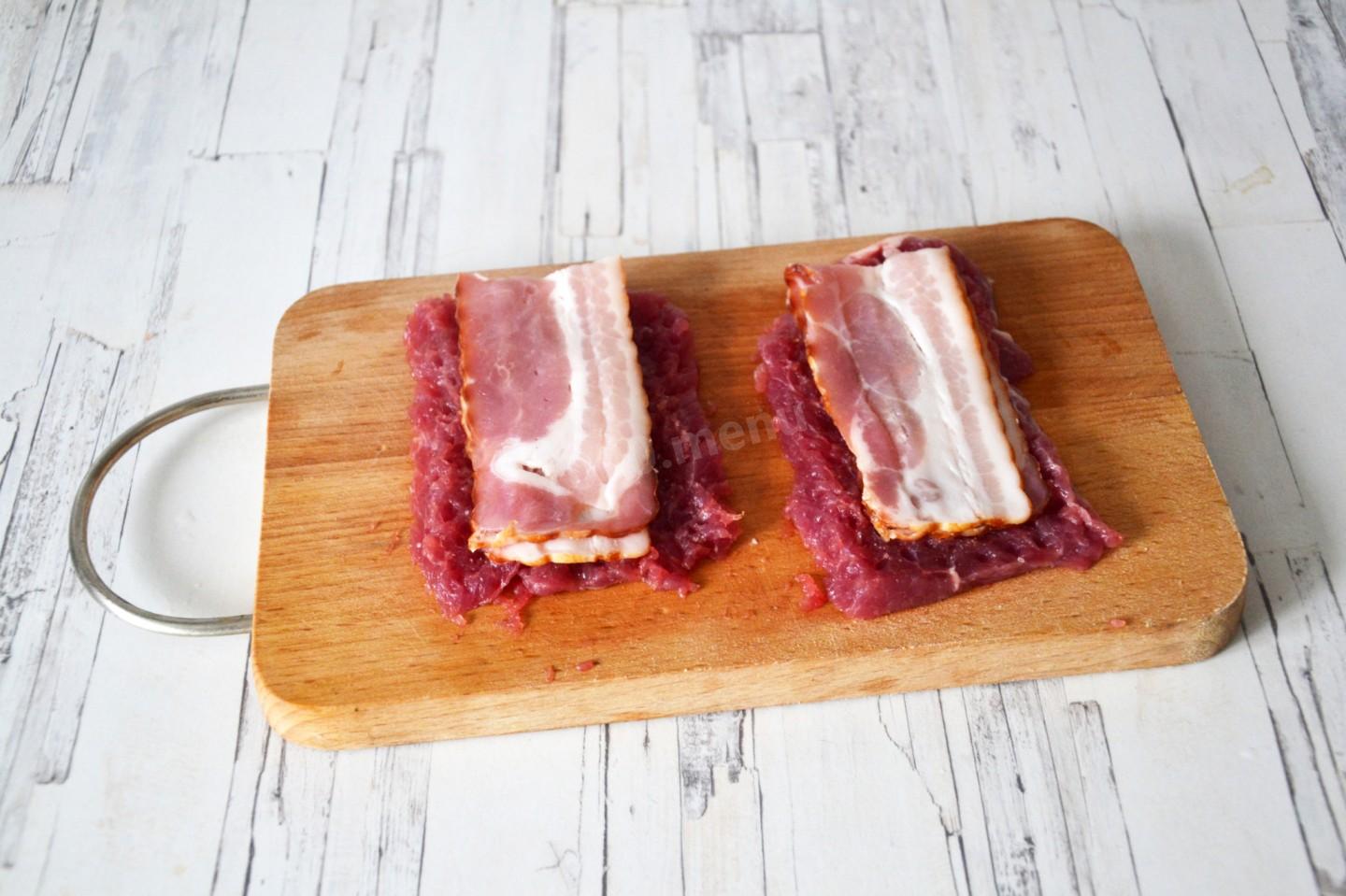
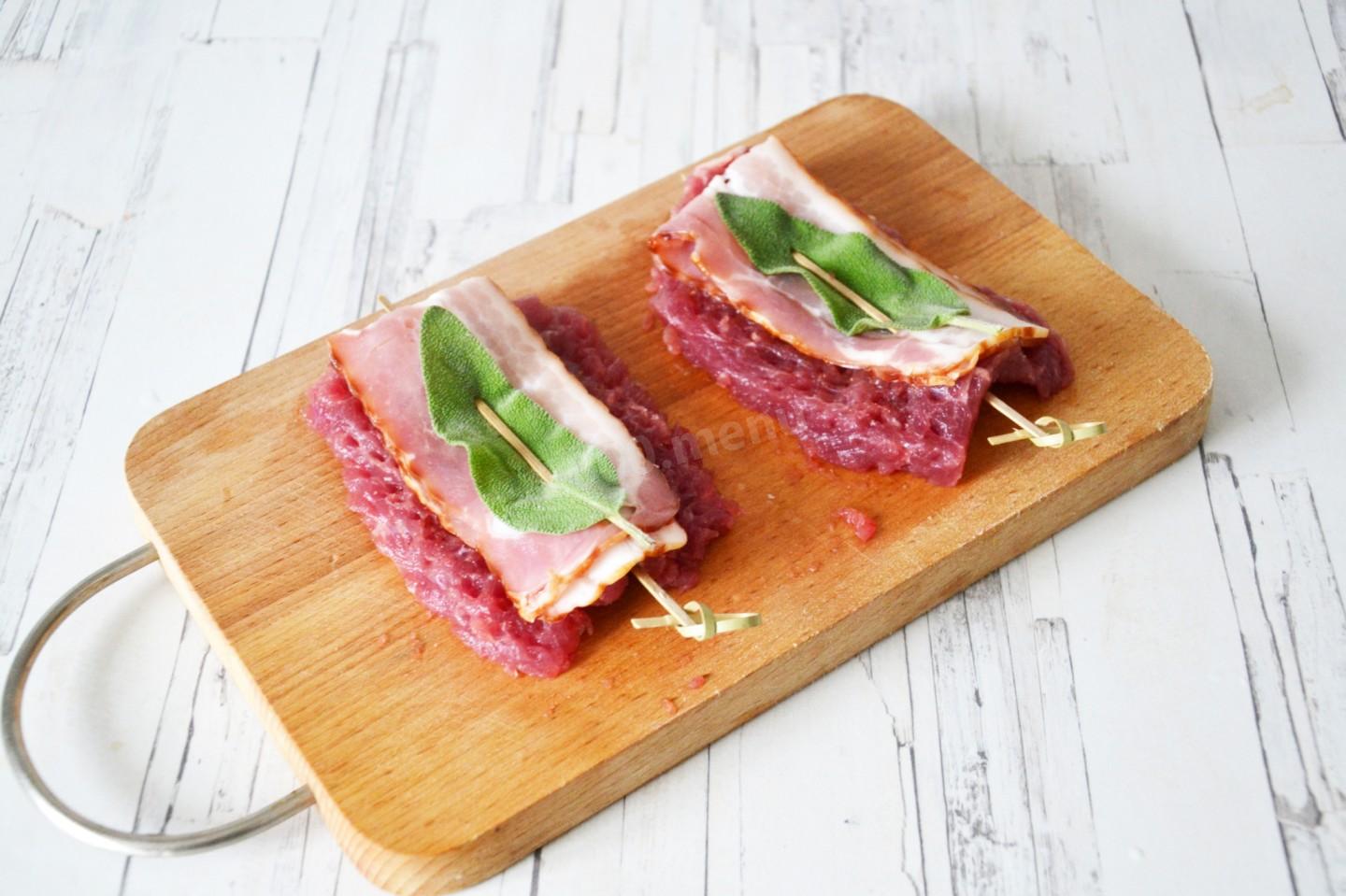
Lay a slice of bacon on each piece of beef.
-
Step 7:
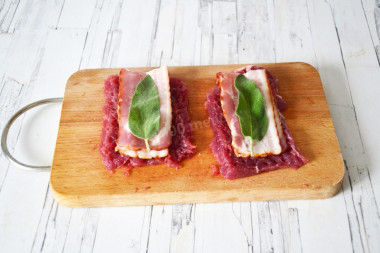
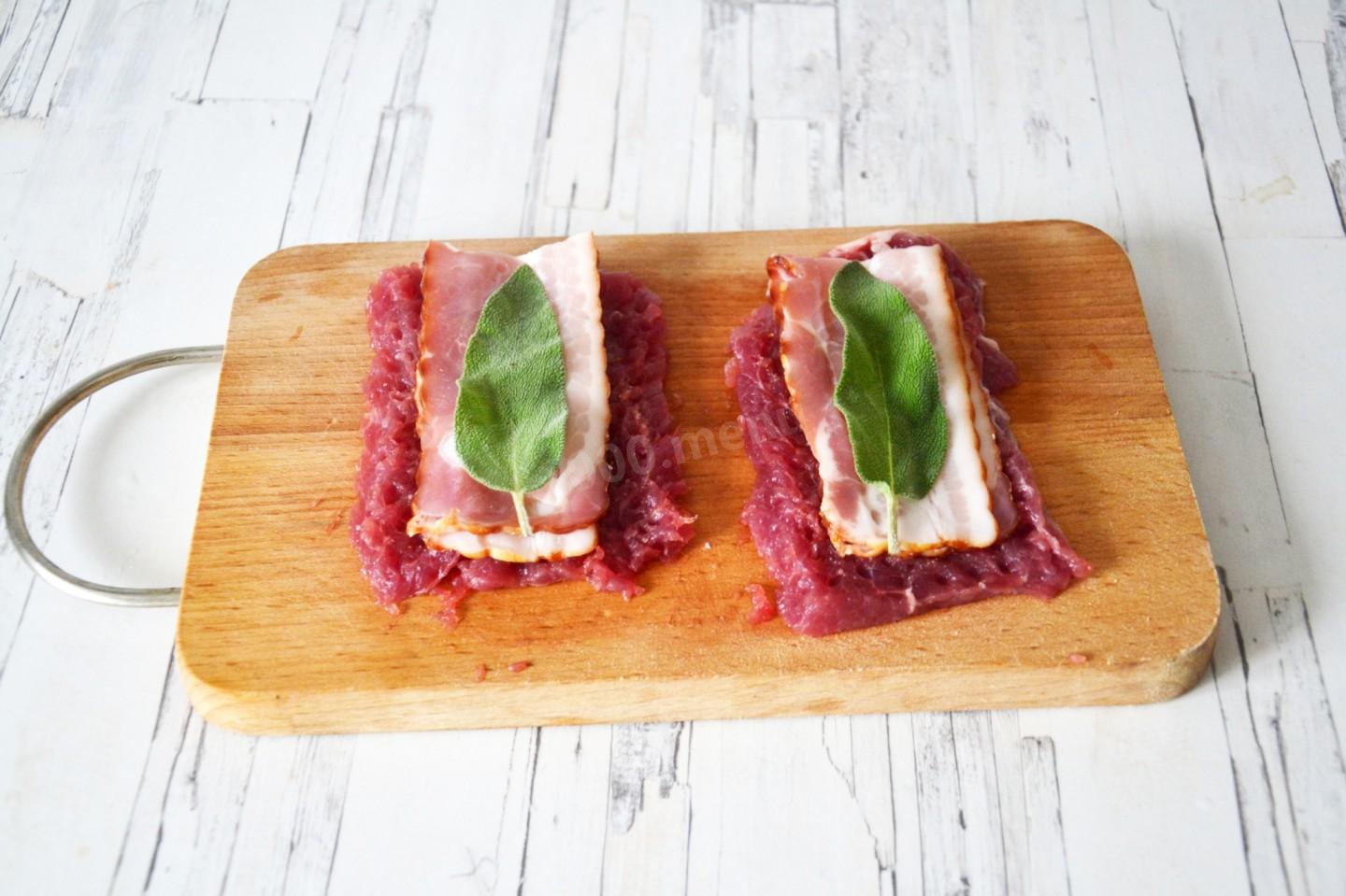
Pluck the 4 largest leaves from the sage, rinse them, and pat them dry. Set a sage leaf on each piece of beef.
-
Step 8:
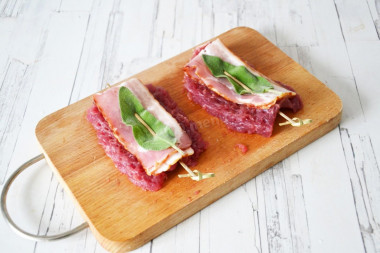
Pin each bundle with a long toothpick so the meat, bacon, and sage stay securely together and won't come apart when you flip them.
-
Step 9:
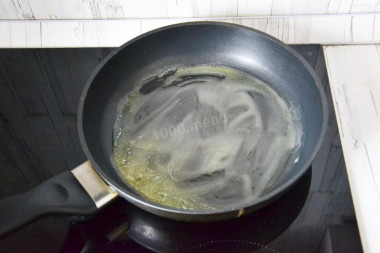
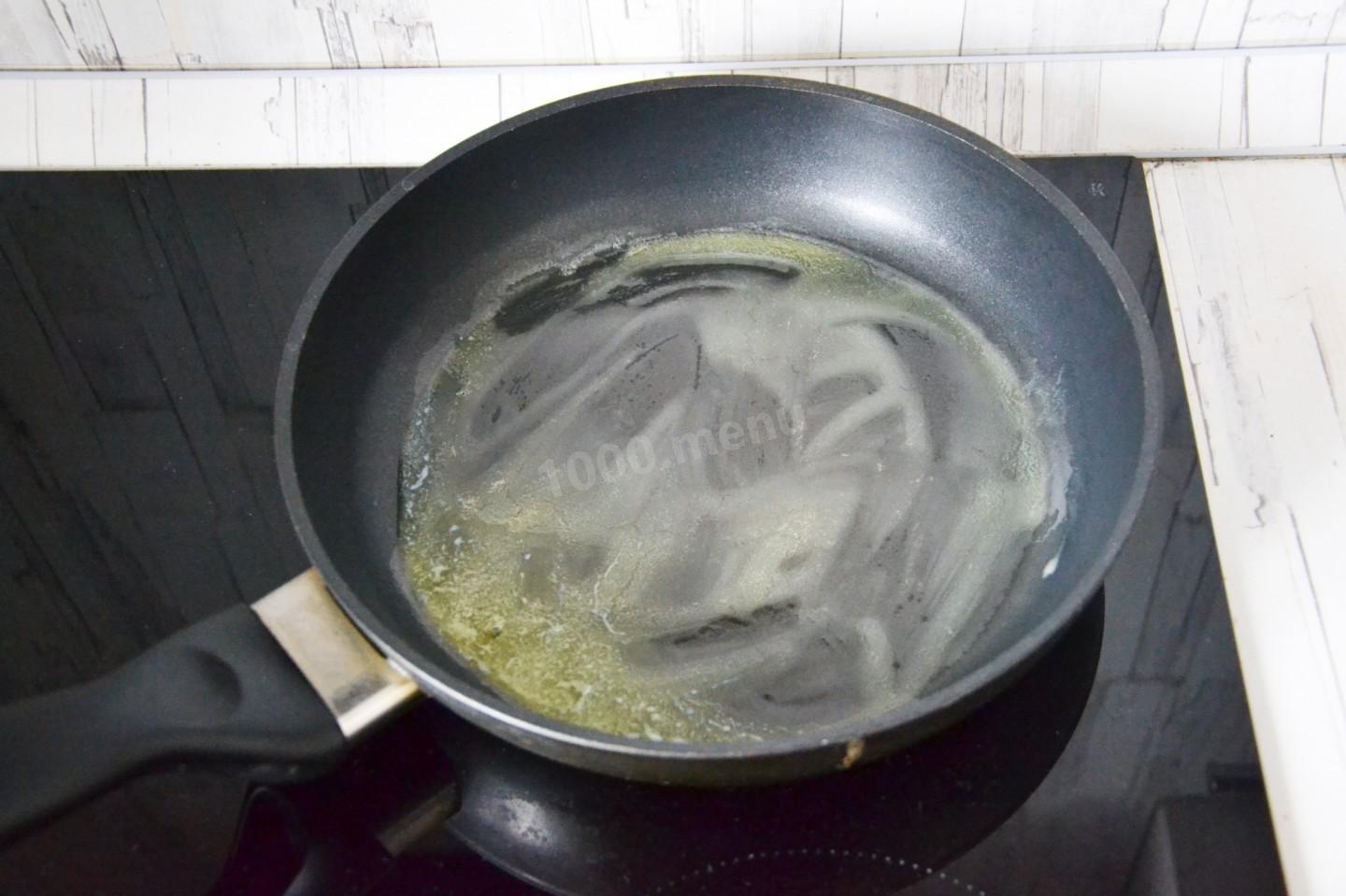
Melt a small piece of butter in a skillet.
-
Step 10:
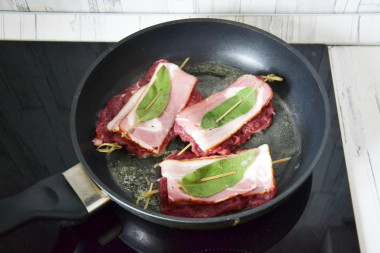
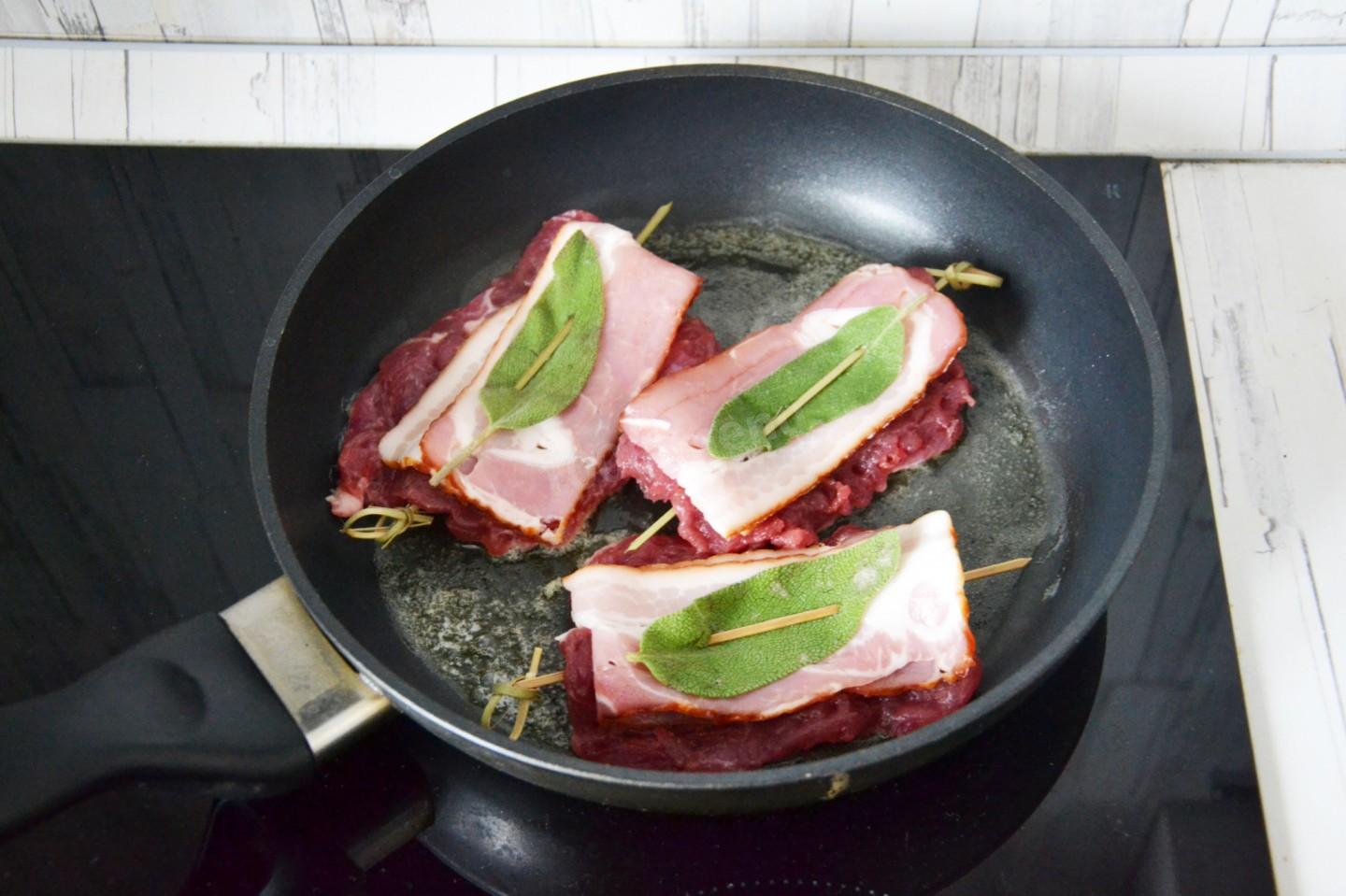
Fry the beef with its bacon and sage for 2 minutes per side.
-
Step 11:
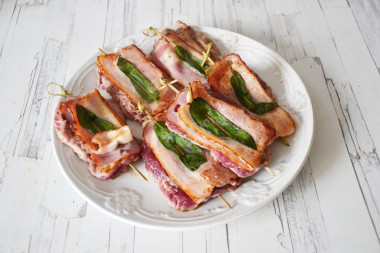
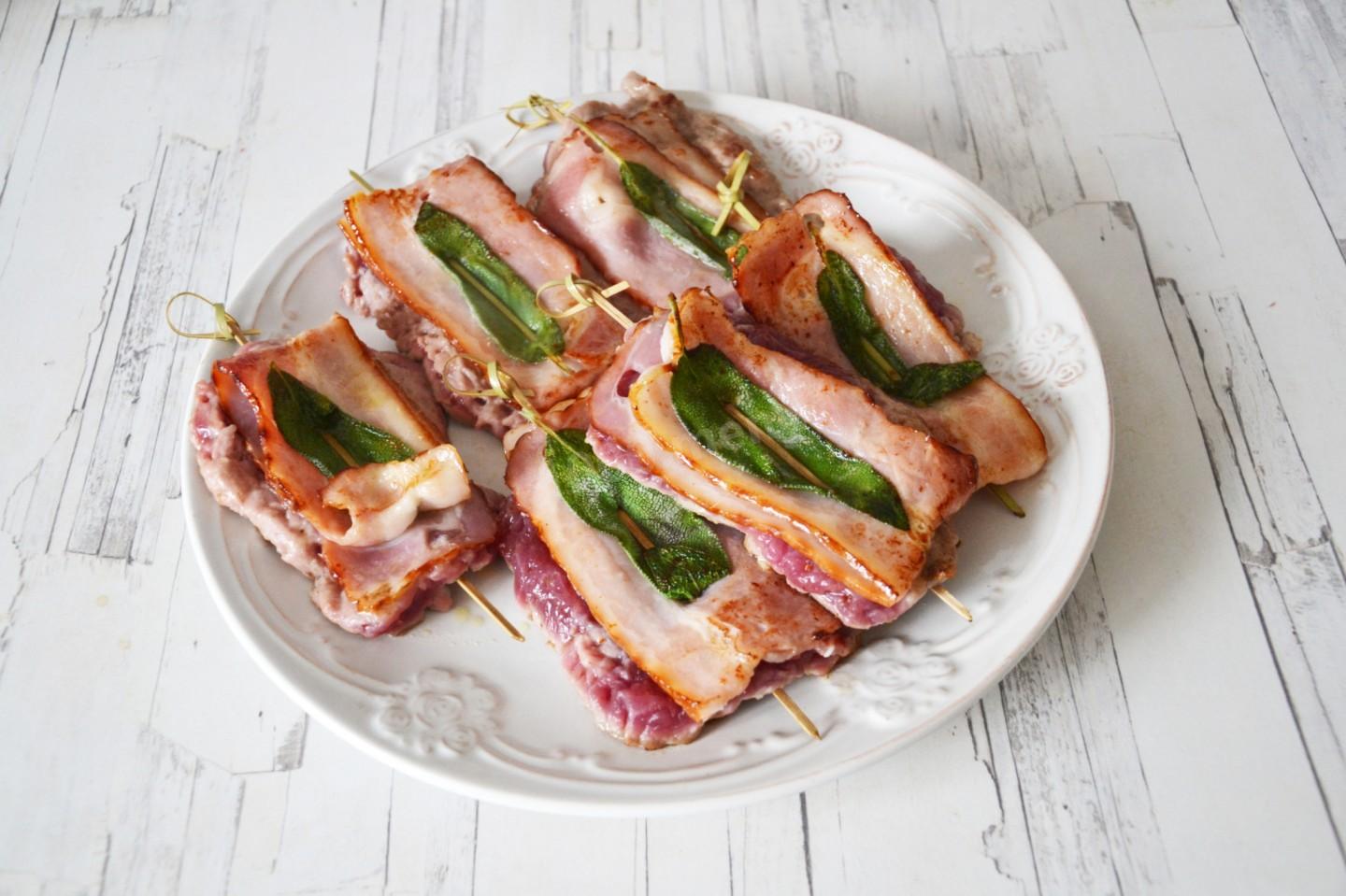
Then transfer the meat to a plate.
-
Step 12:
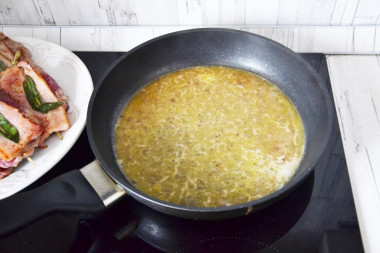
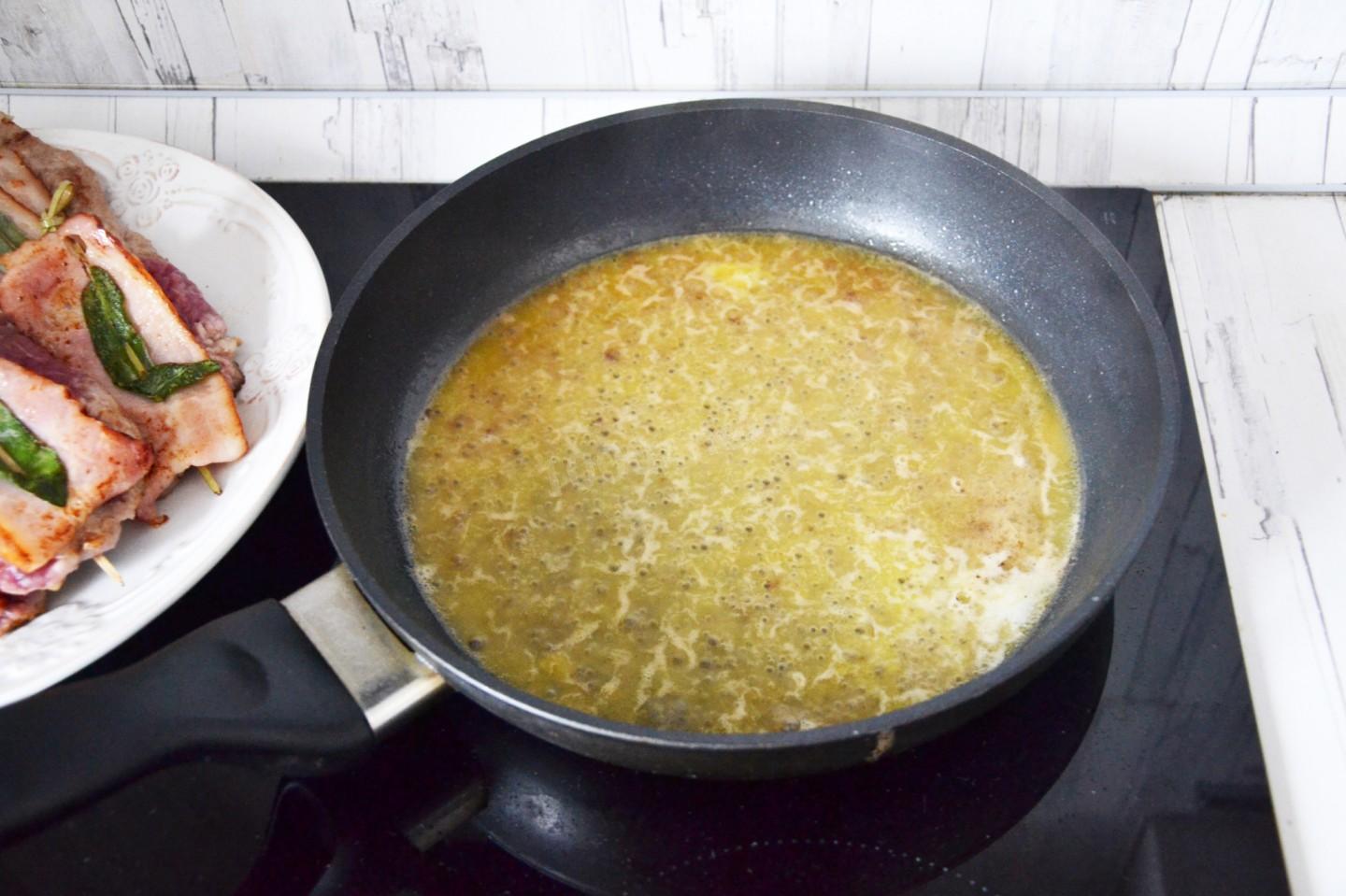
Melt the remaining butter in the skillet and pour in the wine. Simmer the sauce, stirring, for about 2-3 minutes over medium heat. Return the meat to the pan and warm it through in the sauce, 3-4 minutes per side.
-
Step 13:
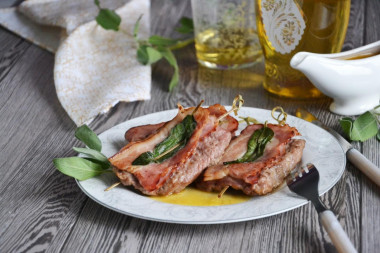
Serve the saltimbocca alla romana with its wine sauce. Honestly, the sauce is the best part — I spooned it over rice and happily ate it on its own, no meat needed. Enjoy!
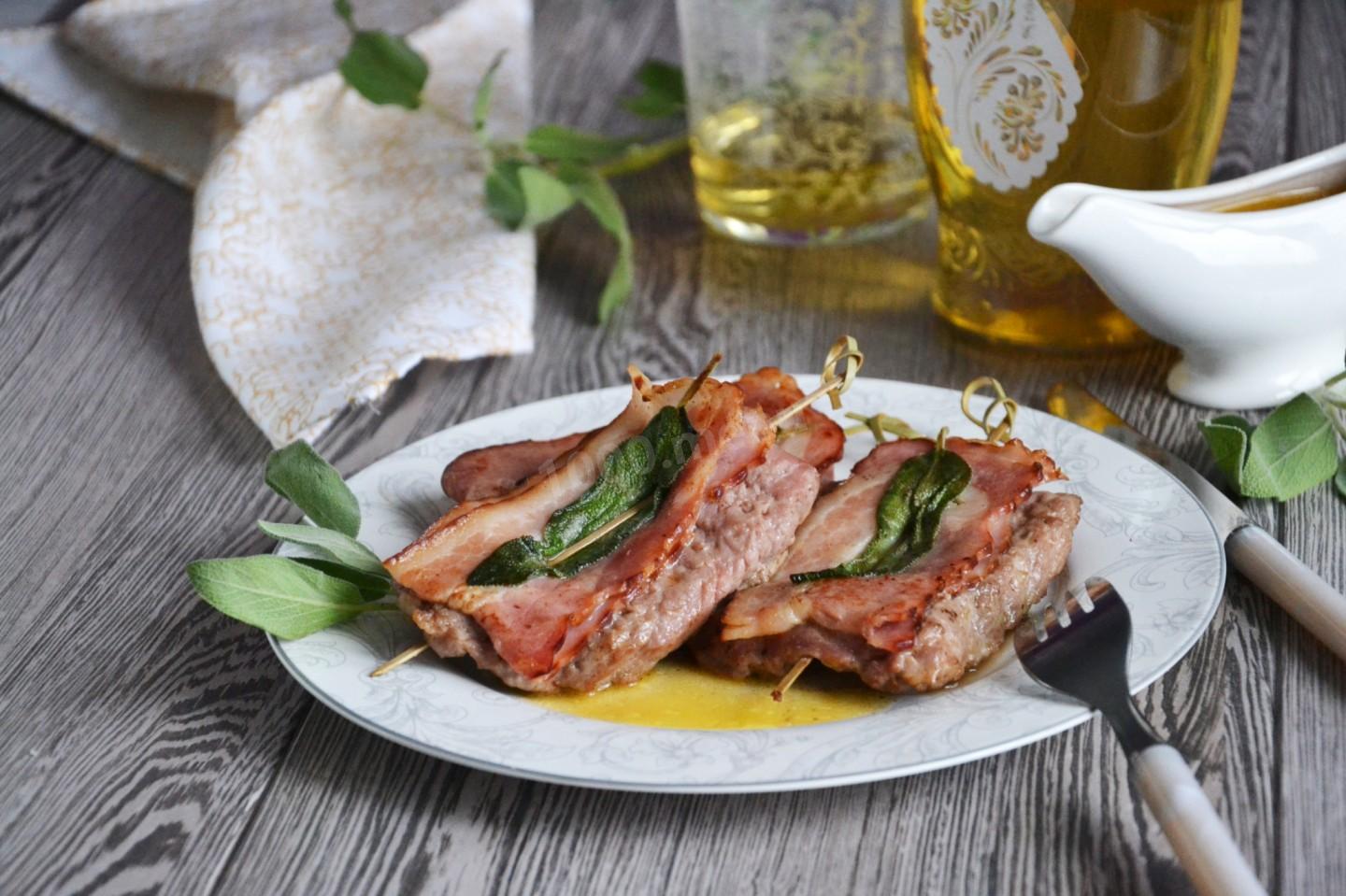
- Saltimbocca alla romana is, as the name says, a classic of Roman cooking — though there's some doubt about whether it truly originated in the capital. The reason: the dish uses butter, which was once unusual in Rome, where pork fat was the go-to fat for frying. That's why some trace saltimbocca to the Brescia area of Lombardy instead. It's beloved not only in Italy but also in Spain, Greece, Switzerland, and among fans of Italian food worldwide — and it invites cooks to make it their own. Almost any meat you like can be dressed up with that fragrant duo of ham and sage: lamb, pork, poultry (chicken or turkey breast), game, even fish.
- Beef can be swapped for any other meat you prefer. Keep in mind that the cooking time, taste, and calorie count will change. Pork and lamb tend to be fattier than beef, while chicken and turkey breast are leaner. Cooking time also depends on which cut you use and how young or old the meat is.
Caloric content of the products possible in the composition of the dish
- Clarified beef fat - 871 kcal/100g
- Fatty beef - 171 kcal/100g
- Lean beef - 158 kcal/100g
- Beef brisket - 217 kcal/100g
- Beef sirloin - 380 kcal/100g
- Lean beef roast - 200 kcal/100g
- Beef chuck - 137 kcal/100g
- Beef ribs - 233 kcal/100g
- Beef shank - 104 kcal/100g
- Oxtail - 184 kcal/100g
- Boiled ham - 269 kcal/100g
- Corned beef - 216 kcal/100g
- Ground black pepper - 255 kcal/100g
- White wine - 78 kcal/100g
- Butter 82% - 734 kcal/100g
- Unsalted butter - 709 kcal/100g
- Unsalted farmhouse butter - 661 kcal/100g
- Salted farmhouse butter - 652 kcal/100g
- Clarified butter - 869 kcal/100g
- Sage - 315 kcal/100g
- Cooked bacon - 447 kcal/100g
- Salt - 0 kcal/100g