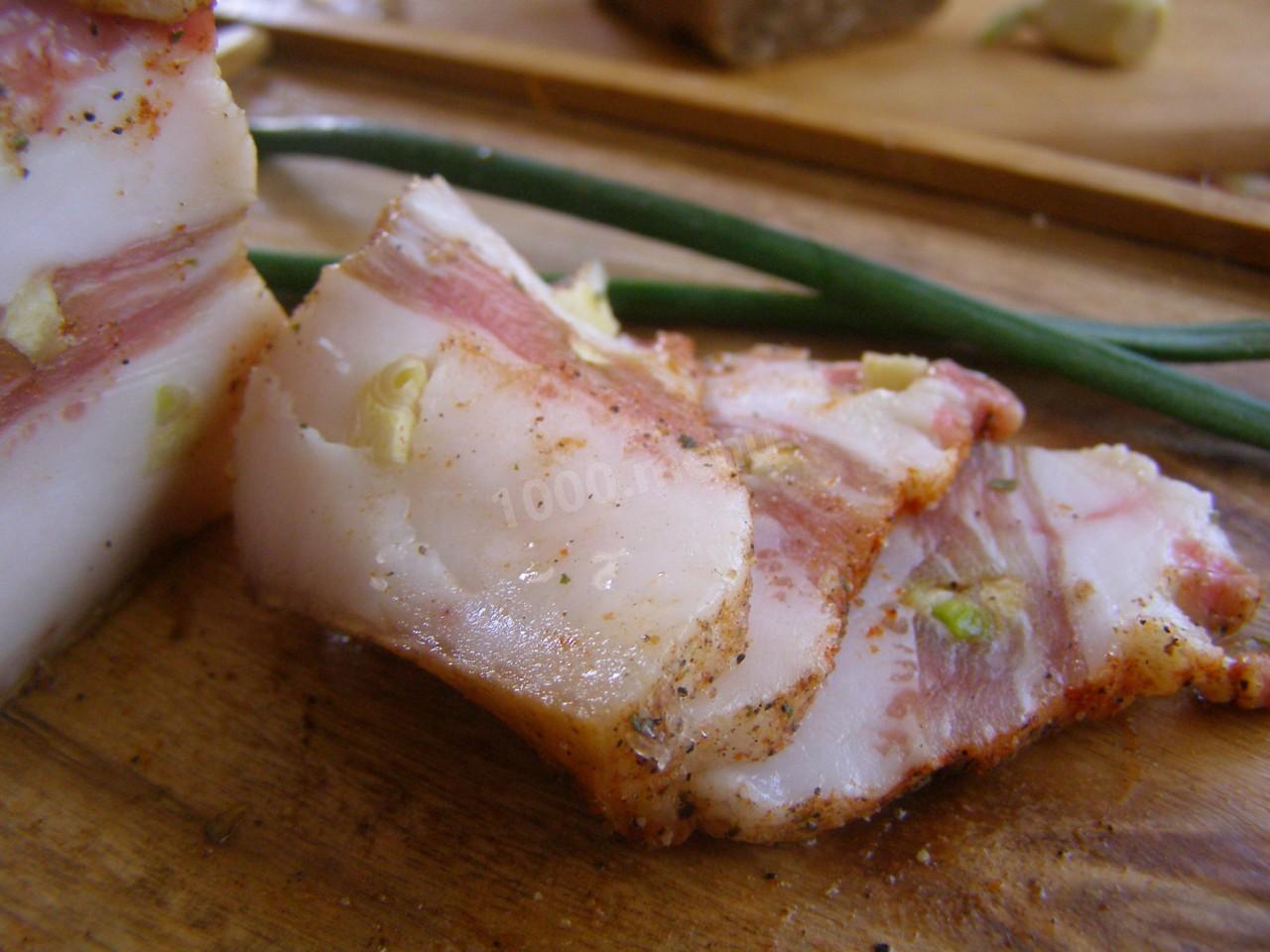
Boiled Salo in a Bag
The most tender. The most delicious. Quick and simple to make! Boiled salo in a bag is a one-of-a-kind food. After all, it's enjoyed not just on ordinary days or as a sliced appetizer for holidays. This versatile food is ideal for any outing, a train trip, or any other journey. It's a great snack at work and a hearty meal alongside salads and other dishes. And let's not forget the benefits. Just remember — everything in moderation!





Cooking method
-
Step 1:
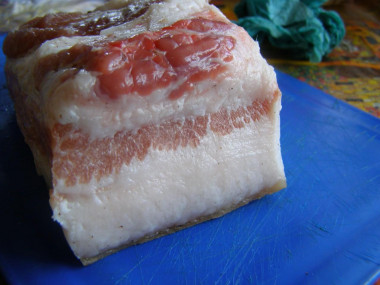
Start by setting aside the amount of salo you need — that is, cut off a piece or several pieces.
-
Step 2:
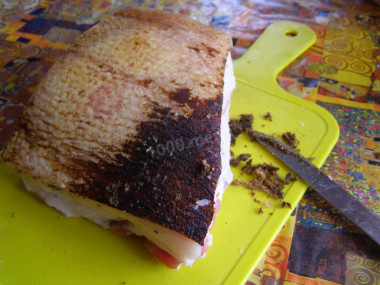
Next, prep the salo. Use a sharp knife or a special scraper to remove any singe marks left on the skin from processing the carcass. If there aren't any, skip this step — but leave the skin on.
-
Step 3:
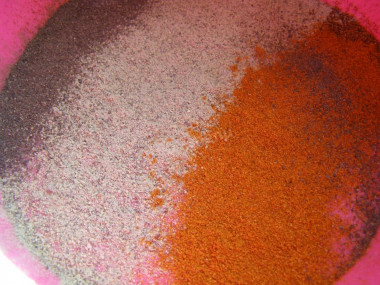
You can use all kinds of spices, including blends made specifically for salo. But it could just as easily be, say, ground black and red pepper. In short, measure out the salt and pepper (or whatever spices you prefer) into a dish.
-
Step 4:
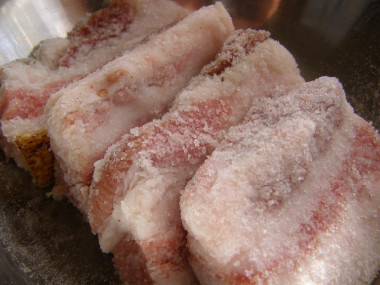
After cutting the salo into pieces, roll them in the salt (or rub it in).
-
Step 5:

Then roll the pieces in the pepper mixture or your chosen spices, which you can rub in — mixing them with the salt beforehand if you like. In short, it's up to you.
-
Step 6:

The salo will be far more fragrant and tasty if you cook it with garlic and bay leaf, for example. The first time, you can use the amounts given in the recipe, then adjust them to taste later. Separate the garlic into cloves.
-
Step 7:
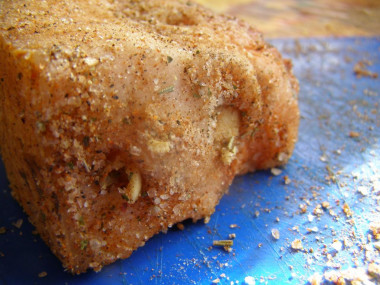
Using a knife, make holes in the salo as deep as the garlic cloves are long, then carefully tuck the cloves into those holes.
-
Step 8:
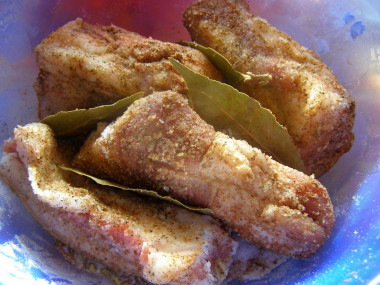
Now all that's left is to layer the pieces of salo with bay leaves. Leave it to marinate this way with the bay leaf for an hour to an hour and a half, covered with a clean cloth.
-
Step 9:
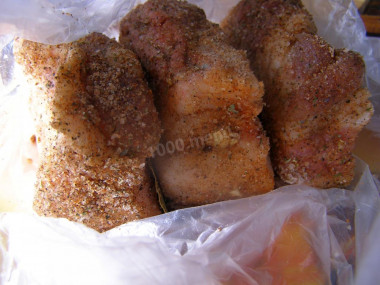
Once the salo is done marinating and ready to cook, place it in a food-grade plastic bag.
-
Step 10:

Lower the tightly sealed bag into cold water; once the water comes to a boil, simmer the salo for at least an hour over low heat. Then let it cool in the same water, then in the refrigerator, and only then slice it — without washing off the salt and spices.


- Salo. It's best to choose only fresh salo — the taste of stale salo won't be very pleasant. If you want two in one — both fat and meat — then choose belly, and the fattier the better. Spices. They can vary widely, even up to specialty blends. But ideally, besides salt, the basic set is ground or whole peppercorns and bay leaf. Salt. It's best to use coarse salt. As for the amount of this preservative, it can vary, but the key is not to use too little — otherwise the finished product won't taste good. Plastic. The most ideal option is special, tightly sealing bags. A few more tips: if the piece looks messy, rinse it with cold water — but before cooking it's best to blot it dry with a napkin or towel. To boil salo in a bag, you don't have to cut it into small pieces. But if you cook it in one large piece, add to the cooking time. If you don't have special bags, you can use an ordinary plastic one, just a large size. That way water definitely won't get into the bag, which you can secure to the side of the pot with an ordinary clothespin. Don't take the bag of salo out of the pot right away — it should cool down right there. After removing the salo, don't slice it immediately — only after it has cooled completely in the refrigerator. Store salo like this wrapped in parchment or foil, but not in plastic!
Caloric content of the products possible in the composition of the dish
- Pork fat - 871 kcal/100g
- Rendered pork fat - 947 kcal/100g
- Pork cracklings - 895 kcal/100g
- Salo - 797 kcal/100g
- Fatback - 658 kcal/100g
- Garlic - 143 kcal/100g
- Bay leaf - 313 kcal/100g
- Ground black pepper - 255 kcal/100g
- Salt - 0 kcal/100g
- Ground red pepper - 318 kcal/100g