Green Bell Peppers for Winter
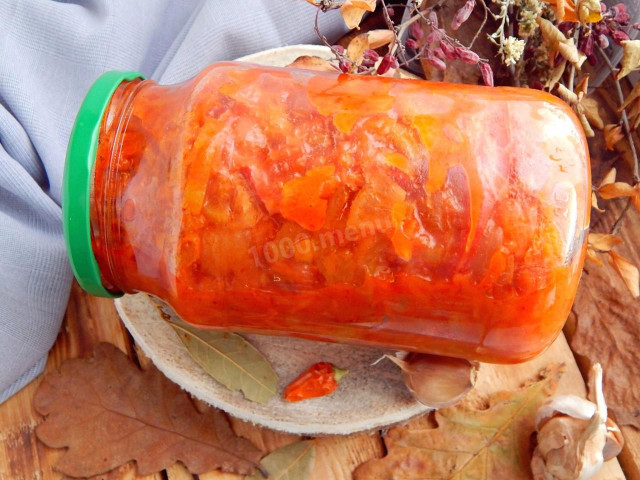
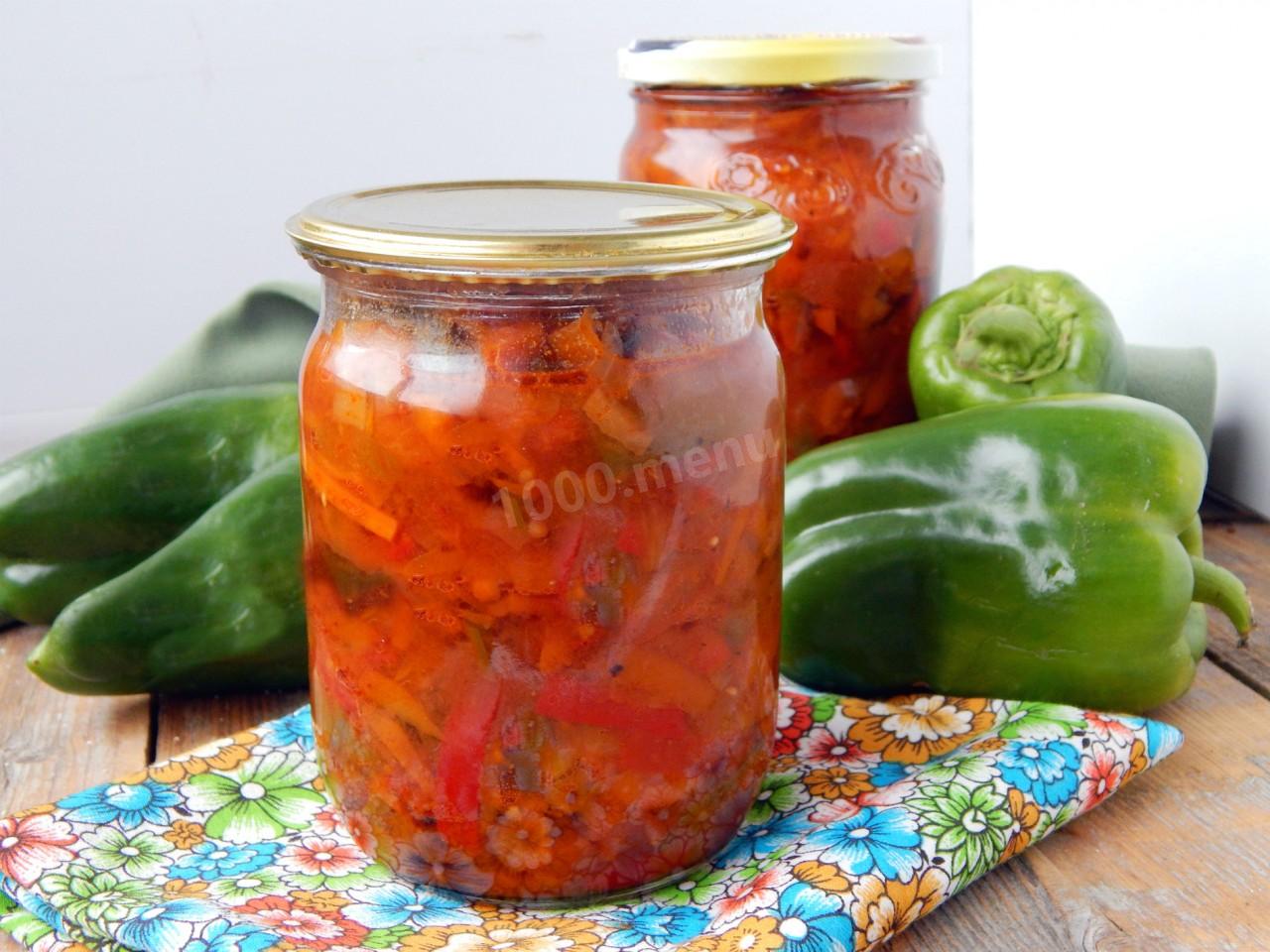
Pretty, tangy, mouthwatering — the tastiest around! Green bell peppers are at their best at harvest time, in late summer and early fall. That's when it's time to put up all sorts of preserves for winter. In this recipe, the peppers are canned with tomatoes, carrots, and onions.

Cooking method
-
Step 1:
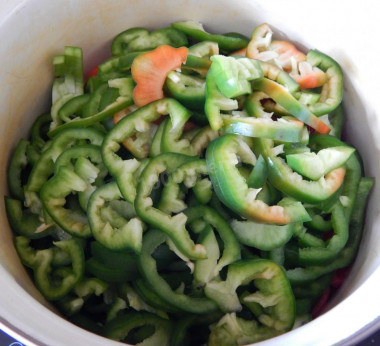
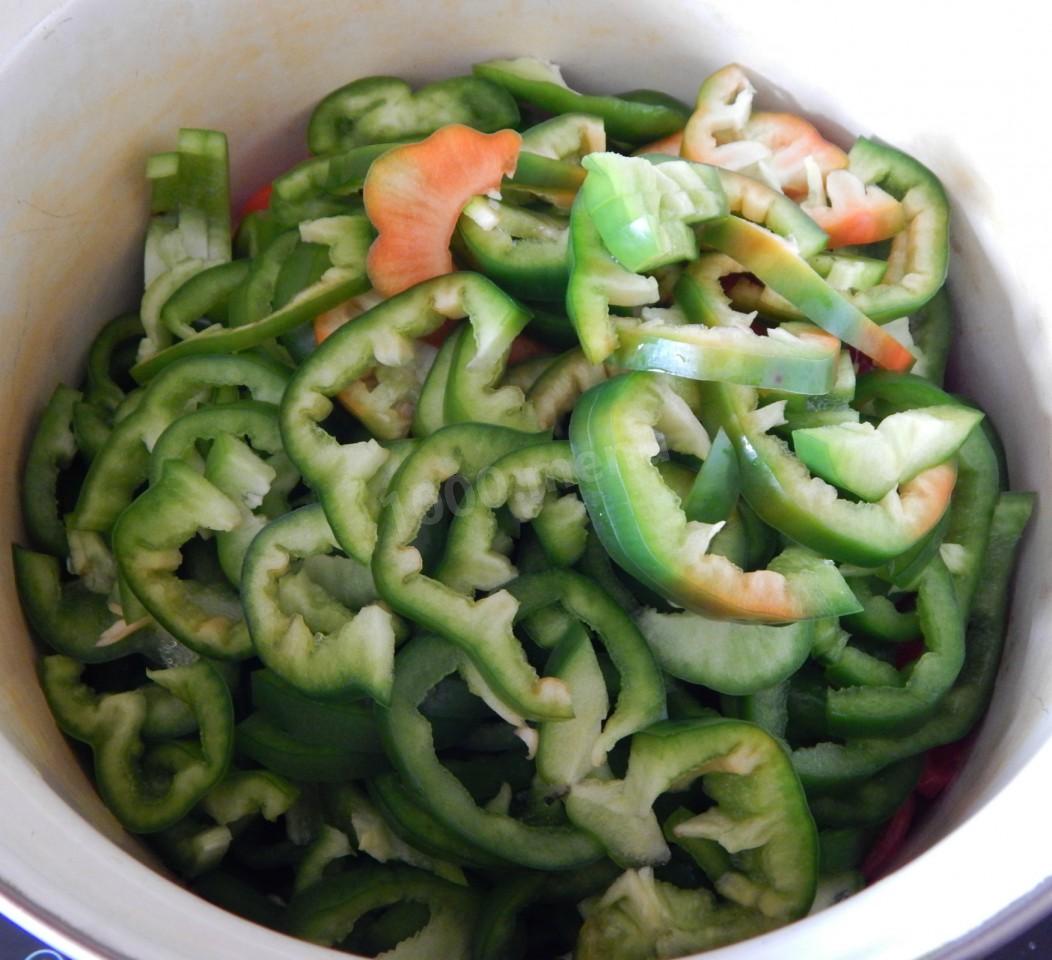
How do you make green bell peppers for winter? Gather your ingredients. Since green bell peppers are the star of this dish, choose peppers that are truly green — and you'll need noticeably more of them than the other ingredients. Rinse the bell peppers well under running water and remove the stems and seeds. Cut the peppers into rings or strips, whichever you prefer.
-
Step 2:
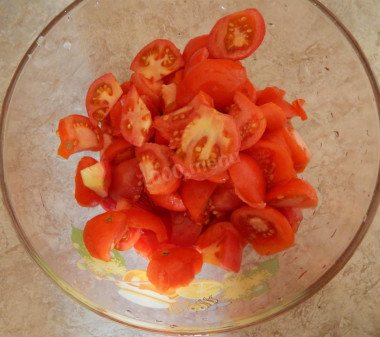
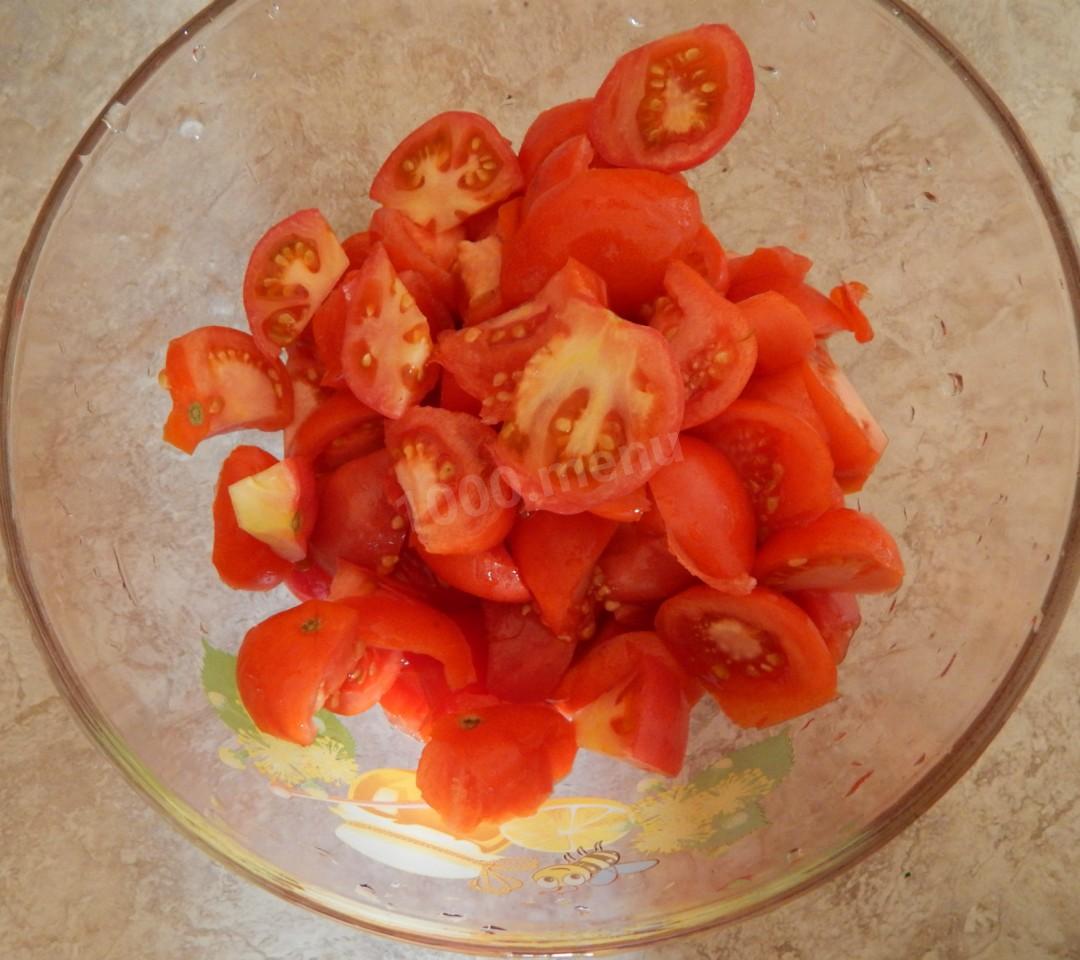
Wash the tomatoes too and cut out the stems. Halve the tomatoes — you can leave the skins on. Run them through a meat grinder or purée them in a blender until smooth.
-
Step 3:
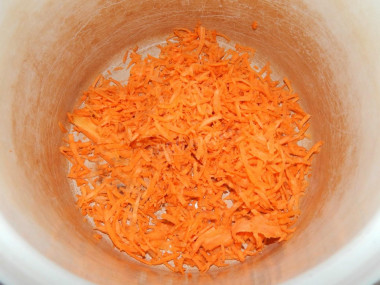
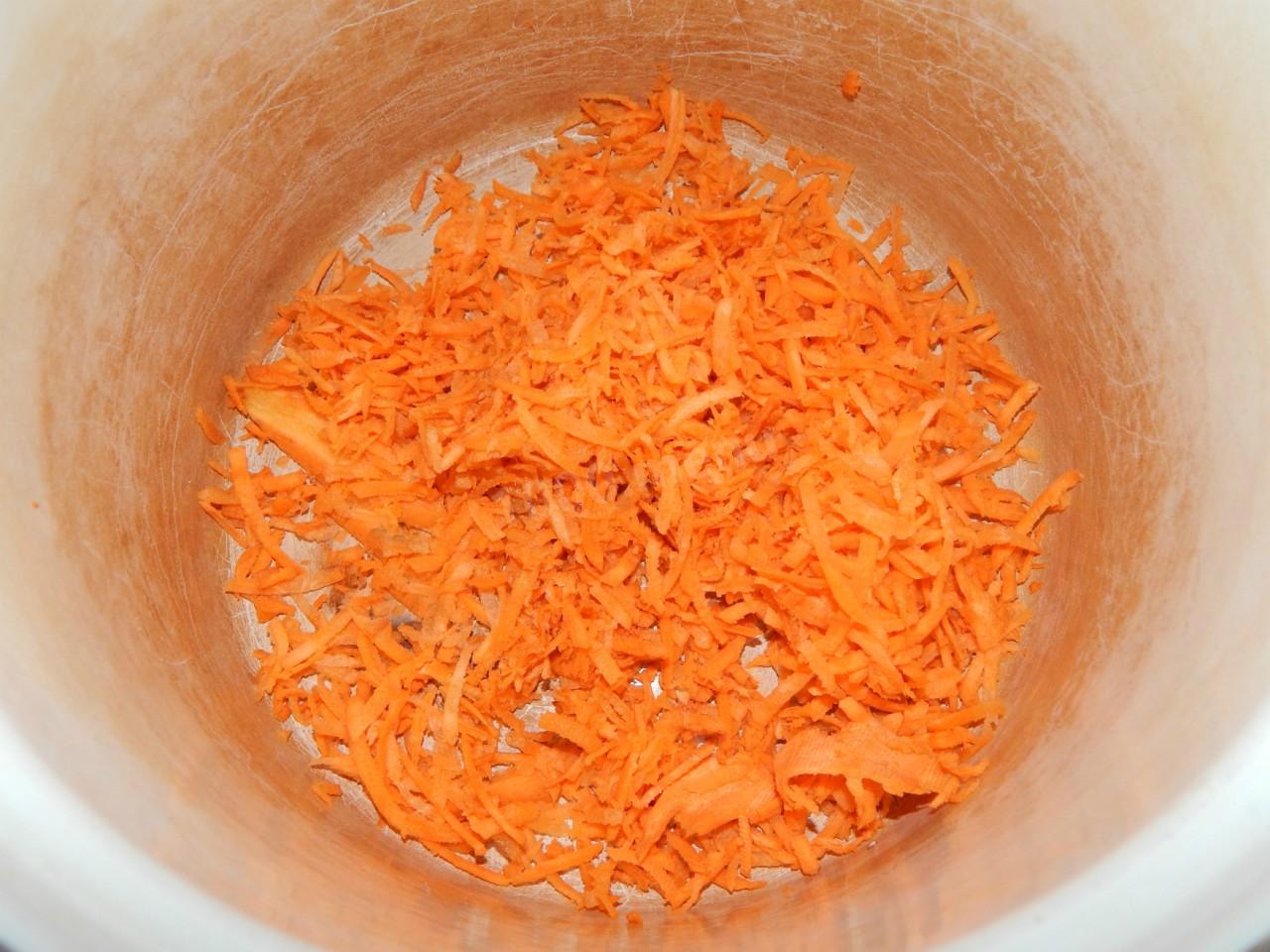
Wash, peel, and grate the carrots on a coarse grater.
-
Step 4:
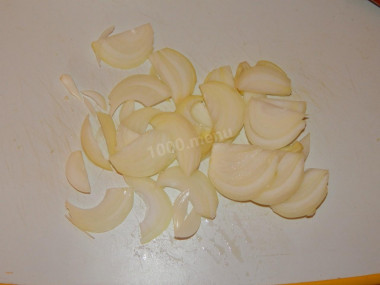
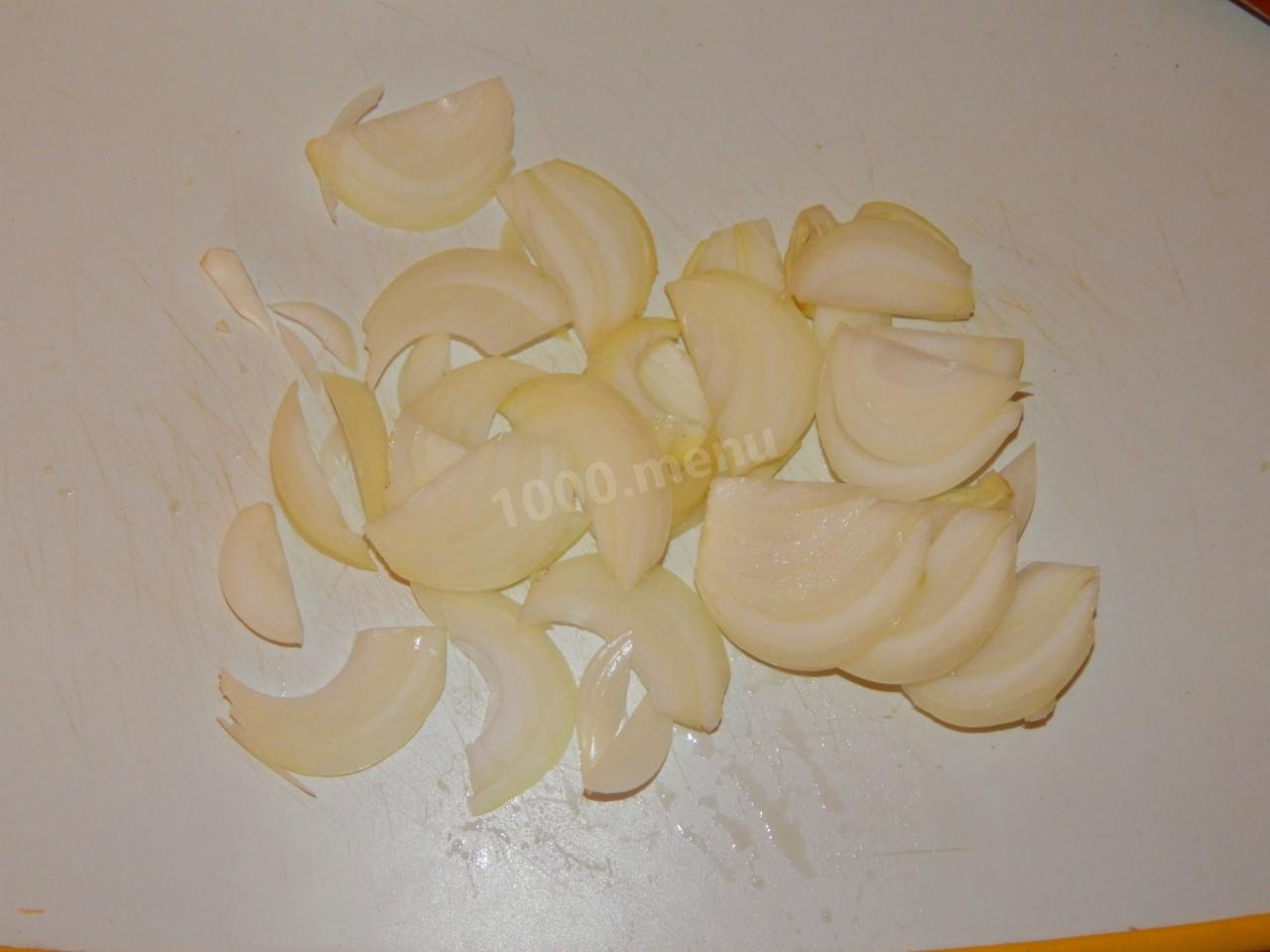
Peel the onions and cut them into half-rings.
-
Step 5:
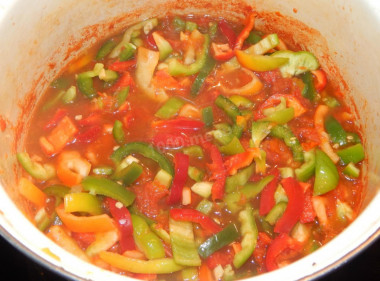
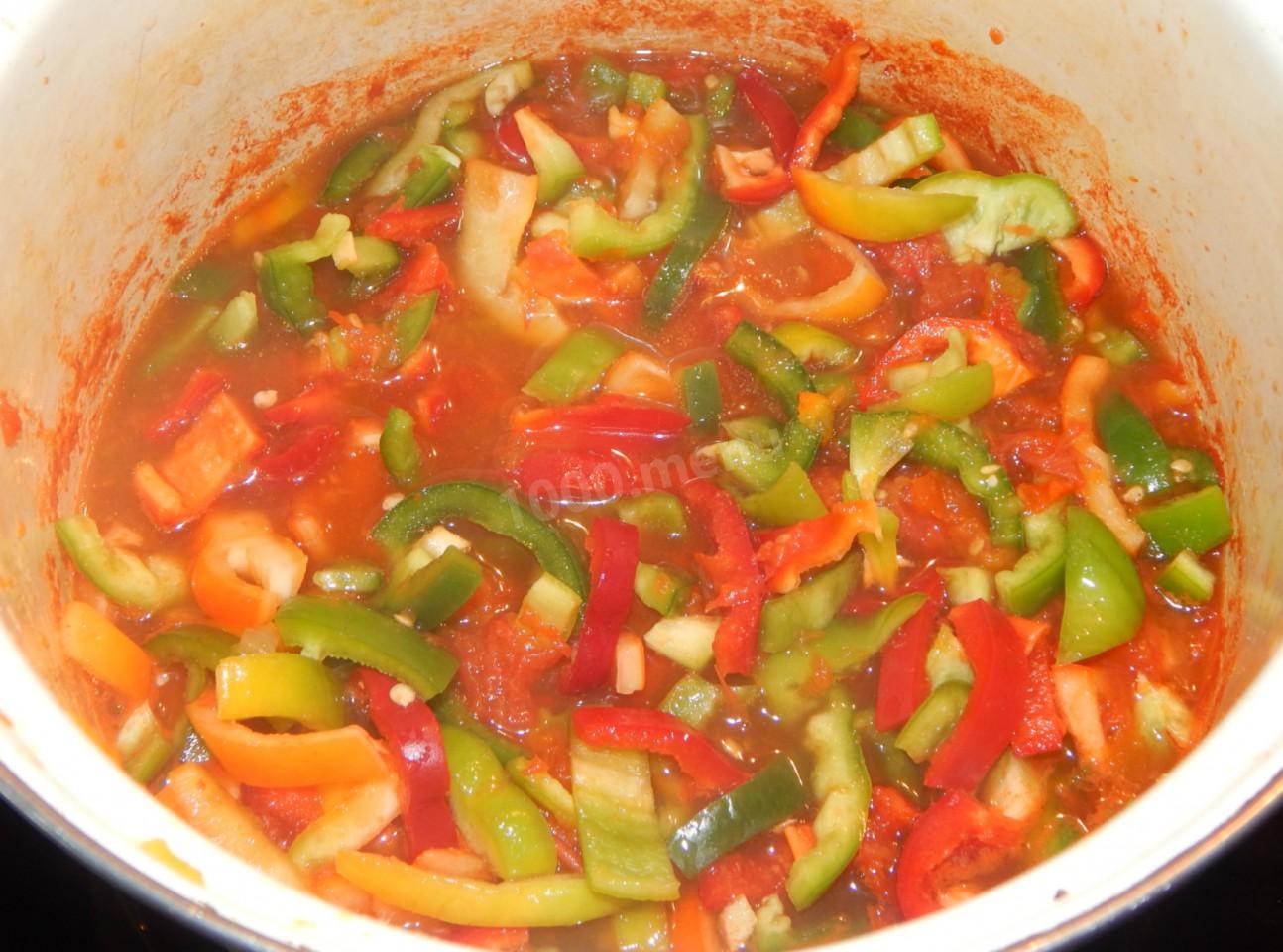
Put the tomato purée in a heavy-bottomed pot. Add the chopped bell peppers. Wash the hot pepper, chop it finely, and add it to the pot.
-
Step 6:
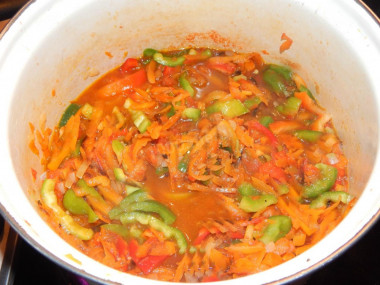
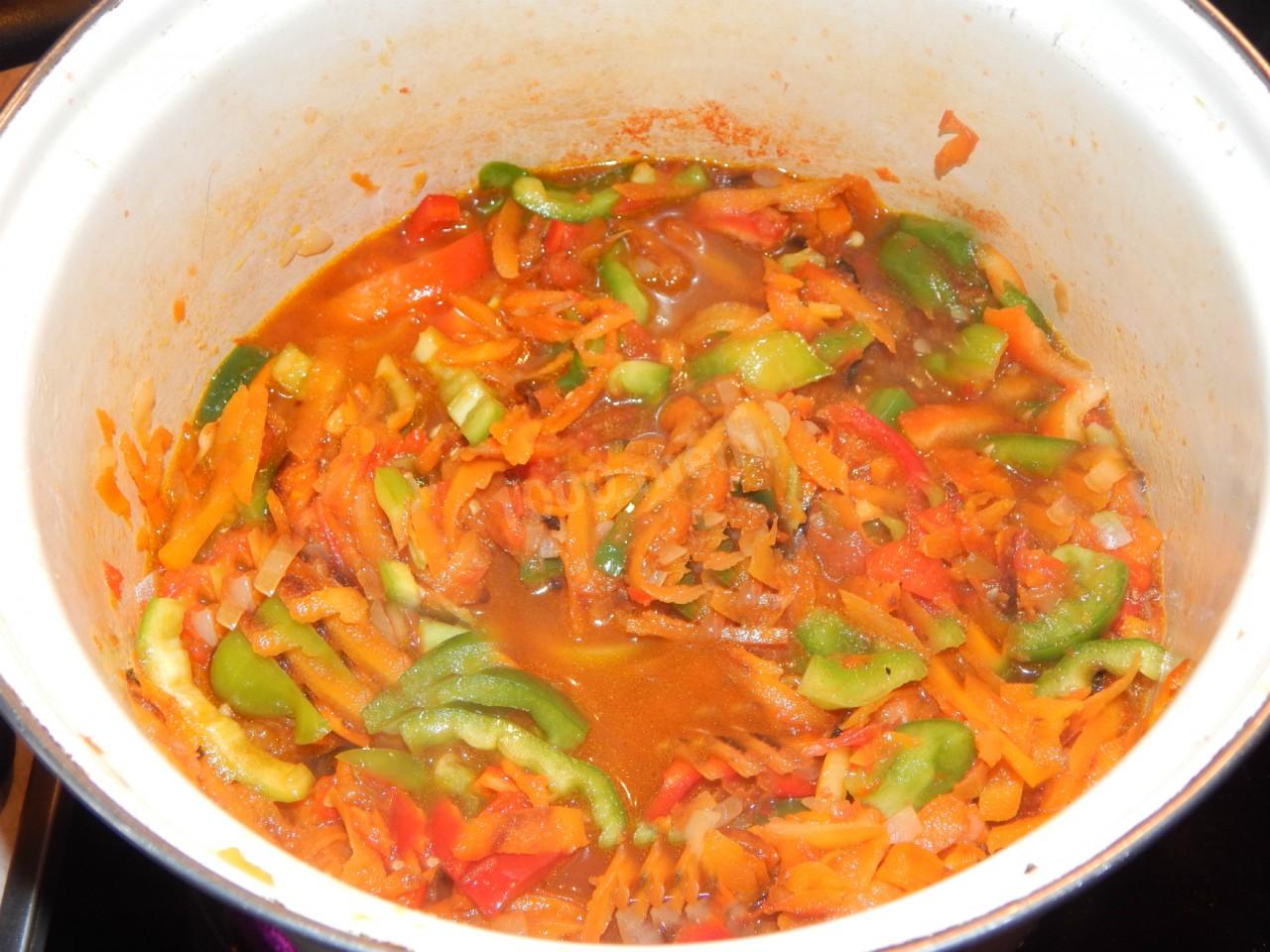
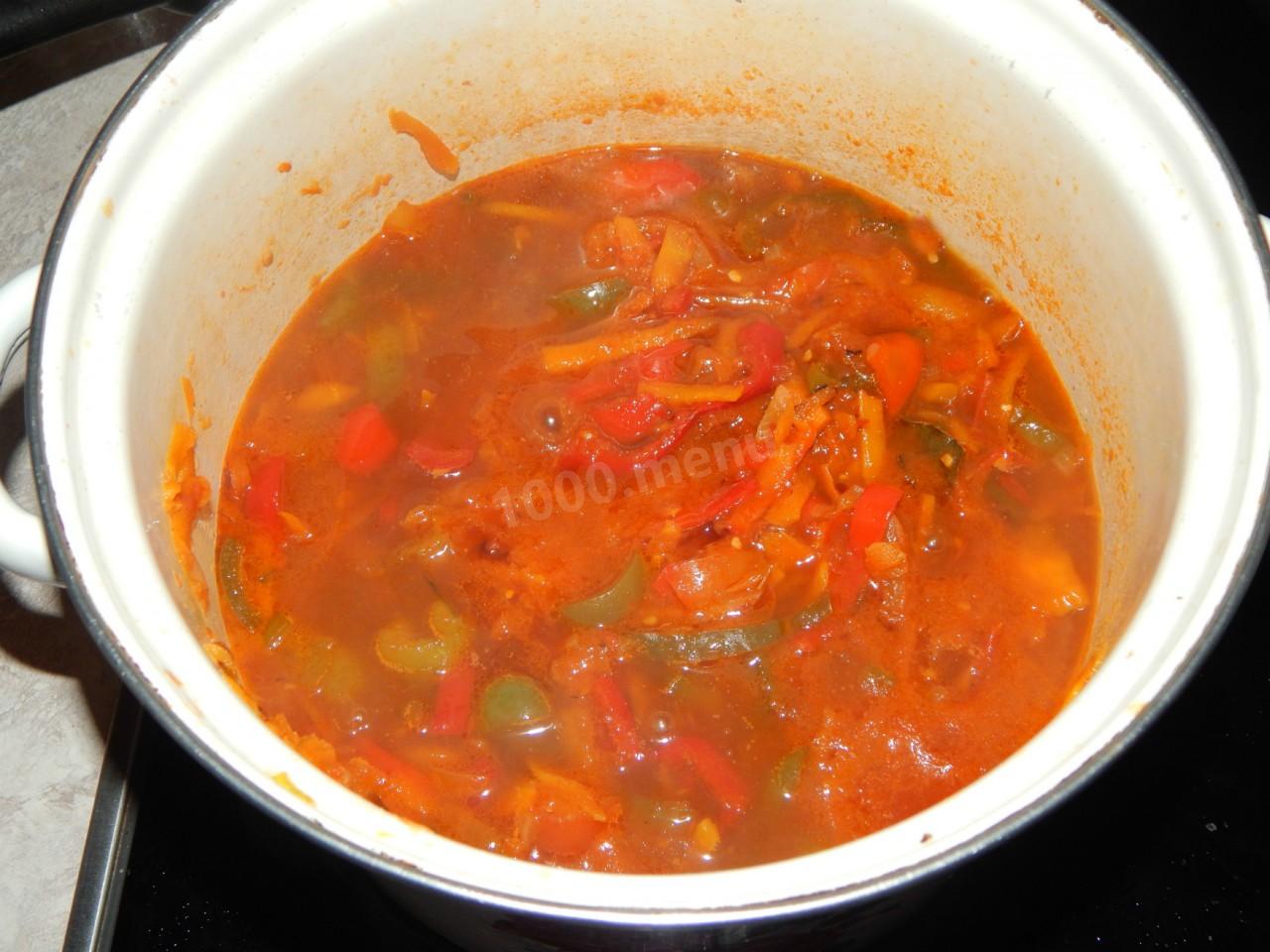
Set the pot over medium heat and bring the mixture to a boil, stirring occasionally. Turn the heat down and cook for about 10 minutes, skimming off any foam with a slotted spoon. Add the prepared carrots and onions and stir. Simmer for about 25 minutes more, stirring with a spoon. Add the salt, sugar, and vegetable oil. Stir again and simmer for another 15 minutes or so.
-
Step 7:
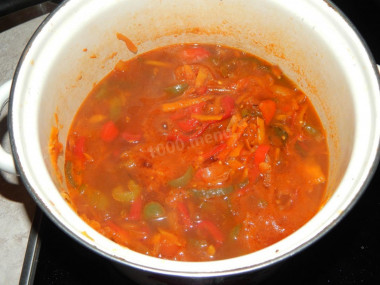
Pour in the vinegar, let the vegetables come to a boil, and cook them for about 5 minutes. Then take the pot off the heat.
-
Step 8:
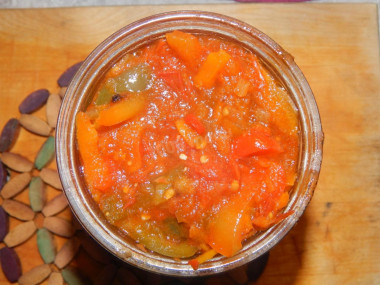
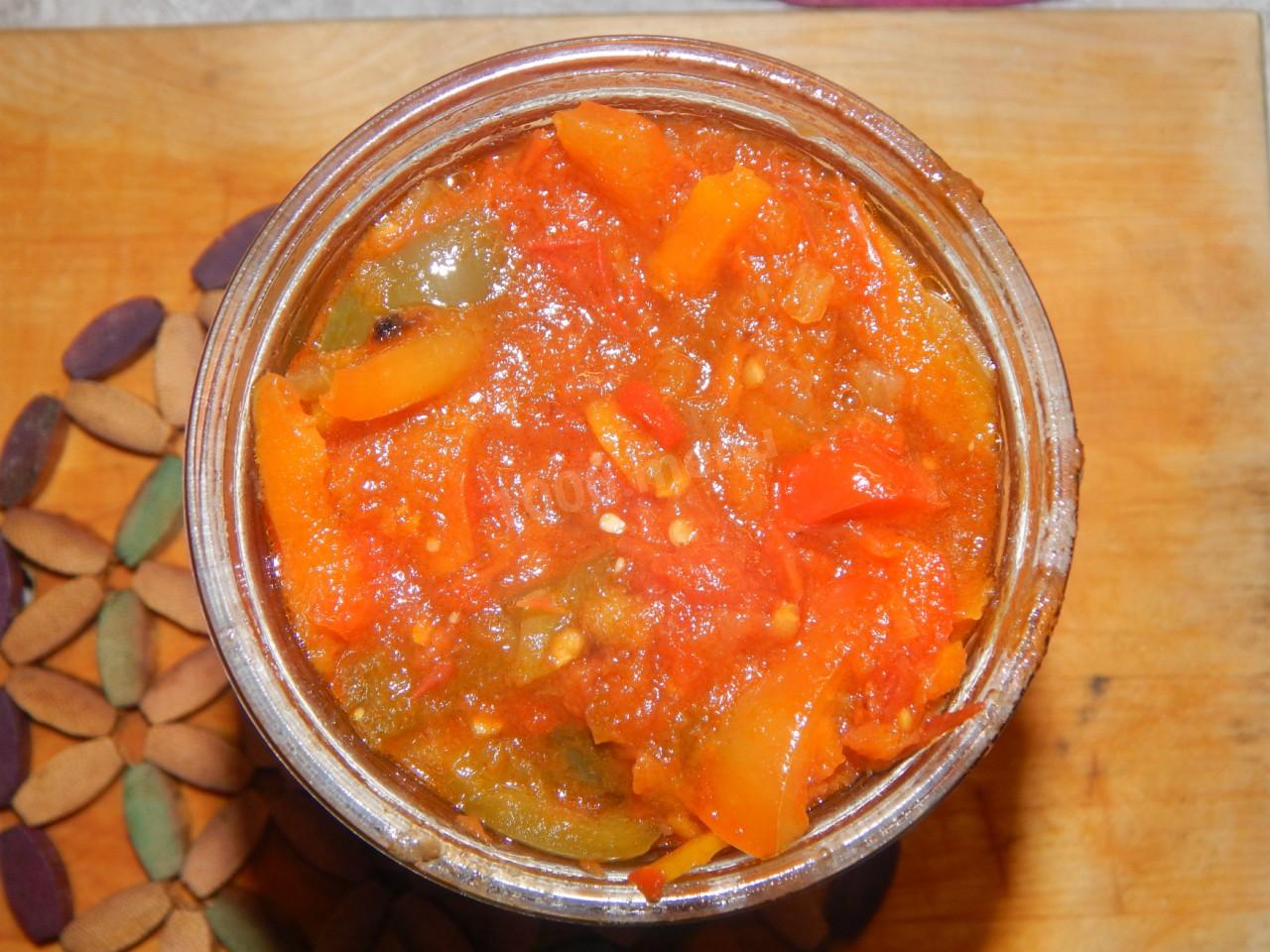
Spoon the mixture into sterile jars right away. Sterilize the jars ahead of time by any convenient method — over a water bath or in the oven — and boil and dry the lids. There's more on sterilizing and canning for winter at the end of the recipe.
-
Step 9:
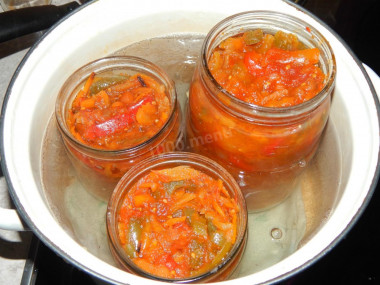
Set the filled jars in a large pot of water with a cloth on the bottom and process them for 15 minutes per pint (500 ml) jar. Seal the jars with lids. Turn them upside down, wrap them in a blanket, and let them cool to room temperature. Store the preserve in a cool pantry. Enjoy!
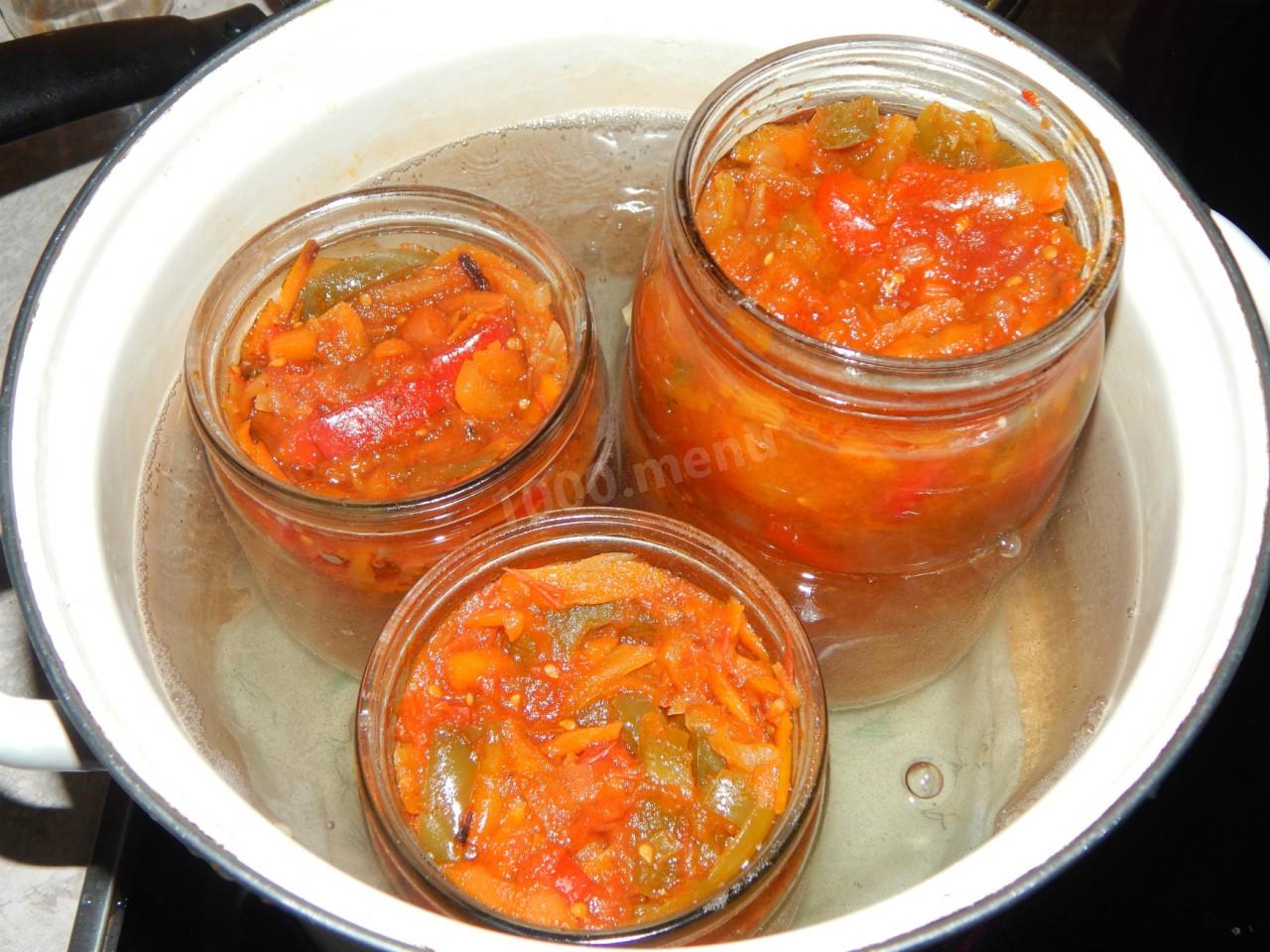
- How do you process the filled jars? Take a large pot and put a cloth on the bottom — it protects the jars from direct heat so they don't crack. Set the filled jars in the pot and rest the lids on top. Carefully pour in water until it reaches about halfway up the jars. Set the pot over low heat and wait for the water to boil. Turn the heat to its lowest setting and keep the jars in the pot for 15 minutes if they're pint (500 ml) jars; larger jars need longer. The water should barely simmer, without splashing into the jars. When the time is up, lift the jars out and seal them immediately.
- To make sure your summer harvest keeps you happy all through the cold season, read up on the basic rules, tips, and tricks for canning for winter.
- Since everyone's tolerance for salt, sweetness, bitterness, heat, acidity, and spice is different, always add seasonings and spices to your own taste! And if you're using a spice for the first time, keep in mind that some are especially easy to overdo (chile pepper, for one).
- Unless a recipe says otherwise, vinegar is assumed to be 9% strength by default.
Caloric content of the products possible in the composition of the dish
- Tomatoes - 23 kcal/100g
- Sweet pepper - 27 kcal/100g
- Carrots - 33 kcal/100g
- Dried carrots - 275 kcal/100g
- Boiled carrots - 25 kcal/100g
- Granulated sugar - 398 kcal/100g
- Sugar - 398 kcal/100g
- Vegetable oil - 873 kcal/100g
- Hot capsicum - 40 kcal/100g
- Salt - 0 kcal/100g
- Onion - 41 kcal/100g
- Table vinegar - 11 kcal/100g