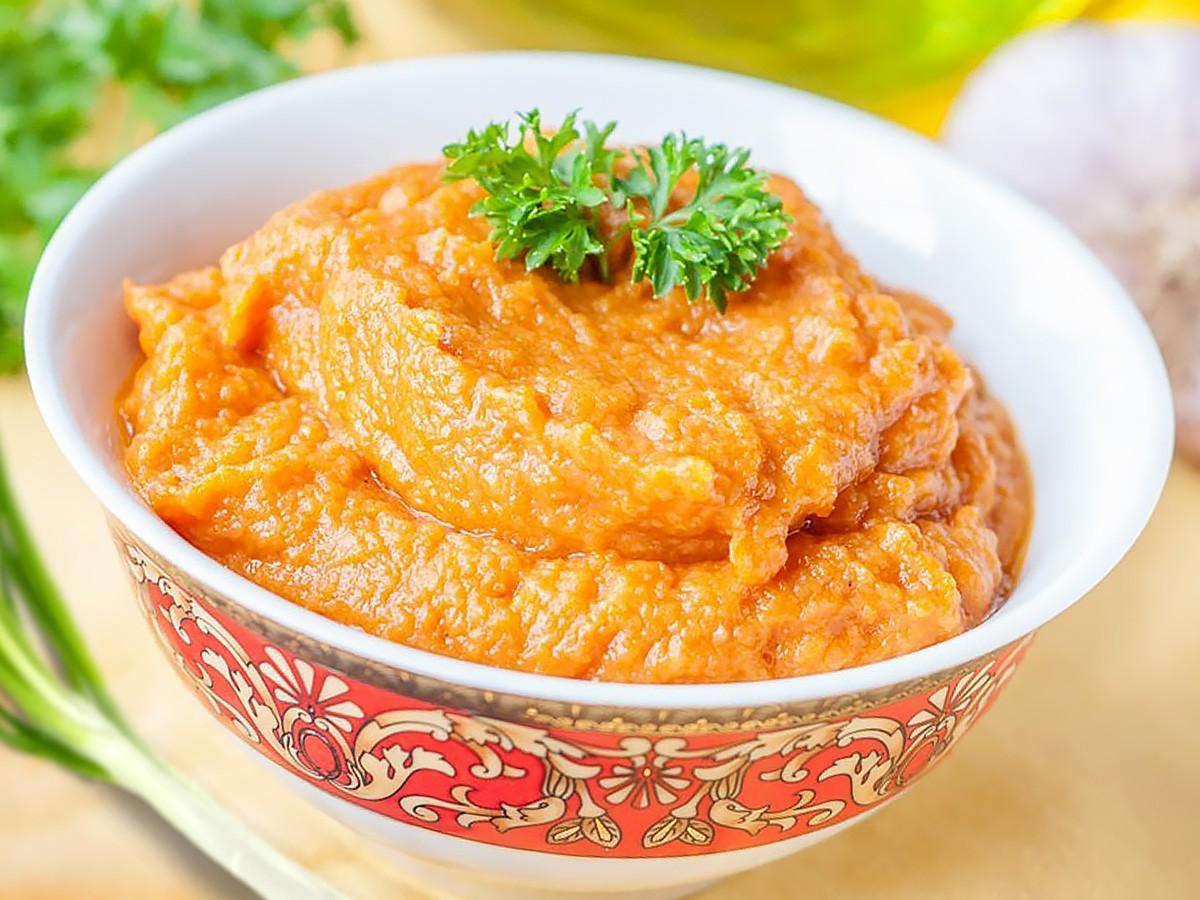
Zucchini Caviar for Winter
A tasty spread for sandwiches or a side for dinner! This zucchini caviar is a great way to put up vegetables for winter. It has a deep, savory flavor — richer, in fact, than caviar made with regular squash. It comes together quickly and easily, and a jar opened in the middle of winter is always a treat.
Mila
Recipe author
Zucchini Caviar for Winter
Nutrients and energy value of the composition of the recipe
By weight of the composition:
Proteins 14 %
2 g
Fats 36 %
5 g
Carbohydrates 50 %
7 g
70 kcal
GI:
100
/
0
/
0
- Zucchini differs from other summer squash in more than just color: the flavor is a little different, and the dark green skin is fairly tough. For this dish you'll want to peel it off, since it doesn't look great and the tough bits can throw off the texture. Wash the zucchini, pat it dry with a towel, trim off the ends, and peel it — a vegetable peeler works well for taking off a thin layer. Cut the zucchini into small, roughly-shaped pieces; if you hit any large seeds inside, scoop them out. Peel, wash, and dry the onion, carrots, and garlic. Cut the onion and carrots into pieces small enough to run through a meat grinder, and leave the garlic in whole cloves for now. Pass the zucchini, onion, and carrots through the meat grinder. Transfer the vegetable mixture to a heavy-bottomed pot and stir well until everything is evenly combined. Add the vegetable oil and tomato paste. Set the pot over medium heat and, stirring now and then, bring it to a boil. Once the whole mixture is bubbling evenly across the surface, lower the heat to a minimum. Let the caviar simmer gently for an hour and a half, stirring occasionally so it doesn't scorch. Press the garlic or chop it very finely with a knife. When 10 minutes of cooking remain, stir in the garlic along with salt and ground black pepper to taste, using a silicone or wooden spatula. Finished zucchini caviar keeps beautifully sealed in a cold cellar. If your only storage is a pantry in an apartment, you can add a little vinegar essence — about 5 ml per 4 liters of caviar — for extra keeping power. Wash and sterilize the jars however you like, and boil the lids. Spoon the caviar into the jars, seal them, and leave them to cool, then move them to a cool spot for storage. The zucchini caviar is ready — enjoy!
Caloric content of the products possible in the composition of the dish
- Onion - 41 kcal/100g
- Carrots - 33 kcal/100g
- Dried carrots - 275 kcal/100g
- Boiled carrots - 25 kcal/100g
- Garlic - 143 kcal/100g
- Ground black pepper - 255 kcal/100g
- Vegetable oil - 873 kcal/100g
- Tomato paste - 28 kcal/100g
- Salt - 0 kcal/100g
- Zucchini - 16 kcal/100g
Similar recipes
Related and additional categories: