Wild Strawberry Jam for Winter
Tasty, bright, fragrant, simple, with a touch of summer! Wild strawberry jam is a little piece of summer in the long, cold winter! It's very easy to make and tastes wonderful. Serve it with tea, coffee, crêpes, or pancakes, or use it as a filling for pies and hand pies.


Cooking method
-
Step 1:
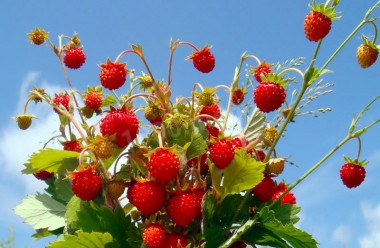
How do you make wild strawberry jam for winter? Get your ingredients ready. It doesn't matter what wild strawberries you use — from the store, the woods, or your own garden. The main thing is that they're fresh, fragrant, and whole. And here's a little bouquet of wild strawberries to lift your spirits! :)
-
Step 2:
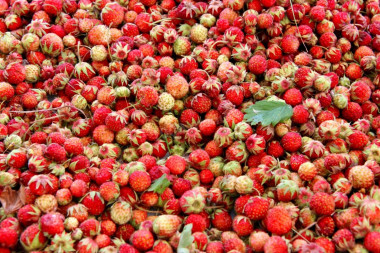
Carefully sort the wild strawberries, removing the stems and leaves. Discard any crushed or spoiled berries, but you can keep the underripe, greenish ones (they won't spoil the jam). This is the most tedious, time-consuming part, but clean berries make better jam, so sort them well! Then gently rinse the strawberries under running water (I put a few berries in a colander and run cool water over them at low pressure from a shower head).
-
Step 3:
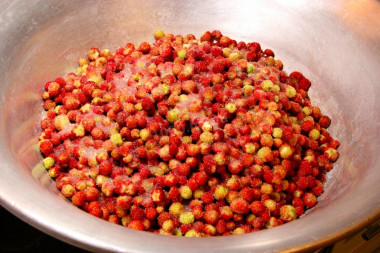
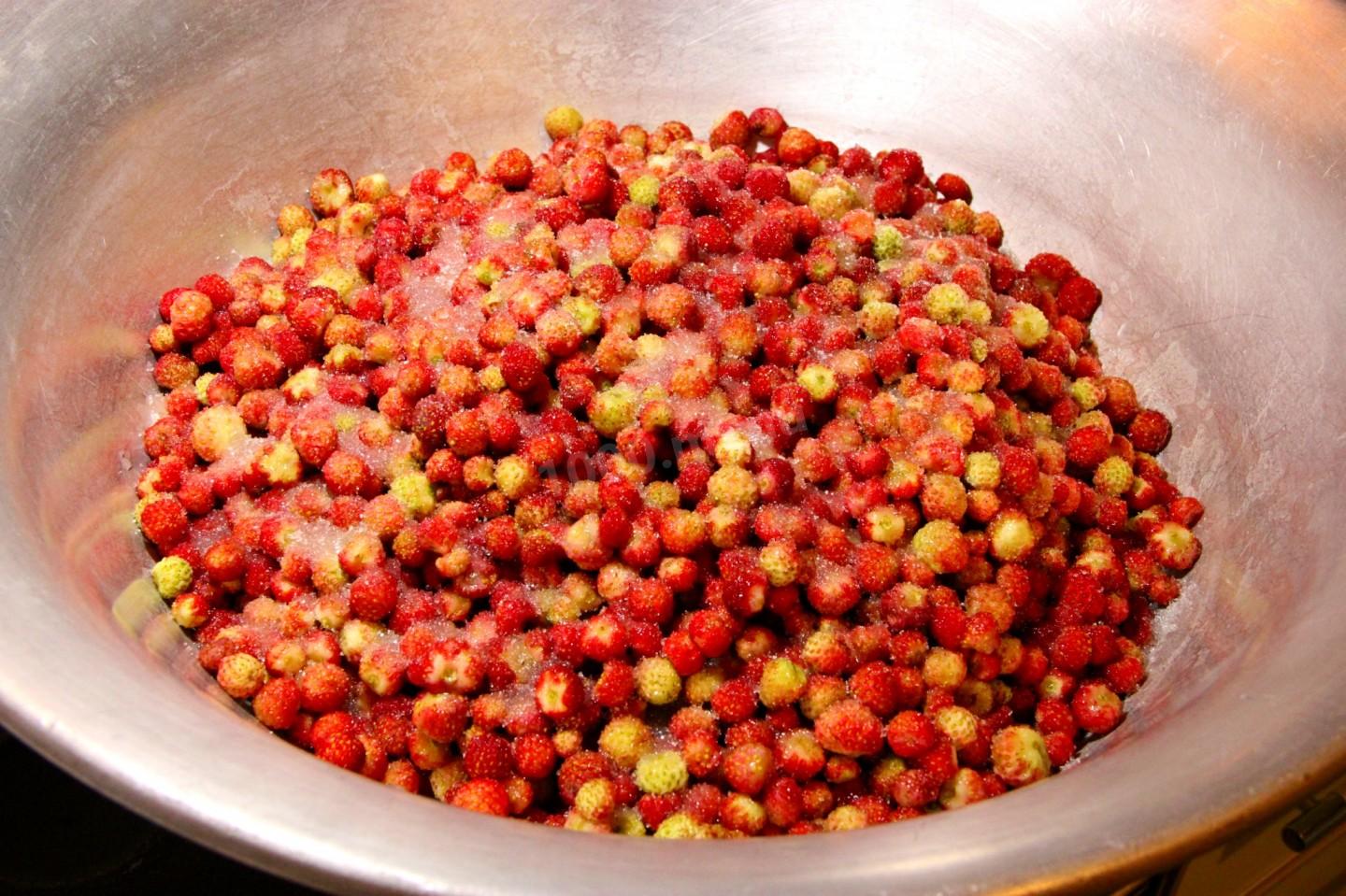
Let the water drain off and transfer the berries straight into a preserving pan. Layer the berries and sugar alternately (I split the berries between two pans, putting no more than 2 kg in each, since it's easier to cook that way, and add 1 kg of sugar to each pan right away). Then leave the berries at room temperature until they release their juice, about 2–3 hours. After that, set the pan on the stove.
-
Step 4:
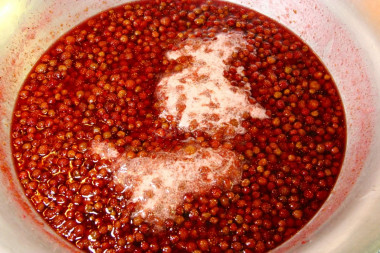
Start over low heat and gently stir the berries. Once the sugar has fully dissolved in the released juice, raise the heat to medium and bring it to a boil. Foam will start to form. Gently stir the jam and let it come to a boil twice, stirring each time so it heats evenly.
-
Step 5:
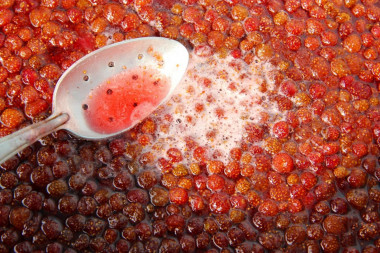
Take the pan of strawberries off the stove, gather the foam toward the center, and skim it off with a spoon. To do this, I gently rock the pan left and right, back and forth. But be very careful — it's easy to get burned, so pay attention!
-
Step 6:
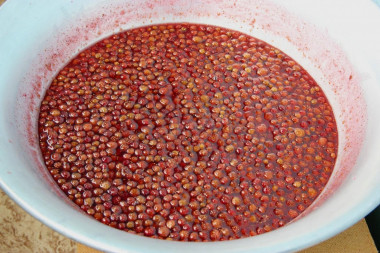
Add the remaining sugar to the hot jam and stir well until it's fully dissolved. Let the jam cool completely and rest for 3–4 hours. Then repeat the boiling step twice more. After the third boil, at the end of cooking, add the citric acid and skim off the foam.
-
Step 7:
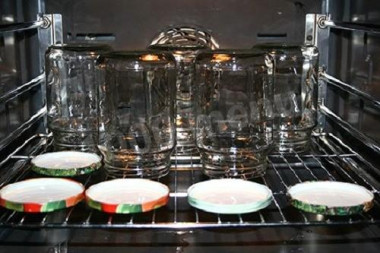
Prepare the glass jars: wash them with baking soda and rinse well under running water. Place them, still wet, neck-down in a cold oven, and set out the lids. Turn the oven to 150°C (300°F); once it reaches temperature, sterilize 0.5 l jars for 10 minutes and 1 l jars for 15 minutes. This sterilizing method is the most convenient for me, but you can also sterilize the jars in the microwave or over steam.
-
Step 8:

Pour the hot jam into the dry, still-warm sterilized jars. Seal the jars of hot jam right away, wipe them clean, turn them upside down on their lids, and let them cool. Store the jam in a cellar or the fridge. It keeps for up to two years.
-
Step 9:
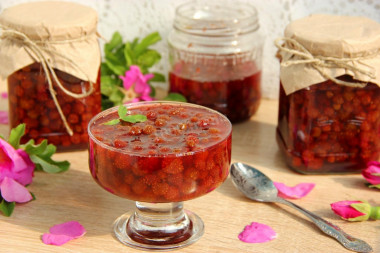
And there you have it — bright, beautiful wild strawberry jam! Enjoy your tea!

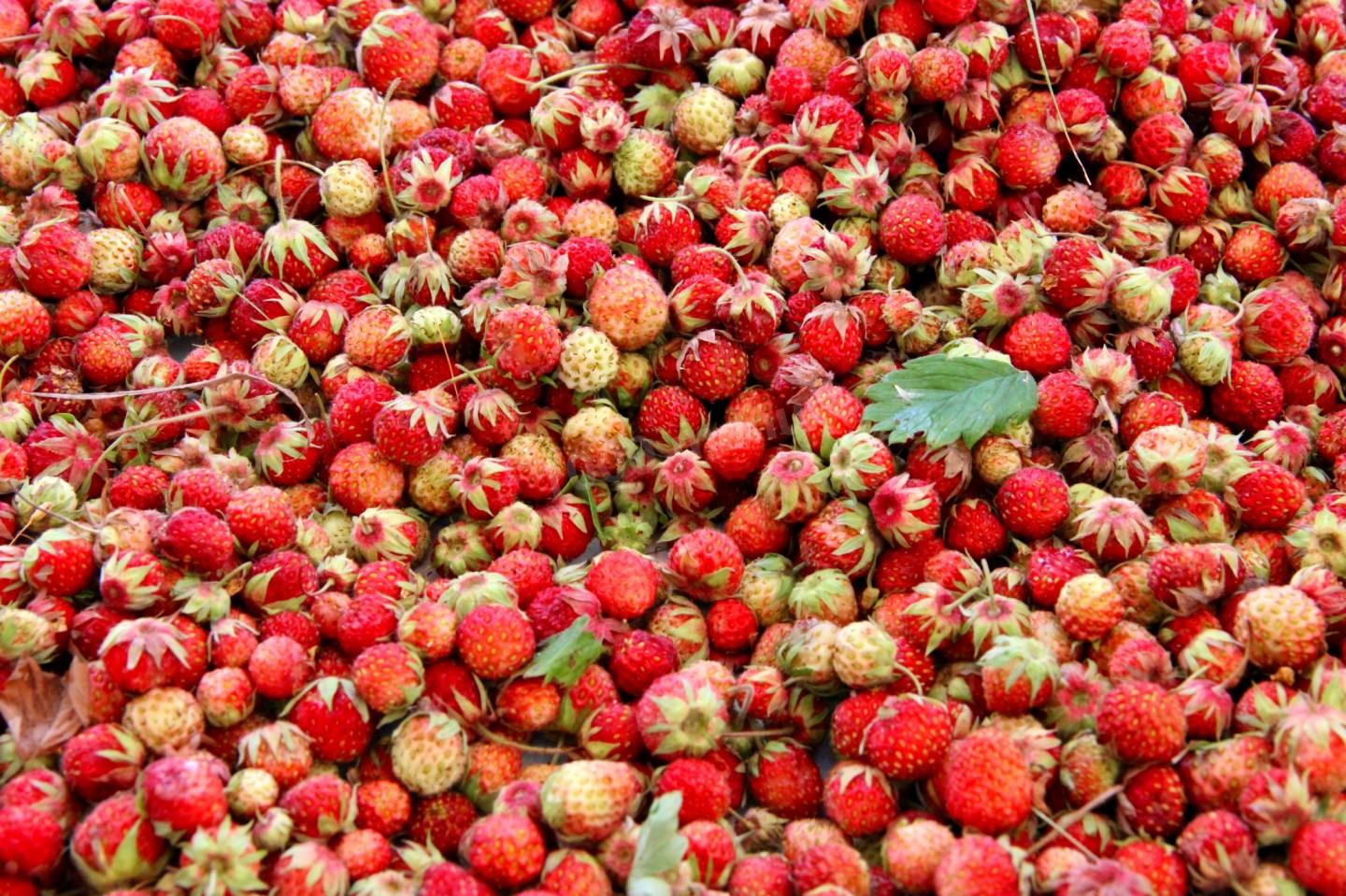


- There are lots of wild strawberries in Siberia. We don't plant them in our gardens — they grow wild, in sunny clearings, often on high ground. Gathering them is quite a chore, so the locals affectionately call them "polzunika" (little crawlers). And of course we don't pick 1 kg but whole buckets, which is why I give the recipe for this amount of berries. There was a 10 l bucket; after cleaning it came to 3.8 kg of berries and 4.9 liters of finished jam — that's almost five liter jars, though I pour it into smaller jars, which is more convenient for us.
- The method is like a "five-minute" jam, but a little different. Here you also bring it to a boil three times, but instead of letting it boil continuously for 5 minutes, you only let it come to a boil three times. That's the only difference, but with this method even delicate berries stay whole.
- To make sure your summer stores delight you all through the cold season, read up on the basic rules, secrets, and tips for winter preserving.
Caloric content of the products possible in the composition of the dish
- Granulated sugar - 398 kcal/100g
- Sugar - 398 kcal/100g
- Citric acid - 0 kcal/100g
- Garden strawberry - 32 kcal/100g