Homemade Caramel for Cake
Caramel made with kefir, easy to make without a thermometer! An affordable caramel recipe that uses kefir instead of cream, which is pricey these days. It's quick and easy — you just need to keep an eye on the timer.


Cooking method
-
Step 1:

How do you make caramel for a cake? You'll be surprised how simple it is! Measure and weigh out all the ingredients on the list.
-
Step 2:
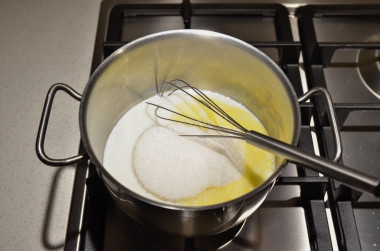
Put everything into a large, heavy-bottomed pot and set it over medium heat.
-
Step 3:
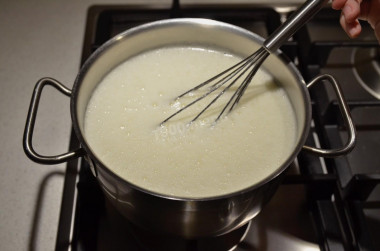
Stirring constantly, bring it to a boil. Keep in mind that the mixture will rise up a lot (which is why you need a large pot).
-
Step 4:
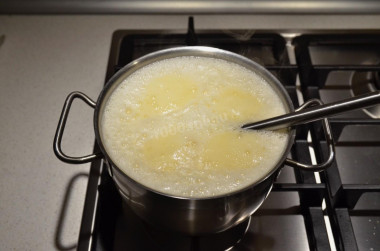
Once it boils, reduce the heat and cook the mixture for exactly 7 minutes (a timer is best), stirring the whole time. When the time is up, turn off the heat but keep stirring with a whisk.
-
Step 5:
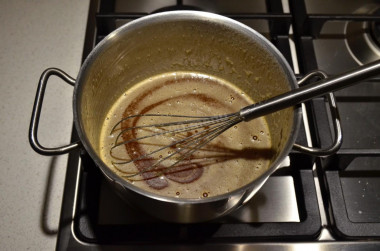
Don't stop stirring. The mixture will gradually reduce in volume and take on a caramel color. A little foam will stay on the surface — don't worry about it; it disappears as the caramel cools.
-
Step 6:
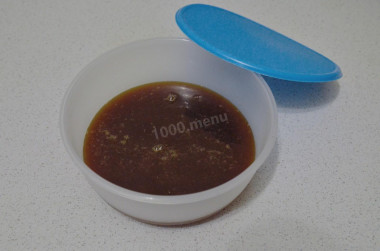
Once the caramel has cooled to room temperature, pour it into a container with a lid and refrigerate for at least 12 hours.


- I like this caramel recipe because it's simple and convenient: there's no thermometer to fuss with, so it's easier to make, and the expensive cream is swapped for budget-friendly kefir — without the result suffering at all. To my mind, it comes out absolutely delicious! Give this homemade caramel a try, then treat your loved ones to it.
- You can use the finished caramel as a cake filling and for those trendy drips when decorating, which keeps the cost of the cake way down. It also makes a great sauce for baked goods, pancakes, syrniki, desserts, and ice cream; you can drizzle it over berries, or just eat it straight from the jar with a spoon. Delicious!
- A couple more notes specific to this caramel:
- Freshly made caramel is very runny, but it thickens after a night in the refrigerator. The top layer will be a little thicker, so give it a stir after it has set in the fridge — that smooths it out.
- Instead of sugar, you can use a heat-stable sweetener.
Caloric content of the products possible in the composition of the dish
- Honey - 400 kcal/100g
- Granulated sugar - 398 kcal/100g
- Sugar - 398 kcal/100g
- Kefir fat - 62 kcal/100g
- Kefir of 1% fat content - 38 kcal/100g
- Low-fat kefir - 30 kcal/100g
- Kefir 'doctor beefy' 1,8% fat content - 45 kcal/100g
- Kefir 2.5% fat content - 53 kcal/100g
- Butter 82% - 734 kcal/100g
- Amateur unsalted butter - 709 kcal/100g
- Unsalted peasant butter - 661 kcal/100g
- Peasant salted butter - 652 kcal/100g
- Melted butter - 869 kcal/100g
- Salt - 0 kcal/100g
- Baking soda - 0 kcal/100g