How to make coconut milk at home
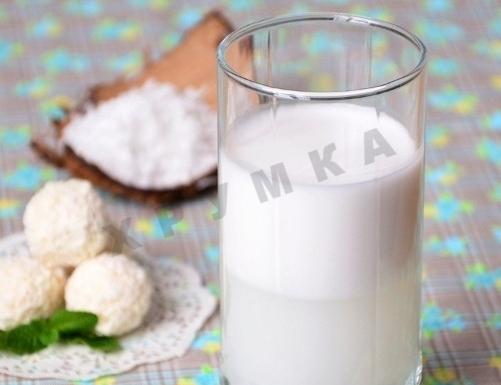
Making coconut milk at home is quick and easy! A lot of you have probably seen a whole coconut at the store. I don't know about you, but I always used to pick it up, turn it over in my hands, and put it right back on the shelf, because I had no idea what to do with it. But it's really not as intimidating as it looks. From one nut you get a couple of great things at once — coconut flakes and coconut milk. So, shall we get cooking?

Cooking method
-
Step 1:
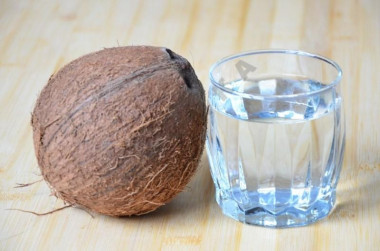
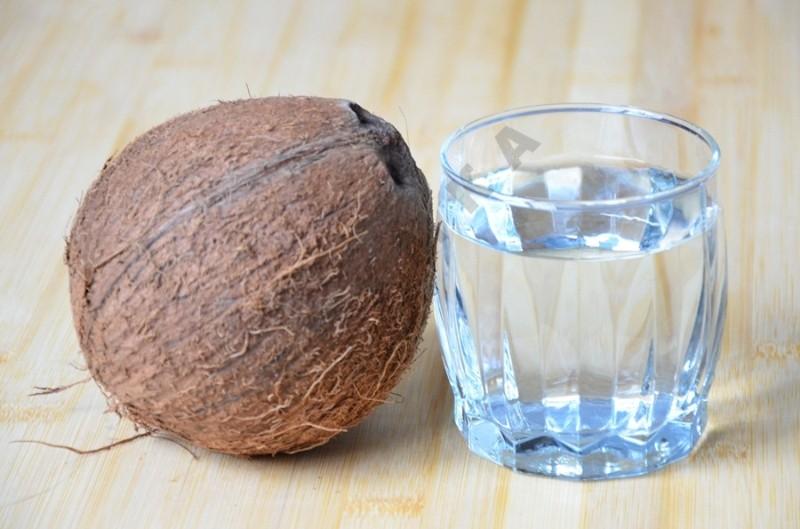
Here's everything we'll need. First, pick out your coconut — choose the heaviest one, and be sure to give it a shake right next to your ear; you should hear water sloshing around inside. :) The three eyes of the coconut should be intact and free of mold. Once you've chosen a good coconut, you're ready to cook.
-
Step 2:
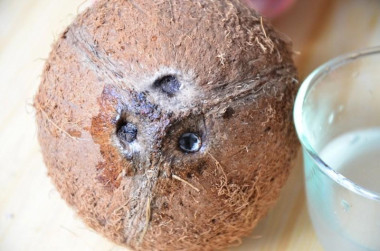
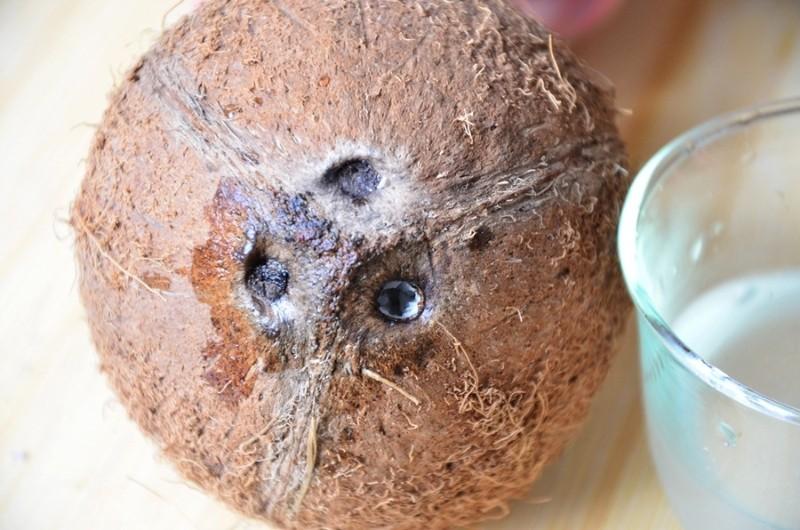
Among the three eyes, feel for the one that opens into the coconut — it'll be soft and easy to poke through with a knife. The other two stay closed; don't bother trying to poke them, they'd only give way to a drill. Drain the coconut water out through the hole. You can drink it; we won't need it for this.
-
Step 3:
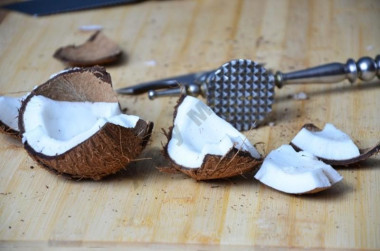
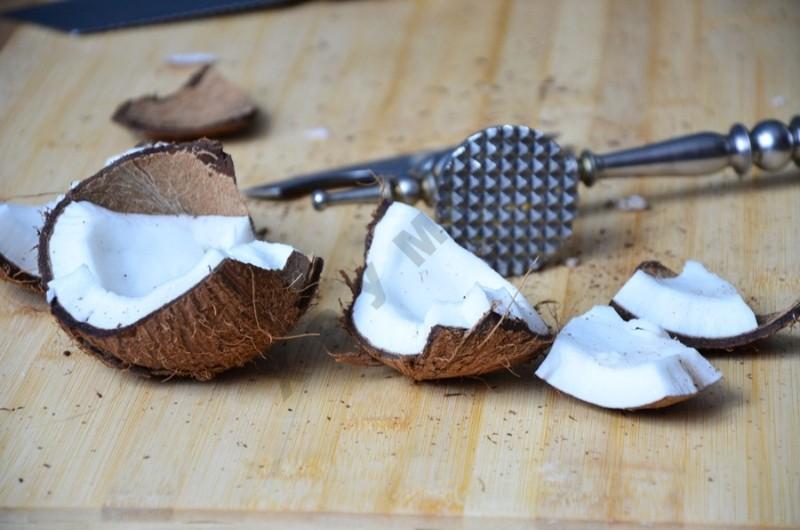
Next you need to crack the nut open, and this is where a little muscle comes in handy (which is exactly what I used). If you'd rather not, use a hatchet and try to strike the same spot each time — just be careful.
-
Step 4:
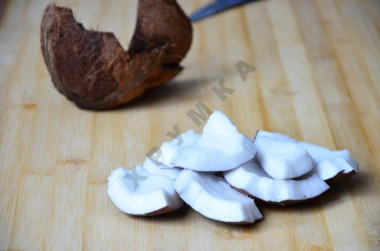
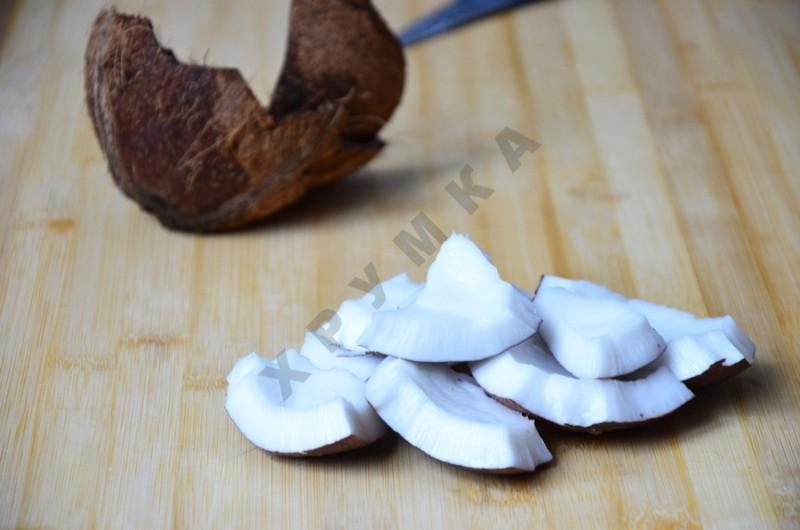
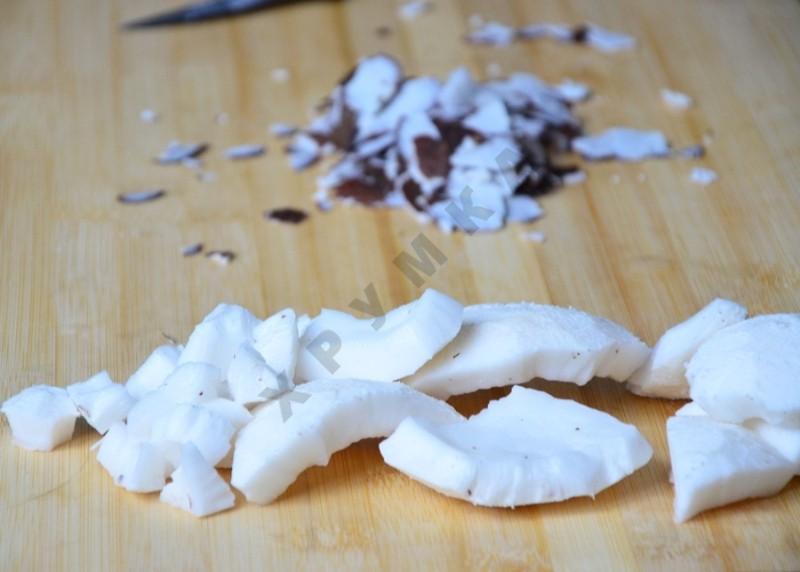
Pry the coconut meat away from the shell.
-
Step 5:
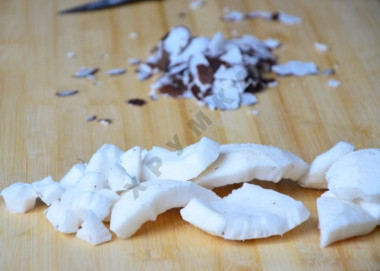
Peel the dark skin off the meat. You don't strictly have to, but if you leave it on the milk will come out grayish and so will the flakes.
-
Step 6:
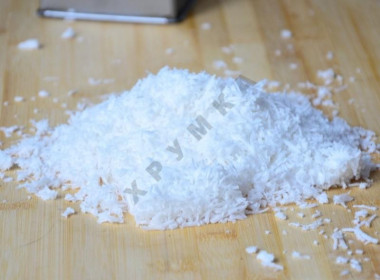
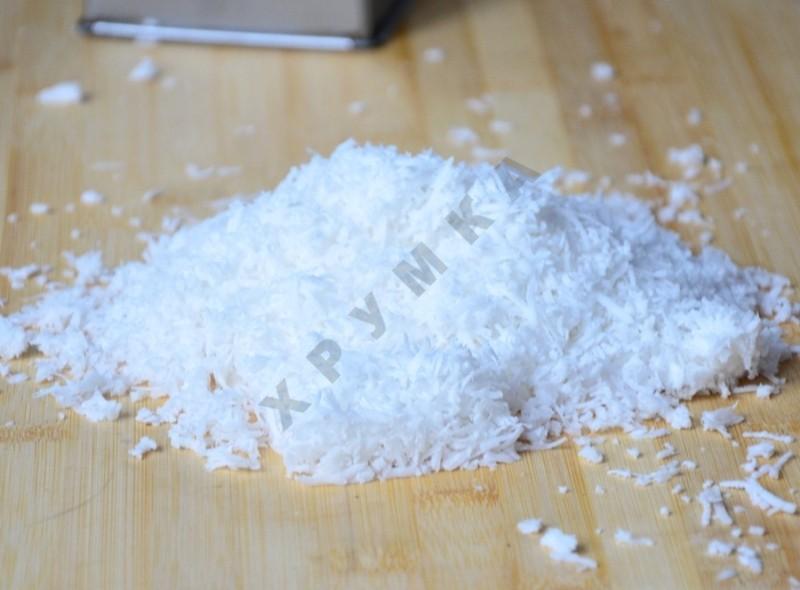
Grate the coconut meat, or grind it in a food processor.
-
Step 7:
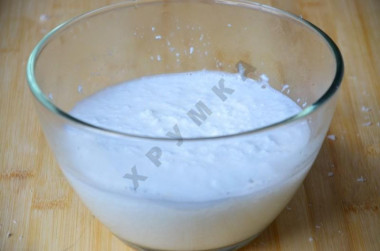
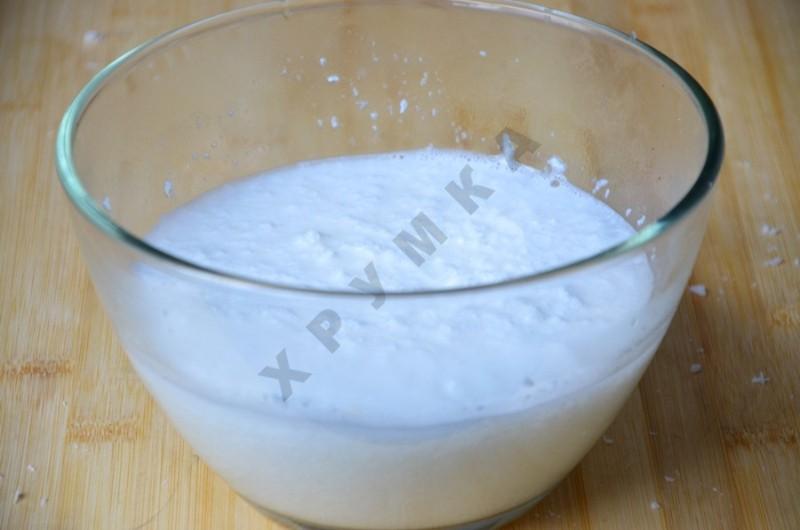
Transfer the grated coconut to a bowl and pour over just enough boiling water to barely cover it. Let it sit for half an hour. During this time the meat swells and soaks up some of the water. Tip the mixture out onto a sturdy towel or cloth napkin and squeeze out the liquid. Work in batches, wringing the pulp as dry as you can. A strong grip helps here too.
-
Step 8:
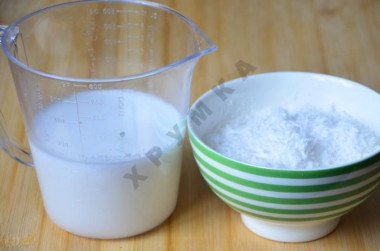
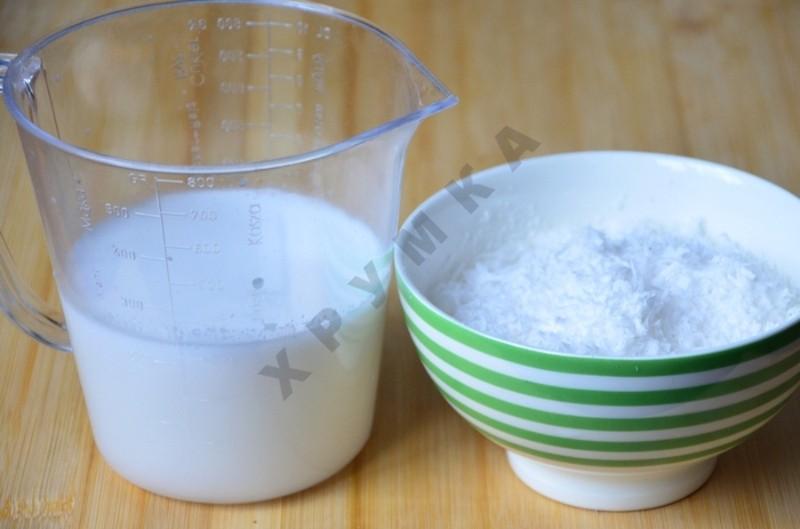
So in the end you get coconut flakes — I ended up with about 130 g — and 380 g of coconut milk. If you want to store the flakes, you have to dry them in the oven; I dried mine at 210°F (100°C), stirring now and then.
-
Step 9:
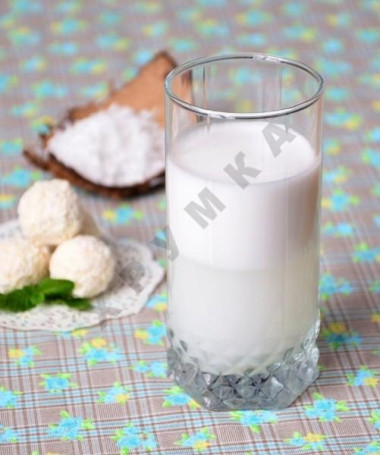
Over time you'll notice the milk starting to separate into two layers — coconut oil rises to the top and the milk settles below. The coconut oil can be used on its own. Keep the milk in the refrigerator for up to 24 hours.
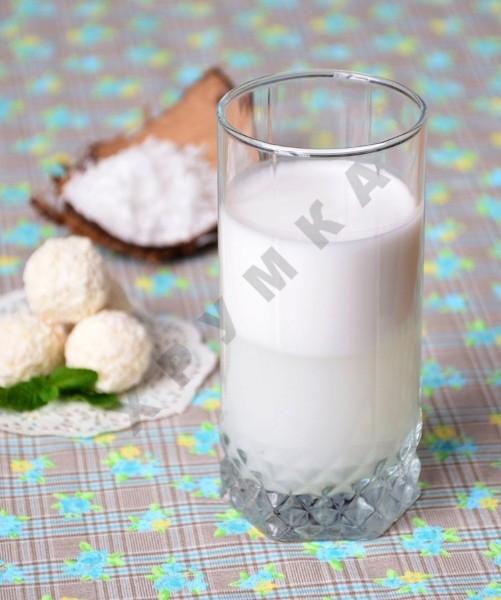
- A lot of people, seeing this recipe, will immediately wonder what you can actually do with the milk itself — and the answer is just about anything. :) You can swap this milk in for cow's milk in most recipes, use it for pancakes, knead it into dough, add it to meat dishes and even soups. It lends a lovely nutty aroma. And coconut oil is useful beyond the kitchen too — it goes into hair masks and homemade soap.
Caloric content of the products possible in the composition of the dish
- Dried coconut - 608 kcal/100g
- Coconut nuts - 380 kcal/100g
- Water - 0 kcal/100g