Baranki at home
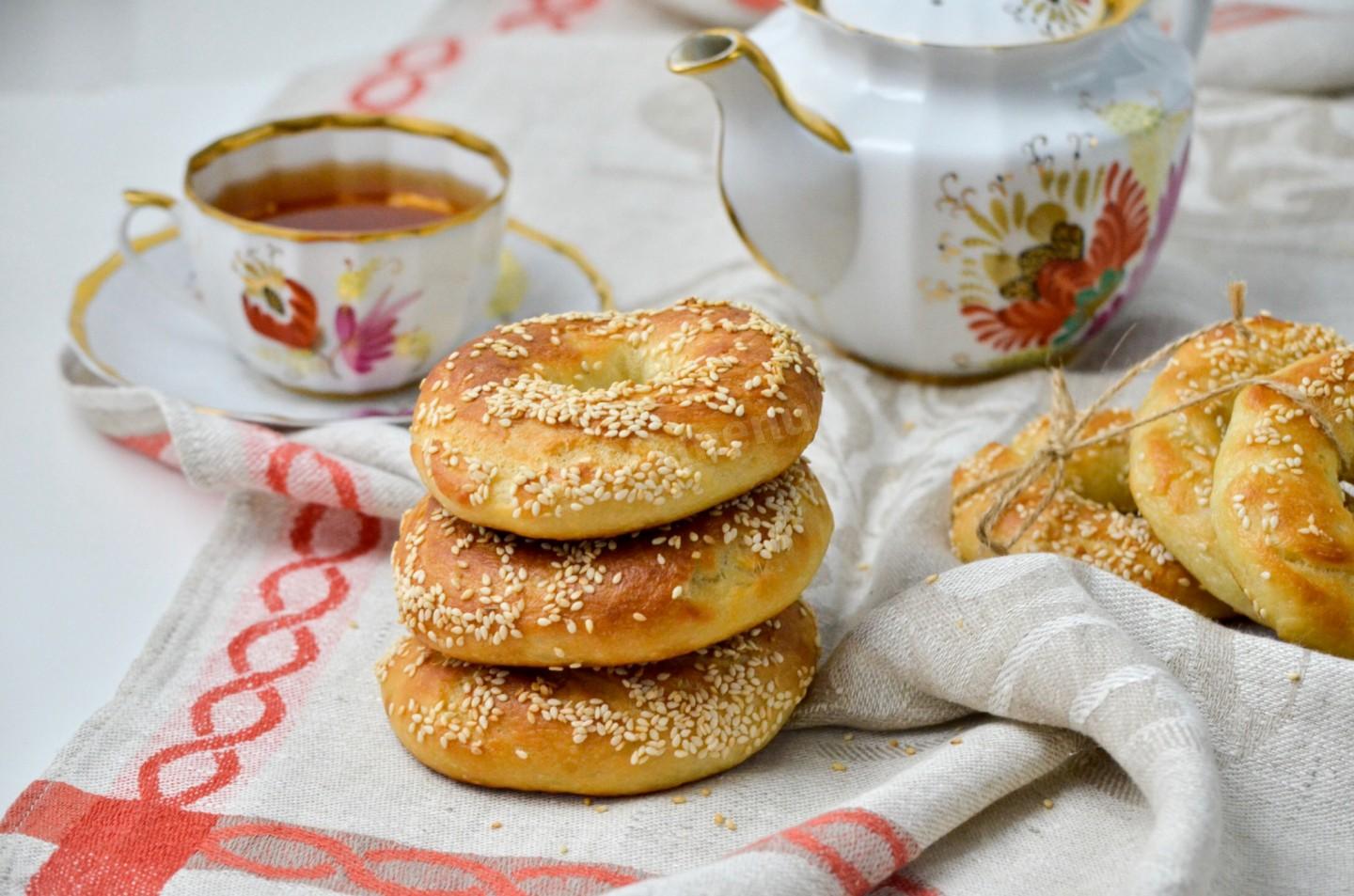
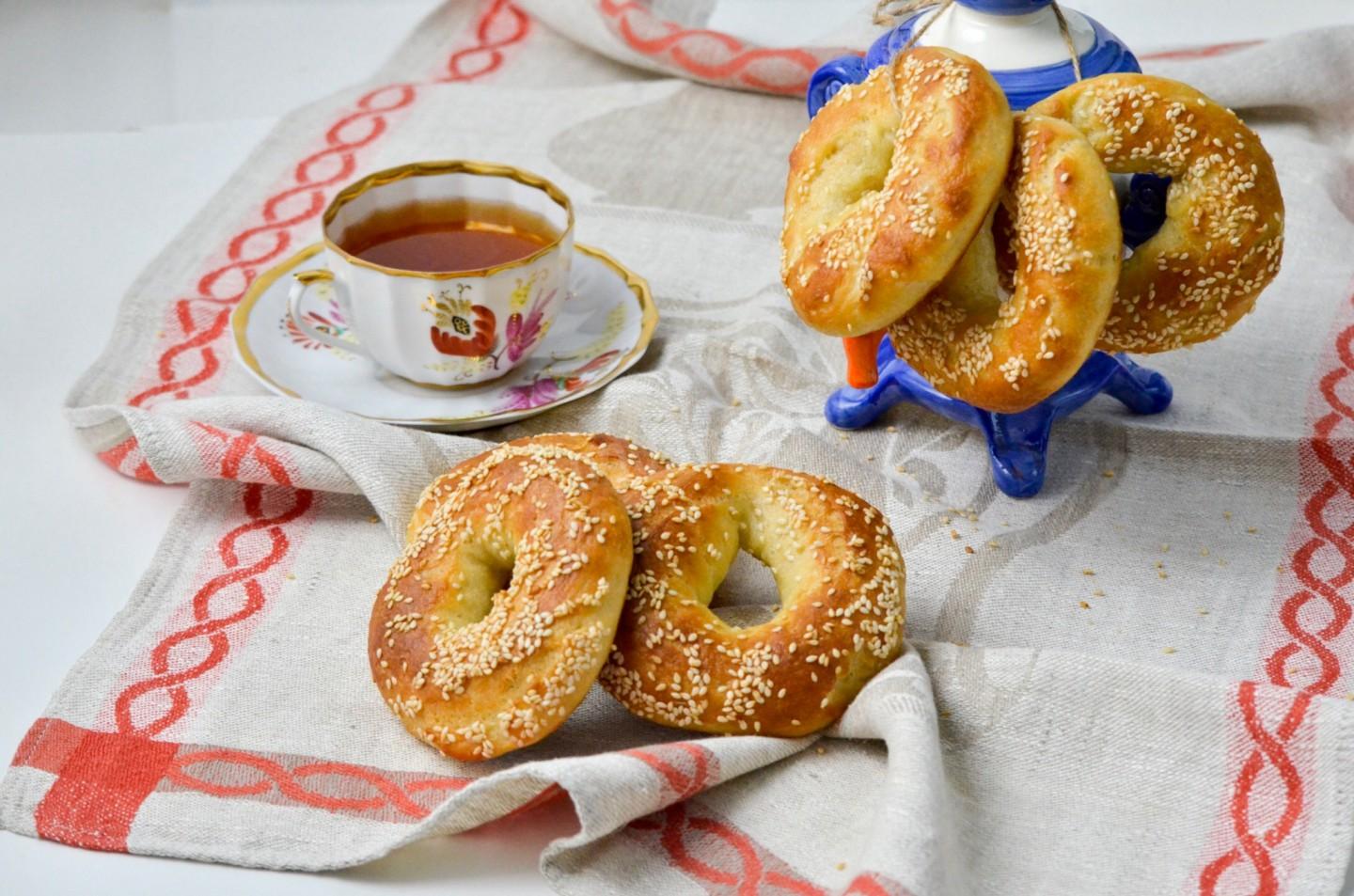
Traditional Russian baked rings, made at home! I always used to buy baranki at the store, never realizing you could make them yourself from the simplest ingredients. The process is easy and fun — shaping the rings is a real pleasure. And we'll be sure to boil them before baking!



Cooking method
-
Step 1:
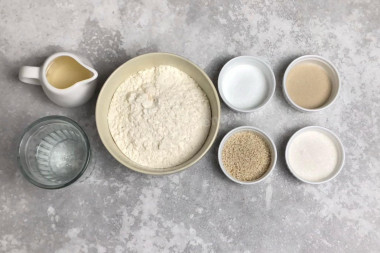
Gather the ingredients.
-
Step 2:

Warm the water to about 95°F (35°C) — it should feel pleasantly warm to the touch, never hot! The yeast we'll dissolve in it is a living organism and can die in hot water. Stir the yeast and sugar into the water and let it sit for 15 minutes.
-
Step 3:
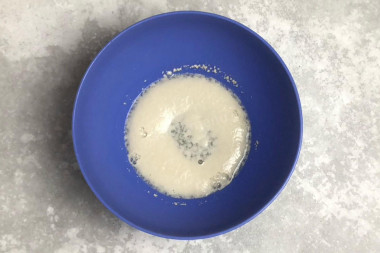
After 15 minutes a foamy "cap" should form on the surface — that means the yeast is good and active; it's woken up and started working. Add the salt and all the flour, sifted beforehand. Start stirring with a spoon.
-
Step 4:
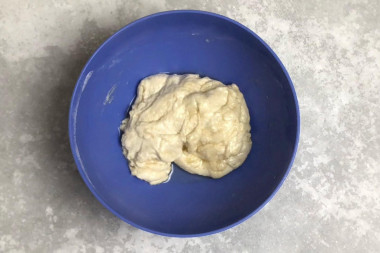
Once all the flour is moistened, add the oil and stir until there are no flour lumps left. Let the dough rest for 20 minutes. I covered it with a lid; a towel works too.
-
Step 5:
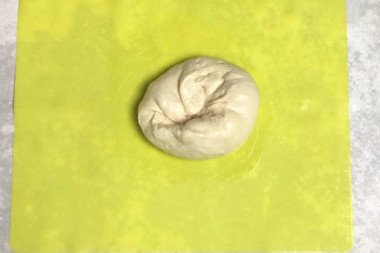
Turn the rested dough out onto the counter and start kneading. You don't need to add flour — the dough doesn't stick at all. Knead it until smooth and elastic.
-
Step 6:
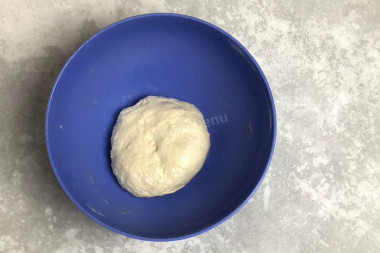
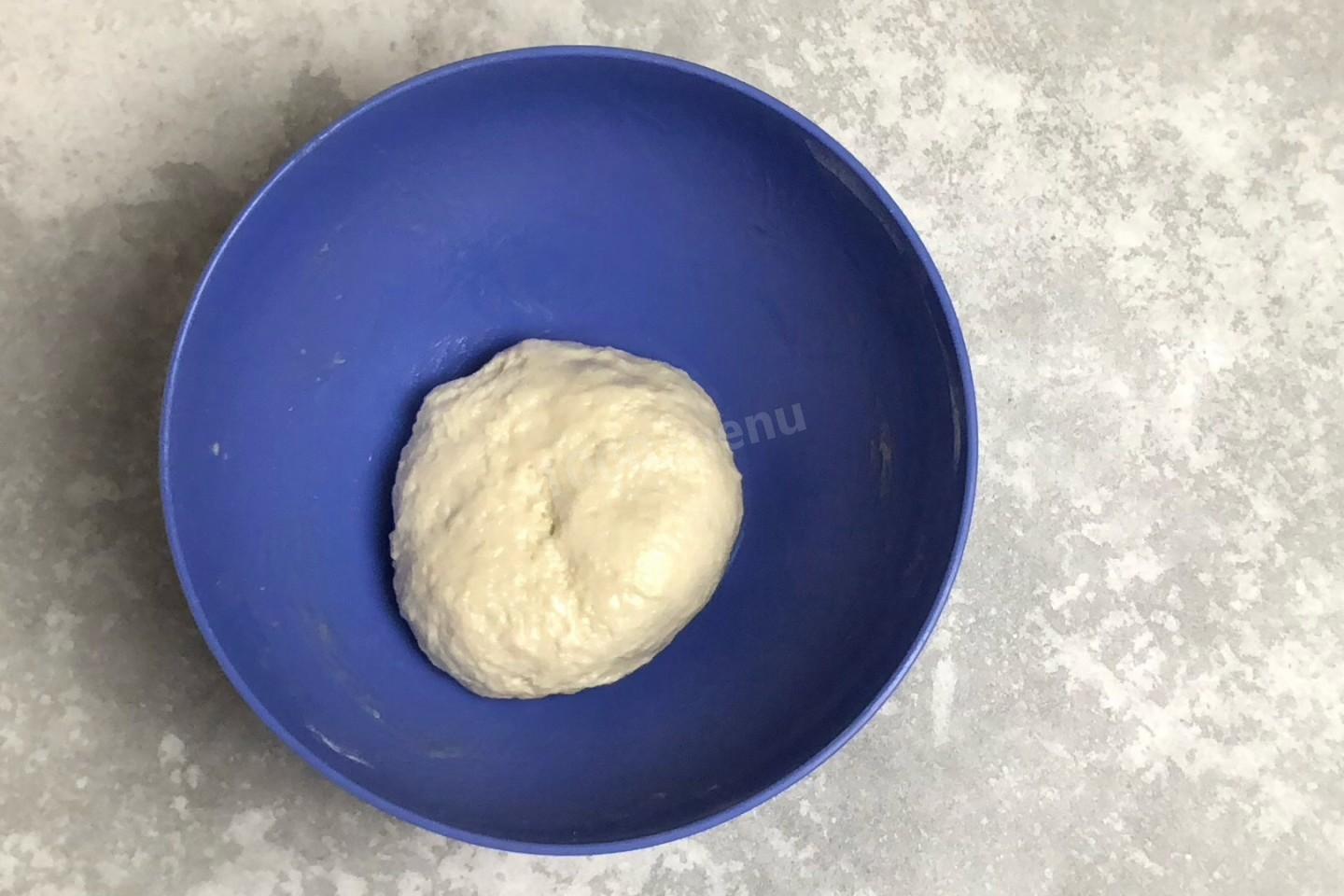
Put the dough back in the bowl, cover it, and leave it for 40 minutes to rise.
-
Step 7:
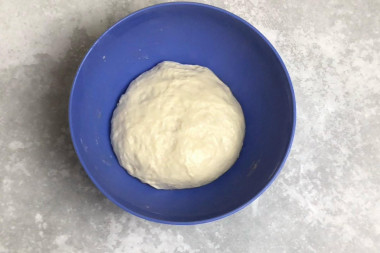
The dough should double in size. Now you can start shaping the baranki, but first turn on the oven to preheat to 425°F (220°C).
-
Step 8:
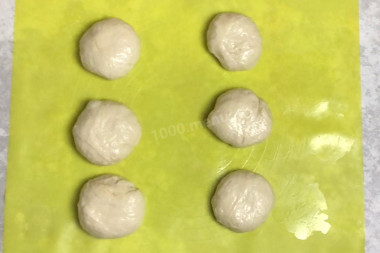
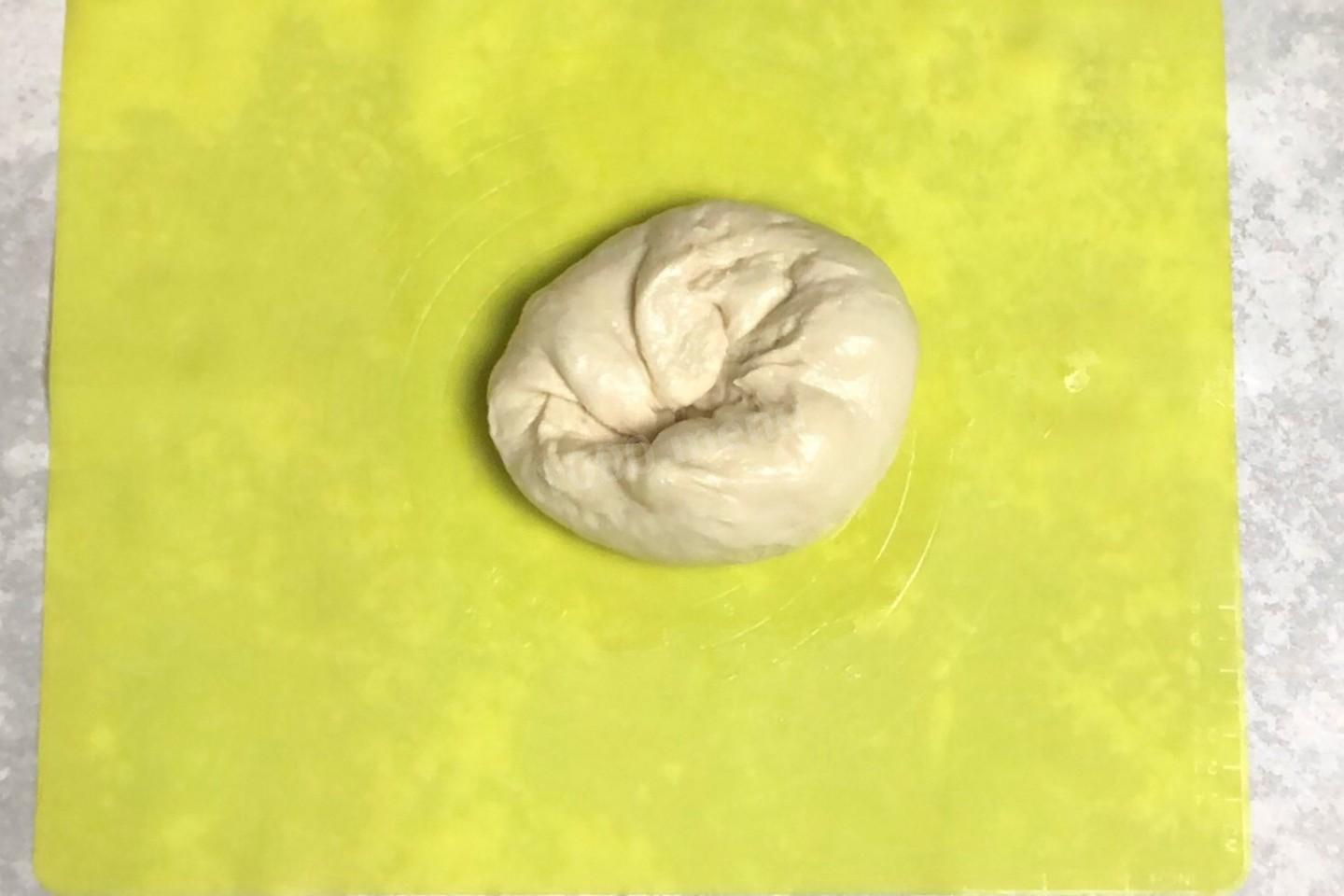
Turn it out onto the counter again and divide it into equal pieces. I made a half batch and got 6 pieces. Roll each into a ball.
-
Step 9:
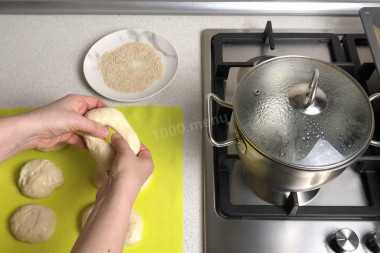
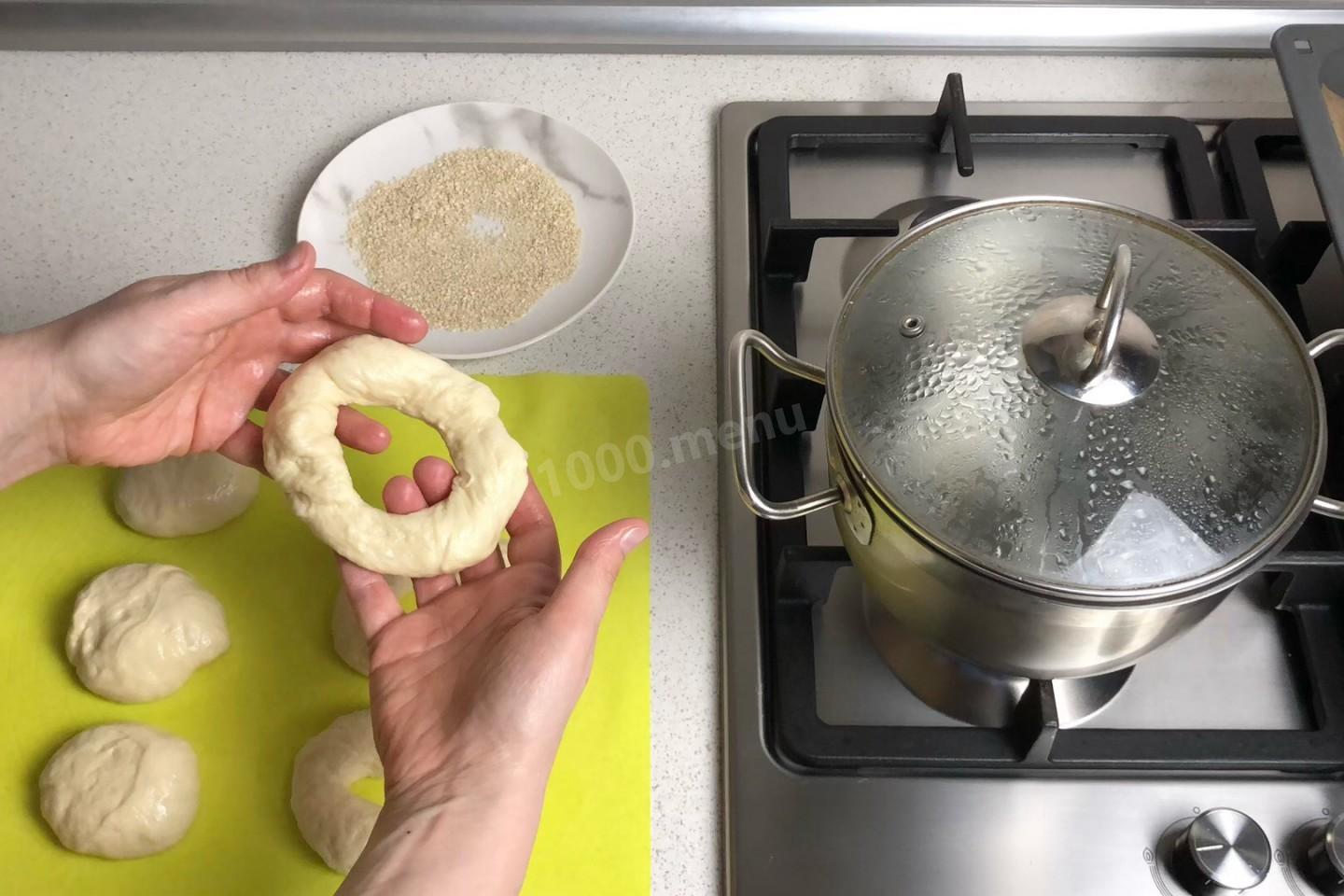
Before you start shaping the rings, put a pot of water on to boil. The baranki shouldn't be left to proof — that would hurt them, so work quickly. To shape a ring: take a ball and poke a hole through it with your thumbs.
-
Step 10:
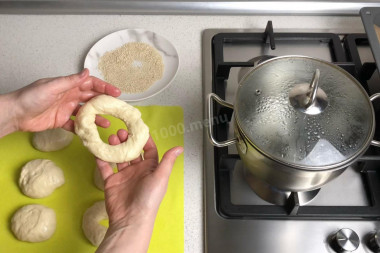
Start stretching the dough, working it all the way around to a thickness of about 1/2 inch (1–1.5 cm). Set the finished ring on the counter.
-
Step 11:
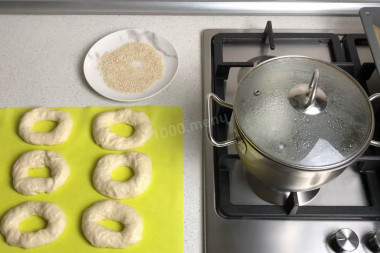
I'd recommend shaping all the baranki at once.
-
Step 12:

Now they need to be boiled. Lower a ring into the boiling water and count to 10.
-
Step 13:
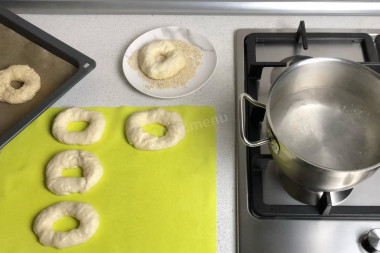
Lift the ring out with a slotted spoon, shake off the water droplets, and set it on a saucer of sesame seeds. Then transfer the ring to a parchment-lined baking sheet, sesame side up.
-
Step 14:
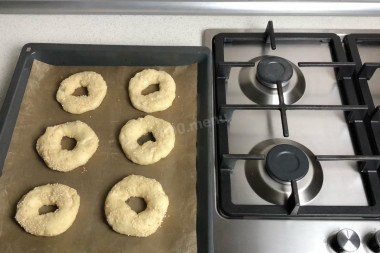
Do the same with all the baranki. Put the baking sheet in the oven. If you're making a full batch, only start shaping the next ones after the first sheet has baked.
-
Step 15:
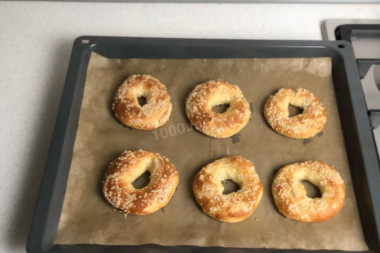
Bake the baranki at 425°F (220°C) for about 20 minutes, until they're golden and puffed. Enjoy!






- Fresh baranki are delicious! The crust is slightly crunchy and the crumb is airy and open. A day later they dry out and start to resemble store-bought ones. You can dip the rings in sesame seeds, in poppy seeds, or leave them plain. I'd add a little vanilla to the dough for a brighter flavor.
- Dry yeast can be swapped for fresh compressed yeast at a 1:3 ratio — that is, for every 1 gram of dry yeast the recipe calls for, use 3 grams of fresh.
- Keep in mind that every oven is different. Your temperature and timing may vary from the recipe. For any baked dish to come out well, make use of some handy tips on how ovens behave!
- Be ready for the dough to take more or less flour than the recipe states. Go by the consistency you're after, not the exact amount of flour. To avoid mistakes, read up on flour and its properties!
Caloric content of the products possible in the composition of the dish
- Whole durum wheat flour fortified - 333 kcal/100g
- Whole durum wheat flour universal - 364 kcal/100g
- Fine wheat flour - 348 kcal/100g
- Flour - 325 kcal/100g
- Granulated sugar - 398 kcal/100g
- Sugar - 398 kcal/100g
- Vegetable oil - 873 kcal/100g
- Dried whole sesame seeds - 563 kcal/100g
- Shelled sesame seed - 582 kcal/100g
- Salt - 0 kcal/100g
- Water - 0 kcal/100g
- Dry yeast - 410 kcal/100g