Candied Orange Peel
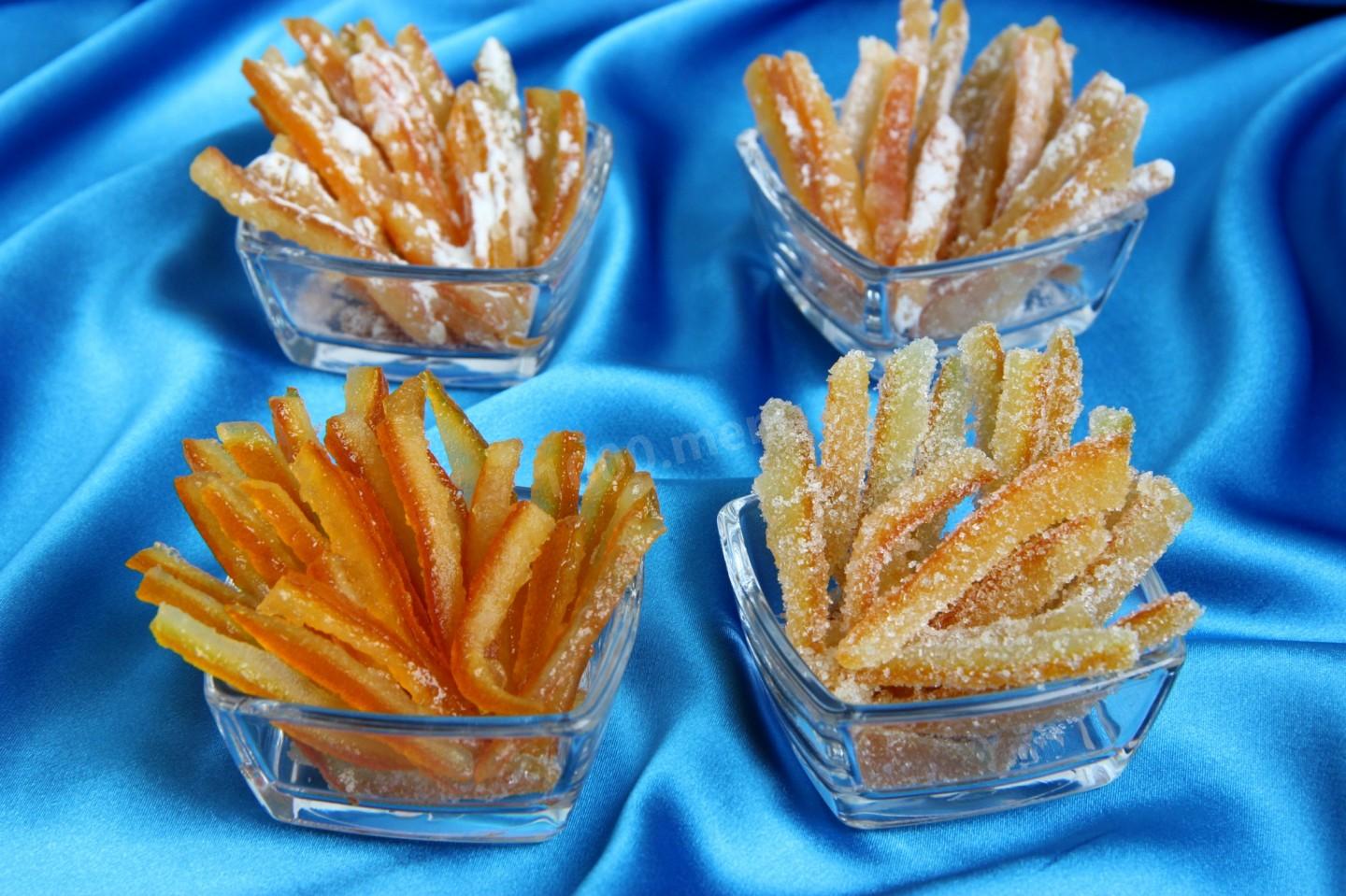
A must-have for baking, and the kids eat it instead of candy! There are a few different ways to make candied peel, and it all comes down to how you remove the bitterness from the rind: either the quick way—boiling it in a saltwater bath—or the slower way, by soaking. I tried both, but each had something that didn't quite work for me. In the end I came up with my own method, and that's what I want to share. The candied peel turns out with a bright citrus flavor, a faint pleasant bitterness, and a gentle tartness—springy, soft, and pliable. Great both for dessert and for baking.

Cooking method
-
Step 1:
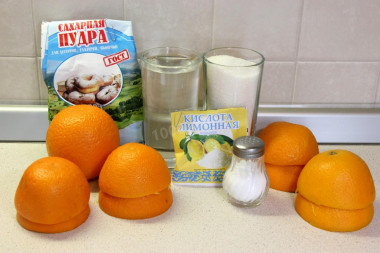
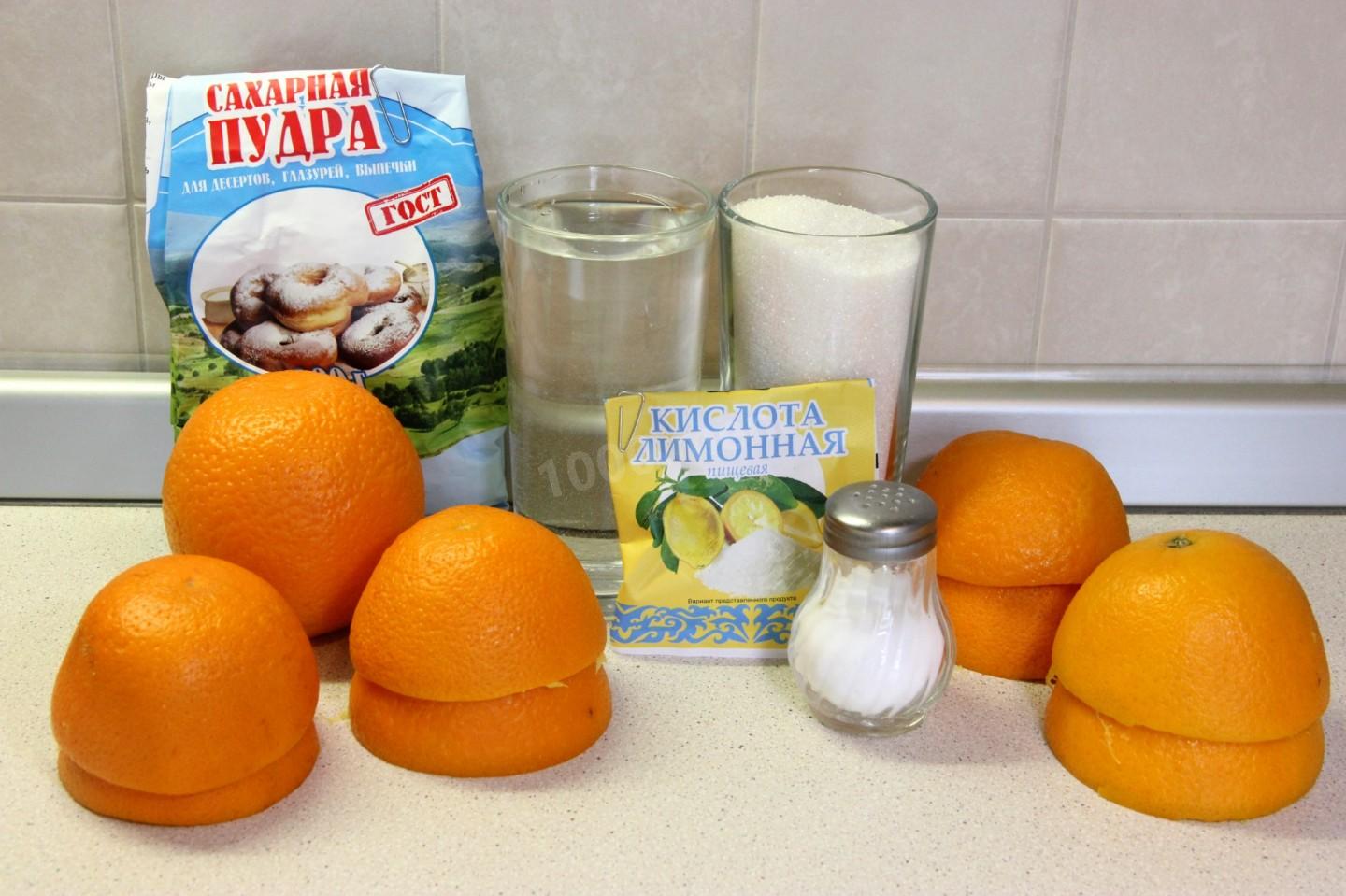
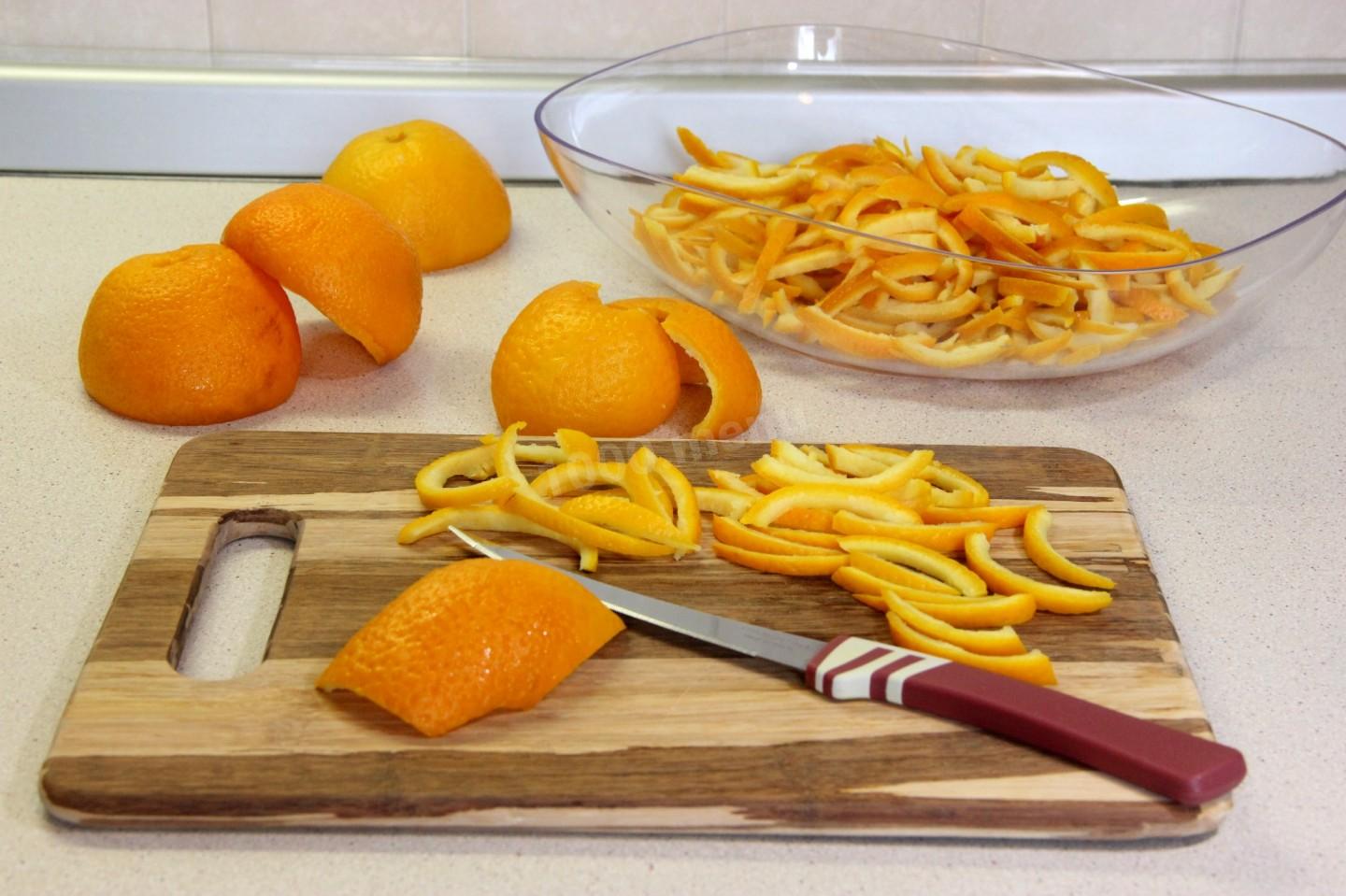
Gather your ingredients. Wash the oranges well, then peel them.
-
Step 2:
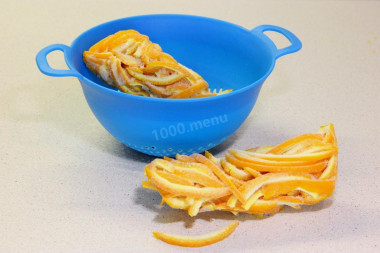
You can mix in frozen peel along with the fresh. Without thawing it, just rinse it under cold water.
-
Step 3:
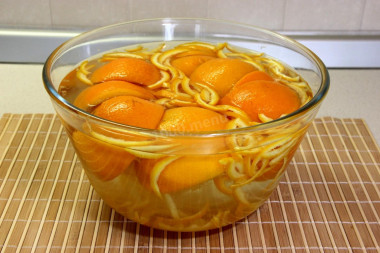
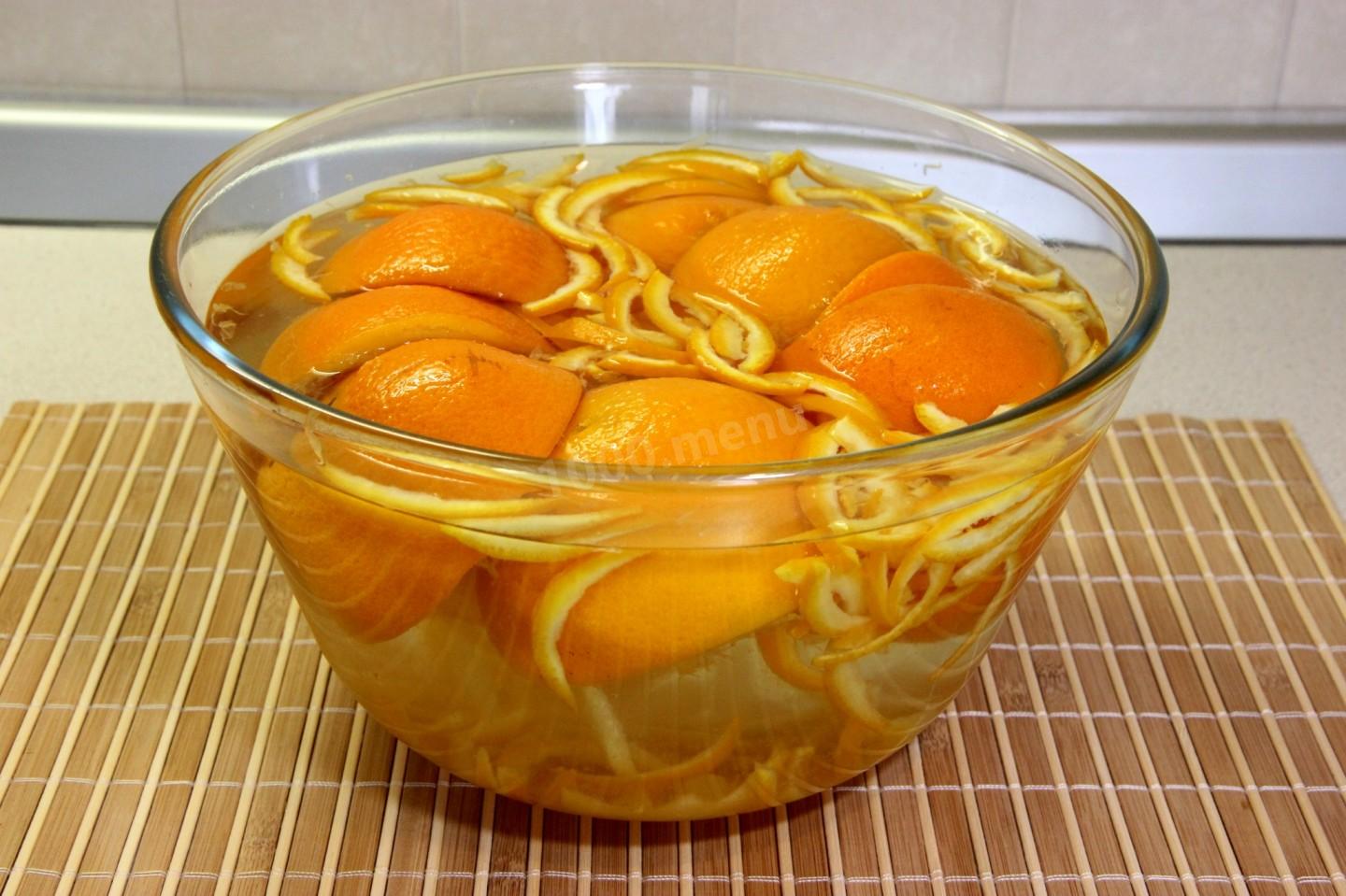
Then cover with cold tap water and leave to soak for two days to draw out the bitterness, changing the water every 6–7 hours. The soaking time has been worked out by trial and error—it's the sweet spot for the best result.
-
Step 4:
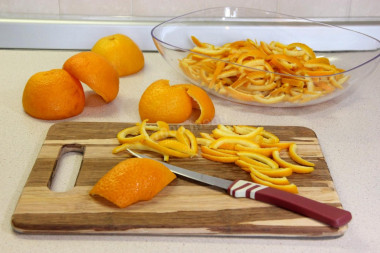
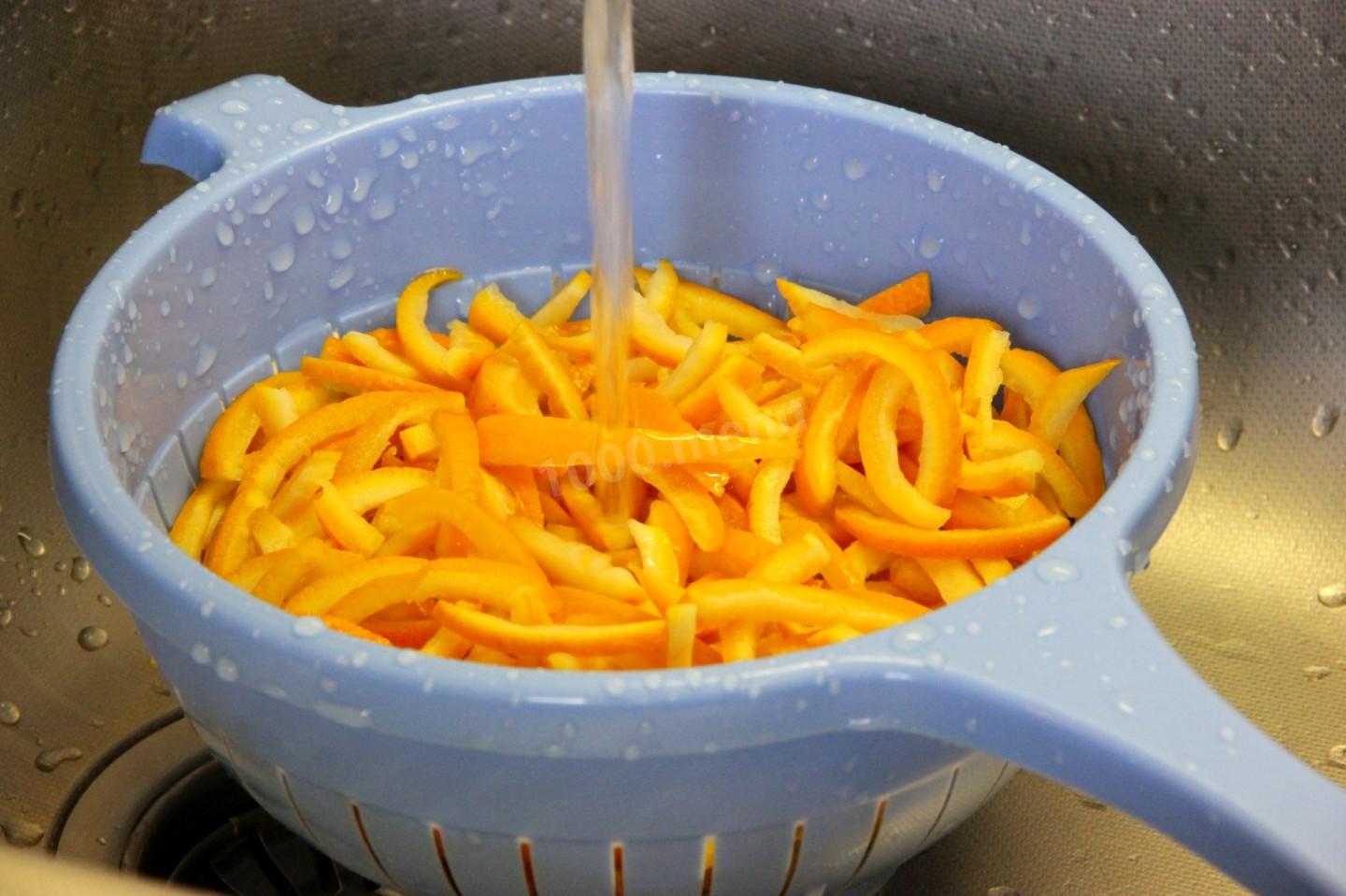
Rinse the peel under running water, gently squeeze out the larger pieces, and scrape off any leftover membrane with a spoon. Cut into strips about 1/4 inch (0.5–0.6 cm) wide.
-
Step 5:
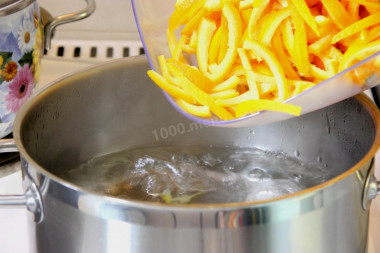
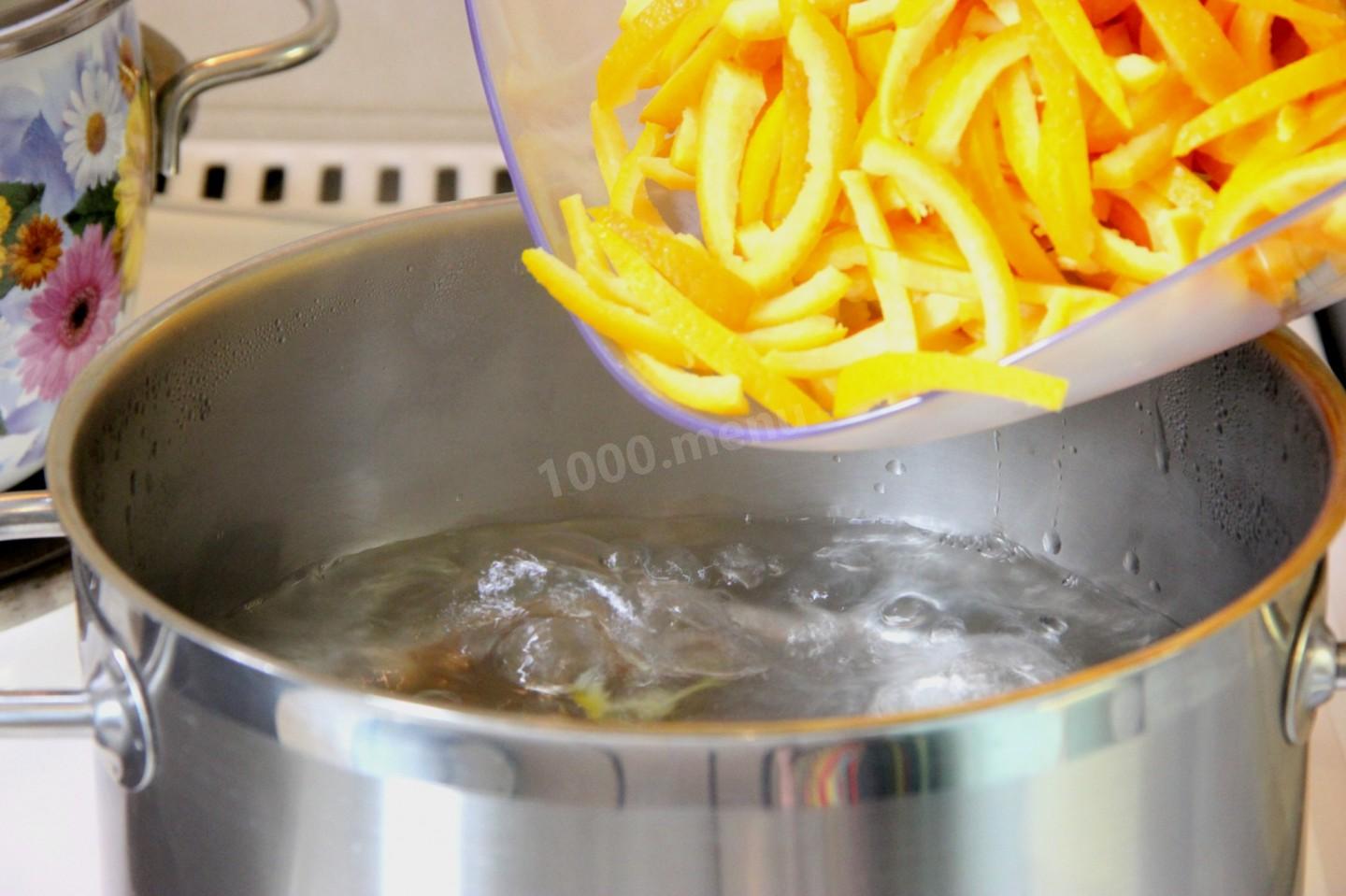
Blanch the prepared peel in boiling water for 3–4 minutes, then drain.
-
Step 6:
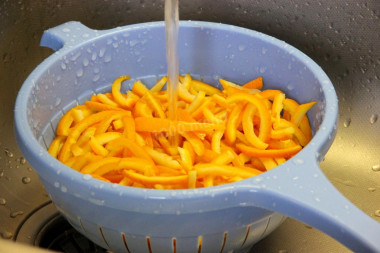
Rinse the peel, cooling it under running water.
-
Step 7:
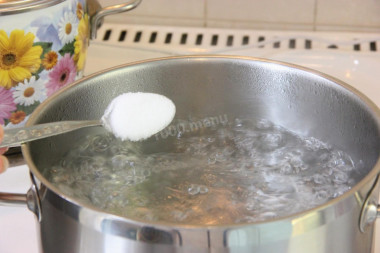
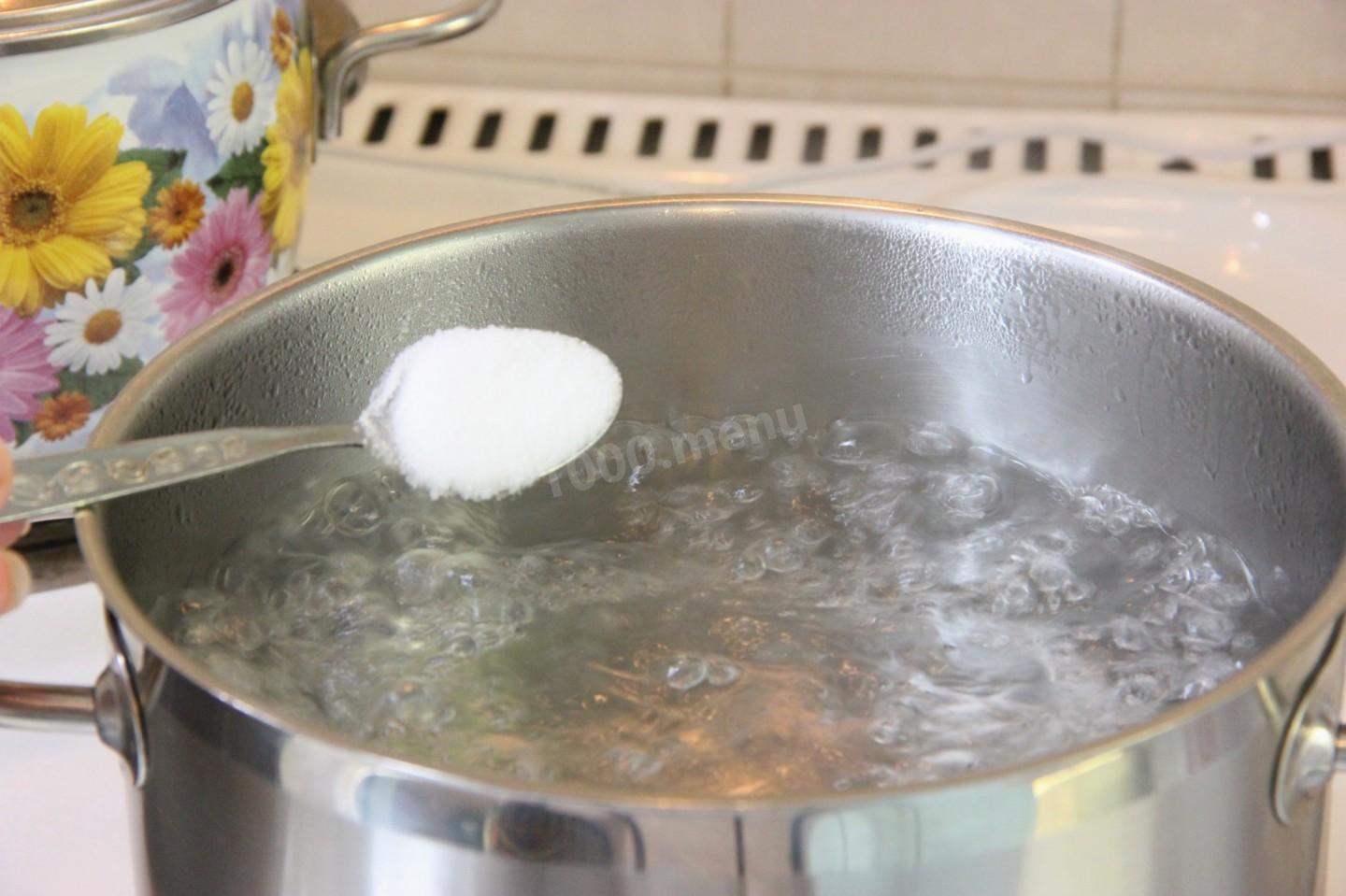
Change the water and, once it's boiling, add 1 teaspoon of salt (per 2 liters of water), then blanch the peel again. Repeat the salted blanch one more time—it gets rid of any lingering bitterness.
-
Step 8:
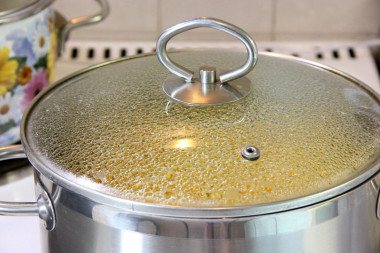
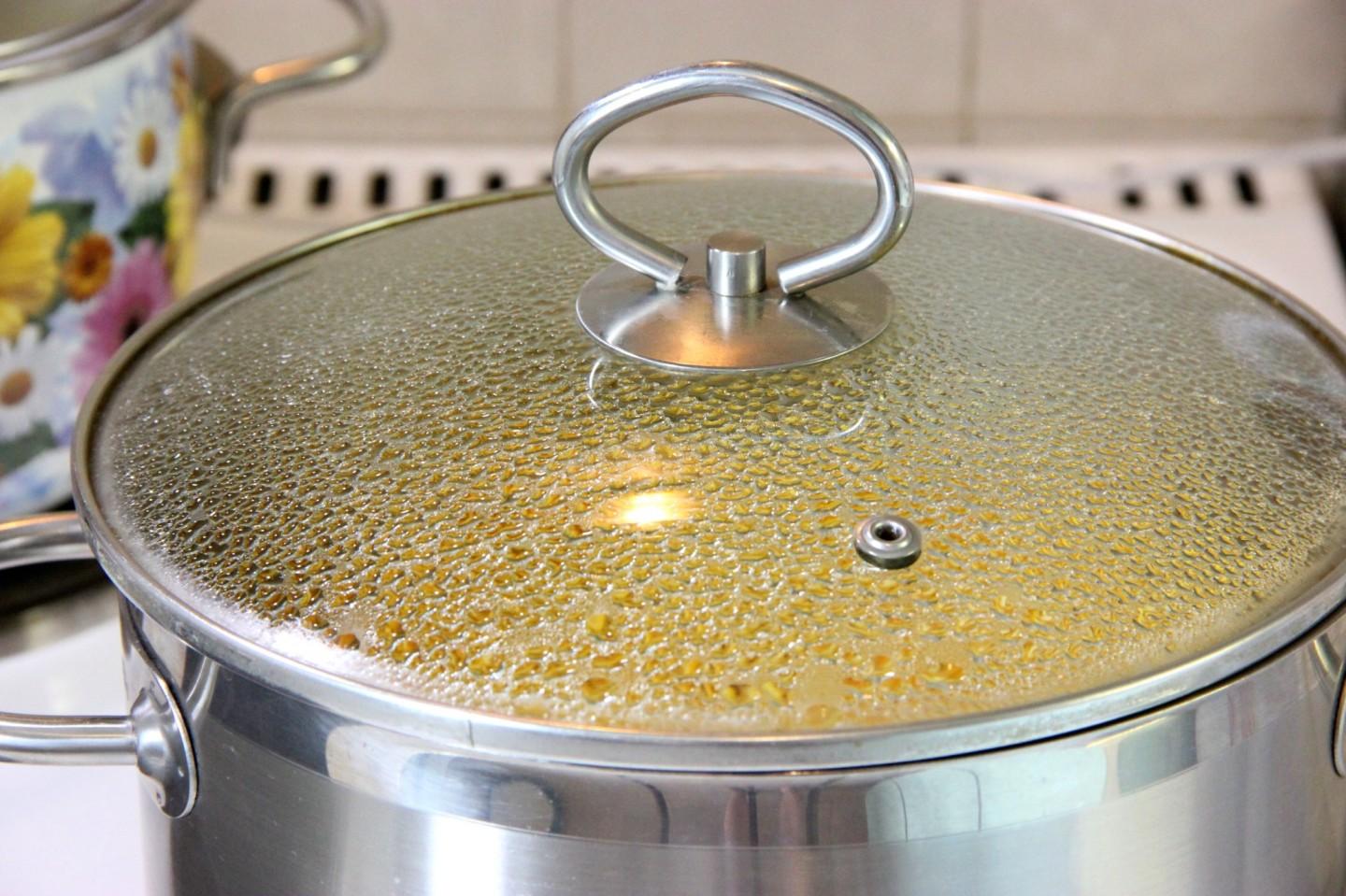
Blanch covered, but don't boil it long, since the peel has already been soaked.
-
Step 9:
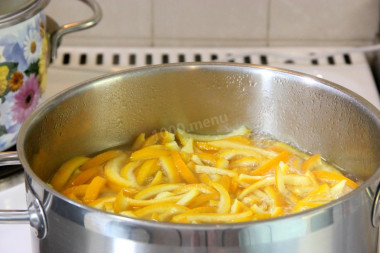
This way the peel softens more effectively. Boil it three times total, each time in fresh water—the last two with salt—rinsing very well between each. Each round, the water will run clearer.
-
Step 10:
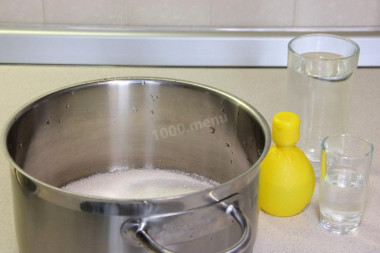
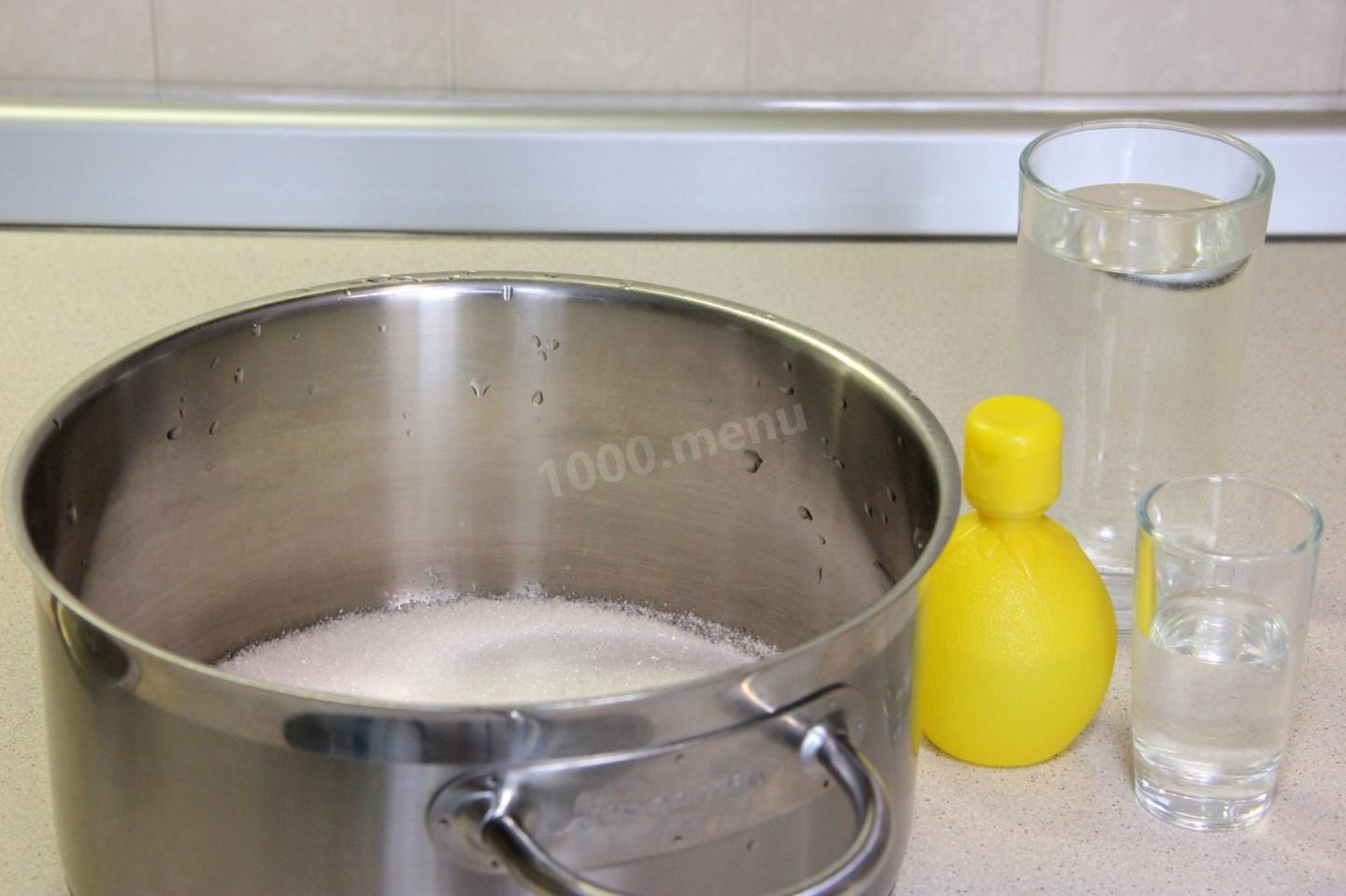
Now make the syrup: combine 400 g of sugar with 200 ml of water and your choice of acid. Cook over low heat until the sugar dissolves, then turn up the heat and bring to a boil.
-
Step 11:
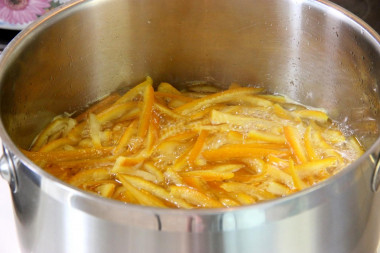
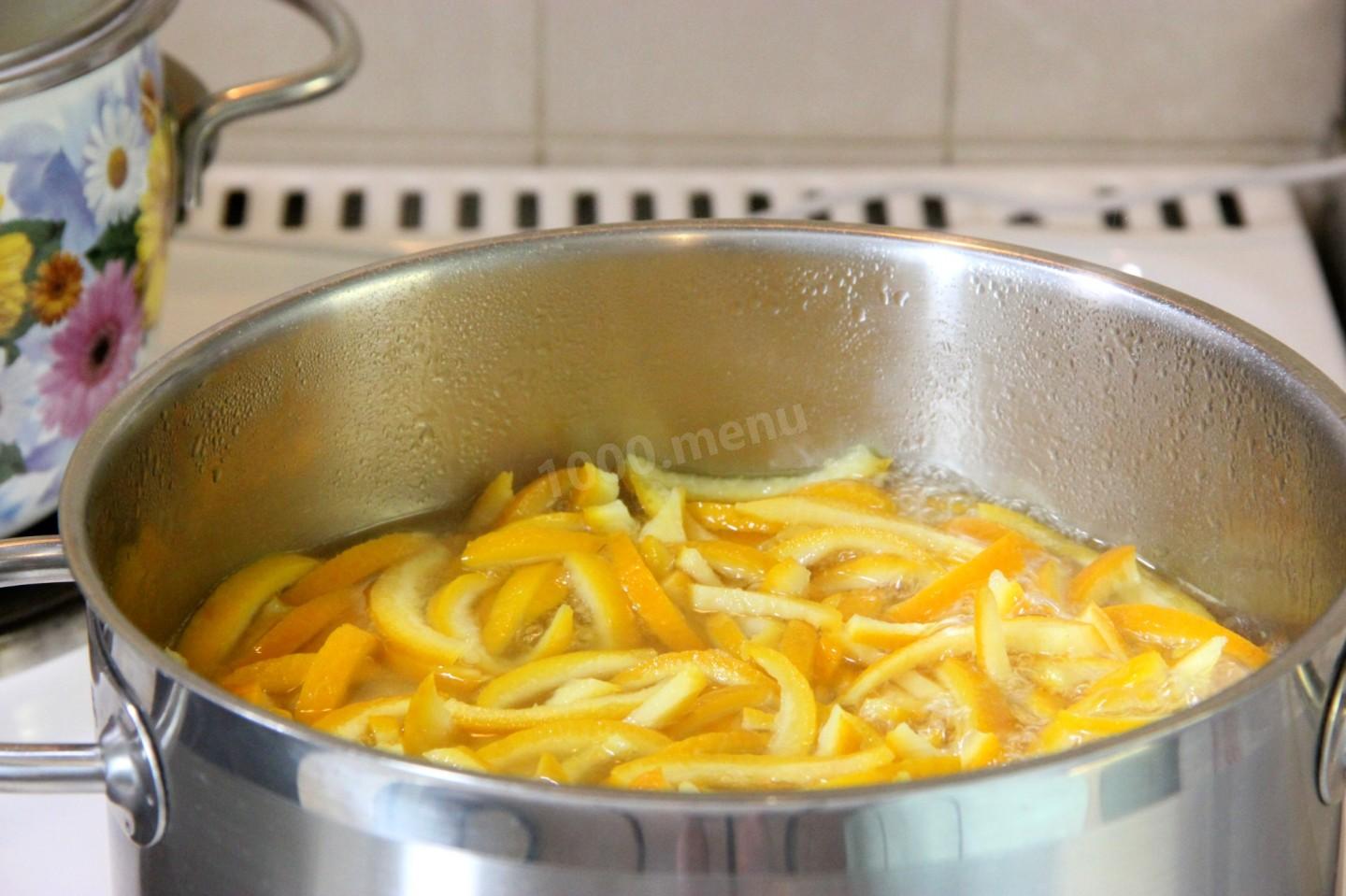
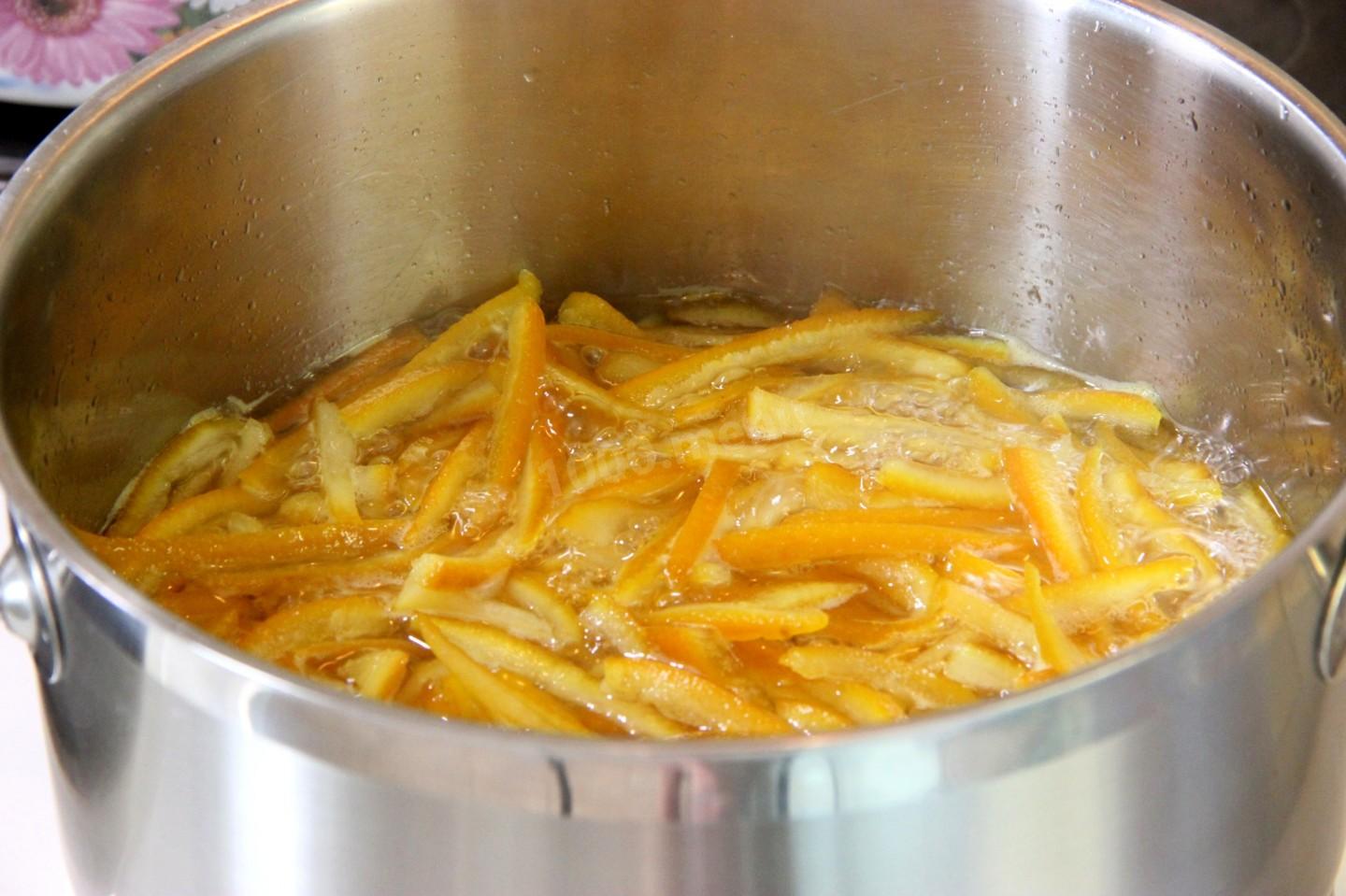
Drop the peel into the boiling syrup and cook over low heat. Adjust it so it bubbles gently and steadily, without spattering or stalling. Leave it uncovered.
-
Step 12:
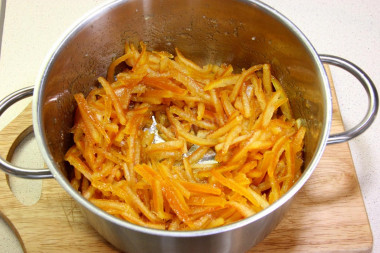
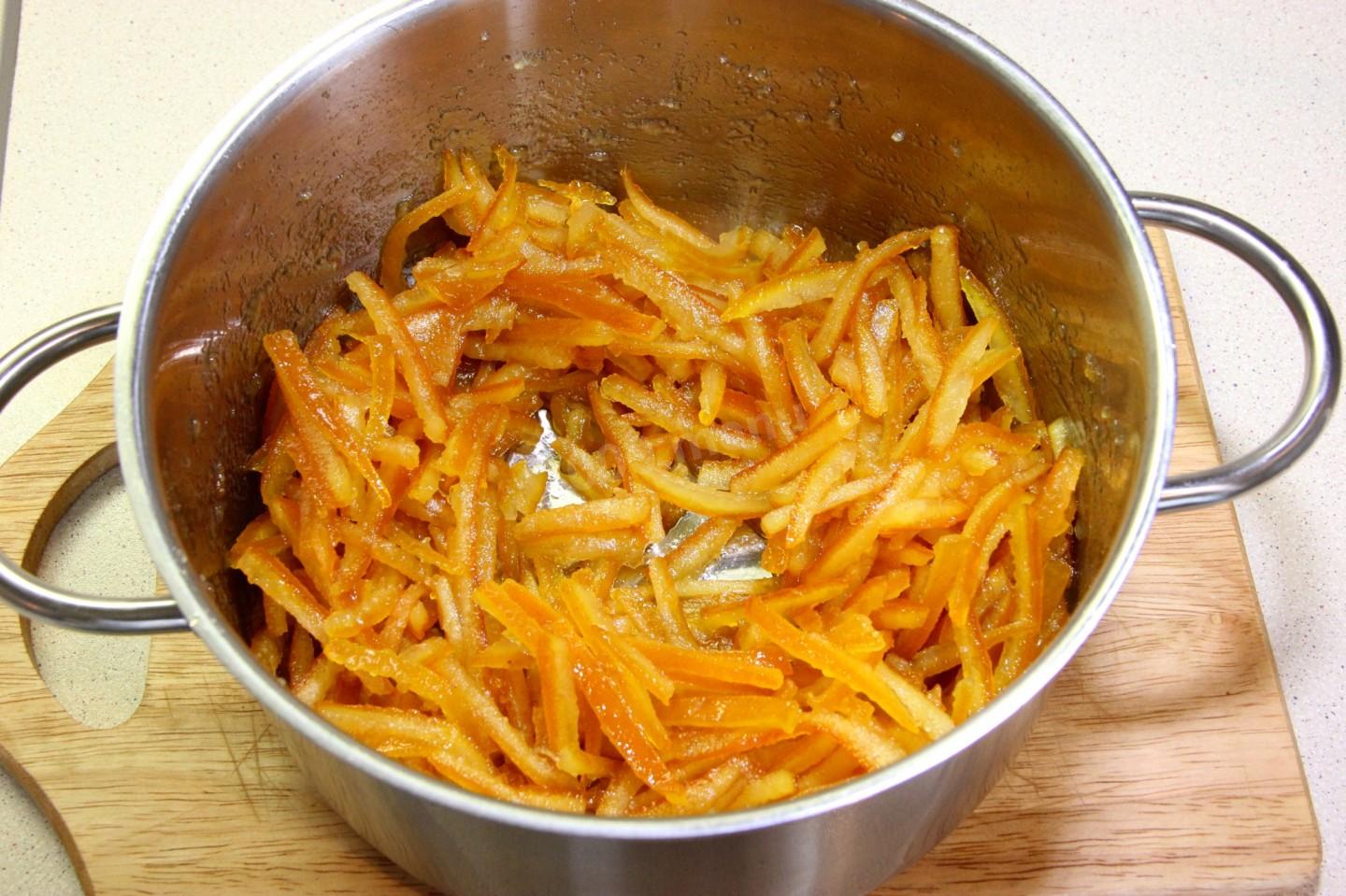
Cook for about an hour, until almost all the syrup has cooked away. Keep an eye on it so the peel doesn't scorch, but let the syrup reduce to almost nothing.
-
Step 13:
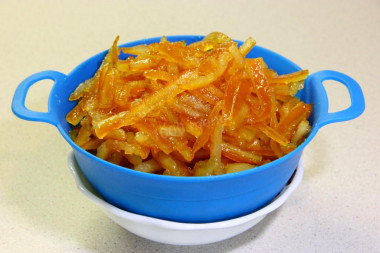
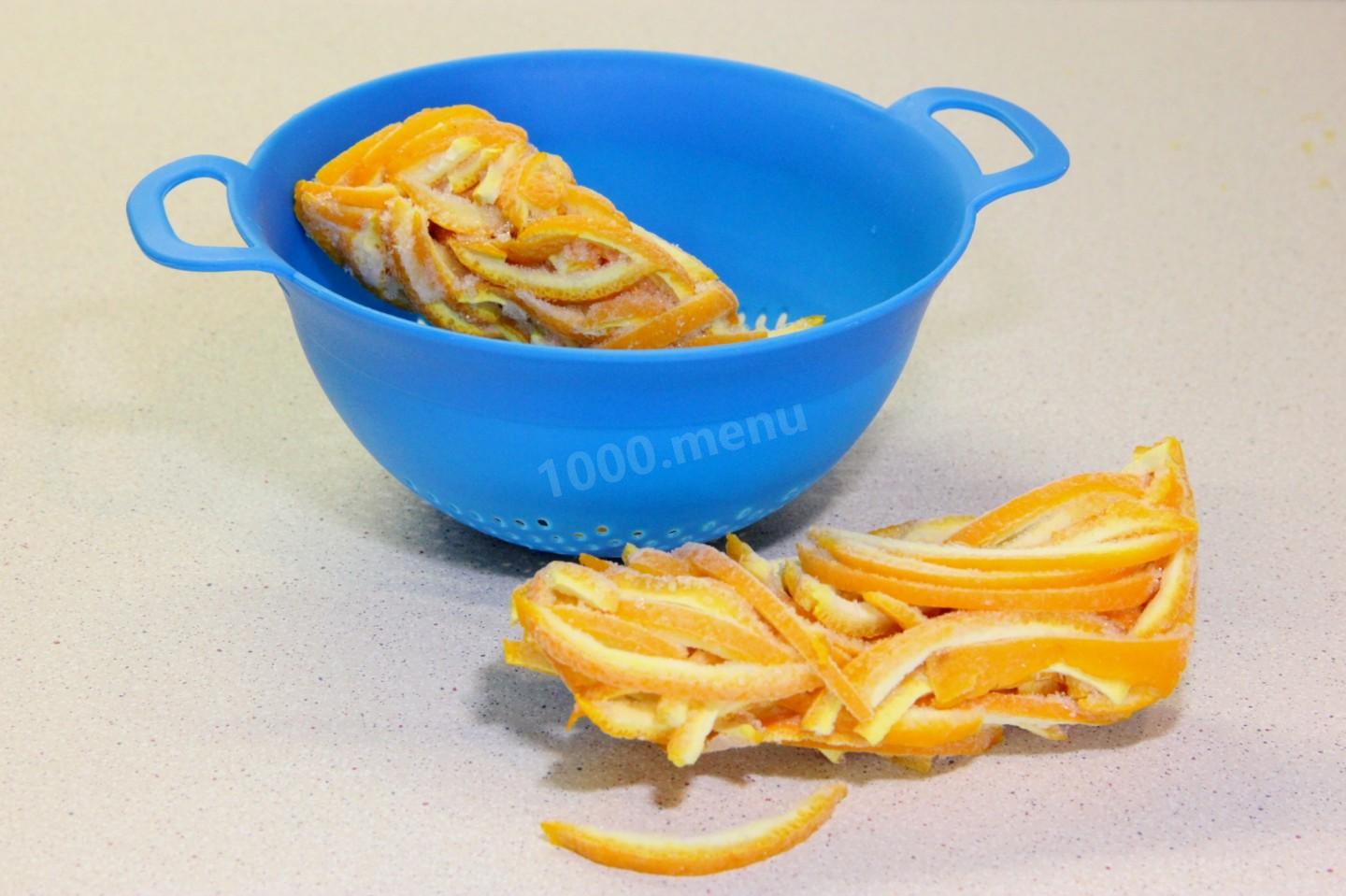
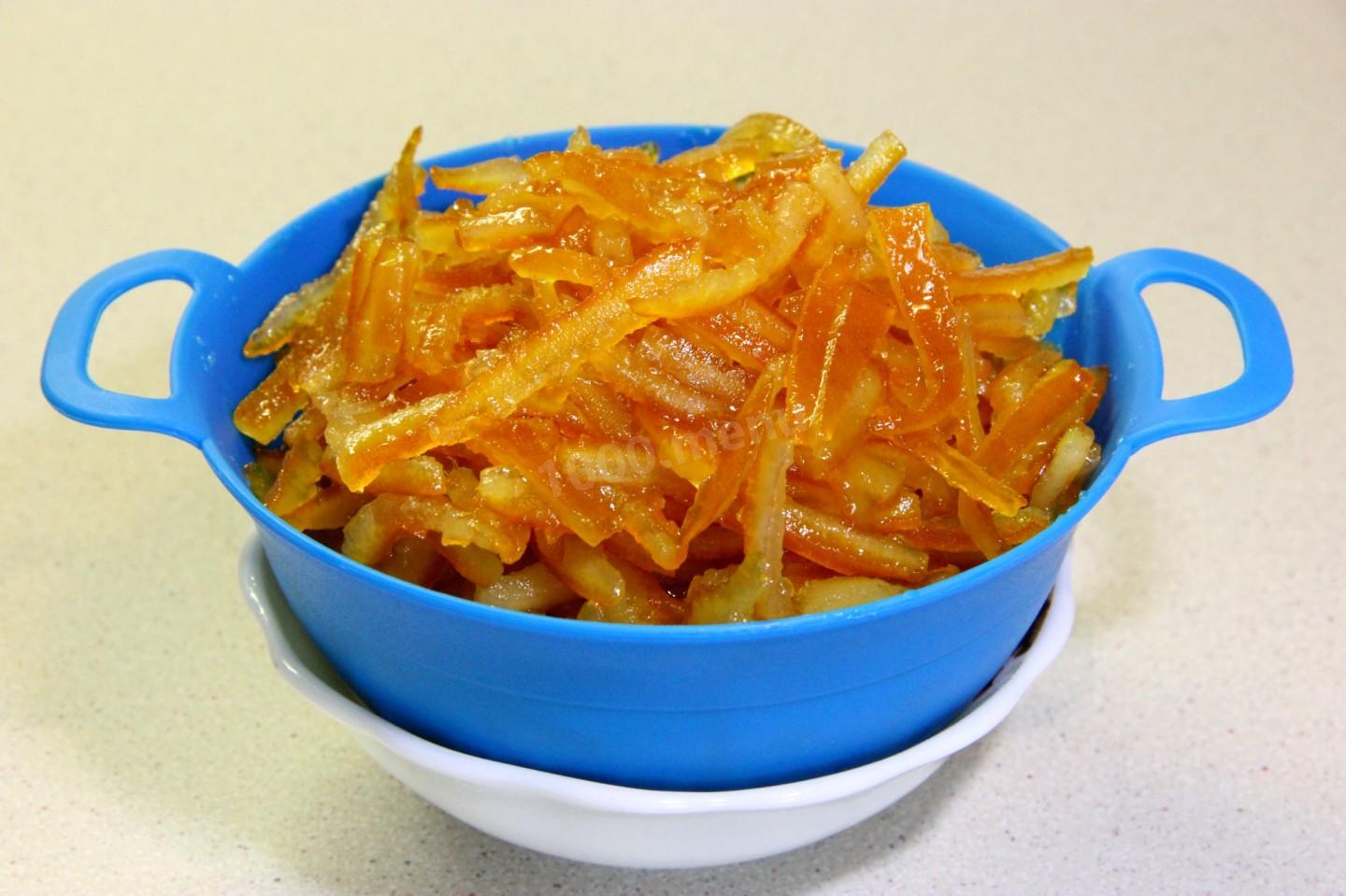
Drain the peel in a colander or sieve and let it cool.
-
Step 14:
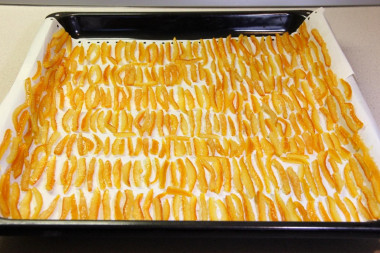
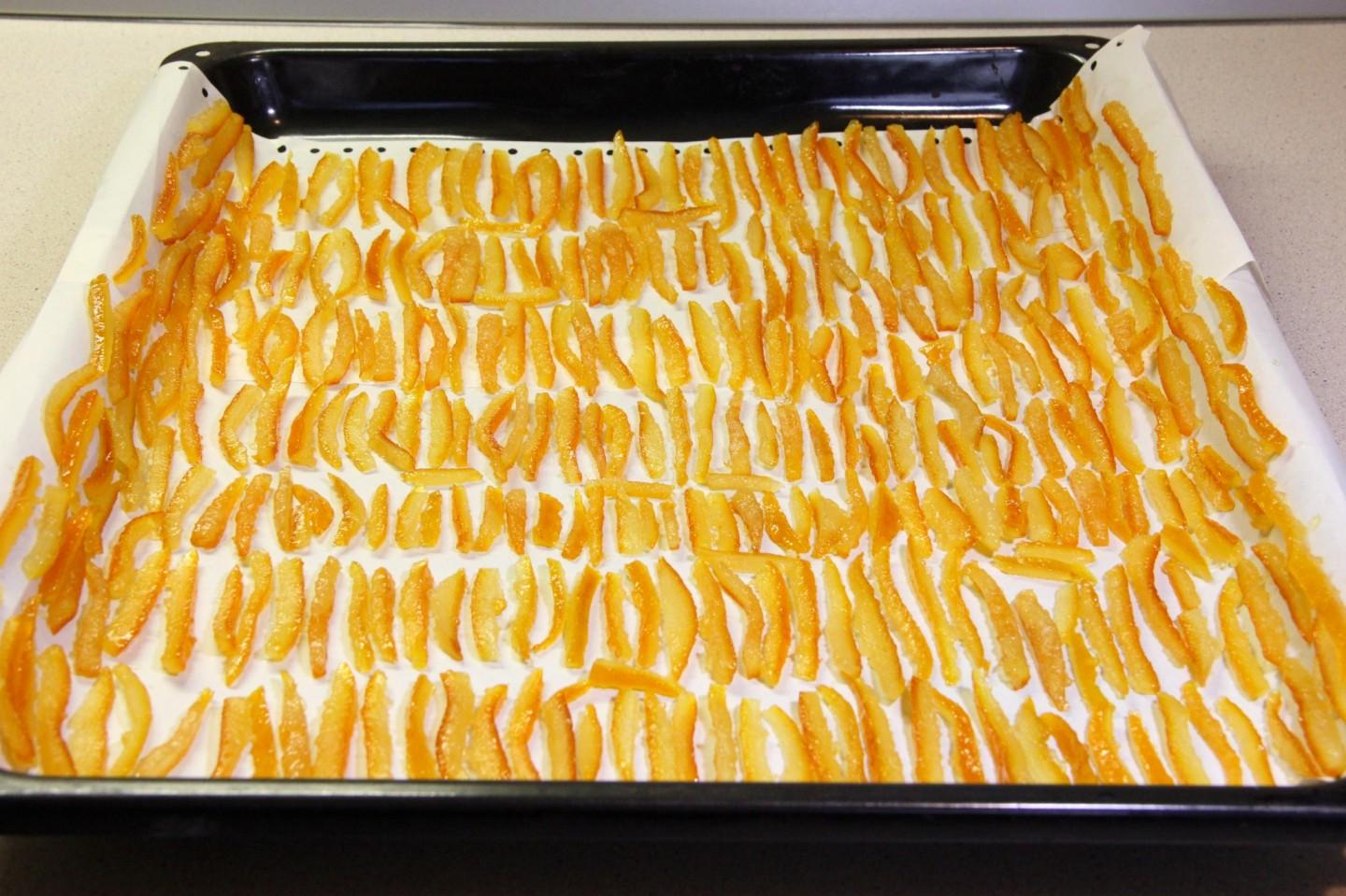
Spread it out in a single layer on parchment and leave it to dry for a day. You can also use the oven at 176°F (80°C) with the door cracked for a few hours, but it tastes better when it dries naturally.
-
Step 15:
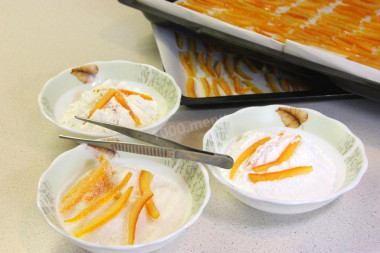
After a day the peel will have dried but still be a little moist and tacky—perfect for tossing in sugar, powdered sugar, or (if it's for baking) cornstarch; or you can just leave it to keep drying as is. Whichever you prefer. I like powdered sugar—it's my all-purpose choice. Then leave the candied peel to dry for another day, during which it'll keep crystallizing. Store the finished peel in a glass container in the fridge. This batch made 460 g.
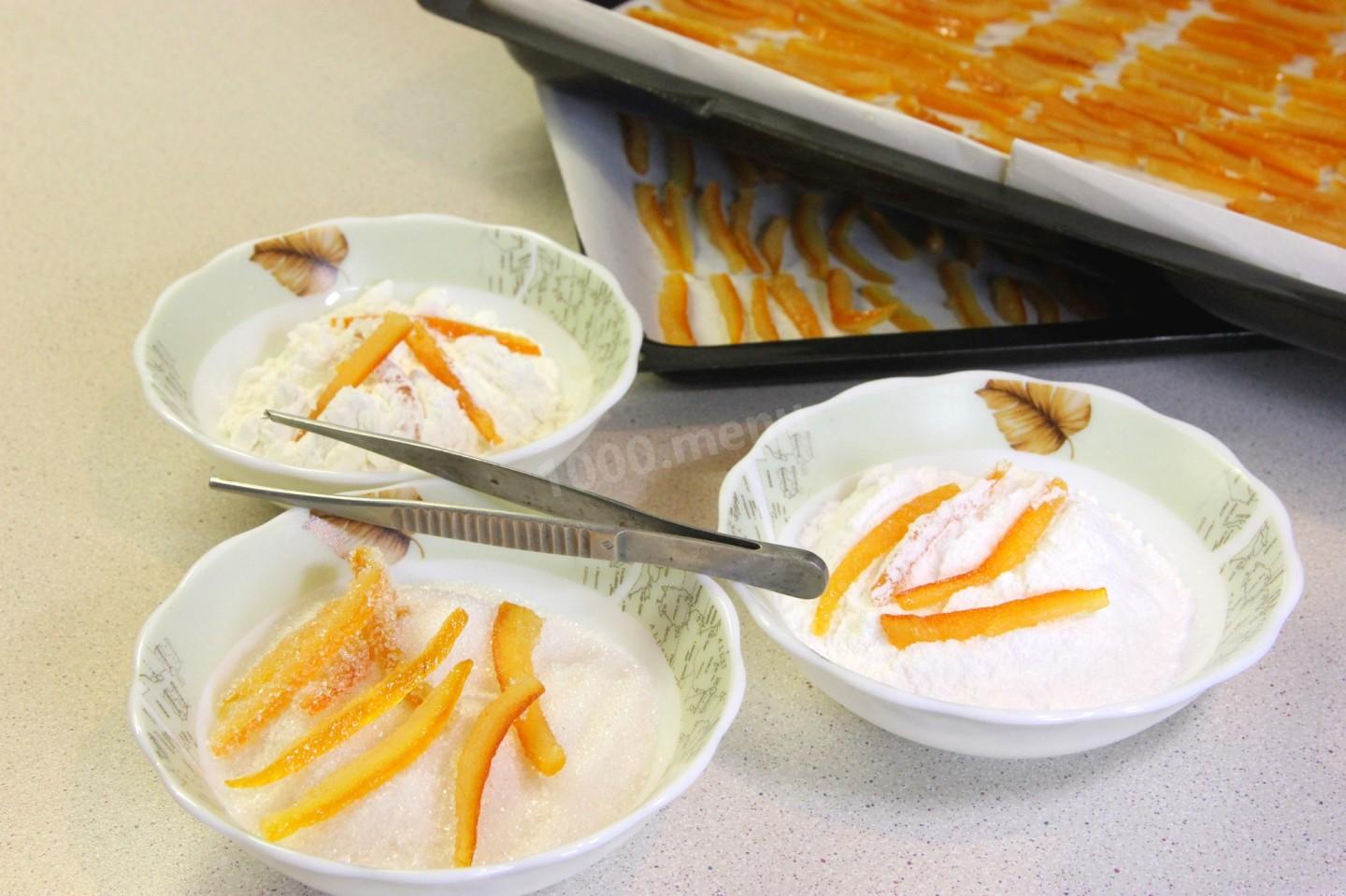
- The process is fairly simple; the most tedious part is laying everything out to dry. Most of the time goes to drying and soaking. The quick recipe didn't quite satisfy me on flavor, and the candied peel came out firm, so I prefer to soak—but I borrowed the salt trick from the quick method, since it removes bitterness wonderfully. I love using this candied peel in baking. You can make a mix by adding lemon and tangerine peel from thick-skinned citrus, which is also very tasty.
Caloric content of the products possible in the composition of the dish
- Granulated sugar - 398 kcal/100g
- Sugar - 398 kcal/100g
- Citric acid - 0 kcal/100g
- Salt - 0 kcal/100g
- Water - 0 kcal/100g
- Powdered sugar - 374 kcal/100g
- Orange peel - 36 kcal/100g