Fried Adyghe Cheese
An original, eye-catching, and unexpected appetizer! Fried Adyghe cheese — a fresh, mild brined cheese from the Caucasus, similar to a firm farmer's cheese or paneer — is a great way to shake up your menu. This cheese holds its shape when fried, developing an appetizing golden crust and a tender center. You can also toss it into any vegetable salad.


Cooking method
-
Step 1:
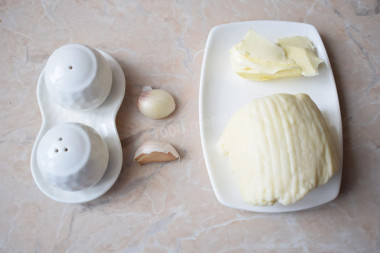
How do you fry Adyghe cheese? Gather your ingredients. Use the freshest, best-quality Adyghe cheese you can find (not the smoked kind). Peel the garlic and cut each clove into 2–3 pieces — it's there to flavor the dish. Choose real butter with no added vegetable fats. A nonstick skillet is best so the cheese won't stick to the bottom.
-
Step 2:
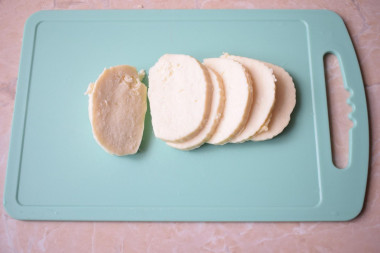
Blot the cheese with paper towels to remove excess moisture, then cut it into pieces — slices, sticks, or cubes, whatever you prefer. I cut it into slabs.
-
Step 3:
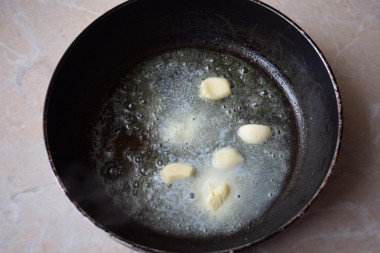
Heat the skillet until hot and drop in a small pat of butter. Wait for it to melt, but keep an eye on it — butter scorches quickly. To prevent that, add a little vegetable oil, which has a higher smoke point. Add the cut garlic cloves. Since they're just there to flavor the butter, there's no need to chop them fine.
-
Step 4:

Once the garlic aroma comes up, add the sliced Adyghe cheese to the skillet. Fry it for about a minute over medium heat.
-
Step 5:
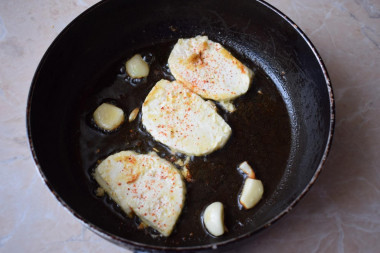
Then flip the cheese pieces. Sprinkle them with a little salt and spices. I use a bit of paprika; ground black pepper works well too.
-
Step 6:
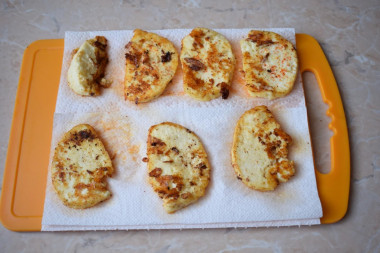
Fry the cheese until golden. Then lift it out onto a paper towel to blot off the excess oil.
-
Step 7:
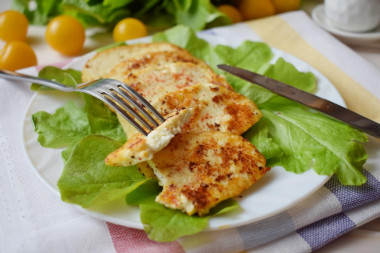
Your tasty Adyghe cheese appetizer is ready. It's great on its own, but you can also serve it with a berry sauce or fresh vegetables. Enjoy!


- Every oil is good only up to a certain temperature — its smoke point, beyond which it starts to burn and forms harmful compounds, including carcinogens. Keep an eye on your frying temperature and choose an oil that stands up to the heat.
- A word on the pan: the wrong skillet can spoil even the best recipe, so pick one suited to what you're cooking.
- Since everyone's tolerance for salt, sweetness, bitterness, spice, acidity, and heat is different, always add spices and seasonings to your own taste. And if you're using a seasoning for the first time, remember that some are especially easy to overdo (chili pepper, for one).
Caloric content of the products possible in the composition of the dish
- Garlic - 143 kcal/100g
- Butter 82% - 734 kcal/100g
- Amateur unsalted butter - 709 kcal/100g
- Unsalted peasant butter - 661 kcal/100g
- Peasant salted butter - 652 kcal/100g
- Melted butter - 869 kcal/100g
- Salt - 0 kcal/100g
- Spices dry - 240 kcal/100g
- Adyghe cheese - 240 kcal/100g