Fluffy Stovetop Chicken Pilaf
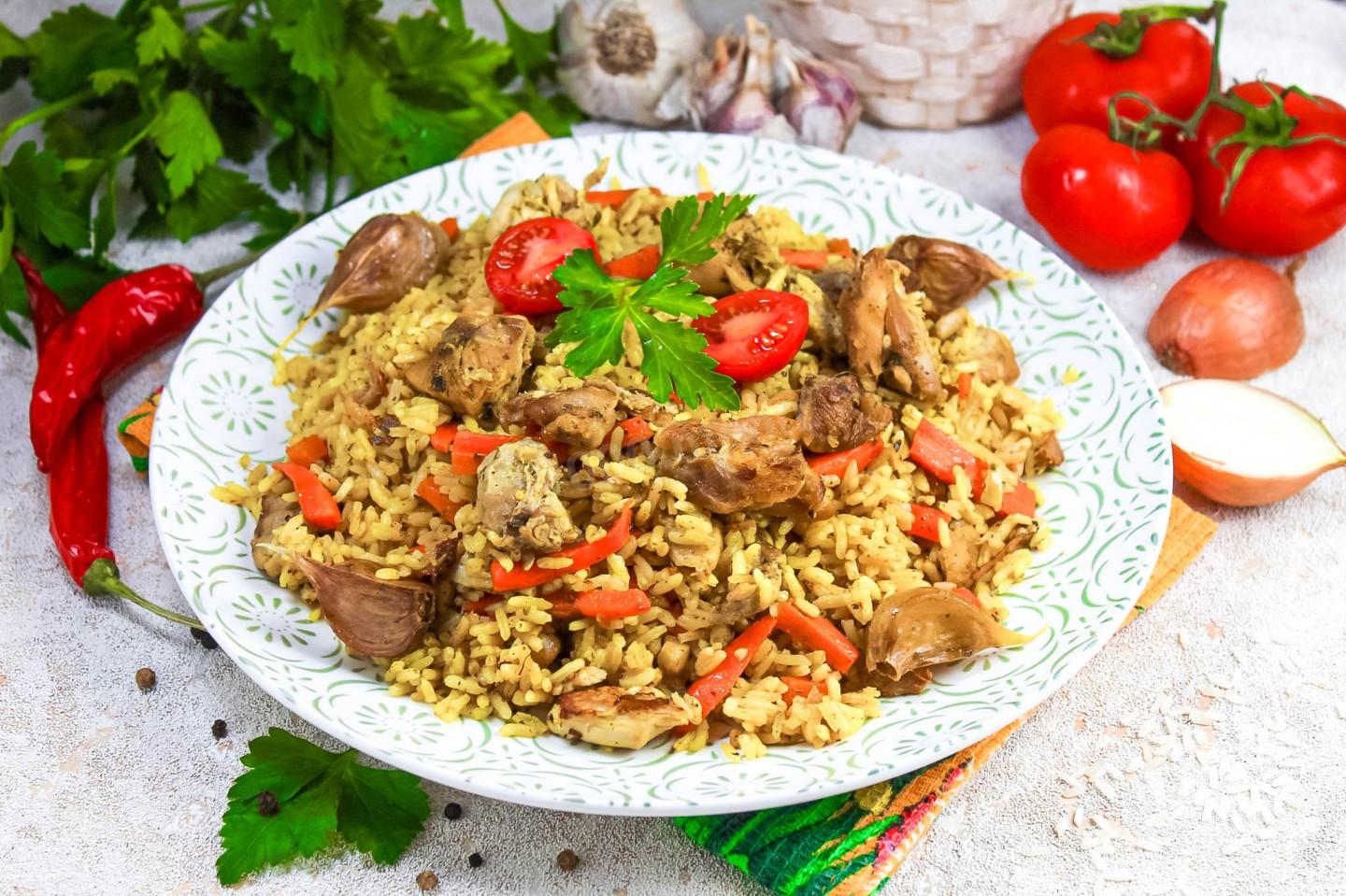
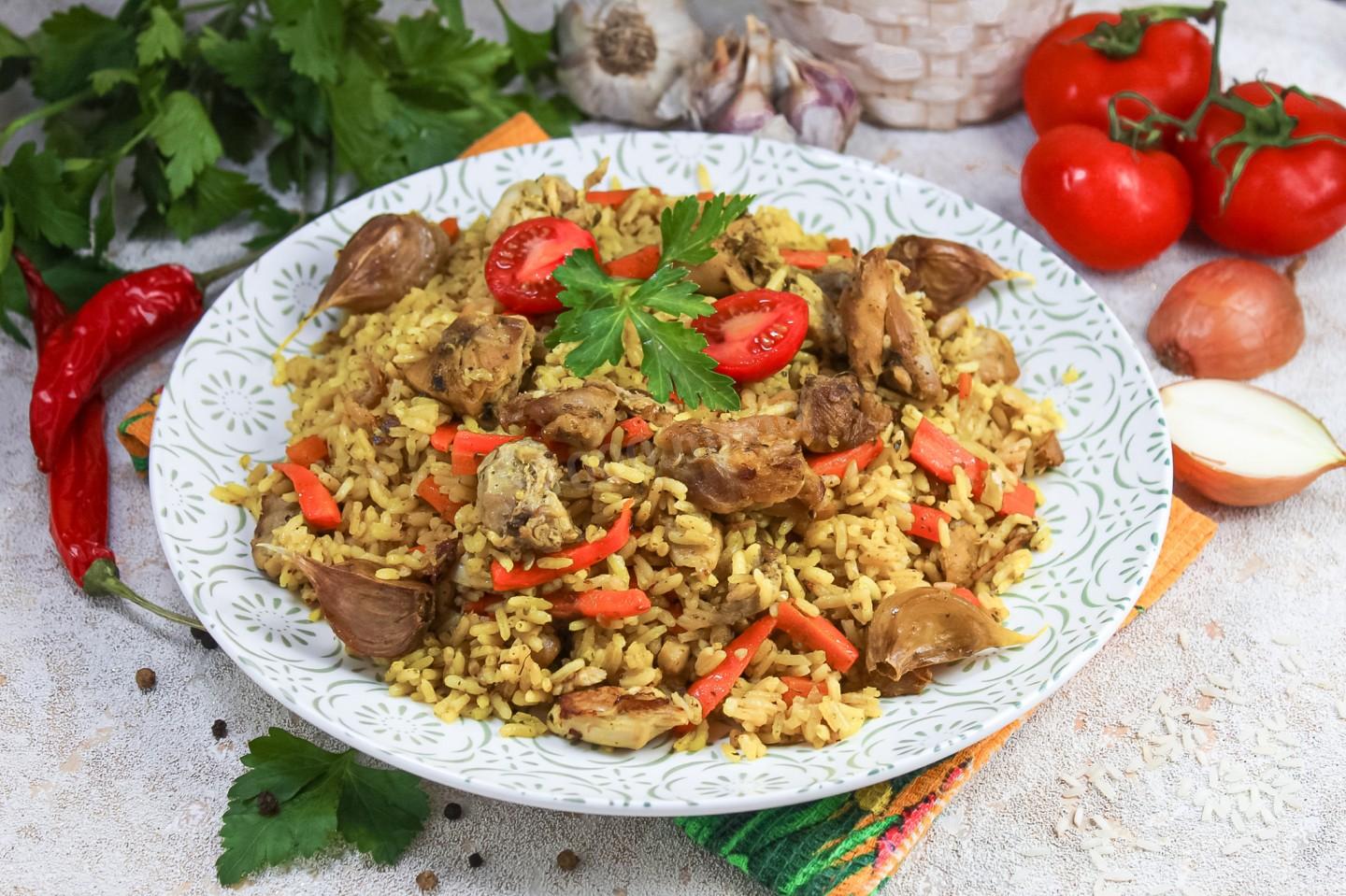
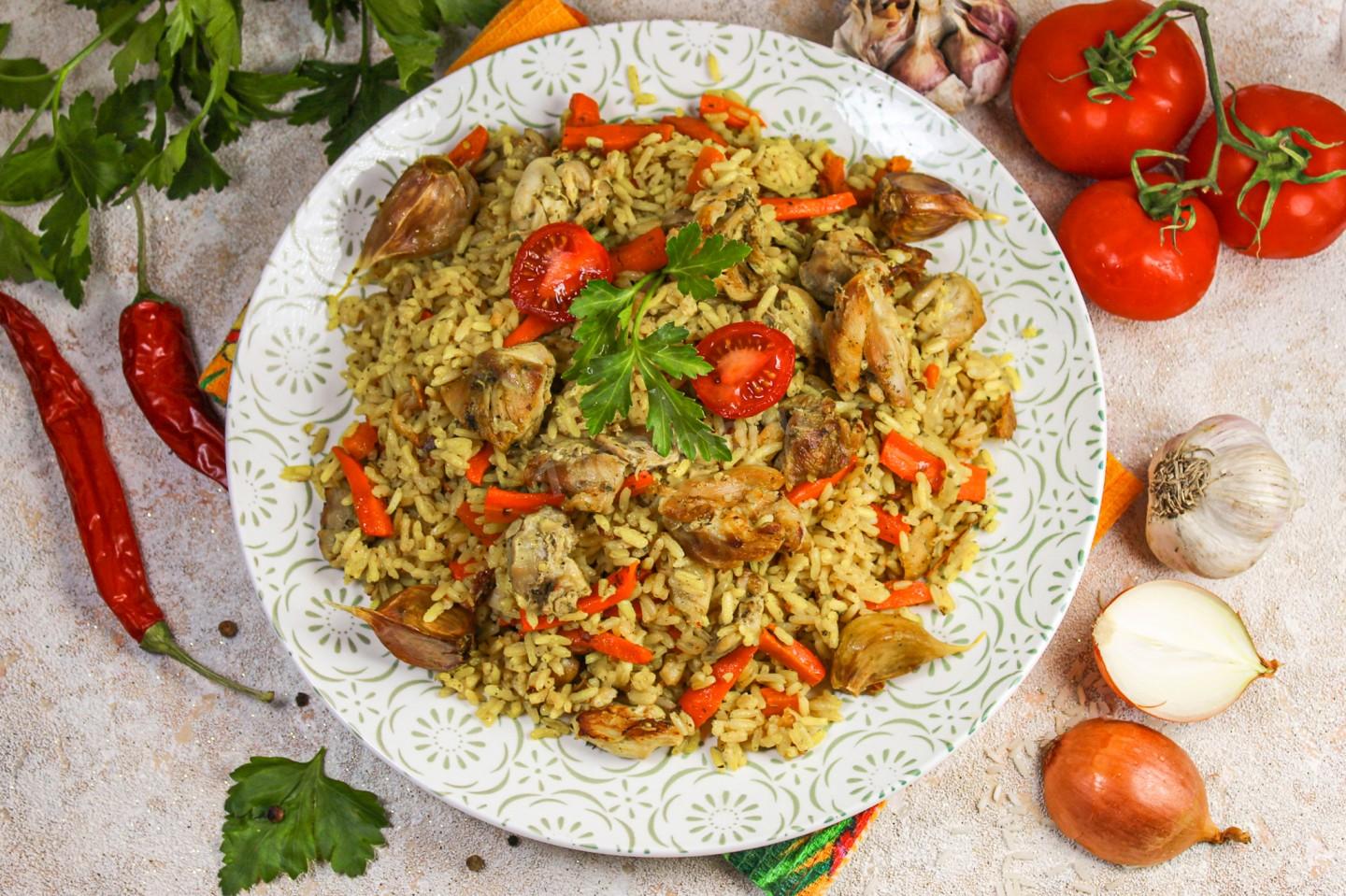
Delicious, fluffy pilaf without a Dutch oven or cauldron? It's absolutely doable, and fast! This is chicken pilaf made in a saucepan right on the stovetop. A regular pot works fine — just be sure it has a heavy bottom. Pilaf made in a saucepan comes out every bit as fragrant and tasty. This is how I make it most often, because it's quick, simple, and inexpensive.

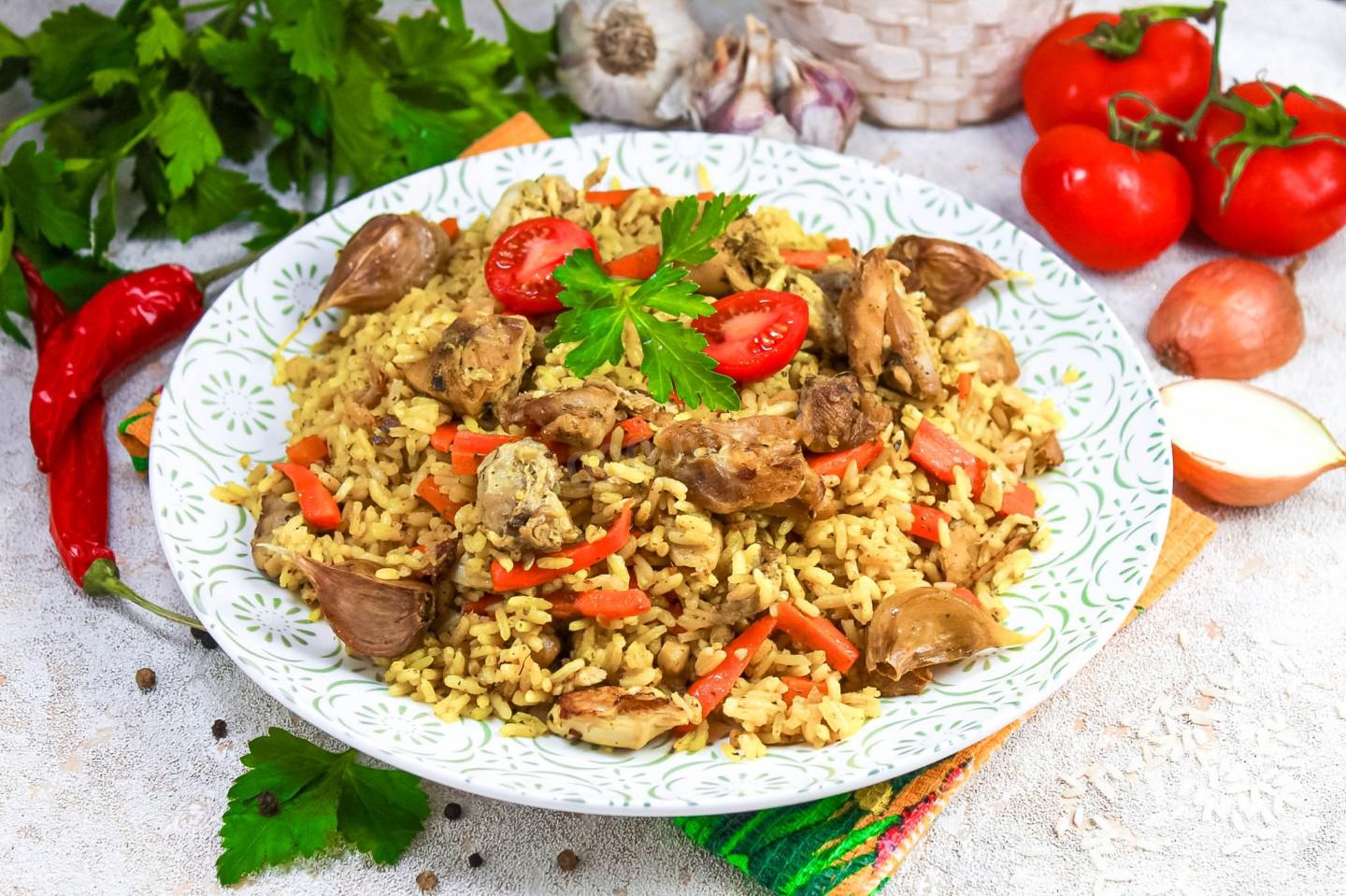
Cooking method
-
Step 1:
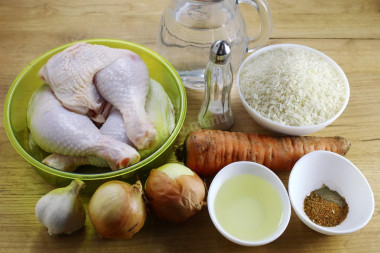
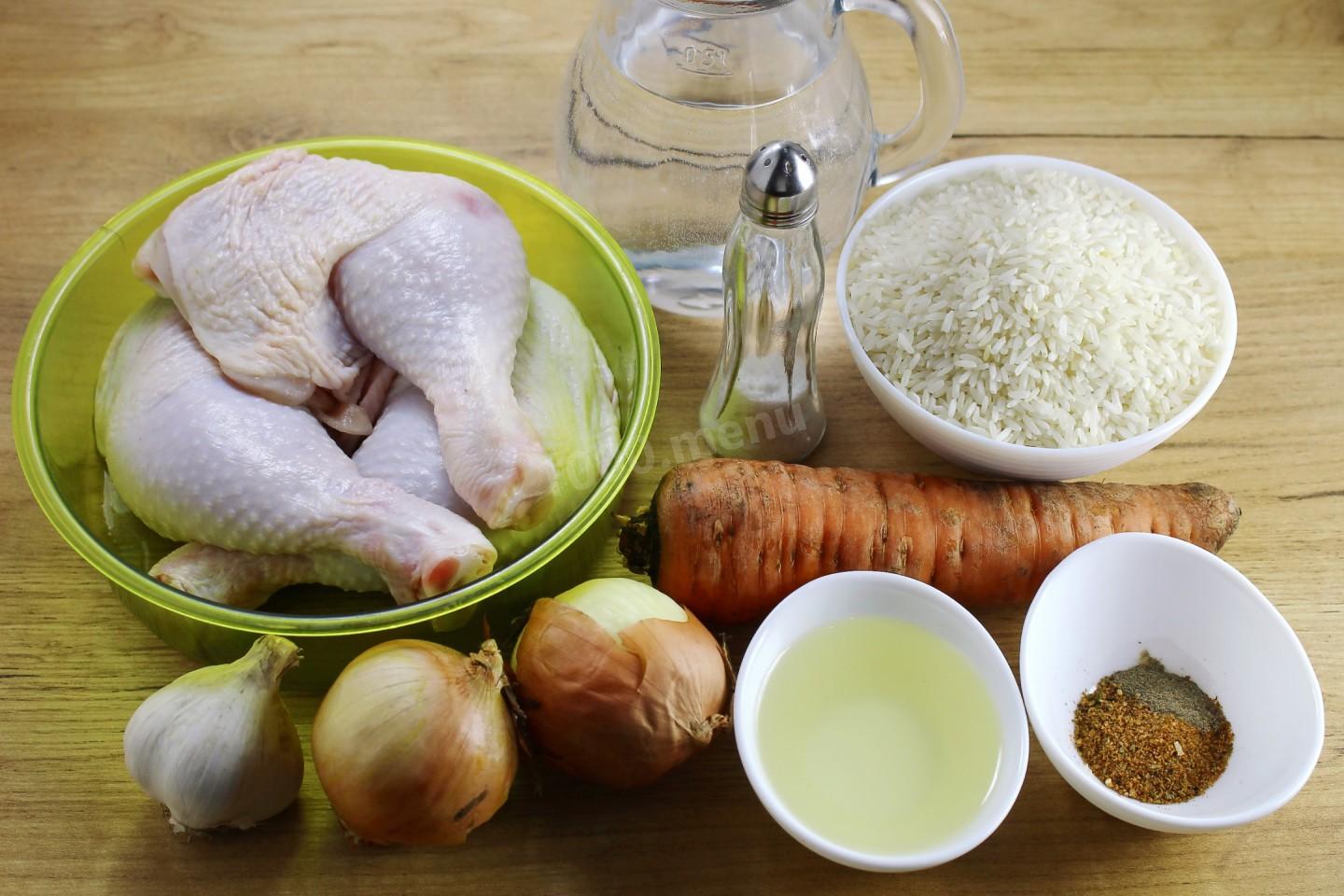
How do you make fluffy chicken pilaf in a saucepan? Gather all the ingredients. For the pilaf to turn out fluffy, start by choosing the right rice. Sometimes the package will even say "for pilaf." If you can't find that, use any long-grain rice — it has less starch and clumps together less. You can use chicken from any part of the bird. For spices, reach for cumin, barberry, saffron, turmeric, red and black pepper, and thyme.
-
Step 2:
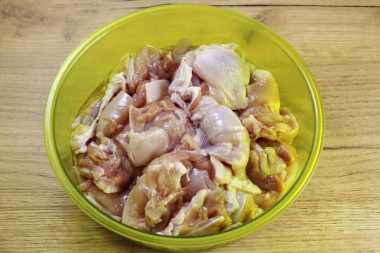
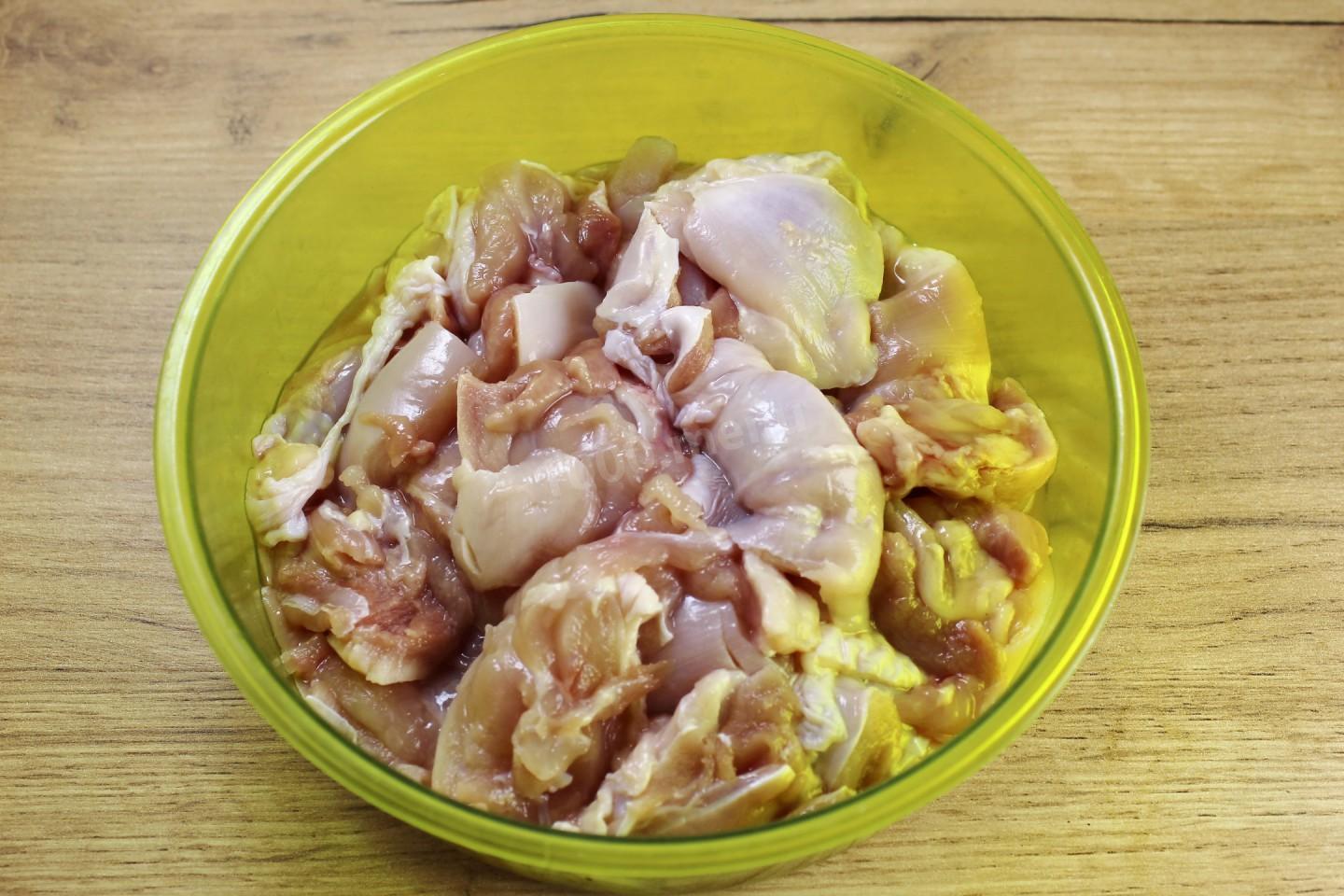
Rinse the chicken under running water. If it isn't already cut up, carve the meat off the bones and remove the skin. Save those for another dish — to make stock, for example. Cut the meat into pieces no larger than about 3/4 inch (2 cm). Blot the pieces with paper towels so no moisture is left; this cuts down on splattering when you fry.
-
Step 3:
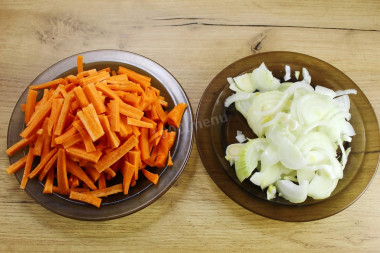
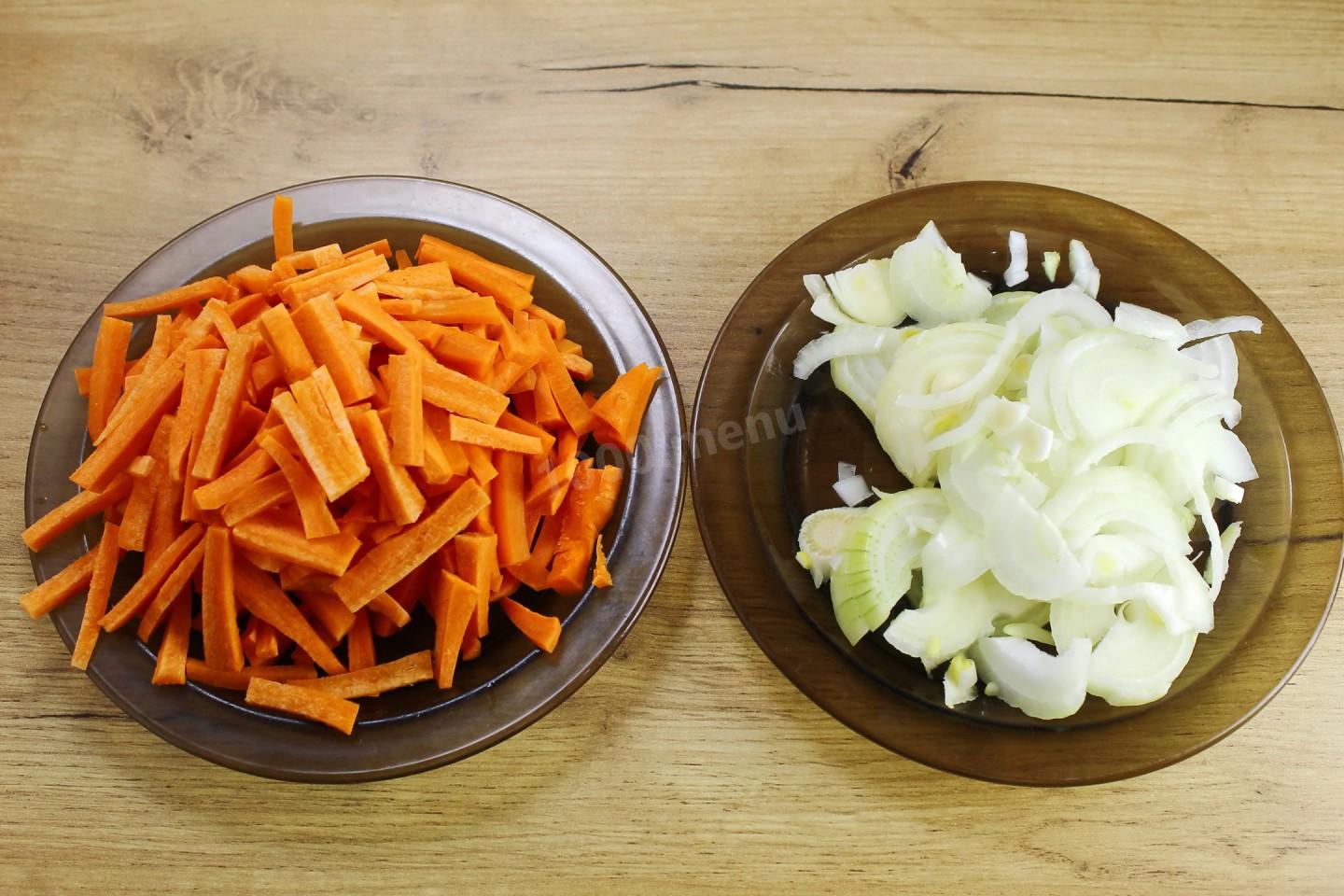
Peel the onion, rinse it, and cut into half-moons. Peel the carrots, rinse, and cut into matchsticks. This cut is considered traditional for pilaf.
-
Step 4:
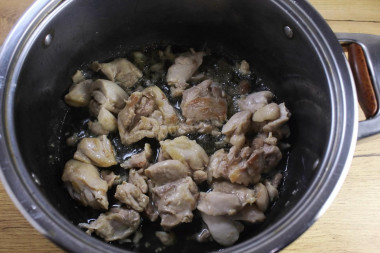
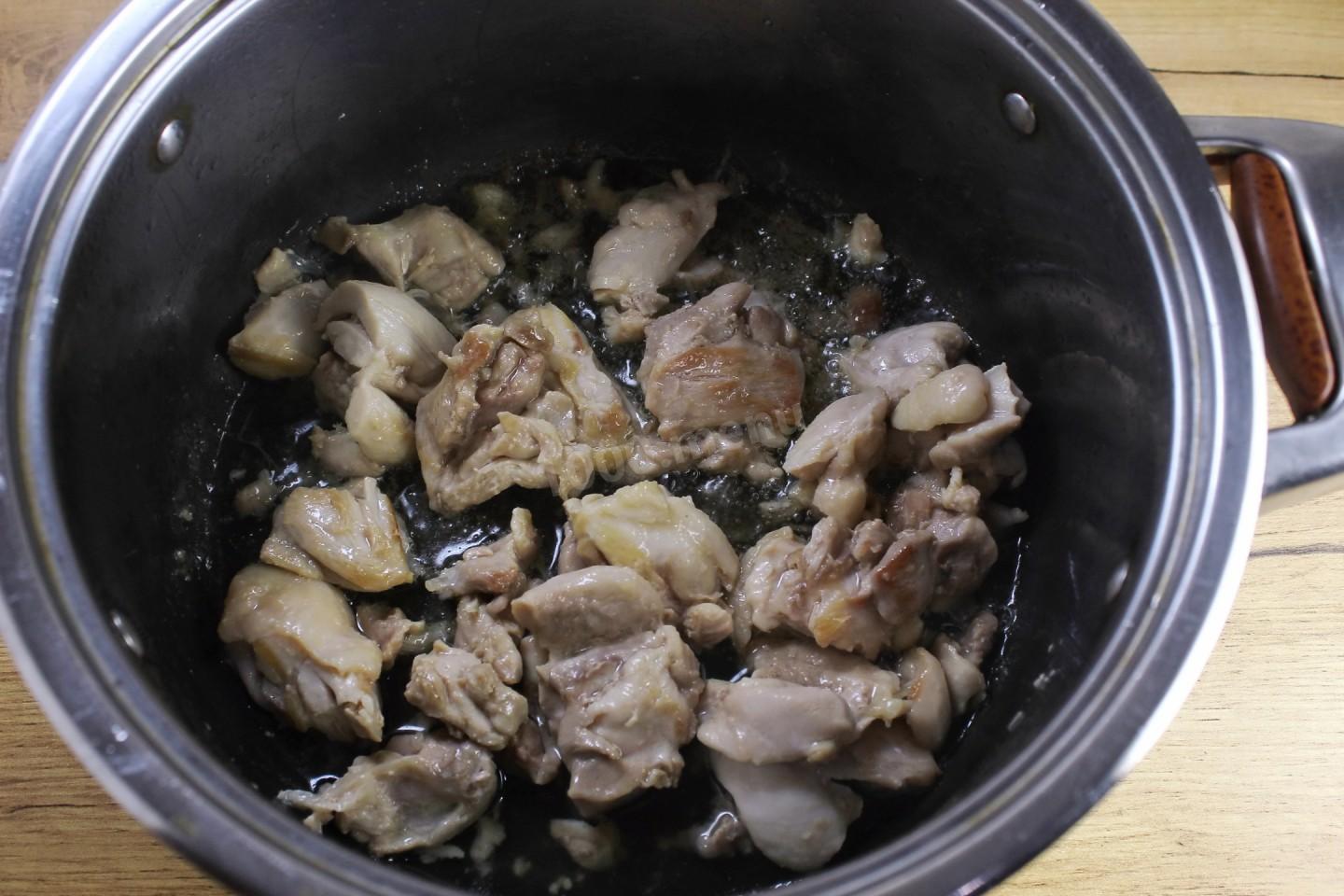
Heat a heavy-bottomed saucepan over medium heat and pour in the vegetable oil. Choose a pot big enough to hold all the pilaf ingredients. Add the cut-up chicken and fry over high heat until lightly golden.
-
Step 5:
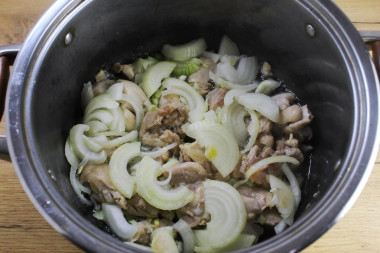
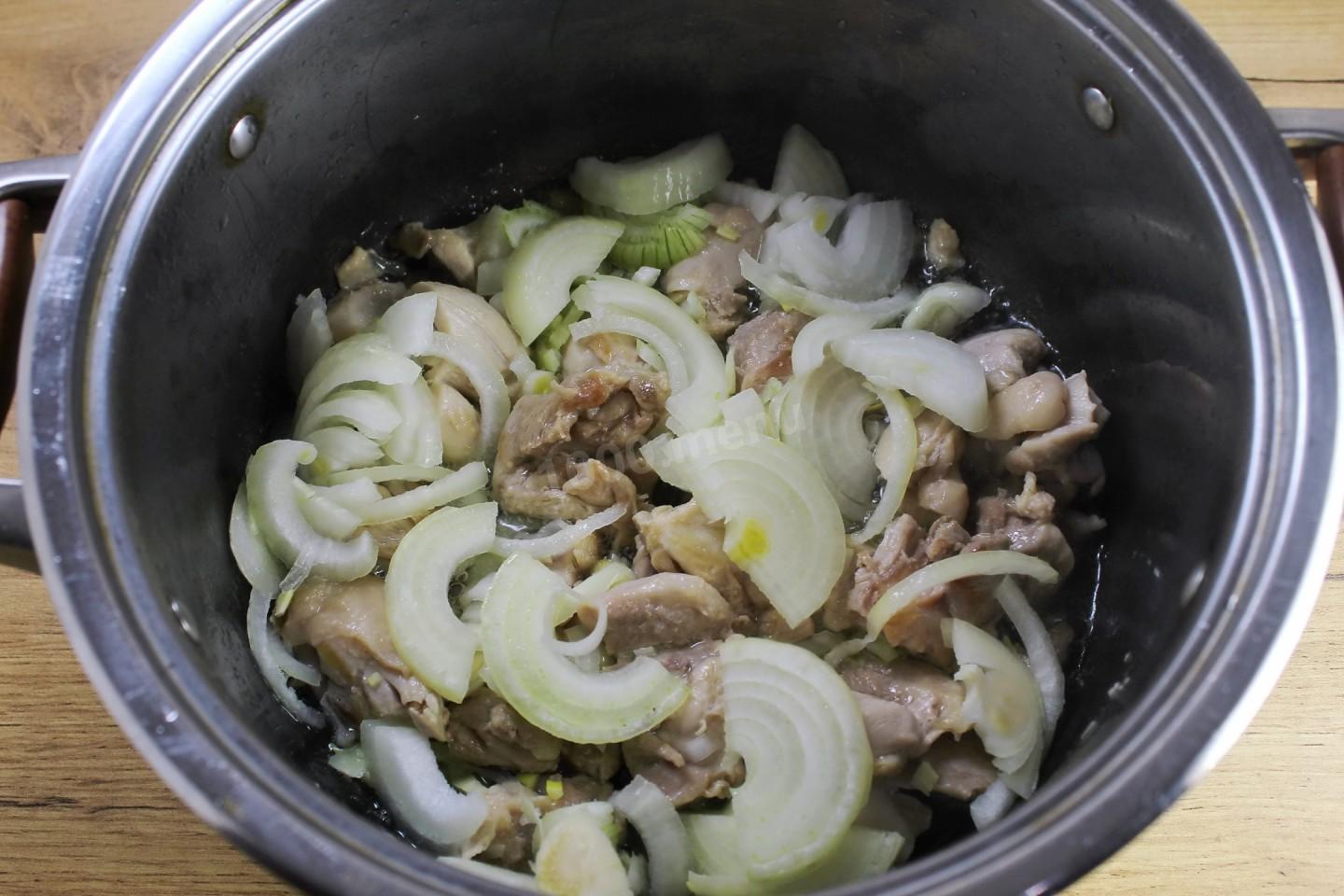
Flip the chicken over and add the chopped onion to the pot. Stir and fry for 2–3 minutes.
-
Step 6:
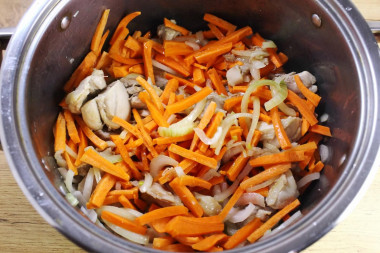
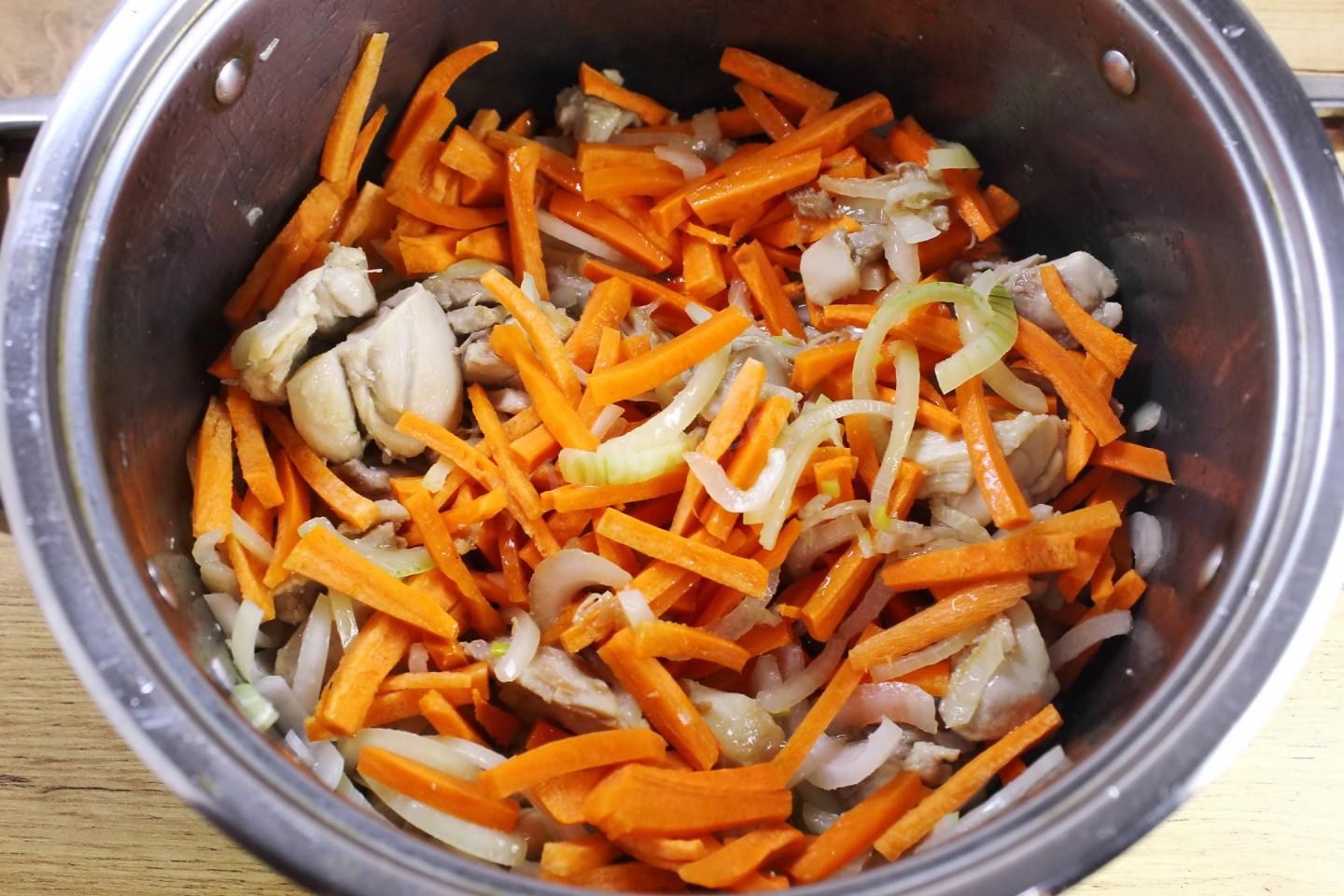
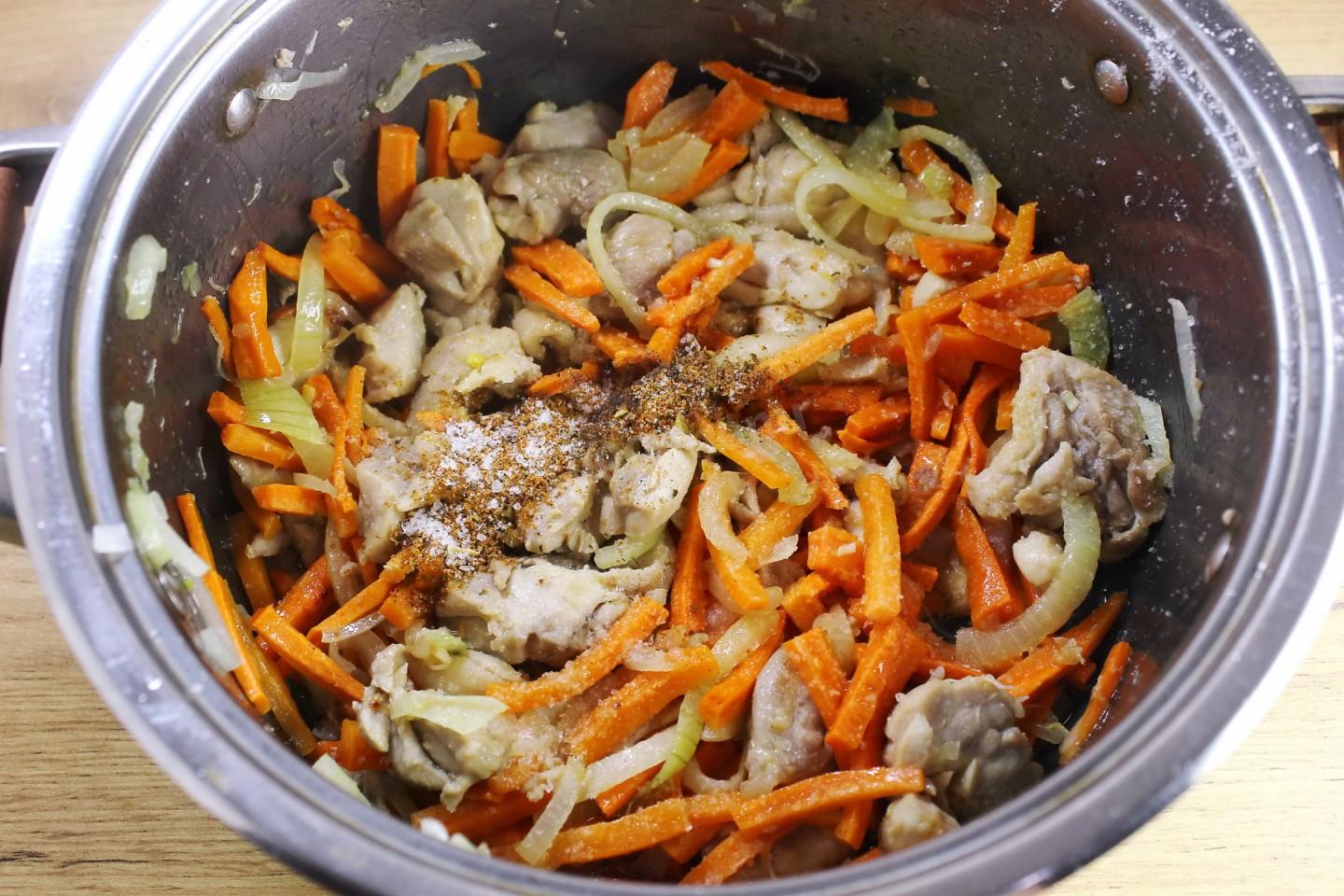
Then add the carrots and stir. Fry for another 3–4 minutes, until the carrots soften.
-
Step 7:
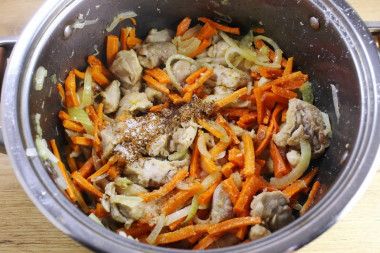
Add salt and spices. Stir and turn down the heat. Bring the water to a boil — you'll need it hot. From this point on, until the pilaf is served, do not stir it under any circumstances, or it will turn to mush.
-
Step 8:
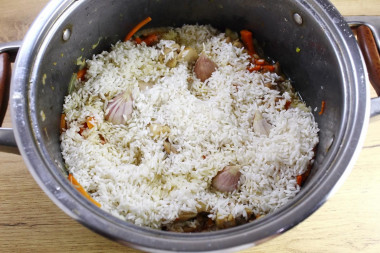
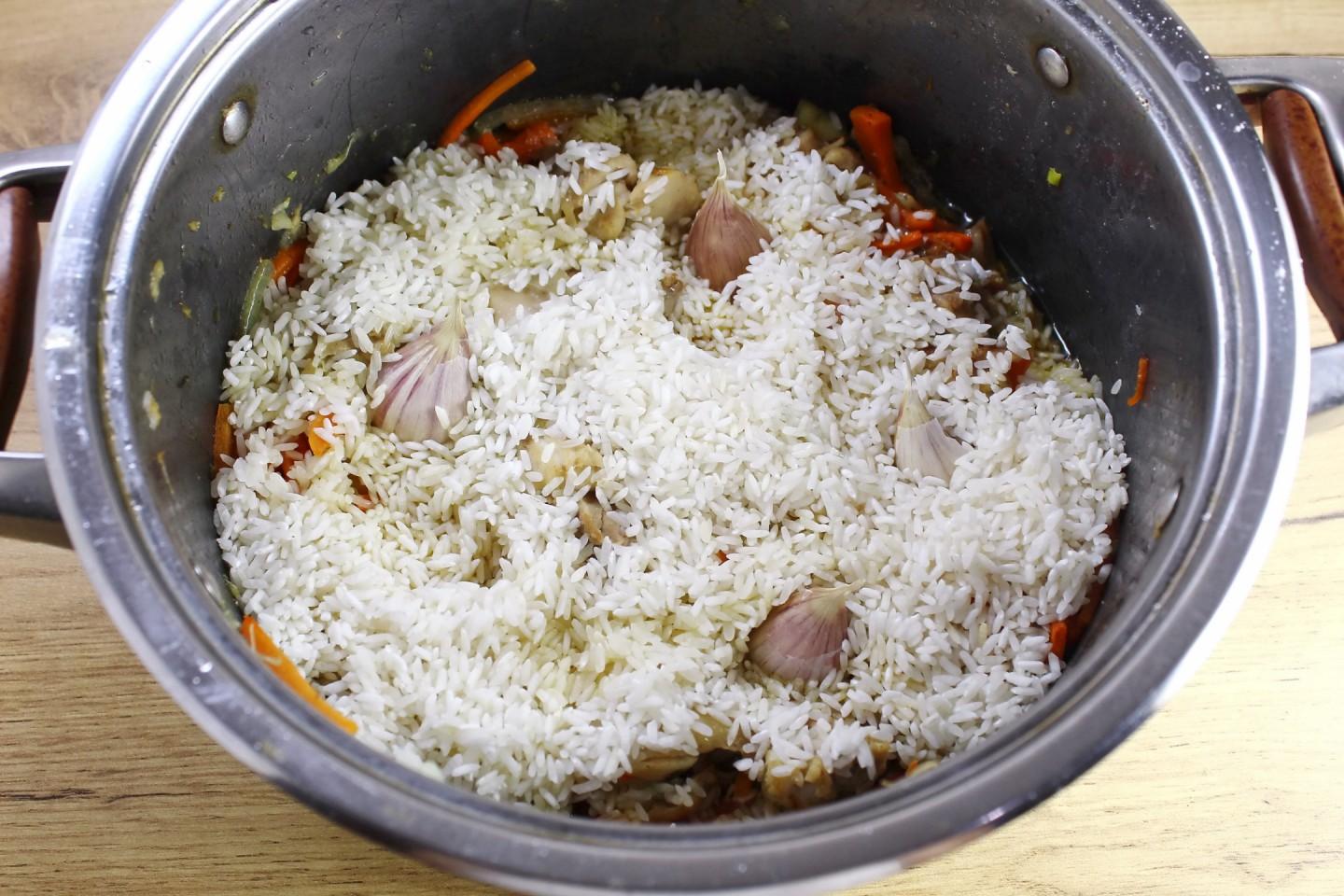
Rinse the rice several times in cold water until it runs clear. This washes out the starch better and makes the pilaf fluffier. Spread the rice over the meat and vegetables. Peel the papery outer layer off the garlic head but leave the cloves whole and unpeeled; set them on the rice and press them in slightly.
-
Step 9:
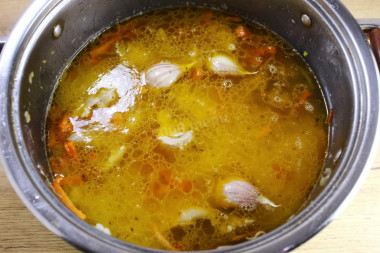
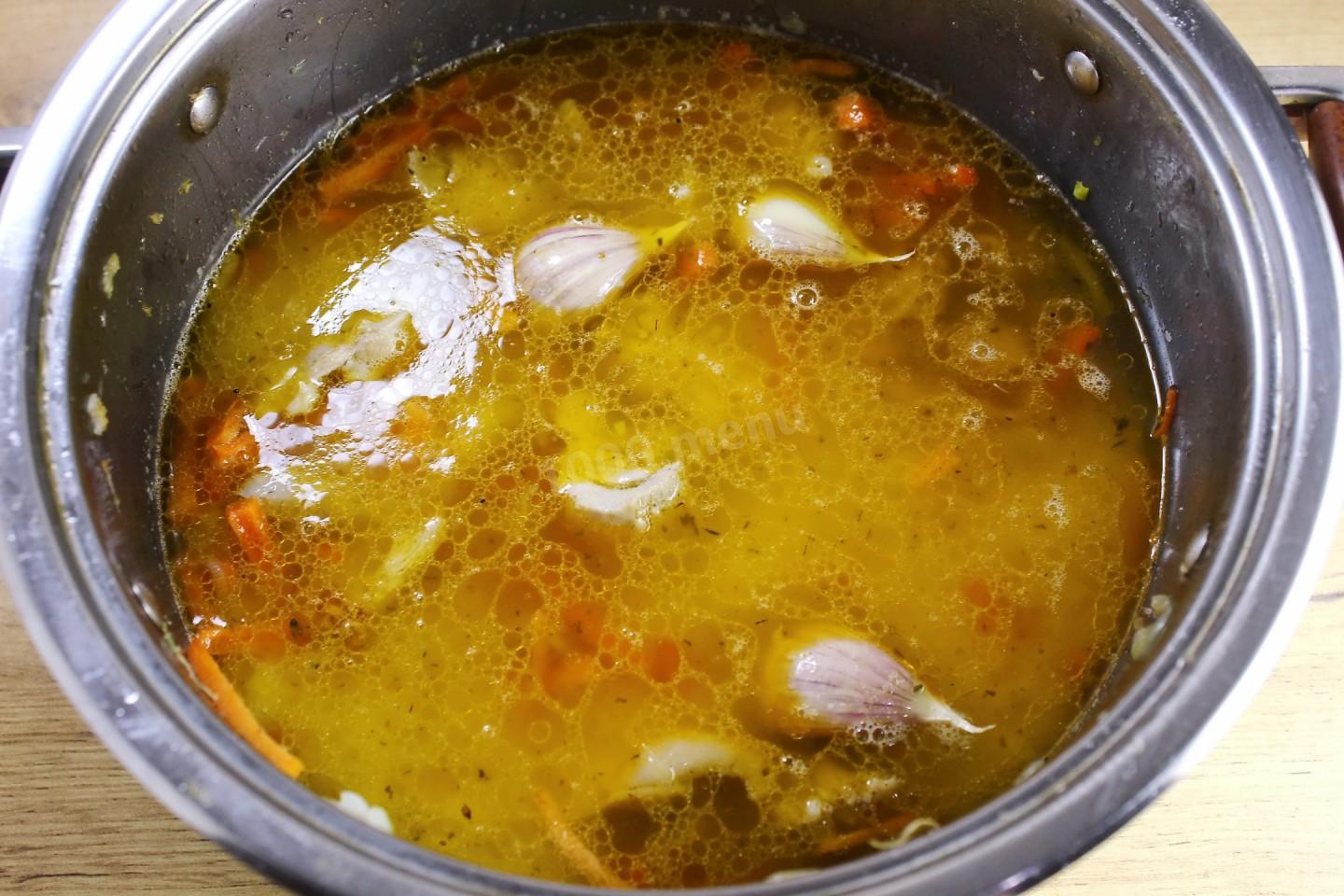
Pour in enough hot water to cover the rice by about 3/4 to 1 inch (1.5–2 cm). Cover and simmer over medium heat for about 15–20 minutes, until the rice has absorbed all the water.
-
Step 10:
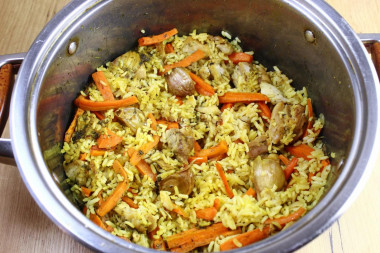
To help any extra liquid evaporate faster, use a spatula to poke a few holes down to the bottom of the pot. If liquid pools in them, the water hasn't fully cooked off yet; if there's none, go ahead and take the pot off the heat. Cover and let it rest for 10–15 minutes.
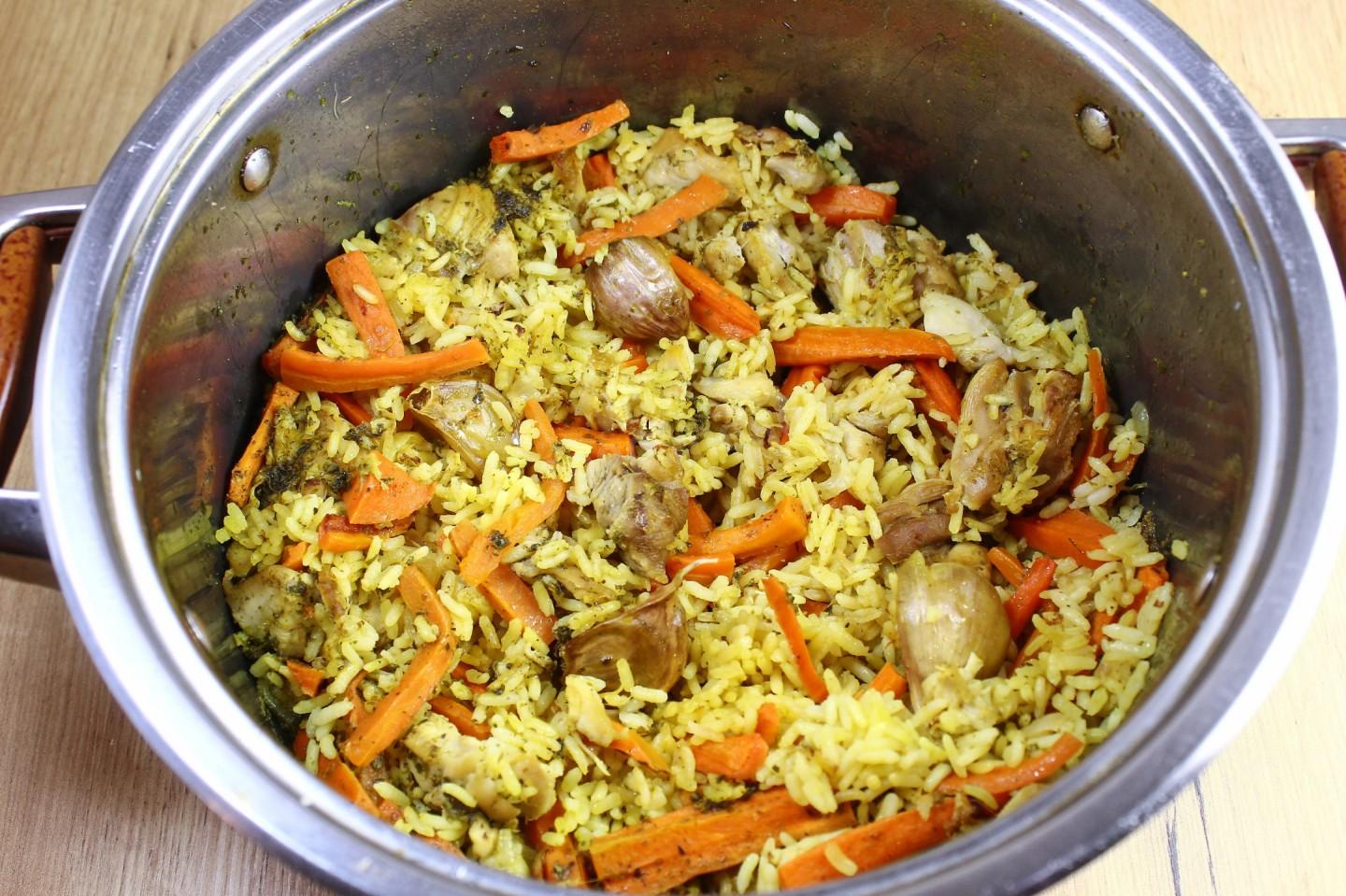
- Before serving, be sure to fold the pilaf together, then mound it on a large platter or plate it in individual portions. A tasty sauce or a fresh vegetable salad goes well alongside.
- You can swap the chicken for turkey or any other meat you like. Just keep in mind that the cooking time and calorie count will change.
- How you cut the carrots affects the final result: grated carrots break down into a purée during cooking and blend evenly into everything else, while matchsticks or batons hold their shape.
- Use a high-smoke-point oil for frying! Every oil is only good up to a certain temperature — its smoke point — beyond which it starts to burn and forms harmful compounds, including carcinogens. Unrefined oils, with rare exceptions, have a low smoke point; they contain lots of unfiltered particles that scorch quickly. Refined oils stand up to heat better and have a higher smoke point. If you're cooking in the oven, in a skillet, or on the grill, make sure you use an oil with a high smoke point. The most common high-smoke-point choices are refined sunflower, olive, and grapeseed oils.
Caloric content of the products possible in the composition of the dish
- Category I chicken - 238 kcal/100g
- Chicken of the II category - 159 kcal/100g
- Chicken, flesh without skin - 241 kcal/100g
- Chickens - 140 kcal/100g
- Raw wild rice - 353 kcal/100g
- Brown raw rice - 360 kcal/100g
- Boiled brown rice - 119 kcal/100g
- White fortified raw rice - 363 kcal/100g
- Fortified boiled white rice - 109 kcal/100g
- White rice, steamed, with long grains raw - 369 kcal/100g
- Steamed white rice, boiled with long grains - 106 kcal/100g
- Instant dry rice - 374 kcal/100g
- Instant rice, ready to eat - 109 kcal/100g
- Rice - 344 kcal/100g
- Carrots - 33 kcal/100g
- Dried carrots - 275 kcal/100g
- Boiled carrots - 25 kcal/100g
- Garlic - 143 kcal/100g
- Vegetable oil - 873 kcal/100g
- Salt - 0 kcal/100g
- Water - 0 kcal/100g
- Onion - 41 kcal/100g
- Spices dry - 240 kcal/100g
Similar recipes

- Homemade dinner
- National cuisine
- Second course
- Meat and meat products
- Vegetables
- Cereals and cereal products
- Spices seasonings spices
- Fats and oils
- Other
- Garlic
- Salt
- Dry spices
- Vegetable oil
- Water
- Asian cuisine
- Frying
- Stewing
- In a frying pan
- Inexpensive dinner
- Pilaf
- Stewed vegetables
- Meat second course
- Poultry
- Inexpensive budget dinner
- Chicken with vegetables
- From carrots
- From onion
- No eggs
- Recipes for lean dishes without butter
- From rice