Pork in Red Wine Sauce
Juicy meat in a fragrant red wine sauce. I recently made pears poached in red wine, and I loved the sauce so much that I decided to cook meat in something similar. That version was sweet, and this one is savory — but you can add a teaspoon of sugar if you like, since meat with a sweet sauce is a classic pairing.



Cooking method
-
Step 1:
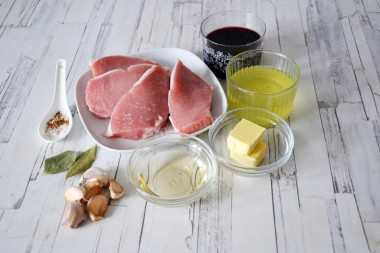
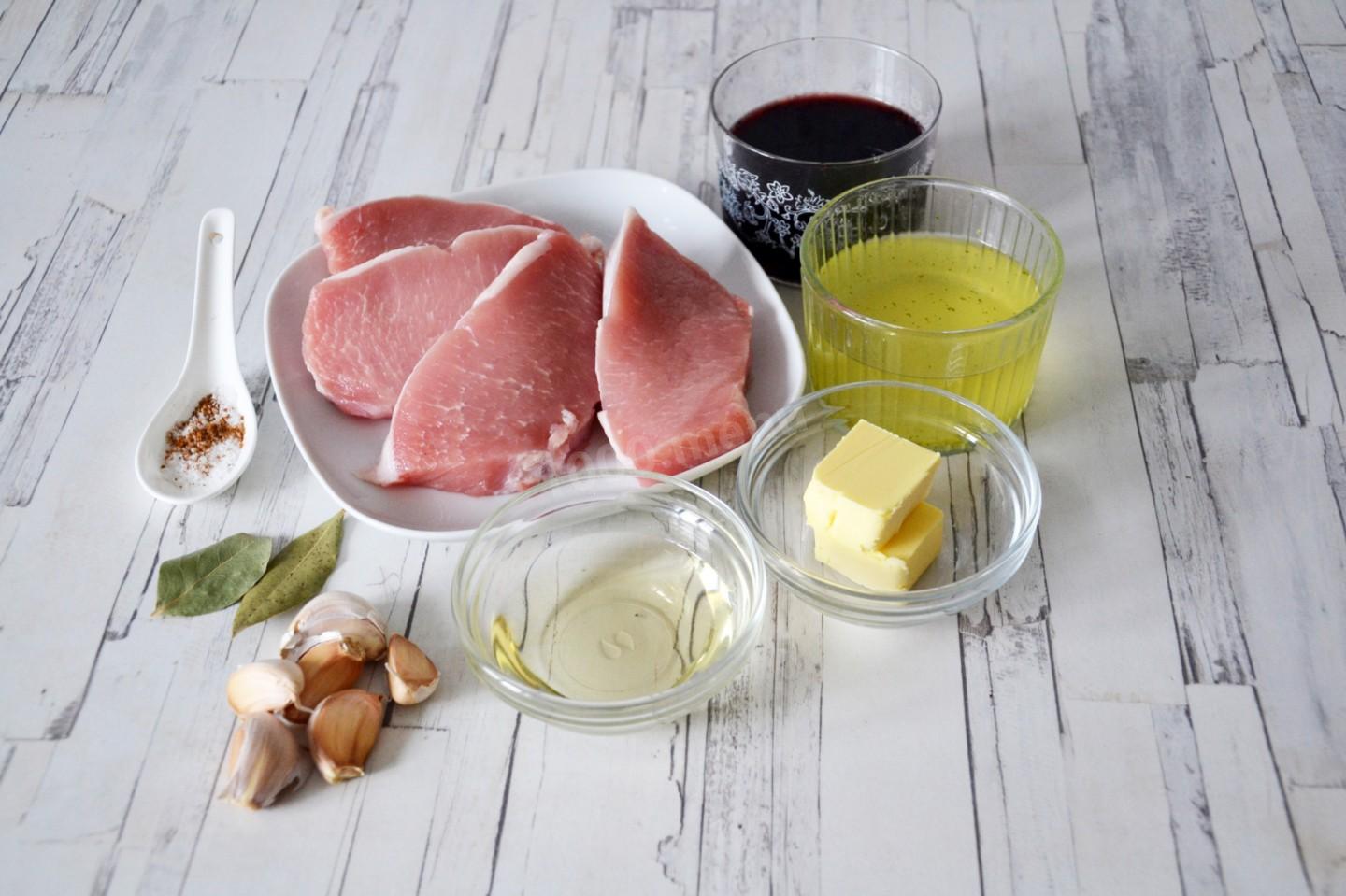
Gather the ingredients. To cook pork in red wine, you'll need: pork (neck, boneless loin, or carbonade); dry red wine; vegetable or meat broth, if you'd like; garlic; butter; vegetable oil; bay leaves; ground black pepper; and salt.
-
Step 2:
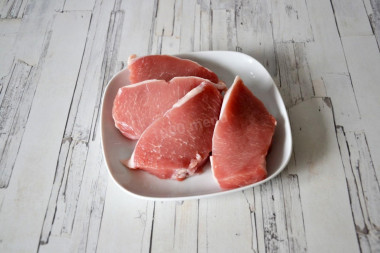
Rinse the pork and pat it dry. Use whatever cut you like — fattier or leaner. I used boneless loin. Tenderloin also works if you want it leaner, and the neck is a good choice if you want some fat marbling.
-
Step 3:
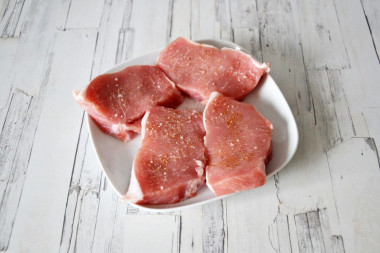
Season the pork with salt and pepper to taste.
-
Step 4:
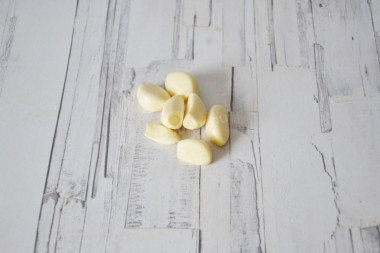
Peel the garlic. If the cloves are very large, cut them lengthwise into 2–3 pieces.
-
Step 5:
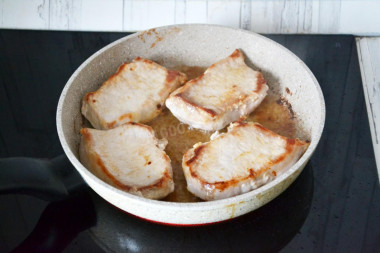
Heat the vegetable oil in a skillet and sear the pork on both sides over high heat until golden. Transfer the pork to a plate.
-
Step 6:
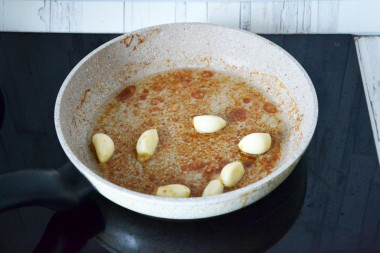
In the same skillet, fry the garlic for 1 minute.
-
Step 7:

Pour the red wine and broth into the skillet. Add the bay leaves. Bring the sauce to a boil.
-
Step 8:
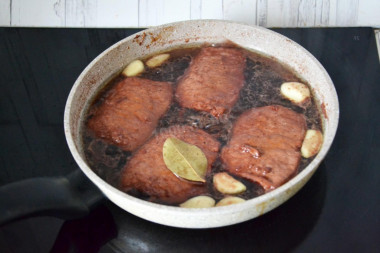
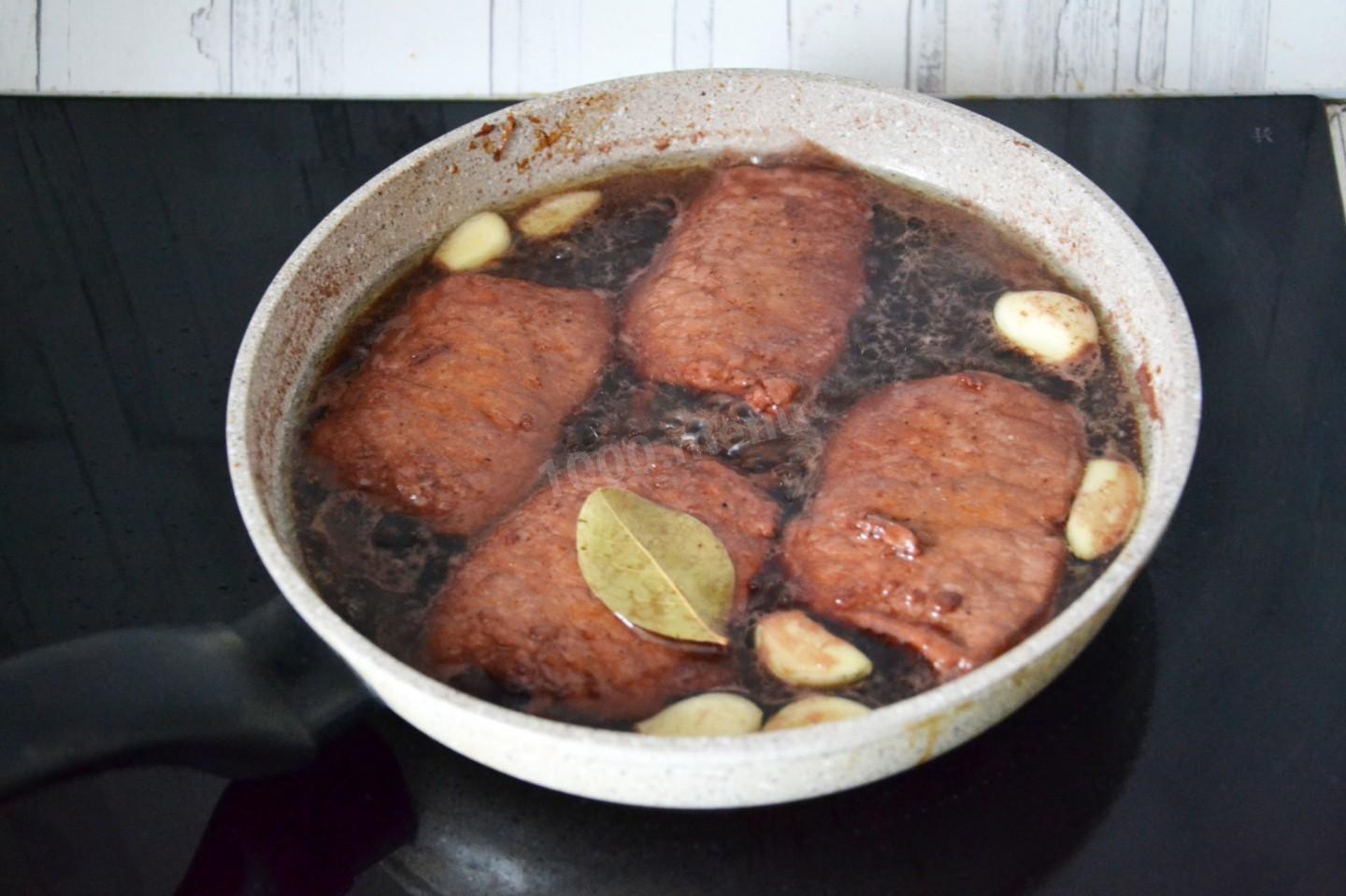
Return the pork to the boiling sauce. Simmer, covered, over medium heat for about 15–20 minutes, until tender. Don't let the liquid cook away completely (though with this much wine and broth that's nearly impossible). Add a splash more wine if needed. Once the meat is done, remove it from the skillet.
-
Step 9:

Add the butter to the sauce. Stirring, reduce it until slightly thickened. Don't overdo it — the sauce will keep thickening on its own as it cools.
-
Step 10:
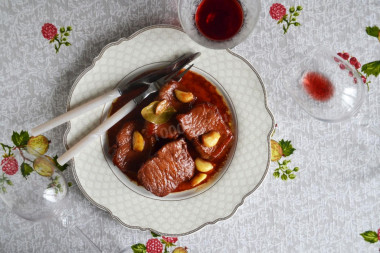
Serve the pork drizzled with the red wine sauce. So good! Enjoy!



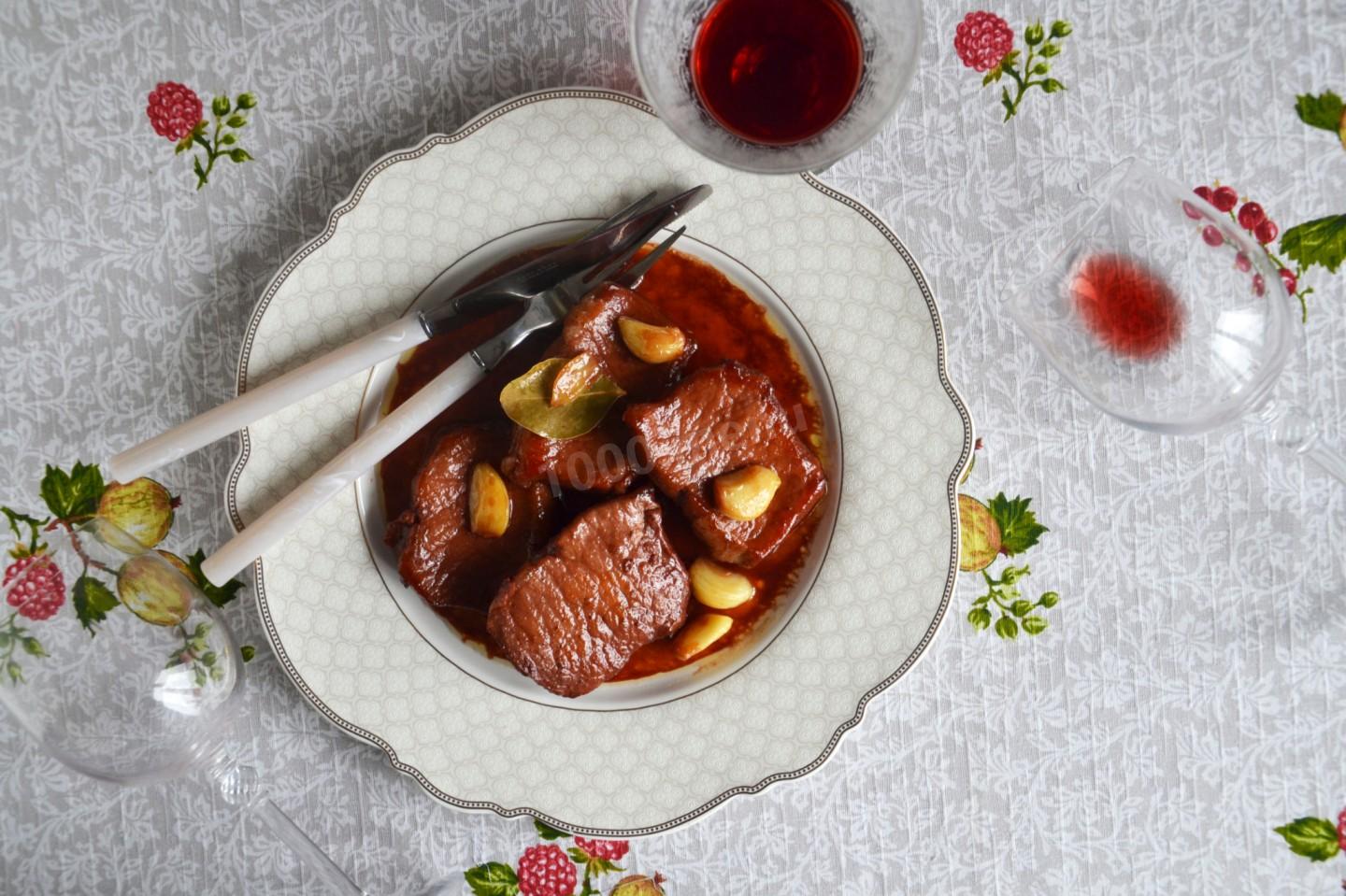
- This is a restaurant-quality dish, even though it uses very few, very affordable ingredients — proof that the best things are simple (and sometimes fast, too). I'd suggest adding a teaspoon of sugar (or a little more) to the sauce along with the butter, for a slightly sweet finish that really flatters the meat. Instead of simmering the pork in the sauce, you can also sear it, wrap it in foil, and finish it in the oven.
Caloric content of the products possible in the composition of the dish
- Pork fat - 333 kcal/100g
- Pork meat - 357 kcal/100g
- Pork - low-fat roast - 184 kcal/100g
- Pork chop on a bone - 537 kcal/100g
- Pork - schnitzel - 352 kcal/100g
- Pork shoulder - 593 kcal/100g
- Boar's leg - 113 kcal/100g
- Pork - 259 kcal/100g
- Garlic - 143 kcal/100g
- Bay leaf - 313 kcal/100g
- Ground black pepper - 255 kcal/100g
- Butter 82% - 734 kcal/100g
- Amateur unsalted butter - 709 kcal/100g
- Unsalted peasant butter - 661 kcal/100g
- Peasant salted butter - 652 kcal/100g
- Melted butter - 869 kcal/100g
- Liqueur wines - 212 kcal/100g
- Semi-dry wines - 78 kcal/100g
- Dry wines - 64 kcal/100g
- Red wine - 88 kcal/100g
- Vegetable oil - 873 kcal/100g
- Salt - 0 kcal/100g
- Meat broth - 34 kcal/100g