Skillet Buckwheat with Pork
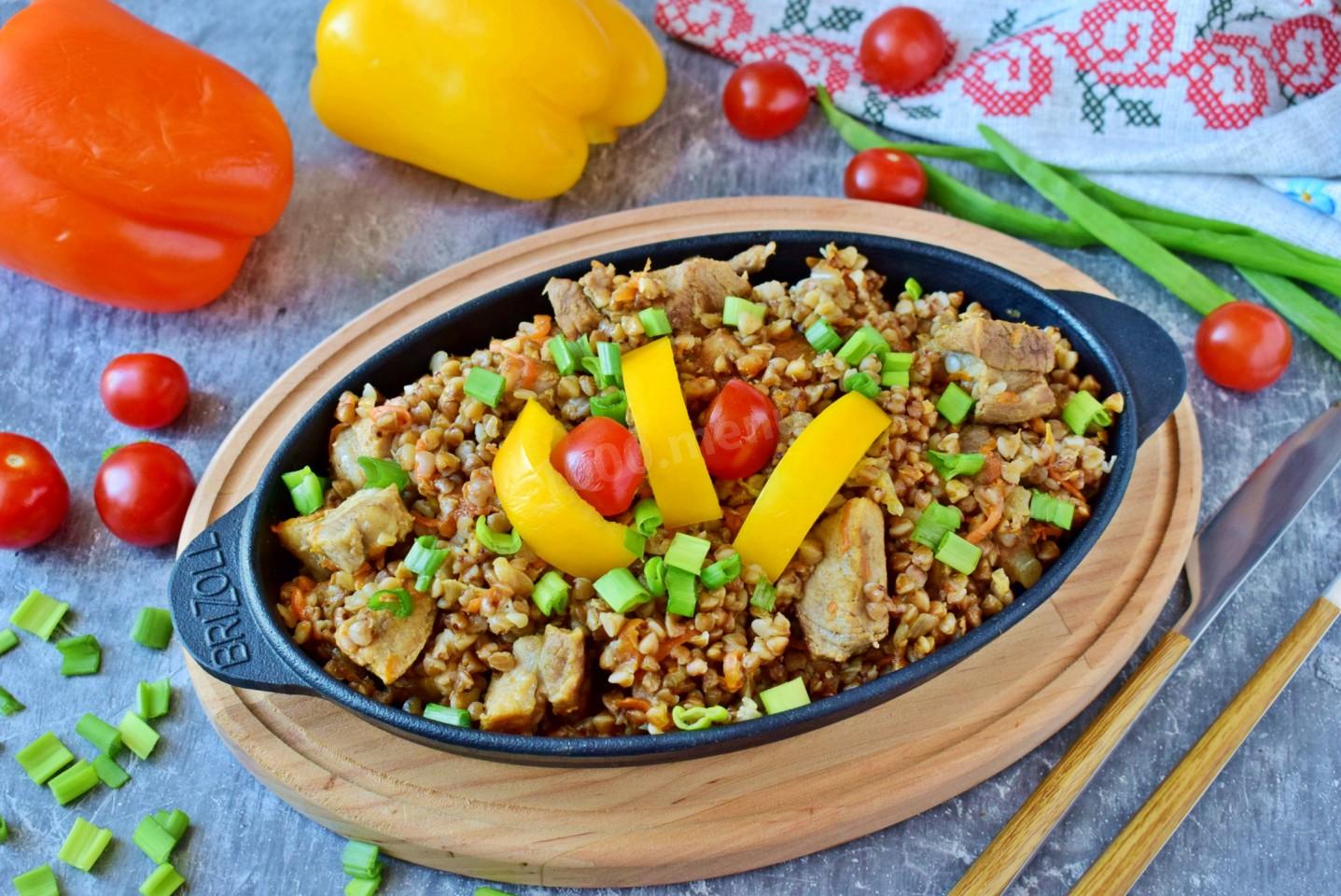
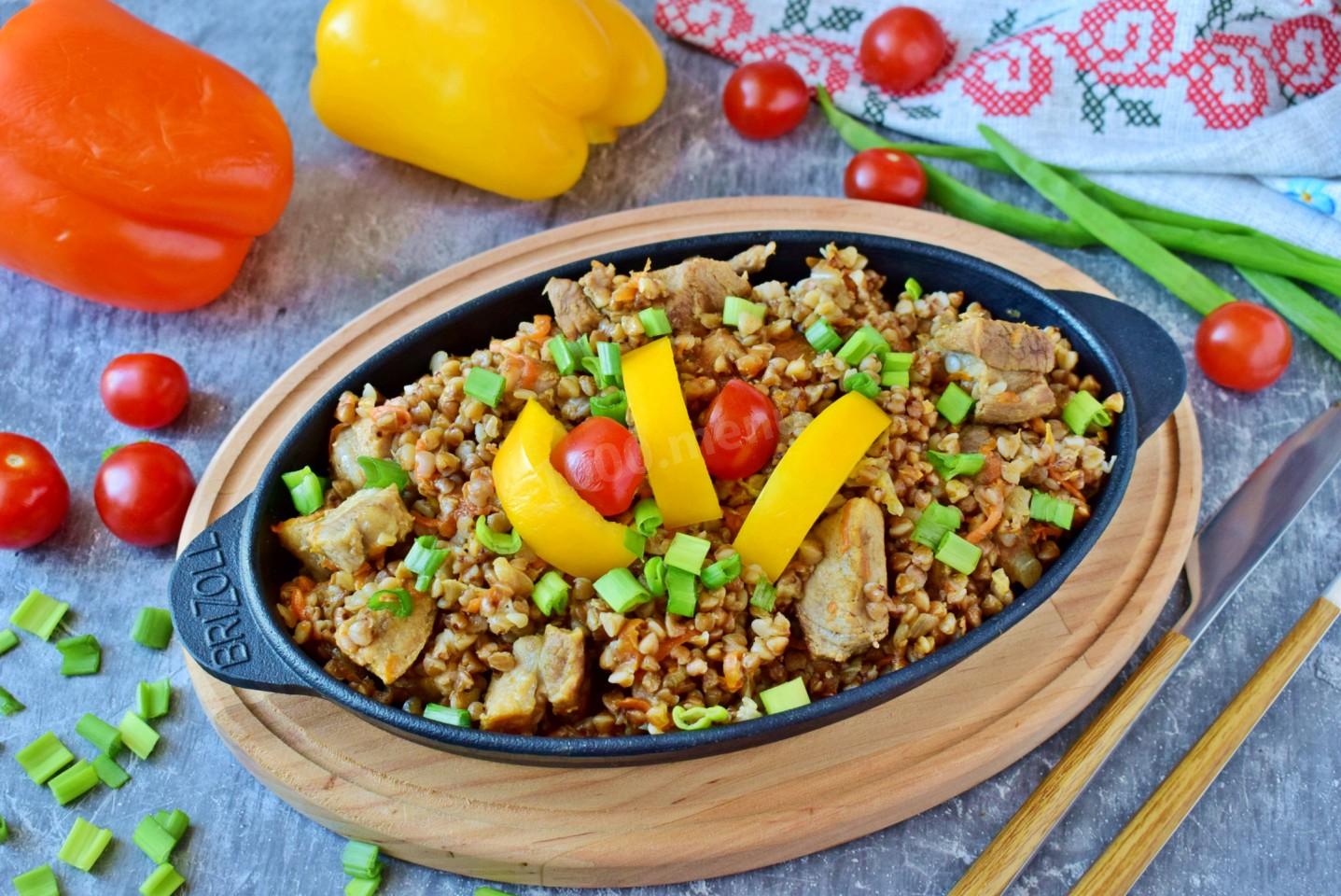
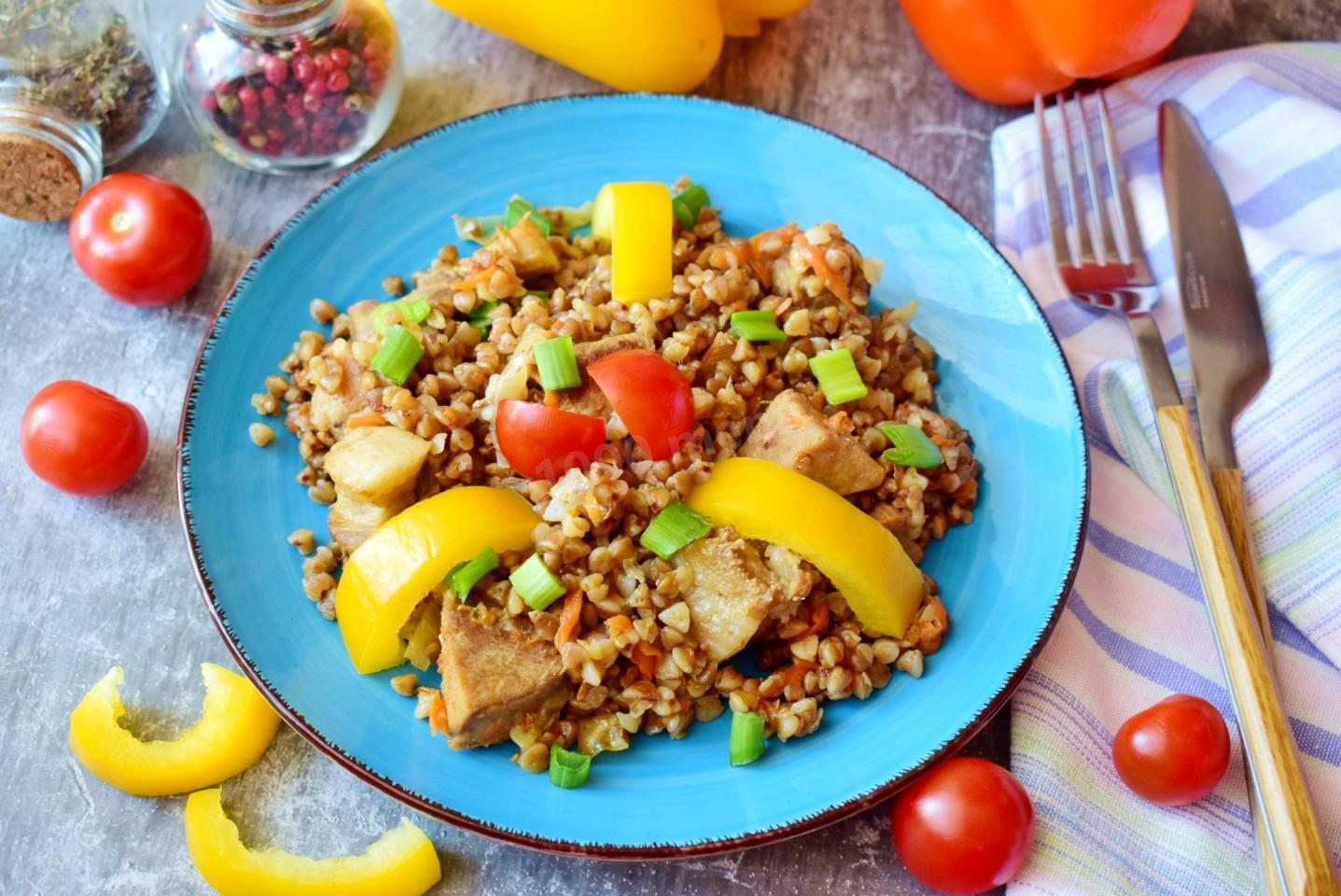
Really tasty, really simple, really homey — perfect for dinner! One of the best things about skillet buckwheat with pork is how swappable the ingredients are. You can use a different meat in place of the pork, or trade it out for mushrooms, chicken, or vegetables. Add tomato paste, sour cream, fresh herbs, your favorite spices. Serve it with a sauce or without.

Cooking method
-
Step 1:
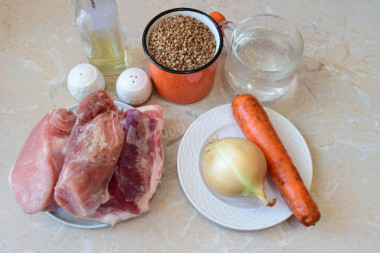
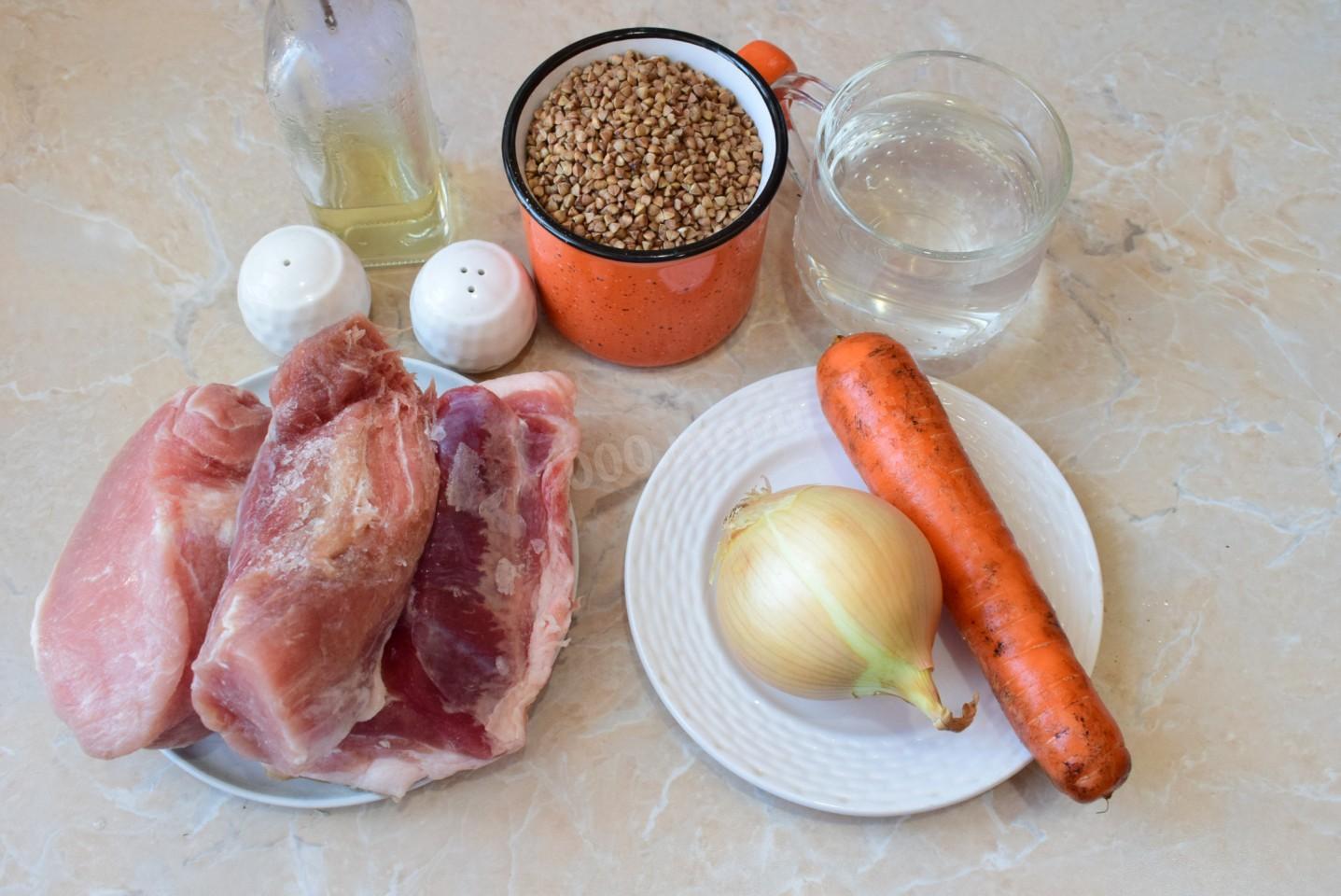
How do you make skillet buckwheat with pork? Start by gathering your ingredients. Any cut of pork works — use lean meat or belly with a bit of fat.
-
Step 2:
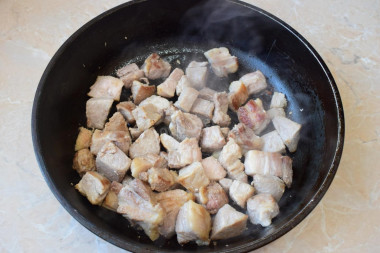
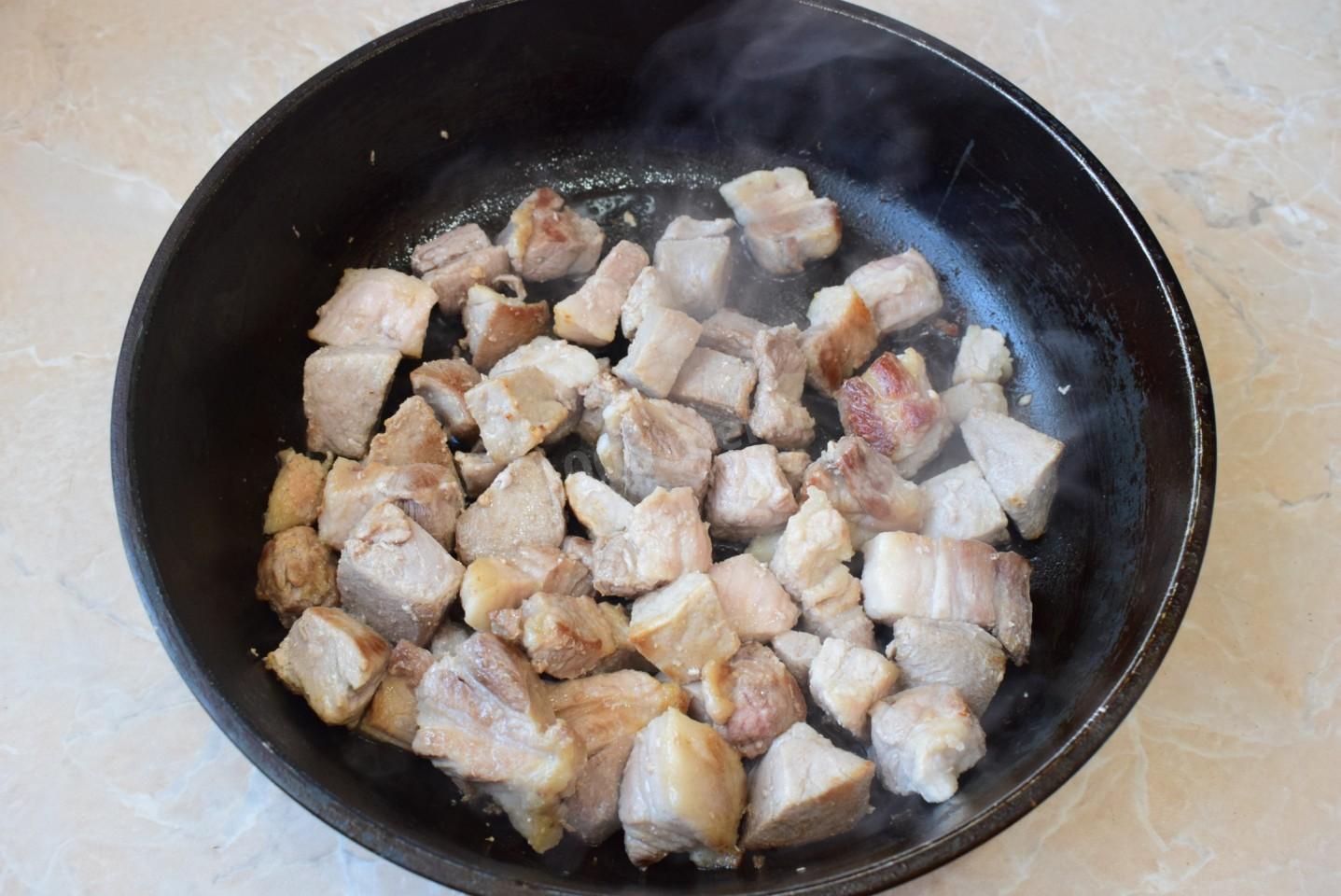
Use a deep, wide-bottomed skillet. Heat it until hot and add a little vegetable oil. Cut the pork into evenly sized pieces. Sear the pork in the hot oil on all sides until lightly golden. Stir as it cooks so it doesn't scorch.
-
Step 3:
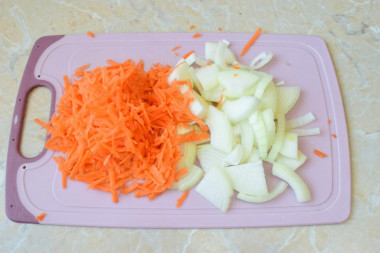
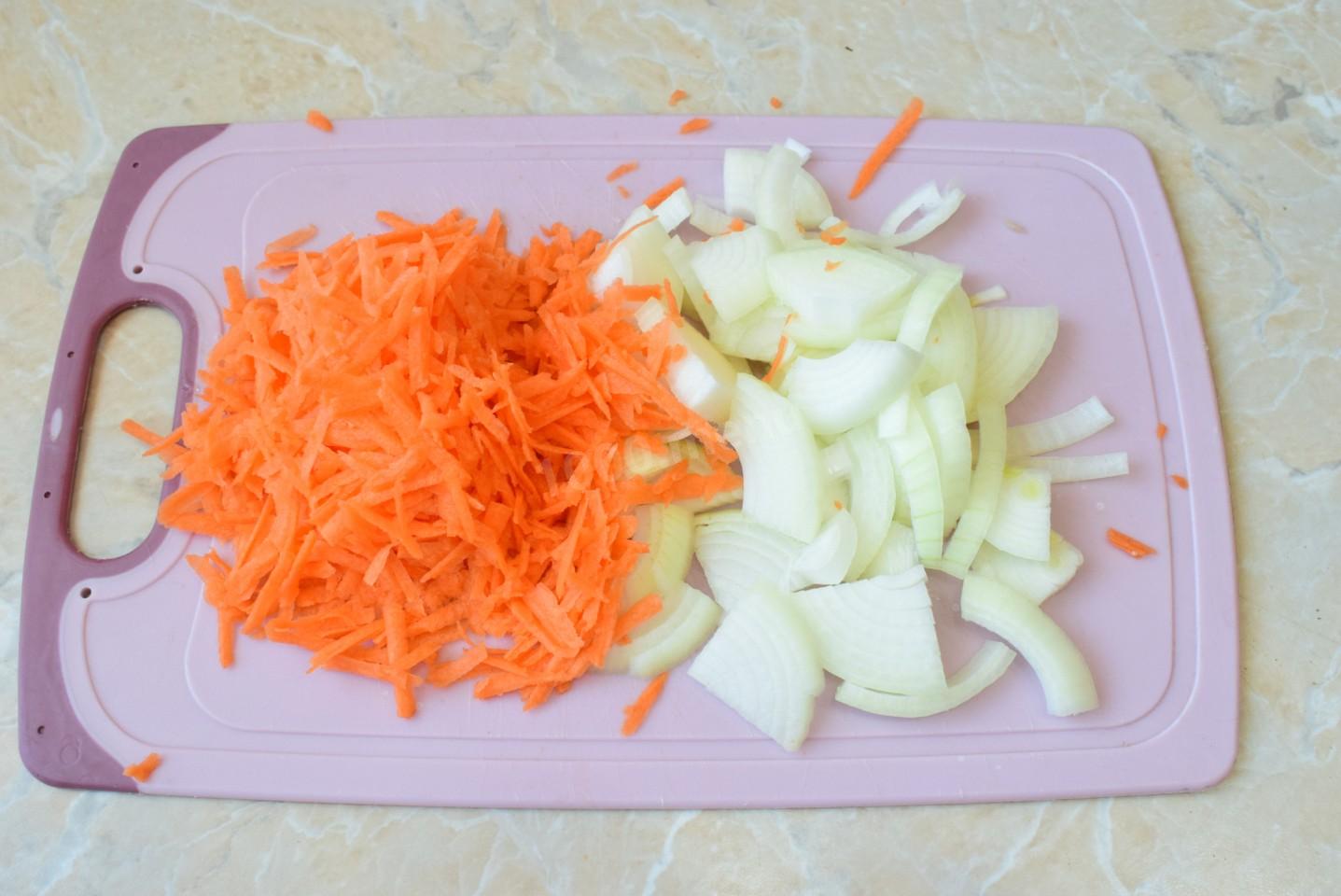
While the meat sears, prep the vegetables. Peel the onion and carrot and rinse them clean. Cut the onion into half-rings or a bit smaller. Grate the carrot on the coarse side of a box grater.
-
Step 4:
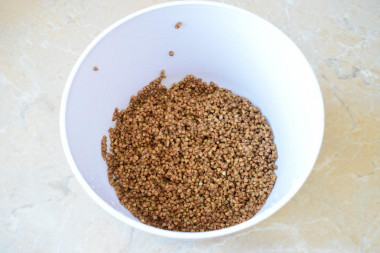
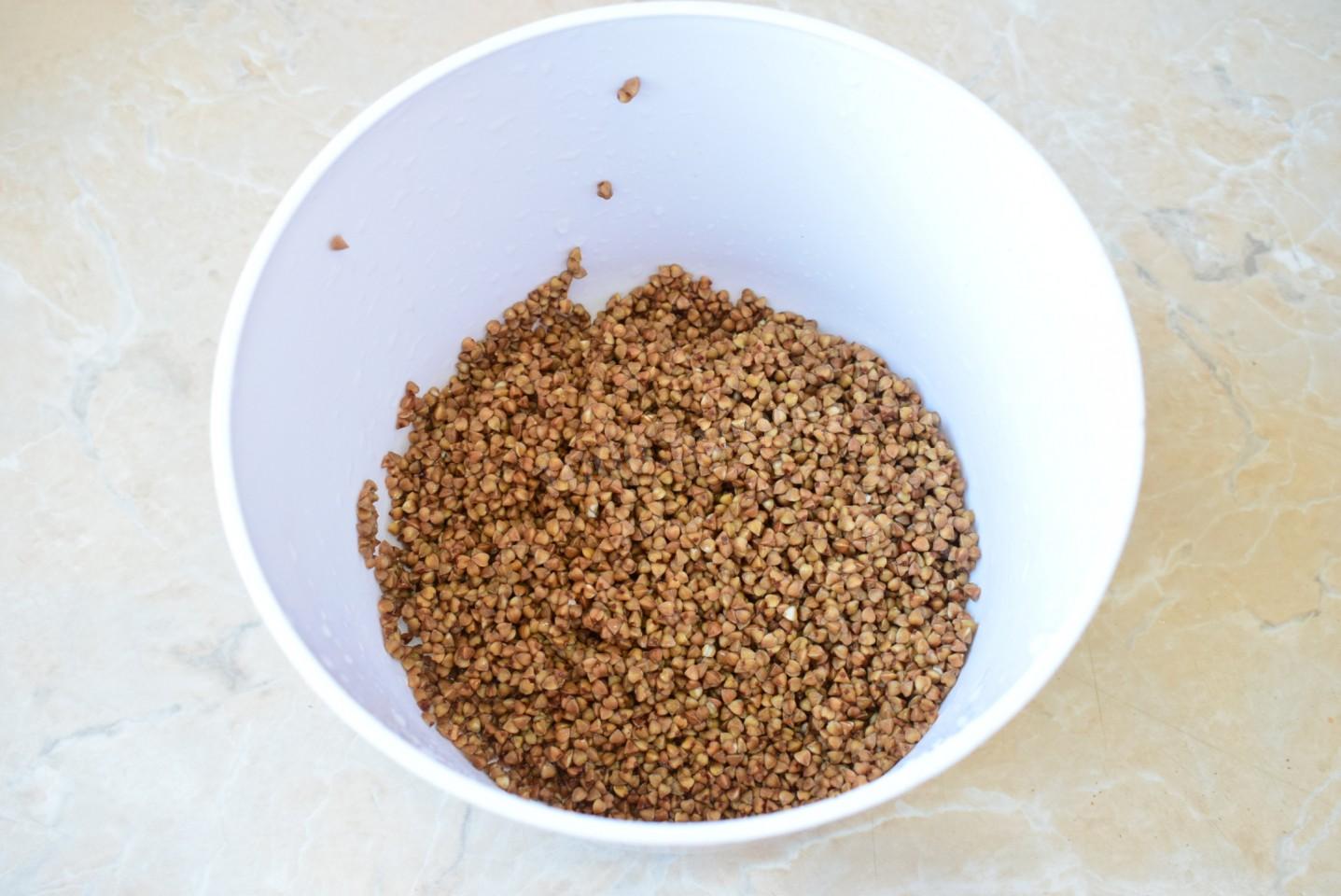
Rinse the buckwheat a few times in cold water, then drain it well.
-
Step 5:
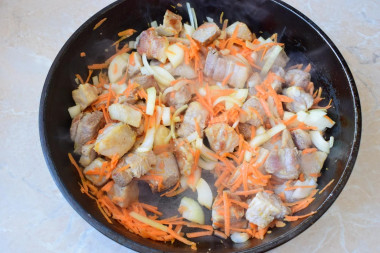
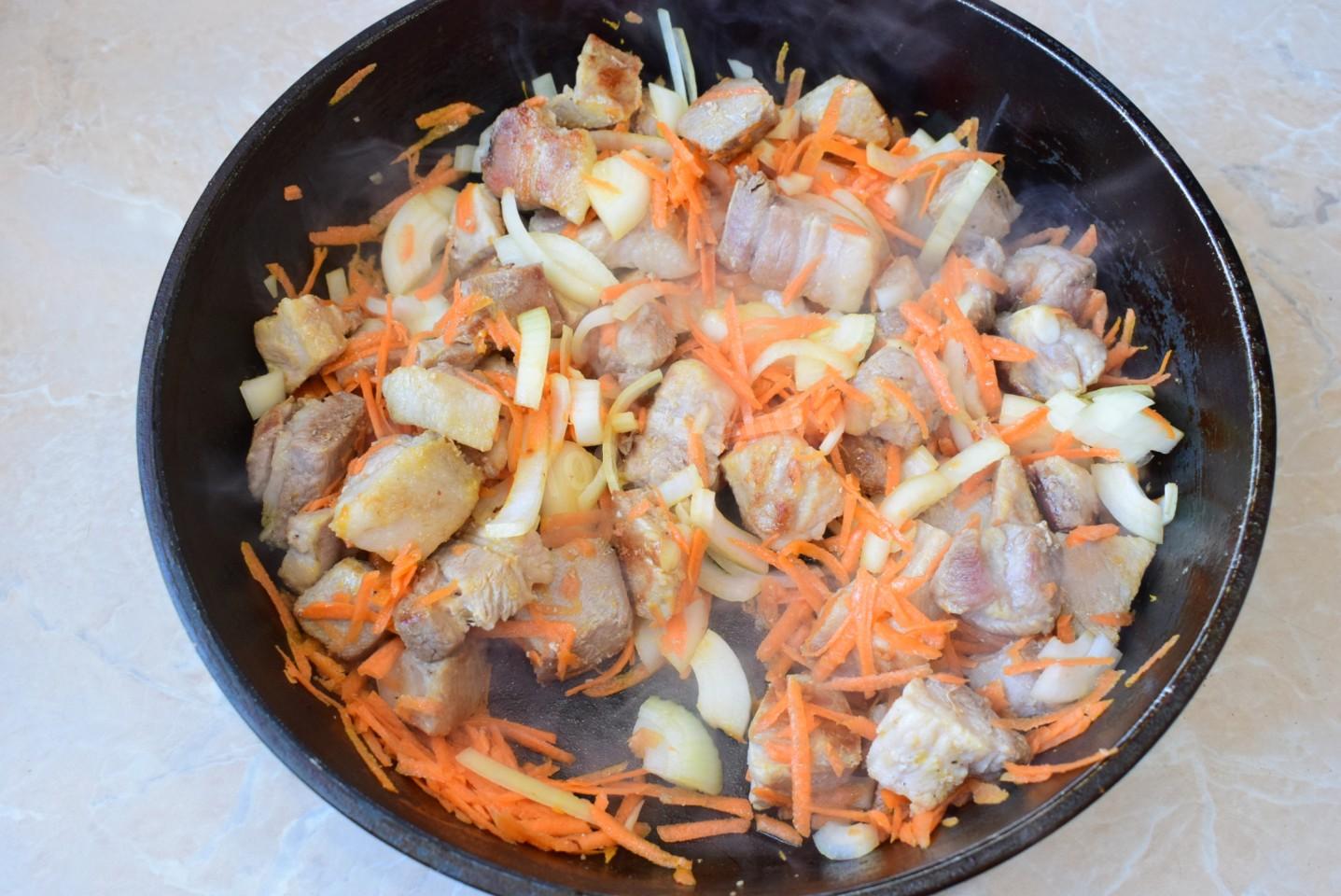
Add the onion and carrot to the pork in the skillet. Stir and fry everything together for another 3–5 minutes.
-
Step 6:
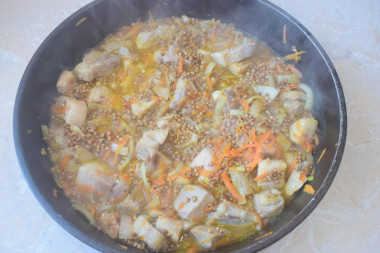
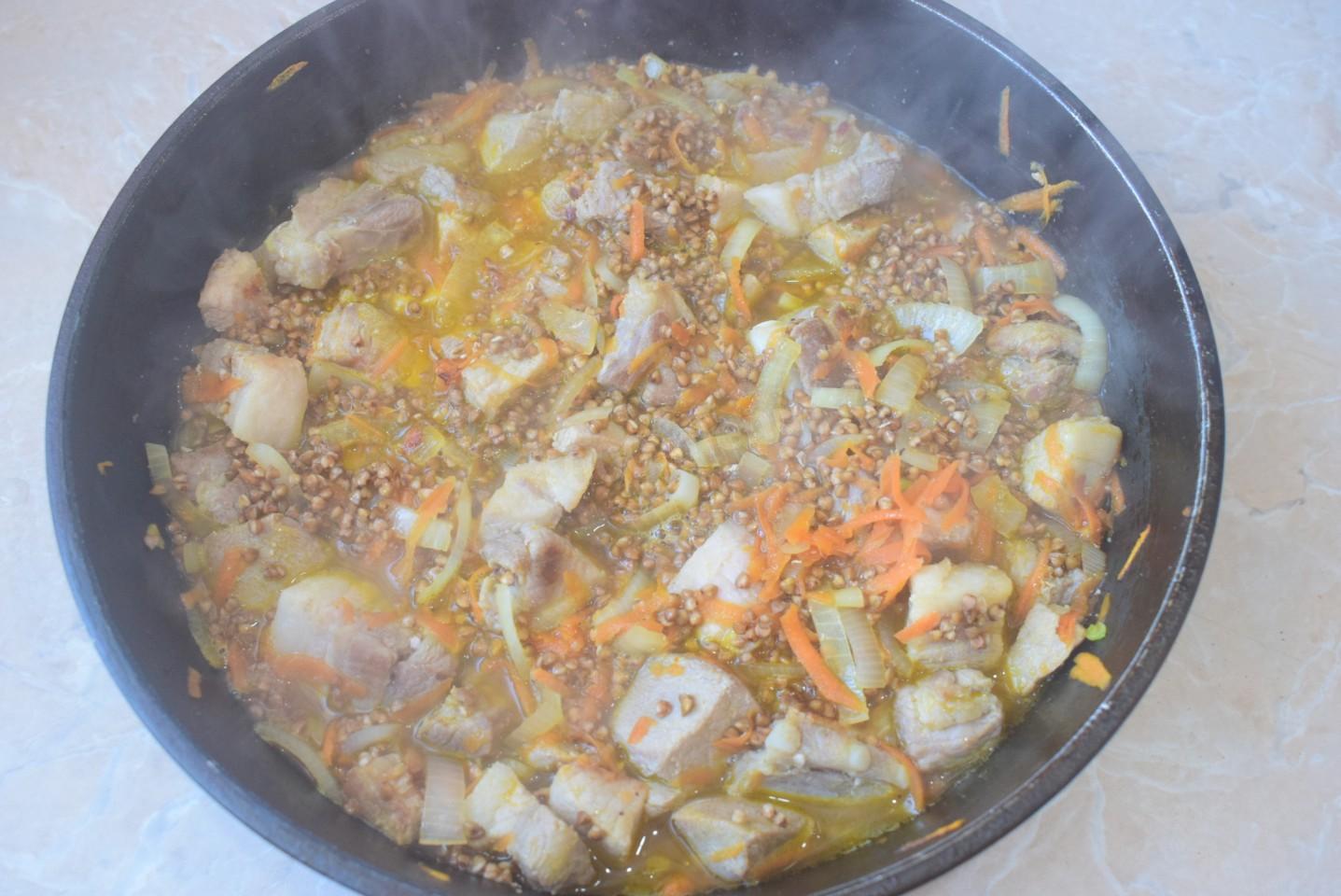
Then add the drained buckwheat to the skillet along with twice as much hot water as buckwheat. Cooking it at a 1:2 ratio of grain to water keeps it from turning mushy. Season with a little salt and spices to taste. Stir everything and bring to a boil. Cover and cook the buckwheat over low heat for 25–35 minutes.
-
Step 7:
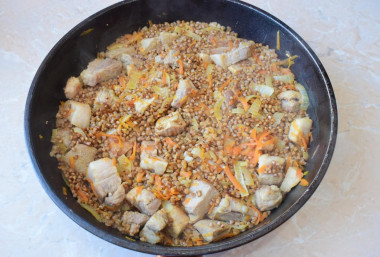
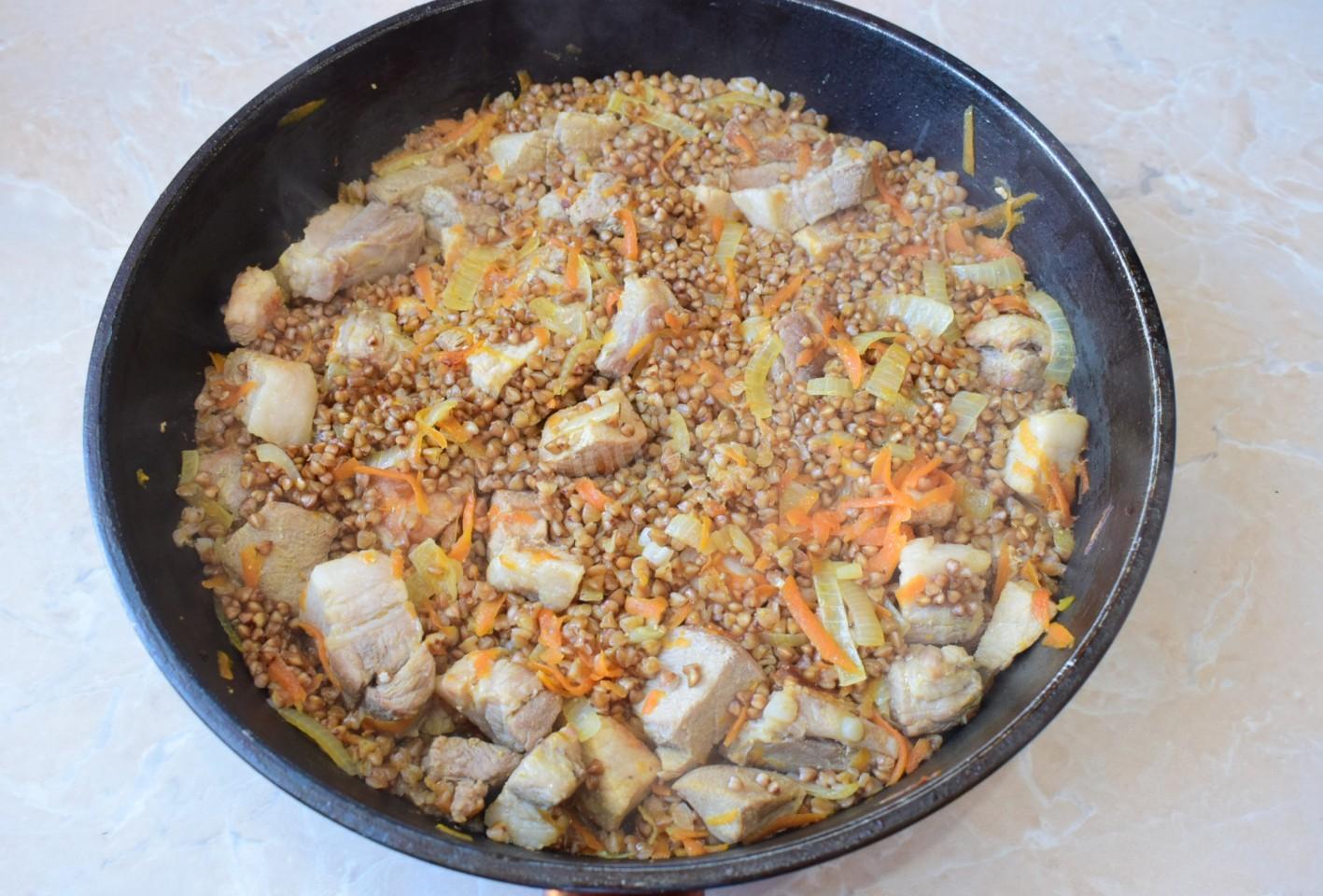
As it cooks, the buckwheat soaks up all the water. Keep an eye on the water level so it doesn't start to scorch. As soon as the water has evaporated, take the skillet off the heat. Leave the buckwheat covered to rest a few minutes.
-
Step 8:
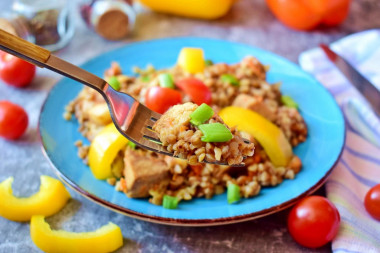
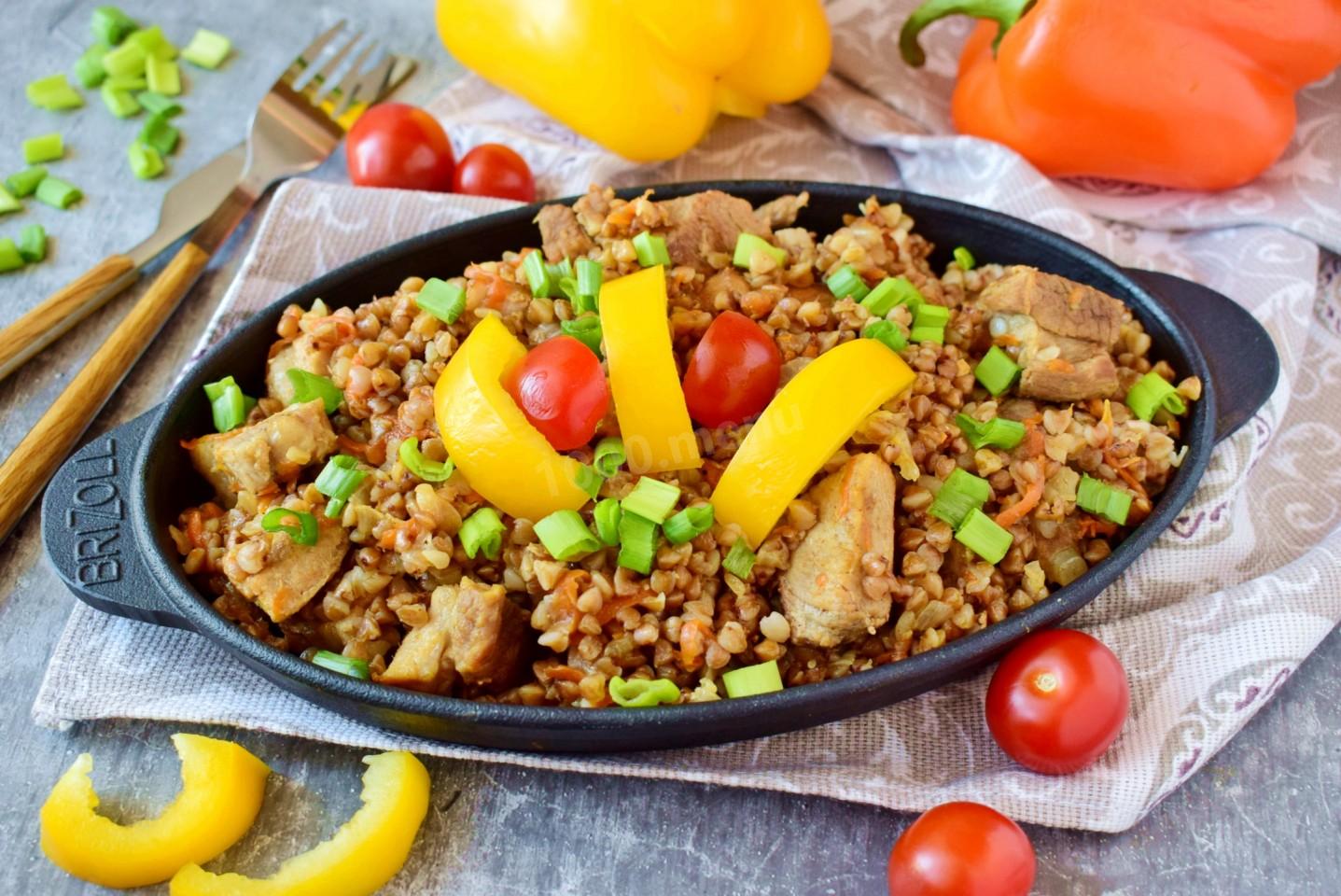
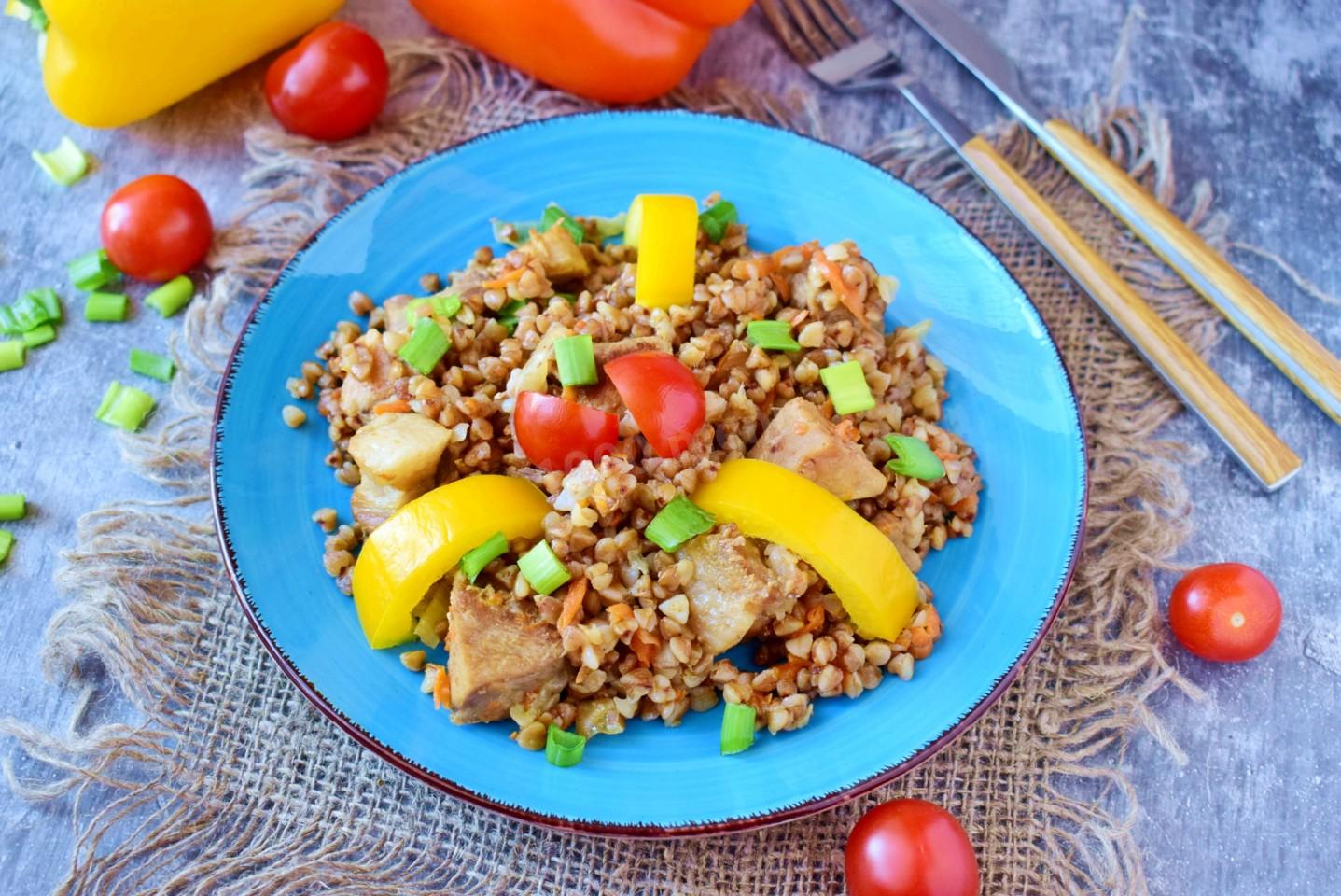
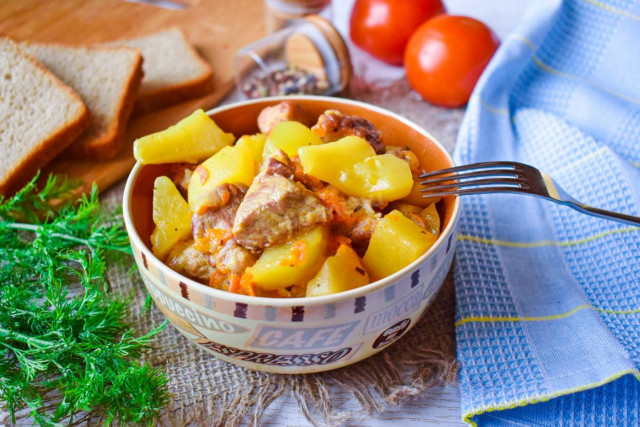
The buckwheat with pork is ready! Round it out with some fresh vegetables. Enjoy!
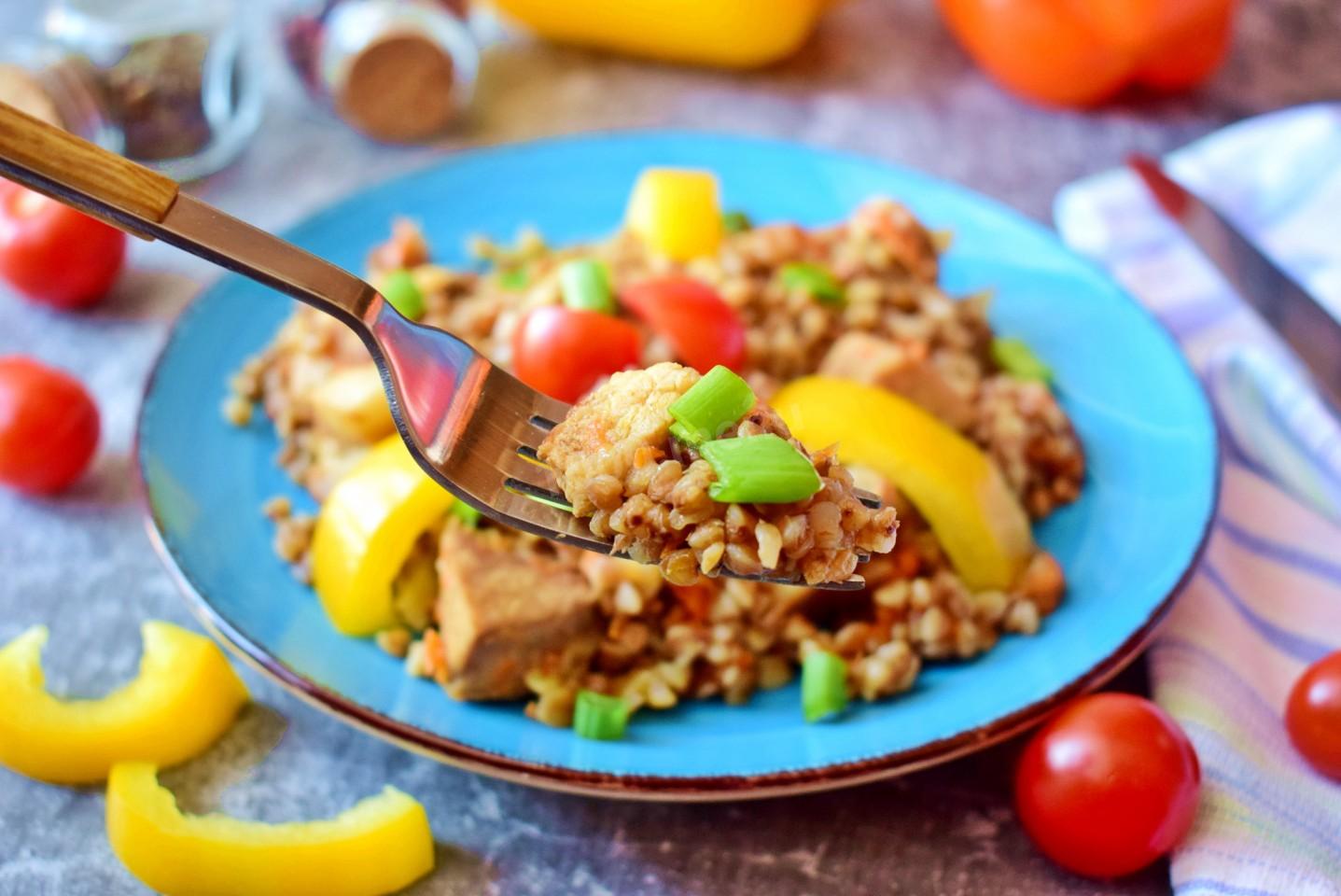
- Besides pork, you can use any other meat in this dish. Keep in mind the cooking time, flavor, and calorie count will change. Beef, for instance, takes longer than pork, while chicken breast or turkey takes less.
- How do you choose good buckwheat? Look at its appearance when buying. The grains should be uniform in shape and size, with no debris or broken bits settled at the bottom of the package. Brown (toasted) buckwheat cooks faster, since the grains have been roasted at the factory. Green buckwheat takes longer to cook; it's considered more nutritious but has a distinctive taste.
Caloric content of the products possible in the composition of the dish
- Onion - 41 kcal/100g
- Pork fat - 333 kcal/100g
- Pork meat - 357 kcal/100g
- Pork - low-fat roast - 184 kcal/100g
- Pork chop on a bone - 537 kcal/100g
- Pork - schnitzel - 352 kcal/100g
- Pork shoulder - 593 kcal/100g
- Boar's leg - 113 kcal/100g
- Pork - 259 kcal/100g
- Carrots - 33 kcal/100g
- Dried carrots - 275 kcal/100g
- Boiled carrots - 25 kcal/100g
- Buckwheat (whole grain) - 335 kcal/100g
- Dark buckwheat flour - 333 kcal/100g
- Light buckwheat flour - 347 kcal/100g
- Boiled buckwheat - 163 kcal/100g
- Buckwheat - 313 kcal/100g
- Vegetable oil - 873 kcal/100g
- Salt - 0 kcal/100g
- Water - 0 kcal/100g
- Spices dry - 240 kcal/100g
Similar recipes


- Homemade dinner
- Second course
- Meat and meat products
- Vegetables
- Cereals and cereal products
- Spices seasonings spices
- Fats and oils
- Other
- Salt
- Dry spices
- Vegetable oil
- Water
- Frying
- Stewing
- In a frying pan
- Porridge recipes
- Stewed vegetables
- Meat second course
- Pork
- From carrots
- From onion
- No eggs
- Recipes for lean dishes without butter
- Buckwheat