Braised Beef with Gravy
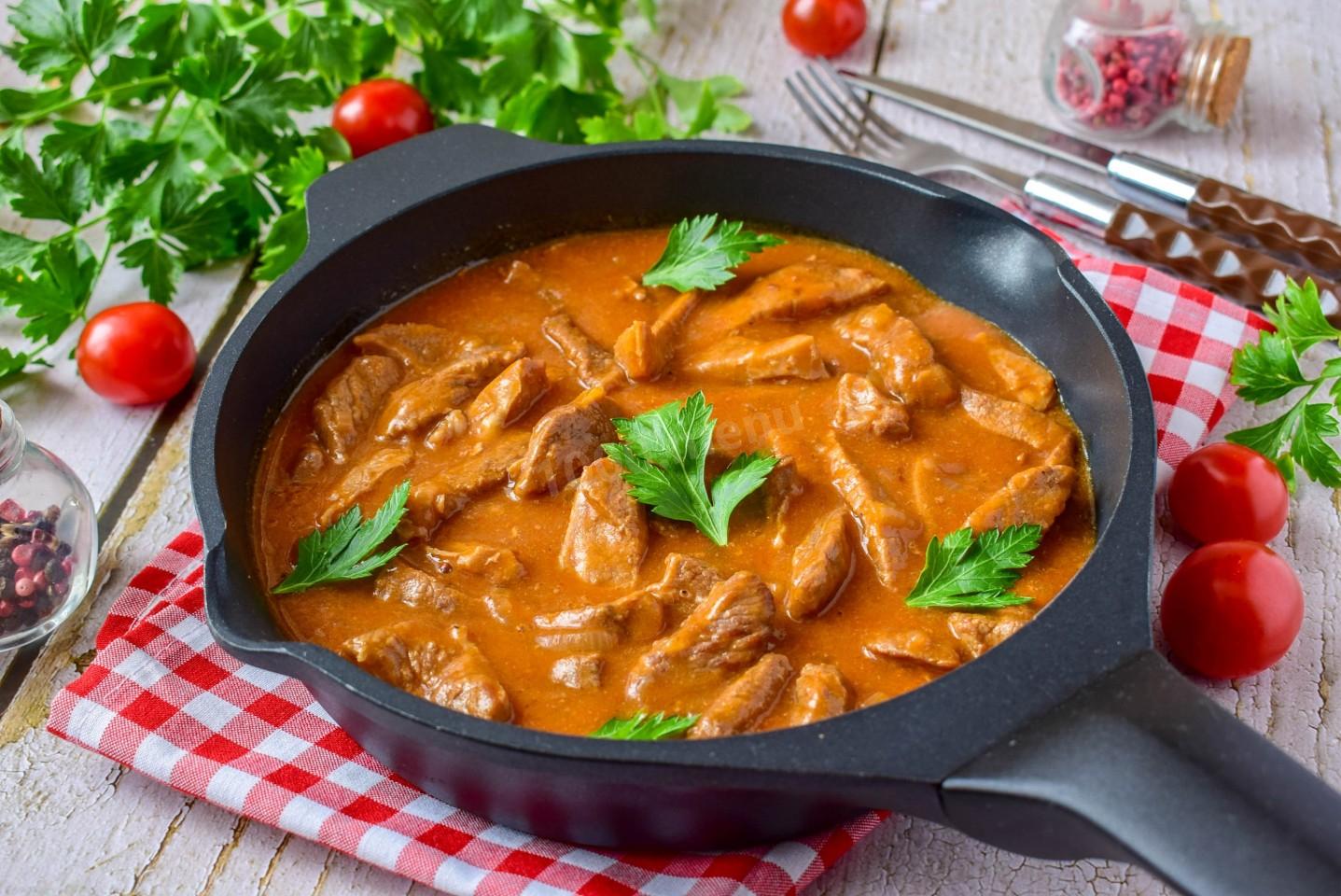
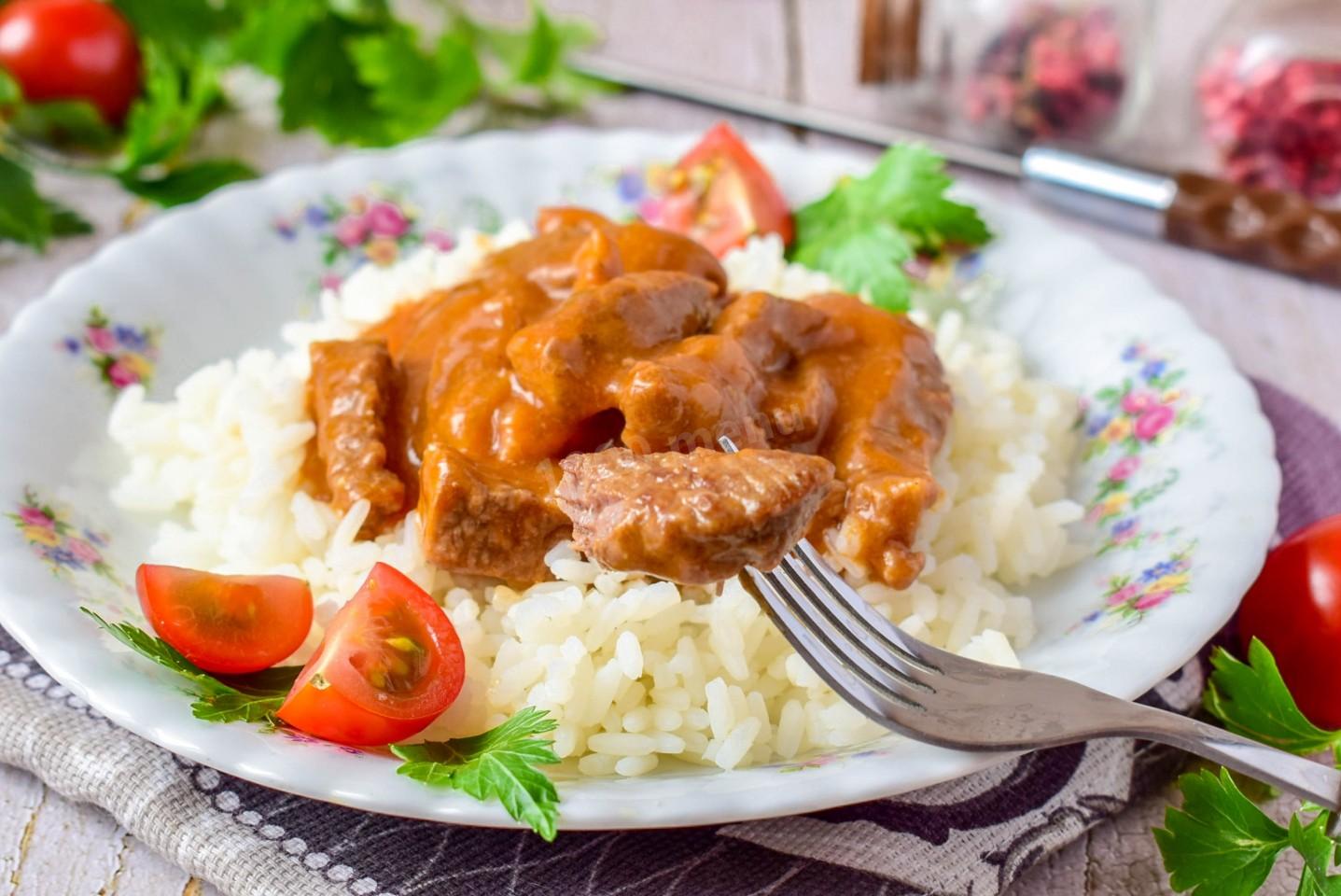
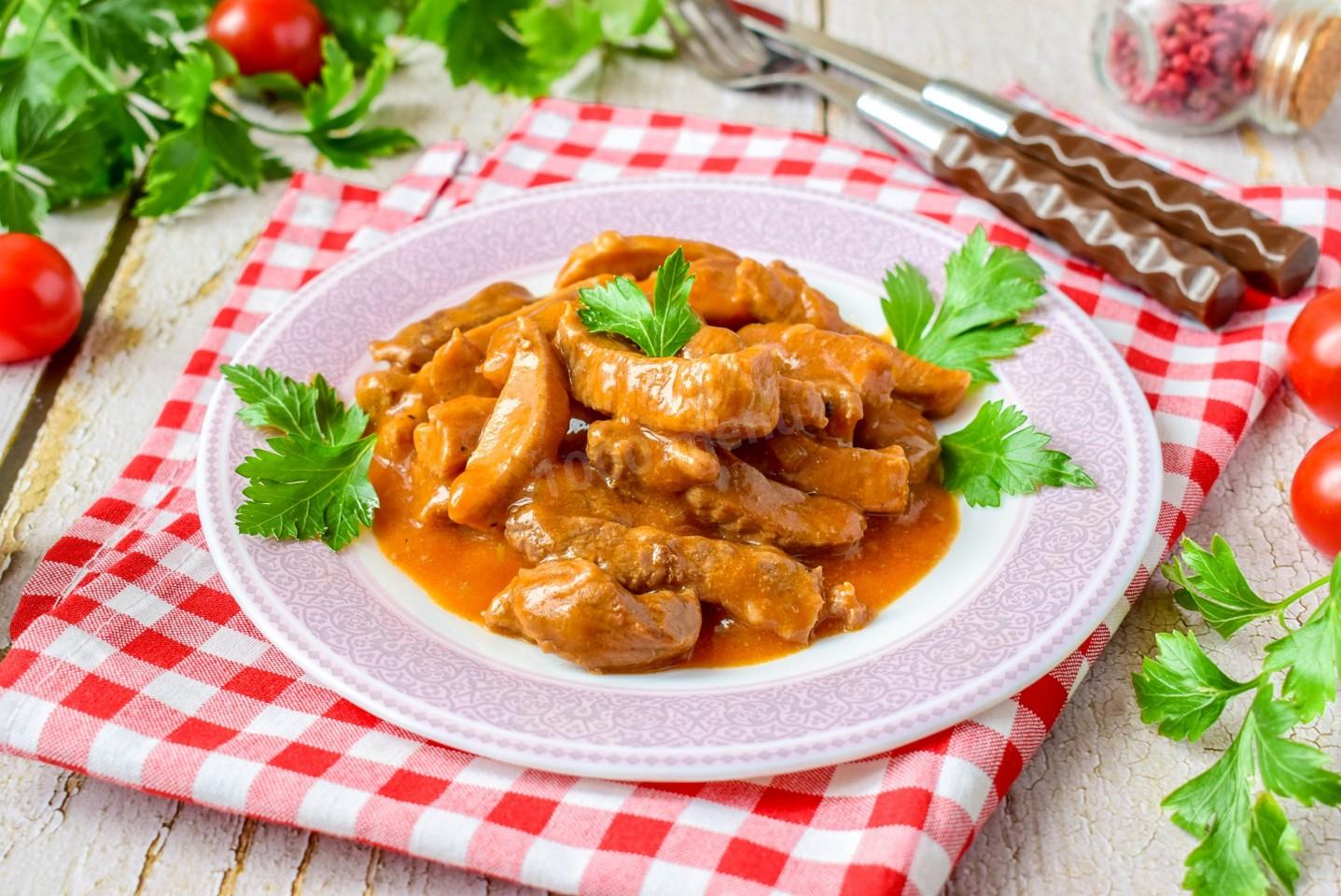
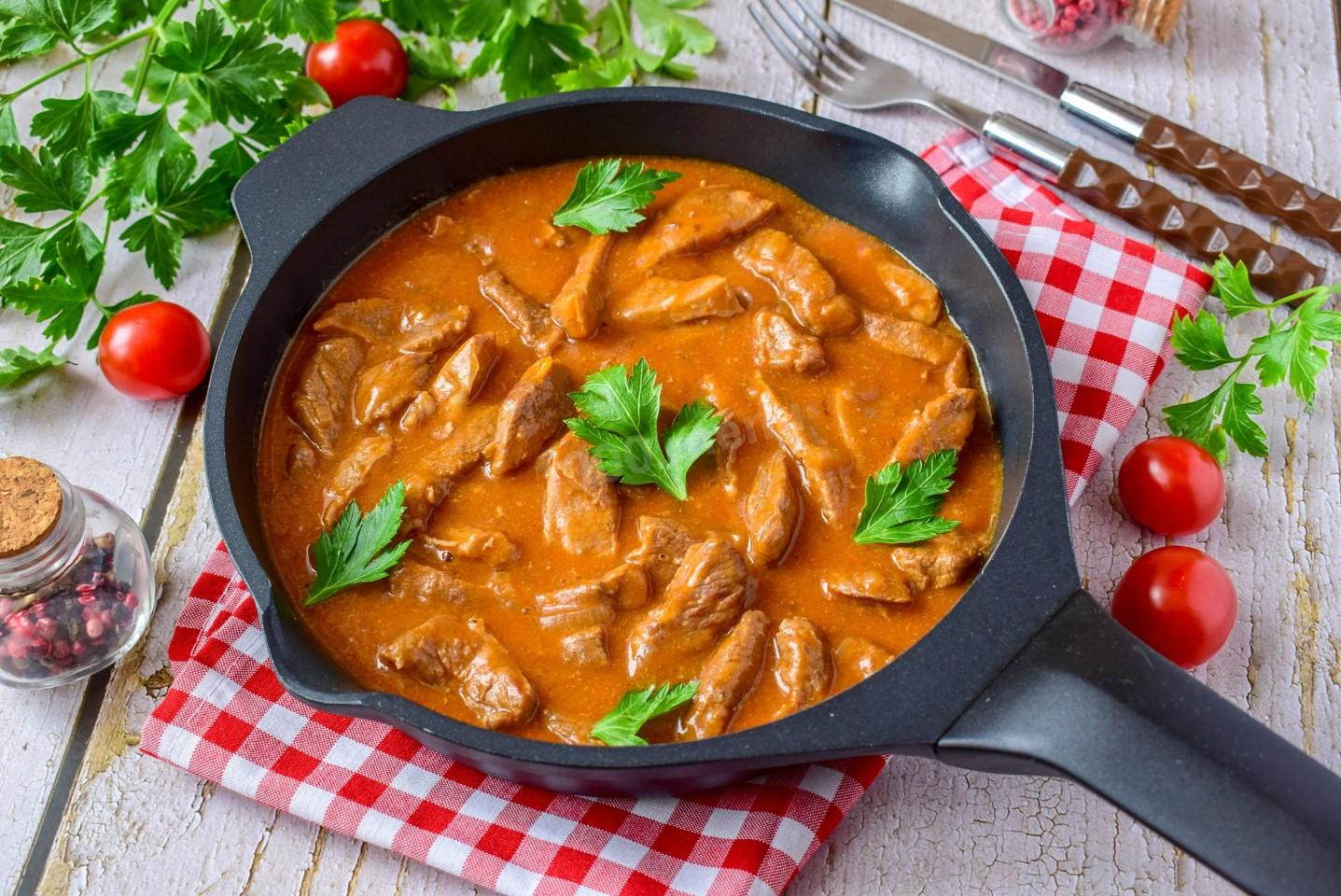
A simple, crowd-pleasing weeknight dish that goes with any side. Braised beef with gravy is an easy way to shake up your everyday rotation. Not only can you swap the beef for any other meat, you can serve it over any side you like — grains, vegetables, or pasta.

Cooking method
-
Step 1:
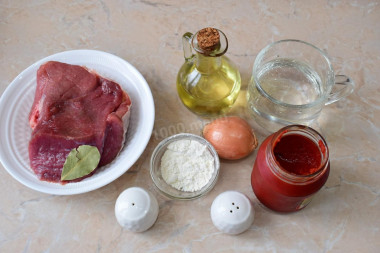
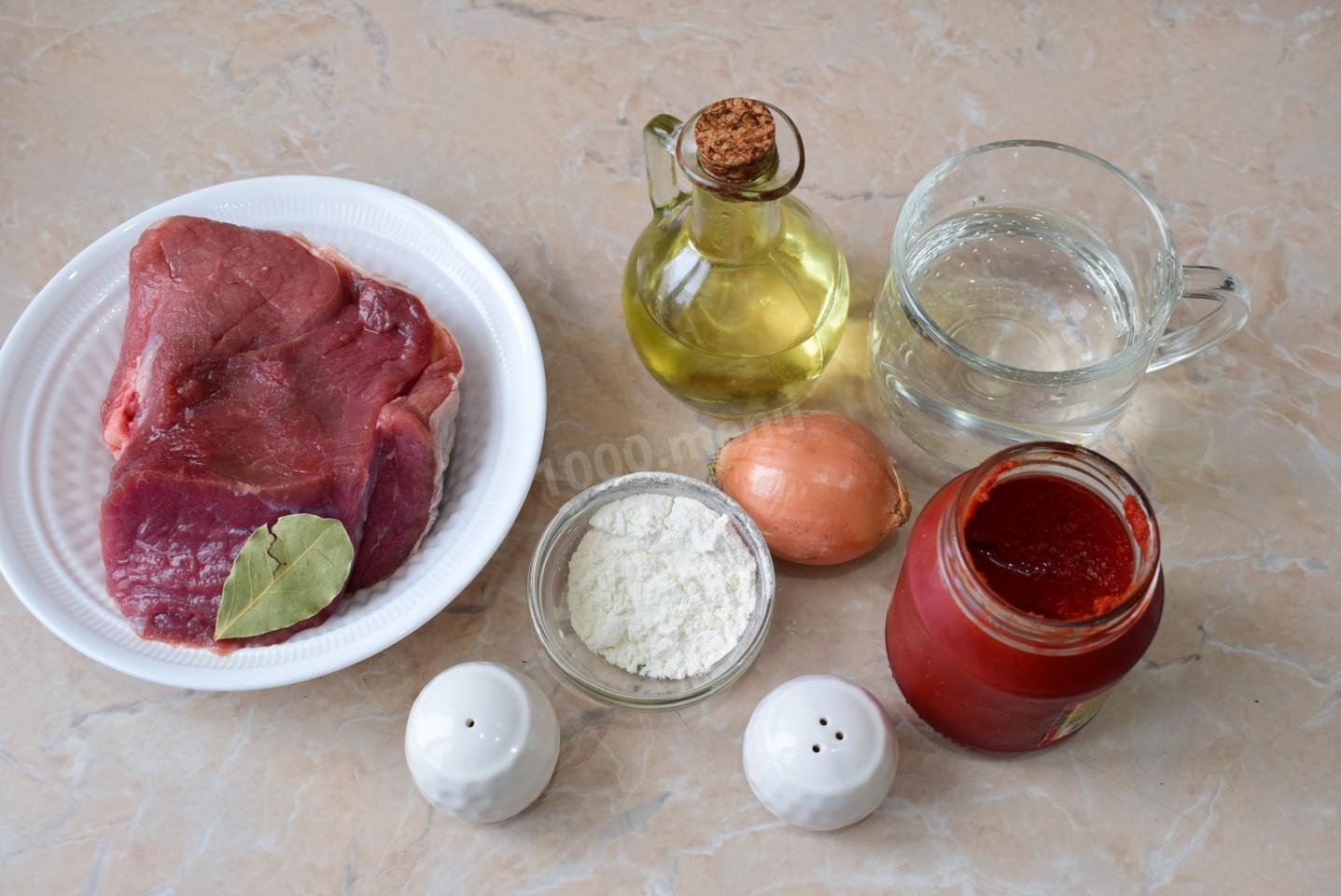
How do you make braised beef with gravy? Gather your ingredients. For this, choose lean young beef with no bones or gristle.
-
Step 2:
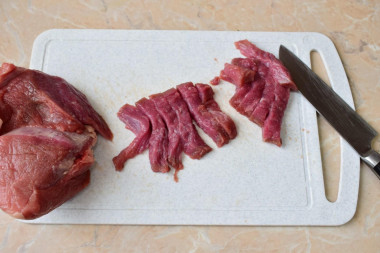
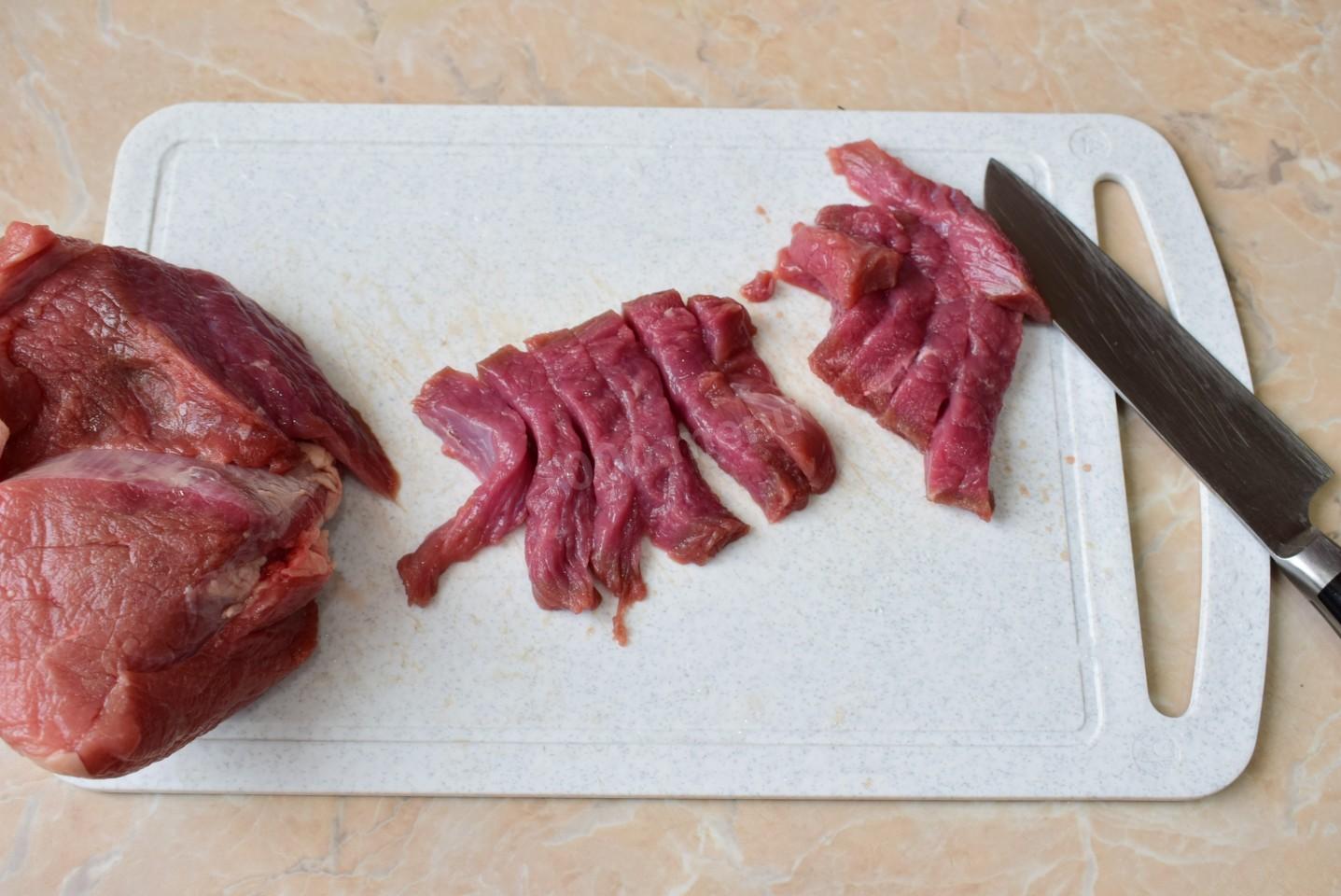
Cut the beef into thin strips about 3/4 inch (1.5–2 cm) thick. Chilling the meat slightly first makes it easier to cut.
-
Step 3:
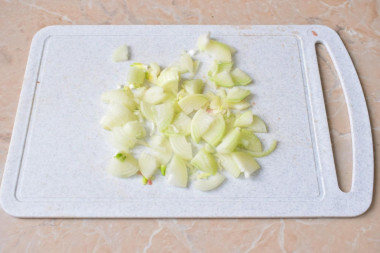
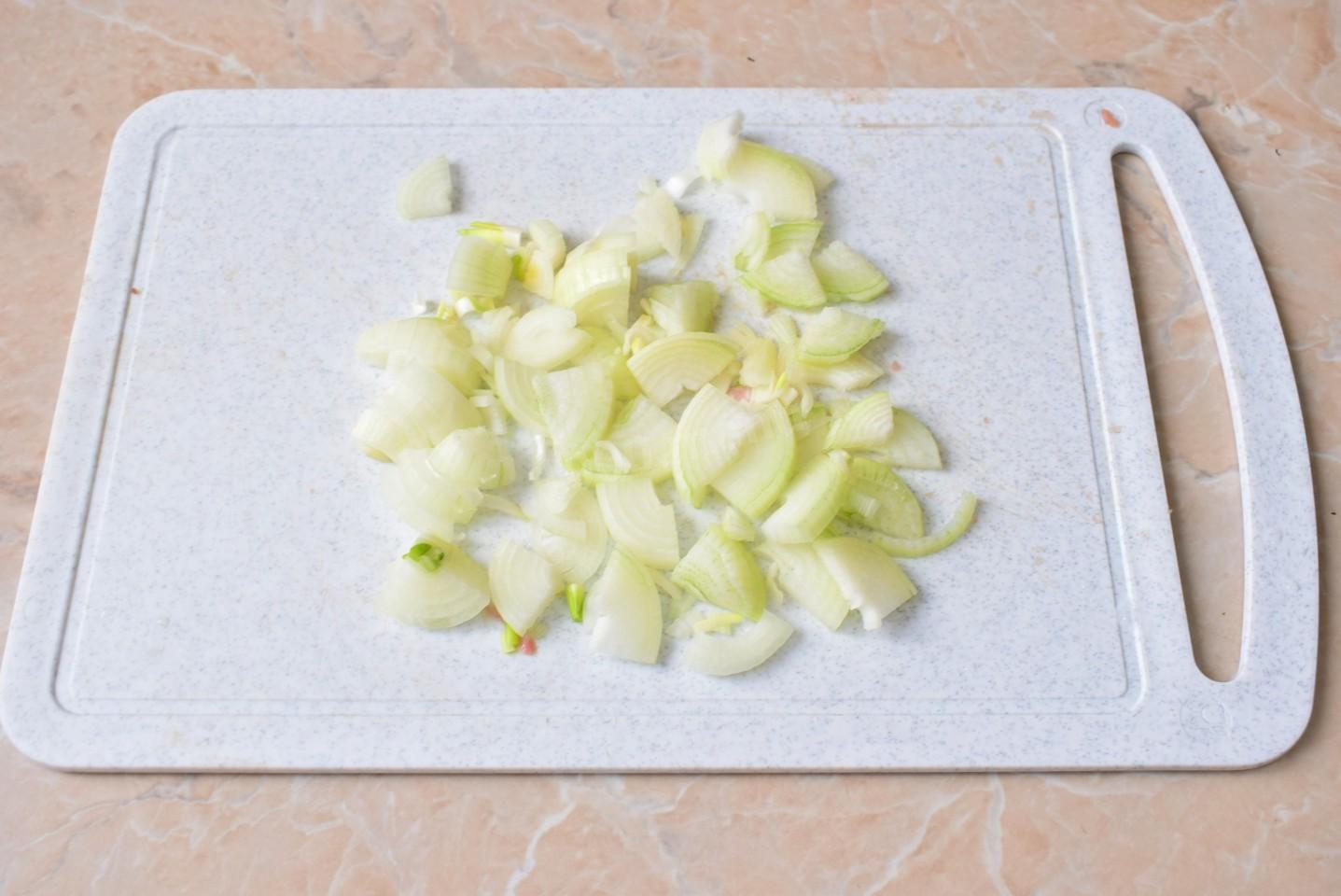
Peel the onion, rinse it in cold water, and finely chop it.
-
Step 4:
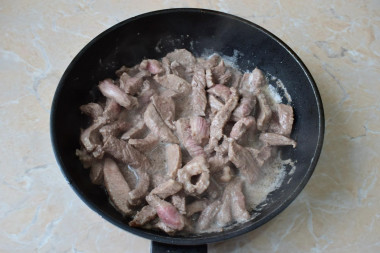
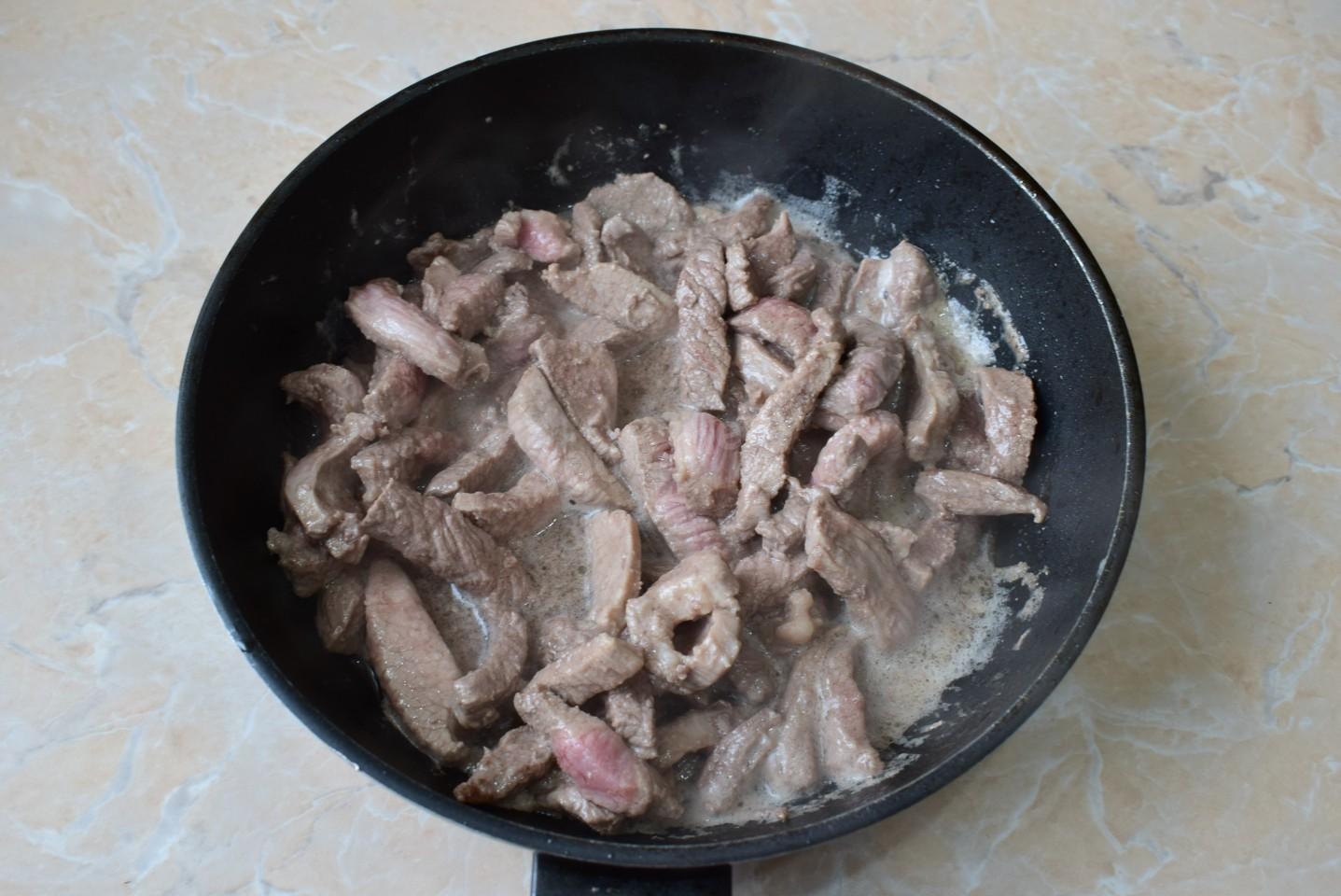
Add a little vegetable oil to a hot skillet and add the cut meat. It will give off a lot of juices as it cooks — keep going until all the liquid has cooked off.
-
Step 5:
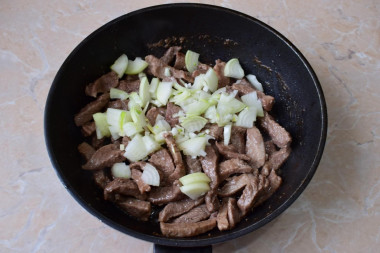
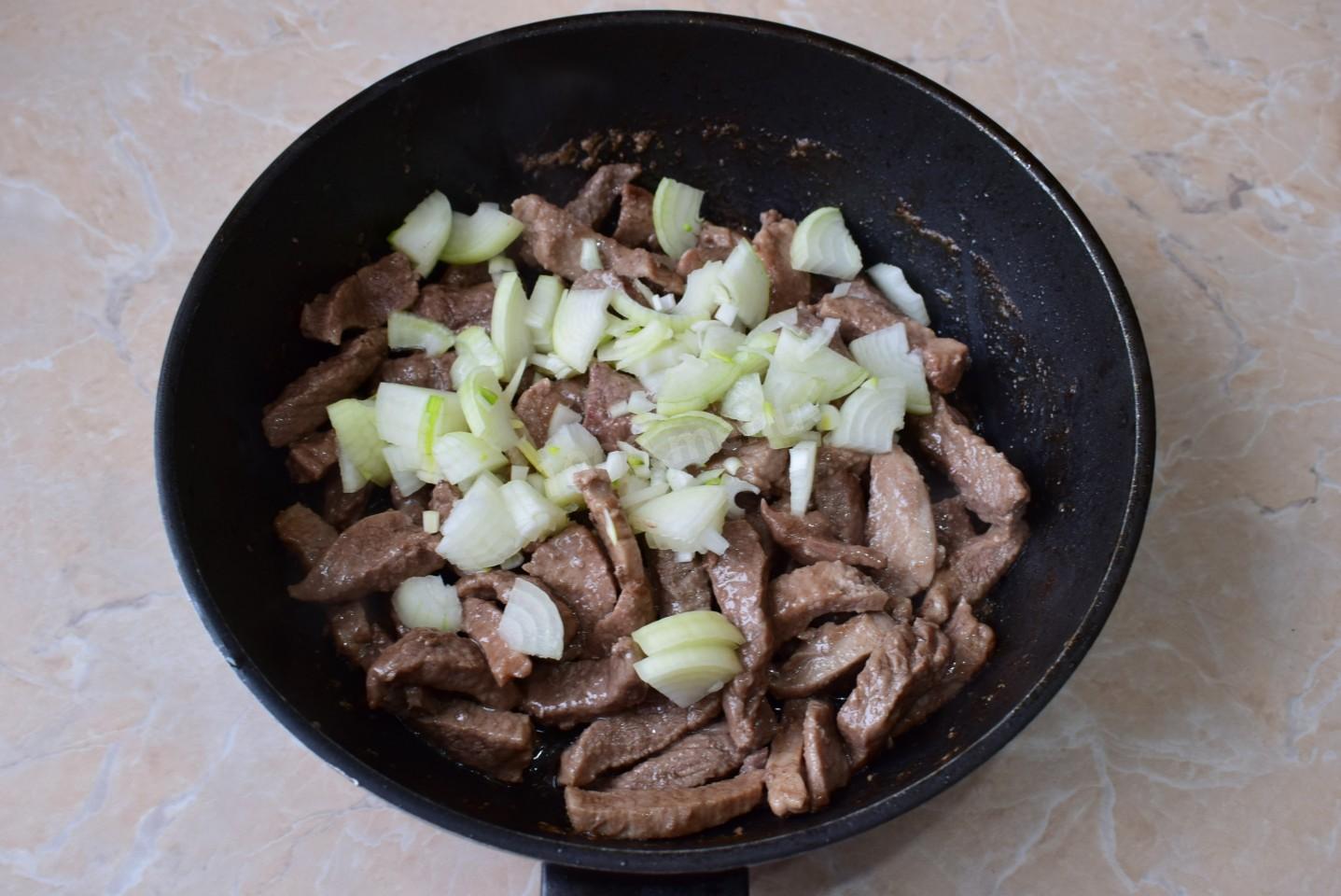
Add the chopped onion to the skillet and stir it in with the meat. Cook everything together for 2–3 minutes.
-
Step 6:
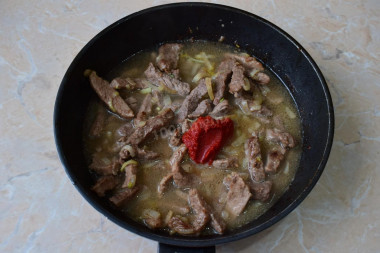
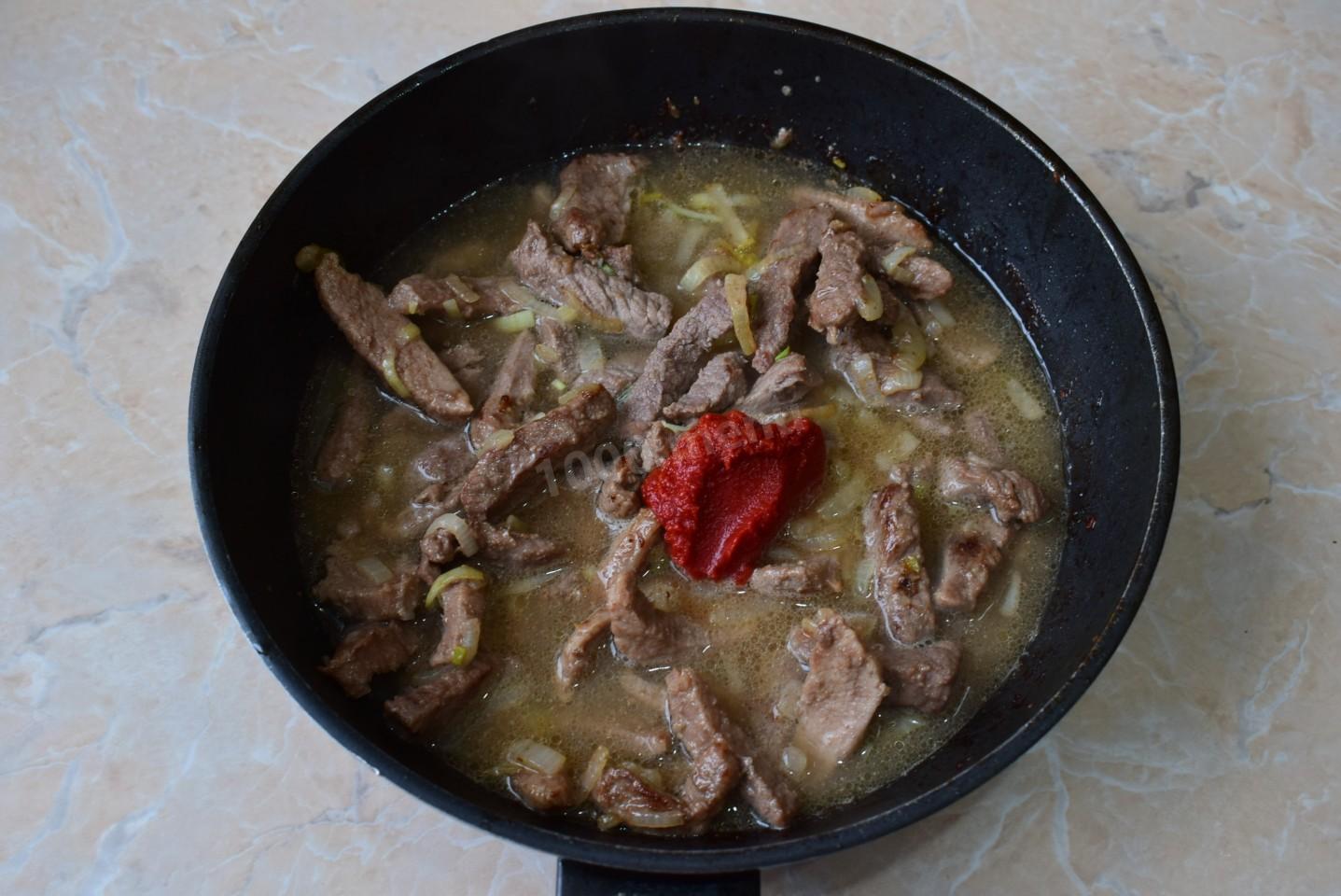
Pour hot water into the skillet. Add the tomato paste, bay leaf, salt, and spices. Cover and simmer the meat for about 40 minutes. The exact time depends on the meat — taste a piece; it should be tender.
-
Step 7:
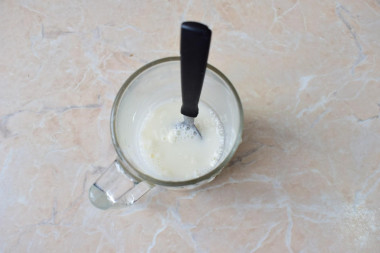
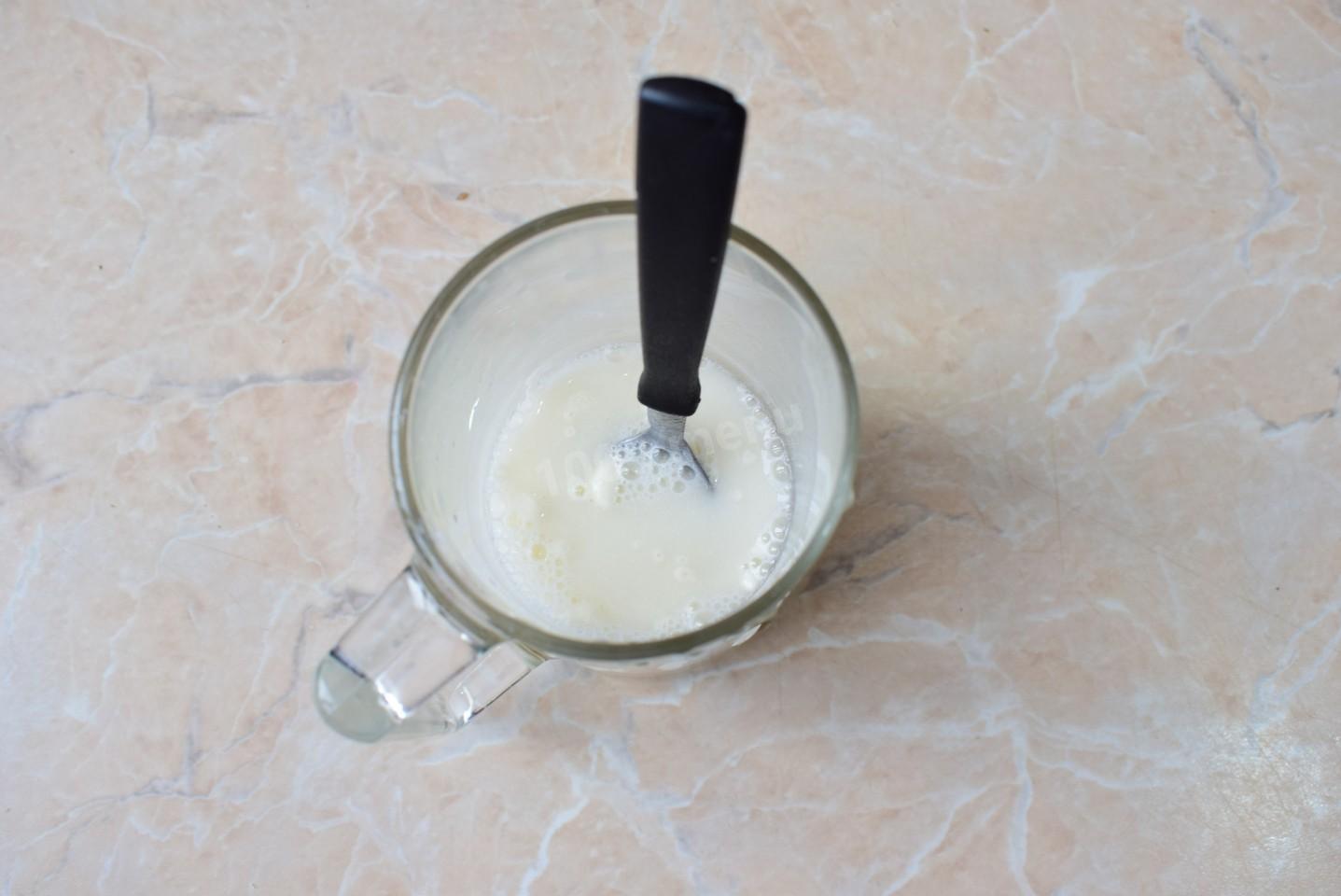
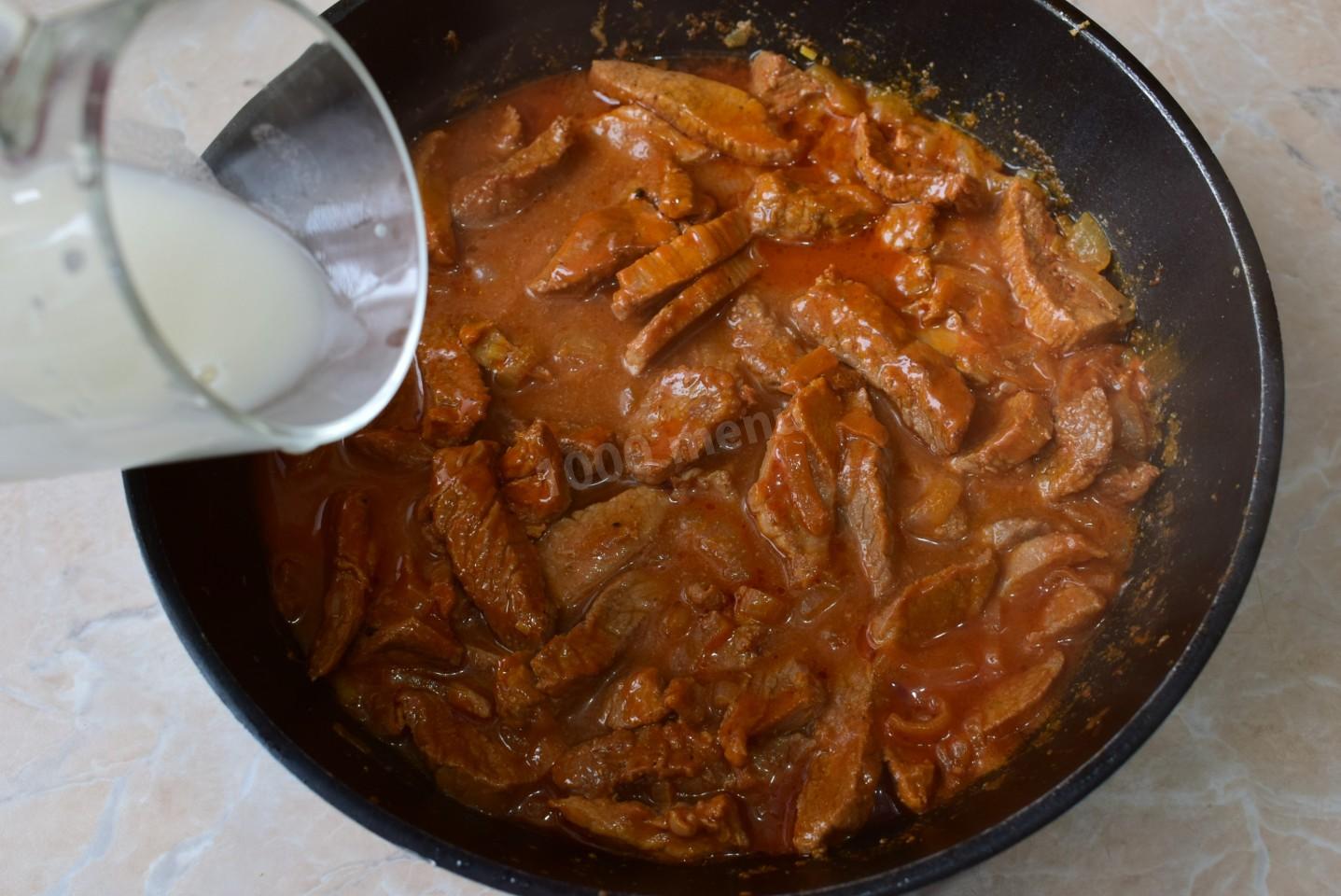
In a separate cup, stir the flour into a little cold water until smooth.
-
Step 8:
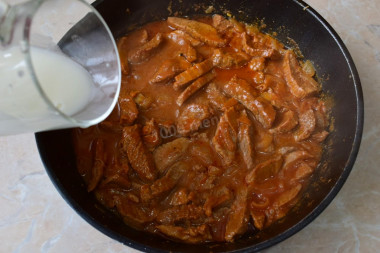
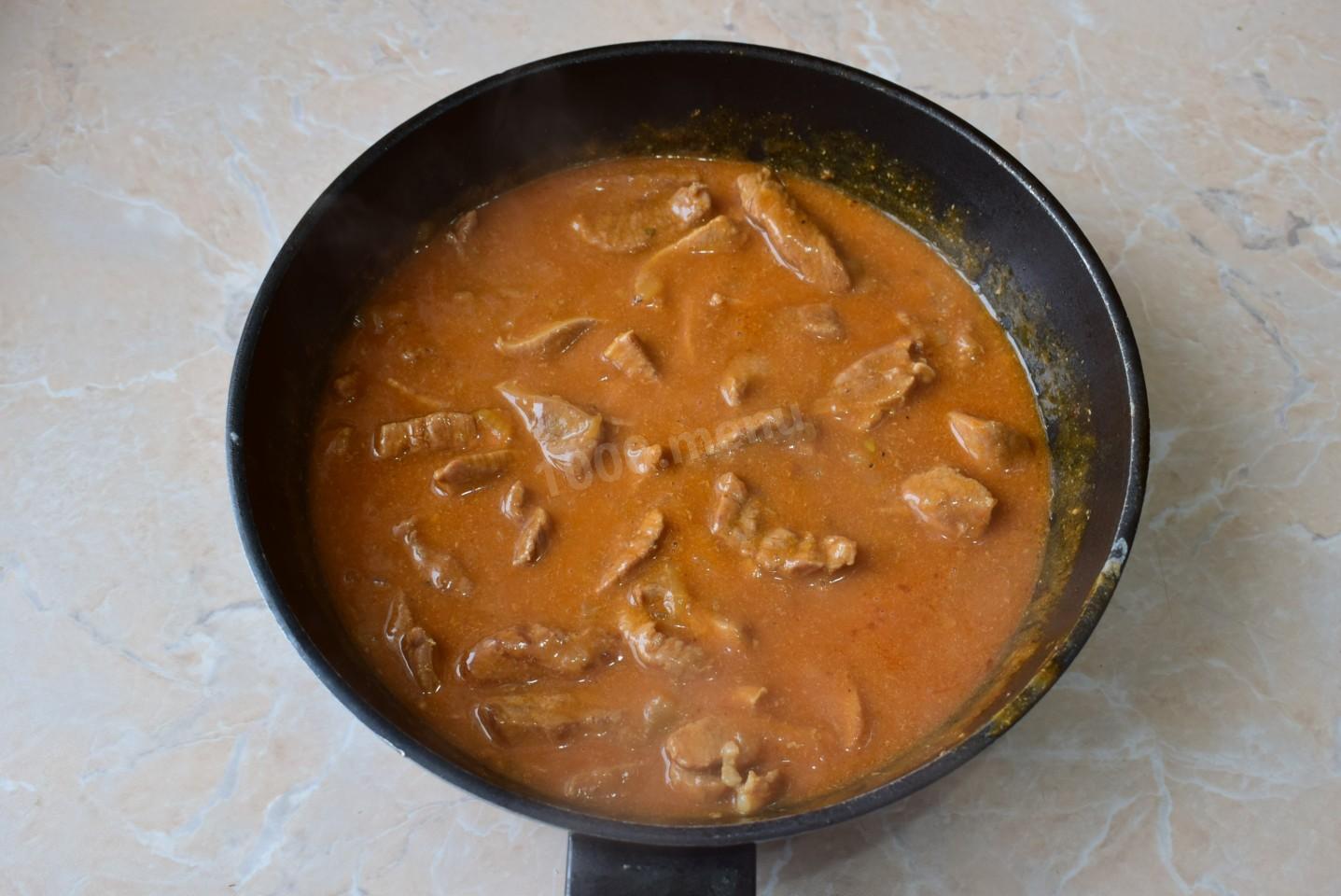
Pour the flour slurry into the skillet. Stir and bring everything back to a boil. Add more water if you like, depending on how much gravy you want.
-
Step 9:
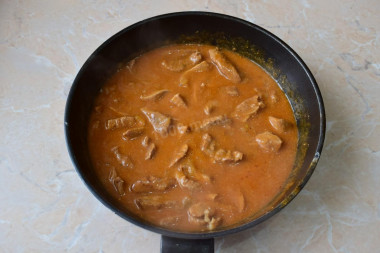
Warm the meat and gravy together for 1–2 minutes, then take the skillet off the heat. Serve with the side dish of your choice. Enjoy!
- You can swap the beef for any other meat you prefer. Just keep in mind that the cooking time, flavor, and calorie count will change. Pork and lamb are usually fattier than beef, while chicken breast and turkey are leaner. Cooking time depends not only on the type of meat but also on which cut you use and how young or old it is.
- Important! The wrong pan can ruin even the best recipe. A good heavy skillet that heats evenly makes all the difference here.
- There's an easy way to check whether the oil is hot enough: dip a wooden spatula into it. If bubbles gather around it, you're ready to start frying.
Caloric content of the products possible in the composition of the dish
- Melted beef fat - 871 kcal/100g
- Fat beef - 171 kcal/100g
- Lean beef - 158 kcal/100g
- Beef brisket - 217 kcal/100g
- Beef - okovalok - 380 kcal/100g
- Beef - lean roast - 200 kcal/100g
- Beef shoulder - 137 kcal/100g
- Beef - ribs - 233 kcal/100g
- Beef - ham - 104 kcal/100g
- Beef - tail - 184 kcal/100g
- Boiled ham - 269 kcal/100g
- Beef corned beef - 216 kcal/100g
- Bay leaf - 313 kcal/100g
- Whole durum wheat flour fortified - 333 kcal/100g
- Whole durum wheat flour universal - 364 kcal/100g
- Flour krupchatka - 348 kcal/100g
- Flour - 325 kcal/100g
- Vegetable oil - 873 kcal/100g
- Tomato paste - 28 kcal/100g
- Salt - 0 kcal/100g
- Water - 0 kcal/100g
- Onion - 41 kcal/100g
- Spices dry - 240 kcal/100g