Cabbage Stew with Eggplant and Tomatoes
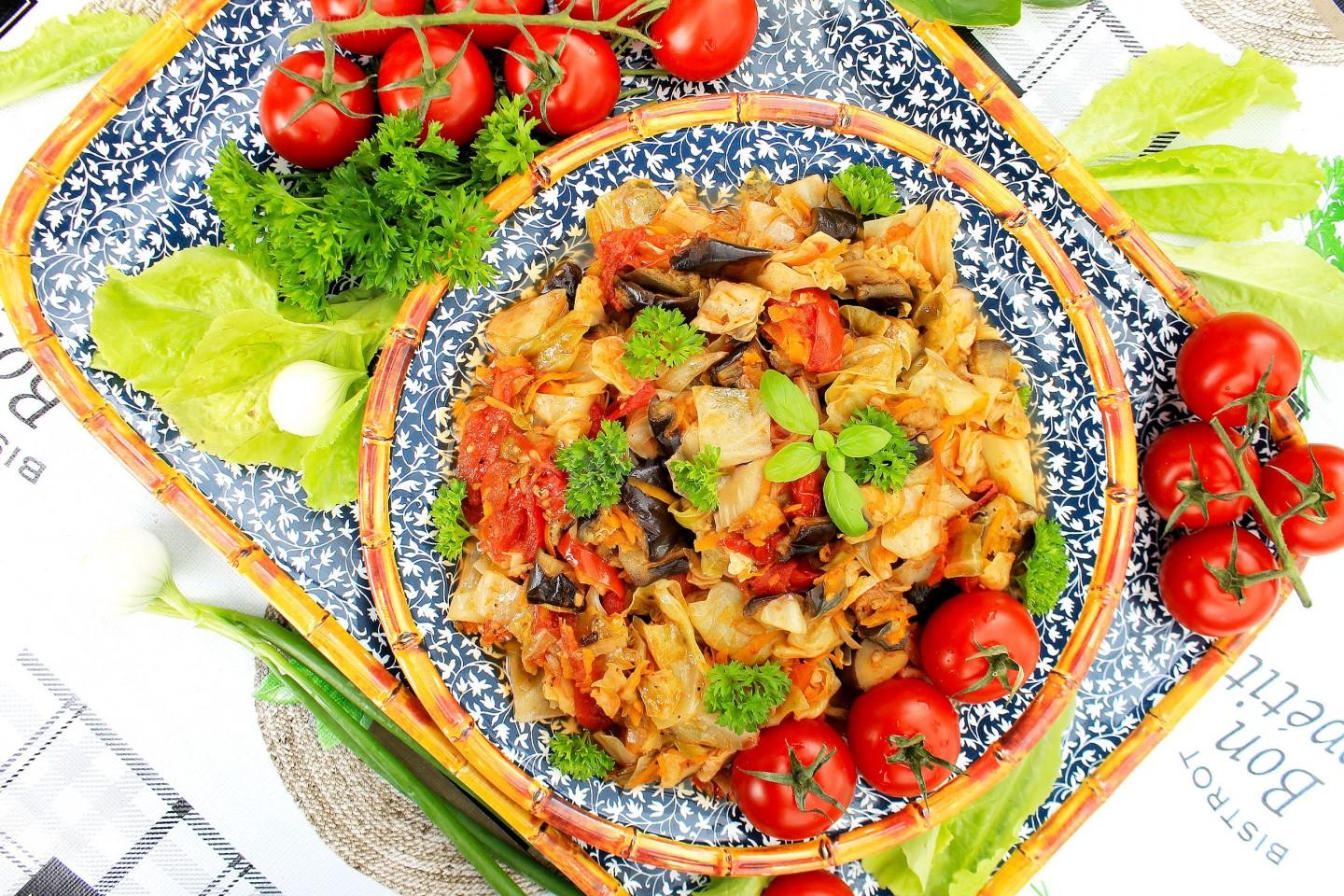
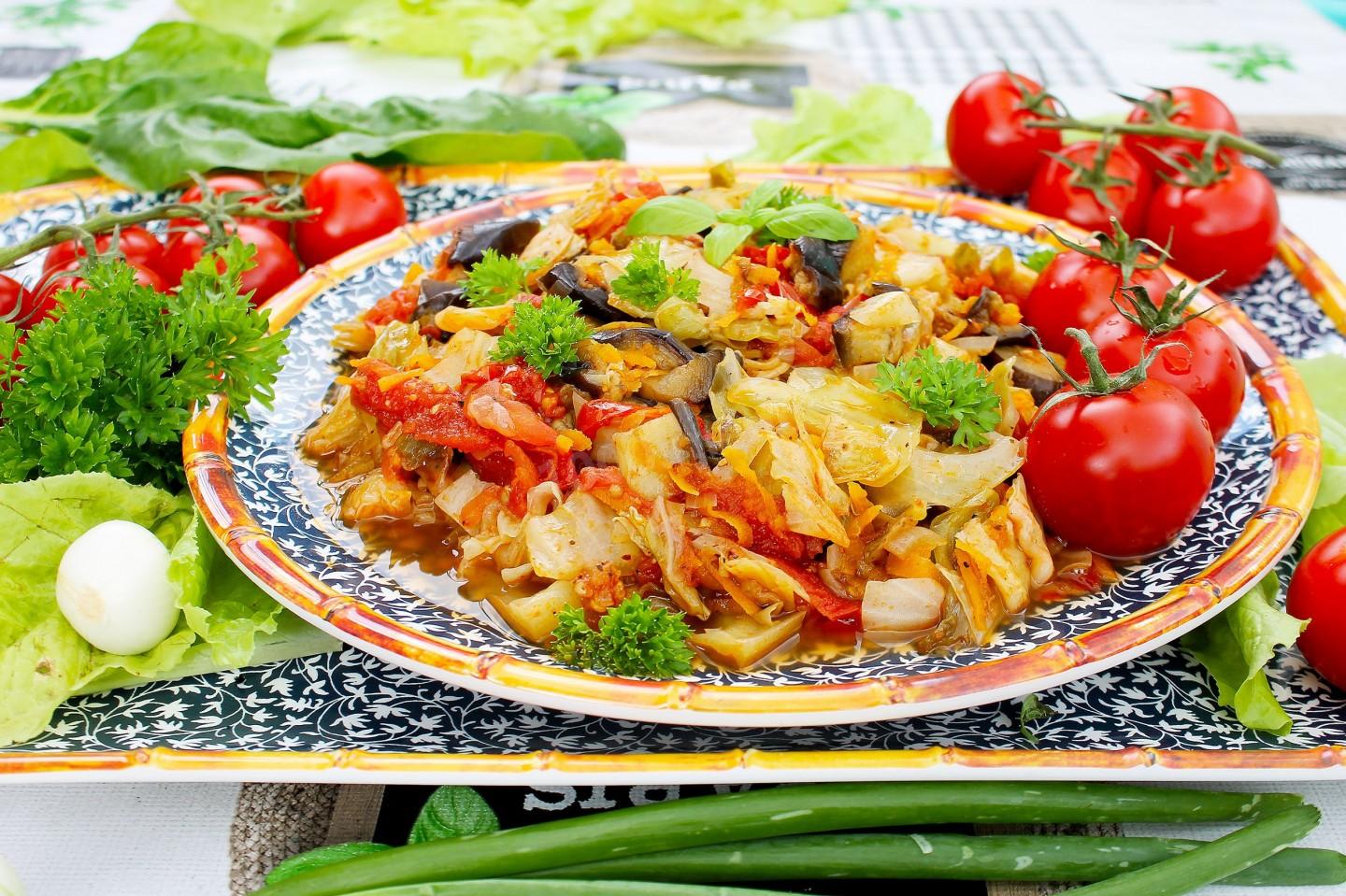
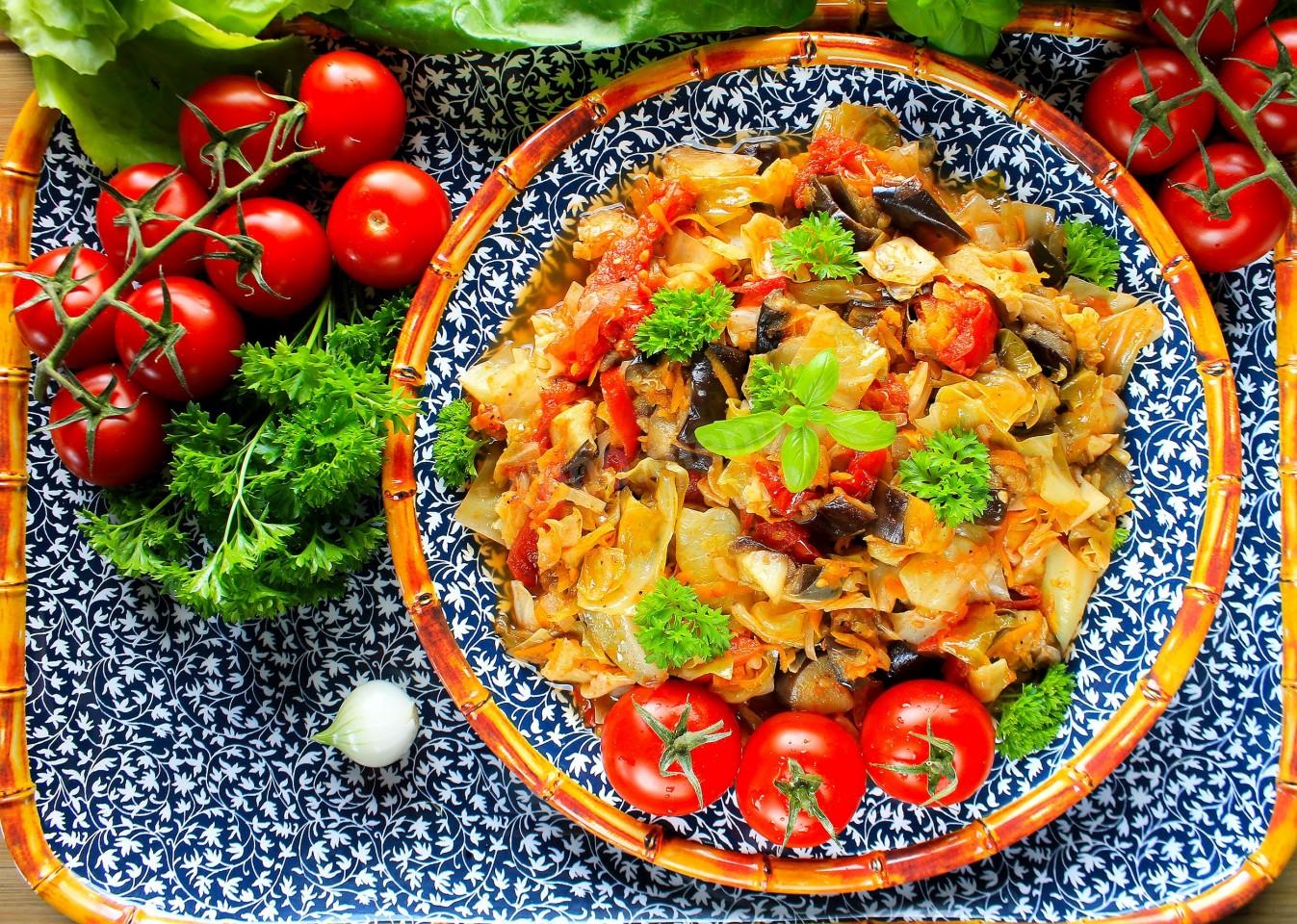
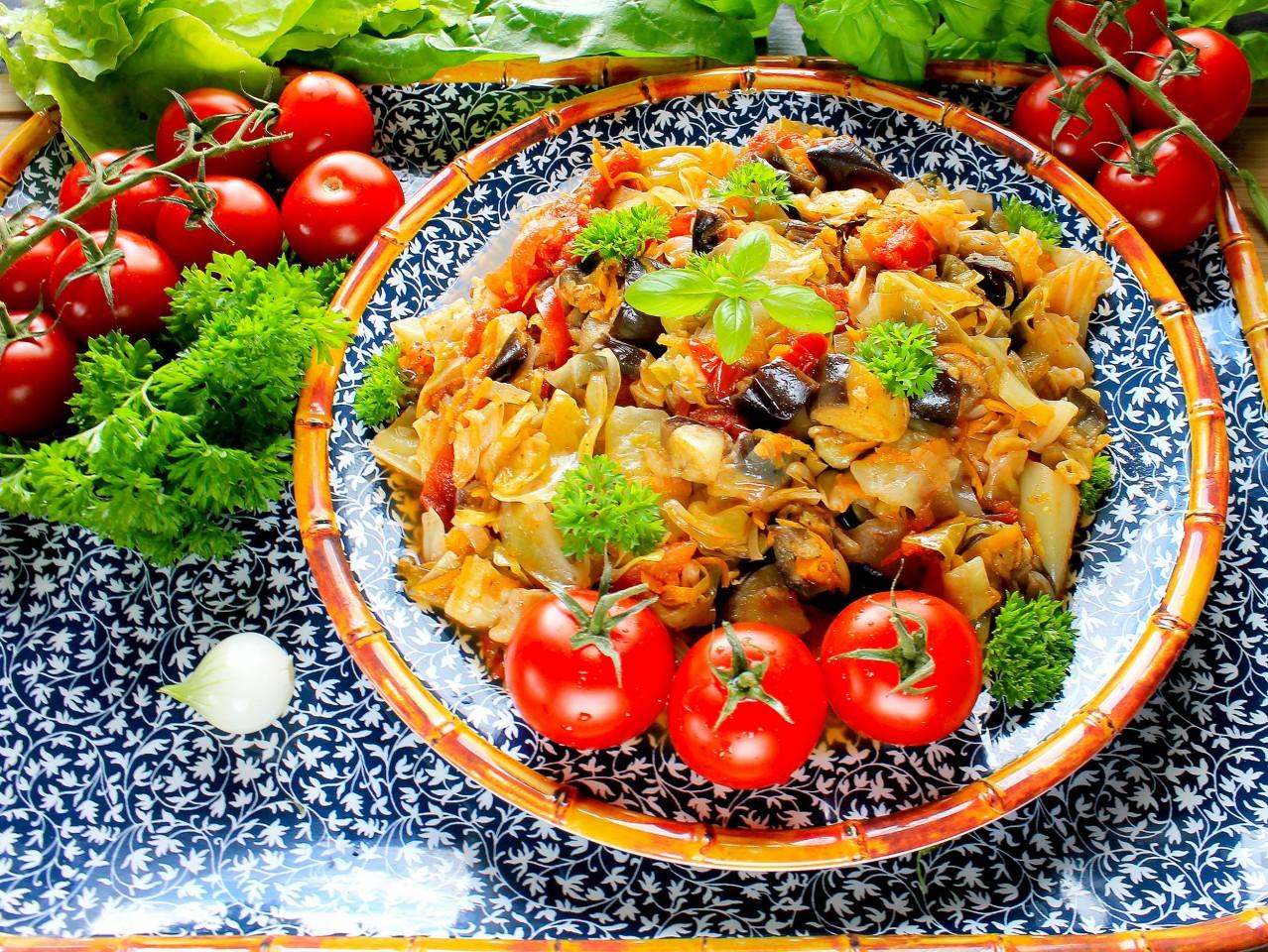
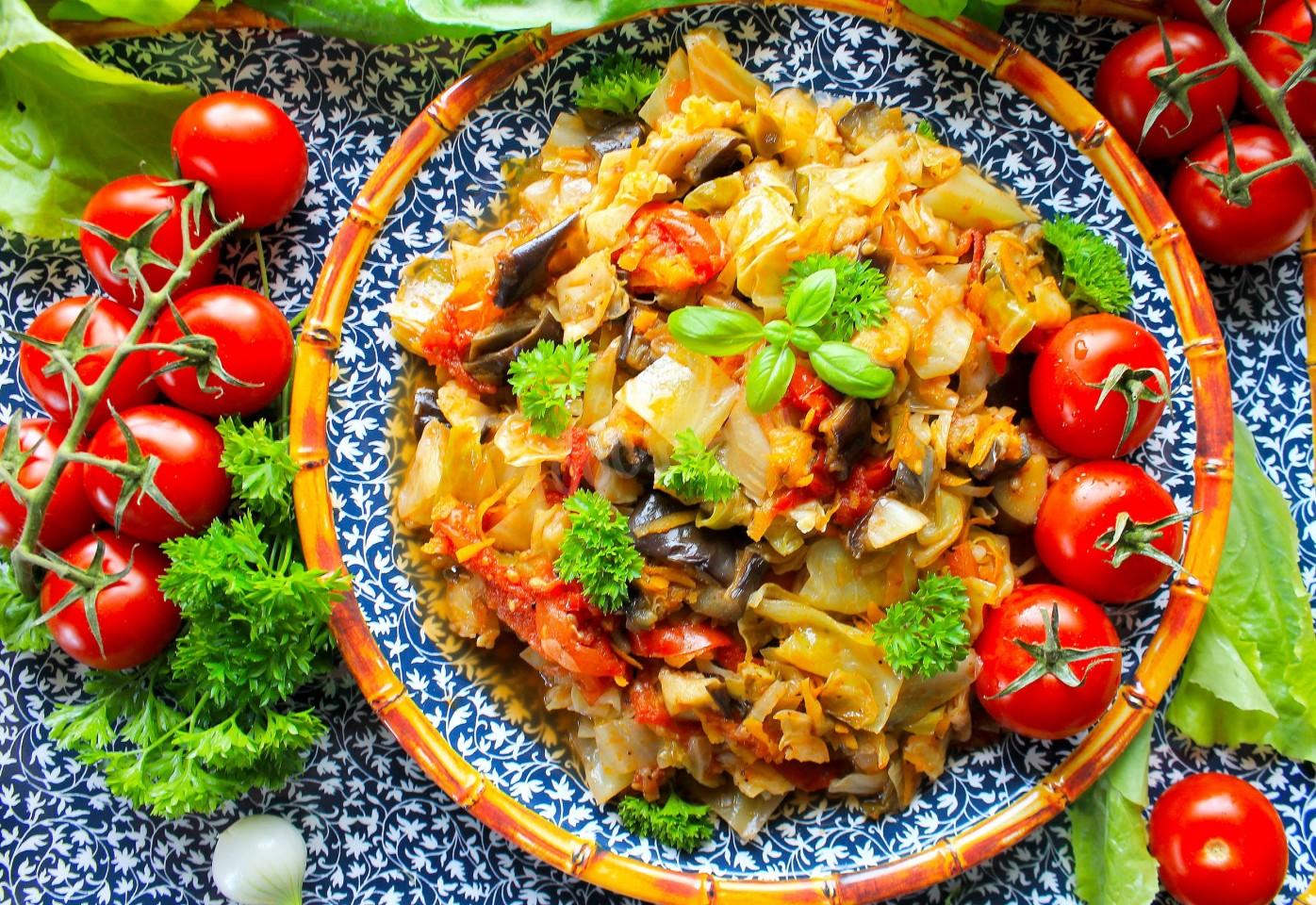
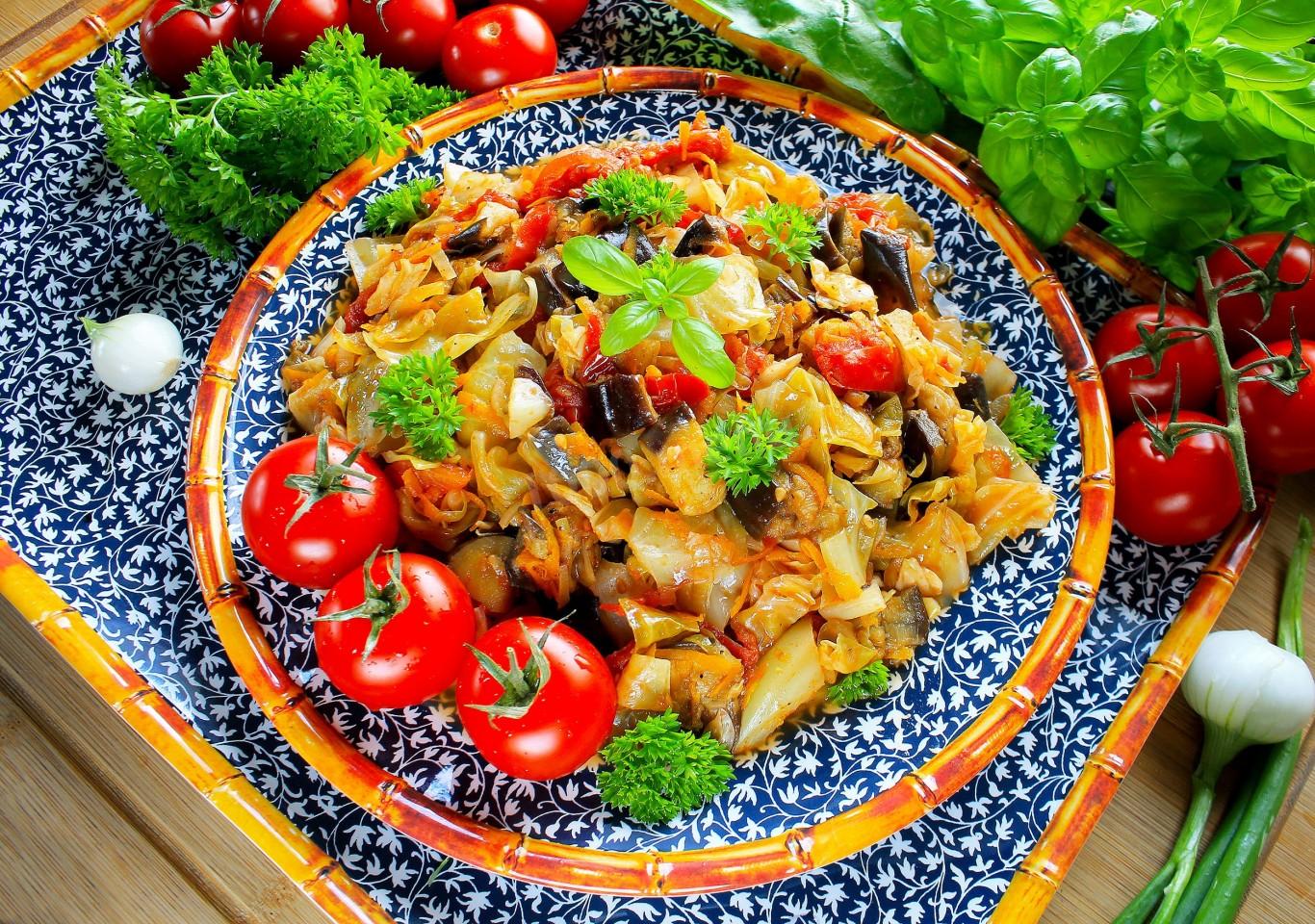
A wonderful light, colorful dish for the whole family! This cabbage stew with eggplant and tomatoes is incredibly tasty and good for you. If you're watching your weight, it's definitely one to add to your rotation. It's just as good hot or cold.

Cooking method
-
Step 1:
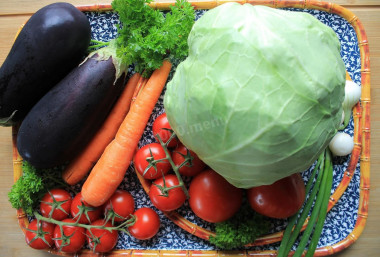
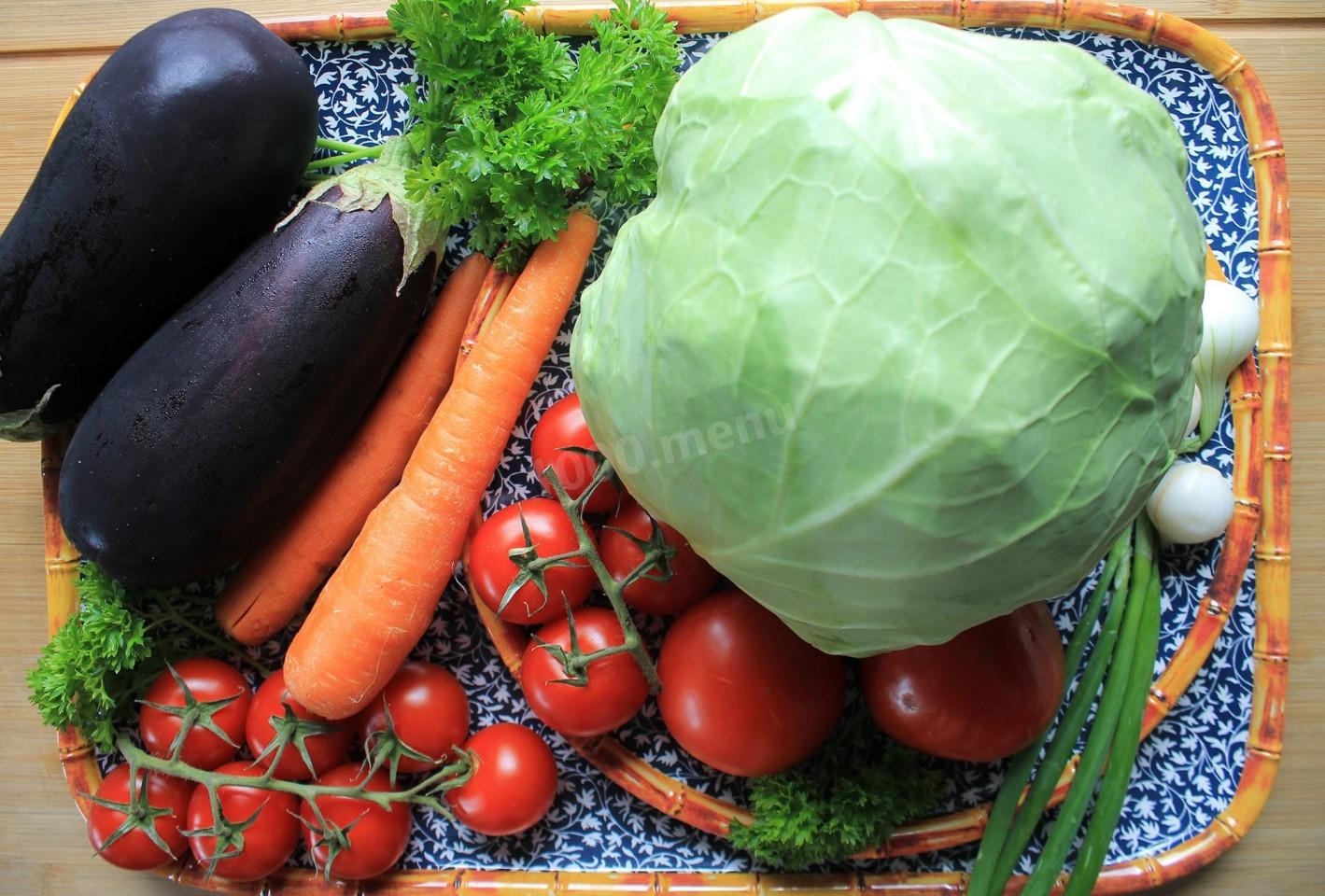
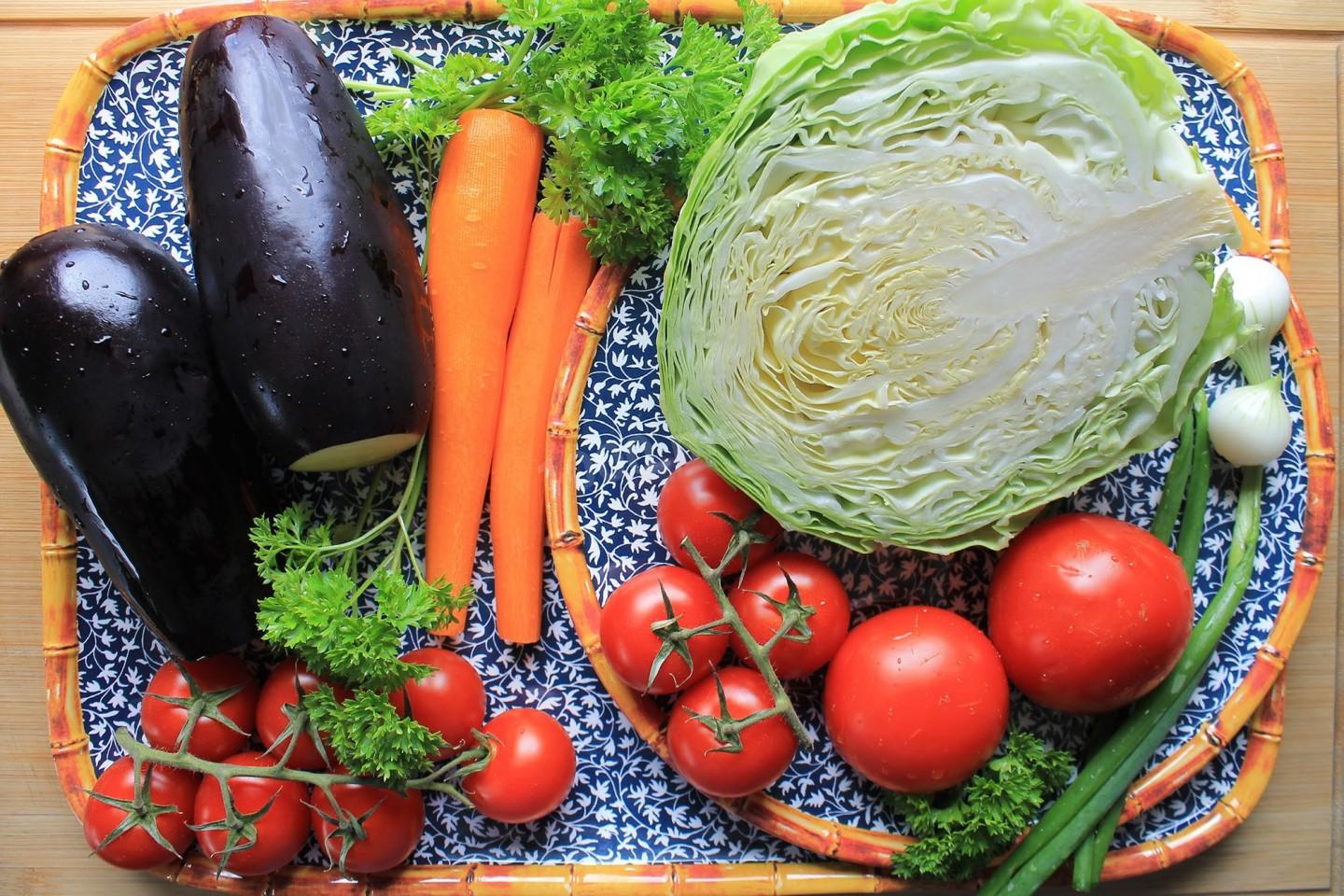
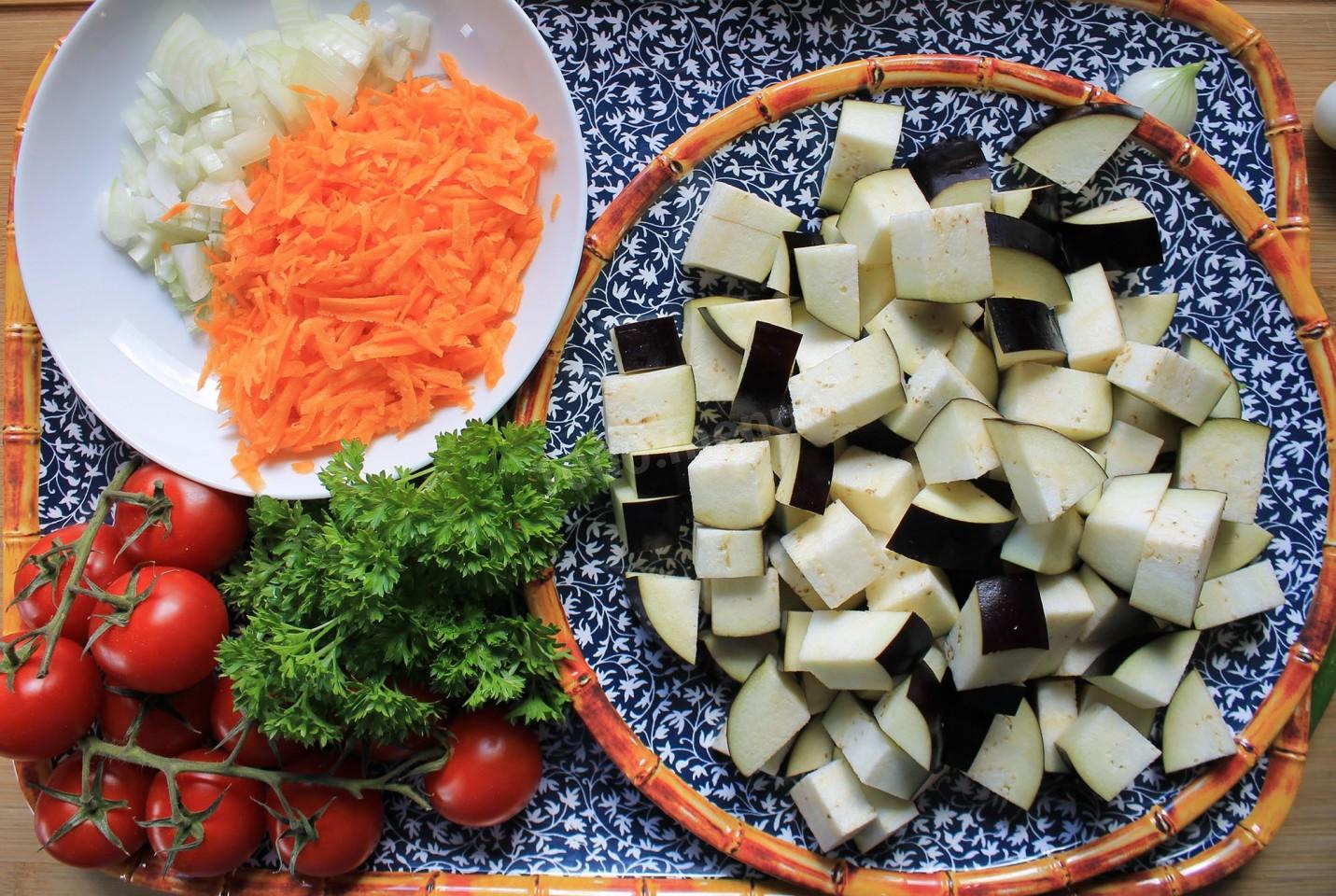
How do you make cabbage stew with eggplant and tomatoes? Gather all the vegetables listed in the recipe. Choose juicy, meaty tomatoes. Cherry tomatoes work well too — they're usually a little sweet, which nicely rounds out everything else in the stew. I used young cabbage; a more mature head works too, just note that it'll need a bit more cooking time.
-
Step 2:
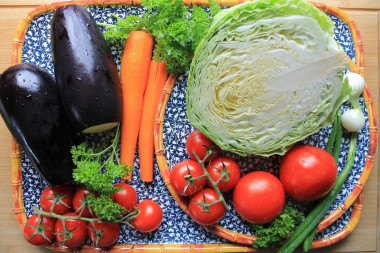
Wash all the vegetables well. Peel off the cabbage's outer leaves — they can be tough and sometimes bruised. Peel the carrot and onion, and trim the stem ends off the eggplant.
-
Step 3:
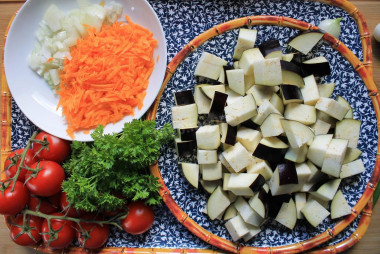
Cut the eggplant into large cubes or half-moons. If needed, soak the eggplant in salted water to draw out any bitterness — I skip this, since the variety I used isn't bitter. Grate the carrot on a coarse grater and roughly chop the onion.
-
Step 4:
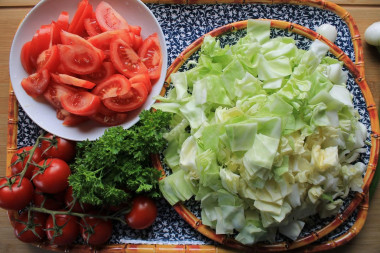
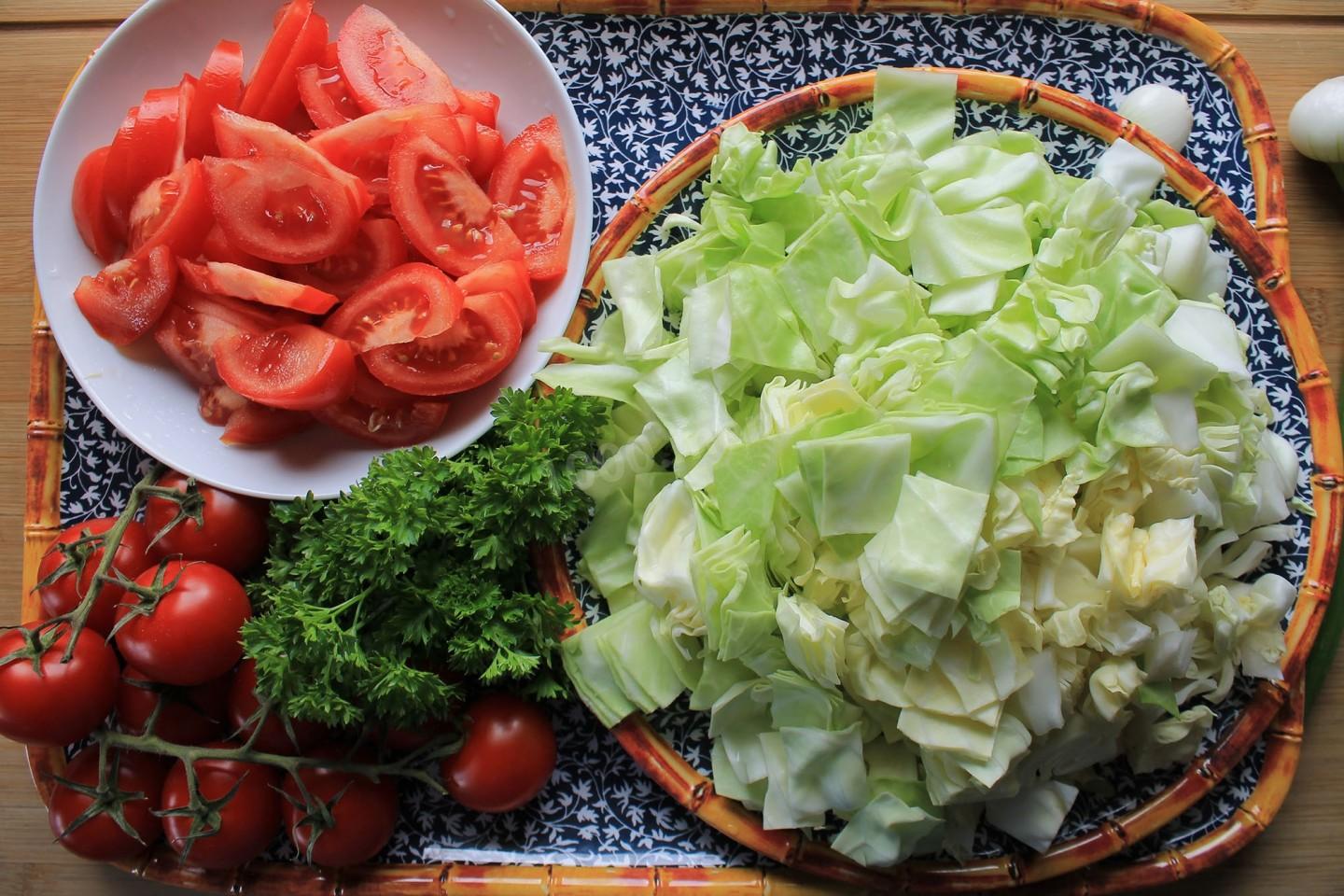
Cut the tomatoes into cubes or wedges. If you like, peel them first. An easy way to peel tomatoes: wash them, score a shallow criss-cross on top with a sharp knife, drop them into boiling water for 1–2 minutes, then remove, cool slightly, and slip off the skins. Shred the cabbage into squares or medium-thick strips.
-
Step 5:
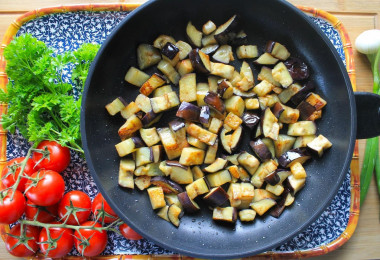
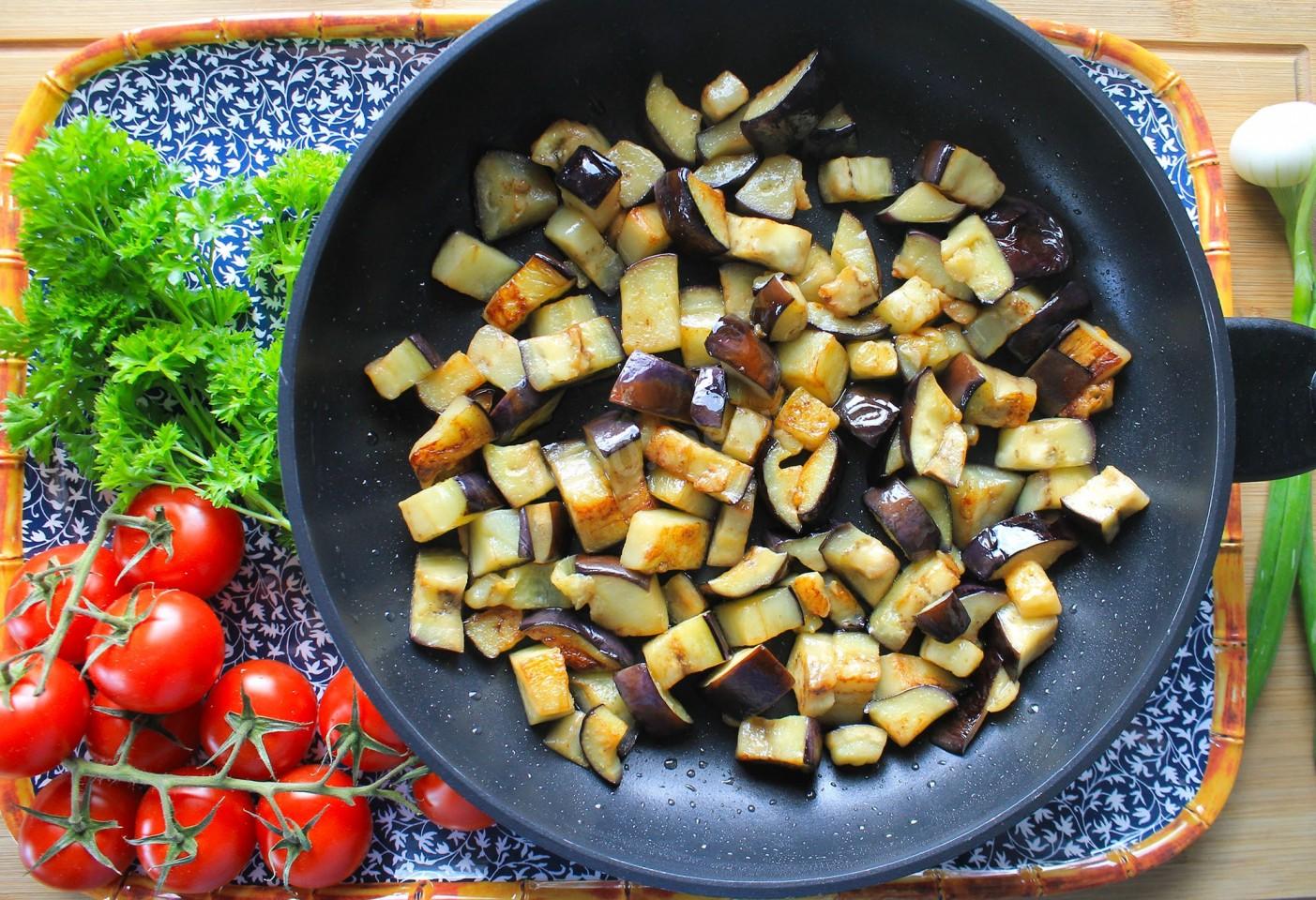
Heat the vegetable oil in a deep skillet. Add the eggplant and fry, stirring now and then, until browned.
-
Step 6:
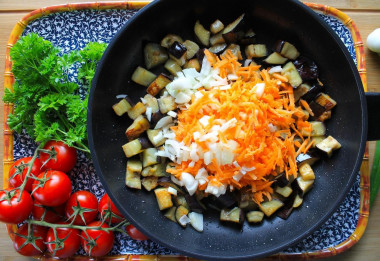
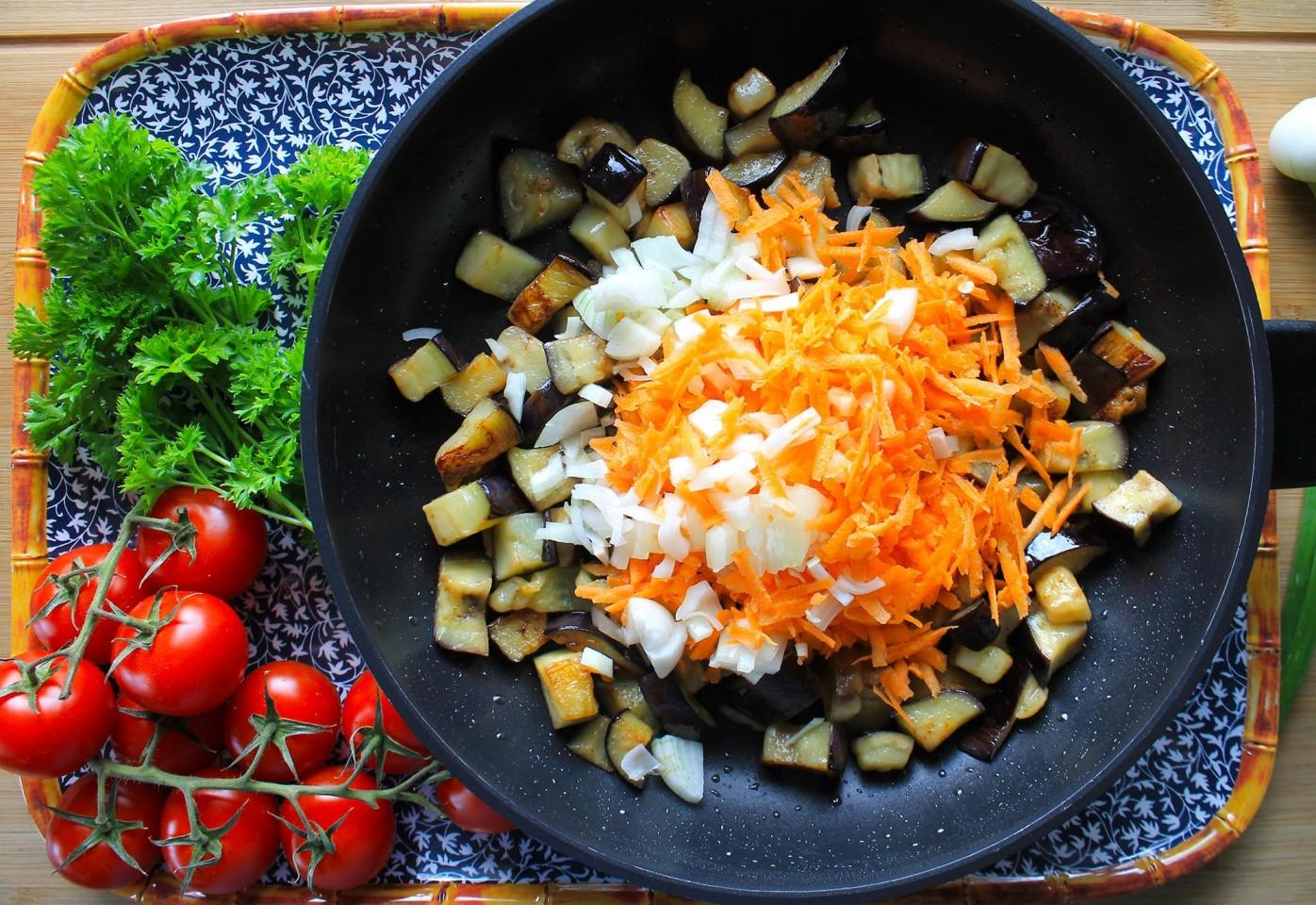
Add the onion and carrot to the eggplant. Cook until the onion turns translucent.
-
Step 7:
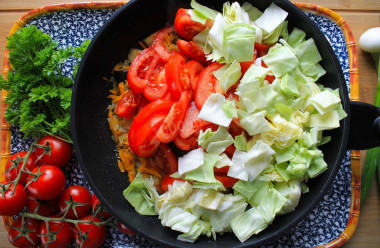
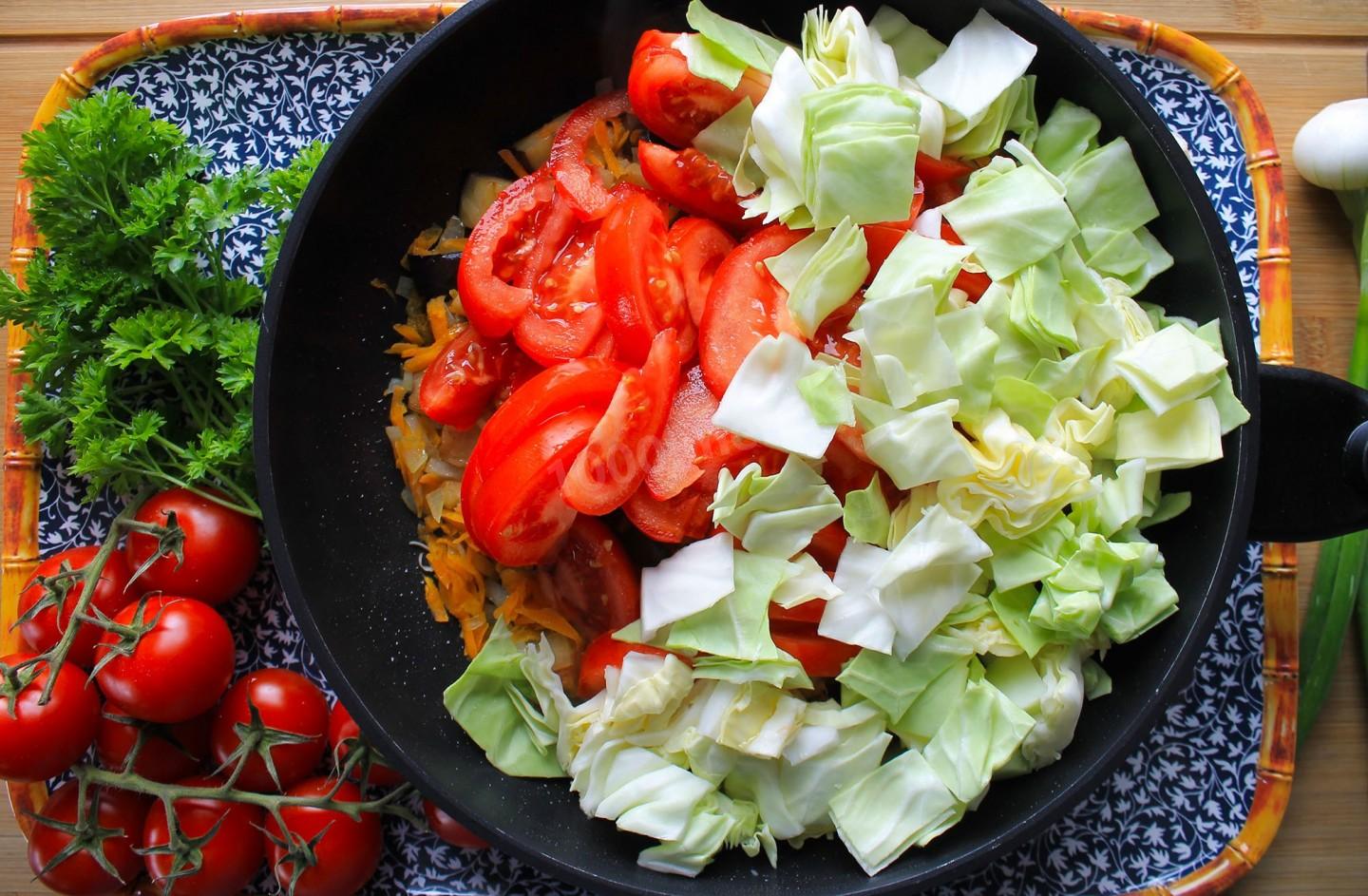
Next up: the tomatoes and cabbage.
-
Step 8:
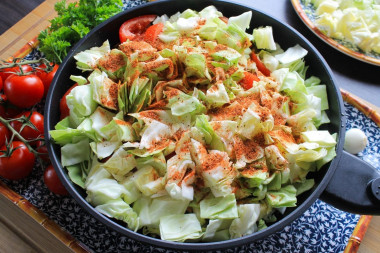
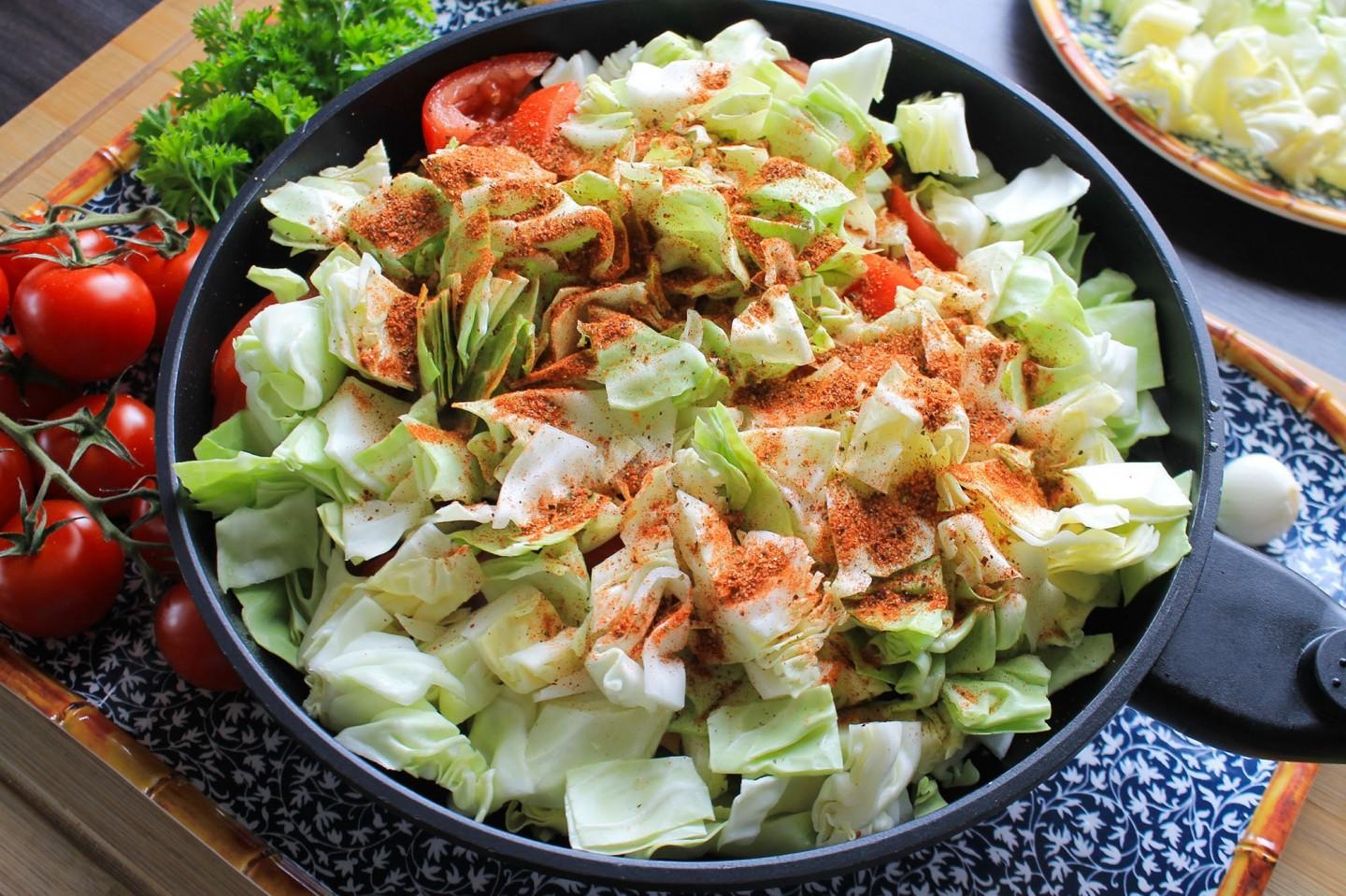
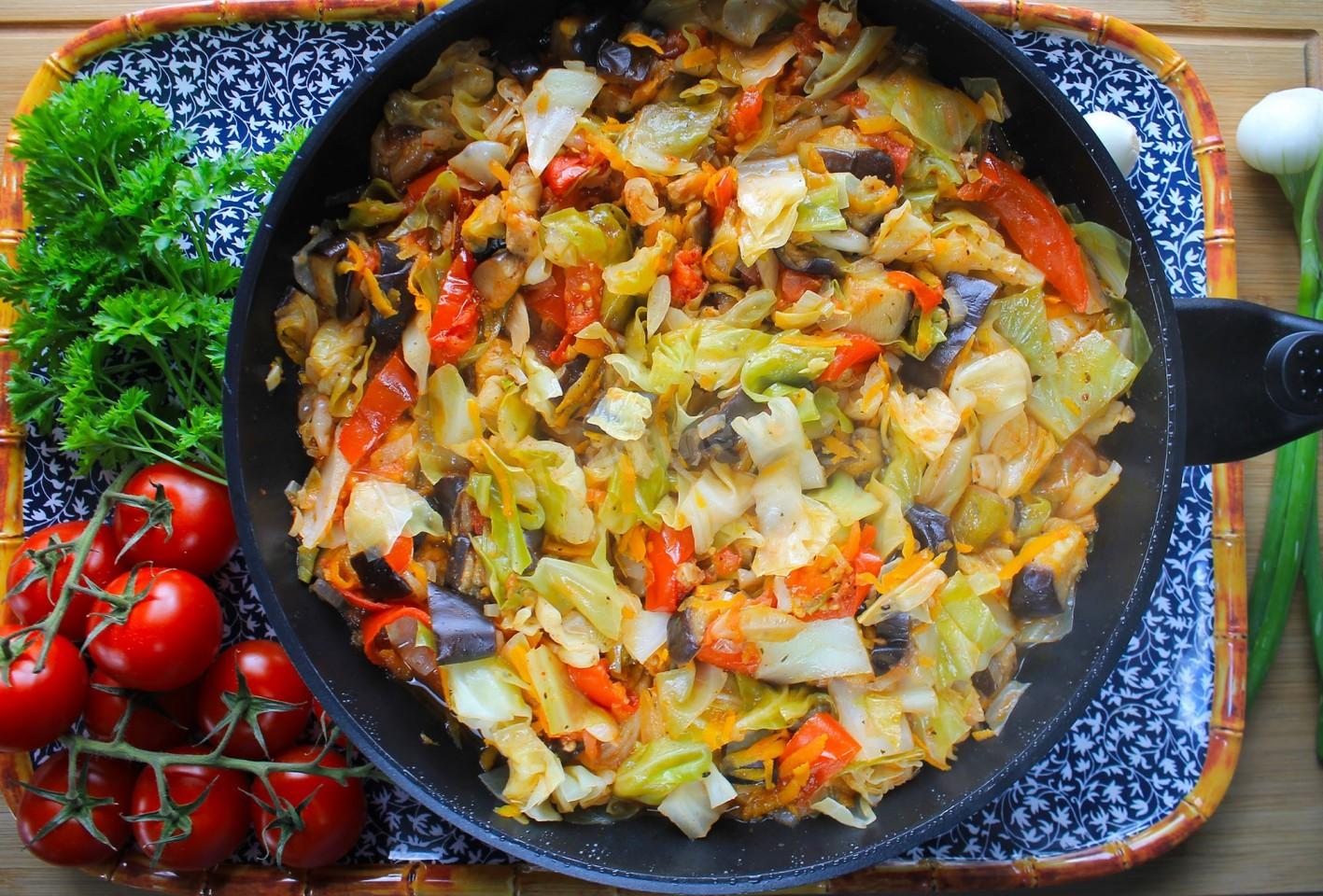
Add them to the skillet and season with salt and pepper to taste. I added a pinch of ground pepper and a ready-made vegetable seasoning. Stir gently, cover, and simmer over medium heat until the cabbage is tender. This took me about 20 minutes.
-
Step 9:
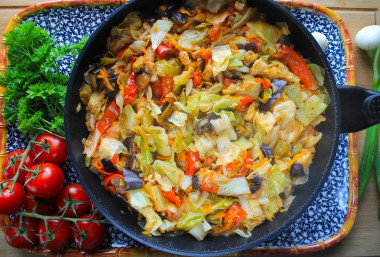
Near the end, uncover, taste, and add more salt if needed. The vegetables release liquid as they cook. If there's too much liquid for your taste, turn up the heat and let some of it cook off with the lid off.
-
Step 10:

Sprinkle the finished stew with finely chopped fresh herbs. Parsley, dill, or young green onions all work well.
- Enjoy!
- Every oil is good only up to a certain temperature — its smoke point, beyond which it begins to burn and form harmful compounds, including carcinogens. Choosing the right frying temperature and the best oil for the job makes a real difference.
- Important! The wrong skillet can ruin even the best recipe, so pick the right pan for the dish.
- If you use ready-made spice blends, always check the ingredients on the package. They often already contain salt, so keep that in mind or you risk over-salting the dish.
Caloric content of the products possible in the composition of the dish
- Onion - 41 kcal/100g
- Tomatoes - 23 kcal/100g
- Carrots - 33 kcal/100g
- Dried carrots - 275 kcal/100g
- Boiled carrots - 25 kcal/100g
- Eggplant - 24 kcal/100g
- Vegetable oil - 873 kcal/100g
- Salt - 0 kcal/100g
- Fresh frozen soup greens in a package - 41 kcal/100g
- Greenery - 41 kcal/100g
- Young cabbage - 27 kcal/100g
Similar recipes




- Homemade dinner
- Second course
- Vegetables
- Spices seasonings spices
- Fats and oils
- Зелень
- Salt
- Vegetable oil
- Frying
- Stewing
- Simple dinner
- Рагу
- Stewed vegetables
- Eggplant second course
- Second courses of cabbage
- Simple quick dinner
- Light dinner
- From carrots
- From cabbage
- From tomato
- From eggplant
- From onion
- No eggs
- Vegetarianism
- Recipes for lean dishes without butter