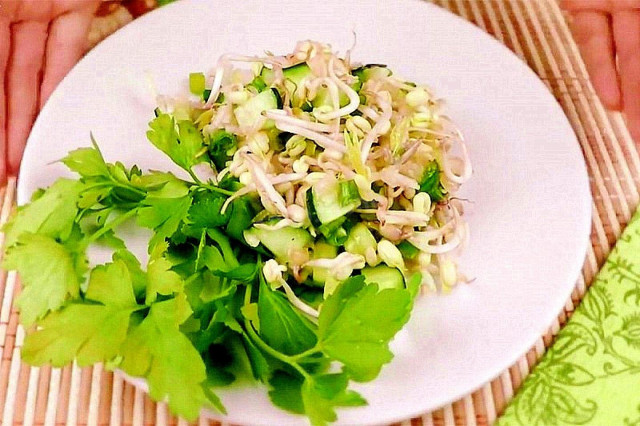
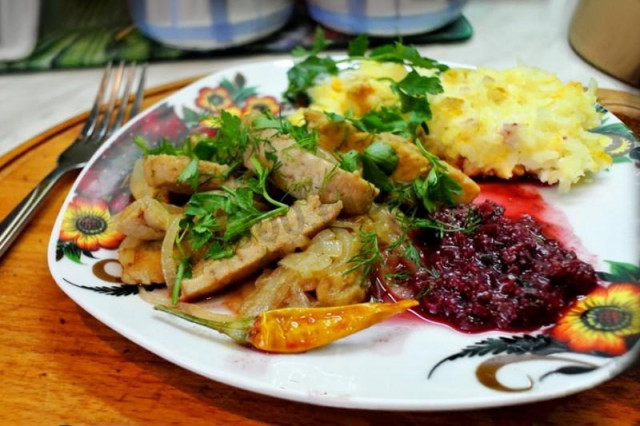
Edible Cheese Salad Baskets
Did you know the prettiest salad "plate" can also be eaten? It's a great way to serve a portion of some light salad—and gorgeous, if you ask me! And I doubt anyone will turn down eating the little dish afterward. Your guests will absolutely love it!



Cooking method
-
Step 1:
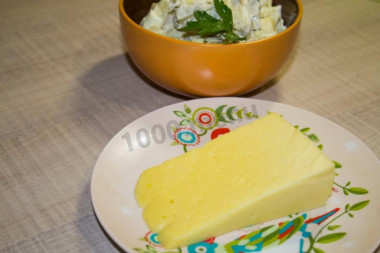
For these baskets you'll need a good piece of hard cheese. The harder the cheese, the better the basket will hold its shape. I tried Gouda-style and a firm aged cheese—the firmer one held its shape much better. I'm not sure whether it comes down to the type of cheese or its quality, but that's how it went for me...
-
Step 2:
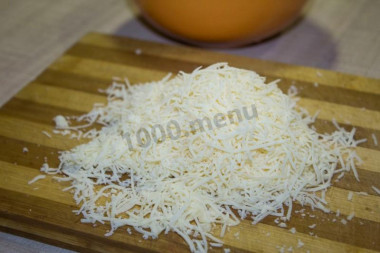
Grate the cheese fine. There are two ways to form the basket itself—I'll show you both.
-
Step 3:
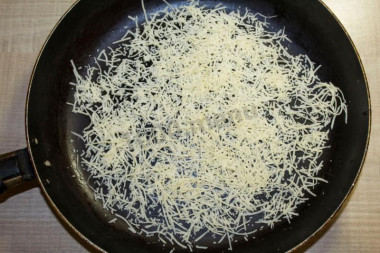
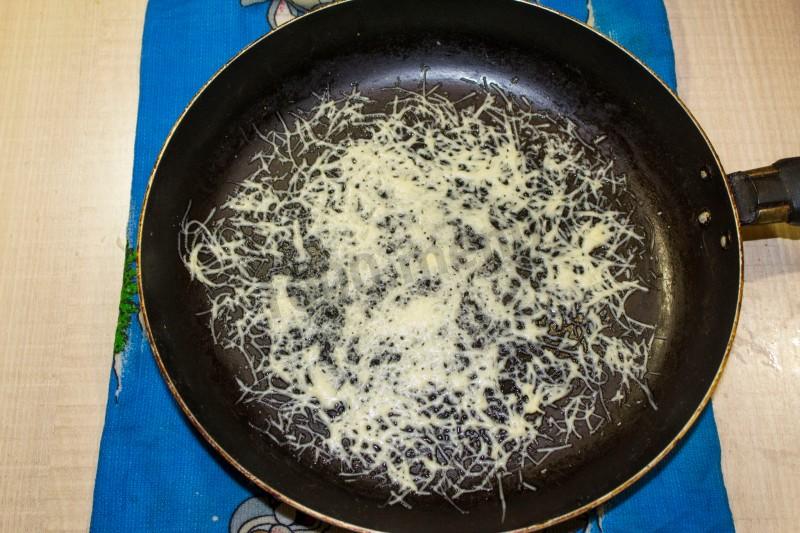
The first way is in a skillet. I wanted this one lacy, so I used only a little cheese. Just keep in mind: the thinner the cheese layer, the more delicate the basket, so the salad should be something very light—ideally without mayonnaise.
-
Step 4:
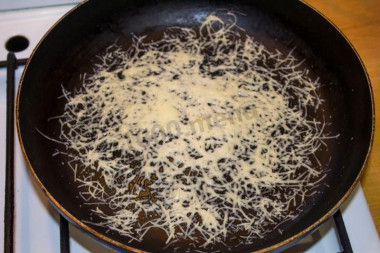
Set the skillet over the lowest heat and wait for the cheese to melt and small bubbles to appear (it took me about 4 minutes).
-
Step 5:
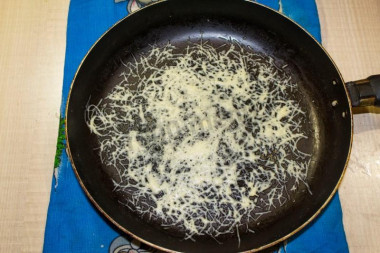
Then flip the skillet under a stream of cold water for a few seconds, or set it on a wet towel, and leave it a couple of minutes.
-
Step 6:
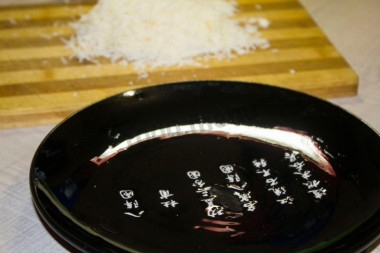
For the second method, you'll need a plate and a microwave—grease the plate.
-
Step 7:
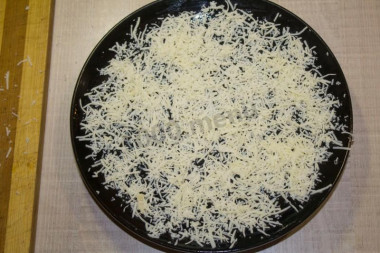
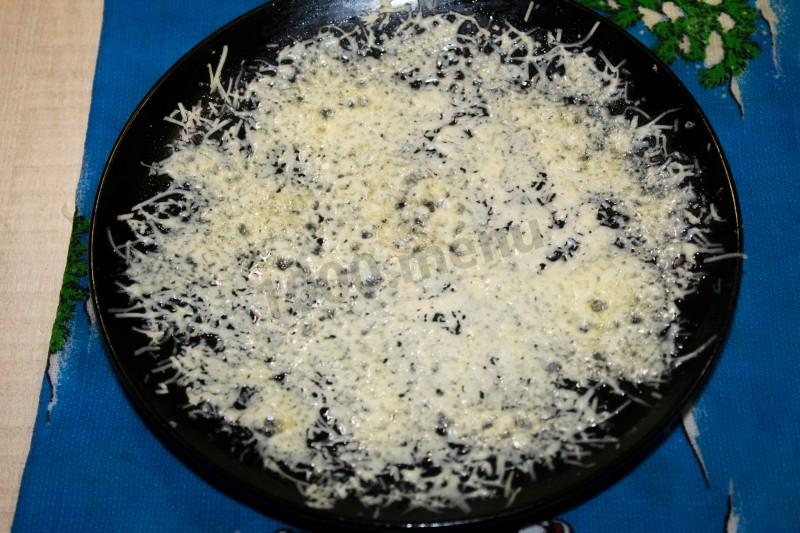
Sprinkle the plate with cheese.
-
Step 8:
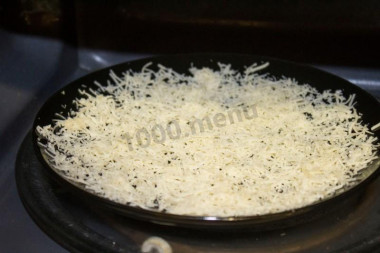
Microwave for 1 minute on high (mine is 700 watts).
-
Step 9:
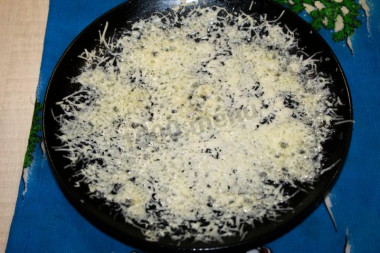
Set the plate on a wet towel too.
-
Step 10:
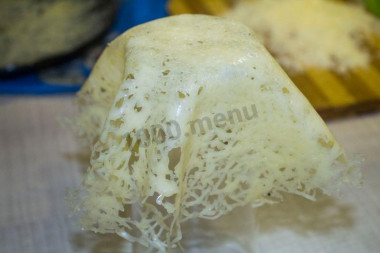
Gently pry it up with a spatula (a silicone one works great) and flip the cheese round onto an upturned glass—it's still warm and not fully set, so you can shape it however you like. Like this, you can put it in the fridge to firm up (30 minutes is plenty).
-
Step 11:
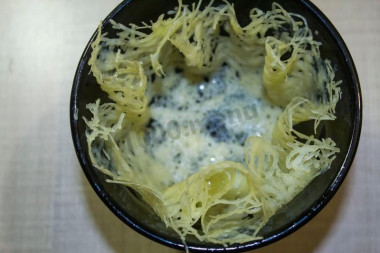
Or, to shape it, set the basket inside a deep bowl and chill it that way—both approaches worked out really well for me.
-
Step 12:
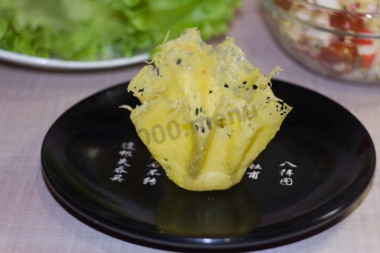
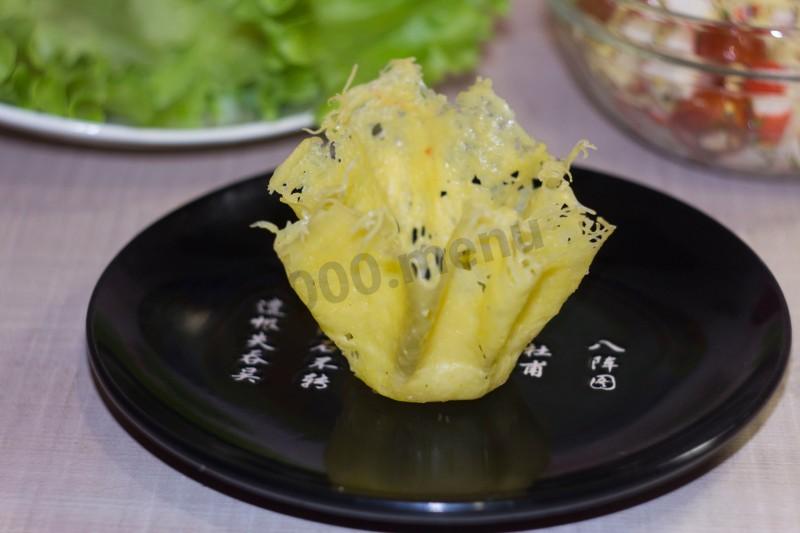
Here's what the basket looks like fresh out of the fridge.
-
Step 13:
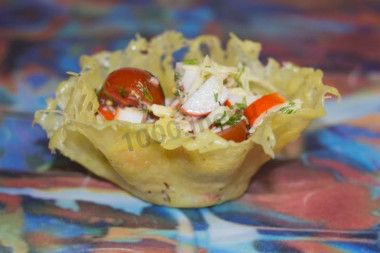
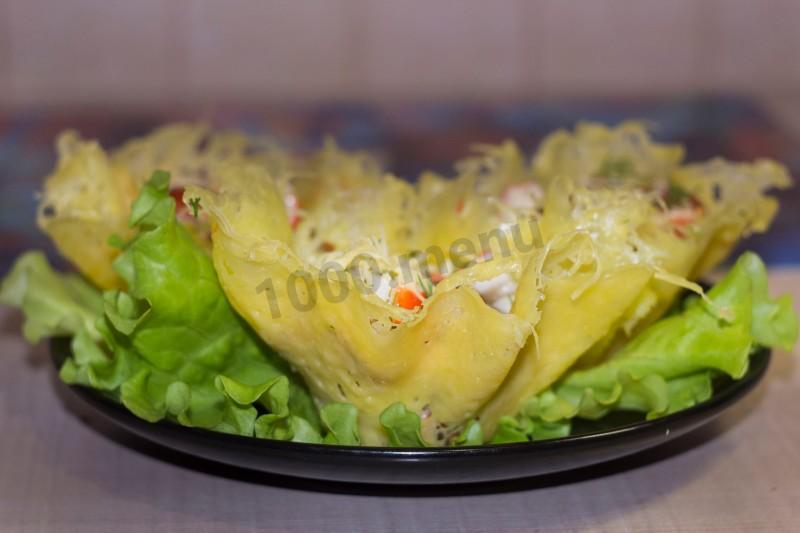
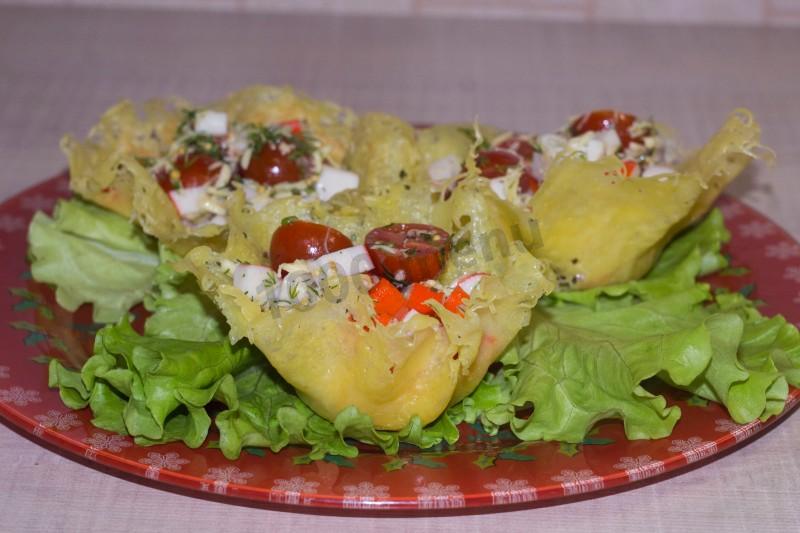
Fill the baskets with a salad you love (I'd be glad if you share your recipe in the comments).
-
Step 14:
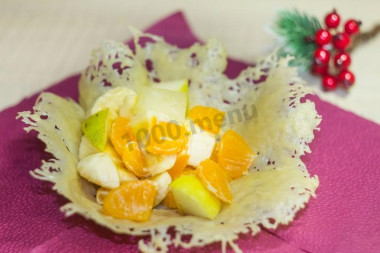
Sliced fruit or a fruit salad looks especially lovely in a basket like this.
-
Step 15:
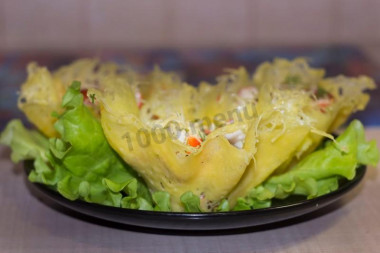
From this amount of cheese I got 3 baskets. It's very handy to make them the day before a party, stack them in the fridge, and fill them with salad right before serving the next day.
-
Step 16:
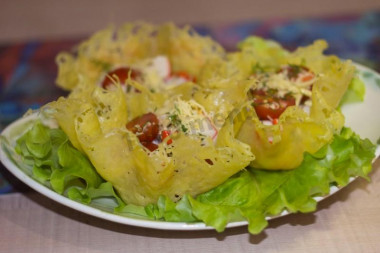
You can work toasted sesame seeds or a clove of garlic into the cheese to give the dish a whole new spin.
-
Step 17:
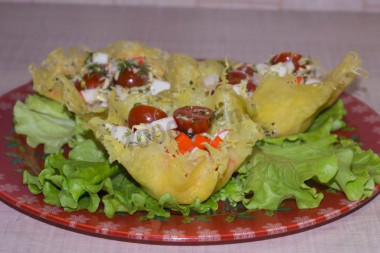
Good luck with your kitchen experiments—and enjoy!









Caloric content of the products possible in the composition of the dish
- Dutch cheese - 352 kcal/100g
- Swiss cheese - 335 kcal/100g
- Russian cheese - 366 kcal/100g
- Kostroma cheese - 345 kcal/100g
- Yaroslavsky cheese - 361 kcal/100g
- Altai cheese 50% fat content - 356 kcal/100g
- Soviet cheese - 400 kcal/100g
- Cheese 'steppe' - 362 kcal/100g
- Uglichsky cheese - 347 kcal/100g
- Poshekhonsky cheese - 350 kcal/100g
- Lambert cheese - 377 kcal/100g
- Appnzeller cheese with 50% fat content - 400 kcal/100g
- Chester cheese with 50% fat content - 363 kcal/100g
- Edamer cheese with 40% fat content - 340 kcal/100g
- Cheese with mushrooms of 50 % fat content - 395 kcal/100g
- Emmental cheese with 45% fat content - 420 kcal/100g
- Gouda cheese with 45% fat content - 356 kcal/100g
- Aiadeus cheese - 364 kcal/100g
- Dom blanc cheese (semi-hard) - 360 kcal/100g
- Lo spalmino cheese - 61 kcal/100g
- Cheese 'etorki' (sheep, hard) - 401 kcal/100g
- White cheese - 100 kcal/100g
- Fat yellow cheese - 260 kcal/100g
- Altai cheese - 355 kcal/100g
- Kaunas cheese - 355 kcal/100g
- Latvian cheese - 316 kcal/100g
- Limburger cheese - 327 kcal/100g
- Lithuanian cheese - 250 kcal/100g
- Lake cheese - 350 kcal/100g
- Gruyere cheese - 396 kcal/100g
- Vegetable oil - 873 kcal/100g