Skillet Chicken with Sauerkraut
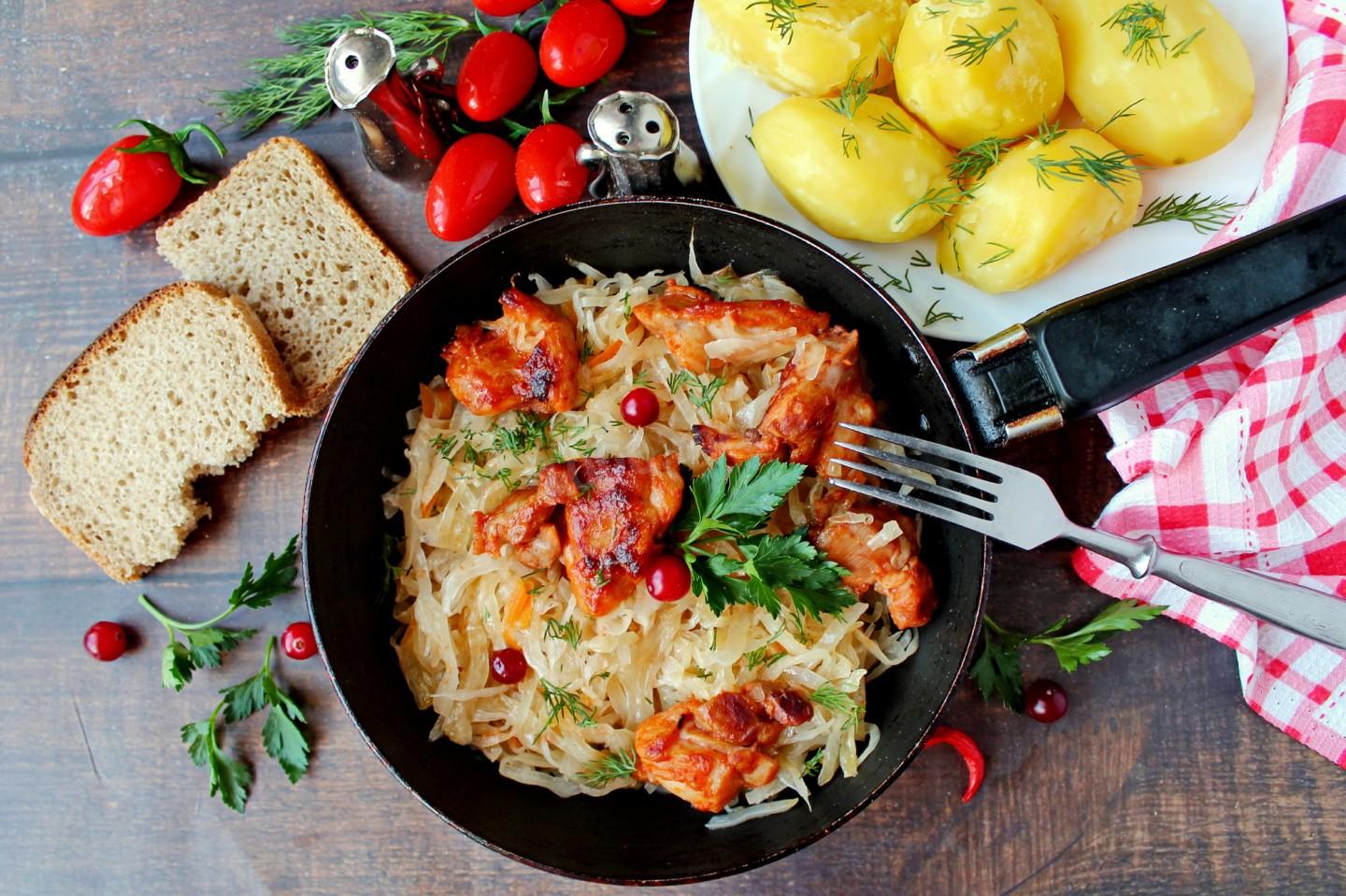
A simple, very tasty dish for family lunch or dinner! This skillet chicken with sauerkraut takes little effort to make, and the ingredients are easy on the budget. It's just as good for a weeknight as it is for a holiday spread.





Cooking method
-
Step 1:
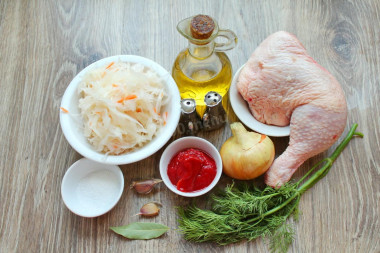
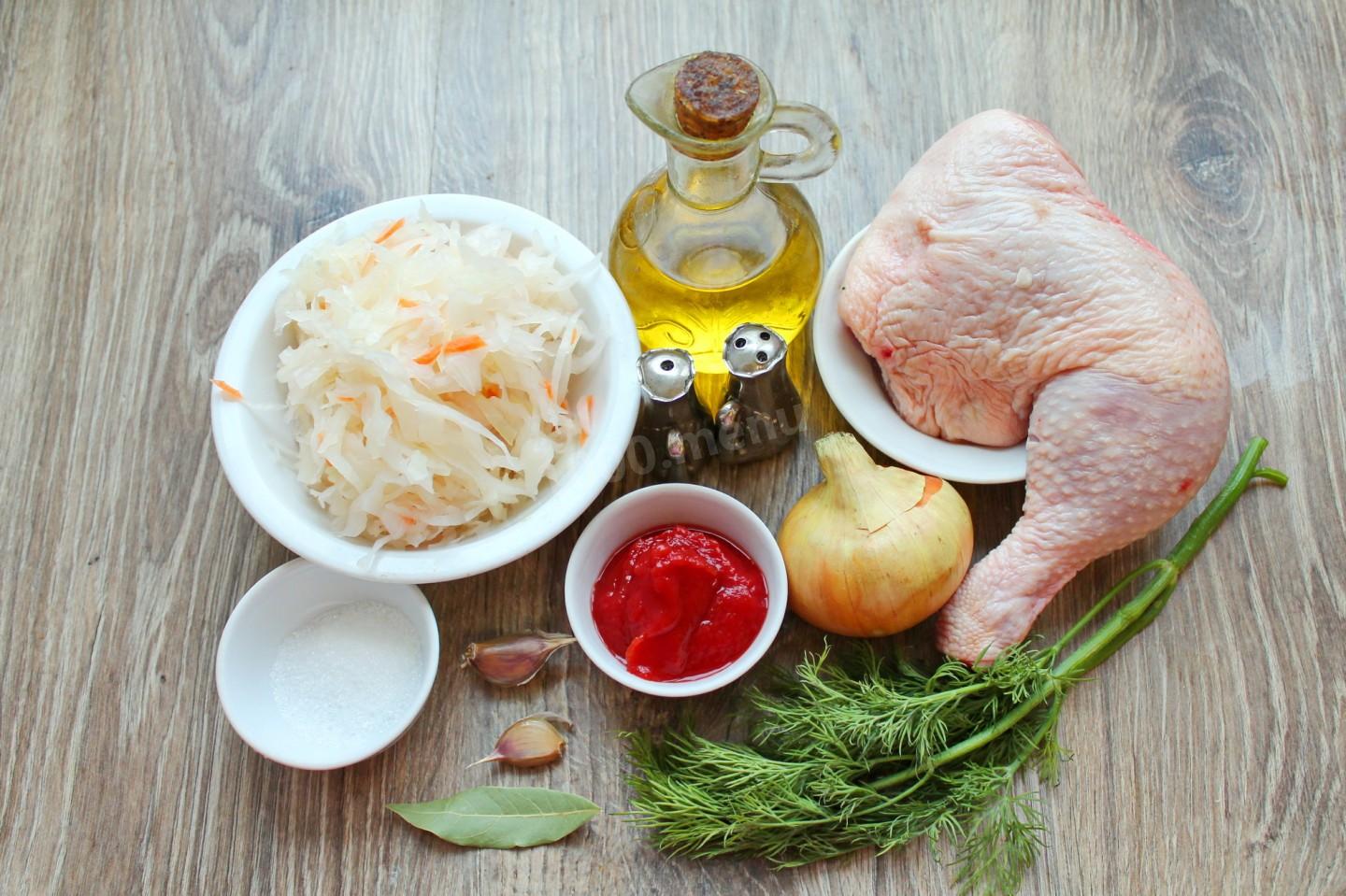
How do you braise chicken with sauerkraut in a skillet? Gather all the ingredients. Any part of the chicken will work; I used a large chicken leg.
-
Step 2:
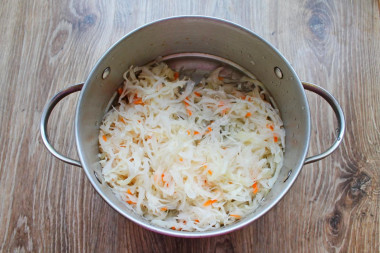
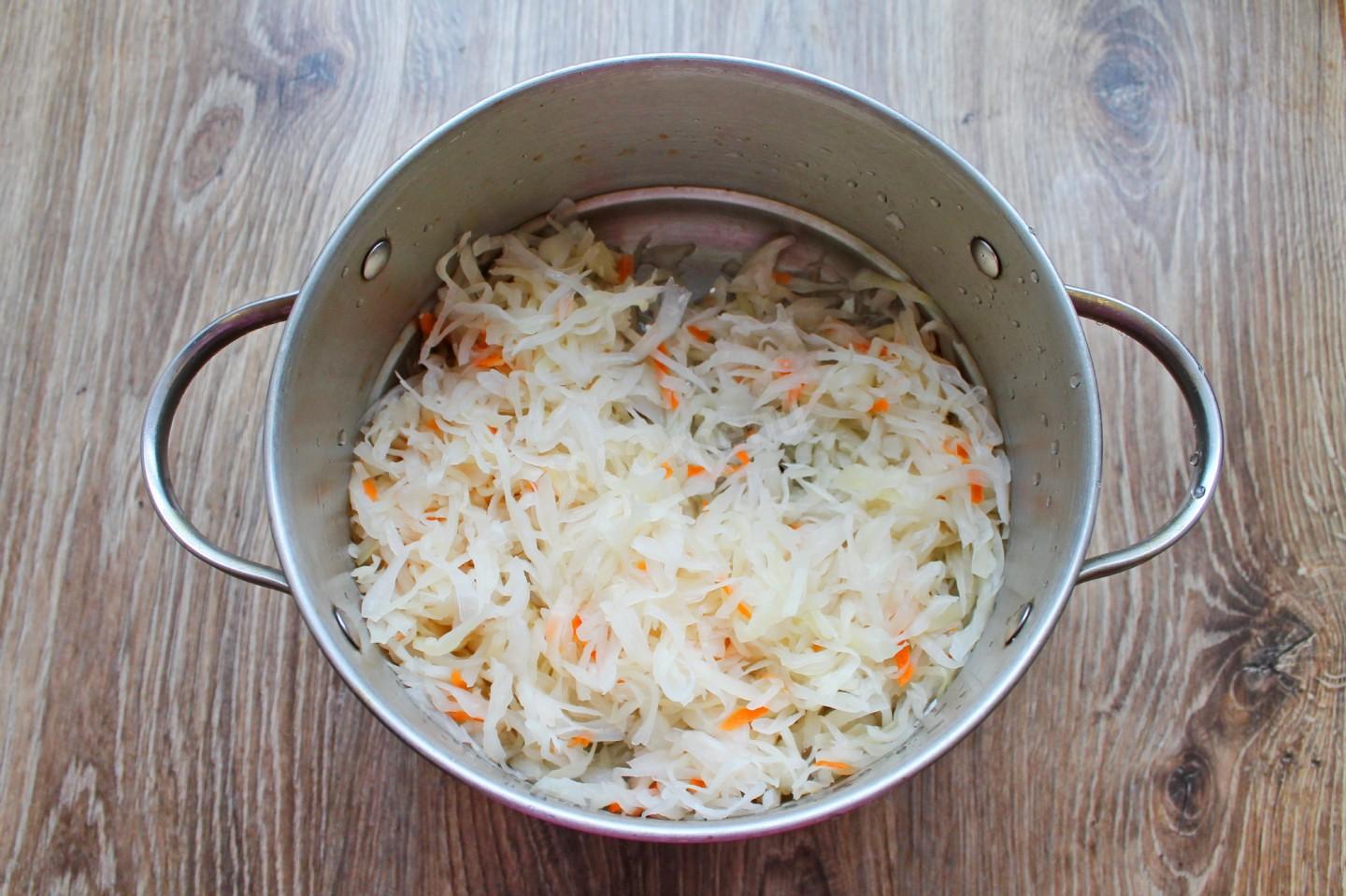
Only true fermented sauerkraut works for this dish — no quick, vinegar-pickled cabbage. If it's very sour, you can cover it with cold water and let it sit for 5–10 minutes. Then tip it into a colander or sieve, rinse under cold water, and let it drain.
-
Step 3:
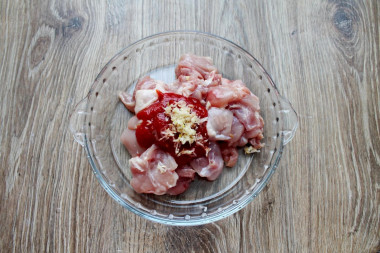
Wash the chicken leg, pat it dry, and remove the bones. Cut the meat into pieces and put them in a bowl. Add the tomato paste and minced garlic. Mix well and let it marinate for 5–6 hours.
-
Step 4:
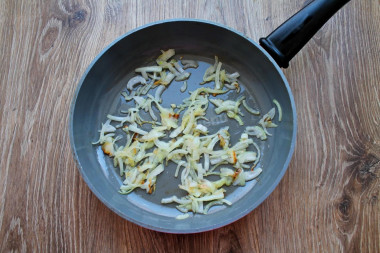
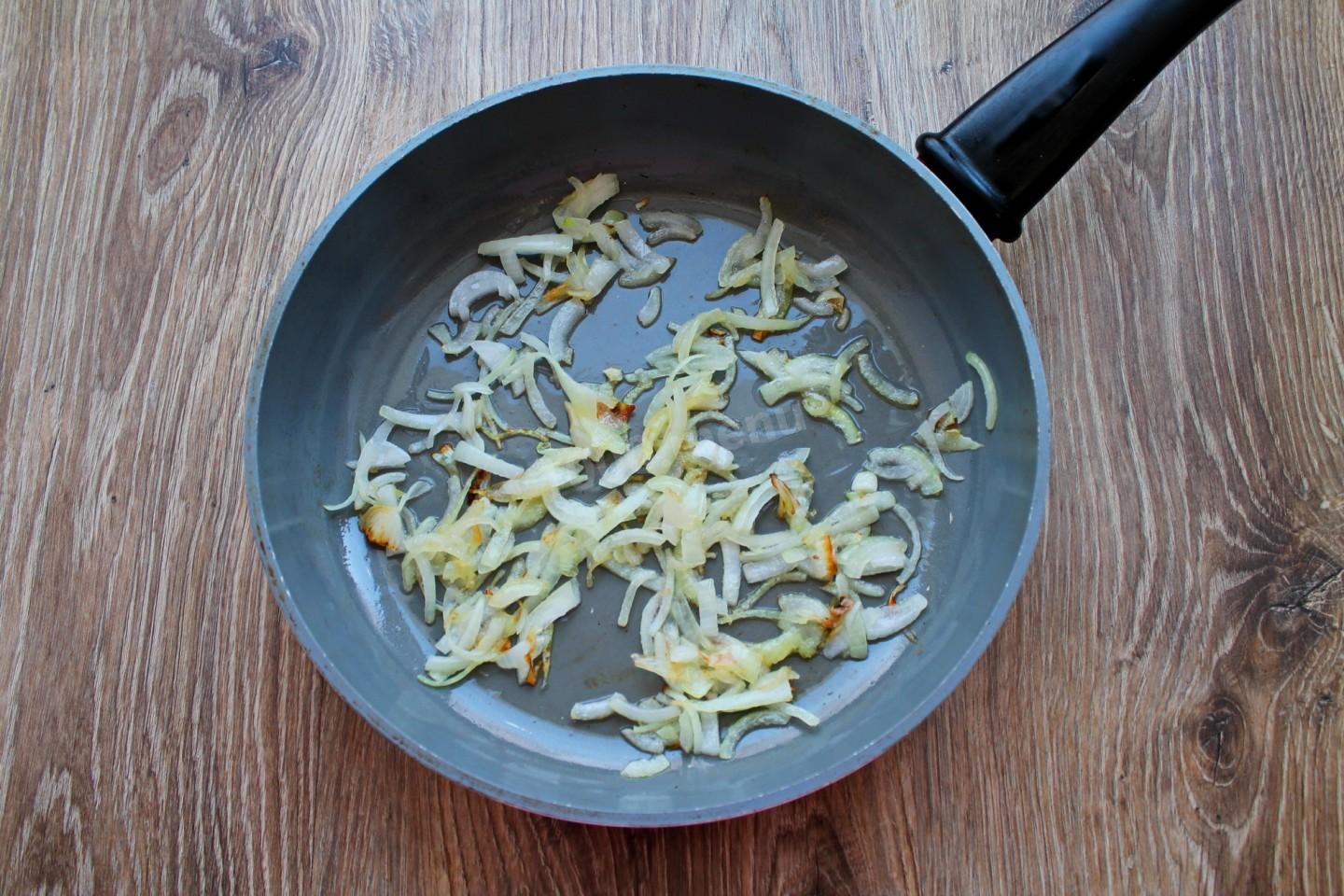
Peel and chop the onion and add it to a skillet with vegetable oil. Sauté the onion for 5 minutes, stirring.
-
Step 5:
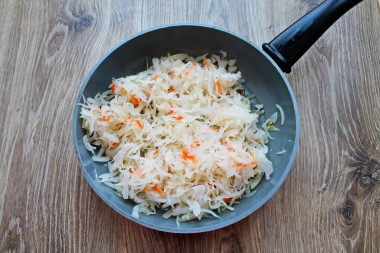
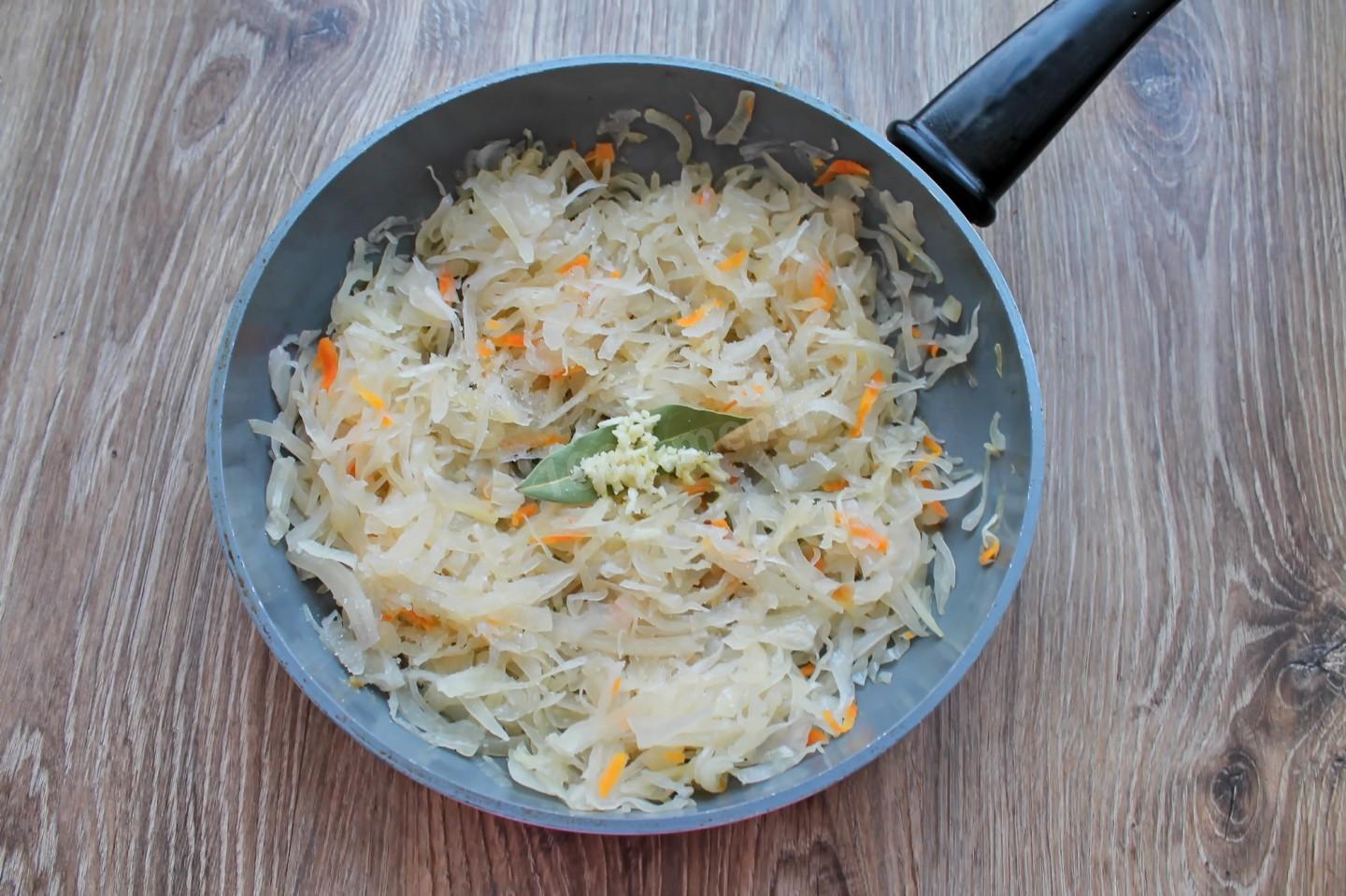
Add the sauerkraut to the skillet with the onion and stir. Season with pepper, sprinkle in the sugar, and pour in the water. Cover and simmer over low heat for 20 minutes. Keep an eye on it so the cabbage doesn't scorch, and add a splash more water if needed.
-
Step 6:
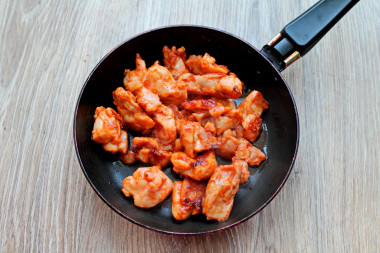
Pour vegetable oil into a skillet and heat it over medium heat. Add the chicken pieces and fry over medium heat for 10 minutes, stirring.
-
Step 7:
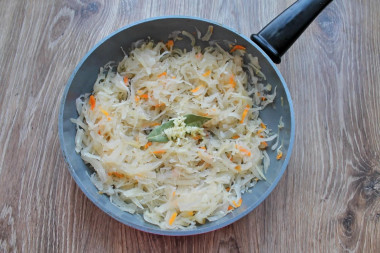
Add the bay leaf and chopped garlic and stir.
-
Step 8:
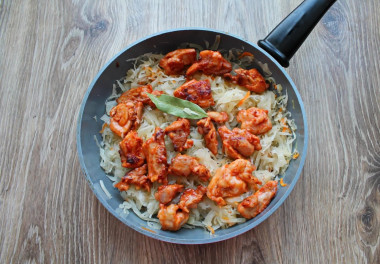
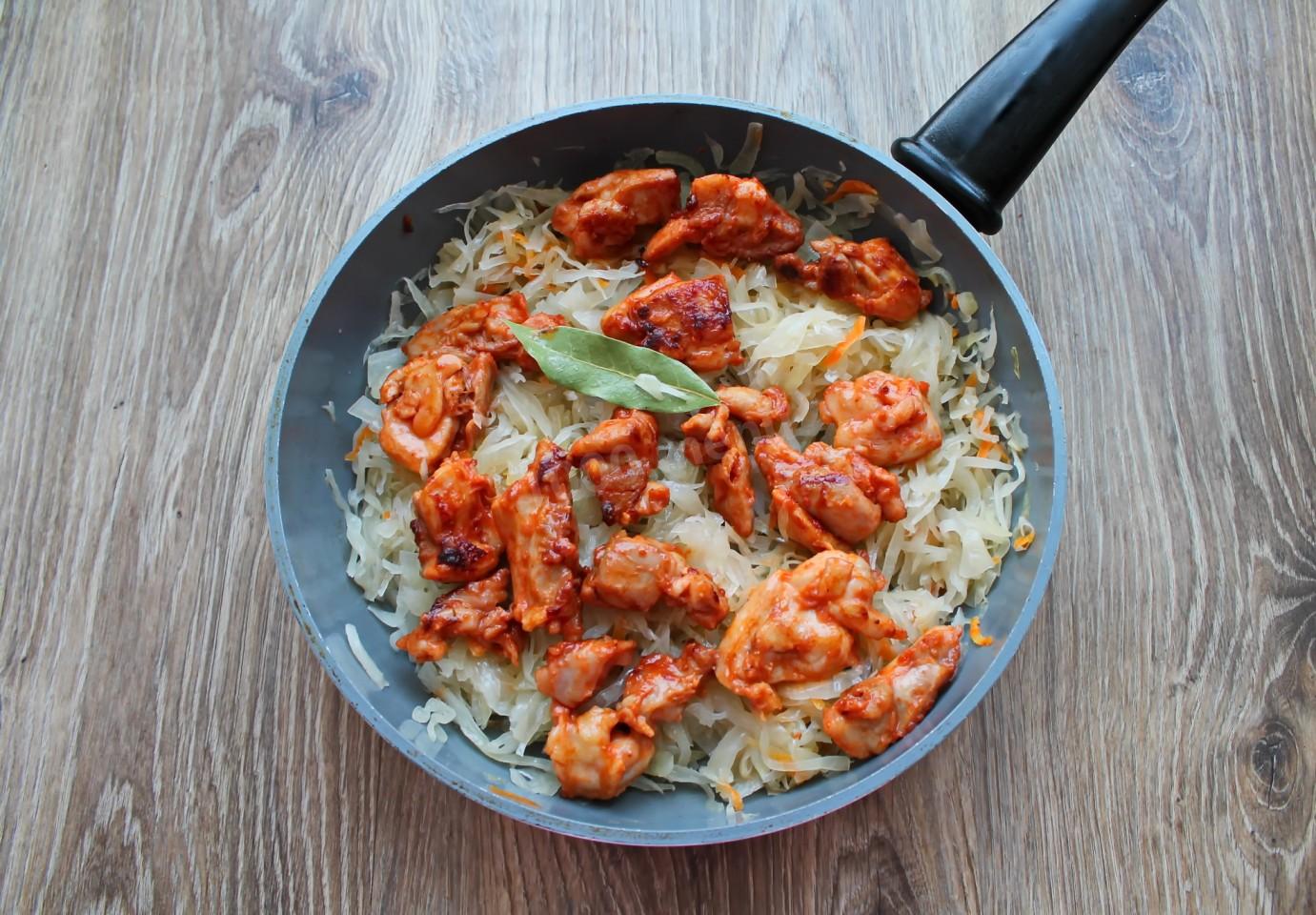
Set the fried chicken pieces on top of the cabbage. Cover again and simmer for another 15–20 minutes until done, then take it off the heat and serve.
-
Step 9:

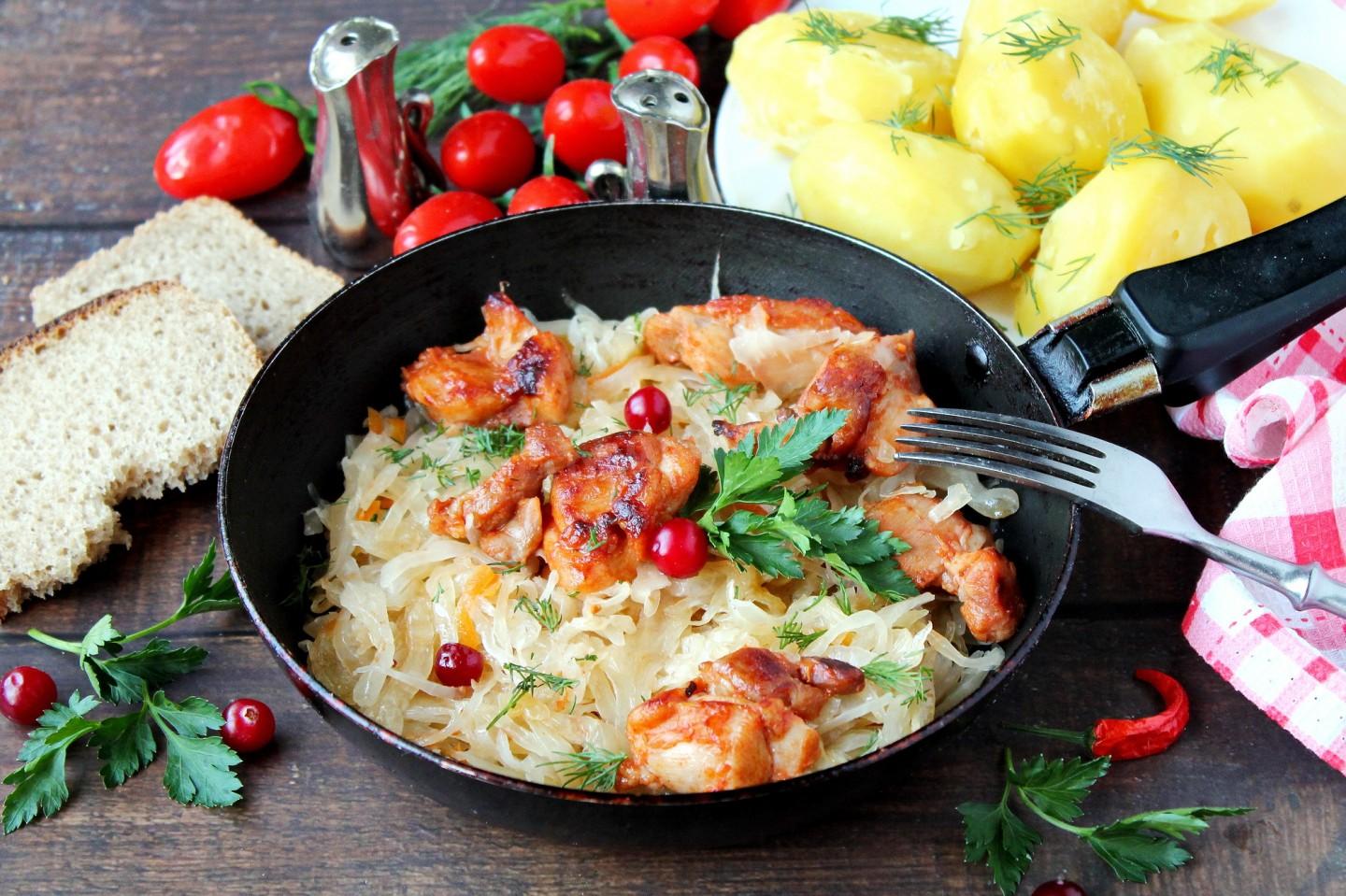
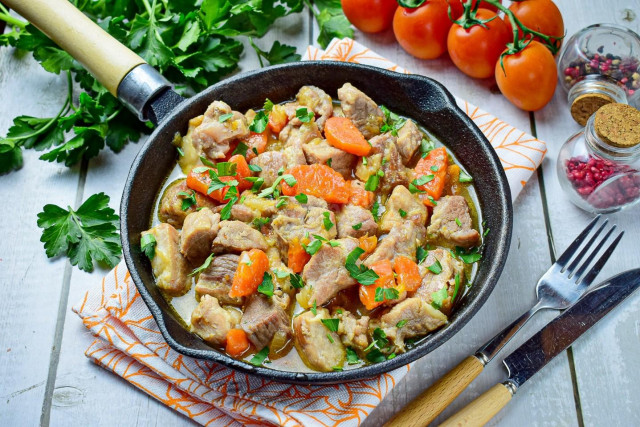
You can serve the chicken and sauerkraut with boiled potatoes, fresh herbs, and vegetables. Plate it up, or serve it in individual skillets the way I did. Enjoy!



- You can marinate the chicken for less time — half an hour, say — or skip the marinating entirely, especially if you trust the quality of the meat. That cuts the total cooking time way down.
- One thing to keep in mind: the wrong pan can ruin even the best recipe. For all the details on choosing the perfect pan for different dishes, see our guide.
- Every oil is only good up to a certain temperature — its smoke point — beyond which it starts to burn and form harmful compounds, including carcinogens. For how to gauge the right frying temperature, which oils are best, and which to avoid entirely, see our guide.
- You can swap the tomato paste in this recipe for canned tomatoes in their own juice, fresh tomatoes, or ketchup.
Caloric content of the products possible in the composition of the dish
- Garlic - 143 kcal/100g
- Bay leaf - 313 kcal/100g
- Granulated sugar - 398 kcal/100g
- Sugar - 398 kcal/100g
- Vegetable oil - 873 kcal/100g
- Tomato paste - 28 kcal/100g
- Sauerkraut - 19 kcal/100g
- Salt - 0 kcal/100g
- Water - 0 kcal/100g
- Onion - 41 kcal/100g
- Fresh frozen soup greens in a package - 41 kcal/100g
- Greenery - 41 kcal/100g
- Chicken leg - 185 kcal/100g
Similar recipes
- Homemade dinner
- Second course
- Meat and meat products
- Vegetables
- Sweet
- Spices seasonings spices
- Fats and oils
- Other
- Garlic
- Зелень
- Bay leaf
- Salt
- Vegetable oil
- Water
- Tomato paste
- Stewing
- In a frying pan
- Simple dinner
- Stewed vegetables
- Meat second course
- Second courses of cabbage
- Poultry
- Simple quick dinner
- Chicken with vegetables
- From cabbage
- From onion
- No eggs
- Recipes for lean dishes without butter
- Sugar