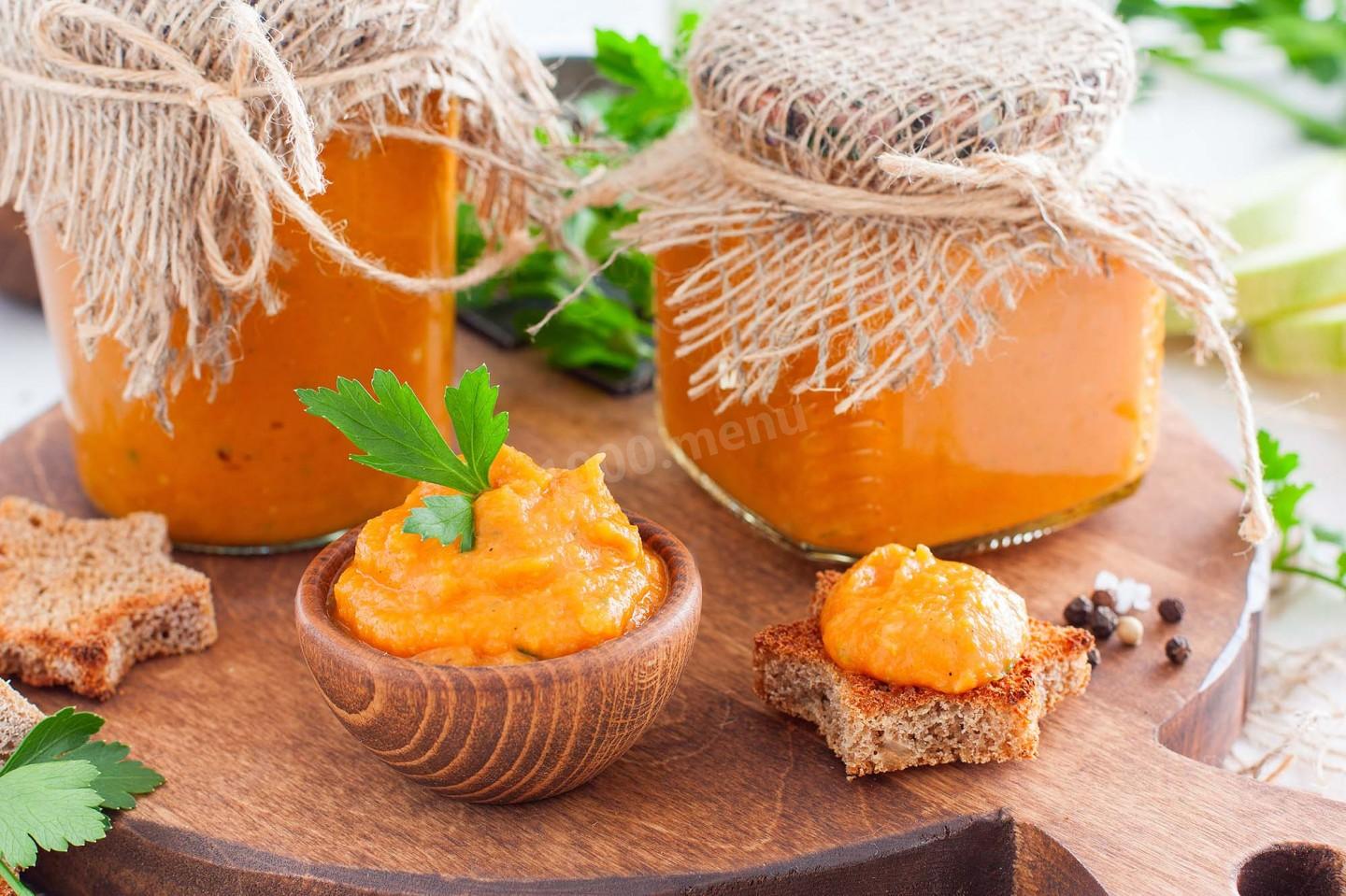
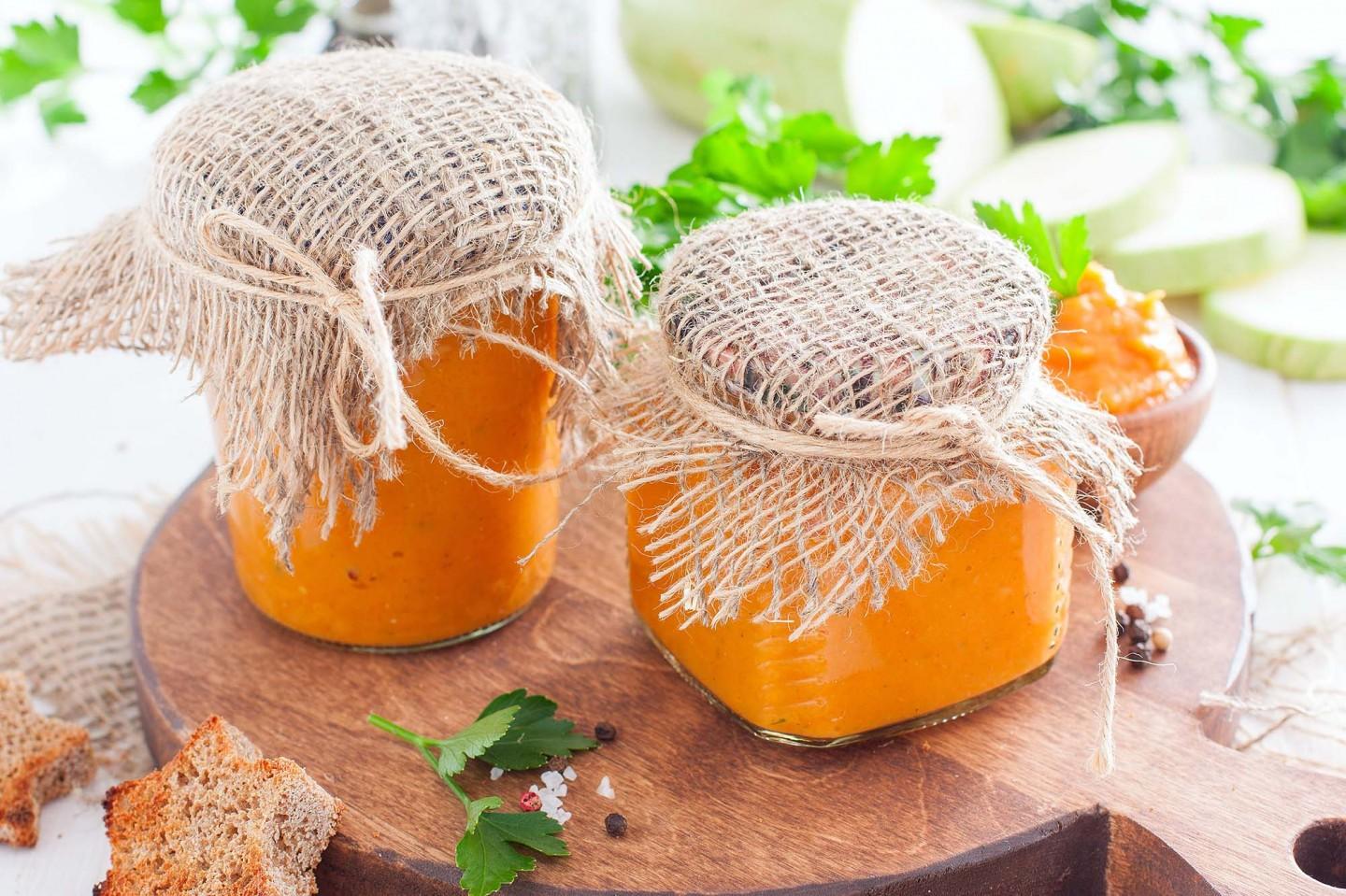
Homemade Zucchini Spread for Canning
Bright, fragrant, silky, and totally reliable! This is the tried-and-true classic zucchini spread — it turns out just like the kind you'd buy at the store. The method is so simple that even a first-time cook can pull it off.




Cooking method
-
Step 1:
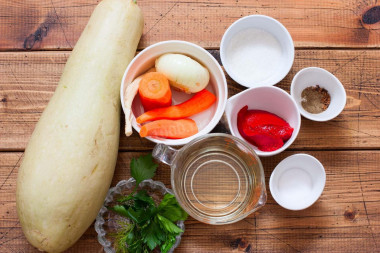
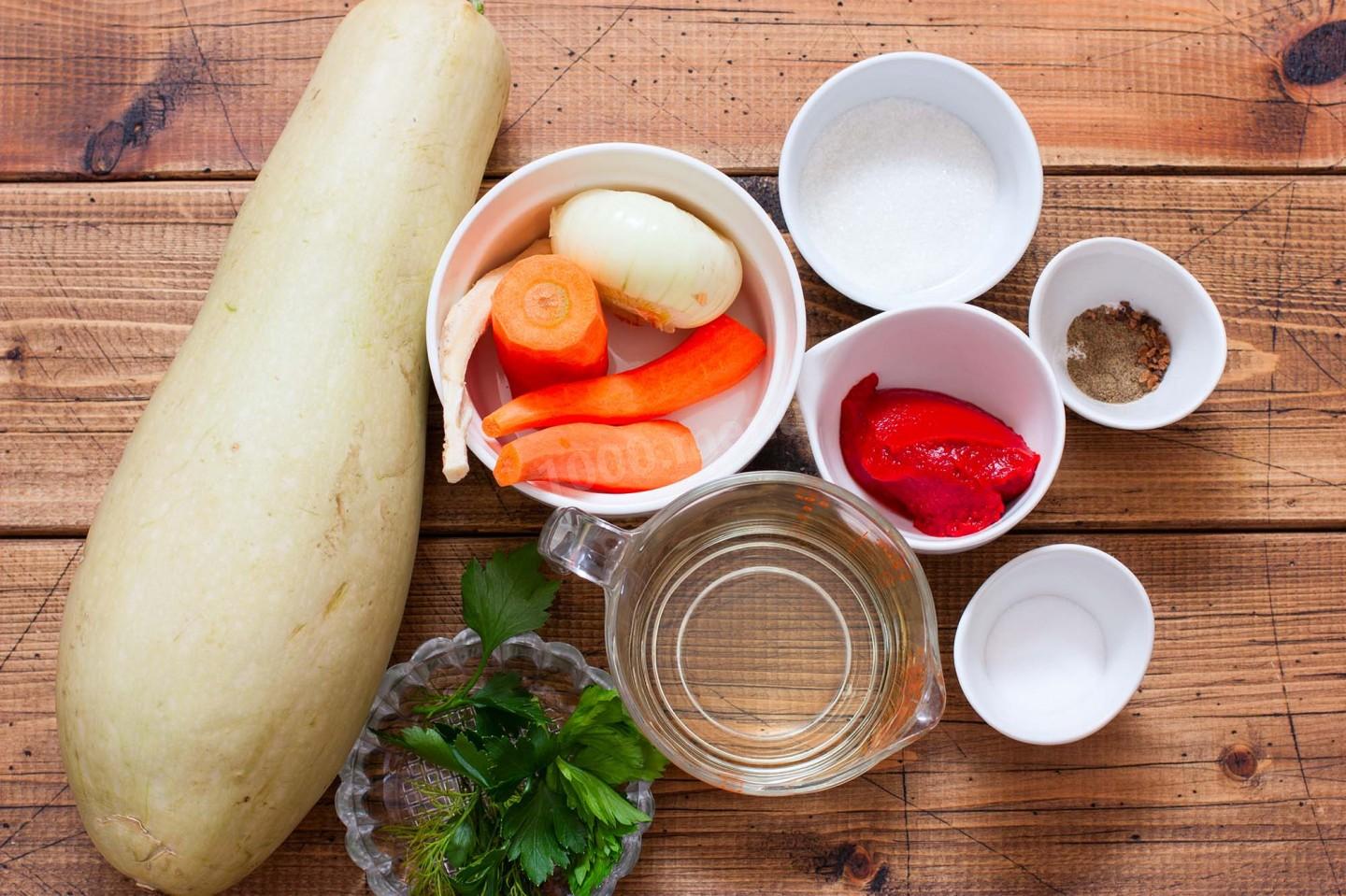
How do you make this zucchini spread? Prepare the ingredients listed. You'll want white root vegetables — besides parsley root, you can use celery root or parsnip. For the fresh herbs, use equal parts dill, parsley, and celery leaf. The vegetable weights are given for peeled vegetables.
-
Step 2:
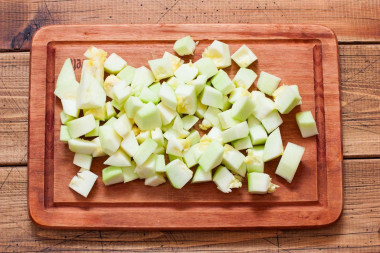
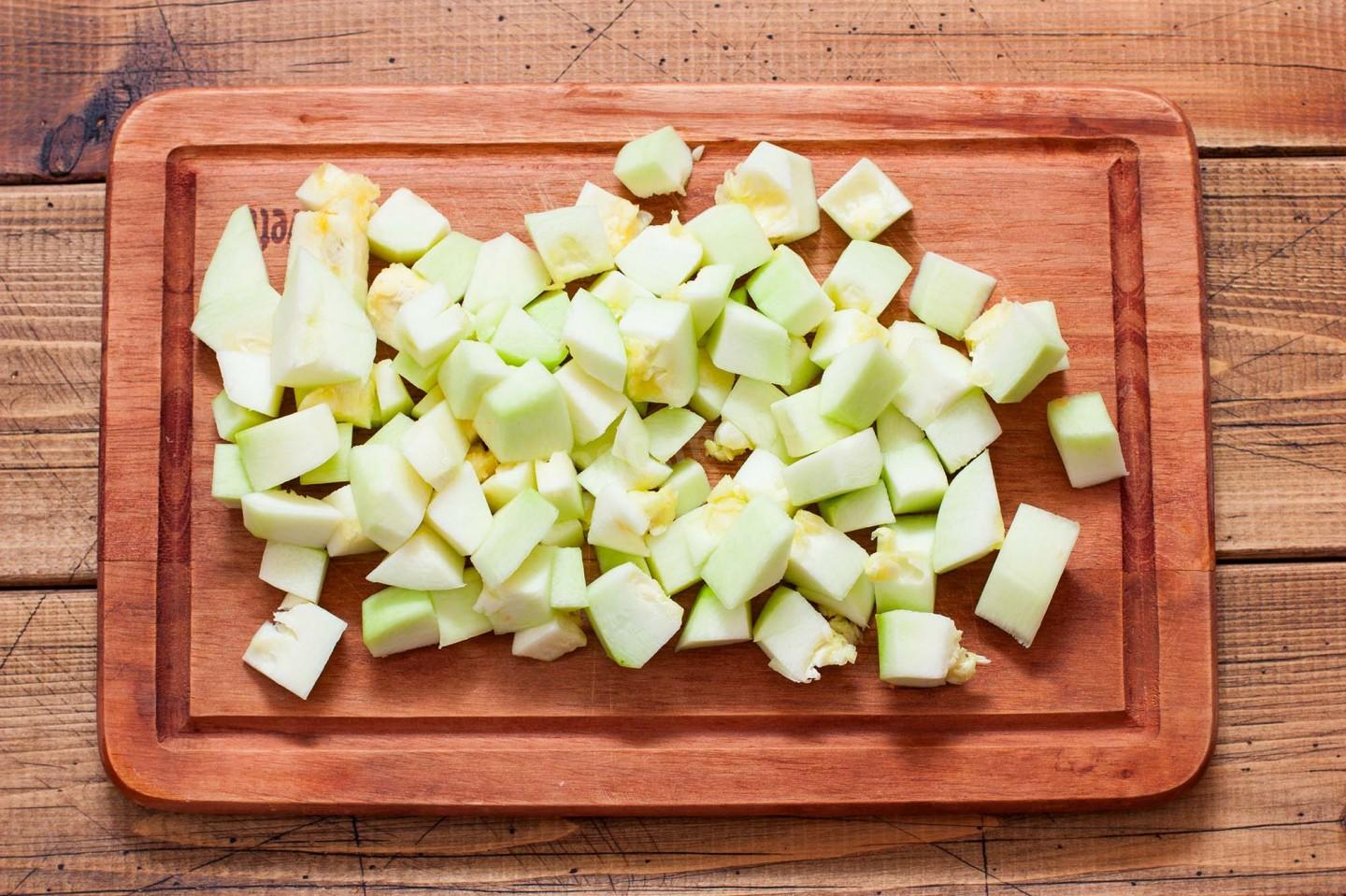
Wash the zucchini; peel it and scoop out the seeds if needed. Cut the zucchini into large cubes.
-
Step 3:
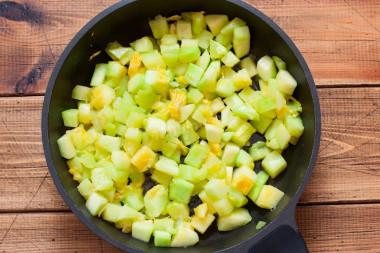
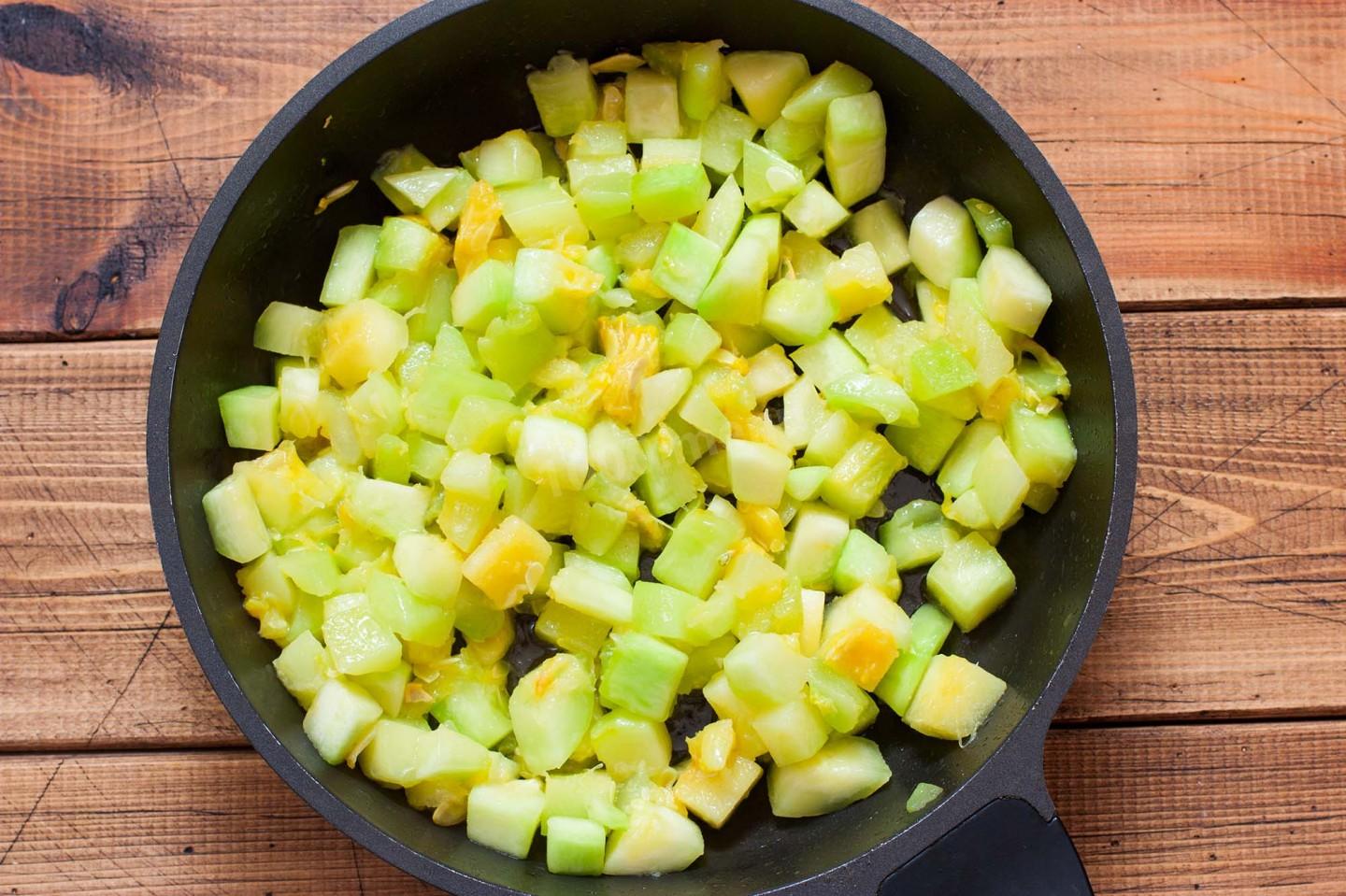
Heat a wide skillet over medium heat with a little oil. Add the diced zucchini and sauté it lightly, without letting it brown. Reduce the heat and cook until tender, stirring constantly. You can cover it with a lid.
-
Step 4:
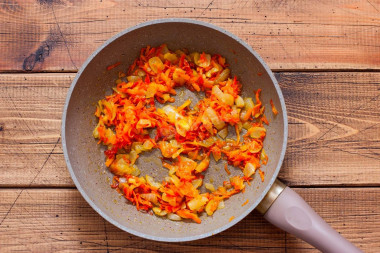
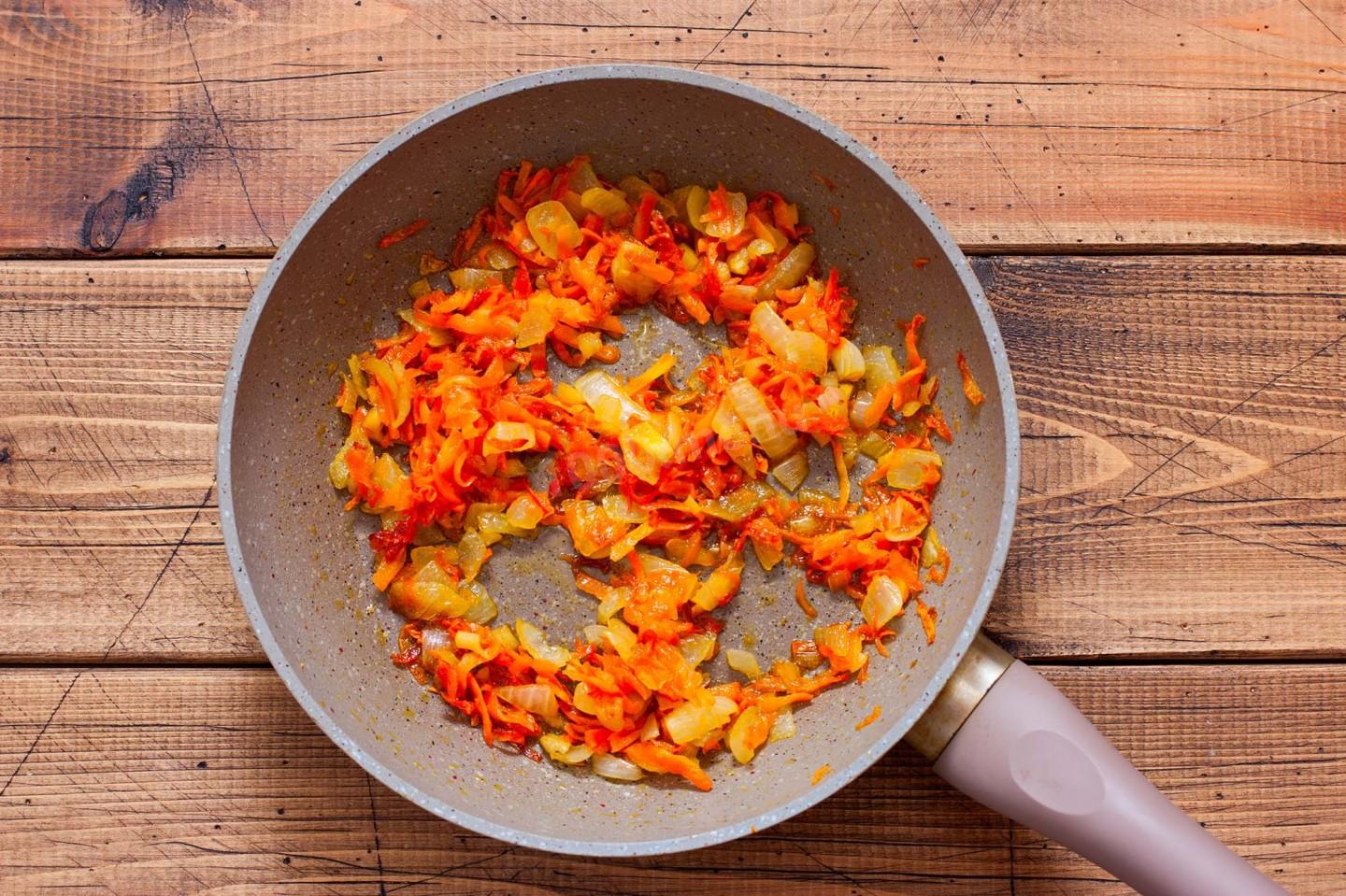
Peel and wash the onion, carrot, and parsley root. Chop the onion, and grate the carrot and parsley root on the coarse side of a box grater (whatever's easier). In a separate skillet, heat a little oil and cook the vegetables over medium heat until tender. Don't let them scorch or brown — it can affect the flavor of the finished dish. Keep stirring the root vegetables the whole time.
-
Step 5:

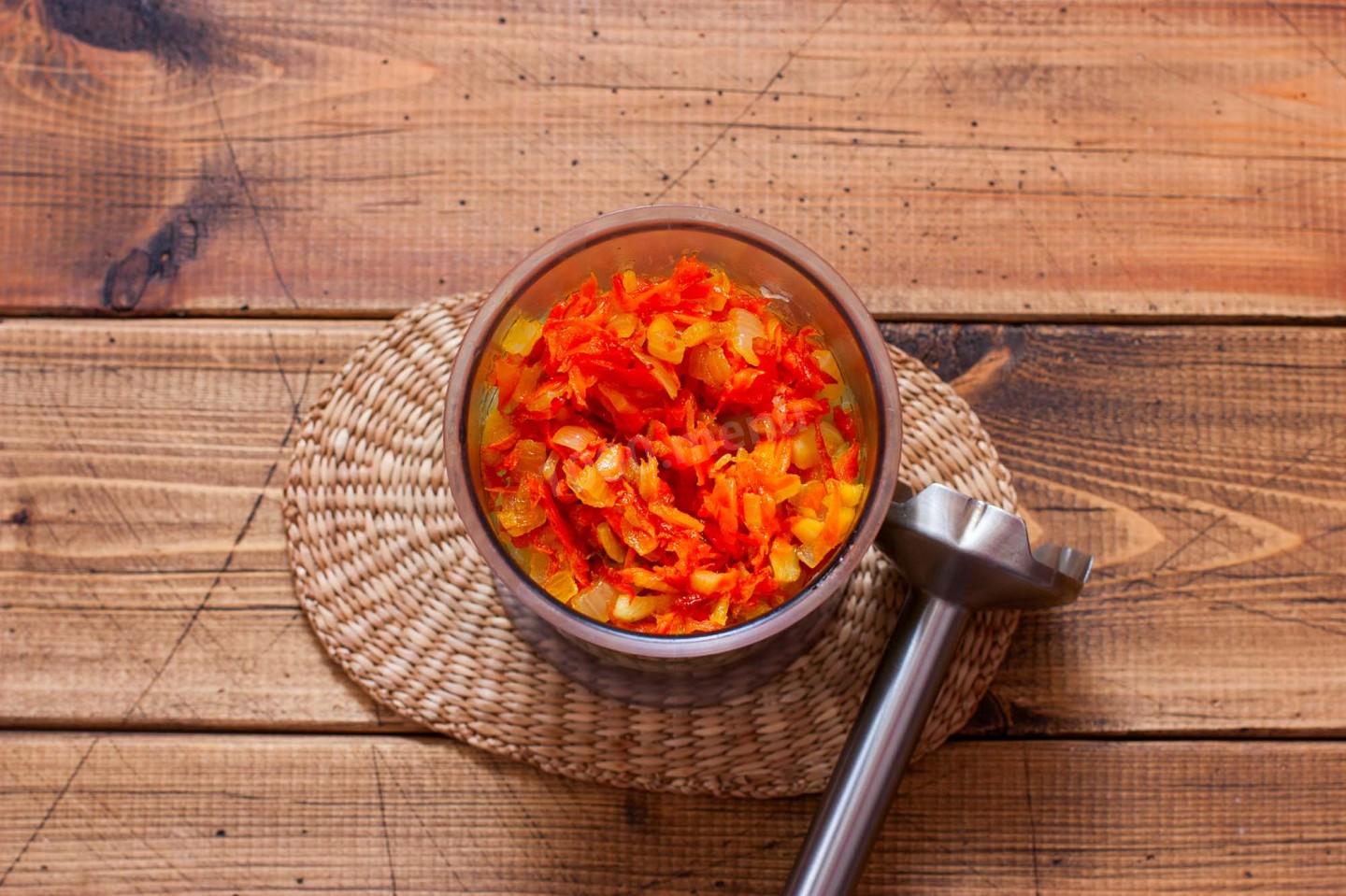
Put the cooked vegetables and the finely chopped fresh herbs (parsley, dill, celery) in a blender and purée. You can use either an immersion blender or a countertop one.
-
Step 6:

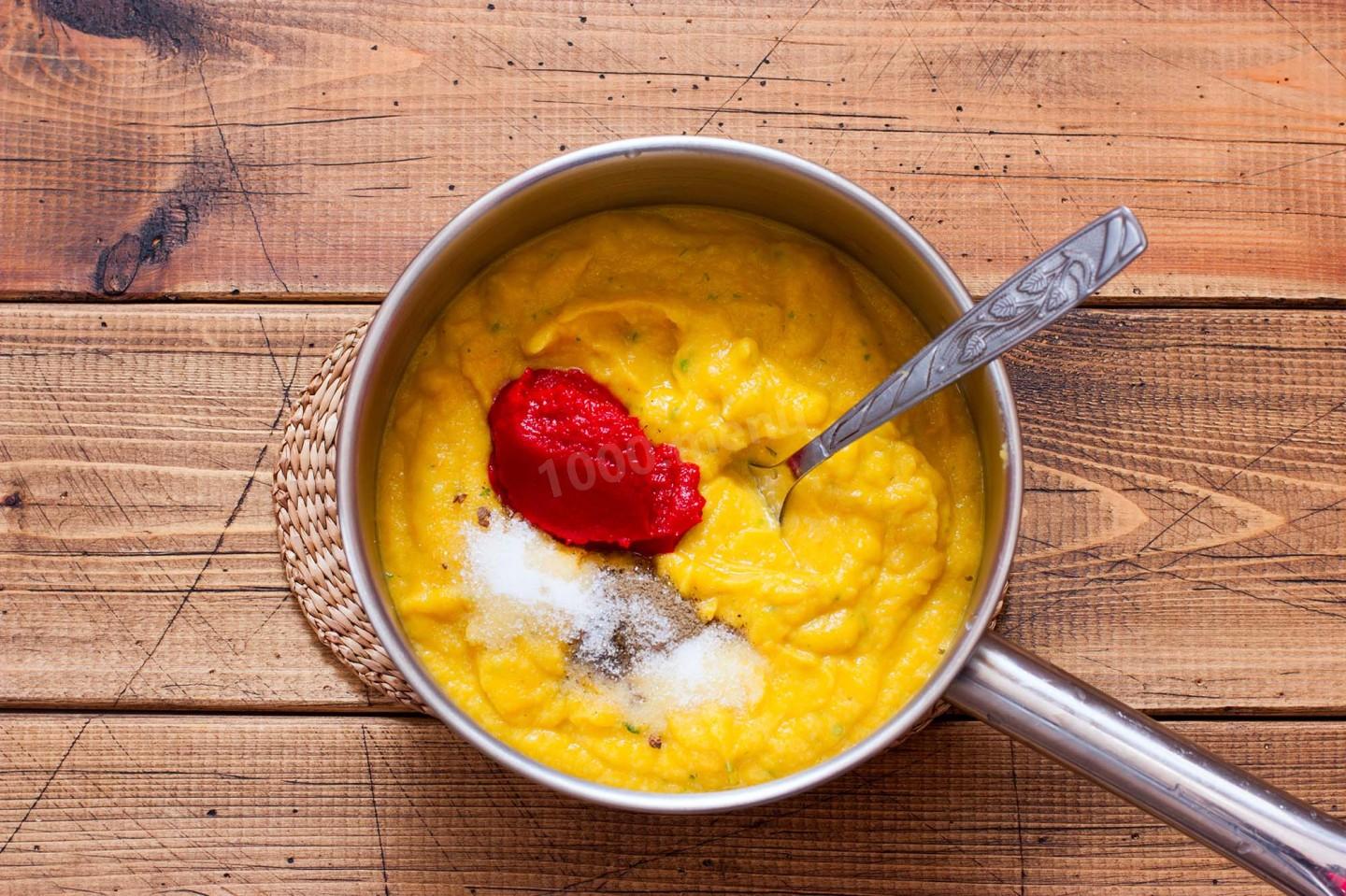
Stir the salt, sugar, ground pepper blend, and tomato paste into the vegetable purée. Warm it over low heat until the salt and sugar dissolve. Note: if the cooked vegetables shrank a lot from their starting volume, scale back the salt, sugar, and tomato paste. I'd suggest adding part of the salt, sugar, and paste first (if the volume dropped), tasting, and then deciding whether to add the rest.
-
Step 7:
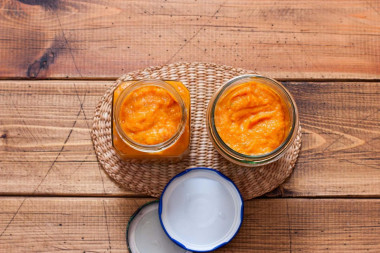
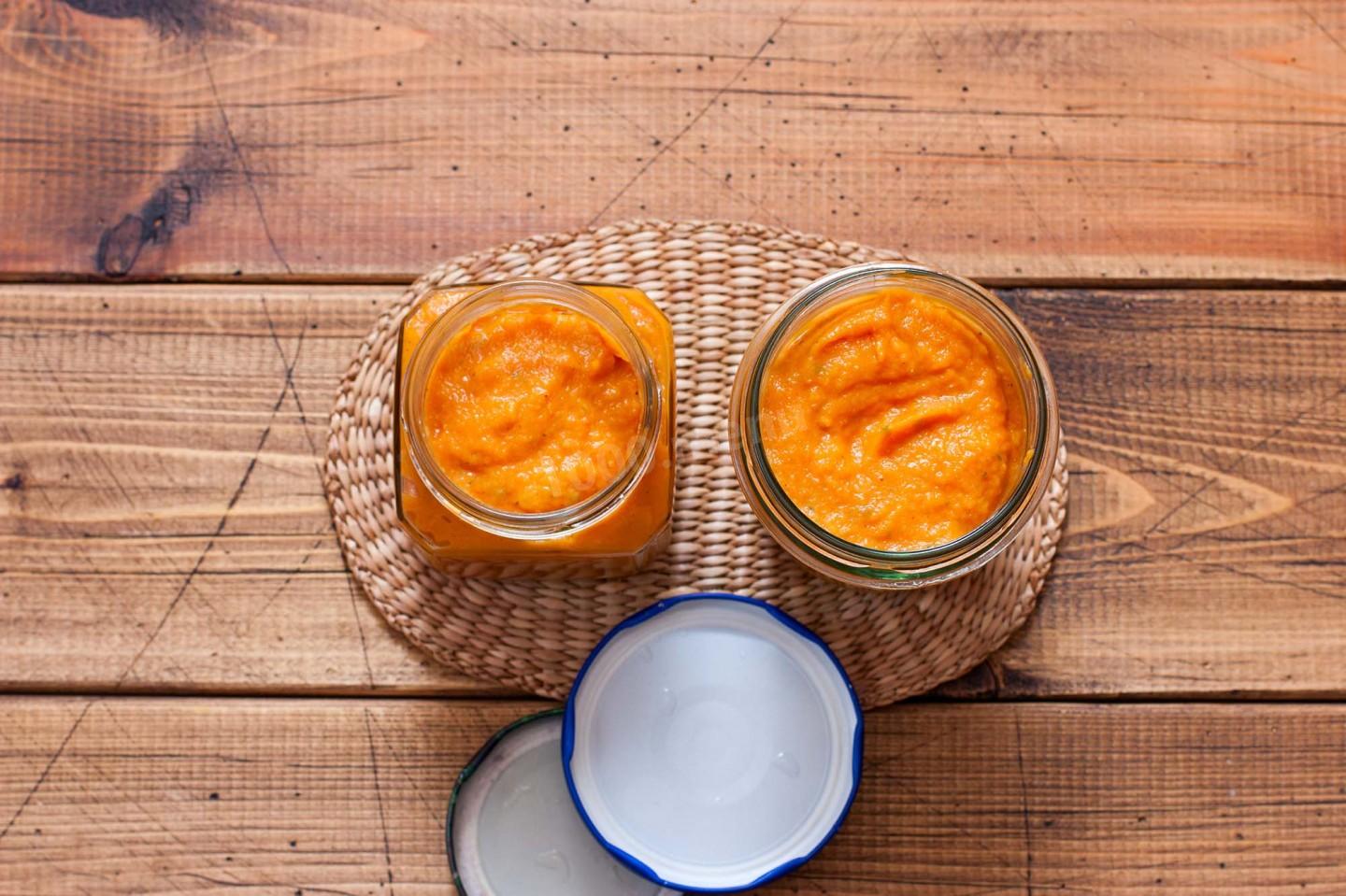
Spoon the finished spread, still warm (at least 160°F / 70°C), into jars you've sterilized by your preferred method (steam, oven, or microwave), and seal with sterilized lids. For longer storage, process the filled jars in a water bath: set the lid-covered jars in a pot of water and boil for a few minutes. Then seal the jars tightly, turn them upside down, wrap them up, and let them cool completely.
-
Step 8:
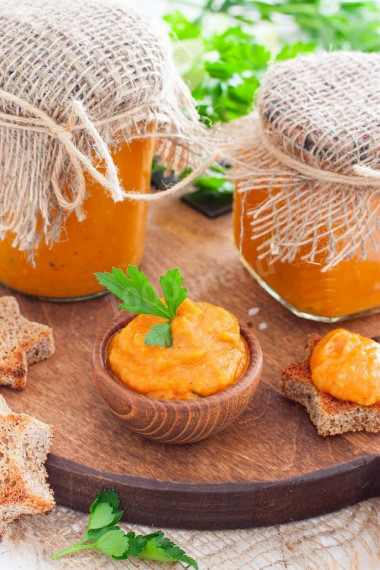
Let the finished spread rest — anywhere from 3 hours to a full day. Then serve it as a side dish, an appetizer, or a spread for sandwiches. Store the jars in a dark place at 32–54°F (0–12°C).
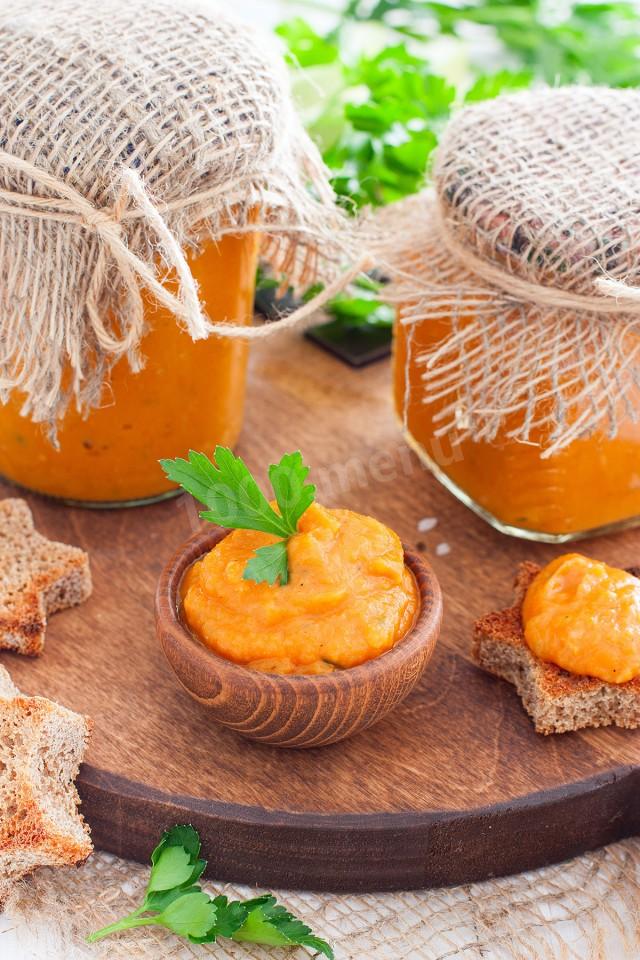
- This zucchini spread is put up for storage without any vinegar. Thanks to sterilizing the finished product, it keeps well for a long time. If you'd rather not risk it without vinegar, you can add 1 tbsp of vinegar in step 7 and skip the water-bath sterilizing of the filled jars. Keep in mind, though, that the vinegar will affect the overall flavor.
- For how to figure out how many jars you'll need, why jars sometimes burst and how to avoid it, plus more tips and tricks, see our article on putting up preserves for the winter.
Caloric content of the products possible in the composition of the dish
- Zucchini - 23 kcal/100g
- Carrots - 33 kcal/100g
- Dried carrots - 275 kcal/100g
- Boiled carrots - 25 kcal/100g
- Ground black pepper - 255 kcal/100g
- Granulated sugar - 398 kcal/100g
- Sugar - 398 kcal/100g
- Vegetable oil - 873 kcal/100g
- Tomato paste - 28 kcal/100g
- Salt - 0 kcal/100g
- Onion - 41 kcal/100g
- Fresh frozen soup greens in a package - 41 kcal/100g
- Greenery - 41 kcal/100g
- Parsley root - 49 kcal/100g
- Allspice - 263 kcal/100g