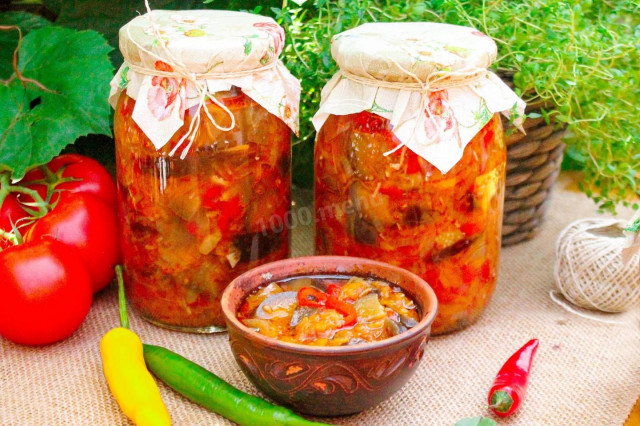
Eggplant in Adjika for Winter
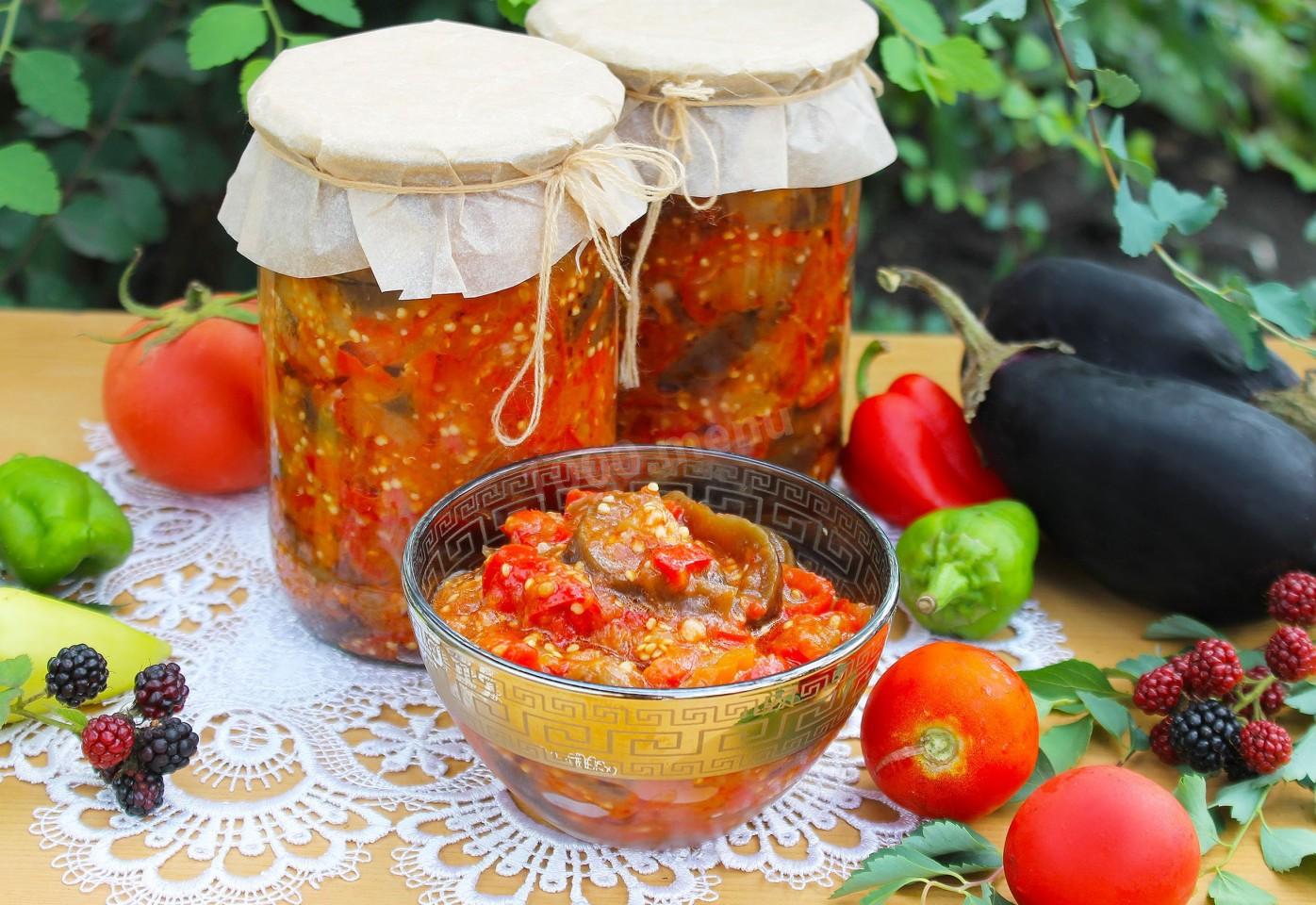
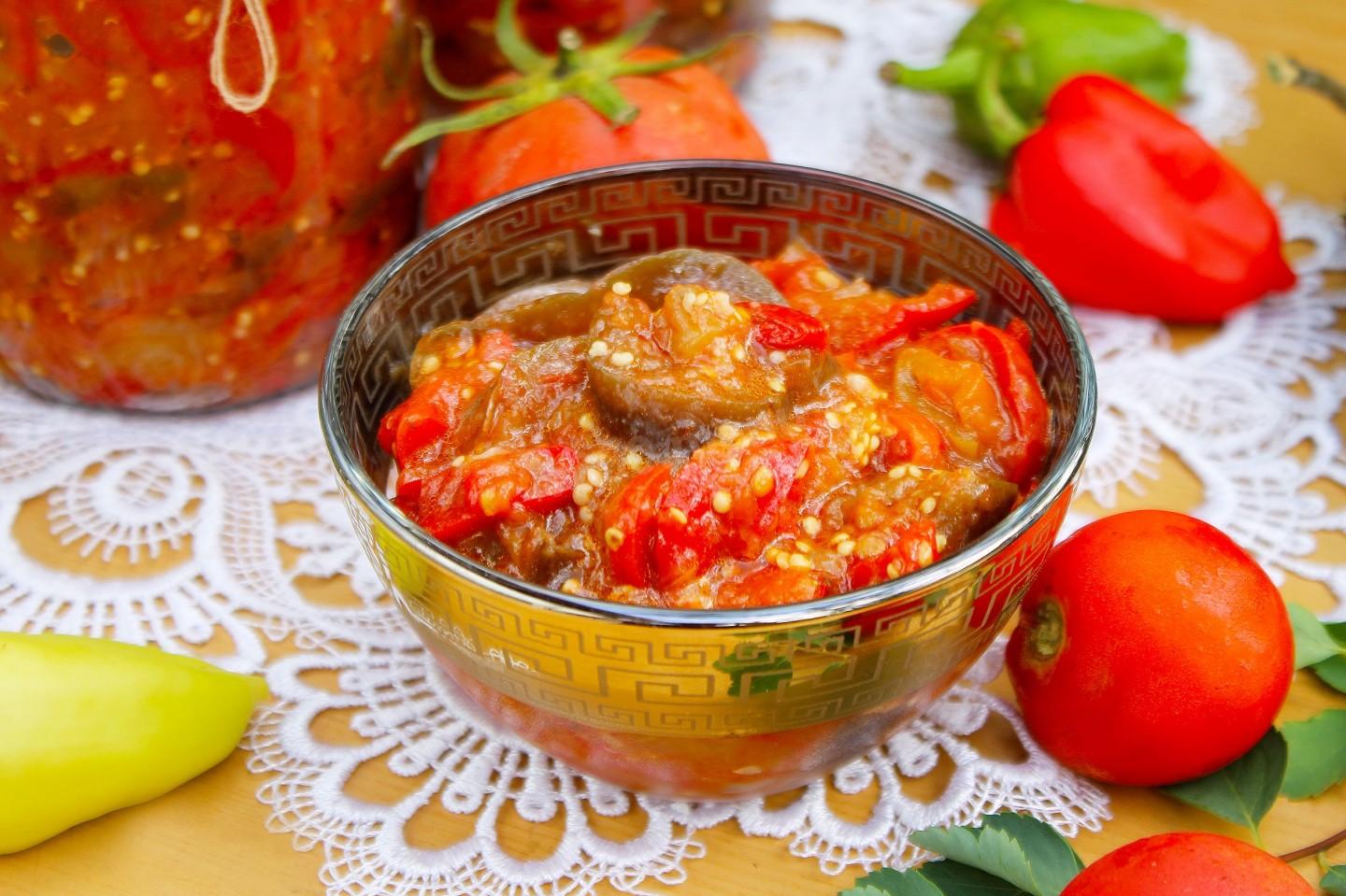
A superb vegetable relish for true food lovers! Eggplant in adjika is a wonderful sweet-and-sour vegetable preserve for the winter. On a cold evening, open a jar to go with fried potatoes or meat, or enjoy it on its own. Treat yourself and your family to an unbeatable flavor!

Cooking method
-
Step 1:
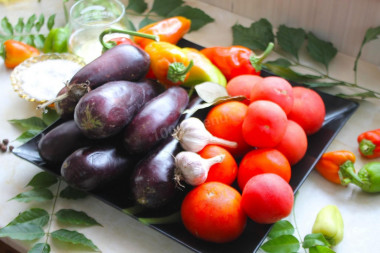
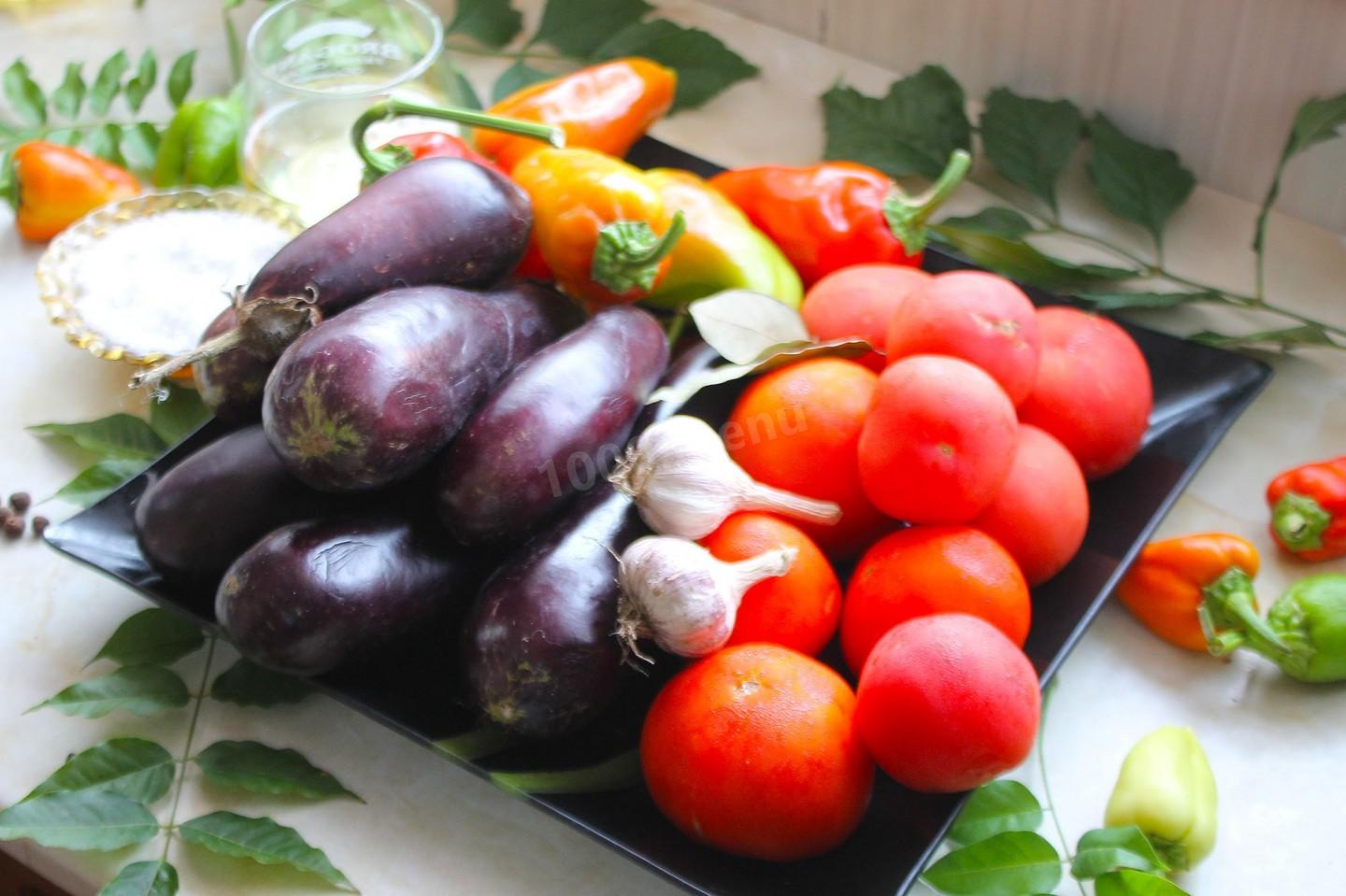
How do you can eggplant in adjika for winter? Gather all the ingredients from the recipe list. Seasonal vegetables are best — they make the finished eggplant especially tasty and fragrant. Wash the vegetables and pat them dry.
-
Step 2:
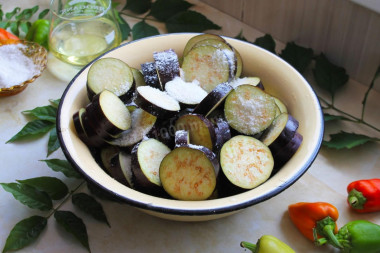
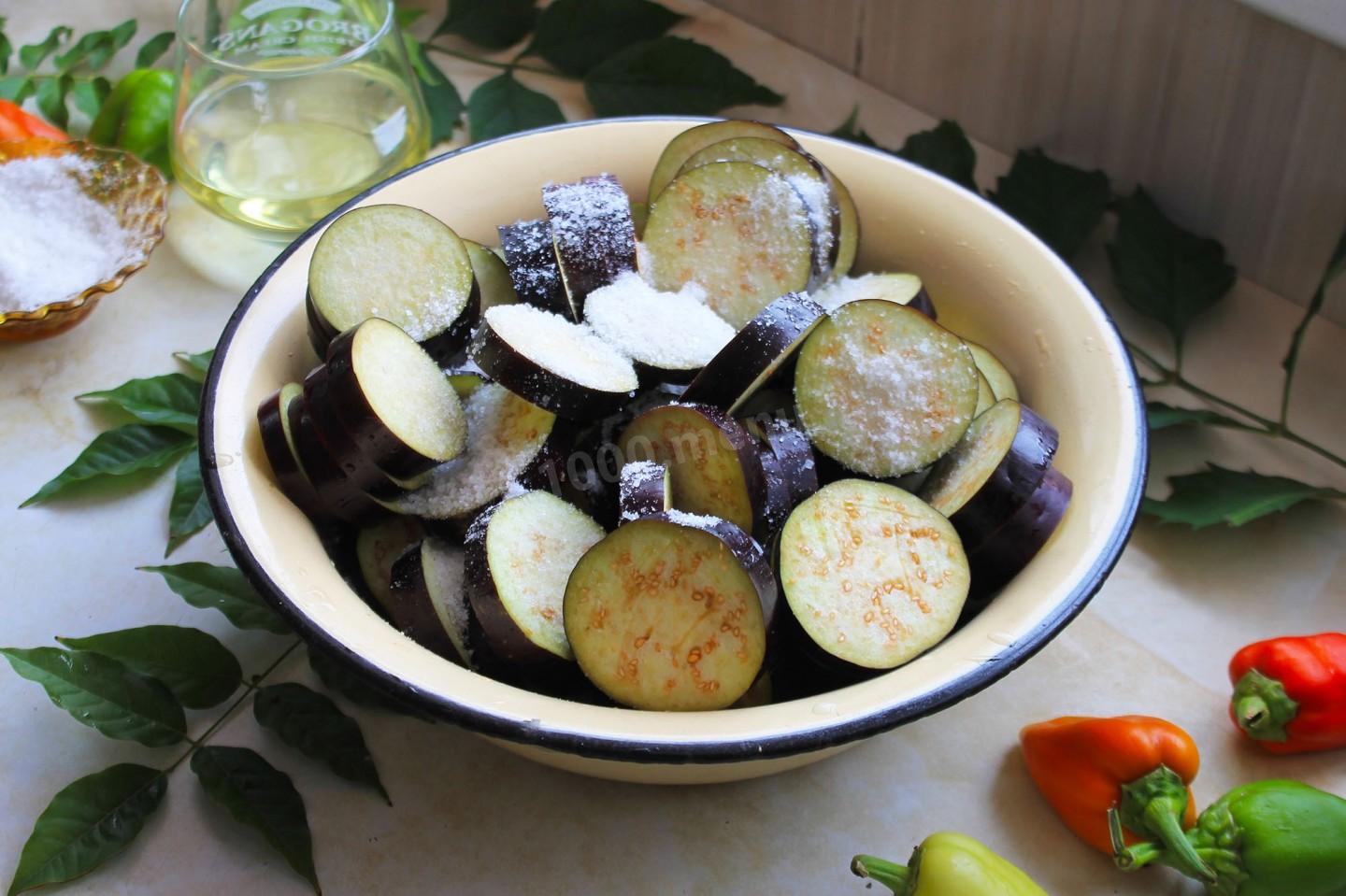
Cut the eggplant into rounds 1/4 to 1/2 inch thick. Sprinkle them with salt (about 1 level tablespoon), toss so the salt spreads evenly over all the rounds, and let them sit for 10–20 minutes. The salt draws out the bitterness. Some eggplant varieties aren't bitter, in which case you can skip the salting.
-
Step 3:
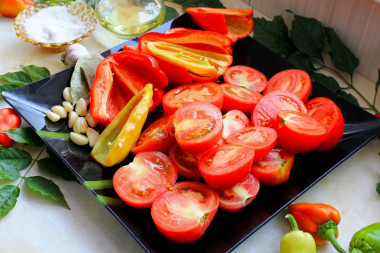
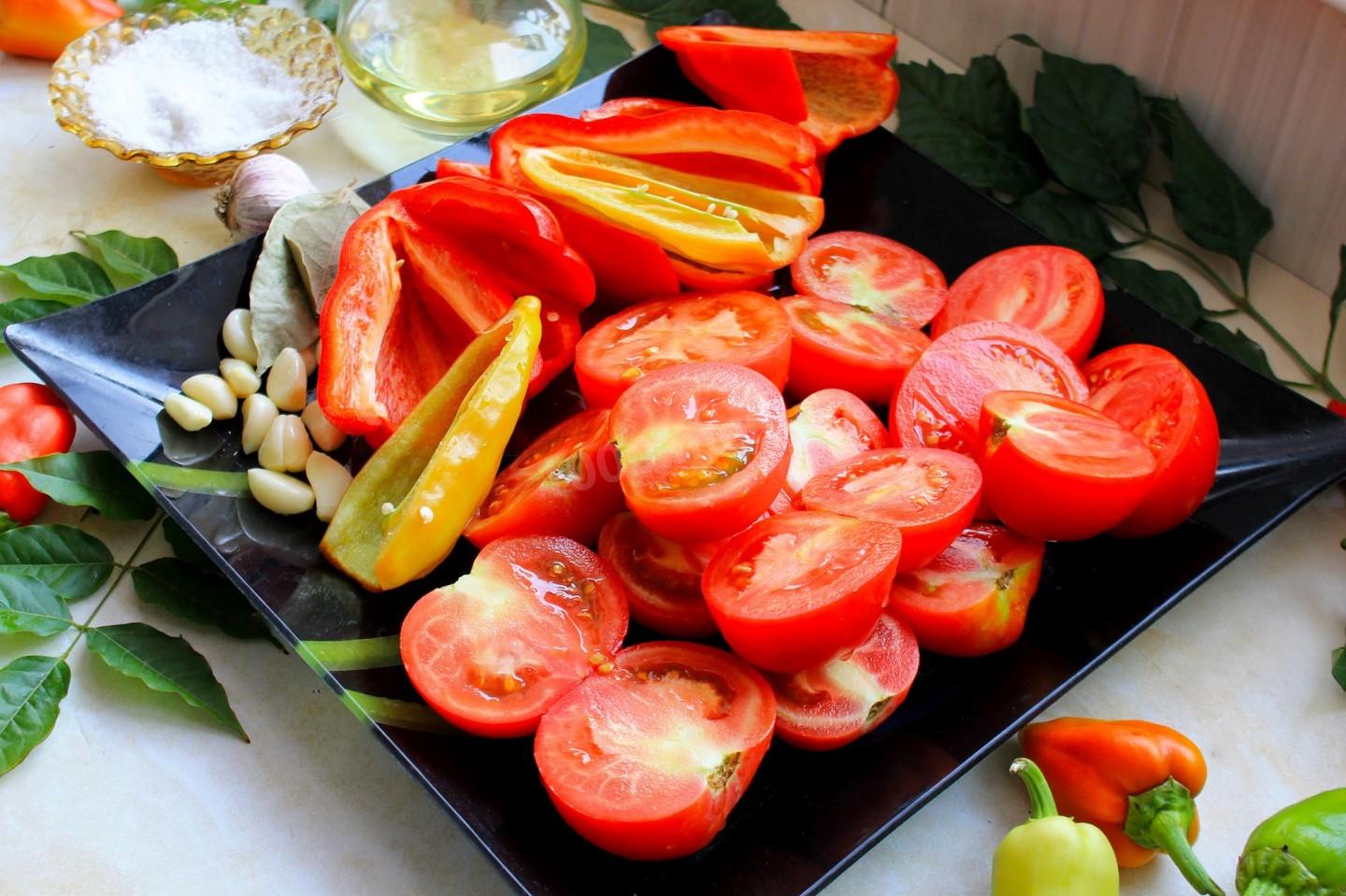
Halve the bell peppers and remove the cores, seeds, and any white ribs. Cut the tomatoes into halves or quarters. Peel the garlic — use more or less to taste.
-
Step 4:
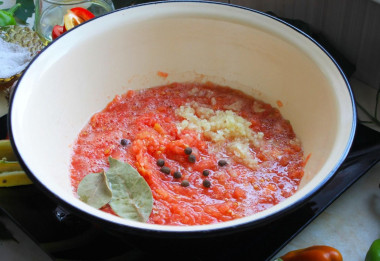
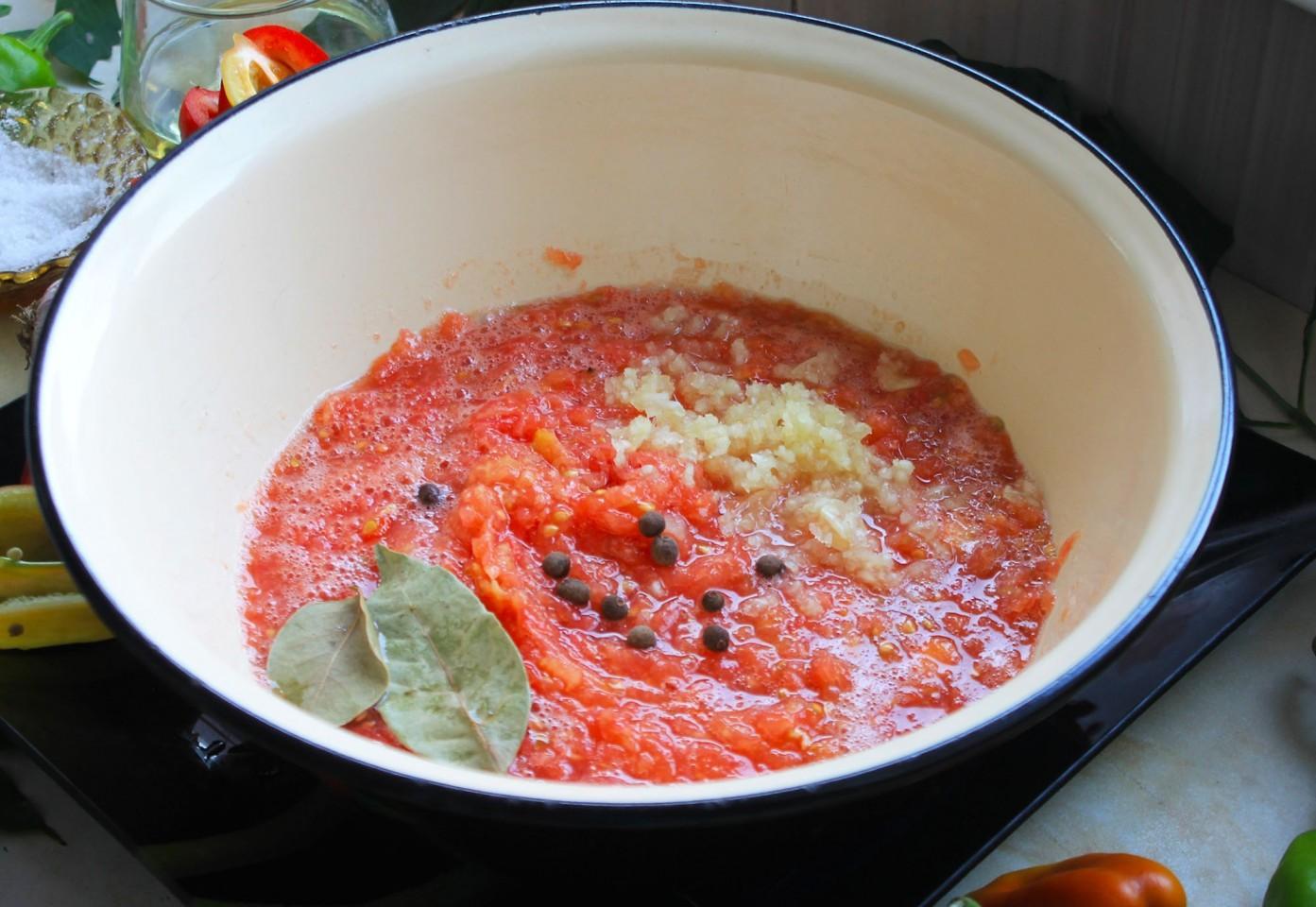
Run the tomatoes through a meat grinder or blend them into a smooth purée. Pour the tomato mixture into a pot or large bowl. Add the minced garlic, bay leaf, and peppercorns. If you're using chile pepper, add it now. Bring everything to a boil on the stove, then lower the heat and simmer the tomatoes for about 20 minutes, stirring so nothing scorches.
-
Step 5:
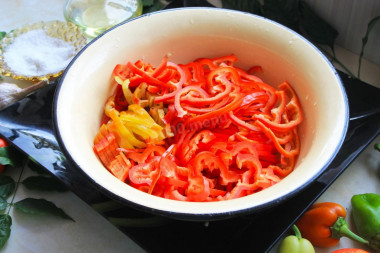
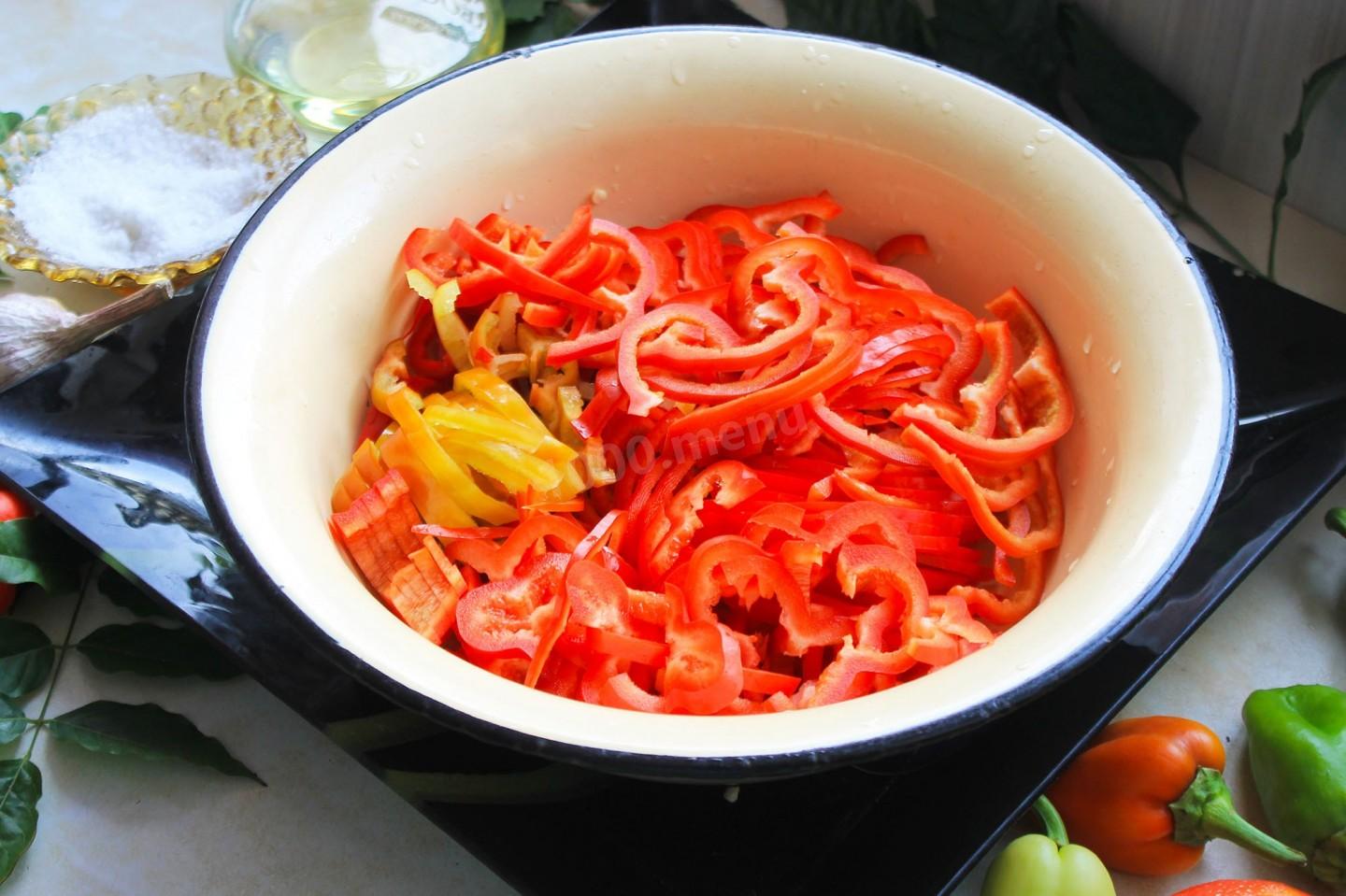
Meanwhile, cut the bell peppers into thin strips.
-
Step 6:
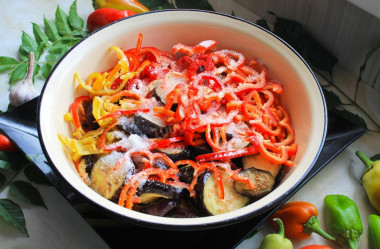
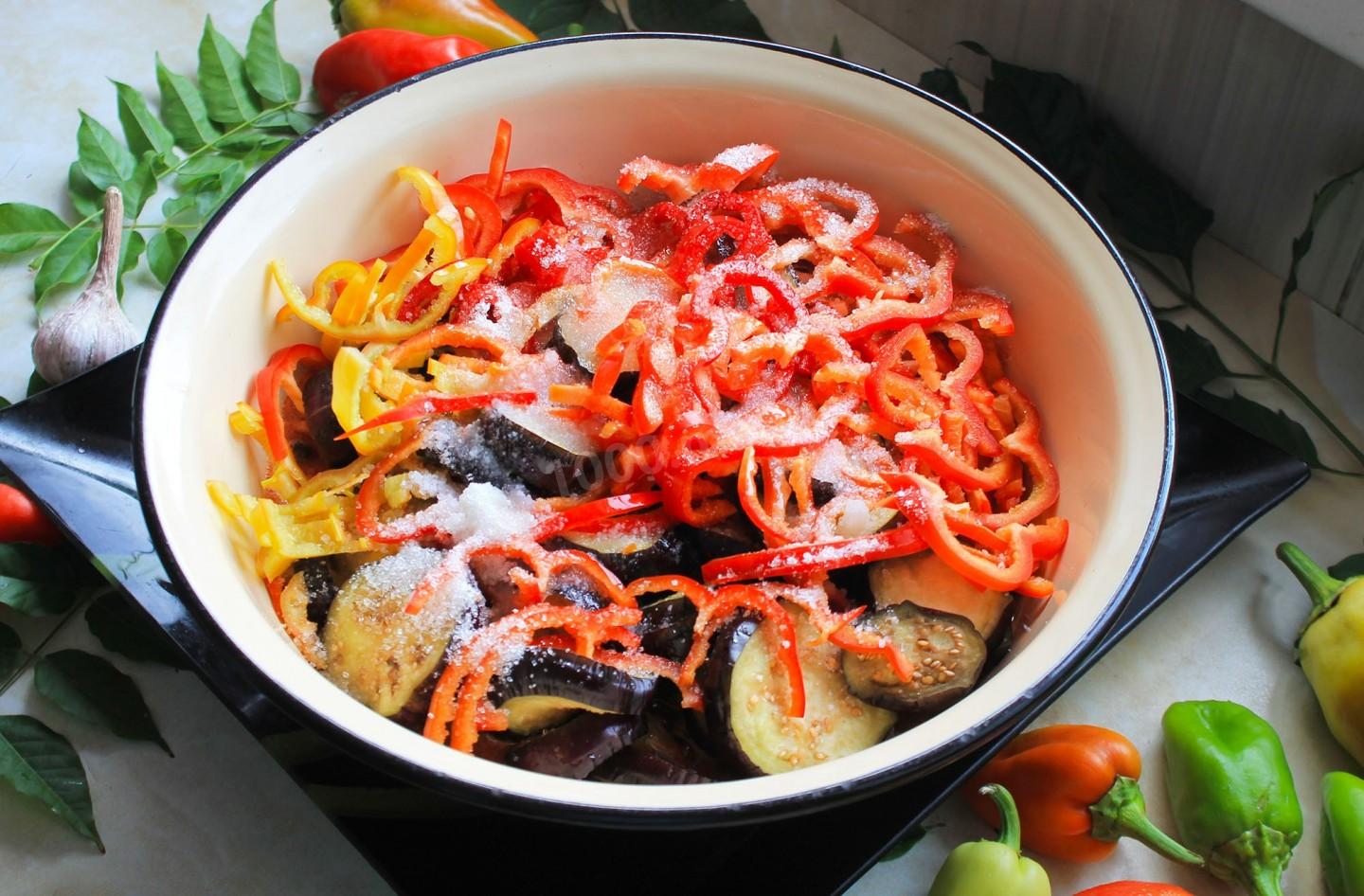
Rinse the eggplant thoroughly in cold water to wash off all the salt. Squeeze out the excess water and add the rounds to the tomatoes. Then add the bell pepper, sugar, vegetable oil, and salt. Turn the heat up.
-
Step 7:
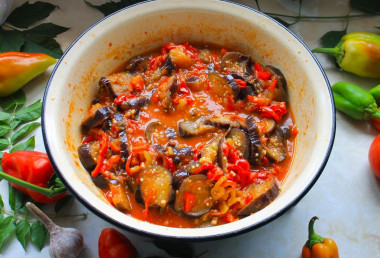
Stir everything well. Once it comes back to a boil, lower the heat a bit and simmer the vegetables for about 30–40 minutes. Keep an eye on it so it doesn't scorch, stirring the eggplant now and then. Pour in the vinegar and cook for another 1–2 minutes. Taste for salt and sugar and adjust if needed.
-
Step 8:
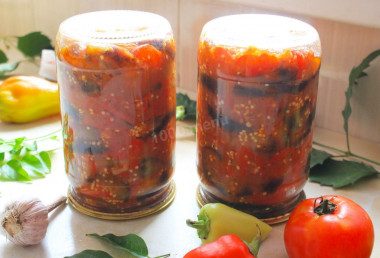
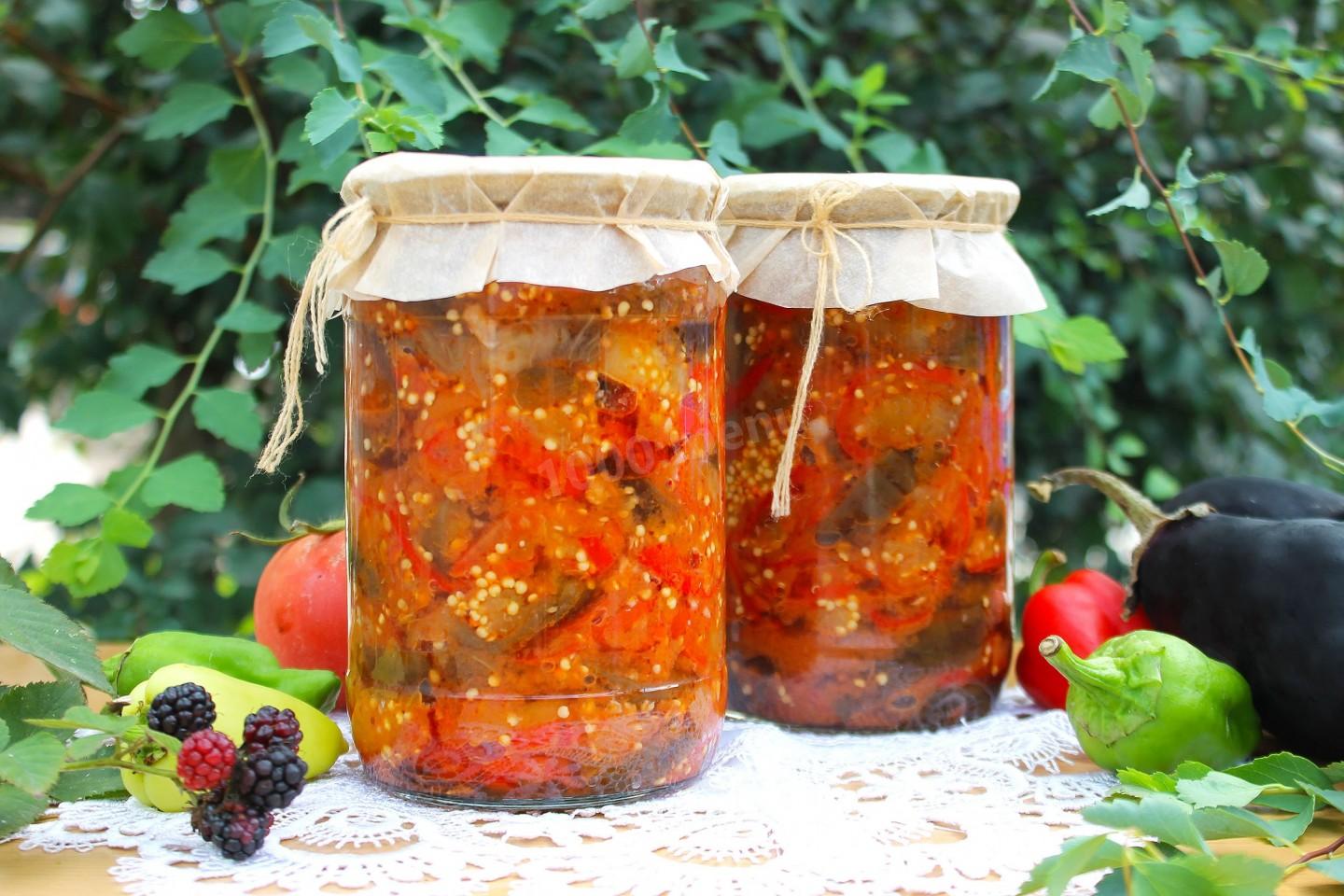
Ladle the eggplant in adjika into sterile jars and seal with sterilized lids. Turn the jars upside down, wrap them in a warm blanket, and leave until completely cooled.
-
Step 9:
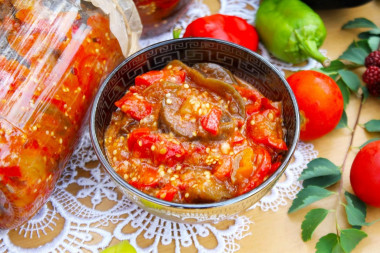
Your delicious eggplant in adjika is ready for winter!
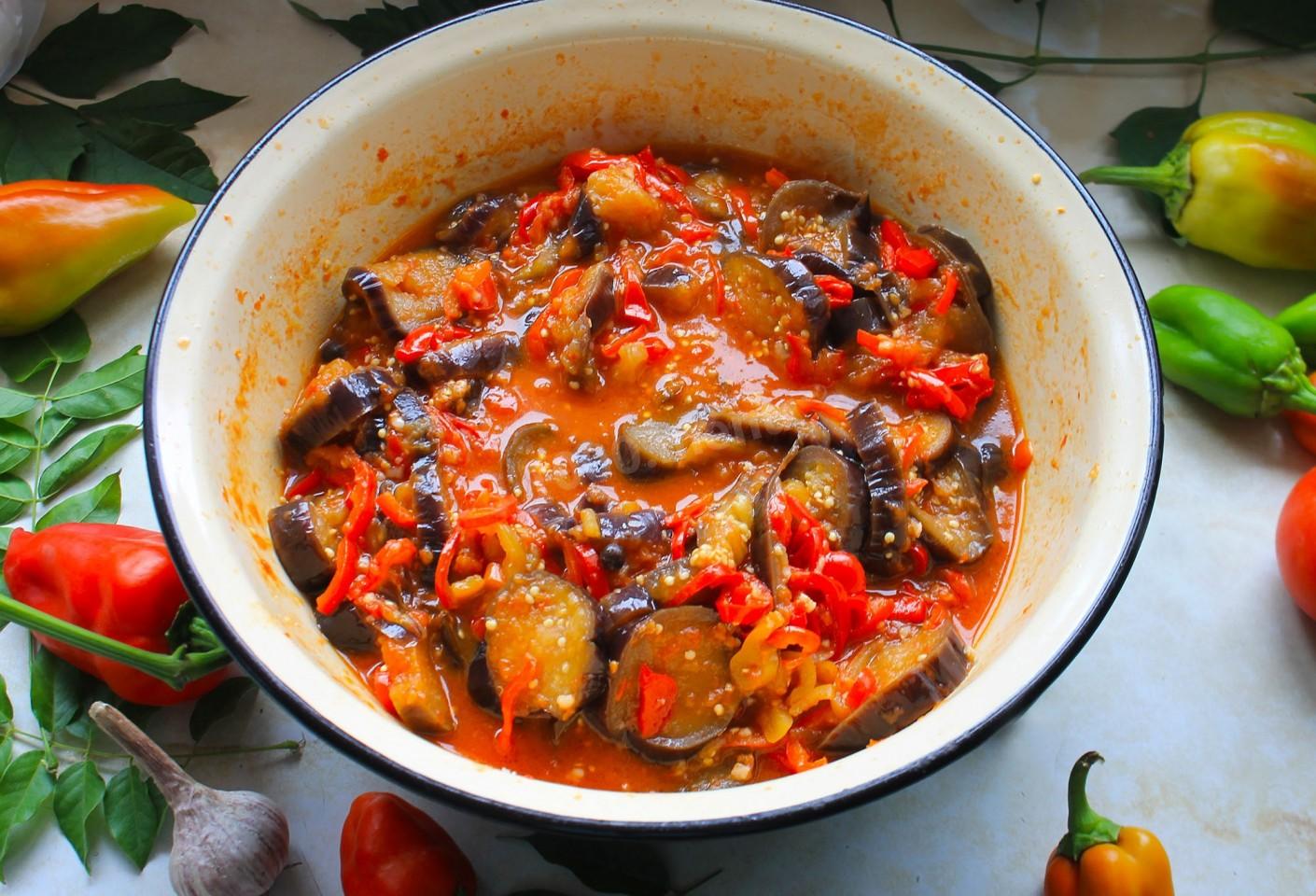
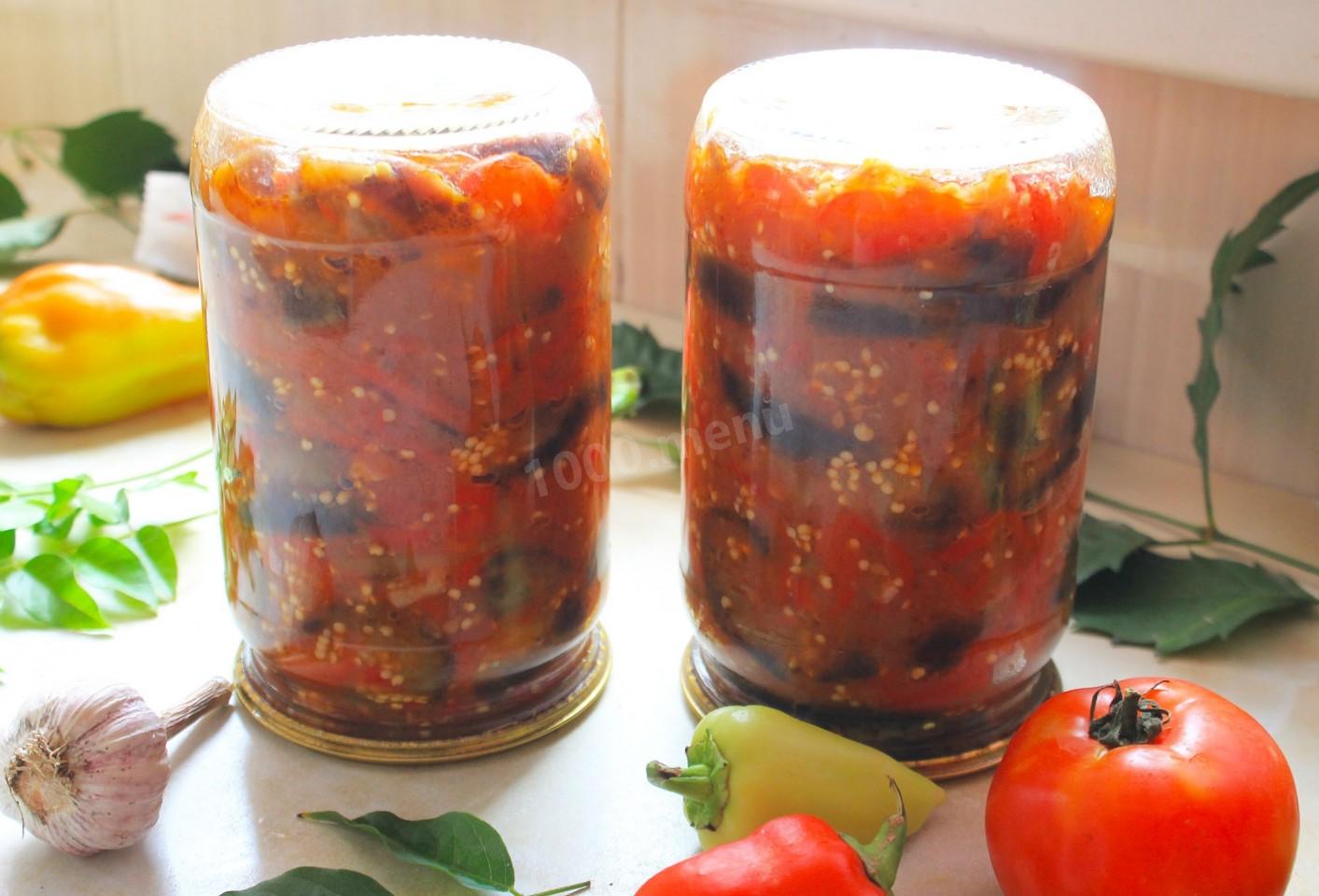
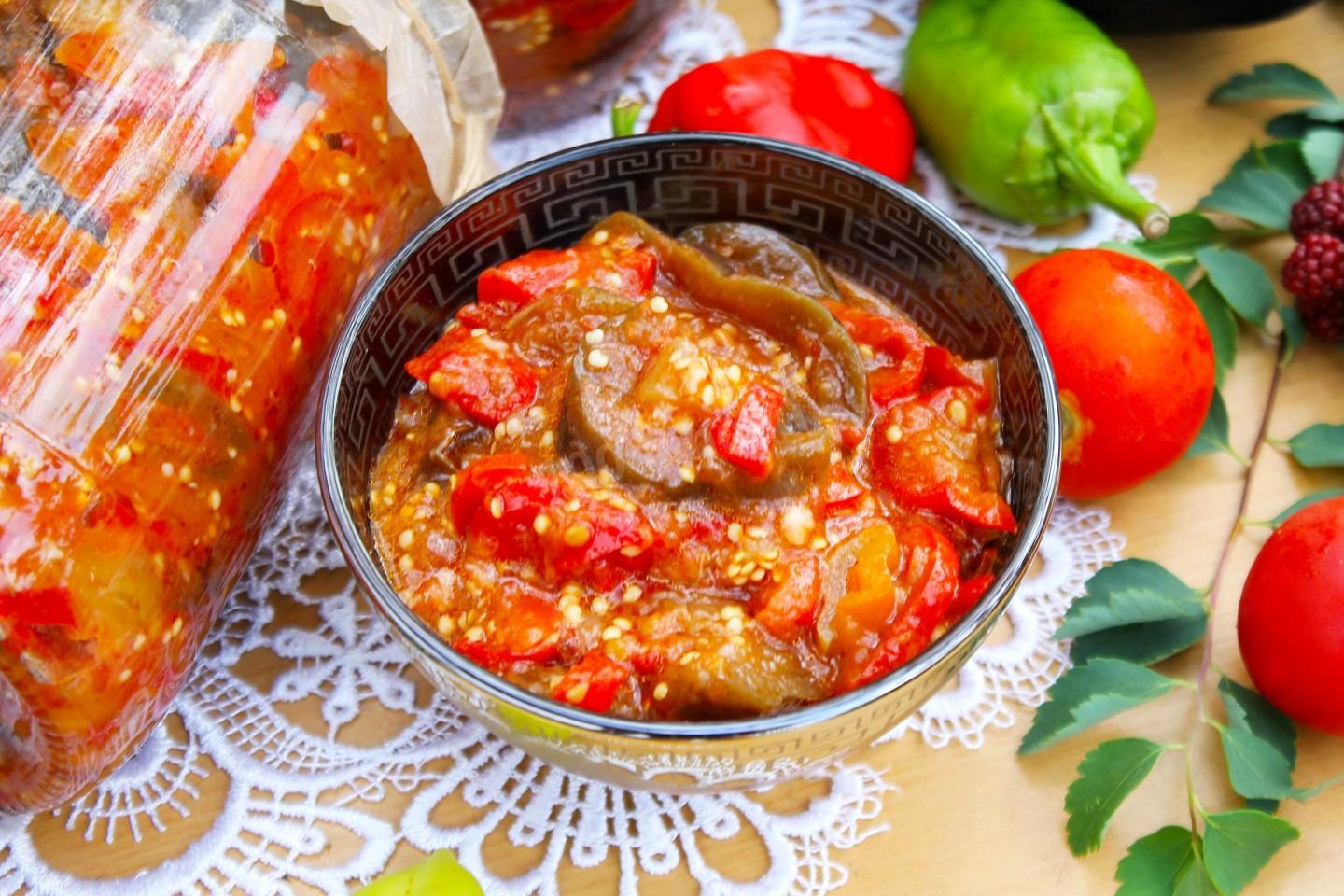
- From this amount, I got two 700 ml jars plus a small dish to sample. Store the jars in a cool, dark place. Enjoy!
- For how to figure out how many jars you'll need, why jars sometimes burst and how to prevent it, plus other tips and tricks, see the article on canning for winter.
- Because everyone's threshold for salt, sweetness, bitterness, heat, and acidity is different, always add spices and seasonings to your own taste. If you're using one for the first time, remember that some are especially easy to overdo (chili, for example).
Caloric content of the products possible in the composition of the dish
- Tomatoes - 23 kcal/100g
- Sweet pepper - 27 kcal/100g
- Eggplant - 24 kcal/100g
- Garlic - 143 kcal/100g
- Bay leaf - 313 kcal/100g
- Granulated sugar - 398 kcal/100g
- Sugar - 398 kcal/100g
- Wine vinegar (3%) - 9 kcal/100g
- Vinegar 9% - 11 kcal/100g
- Balsamic vinegar - 88 kcal/100g
- Apple vinegar - 14 kcal/100g
- Vinegar - 11 kcal/100g
- Vegetable oil - 873 kcal/100g
- Hot capsicum - 40 kcal/100g
- Salt - 0 kcal/100g
- Allspice - 263 kcal/100g