Pork with Eggplant in a Skillet
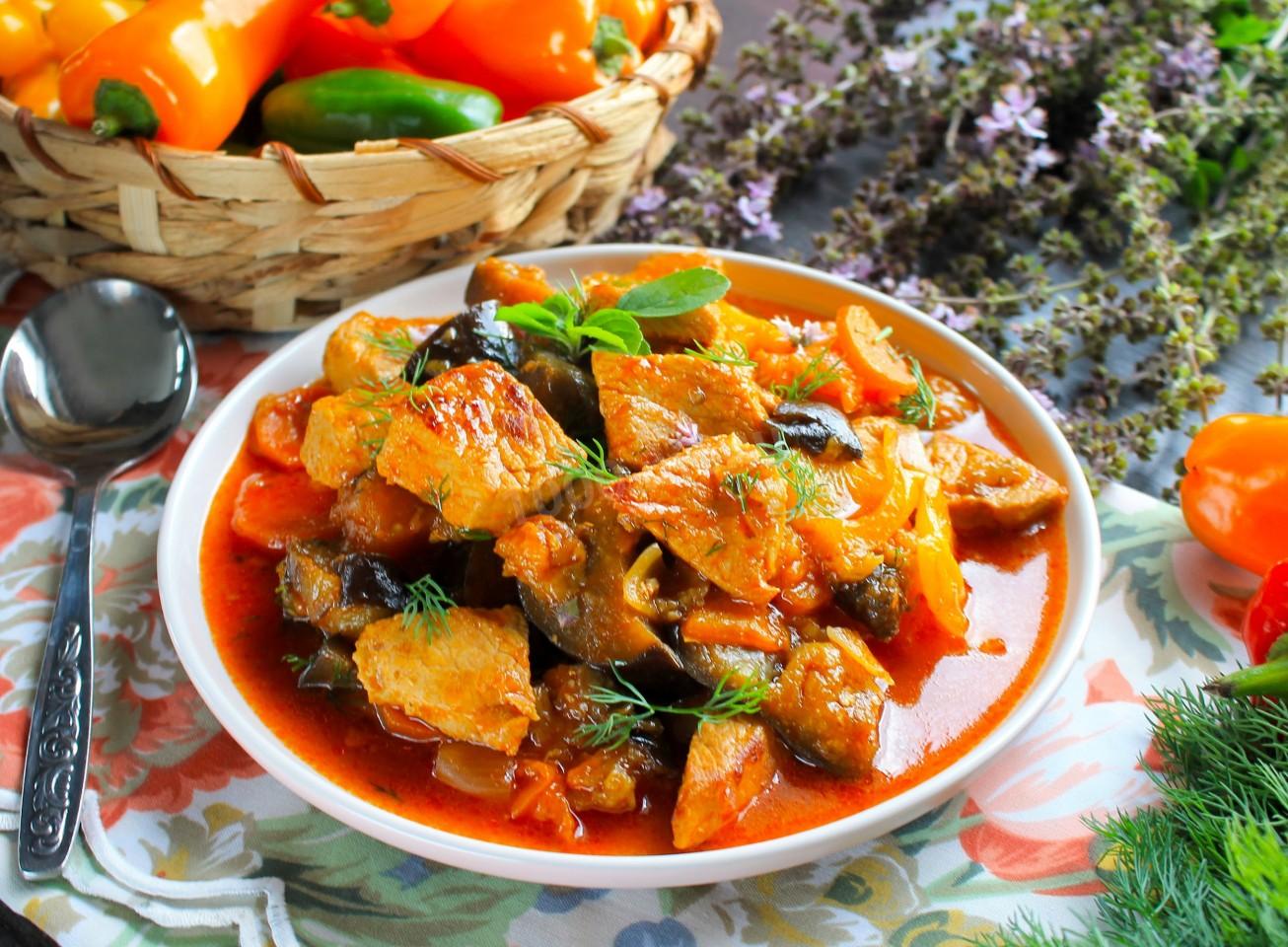
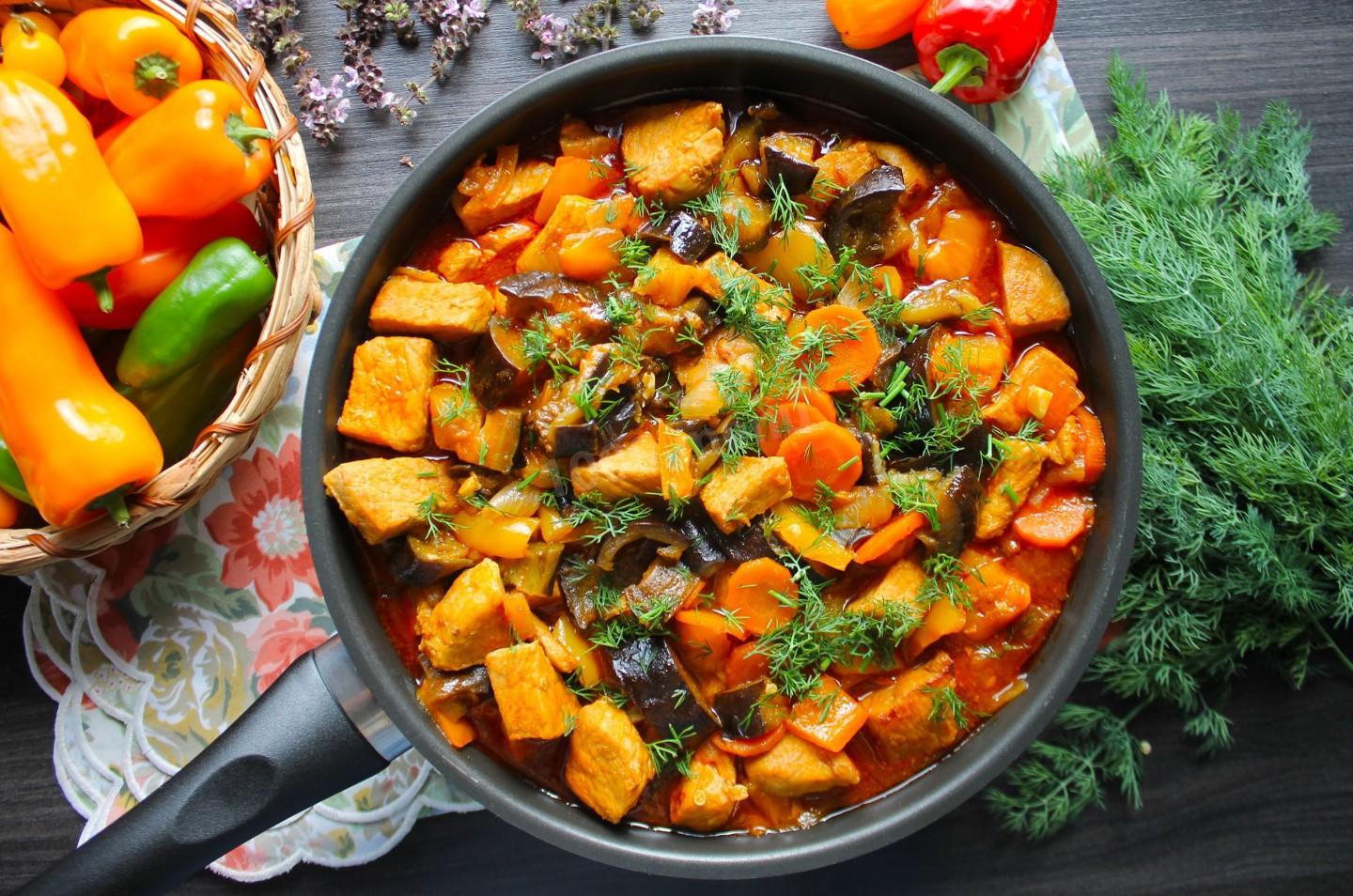
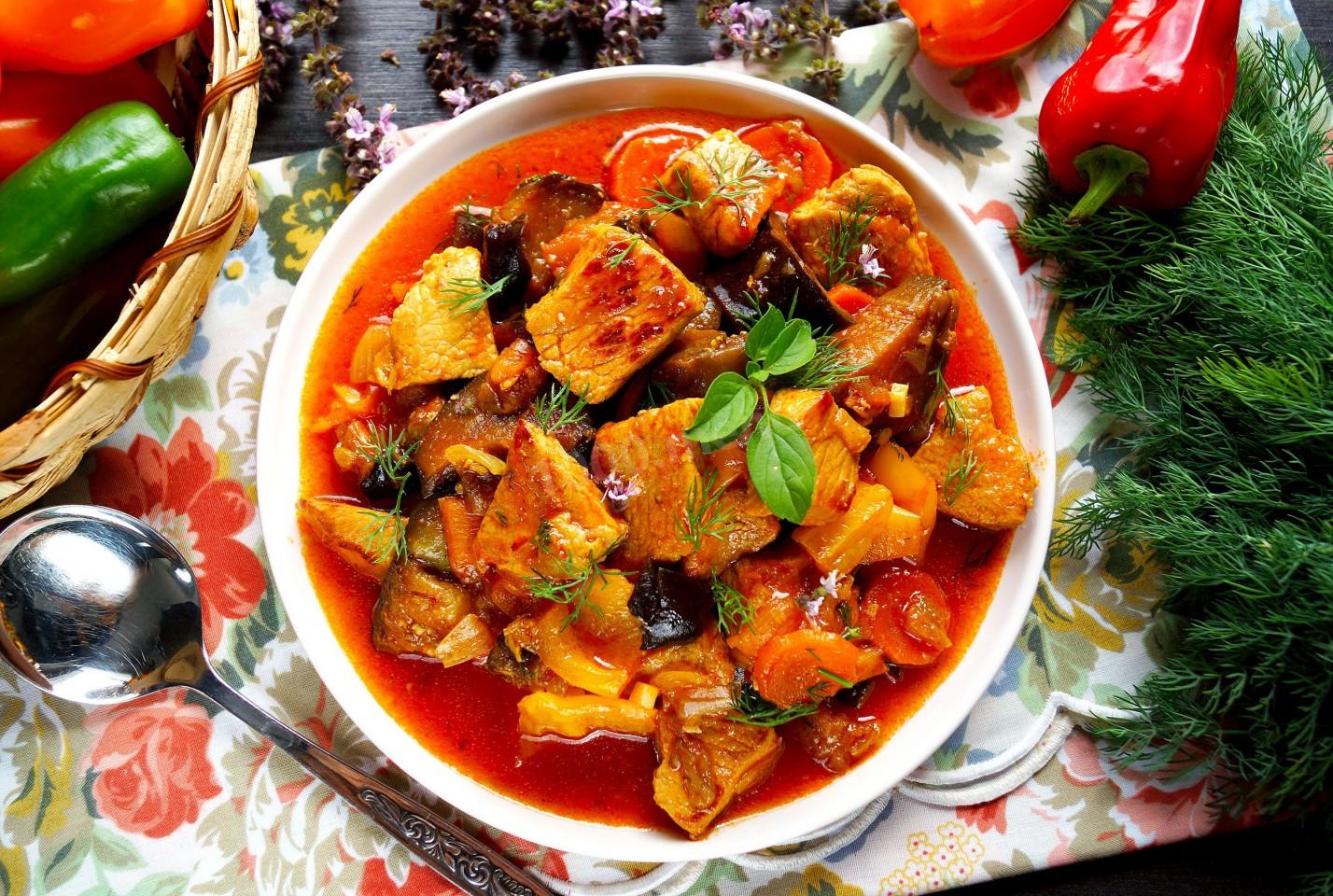
Juicy, incredibly tasty meat in a thick vegetable gravy! Skillet pork with eggplant is a great choice for an everyday family menu. Serve this hearty, fragrant dish as is with a fresh salad, or alongside cooked buckwheat, rice, pasta, or potatoes.

Cooking method
-
Step 1:
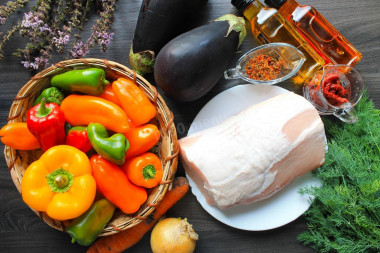
How do you make skillet pork with eggplant? Gather all the ingredients from the recipe. Which cut is best? The neck (shoulder) is ideal, but any cut works. I used boneless loin. Rinse the meat in clean water and pat it dry with paper towels.
-
Step 2:
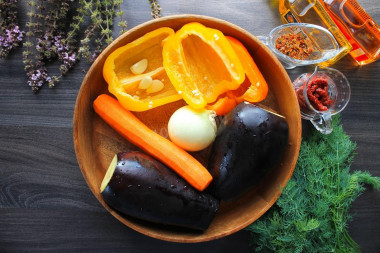
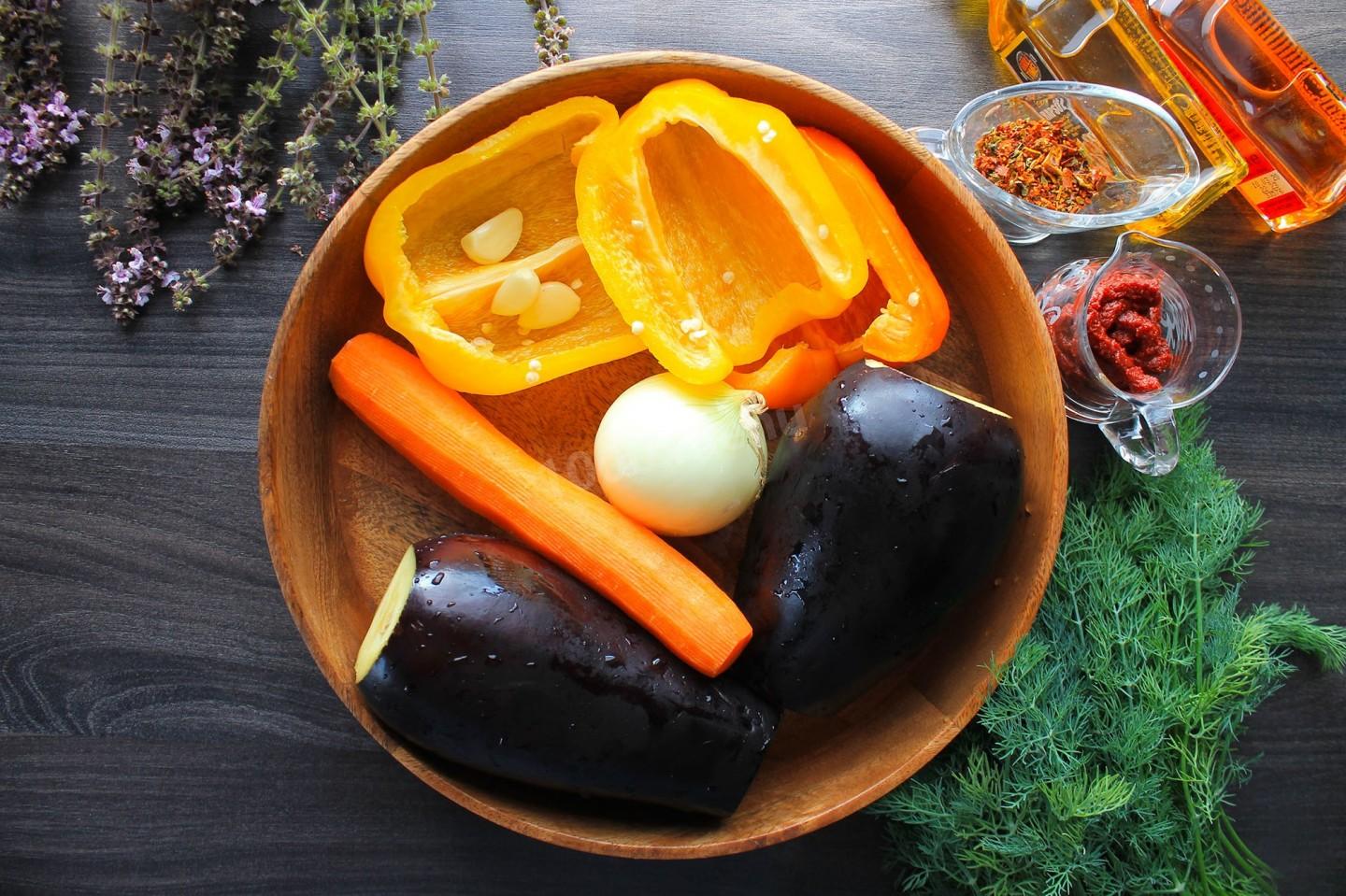
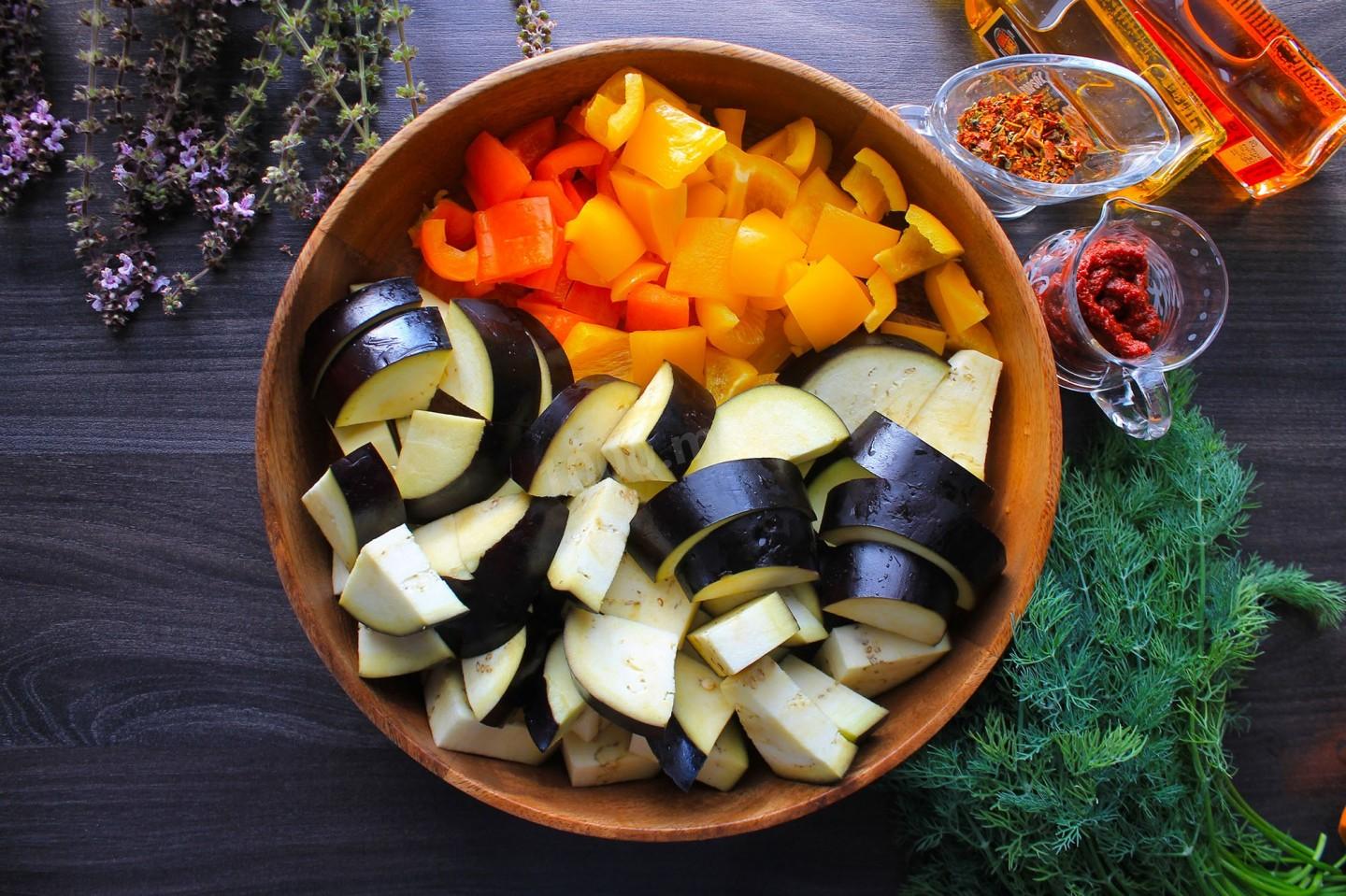
Peel the carrot, onion, and garlic, and wash all the vegetables. Halve the bell peppers and remove the cores and seeds. Trim the stem ends off the eggplant.
-
Step 3:
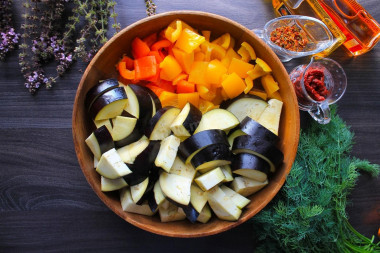
Cut the eggplant into large chunks. If your variety tends to be bitter, sprinkle the pieces with a little salt, toss, and let them sit for 15–20 minutes, then rinse and pat dry (I skipped this step). Cut the bell peppers into large cubes — using peppers of different colors makes the finished dish look bright and appetizing.
-
Step 4:
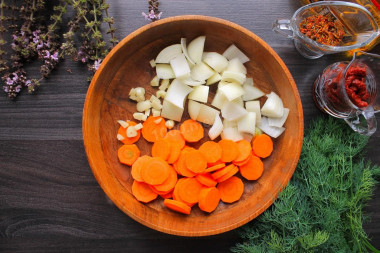
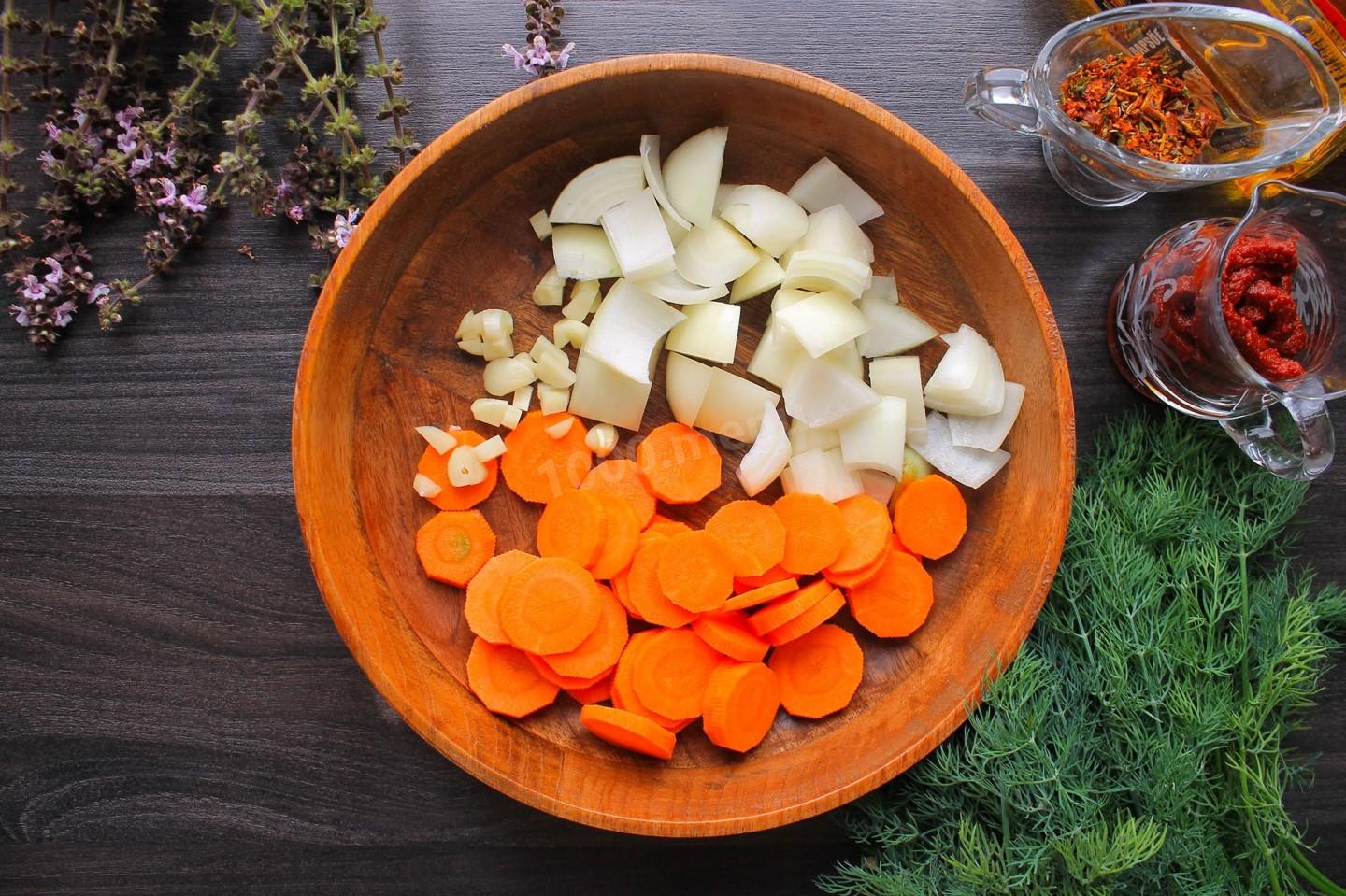
Dice the onion, cut the carrot into thin rounds, and chop the garlic however you like.
-
Step 5:
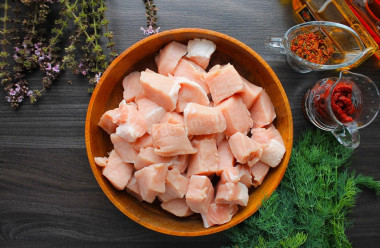
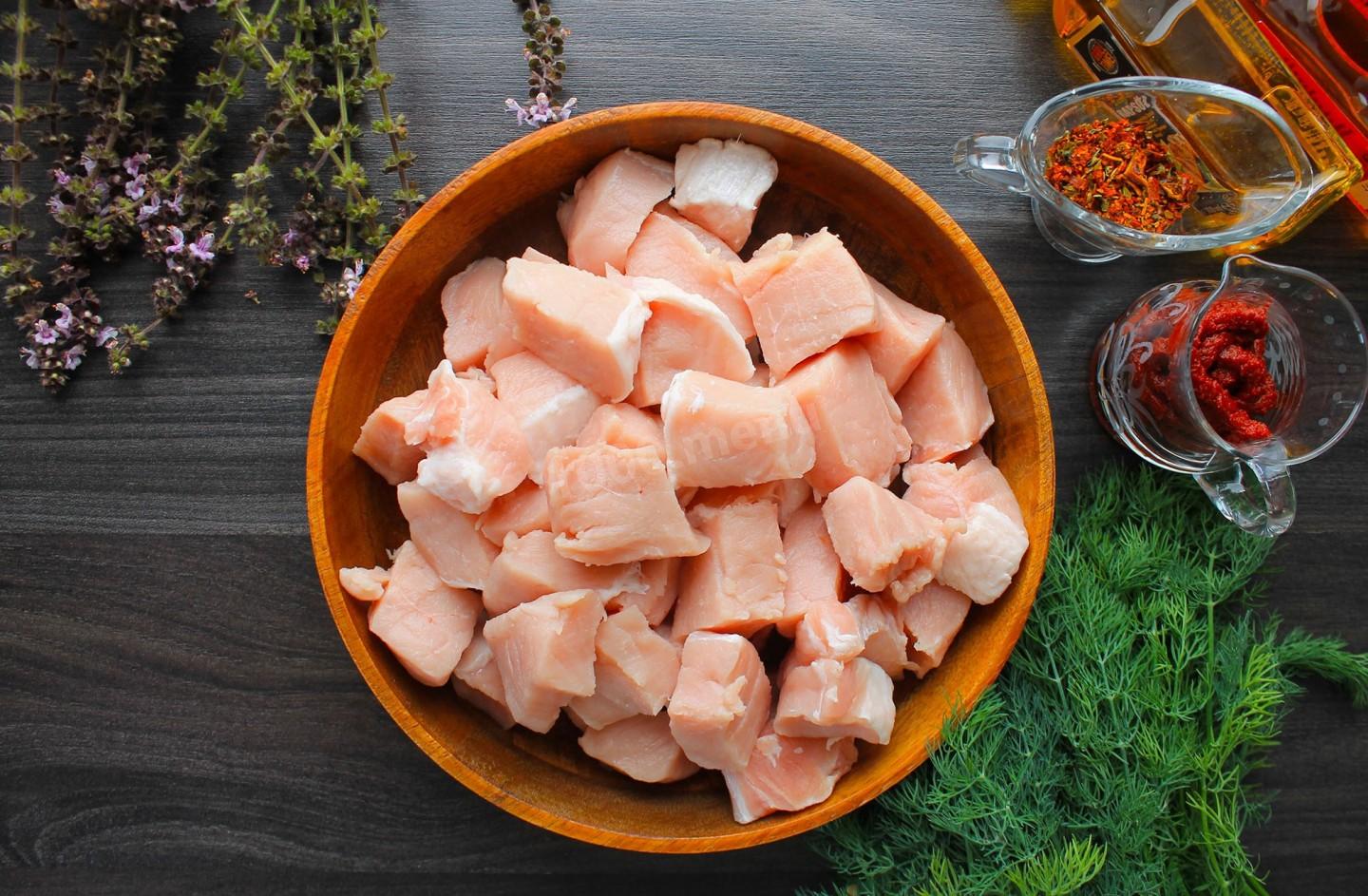
Cut the pork into evenly sized pieces. Don't make them too small — that way the meat stays juicy and tender.
-
Step 6:
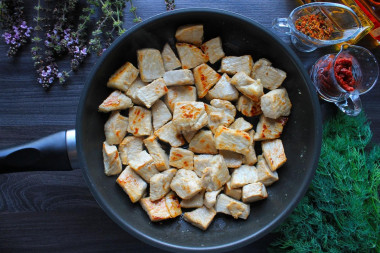
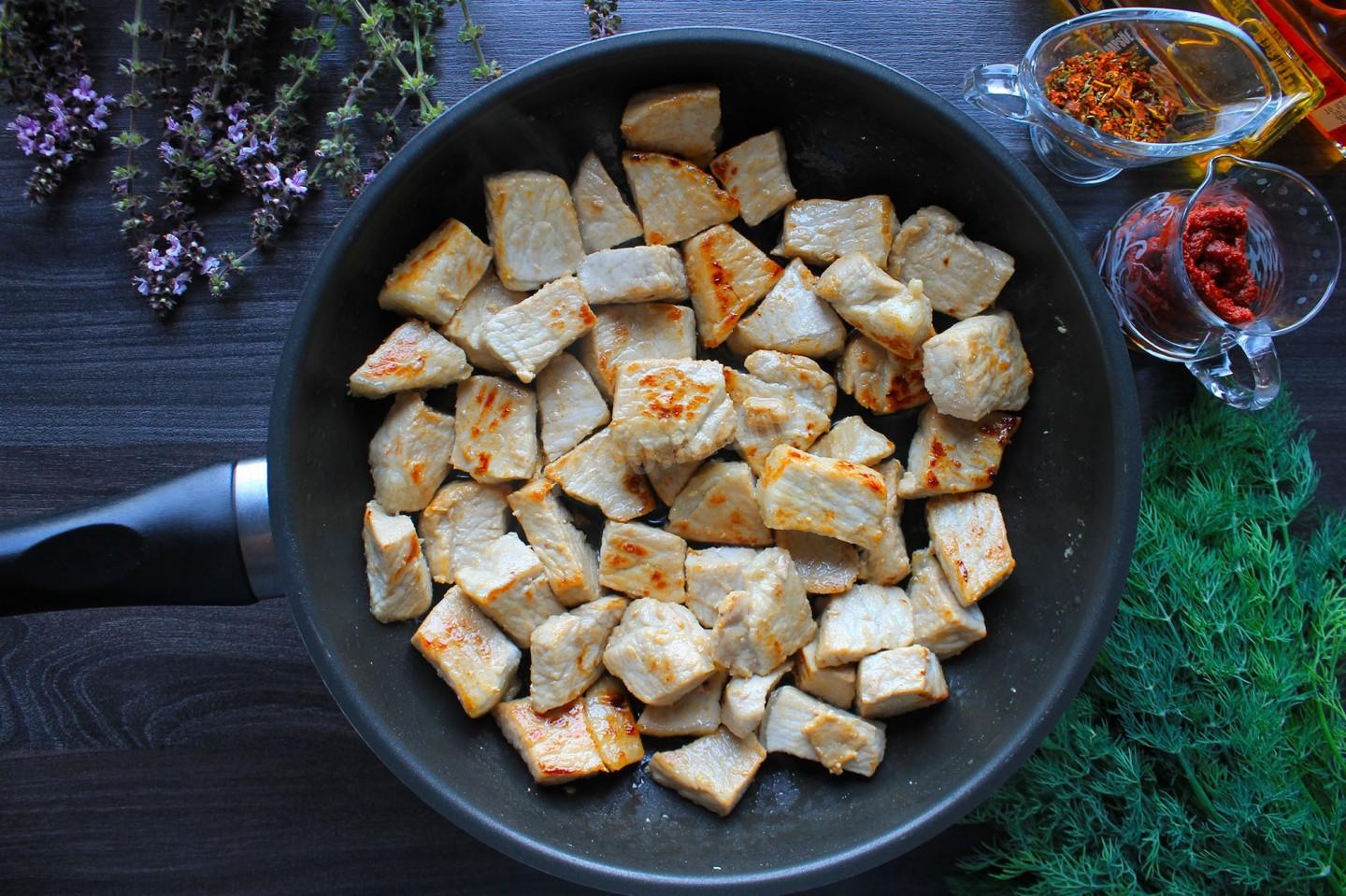
Heat the vegetable oil well in a heavy-bottomed skillet. Add the meat and cook over high heat, stirring, until the pieces are browned.
-
Step 7:
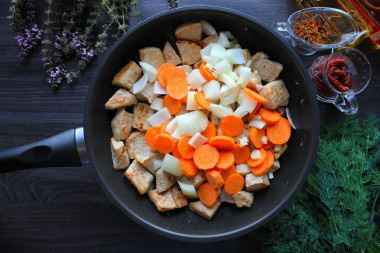
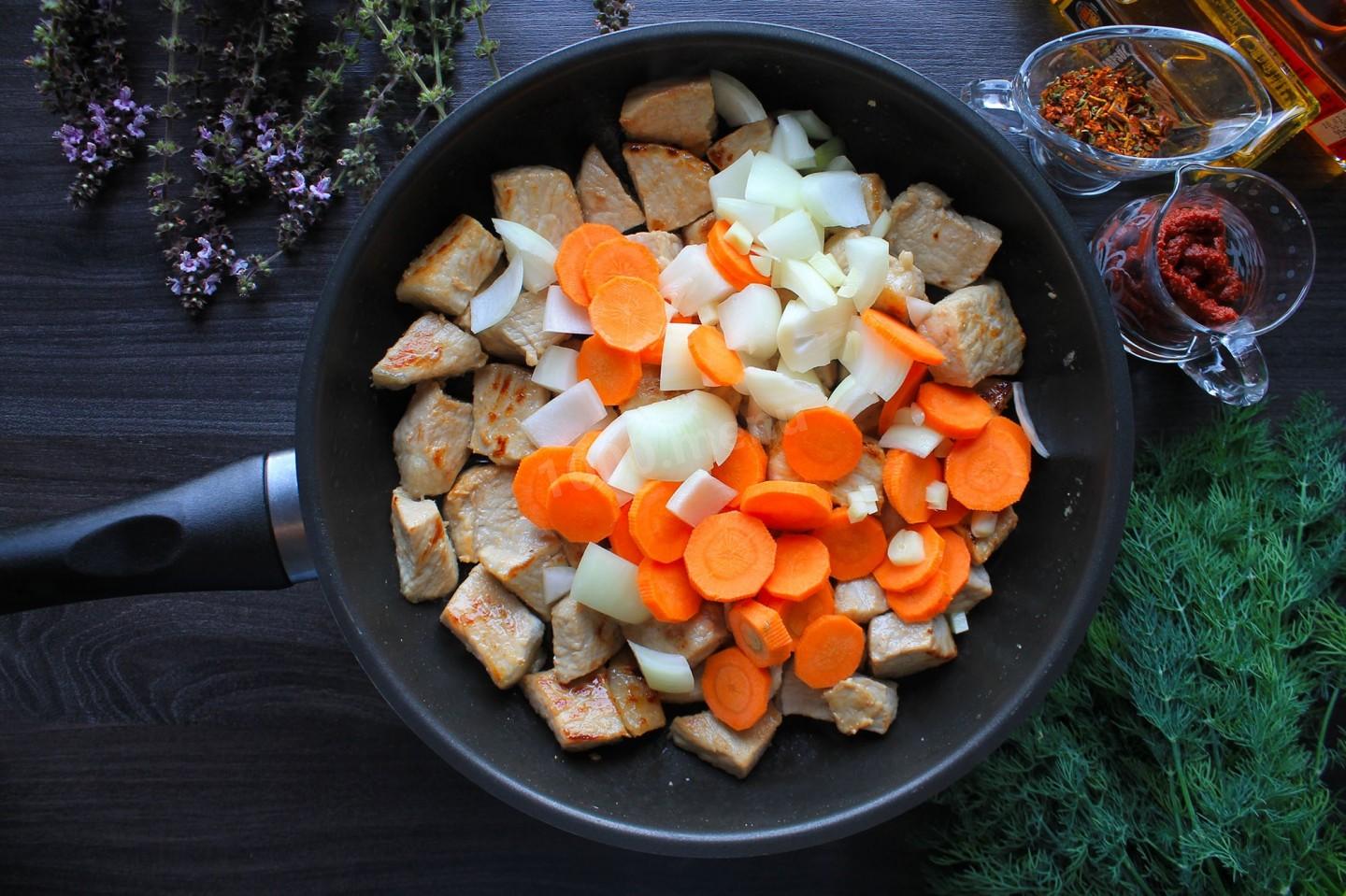
Add the onion, carrot, and garlic to the meat. Fry everything together for about five minutes, stirring occasionally, until the onion turns slightly translucent.
-
Step 8:
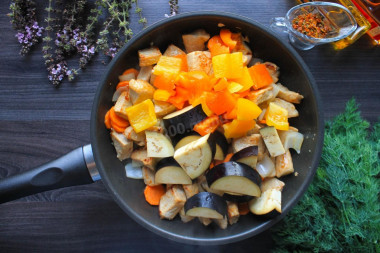
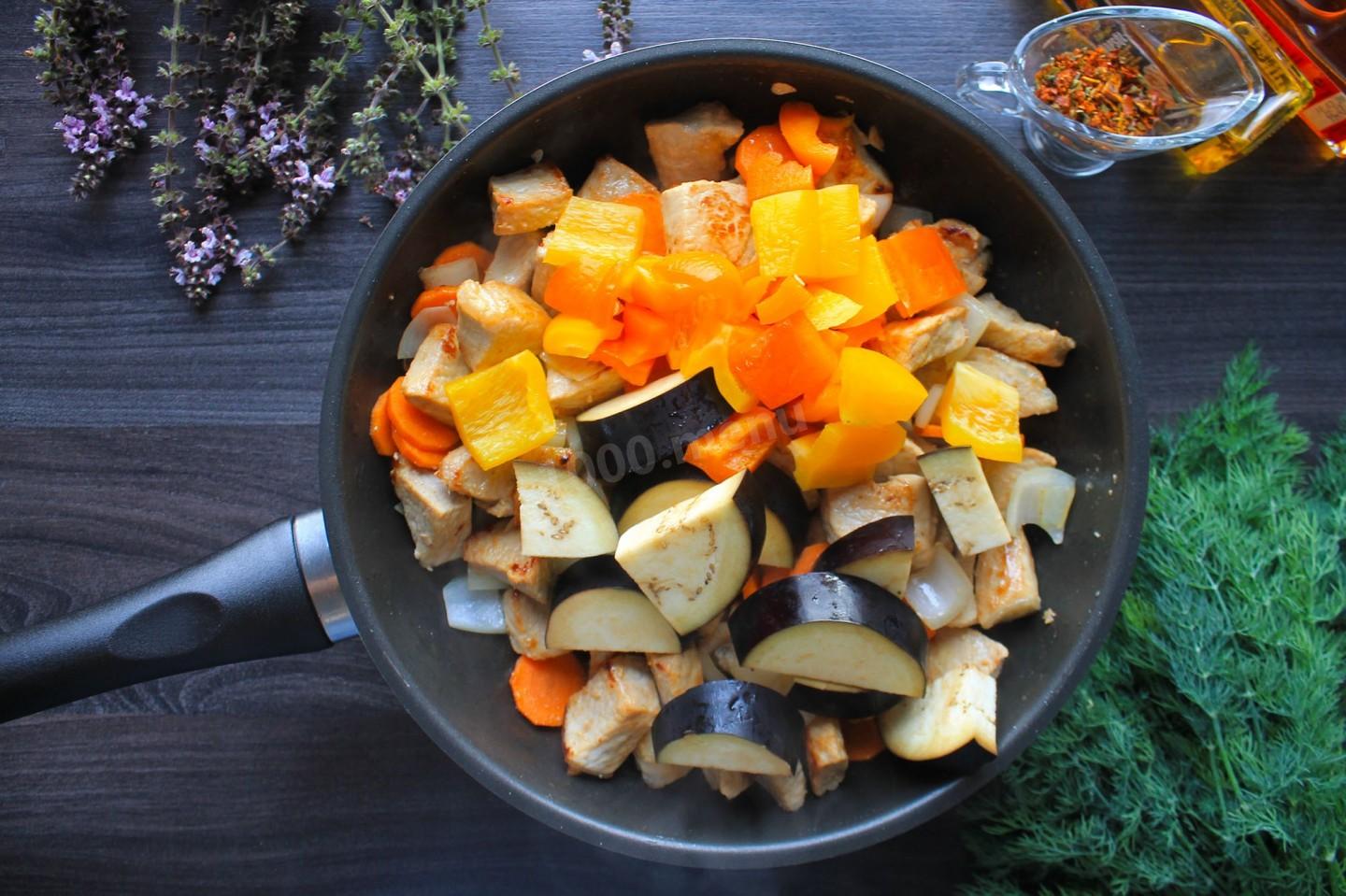
Add the eggplant and bell pepper to the skillet.
-
Step 9:
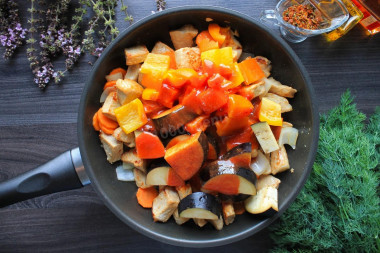
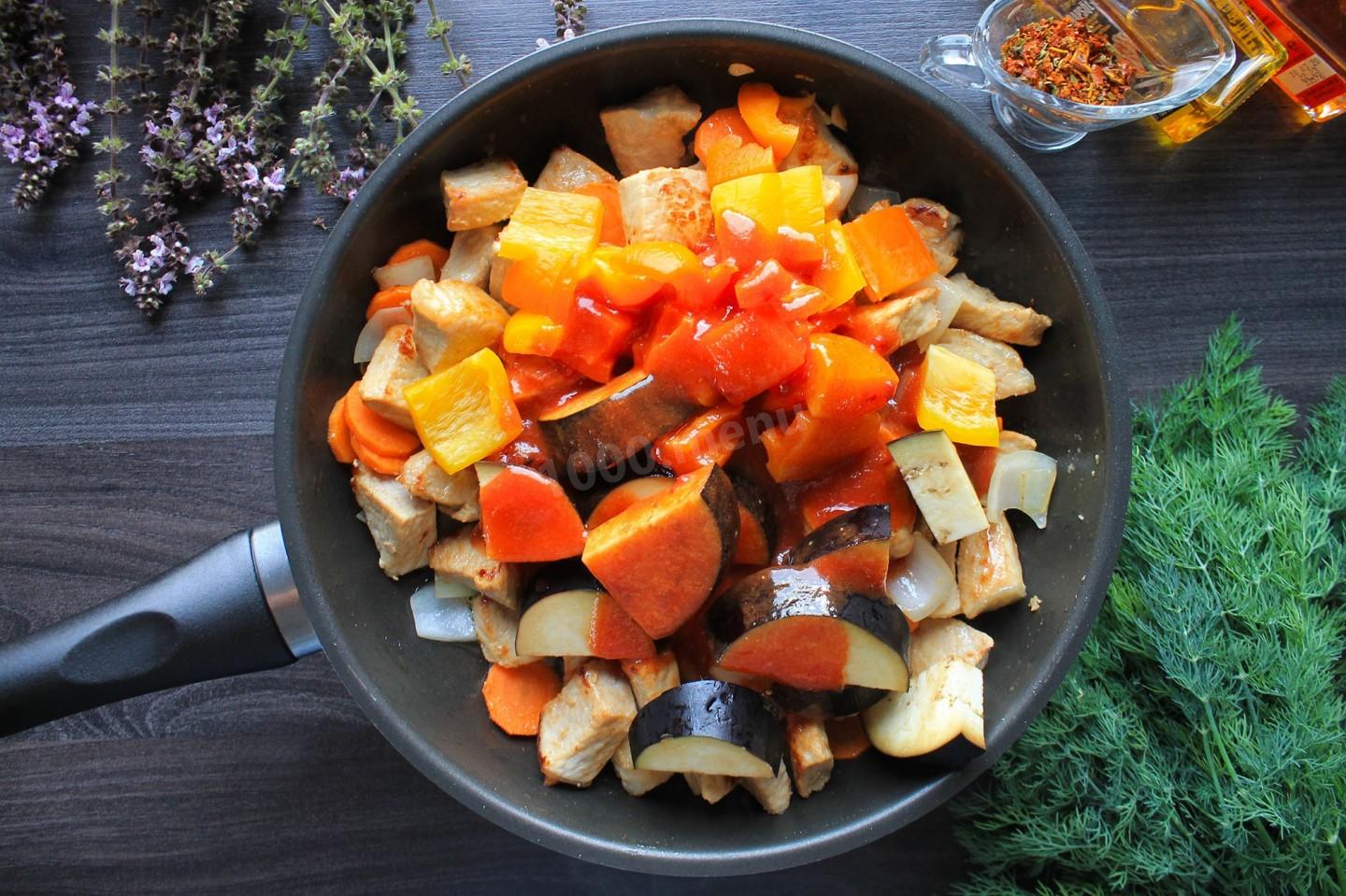
Stir the tomato paste into the water until smooth. The amount of water can vary from the recipe depending on how saucy you want the finished dish. Season with salt and pepper to taste — you can also add your favorite seasonings and spices here. Stir everything well, bring to a boil, then lower the heat to medium and simmer the pork, covered, until done.
-
Step 10:
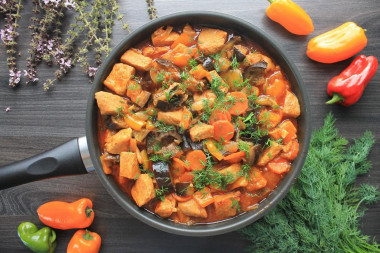
Open the lid occasionally and give it a stir. It took me about 50 minutes. Sprinkle the meat with finely chopped fresh herbs and take the skillet off the heat.
-
Step 11:
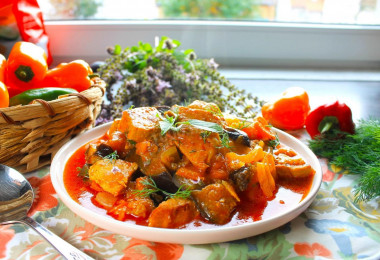
Done! Serve hot.
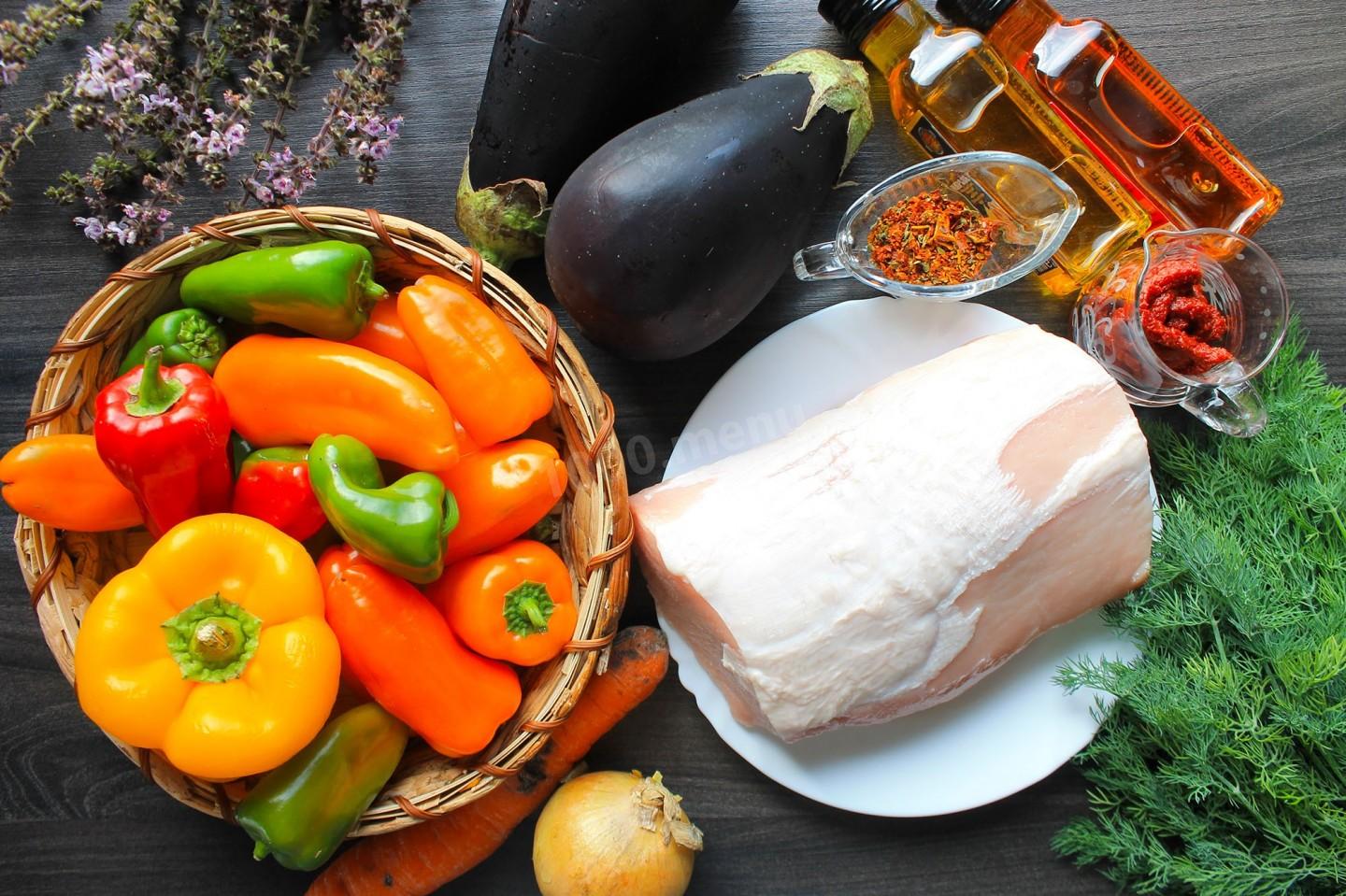
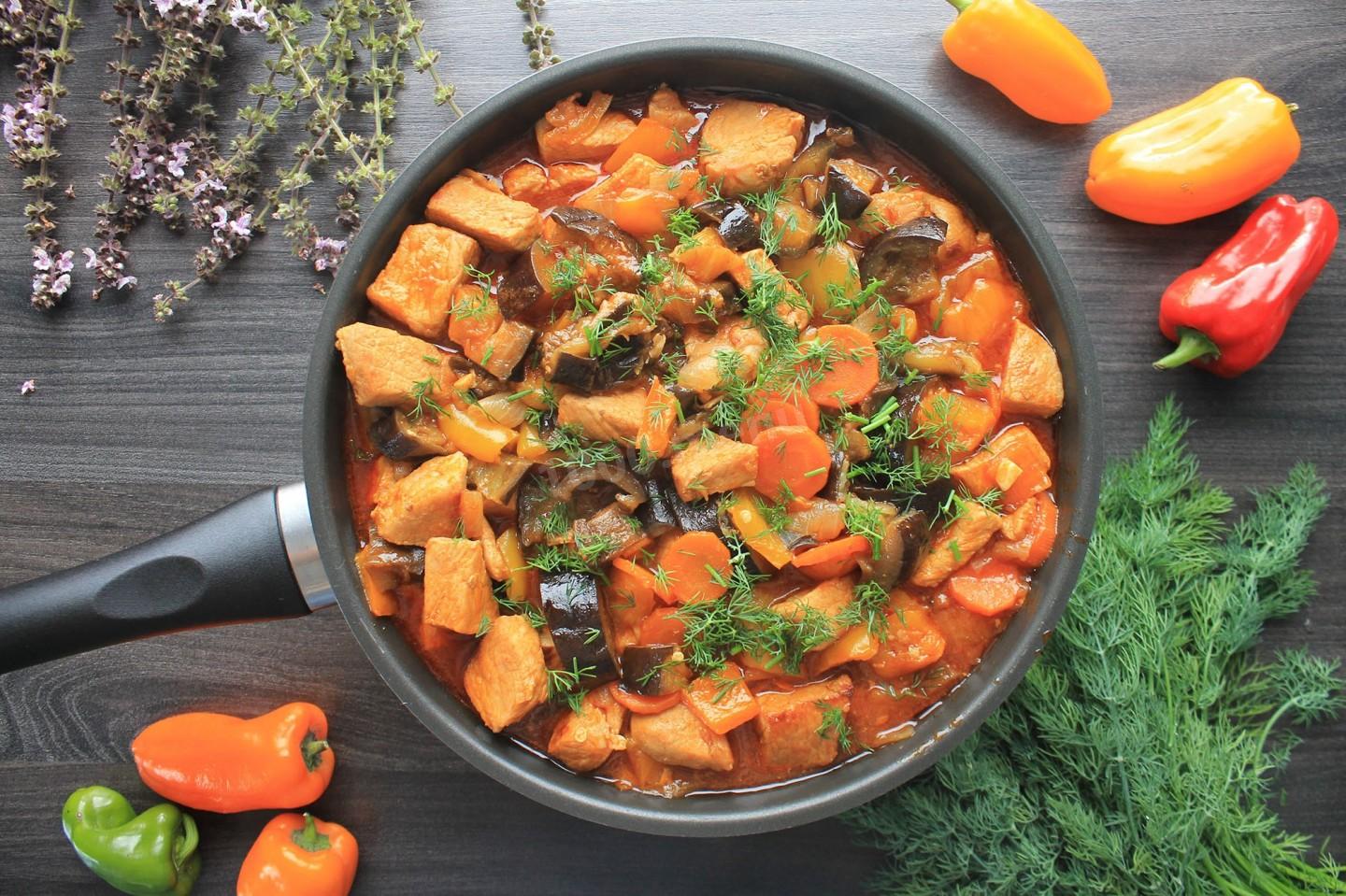
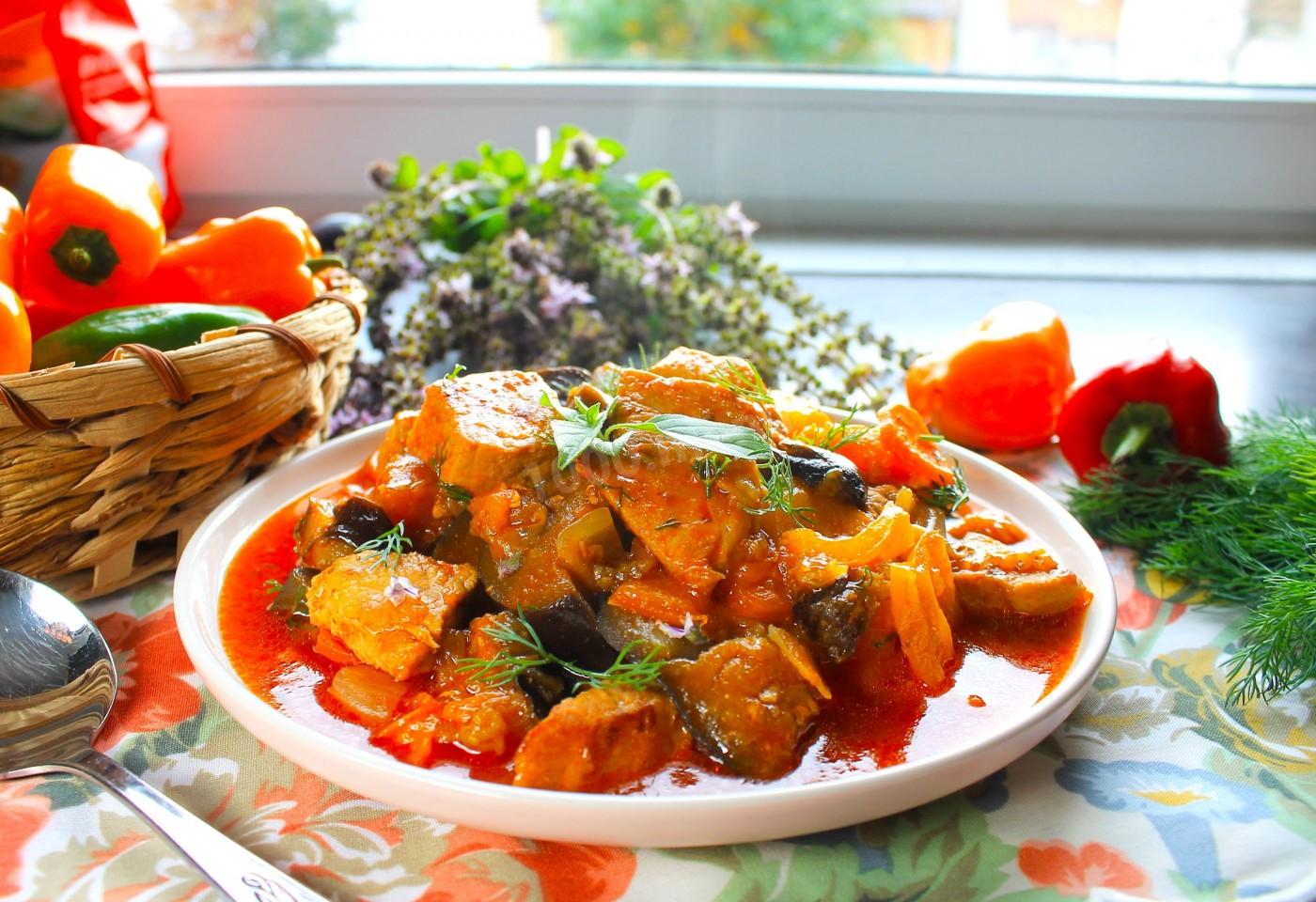
- You can serve the stewed pork on its own or with potatoes and cooked grains. Enjoy!
- One more thing: the wrong pan can ruin even the best recipe, so pick one suited to what you're cooking.
- You can use any other meat in place of pork — just keep in mind the cooking time, flavor, and calorie count will change. Beef, for example, takes longer than pork, while chicken breast or turkey take less.
- If you're using a pre-made spice blend, be sure to check the label. These blends often already contain salt, so account for that or you risk over-salting the dish.
Caloric content of the products possible in the composition of the dish
- Onion - 41 kcal/100g
- Pork fat - 333 kcal/100g
- Pork meat - 357 kcal/100g
- Pork - low-fat roast - 184 kcal/100g
- Pork chop on a bone - 537 kcal/100g
- Pork - schnitzel - 352 kcal/100g
- Pork Shoulder - 593 kcal/100g
- Boar's leg - 113 kcal/100g
- Pork - 259 kcal/100g
- Sweet pepper - 27 kcal/100g
- Carrots - 33 kcal/100g
- Dried carrots - 275 kcal/100g
- Boiled carrots - 25 kcal/100g
- Eggplant - 24 kcal/100g
- Garlic - 143 kcal/100g
- Ground black pepper - 255 kcal/100g
- Vegetable oil - 873 kcal/100g
- Tomato paste - 28 kcal/100g
- Salt - 0 kcal/100g
- Water - 0 kcal/100g
Similar recipes

- Homemade dinner
- Second course
- Meat and meat products
- Vegetables
- Spices seasonings spices
- Fats and oils
- Other
- Garlic
- Pepper
- Salt
- Vegetable oil
- Water
- Tomato paste
- Stewing
- Stewed vegetables
- Meat second course
- Eggplant second course
- Pork
- From carrots
- From eggplant
- From sweet pepper
- From onion
- No eggs
- Recipes for lean dishes without butter