Bone Broth
A fragrant, rich broth for soups and gravies. Making broth isn't hard at all if you follow a few rules. In this recipe I'll show you how to make broth from pork bones. For broth, it's best to use a tall, narrow pot, so there's less surface area for evaporation. Unfortunately, I don't have one yet, so I'll make the broth in a regular soup pot. I'm going to use this broth later to make soup, so I'll make what's called a white broth. If you want a brown broth, first roast the bones in the oven or sear them in a skillet — and you can use smoked bones.

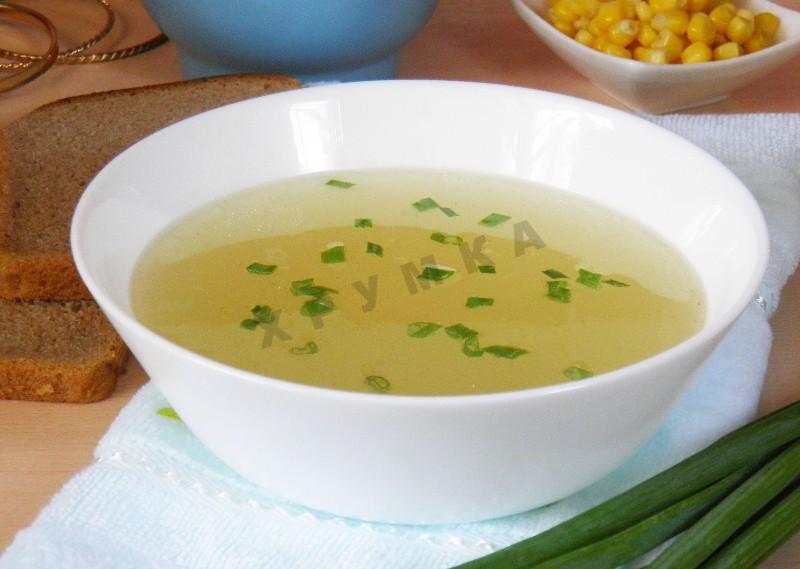
Cooking method
-
Step 1:
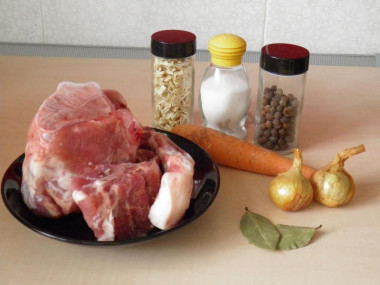
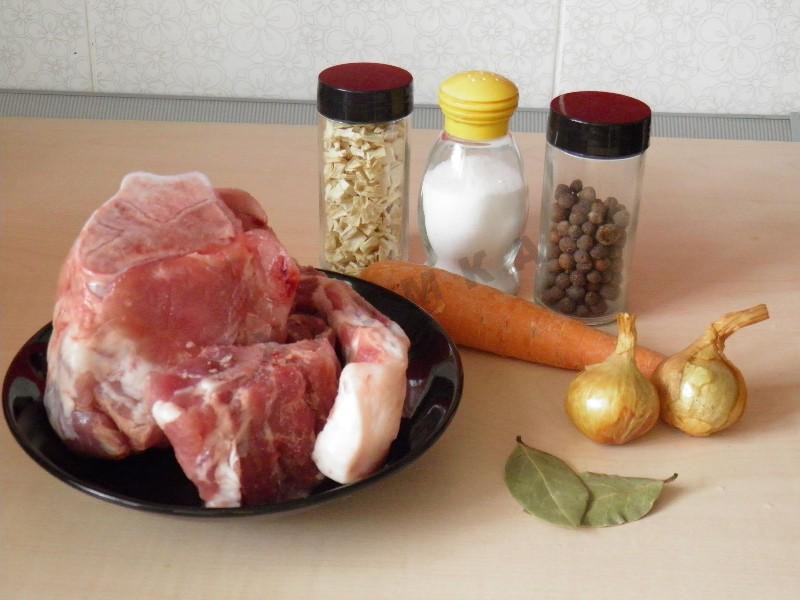
How do you make bone broth? You'll need a short list of ingredients — the bones themselves, some root vegetables, and a few spices. If you're using frozen bones, thaw them first — it's best to leave them in the fridge overnight and use them the next day.
-
Step 2:
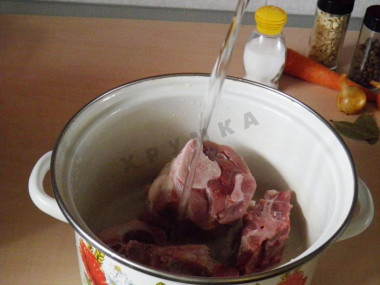
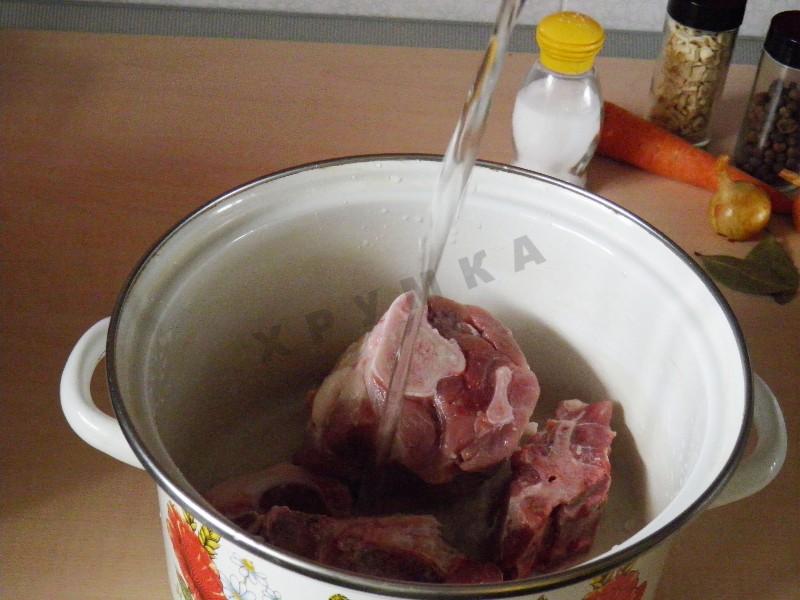
Rinse the bones and meat very thoroughly — you need to wash off any blood and other impurities and grime. You can scrape the bones a little. Then put the bones in a pot and cover them with cold water.
-
Step 3:
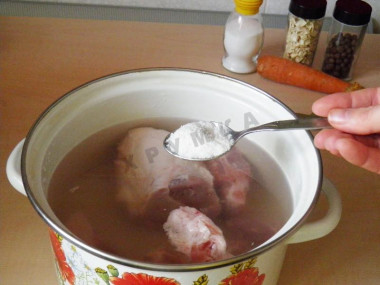
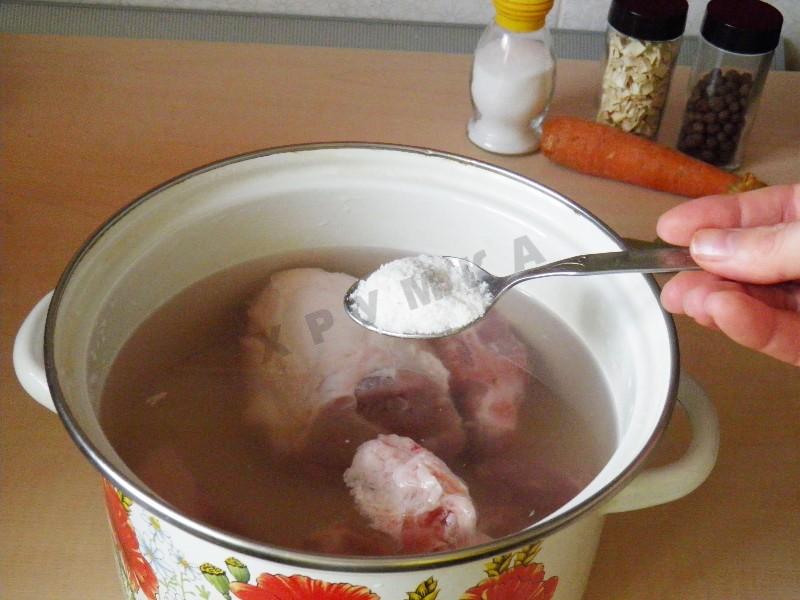
Add salt and set it over low heat. When the broth begins to simmer lightly, skim off the foam with a slotted spoon and turn the heat down nearly to its lowest setting. Cover with a lid, leaving a gap for steam to escape. Skim the foam carefully — the cleaner the broth, the better its quality and the longer it keeps.
-
Step 4:
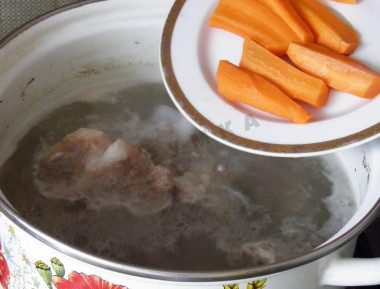
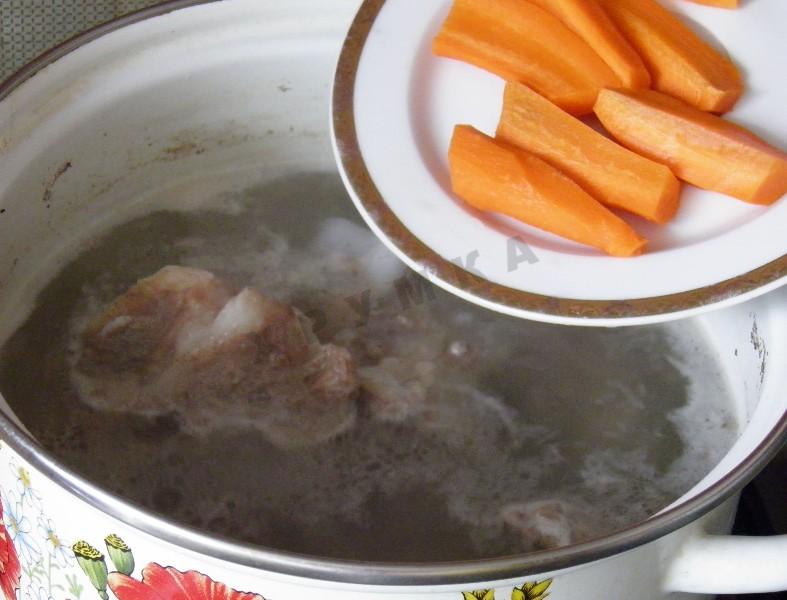
After a couple of hours, once the broth has simmered well, add the vegetables. Cut the carrot into large pieces and drop it into the broth. If you were making vegetable broth you'd need to cut the vegetables as small as possible, but that doesn't apply to meat broths.
-
Step 5:
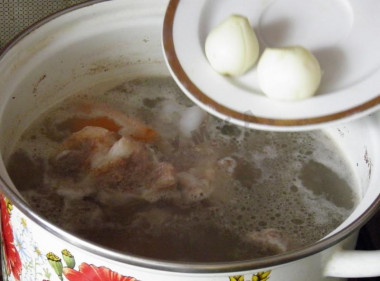
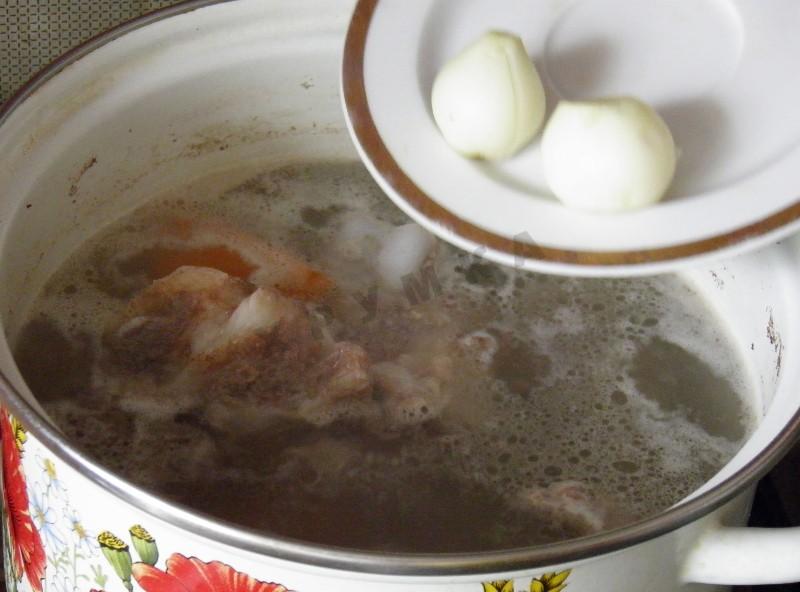
Add the onion. If you have a large onion, cut it into 4; a medium one into 2 — that'll be enough. If you're making brown broth, you can sear or roast the vegetables along with the bones first — it makes the broth's flavor richer.
-
Step 6:
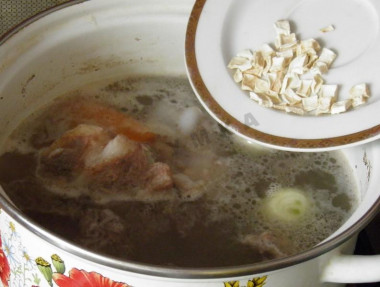
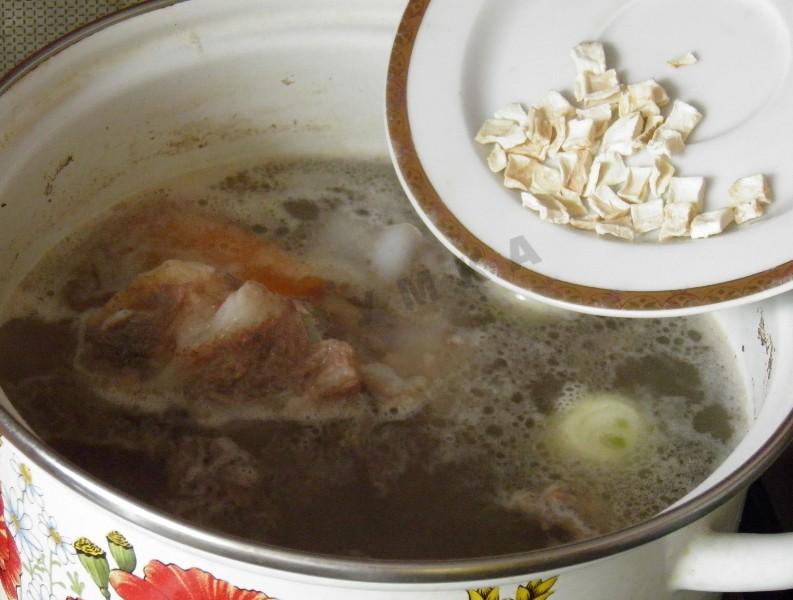
Add the parsley root. Cover the broth and let it cook at a low simmer for another hour. Then add the pepper and bay leaf and turn off the heat. Let the broth sit for another 15–20 minutes.
-
Step 7:
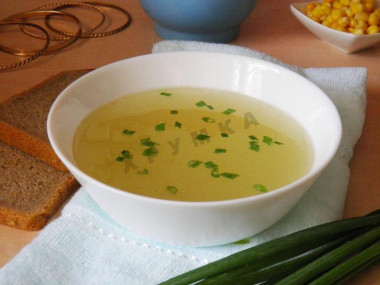
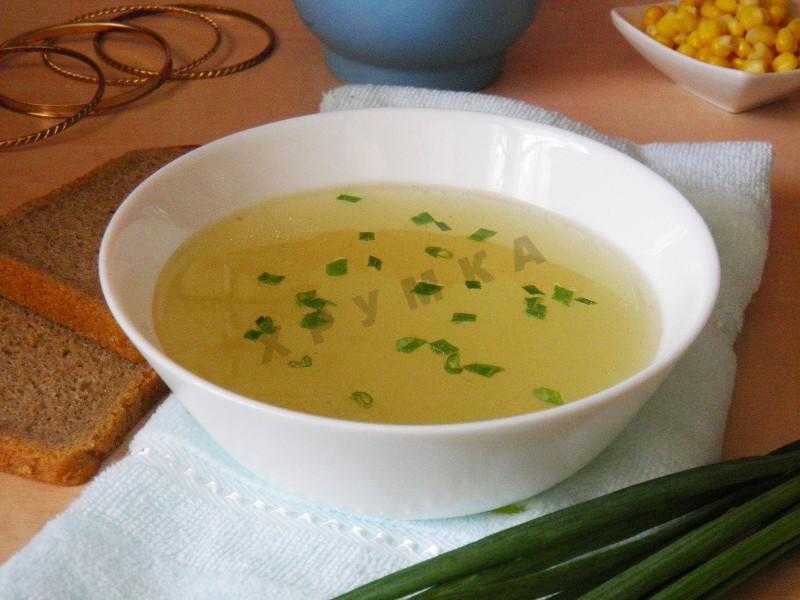
Strain the finished broth through a fine sieve or cheesecloth. You can use it right away. If you're going to freeze the broth for storage, first cool it, skim off the set fat, and only then freeze it.
- I'll be using this broth to make soup; if you want to use the broth for a thick sauce or gravy, you can reduce it over low heat until it's cut in half. Note that if you make broth for soup from chicken or veal bones, 3–4 hours will be enough, just as with the pork version, but lamb and beef bones need to cook longer — at least six hours, ideally a full 8. Fish bone broth cooks in about an hour and a half. By the way, don't throw away the bones left over from making the broth — make a second broth from them. Chefs all over the world use broths like that to make light, healthy soups.
- Keep in mind that the quality and flavor of the finished dish depend a lot on thawing the ingredients properly. For how to avoid mistakes and choose the best way, see the article on defrosting.
- Since everyone has their own tolerance for saltiness, sweetness, bitterness, heat, sourness, and pungency, always add spices and seasonings to your own taste! If you're using a seasoning for the first time, keep in mind that there are some it's especially important not to overdo (chili pepper, for example).
- For how to choose the perfect pot for soup, porridge, or pickling cucumbers, see the article on cookware.
Caloric content of the products possible in the composition of the dish
- Onion - 41 kcal/100g
- Carrot - 33 kcal/100g
- Dried carrot - 275 kcal/100g
- Boiled carrot - 25 kcal/100g
- Bay leaf - 313 kcal/100g
- Water - 0 kcal/100g
- Table salt - 0 kcal/100g
- Parsley root - 49 kcal/100g
- Beef bones - 105 kcal/100g
- Allspice - 263 kcal/100g