Vegetarian Cabbage Rolls
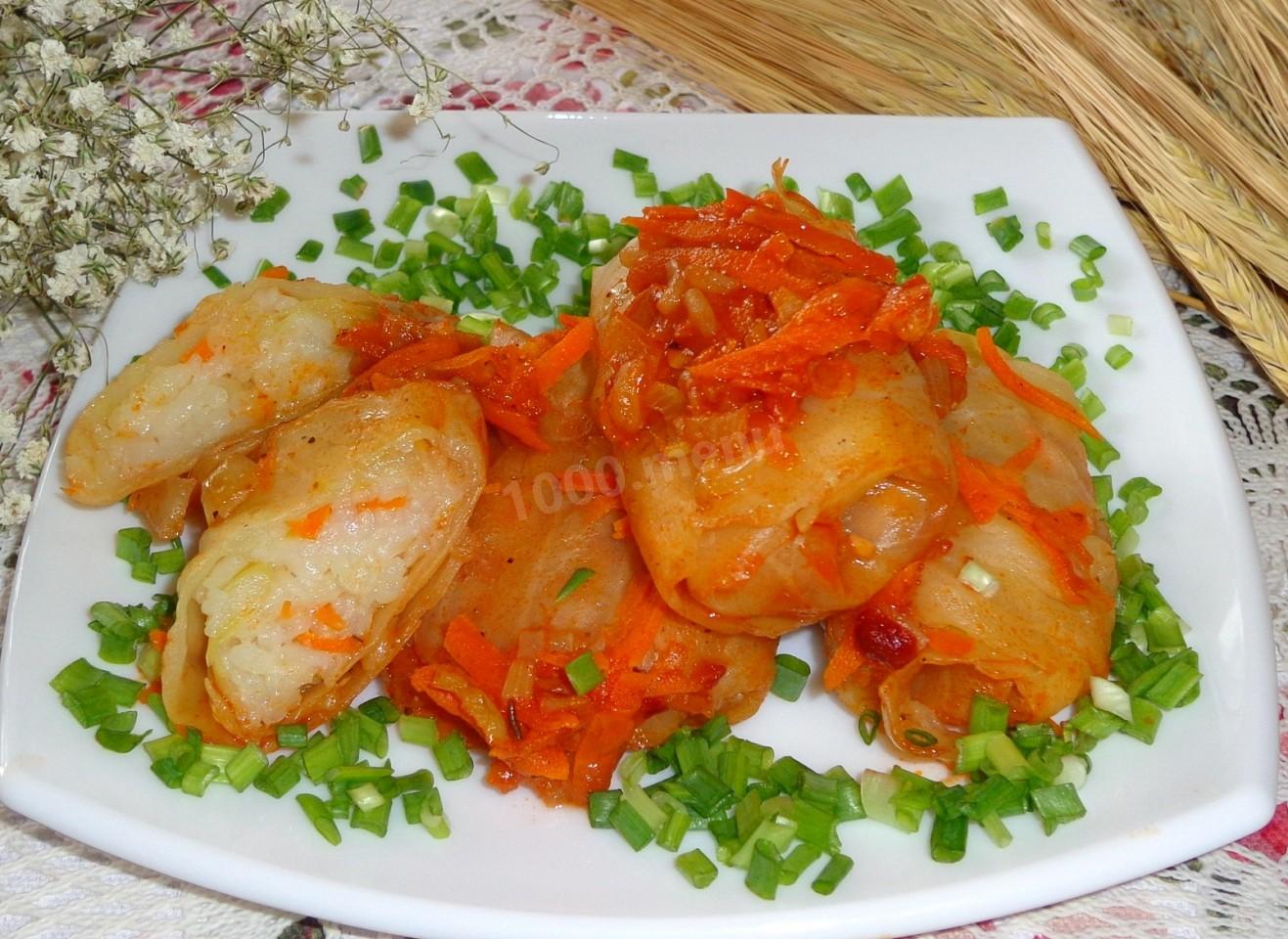
Tasty, fragrant cabbage rolls — perfect for lunch! These vegetarian cabbage rolls are easy to make and every bit as good as the meat version. Use green cabbage with soft leaves, ideally an early-season head. Either way, blanch the leaves in boiling water so they roll up easily. White rice makes a good filling, along with vegetables. You can serve these as a dish on their own — and if they're not just for vegetarians, with a dollop of sour cream.
Ninel
Recipe author
Vegetarian Cabbage Rolls
Nutrients and energy value of the composition of the recipe
By weight of the composition:
Proteins 8 %
1 g
Fats 23 %
3 g
Carbohydrates 69 %
9 g
60 kcal
GI:
40
/
60
/
0
- How do you make vegetarian cabbage rolls?
- First, set a pot of water on the stove and add salt. Once it boils, add the rice and cook for about 20 minutes, stirring now and then. Drain in a colander and rinse under running water. 2. Heat water in a large pot. Lower the cabbage leaves in 1-2 at a time and cook until soft, about 2-3 minutes. Cool the leaves on a plate or cutting board. 3. Peel the onion and carrot. Chop the onion small and grate the carrot on the coarse side of a box grater. Sauté the vegetables in vegetable oil and stir them into the cooked rice. 4. Put some rice filling on a cabbage leaf and roll it up. Make all the rolls this way and arrange them in a deep skillet or sauté pan. 5. Stir the tomato paste into cold water. Cut the onion into medium pieces and grate the carrot coarsely. Add the vegetables to the sauce along with salt and black pepper, and stir. 6. Pour the sauce over the cabbage rolls, cover the pan, and simmer over low heat for 20-30 minutes. Then let them rest, covered, for another 15 minutes. Test with a knife or fork — if the cabbage is soft, it's done. Serve the cabbage rolls hot. Enjoy! If you like, add mushrooms to the rice-and-vegetable filling — if using button mushrooms, sauté them with the vegetables. These rolls are very filling even without a gram of meat, so they're great for vegetarians and for anyone fasting. If you're making them just to mix up the menu, serve them with sour cream sauce or ketchup.
- All oils are only good up to a certain point — the smoke point, where the oil starts to burn and forms harmful compounds, including carcinogens. It's worth learning how to pick the right oil for frying and gauge the right temperature.
- For rice that turns out great every time, it helps to know how to pick the right variety and cook it well.
Caloric content of the products possible in the composition of the dish
- Raw wild rice - 353 kcal/100g
- Brown raw rice - 360 kcal/100g
- Boiled brown rice - 119 kcal/100g
- White fortified raw rice - 363 kcal/100g
- White fortified boiled rice - 109 kcal/100g
- White long-grain rice, steamed, raw - 369 kcal/100g
- White long-grain rice, steamed, boiled - 106 kcal/100g
- Instant dry rice - 374 kcal/100g
- Instant rice, ready to eat - 109 kcal/100g
- Rice - 344 kcal/100g
- Carrots - 33 kcal/100g
- Dried carrots - 275 kcal/100g
- Boiled carrots - 25 kcal/100g
- Ground black pepper - 255 kcal/100g
- Vegetable oil - 873 kcal/100g
- Tomato paste - 28 kcal/100g
- Salt - 0 kcal/100g
- Water - 0 kcal/100g
- Onion - 41 kcal/100g
- Green cabbage - 28 kcal/100g
- Boiled green cabbage - 21 kcal/100g
Similar recipes

Related and additional categories:
- Second course
- Vegetables
- Cereals and cereal products
- Spices seasonings spices
- Fats and oils
- Other
- Pepper
- Salt
- Vegetable oil
- Water
- Tomato paste
- Cooking
- Stewing
- Second lean dishes
- Голубцы
- Stewed vegetables
- Second courses of cabbage
- From carrots
- From cabbage
- From onion
- No eggs
- Vegetarianism
- Lean table
- Recipes for lean dishes without butter
- From rice