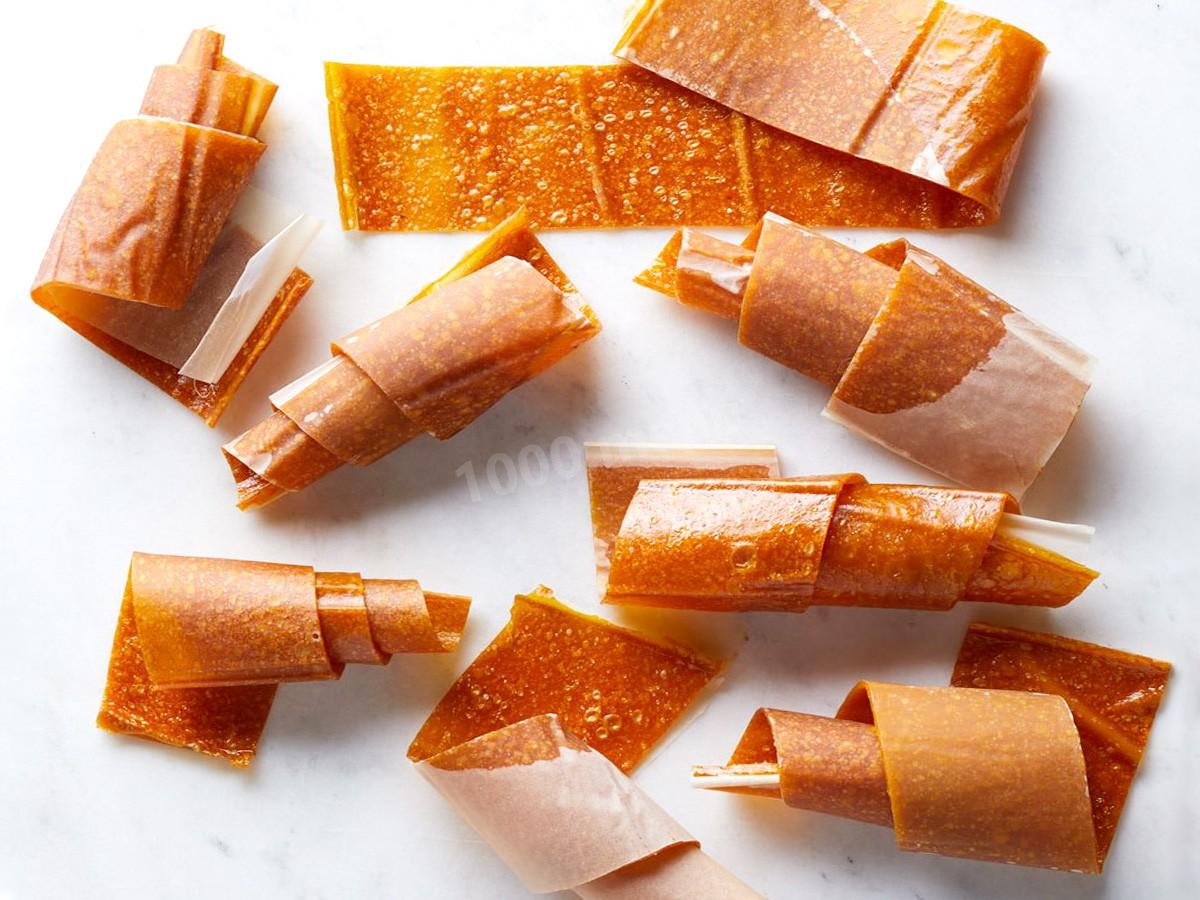
Homemade Pear Fruit Leather
Fragrant, sweet rolls made from all-natural fruit! Homemade pear fruit leather isn't just tasty—it's good for you, too. Not a gram of added sugar, just the natural flavor of ripe pears and a touch of spice for a light, barely-there hint.
Lubava
Recipe author
Homemade Pear Fruit Leather
Nutrients and energy value of the composition of the recipe
By weight of the composition:
Proteins 0 %
0 g
Fats 0 %
0 g
Carbohydrates 100 %
11 g
44 kcal
GI:
100
/
0
/
0
- Jam isn't the only way to put up a pear harvest for winter. There's no need to go to all that trouble—sealing and storing jars and using up a mountain of sugar. Pear fruit leather is a great fruit dessert that's a treat right after you make it and keeps in the fridge for a long time. You don't even need perfect pears for it—bruised, slightly overripe ones work great. Just trim off any rotten or wormy spots. Wash the pears well and pat them dry, so no water gets into the leather (that would only drag out the already-slow oven-drying). Remove the stems and seed cores from the pears and cut the remaining flesh into pieces. Put the cut fruit in a sauté pan or heavy-bottomed pot. Cover and start cooking over low heat. Don't crank the flame up—the fruit shouldn't scorch; warming slowly, it releases plenty of juice and turns soft within about 15 minutes. Season the pears right away with the cardamom and add the star of anise. After a quarter hour, the fruit will be soft enough. Take out the star anise and purée the pears smooth with an immersion blender. The fruit prep is done; all that's left is to dry the leather in the oven, and that part can happen pretty much hands-free. Line a baking sheet with parchment paper—you can brush it with a little oil just in case. If you have a silicone mat, use it; with that, there's no risk of sticking and no extra fuss. Spread the purée on the sheet and smooth it out with a spatula. Don't make the layer too thick, or the leather will take forever to dry and won't roll up—7 mm at most. Smooth it with a spatula and put it in the oven to dry. Dry the leather at no higher than 210°F (100°C), and ideally around 175°F (80°C). Leave the door slightly ajar so the steam can escape. The time depends on the thickness of the layer—5 to 7 hours on average. You'll know it's done by its golden color and by checking the surface for tackiness. As soon as the leather no longer sticks to your hands when you touch it, you can take the sheet out of the oven. Leave the leather on the mat or paper until completely cool. Then cut it into rectangles and roll each up. If a roll unwinds, tie it with kitchen twine. Serve the fruit leather right after it cools, or store it in the fridge all winter. Enjoy!
Caloric content of the products possible in the composition of the dish
- Pear - 42 kcal/100g
- Dried pear - 246 kcal/100g
- Canned pears - 76 kcal/100g
- Cardamom - 311 kcal/100g
- Badyan - 337 kcal/100g
Similar recipes

Related and additional categories: