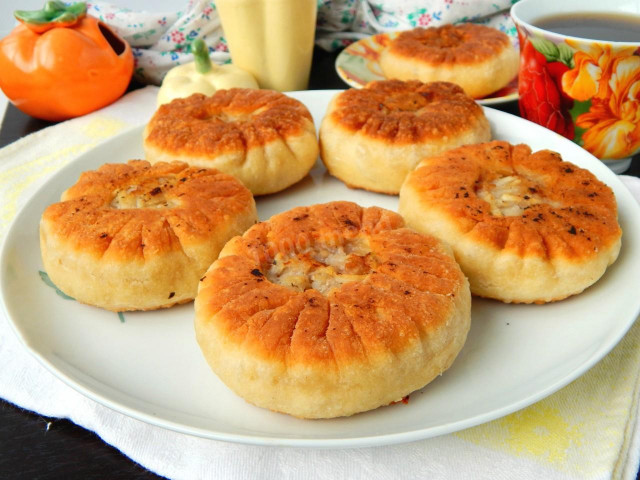
Skillet Egg and Green Onion Hand Pies
Simple, delicious, and airy — no oven needed! These skillet egg and green onion hand pies are a lifesaver when you have nothing to bake in but you're craving a savory pastry. Feel free to swap the filling to suit your taste.





Cooking method
-
Step 1:
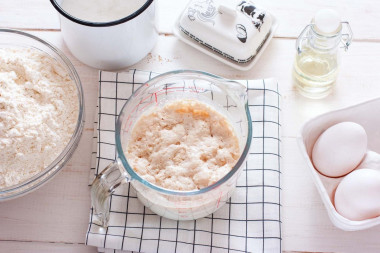
How do you make egg hand pies? First, make the dough. You can use your favorite recipe or buy it ready-made. I'm making a dough with a yeast sponge. Make the sponge: to warm milk (no hotter than 105°F / 40°C), add the yeast, a tablespoon of sugar, and a tablespoon of flour. Stir, cover, and set in a warm spot until it forms a foamy cap — a sign the yeast is active. The rest of the ingredients for the dough should be at room temperature.
-
Step 2:
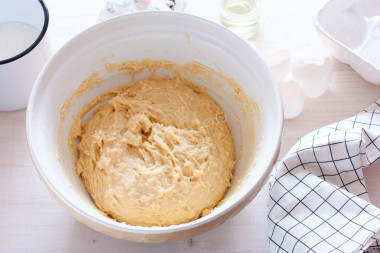
Melt the butter in a double boiler. In a deep bowl, combine the sponge, salt, sugar, and egg, and mix well until the sugar and salt dissolve. Add 250 grams of the flour and stir. Then add the melted butter and vegetable oil and knead the dough. It comes out soft and sticky, but don't add extra flour yet. Cover with a water-dampened towel or plastic wrap and set the dough in a warm place.
-
Step 3:
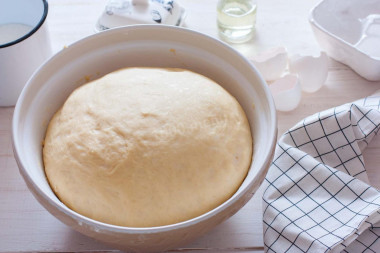
The dough should double or triple in size. Once it has risen, punch it down and let it rise again. Repeat this twice, working in a little more flour each time. By now the dough should be soft and pliable, barely sticking to your hands.
-
Step 4:
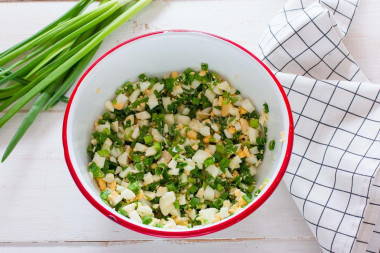
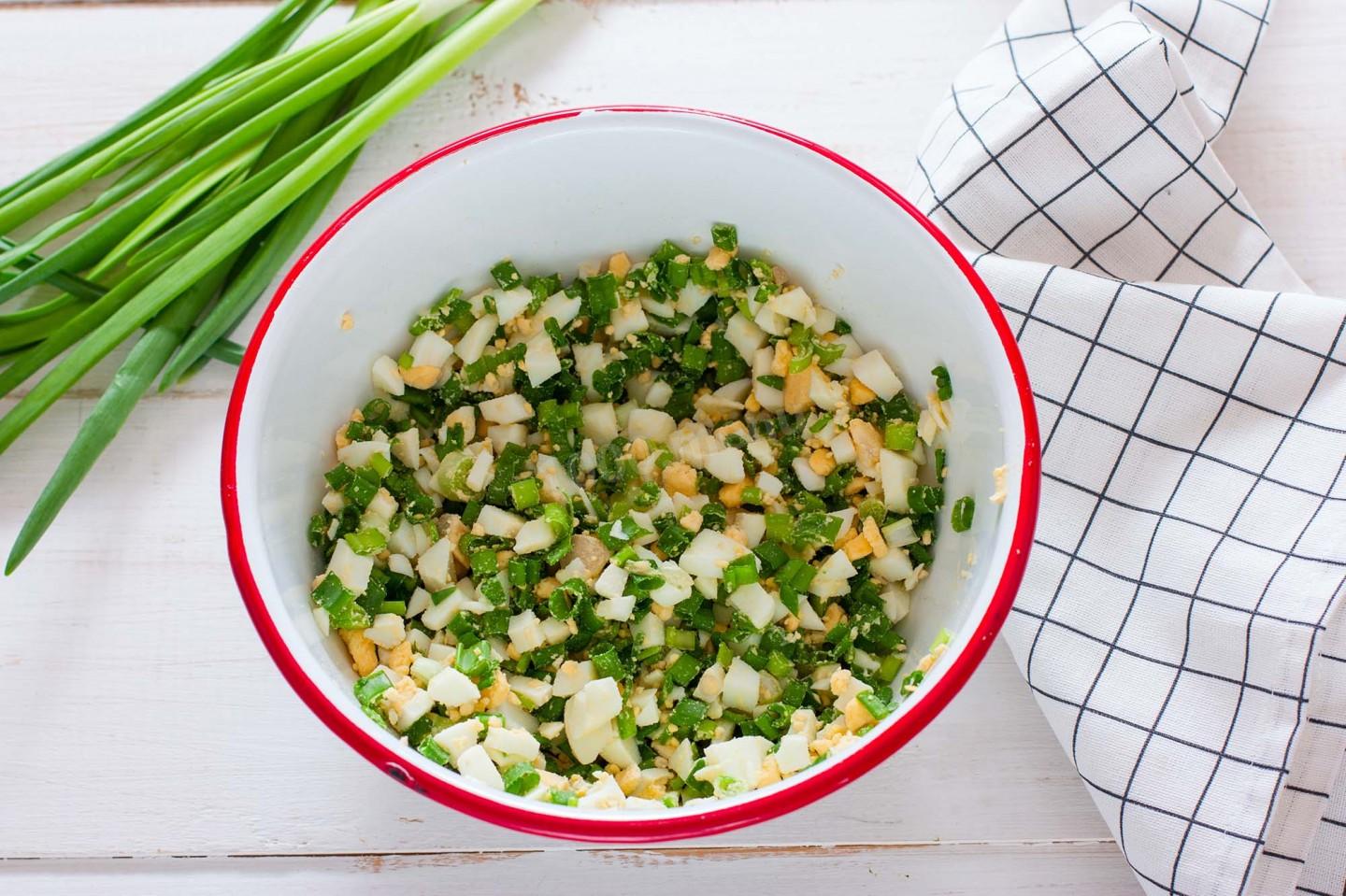
For the filling, hard-boil and cool the eggs ahead of time. Peel them and cut into small cubes. Wash the green onion well and chop it, not too fine. In a deep bowl, combine the chopped eggs and green onion, add a pinch of salt, and mix. Add more salt if needed.
-
Step 5:
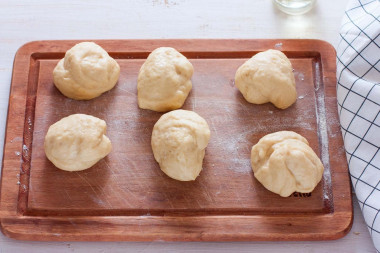
Punch down the risen dough and divide it into balls (mine were 55 grams each, but smaller is better). Keep the dough balls covered with a towel as you work so they don't dry out.
-
Step 6:

Roll each ball into a round, place the filling in the middle, and pinch the edges shut so the filling stays put. Shape all the pies this way.
-
Step 7:
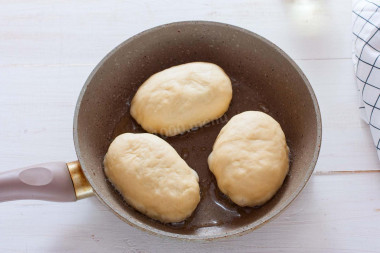
Heat the vegetable oil in a skillet over just below medium heat. Add the pies and fry until golden, first on one side, then the other. You can cover the pan. Using a bit more oil helps the pies brown more evenly.
-
Step 8:
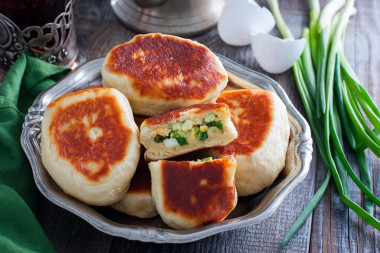
Serve the finished egg and green onion pies warm or at room temperature.




- Be ready to use a little more or a little less flour than the recipe calls for. Go by the consistency of the dough rather than the exact amount of flour — different flours behave differently.
- It's important to sift the flour to work air into it. That way the pastry comes out light and rises well as it cooks.
- Use a high-smoke-point oil for frying. Every oil is only healthy up to a certain temperature — its smoke point — beyond which it starts to burn and forms harmful compounds. Unrefined oils, with few exceptions, have a low smoke point: they're full of unfiltered particles that scorch quickly. Refined oils stand up to heat better and have a higher smoke point. Whether you're baking, pan-frying, or grilling, use an oil with a high smoke point. Common ones include refined sunflower, olive, and grapeseed oil.
Caloric content of the products possible in the composition of the dish
- Whole cow's milk - 68 kcal/100g
- Milk 3.5% fat content - 64 kcal/100g
- Milk 3.2% fat content - 60 kcal/100g
- Milk 1.5% fat content - 47 kcal/100g
- Concentrated milk 7.5% fat content - 140 kcal/100g
- Milk 2.5% fat content - 54 kcal/100g
- Chicken egg - 157 kcal/100g
- Egg white - 45 kcal/100g
- Egg powder - 542 kcal/100g
- Egg yolk - 352 kcal/100g
- Ostrich egg - 118 kcal/100g
- Whole durum wheat flour fortified - 333 kcal/100g
- Whole durum wheat flour universal - 364 kcal/100g
- Flour krupchatka - 348 kcal/100g
- Flour - 325 kcal/100g
- Granulated sugar - 398 kcal/100g
- Sugar - 398 kcal/100g
- Butter 82% - 734 kcal/100g
- Amateur unsalted butter - 709 kcal/100g
- Unsalted peasant butter - 661 kcal/100g
- Peasant salted butter - 652 kcal/100g
- Melted butter - 869 kcal/100g
- Vegetable oil - 873 kcal/100g
- Green onion - 19 kcal/100g
- Salt - 0 kcal/100g
- Dry yeast - 410 kcal/100g